The First Encounter and the Introduction to Mescalito
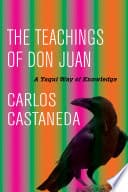
In the summer of 1960, Carlos Castaneda, an anthropology student, goes to Arizona to research medicinal plants. He meets Don Juan Matus, a Yaqui Indian from Sonora, Mexico, who is said to be a 'brujo' or sorcerer. Castaneda starts visiting Don Juan, initially to learn about peyote. Don Juan takes an interest in Castaneda and slowly introduces him to a complex world of non-ordinary reality. Their early talks show Castaneda's doubt and Don Juan's mysterious statements. Don Juan offers to teach Castaneda the 'way of a man of knowledge,' which means learning to perceive the world differently, often using psychoactive plants. Castaneda's first experience with a power plant is with peyote, which Don Juan calls 'Mescalito,' a kind teacher.
Mescalito's Lessons and the Fear of the Unknown
Don Juan guides Castaneda as he uses peyote multiple times. His experiences are intense and often scary, with vivid hallucinations and changed perceptions of reality. He sees Mescalito as a living being, a kind but demanding teacher who gives lessons directly. Castaneda struggles to fit these experiences into his scientific worldview, often feeling deep fear and confusion. Don Juan says fear is the first 'enemy' a man of knowledge must conquer. He teaches Castaneda to 'erase personal history,' 'lose self-importance,' and be 'impeccable' to handle these non-ordinary states. Castaneda tries to write down and explain these events, but Don Juan always guides him back to direct experience.
The Ally and the World of 'Diableros'
Don Juan introduces Castaneda to the idea of an 'ally,' a non-human entity a sorcerer can control and use for power or knowledge. He says getting an ally is dangerous and hard. Don Juan tells about his own experiences with allies and warns Castaneda about 'diableros' or 'sorcerers of the left hand,' who use power for selfish and bad reasons. Castaneda is both interested and scared by these stories, which challenge his understanding of reality. Don Juan starts teaching Castaneda specific practices, such as 'stopping the world' and 'seeing,' which are needed to interact with these non-ordinary phenomena, preparing him for meeting such entities.
Smoke of the Devil's Weed and the Journey to the Second Attention
Don Juan introduces Castaneda to 'Datura innoxia,' the 'devil's weed,' a strong hallucinogenic plant used to get an 'ally.' Castaneda's experiences with Datura are more physically intense and terrifying than with peyote. He says he transformed into an animal (a crow), flew, and fought invisible forces. Don Juan guides him through these difficult experiences, saying the plant's power can be a loyal ally or a destructive master. These encounters are meant to push Castaneda past his normal perception into the 'second attention,' a state of high awareness where sorcerers work. The physical and mental strain of these experiences makes Castaneda question his commitment to the path.
The Little Smoke and the Challenge of the Guardian
Don Juan introduces Castaneda to a third power plant, a mushroom preparation he calls 'humito' or 'the little smoke,' from Psilocybe mushrooms. This plant helps get a different kind of ally, one that lets the sorcerer 'fly' or move very fast. During one of these experiences, Castaneda sees a terrifying, shapeless entity that Don Juan calls the 'guardian' or 'doorway' to the non-ordinary world. This meeting tests Castaneda's courage and determination. Don Juan explains that overcoming such obstacles is needed for a man of knowledge to gain power and freedom, showing that the path is dangerous and requires strong belief.
The Path of a Man of Knowledge and the Four Enemies
Throughout his apprenticeship, Don Juan explains the main ideas of the 'way of a man of knowledge.' He says a sorcerer must gain 'power' by living well and developing 'will.' He introduces the 'four natural enemies' a man of knowledge must conquer: fear, clarity, power, and old age. Each enemy is a challenge that, if not overcome, can stop a sorcerer from becoming truly free. Don Juan stresses 'controlled folly' – acting as if things are important, while knowing they are not – and taking responsibility for one's actions without self-pity. These talks give a framework for Castaneda's often confusing experiences.
The Structure of the Teachings: A Chronological Account
The first part of the book, 'The Teachings,' is a timeline of Castaneda's notes and talks with Don Juan from 1960 to 1965. It details his first meetings, his first experiences with peyote, Datura, and psilocybin, and the philosophical discussions that went with them. This section has vivid descriptions of his altered consciousness, his struggles with fear and doubt, and Don Juan's steady guidance. Castaneda tries to keep a scientific, observational view, even as his own perceptions change. This timeline helps place the extraordinary events within a relatable timeframe, showing Castaneda's learning and his slow immersion into Don Juan's world.
The Structure of the Teachings: A Structural Analysis
The second part of the book, 'A Structural Analysis,' is Castaneda's attempt to categorize and interpret Don Juan's teachings using an anthropological framework. He breaks down Don Juan's complex worldview into distinct ideas, such as the 'three systems of understanding' (ordinary reality, non-ordinary reality, and the 'ally' system), and the 'four natural enemies.' He discusses 'stopping the world,' the role of psychoactive plants as 'power objects,' and 'losing self-importance.' This analytical section aims to give a clear structure to the seemingly different and often conflicting teachings, making them easier for academics to understand and showing the logic behind Don Juan's sorcery.
The Role of the Ally and the Acquisition of Power
In the structural analysis, Castaneda spends much time on the 'ally.' He explains how the ally is not just a hallucination but a specific, non-human entity a sorcerer must get and control through strict discipline and power plants. He lists different types of allies (e.g., Mescalito, the 'devil's weed' ally, the 'little smoke' ally) and what they do. Getting and controlling an ally is central to a sorcerer's power, letting them do things that cannot be explained. Castaneda describes the process as a demanding and dangerous spiritual journey, needing great courage and 'will' from the person doing it.
The Man of Knowledge and the Ultimate Goal
Castaneda's structural analysis ends with a look at the 'man of knowledge' – the ideal state of a sorcerer who has gone beyond normal limits. Don Juan teaches that a man of knowledge has conquered the four enemies, developed strong 'will,' and gained 'freedom' from normal perception. This freedom is not just intellectual but a deep change in being, allowing the sorcerer to 'see' the world as energy and interact with non-ordinary reality at will. The goal is to live a life of 'controlled folly,' accepting that human efforts are fleeting while acting with purpose and responsibility, showing a deep understanding of the universe's mysteries.
The End of the Apprenticeship (for now)
The book ends with Castaneda thinking about the impact of his five-year apprenticeship with Don Juan. He has not become a full sorcerer but has gained a new understanding of non-ordinary reality and its teachings. While his scientific mind still struggles to fully accept these experiences, he acknowledges Don Juan's guidance. The story leaves Castaneda at a point where he has started to 'see' and understand the world differently, changed forever by his encounters with Mescalito, the 'devil's weed,' and the 'little smoke.' He has a new view on existence, having seen beyond normal reality, though his journey continues.