

Synopsis
Covers the whole plot, including the ending.
- Difficulty
- Hard
- Pacing
- Slow
- Mood
- Bleak, Suspenseful, Gruesome, Oppressive, Desperate
- Read it if
- You love historical fiction with a strong horror element, survival stories against impossible odds, and deep character studies in extreme environments.
- Skip it if
- You are sensitive to graphic violence, body horror, or stories with a bleak, despairing tone.
The Terror Plot Summary
Covers the whole plot, including the ending.
The Franklin Expedition Becomes Icebound
In May 1845, Sir John Franklin leads the British Royal Navy's expedition to find the Northwest Passage with two ships, HMS Erebus and HMS Terror. By September 1846, after exploring Peel Sound, both ships become trapped in the ice of Victoria Strait. Captain Francis Crozier of the Terror, a seasoned Arctic explorer, expresses his concerns to Franklin, advocating for a return attempt, but Franklin remains optimistic, anticipating a thaw that never comes. The crew settles into winter quarters, unaware of the grim fate awaiting them. Supplies are abundant initially, but the psychological toll of the perpetual darkness and isolation begins to weigh on the men, while an unknown, massive predator begins to stalk the ships.
The Beast's First Attacks and Franklin's Demise
As the first winter deepens, a monstrous creature, dubbed the 'Tuunbaq' by the Inuit, begins to attack the ships and their crews. It kills several men, including Mr. Gore, Franklin's first lieutenant, and injures others. These attacks are initially attributed to a polar bear, but the sheer size and ferocity of the beast soon make the men doubt that. During a hunting party on the ice, Sir John Franklin is inexplicably dragged into a hole in the ice by an unseen force, presumed to be the Tuunbaq, and perishes. Command of the expedition falls to Captain Crozier, a man often overlooked due to his Irish heritage and lack of social connections, who now faces the task of saving the remaining 128 men.
The Silent Woman and the Reveal of the Tuunbaq
After Franklin's death, a small Inuit encampment is discovered near the ships. The expedition finds an elderly man and a young woman, both of whom are mute. The old man soon dies, but the woman, whom the crew names Lady Silence, is brought aboard the Terror. She has a deep spiritual connection to the Arctic and its creatures, including the Tuunbaq. Through her, Crozier and Dr. Goodsir begin to understand that the creature is not merely an animal but a supernatural entity, a shamanic spirit-bear, and that its attacks are not random but targeted, possibly in response to the expedition's intrusion into its domain. Lady Silence becomes an interpreter of the Arctic's mysteries.
The Decision to Abandon Ship
By the spring of 1848, after two years trapped in the ice and facing dwindling, contaminated provisions (the preserved food tins are found to contain lead solder poisoning), Crozier decides to abandon the ships. Despite the Erebus having a more senior officer, Captain Fitzjames, Crozier, as expedition commander, takes charge of the overland march south. He plans to trek over 800 miles to the Back River, a known fur trading route. The men begin to haul heavy boats and supplies, a physical challenge that quickly takes its toll, exacerbated by scurvy, lead poisoning, and the relentless attacks of the Tuunbaq.
The Treacherous March South
The overland march becomes a death sentence for many. Men succumb to scurvy, starvation, lead poisoning, frostbite, and the sheer exhaustion of pulling heavy sledges. The Tuunbaq continues its relentless pursuit, picking off stragglers and even attacking the main group, causing terror and further demoralizing the men. Crozier struggles to maintain discipline and morale as his officers, including Fitzjames, grow increasingly weak. The expedition's numbers dwindle rapidly, and the men resort to desperate measures, including cannibalism, a horrifying secret that Crozier tries to suppress, but which further erodes their humanity and hope.
Mutiny and Desperation
The desperate conditions and the constant threat of the Tuunbaq lead to a breakdown in discipline. Hickey, a treacherous master's mate, along with a group of disgruntled men, plots a mutiny. They steal supplies and desert the main party, intending to survive on their own. This act of betrayal further fragments the already fragile expedition. Crozier and his loyal men are forced to pursue Hickey's group, leading to violent confrontations and more deaths. The mutiny shows the descent into savagery that the men are experiencing, abandoning the rules of civilization in their fight for survival.
The Tuunbaq's True Purpose and Lady Silence's Intervention
Lady Silence, who has remained with Crozier's group, reveals through her actions and limited communication that the Tuunbaq is not simply a monster but a powerful guardian spirit of the Arctic, tasked with protecting its sacred places from intruders. She attempts to placate the creature, even offering herself as a sacrifice at one point, but her efforts are met with brutal resistance from the desperate sailors who perceive her as a witch or an accomplice to the beast. Her insights, however, give Crozier a deeper understanding of the spiritual landscape they have trespassed upon, and the true, supernatural nature of their antagonist.
Hickey's Treachery and the Final Confrontation
Hickey's mutineers descend into full-blown cannibalism, preying on their own and even attempting to capture Lady Silence. They believe that by consuming human flesh, particularly that of those touched by the Tuunbaq, they can gain its power or appease it. Crozier and the remnants of his loyal crew finally confront Hickey and his men. In a horrific climax, Hickey and his followers are cornered, and the Tuunbaq, drawn by the bloodshed and violation of its territory, attacks them directly. Hickey attempts to control the Tuunbaq through a ritualistic act but fails, leading to his grotesque demise.
Crozier's Sacrifice and Lady Silence's Choice
After the bloody confrontation with Hickey's men, Crozier, severely weakened but still determined, makes a final stand. He realizes that the Tuunbaq is specifically targeting the 'intruders' and that Lady Silence, being an Inuit, might be spared. He orchestrates a plan to draw the Tuunbaq's attention to himself, using his own body as bait. In a harrowing encounter, Crozier confronts the creature, sacrificing his own hand to the Tuunbaq in a symbolic act of submission and understanding. This act, combined with Lady Silence's spiritual intervention, causes the Tuunbaq to relent its pursuit of the remaining few, allowing Lady Silence to escape.
Crozier's New Life and the Inuit Way
Miraculously, Crozier survives his encounter with the Tuunbaq. He is found and cared for by Lady Silence and her people. Having lost his hand and nearly his life, Crozier chooses to abandon his British identity and fully integrate into the Inuit community. He learns their language, customs, and survival skills, becoming a hunter and a respected member of their society. He forms a deep, unspoken bond with Lady Silence. The narrative concludes with Crozier, now known as 'Kro-zhee-ay,' living a quiet, purposeful life with the Inuit, having found peace and belonging in the very wilderness that sought to destroy him, a stark contrast to the fate of the rest of the expedition.
Principal Figures
Captain Francis Crozier
Protagonist
Captain of HMS Terror, an experienced but often overlooked Arctic explorer.
Crozier is a seasoned naval officer, burdened by his Irish heritage and a perceived lack of social standing within the Admiralty. He is pragmatic, intelligent, and deeply committed to his men's welfare. Initially subordinate to Franklin, he takes command after Franklin's death, leading the desperate overland trek. He struggles with alcoholism and loneliness but possesses an innate resilience and capacity for leadership. His journey is one of profound transformation, from a rigid naval officer to an adaptive survivor who ultimately embraces the indigenous way of life.
Relationships: Sir John Franklin (Subordinate officer, later commander after Franklin's death); Lady Silence (Protector, eventual companion and spiritual guide); Captain James Fitzjames (Rival, then grudging ally, finally a respected subordinate); Cornelius Hickey (Antagonist, mutineer)
Lady Silence (Silna)
Supporting
A mute Inuit woman with a spiritual connection to the Arctic and the Tuunbaq.
Lady Silence is a young Inuit woman, initially found with her elderly father near the icebound ships. She is mute due to a ritualistic tongue-cutting, but communicates through gestures, expressions, and her deep understanding of the Arctic's spiritual landscape. She serves as a vital, if enigmatic, link between the doomed expedition and the supernatural forces at play. She understands the Tuunbaq's nature and eventually guides Crozier to survival and integration into her community. She is a symbol of the indigenous wisdom and resilience against the encroaching European ambition.
Relationships: Captain Francis Crozier (Protector, spiritual guide, eventual companion); Dr. Harry Goodsir (Initial caregiver and interpreter); Tuunbaq (Shamanic ward, understood and feared)
Tuunbaq
Antagonist
A monstrous, supernatural predator and guardian spirit of the Arctic.
The Tuunbaq is the central antagonist of the novel, a colossal, bear-like creature with supernatural strength and intelligence. It is not merely an animal but a shamanic entity, a guardian spirit of the Arctic, specifically the 'throat' or passage it inhabits. Its attacks are relentless and targeted, primarily focused on the expedition members who have trespassed into its domain. It embodies the unforgiving and mystical power of the natural world, actively resisting human intrusion. Its vocalizations are described as a terrifying, guttural roar that can disorient and paralyze its prey.
Relationships: Lady Silence (Shamanic ward/servant, understood by her); Expedition members (Prey, target of its wrath)
Sir John Franklin
Supporting
The overconfident leader of the doomed Franklin Expedition.
Sir John Franklin is the expedition's commander, a veteran but somewhat complacent explorer known for his past failures. He is depicted as overly optimistic, religiously devout, and ultimately ill-suited for the extreme challenges of the Arctic. His poor judgment and refusal to heed Crozier's warnings contribute significantly to the expedition's entrapment. He meets a gruesome end early in the narrative, dragged into the ice by the Tuunbaq, leaving Crozier to inherit the impossible task of saving the remaining men.
Relationships: Captain Francis Crozier (Commander, often dismissive of Crozier's advice); Captain James Fitzjames (Favored officer)
Captain James Fitzjames
Supporting
Captain of HMS Erebus, a charming but ultimately ineffective officer.
Fitzjames is a dashing and ambitious officer, known for his fabricated heroic past and social graces. He initially clashes with Crozier due to his arrogance and loyalty to Franklin. Despite his outward confidence, he lacks true leadership skills and practical Arctic experience. As the expedition's situation deteriorates, his health and resolve decline, and he eventually succumbs to the harsh conditions, although he develops a grudging respect for Crozier before his death.
Relationships: Sir John Franklin (Loyal subordinate, favored by Franklin); Captain Francis Crozier (Initial rival, later subordinate and ally)
Dr. Harry Goodsir
Supporting
Assistant Surgeon on HMS Erebus, a kind and observant man.
Goodsir is a young, compassionate, and intelligent assistant surgeon. He is one of the few characters who attempts to understand Lady Silence and the Inuit culture. He meticulously documents the crew's deteriorating health, identifying the lead poisoning from the food tins, and observes the psychological toll of the Arctic. Goodsir represents the scientific curiosity and humanity of the expedition, even as he faces the horrors of starvation, scurvy, and cannibalism. His observations provide critical insights into the expedition's demise, even as he himself succumbs to the unforgiving environment.
Relationships: Captain Francis Crozier (Respected officer, provides medical insights); Lady Silence (Attempts to understand and communicate with her)
Cornelius Hickey
Antagonist
Master's Mate on HMS Terror, a cunning and depraved mutineer.
Hickey is a deeply malevolent and opportunistic master's mate. He is driven by a perverse desire for power and survival, quickly descending into savagery and leading a mutiny against Crozier. He embodies the darkest aspects of human nature under extreme duress, engaging in cannibalism and attempting to manipulate the supernatural forces of the Arctic. His actions are a constant threat to the remaining loyal crew members, and he represents the breakdown of civilization and morality within the expedition.
Relationships: Captain Francis Crozier (Primary antagonist, mutineer against Crozier's command); His mutineer followers (Leader, manipulates them for his own ends)
Thomas Blanky
Supporting
Ice Master on HMS Terror, a gruff but experienced sailor.
Blanky is the pragmatic and highly experienced Ice Master, responsible for navigating the ships through treacherous ice. He is a gruff, no-nonsense sailor, respected for his knowledge of the Arctic. Despite losing his leg to the Tuunbaq, he remains resourceful and resilient, offering valuable advice to Crozier. He represents the practical, seafaring expertise of the expedition and faces his grim fate with stoicism and courage. His character highlights the immense physical challenges faced by the men.
Relationships: Captain Francis Crozier (Trusted advisor, respected subordinate)
Mr. Gore
Supporting
First Lieutenant of HMS Erebus, one of the Tuunbaq's first victims.
Mr. Gore is Franklin's first lieutenant and one of the expedition's early casualties. He is an officer of good standing and experience. His death at the hands of the Tuunbaq is one of the first clear indications that the creature stalking them is not an ordinary polar bear, initiating the long reign of terror. His demise serves as a chilling warning of the dangers to come for the rest of the crew.
Relationships: Sir John Franklin (First Lieutenant); Tuunbaq (One of its first victims)
Themes & Insights
Man vs. Nature (and the Supernatural)
The central theme is humanity's futile struggle against the overwhelming power of the Arctic wilderness and its supernatural guardian, the Tuunbaq. The expedition's advanced technology and naval discipline prove useless against the crushing ice, extreme cold, starvation, and the monstrous entity. The book emphasizes the arrogance of human ambition in attempting to conquer a domain that is inherently hostile and spiritually protected. Crozier's eventual survival depends not on conquering nature, but on submitting to and integrating with it.
“The Arctic did not care for their steam power, their scientific instruments, or their brave pronouncements. It was merely... there, a vast, indifferent, and utterly dominant force.”
The Decay of Civilization and Morality
As the expedition faces increasing hardship, the veneer of British naval discipline and civilized behavior rapidly erodes. Starvation, lead poisoning, and the constant threat of the Tuunbaq lead to widespread illness, despair, and ultimately, cannibalism and mutiny. Characters like Hickey exemplify this moral decay, abandoning all semblance of humanity for brutal self-preservation. The theme explores how extreme circumstances strip away societal norms, revealing the primal instincts and darker aspects of human nature.
“The rules of men, the King's regulations, the very fabric of their society, were melting faster than the ice around them.”
Identity and Transformation
Many characters undergo transformations, but none more so than Captain Crozier. Initially defined by his naval rank and social insecurities, his ordeal forces him to shed his European identity and embrace the Inuit way of life. The Arctic strips away external markers of status and culture, forcing individuals to confront their core selves. Lady Silence, through her connection to the land, helps Crozier with this transformation, illustrating how true identity can be found through adaptation and respect for the environment, rather than through conquest.
“He was no longer Captain Crozier of His Majesty's Navy. He was Kro-zhee-ay, a man of the ice, a man of the people who knew how to live here.”
Colonialism and Environmental Hubris
The Franklin Expedition is an example of the hubris of 19th-century British colonialism, attempting to 'discover' and 'conquer' a region already inhabited and understood by indigenous peoples. The expedition's technology and Eurocentric worldview prove disastrously inadequate. The Tuunbaq is a manifestation of the Arctic's active resistance to this intrusion, a supernatural force defending its sacred spaces. The narrative critiques the idea of imposing foreign will upon natural environments and indigenous cultures, highlighting the destructive consequences of such arrogance.
“They had come to claim this place, to chart it, to make it theirs. But the Arctic had other plans. It was not a thing to be claimed.”
Leadership and Responsibility
The novel contrasts different forms of leadership under duress. Sir John Franklin's optimistic but ultimately naive leadership leads to disaster. Captain Crozier, though flawed, shows true leadership through pragmatism, resilience, and a deep sense of responsibility for his men, even when facing impossible odds. The theme explores the burden of command, the difficult decisions leaders must make, and the moral compromises sometimes required for survival. Hickey's mutiny, conversely, shows the destructive consequences of selfish and manipulative leadership.
“A captain was only as good as his crew, and a crew was only as good as the ice they were trapped in.”
Plot Devices & Literary Techniques
Lead Poisoning
A silent killer exacerbating the crew's suffering and mental decline.
The lead solder used to seal the preserved food tins gradually poisons the crew, contributing significantly to their physical and mental deterioration. It causes lethargy, irritability, cognitive impairment, and weakness, often mistaken for scurvy or general illness. This insidious, man-made poison symbolizes the expedition's self-inflicted wounds and the unforeseen consequences of their 'advanced' technology, adding another layer of horror to their already dire situation and weakening their ability to fight against the elements and the Tuunbaq.
The Tuunbaq as a Supernatural Antagonist
A monstrous, shamanic guardian spirit that hunts the expedition.
The Tuunbaq is not merely an animal but a powerful, supernatural entity. It acts as the physical embodiment of the Arctic's hostility and its spiritual guardian. Its mysterious nature and immense power elevate the narrative beyond historical thriller to horror and dark fantasy. It serves as a constant, terrifying threat that forces the characters to confront not just the harsh environment but also the limits of their rational understanding, pushing them towards superstition and despair. Its presence ensures that the expedition's failure is not just environmental but also spiritual.
First-Person and Third-Person Shifting Perspectives
Alternating viewpoints to provide intimacy and broader scope.
The novel predominantly uses a close third-person perspective, often focusing on Crozier, but it occasionally shifts to other characters like Goodsir or Fitzjames, and even incorporates passages from their journals. This allows the reader to experience the horrors and psychological toll from multiple angles, providing both intimate insights into individual suffering and a broader view of the expedition's unraveling. The journal entries, in particular, offer a sense of authenticity and a chilling record of the descent into madness and death.
Cannibalism
The ultimate symbol of moral decay and desperation.
The slow, horrifying descent into cannibalism among the crew, particularly Hickey's group, serves as a powerful and visceral symbol of the complete breakdown of civilization and morality. It represents the ultimate act of desperation and depravity, marking the point of no return for many characters. It's not just a means of survival but also a psychological horror, forcing the men to confront the darkest aspects of their humanity and highlighting the extreme conditions that can drive individuals to unthinkable acts.
Lady Silence's Muteness
Symbolizing the incommunicability of indigenous knowledge and the Arctic's mysteries.
Lady Silence's inability to speak English (and her ritualistic muteness) highlights the profound communication barrier between the expedition and the indigenous understanding of the Arctic. Her silence forces the Europeans to observe and interpret, rather than dominate with their own language and culture. It symbolizes the ineffable nature of the spiritual world and the limitations of Western rationalism. Her eventual communication through gestures and actions becomes more profound than any words, conveying deep truths about the Tuunbaq and the land that the sailors initially fail to grasp.
The Terror Quotes
“We are all of us, in the end, alone.”
“The ice is not a place for men.”
“Fear is the mind-killer.”
“In this white hell, we have become monsters to survive.”
“The Terror is not just the beast; it is the cold, the hunger, the madness.”
“We sailed for glory and found only death.”
“The silence of the ice is louder than any storm.”
“Hope is the last thing to die, and the first to betray.”
“Every man has his breaking point, and the Arctic finds it.”
“We are not lost; we are abandoned by God.”
“The beast is in all of us, waiting for the cold to set it free.”
“History will remember us as fools or heroes, but we know we are neither.”
“In the end, the greatest terror is not knowing.”
Quiz
10 questions on the plot and the characters. Each answer comes with a short explanation.
Question 1
What is the primary historical event that serves as the basis for 'The Terror'?
- The 1819 Ross Expedition to Antarctica
- The 1845 Franklin Expedition to find the Northwest Passage
- The 1903 Amundsen Expedition through the Northeast Passage
- The 1914 Shackleton Expedition to cross Antarctica
Show answer
B. The 1845 Franklin Expedition to find the Northwest Passage The novel is a fictionalized account of the real-life 1845 Franklin Expedition, where Sir John Franklin led two ships, HMS Erebus and HMS Terror, to discover the Northwest Passage, but the entire expedition vanished, becoming one of history's great mysteries.
Question 2
Who takes command of the expedition after Sir John Franklin's death?
- Lieutenant Graham Gore
- Captain James Fitzjames
- Captain Francis Crozier
- Dr. Harry Goodsir
Show answer
C. Captain Francis Crozier After Franklin's death, Captain Francis Crozier, the commander of HMS Terror and second-in-command of the expedition, assumes leadership, guiding the surviving crew in their desperate struggle for survival.
Question 3
What supernatural element does Dan Simmons introduce to the historical Franklin Expedition story?
- A ghost ship that haunts the ice
- A malevolent spirit possessing the crew
- A monstrous creature stalking and killing the men
- A curse from Inuit shamans
Show answer
C. A monstrous creature stalking and killing the men Simmons blends historical fiction with horror by adding a fictional monster, often referred to as 'the Terror' or Tuunbaq, an Inuit spirit bear-like creature that relentlessly hunts the crew, adding a supernatural layer to their real-world struggles.
Question 4
What critical mistake contributes to the crew's poisoning early in the novel?
- Eating polar bear meat infected with parasites
- Drinking melted ice contaminated with lead
- Consuming canned food with lead-soldered seams
- Using tainted medical supplies from outdated kits
Show answer
C. Consuming canned food with lead-soldered seams The crew suffers from lead poisoning due to the lead-soldered seams of their canned provisions, a historical detail that Simmons incorporates to explain the real expedition's decline in health and mental state.
Question 5
What role does the Inuit woman, Lady Silence, play in the story?
- She is a spy sent by rival explorers to sabotage the expedition
- She acts as a translator and guide for the crew
- She is a shaman with a connection to the monster, offering ambiguous help
- She is a survivor from a previous shipwreck seeking rescue
Show answer
C. She is a shaman with a connection to the monster, offering ambiguous help Lady Silence, an Inuit woman who joins the crew, is mute and mysterious, believed to have a spiritual link to the Tuunbaq. Her presence symbolizes the clash between European and Inuit cultures and offers potential insights into surviving the Arctic, but her motives remain unclear.
Question 6
Why do the men eventually abandon their ships, HMS Erebus and HMS Terror?
- The ships are destroyed in a sudden storm
- They are commandeered by mutineers seeking escape
- The ice crushes and traps the ships, making them uninhabitable
- The monster systematically dismantles the vessels
Show answer
C. The ice crushes and traps the ships, making them uninhabitable After being stuck in the ice for years, the relentless pressure causes the ships to be crushed and immobilized, forcing Crozier and the survivors to leave and attempt a treacherous trek south across the ice in a bid for survival.
Question 7
What theme is highlighted by the crew's deteriorating mental state as the novel progresses?
- The triumph of human ingenuity over nature
- The corrosive effects of isolation and despair under extreme conditions
- The importance of strict military discipline in crises
- The benefits of technological advancement in exploration
Show answer
B. The corrosive effects of isolation and despair under extreme conditions As starvation, scurvy, cold, and fear of the monster take their toll, the crew experiences paranoia, superstition, and madness, illustrating how extreme adversity can erode sanity and social order, a central theme in the novel.
Question 8
How does Dr. Harry Goodsir's character evolve in response to the expedition's horrors?
- He becomes a ruthless leader, advocating for cannibalism to survive
- He remains a detached scientist, focusing solely on medical observations
- He transforms from an idealistic doctor to a morally conflicted survivor documenting the decline
- He abandons the crew to seek help from Inuit tribes alone
Show answer
C. He transforms from an idealistic doctor to a morally conflicted survivor documenting the decline Goodsir starts as a compassionate and curious surgeon but is deeply affected by the suffering and moral compromises, such as cannibalism, that he witnesses. His journals serve as a poignant record of the expedition's tragic unraveling.
Question 9
What is the significance of the 'Carnivale' episode in the novel?
- It is a festive celebration that briefly boosts crew morale
- It marks the moment the crew first encounters the monster
- It is a disastrous attempt to burn a ship for warmth, leading to chaos and death
- It refers to a mutiny where officers are overthrown
Show answer
C. It is a disastrous attempt to burn a ship for warmth, leading to chaos and death The 'Carnivale' is a catastrophic event where the crew, in desperation and madness, sets fire to HMS Terror for light and warmth during the polar night. It results in explosions, panic, and numerous deaths, symbolizing the complete breakdown of order.
Question 10
In the context of the novel, what does the Tuunbaq (the monster) primarily represent?
- A literal historical predator unknown to science
- The vengeful spirit of Inuit people wronged by explorers
- A manifestation of the Arctic's indifferent and hostile nature
- A psychological hallucination caused by lead poisoning
Show answer
C. A manifestation of the Arctic's indifferent and hostile nature While the Tuunbaq is a supernatural creature, it symbolizes the brutal, unforgiving force of the Arctic environment itself—an entity that cannot be reasoned with or conquered, reflecting the theme of nature's supremacy over human ambition and technology.
The Terror FAQ
What is 'The Terror' by Dan Simmons about?
The novel follows the doomed 1845 Franklin Expedition as the crews of HMS Terror and HMS Erebus become trapped in Arctic ice for two years. They face starvation, scurvy, and mutiny while being hunted by a supernatural predator on the ice, culminating in Captain Francis Crozier's desperate attempt to lead survivors south.
Why should I read 'The Terror'?
It masterfully blends historical detail about the Franklin Expedition with supernatural horror, creating a gripping survival story. The atmospheric tension, complex characters like Crozier and Dr. Goodsir, and the relentless 'thing on the ice' make it a haunting exploration of human endurance.
What is the background/setting of 'The Terror'?
Set during 1845-1848 in the Canadian Arctic, the story is based on the real-life Franklin Expedition's search for the Northwest Passage. The ships become icebound near King William Island, where extreme cold, perpetual darkness, and isolation create a claustrophobic, deadly environment.
What are the most memorable quotes from 'The Terror'?
Key quotes include Crozier's grim realization, 'We are all dead men,' and Dr. Goodsir's reflection, 'The ice is not interested in your plans.' The Inuit shaman's warning, 'The thing on the ice does not hunt for food. It hunts for fear,' encapsulates the supernatural threat.
What writing style does Dan Simmons use in 'The Terror'?
Simmons employs a dense, historically detailed narrative with shifting third-person perspectives, blending nautical terminology with visceral horror descriptions. The prose alternates between clinical accounts of survival and poetic, terrifying depictions of the monster and Arctic landscape.
What minor details add significant meaning in 'The Terror'?
The canned food's lead poisoning, historically accurate, slowly drives men mad. The silent Inuit woman's carvings foreshadow events, while the dwindling lemon juice supply symbolizes lost hope against scurvy. Crozier's hidden alcoholism mirrors the crew's gradual deterioration.
What are some subtle foreshadowing moments in 'The Terror'?
Early mentions of 'something large moving under the ice' hint at the monster. Sir John Franklin's arrogance about 'taming nature' foreshadows his demise. The Inuit woman's avoidance of certain areas predicts attack sites, and Goodsir's anatomy studies preview the crew's fate.
What unexpected character connections exist in 'The Terror'?
Crozier's unrequited love for Sophia Cracroft, Franklin's niece, influences his leadership. Dr. Goodsir's friendship with the Inuit woman bridges cultures. The monster is subtly linked to Tuunbaq, an Inuit spirit, connecting the expedition's fate to indigenous mythology.
What are unspoken character motivations in 'The Terror'?
Crozier is driven by guilt over past failures and a desire to redeem himself. Lieutenant Little seeks validation through rigid discipline. The Inuit woman, Lady Silence, acts to protect her people's secrets. Hickey's mutiny stems from deep-seated resentment of class hierarchy.
What psychological complexities do characters exhibit in 'The Terror'?
Crozier battles depression and alcoholism while maintaining leadership. Dr. Goodsir struggles with ethical dilemmas as he documents the crew's decline. The men experience collective paranoia and superstition, blurring reality and hallucination in the extreme environment.
What are the major emotional turning points in 'The Terror'?
Franklin's death shifts command to the more pragmatic Crozier. The cannibalism scene marks moral collapse. The final confrontation with the Tuunbaq on the ice, and Crozier's decision to stay with the Inuit woman, represent acceptance of a new reality beyond survival.
How do relationship dynamics evolve in 'The Terror'?
Initial naval hierarchy breaks down into anarchic survivalism. Crozier and Goodsir develop mutual respect through shared pragmatism. The crew's trust erodes into suspicion, culminating in Hickey's mutiny. The Inuit woman's gradual integration challenges cultural barriers.
Which parts of 'The Terror' remain ambiguous or open-ended?
The exact nature of the Tuunbaq (supernatural beast or psychological manifestation) is never fully explained. The fate of some characters, like Lieutenant Little, is left uncertain. The Inuit woman's thoughts and motivations remain largely inscrutable to the end.
What are controversial scenes or decisions in 'The Terror'?
The graphic cannibalism scenes, particularly under Hickey's mutiny, provoke debate about survival ethics. Crozier's decision to abandon the ships is questioned by some characters. The portrayal of Inuit culture and spirituality through Lady Silence has been analyzed for authenticity.
'The Terror' ending explained: how it ends & what it means
Crozier survives by integrating with an Inuit community, marrying Lady Silence, and abandoning his British identity. The ending suggests that adaptation to the natural world, rather than conquest, is the only true survival, with the Tuunbaq symbolizing the Arctic's indifferent power.
What is the symbolic significance of the Tuunbaq in 'The Terror'?
The Tuunbaq represents the Arctic's vengeful spirit, punishing human arrogance and technological intrusion. It embodies the crew's collective fear and guilt, with its attacks escalating as morale collapses. Its connection to Inuit shamanism highlights cultural clash and environmental themes.
About the author
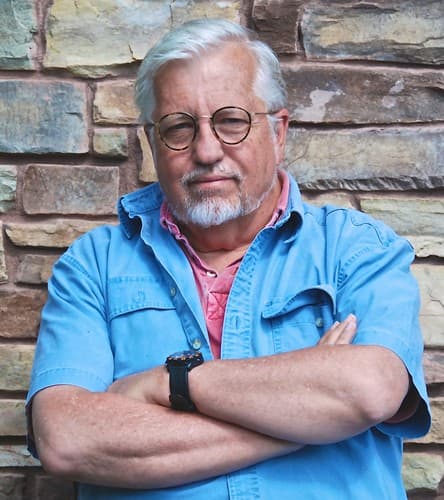
Dan Simmons is an American science fiction and horror writer. He is the author of the Hyperion Cantos and the Ilium/Olympos cycles, among other works which span the science fiction, horror, and fantasy genres, sometimes within a single novel. Simmons's genre-intermingling Song of Kali (1985) won the World Fantasy Award. He also writes mysteries and thrillers, some of which feature the continuing character Joe Kurtz.
Similar books
- Blood Meridian
Cormac McCarthy
4.2 (227k) average on GoodreadsFictionShares a brutal, unflinching portrayal of human cruelty and survival in a hostile landscape.
- Lord of the Flies
William Golding
3.7 (2.3M) average on GoodreadsYoung AdultGolding's novel explores the breakdown of human society and the descent into savagery under isolated, stressful conditions, focusing on internal human flaws. The Terror similarly delves into psychological decay and social disintegration, but amplifies these themes with an external, supernatural, and physically monstrous threat, making the horror both internal and external.
- Angels & Demons
Dan Brown
3.9 (2.7M) average on GoodreadsThrillerA Harvard symbologist races through Rome's ancient sites, deciphering cryptic clues to unmask the Illuminati and stop a vengeful plot to destroy the Vatican with a stolen antimatter weapon.
- Gone Girl
Gillian Flynn
4.1 (2.3M) average on GoodreadsThrillerA wife's sudden disappearance on her fifth anniversary reveals a web of lies and psychological warfare, exposing the secrets within a seemingly perfect marriage.
- The Girl on the Train
Paula Hawkins
3.9 (2.1M) average on GoodreadsThrillerA woman’s fascination with a seemingly perfect couple she watches from her daily train commute leads her into a dark investigation when she witnesses something that shatters their idyllic image.
- The Da Vinci Code
Dan Brown
3.9 (1.9M) average on GoodreadsThrillerA symbologist and a cryptologist race through European landmarks, deciphering ancient codes and uncovering a conspiracy that could rewrite the foundations of Christianity.






Enjoyed the summary?
A summary gives you the shape of the book. The book itself has the detail, the examples and the voice.
Find The Terror on AmazonAs an Amazon Associate, BookBrief earns from qualifying purchases. How we're funded