
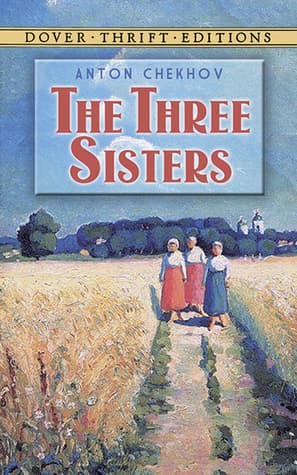
Synopsis
Covers the whole plot, including the ending.
- Difficulty
- Medium
- Pacing
- Slow
- Mood
- Melancholy, Reflective, Poignant, Subtle
- Read it if
- You enjoy classic plays, character-driven dramas about unfulfilled dreams, and subtle explorations of human emotion and societal change.
- Skip it if
- You prefer fast-paced plots, clear-cut resolutions, or stories with strong, optimistic outcomes.
The Three Sisters Plot Summary
Covers the whole plot, including the ending.
Irina's Name Day and the Hope for Moscow
The play opens on Irina's name day, the youngest Prozorov sister, in their provincial Russian home. It is one year after their father, General Prozorov, died. Olga, the eldest, teaches school. Masha, the middle sister, is unhappily married to Fyodor Kulygin, a Latin teacher. Irina dreams of meaningful work and love. The house is full of military officers stationed nearby, including Lieutenant-Colonel Vershinin, a new battery commander, and Baron Tuzenbach. The sisters often say they want to return to Moscow, believing life there would be fulfilling and intellectual, unlike their current dull existence. They hold onto this dream as their main hope.
Vershinin's Philosophy and Masha's Growing Affection
Lieutenant-Colonel Vershinin, a married man with two daughters, quickly becomes important in the Prozorov house. He is a philosophical idealist, often speaking about future human happiness, despite his own sad life. His presence brings intellectual stimulation to the sisters, especially Masha, who likes his thoughtful nature and shared interest in art and literature. Their conversations are often about life's meaning, work, and time's passage. Masha, in a loveless marriage, develops a deep, unspoken affection for Vershinin, finding in him a spirit she lacks in her husband, Kulygin.
Natasha's Growing Influence and the Declining Estate
Andrey, the sisters' brother, starts as a promising scholar, playing the violin and dreaming of a professorship in Moscow. However, he falls in love with and proposes to Natalya Ivanovna, called Natasha, a woman the sisters find common. Natasha quickly begins to control the household, starting with small changes like moving furniture and eventually taking over family finances. Her practical, materialistic nature clashes with the sisters' refined ways, and they dislike her increasing control. Andrey, blinded by affection and later by his own weakness, allows Natasha to slowly take over their family home and way of life, including taking Irina's room for her children.
Irina's Disillusionment with Work and Love
Irina, initially full of youth and a desire for meaningful work, tries various jobs – first at the telegraph office, then at the town council. However, she finds the work boring and unfulfilling; it does not bring the purpose she wanted. Her dream of Moscow, where she believes true love and happiness wait, remains out of reach. Two officers court her: Baron Tuzenbach, a kind but awkward man who truly loves her, and Captain Solyony, a strange character who expresses his love aggressively. Irina struggles to return Tuzenbach's affection, still hoping for a grander love.
The Fire and Further Decline
A fire sweeps through the town, causing chaos. The Prozorov house becomes a temporary refuge for many townspeople and soldiers. This event temporarily unites the community, but it also shows the sisters' vulnerability and their lives' increasing disarray. Natasha, showing her true self, cares more about her own comfort and her children's safety than about others' suffering. The fire also brings Vershinin and Masha closer, intensifying their unspoken bond. The sisters' financial situation worsens, and their Moscow dreams seem more distant.
Andrey's Debt and Natasha's Complete Control
Andrey, increasingly unhappy with his life and marriage, gives in to weakness and begins to gamble. He mortgages the house, losing the family's inheritance without his sisters' knowledge. This betrayal gives Natasha complete financial and practical control over the Prozorov estate. She systematically changes the house, driving out the sisters' old servant, Anfisa, and plans to cut down the garden for a building project. The sisters cannot stop her, realizing their home is no longer truly theirs, and their dream of returning to Moscow becomes impossible financially.
Masha and Vershinin's Farewell
The military brigade receives orders to move, meaning Vershinin and the other officers will soon leave. This news brings sadness to Masha, who has found her only true connection and happiness in her secret affection for Vershinin. Their farewell is emotional; Masha confesses her love, and Vershinin acknowledges their bond, though he must return to his unhappy marriage. Their parting shows the end of Masha's brief joy and intellectual stimulation, leaving her to return to her empty marriage with Kulygin, who knows nothing of her true feelings.
Irina's Desperate Engagement and Tuzenbach's Challenge
Wanting a change and an escape from her provincial life, Irina finally agrees to marry Baron Tuzenbach, even though she does not truly love him. She plans to move with him to a brick factory, embracing a life of hard, meaningful work, hoping it will bring her peace. However, Captain Solyony, consumed by his obsessive love for Irina and jealousy of Tuzenbach, challenges the Baron to a duel. Despite efforts to stop it, the duel happens early in the morning before the brigade's departure. Tuzenbach is killed, shattering Irina's last hope for escape and a new life. Solyony's act leaves Irina devastated and without prospects.
The Departure and The Sisters' Solitude
The military brigade finally leaves, marching away to a distant band. The Prozorov sisters gather in their garden, watching them go. Vershinin, Tuzenbach (now dead), and the other officers who brought a fleeting sense of life and hope to their home are gone. Masha is heartbroken, Olga is tired by her work and the changes in their home, and Irina is shattered by Tuzenbach's death and the loss of her future. They are left alone, their Moscow dreams shattered, with only the reality of their provincial lives and Natasha's control over their former home. They hold to the idea that their suffering might one day help future generations.
The Three Sisters Characters
Olga Prozorova
Protagonist
Eldest sister, burdened by responsibility and a tiring teaching career.
Olga is the eldest of the Prozorov sisters, a schoolteacher who has sacrificed her personal happiness for the sake of her family. She is practical, responsible, and often exhausted by her work and the demands of looking after her siblings and the household. She longs for Moscow but realistically understands the difficulties of achieving this dream. Despite her weariness, she possesses a deep compassion and tries to maintain a sense of order and dignity amidst the chaos. Her constant headaches symbolize her internal suffering and the weight of her responsibilities.
Relationships: Masha Prozorova (sisterly bond, supportive); Irina Prozorova (sisterly bond, protective); Andrey Prozorov (sisterly concern, disappointment); Natalya Ivanovna (Natasha) (dislike, resentment)
Masha Prozorova
Protagonist
Middle sister, unhappily married, seeking intellectual and romantic fulfillment.
Masha is the middle Prozorov sister, a melancholic and artistic woman who is deeply unhappy in her marriage to Fyodor Kulygin. She often wears black, reflecting her somber outlook. She finds intellectual and emotional solace in her secret love for Lieutenant-Colonel Vershinin, a man who understands her yearning for a more meaningful existence. Masha is the most outwardly expressive of the sisters in her discontent, often sighing or humming, and her love for Vershinin becomes her only source of joy and vitality, making his departure particularly devastating.
Relationships: Olga Prozorova (sisterly bond, confidante); Irina Prozorova (sisterly bond, sometimes critical); Fyodor Kulygin (loveless marriage, indifference); Mikhail Vershinin (secret romantic love, intellectual connection)
Irina Prozorova
Protagonist
Youngest sister, initially full of optimism, yearning for work and true love.
Irina is the youngest Prozorov sister, initially filled with youthful optimism, energy, and a strong desire for work and a fulfilling life. She dreams of returning to Moscow, believing it holds the key to her happiness. She tries various jobs but finds them mundane and uninspiring. She is courted by Baron Tuzenbach and Captain Solyony, struggling to find love. Her journey is one of gradual disillusionment as her hopes are repeatedly crushed, culminating in the tragic loss of her fiancé and her dreams for a new life, leaving her utterly devastated.
Relationships: Olga Prozorova (sisterly bond, looks up to); Masha Prozorova (sisterly bond, sometimes clashes); Nikolai Tuzenbach (initially indifferent, later accepts as fiancé); Vasily Solyony (repulsed by, object of his obsessive love)
Andrey Prozorov
Supporting
The sisters' brother, a once-promising scholar who succumbs to weakness and a stifling marriage.
Andrey is the only brother of the Prozorov sisters. Initially a talented violinist and aspiring university professor, he is seen as the family's hope. However, he gradually devolves into a weak, indecisive man, dominated by his wife, Natasha. He gambles away the family's inheritance, mortgages the house, and abandons his intellectual pursuits, becoming a mere clerk. His inability to stand up to Natasha or fulfill his potential is a source of great disappointment and despair for his sisters, symbolizing the decay of their family's aspirations.
Relationships: Olga Prozorova (sisterly concern, later disappointment); Masha Prozorova (sisterly concern, later disappointment); Irina Prozorova (sisterly concern, later disappointment); Natalya Ivanovna (Natasha) (husband, dominated by her)
Natalya Ivanovna (Natasha)
Antagonist
Andrey's wife, a vulgar and materialistic woman who takes control of the Prozorov household.
Natasha is Andrey's fiancée and later wife. She is initially presented as shy and awkward but quickly reveals herself to be manipulative, vulgar, and materialistic. She systematically takes over the Prozorov household, making changes to the house, dismissing old servants, and eventually gaining complete financial control. She is self-serving and lacks empathy, prioritizing her own comfort and her children over everyone else. Natasha embodies the encroaching provincialism and philistinism that the sisters despise, effectively destroying their home and their remaining connection to their past.
Relationships: Andrey Prozorov (wife, dominates him); Olga Prozorova (antagonistic, dismissive); Masha Prozorova (antagonistic, dismissive); Irina Prozorova (antagonistic, dismissive)
Lieutenant-Colonel Mikhail Vershinin
Supporting
New battery commander, a philosophical idealist who forms a bond with Masha.
Vershinin is the new battery commander who arrives in the town. He is a philosophical, melancholic man with an unhappy marriage and two daughters. He often speaks of the future happiness of humanity and the meaning of life, bringing an intellectual spark to the Prozorov household. He forms a deep, unspoken bond with Masha, understanding her intellectual and emotional needs in a way her husband cannot. His presence represents a fleeting possibility of intellectual and romantic fulfillment for Masha, and his departure marks the end of her brief period of happiness.
Relationships: Masha Prozorova (secret romantic love, intellectual kindred spirit); Olga Prozorova (friendly acquaintance); Irina Prozorova (friendly acquaintance)
Baron Nikolai Tuzenbach
Supporting
Officer in love with Irina, a kind and idealistic man who dreams of work.
Baron Tuzenbach is an officer stationed in the town, a kind, good-hearted, and somewhat awkward man who is deeply in love with Irina. Despite his aristocratic background, he yearns for meaningful work and a simpler life, often speaking about the dignity of labor. He genuinely wishes for Irina's happiness and offers her a path out of her provincial life, even if she doesn't fully reciprocate his feelings. His duel with Solyony and subsequent death represent the tragic loss of hope and the senseless cruelty that can destroy even the purest intentions.
Relationships: Irina Prozorova (deeply in love with, fiancé); Vasily Solyony (rival, duels with); Olga Prozorova (friendly acquaintance); Masha Prozorova (friendly acquaintance)
Captain Vasily Solyony
Supporting
Eccentric officer, obsessively in love with Irina, prone to strange behavior.
Solyony is a strange, unsettling army captain who is obsessively in love with Irina. He is socially awkward, often spraying perfume on himself, quoting Lermontov, and expressing his affection in aggressive and possessive ways. His jealousy of Tuzenbach boils over into violence, culminating in the fatal duel. Solyony represents the darker, more irrational forces at play in the provincial town, a stark contrast to the sisters' refined sensibilities, and his actions ultimately destroy Irina's last chance at happiness.
Relationships: Irina Prozorova (obsessively in love with, unwelcome suitor); Nikolai Tuzenbach (rival, kills in a duel)
Fyodor Kulygin
Supporting
Masha's husband, a jovial but oblivious Latin teacher.
Kulygin is Masha's husband, a Latin teacher at the local gymnasium. He is a good-natured, jovial man, but utterly oblivious to Masha's unhappiness and her affair with Vershinin. He constantly quotes Latin phrases and praises the gymnasium, embodying a cheerful but ultimately unseeing provincial mediocrity. His unwavering optimism and lack of understanding make him a frustrating figure for Masha, highlighting the chasm between their natures and his inability to provide her with the intellectual or emotional companionship she craves.
Relationships: Masha Prozorova (husband, unloved by her)
Anfisa
Mentioned
The Prozorovs' elderly, beloved nurse.
Anfisa is the Prozorovs' elderly nurse and a former serf, who has been with the family for many years. She represents the old way of life and the sisters' cherished past. Natasha, in her ruthless takeover of the house, attempts to dismiss Anfisa and send her away, but Olga intervenes, finding her a place at the school. Anfisa's displacement symbolizes Natasha's complete disregard for the family's traditions and the sisters' emotional attachments, and the erosion of their home.
Relationships: Olga Prozorova (cared for by, protected by); Natalya Ivanovna (Natasha) (antagonized by, dismissed by)
The Three Sisters Themes
Unfulfilled Dreams and the Search for Meaning
The main theme is the sisters' constant longing for a more meaningful, cultured life in Moscow, which always remains out of reach. Each sister struggles with the difference between their hopes and the mundane reality of their provincial life. Irina's initial enthusiasm for work turns into despair. Masha's brief love with Vershinin ends. Olga's sense of duty leads to exhaustion. Their repeated wish, 'To Moscow!' symbolizes this unattainable ideal and their inability to find purpose or happiness where they are, leaving them with a sense of emptiness.
“Oh, to Moscow! To Moscow!”
The Decay of the Old Aristocracy and the Rise of the New Bourgeoisie
The Prozorov family, with their cultured background and intellectual hopes, represents the fading Russian aristocracy. Their inability to adapt, their financial mismanagement (Andrey's gambling), and their passive resistance to change lead to their decline. This decline contrasts sharply with the rise of the pragmatic, materialistic Natalya Ivanovna (Natasha), who systematically takes over their home and finances. Natasha shows the new, less refined but more assertive class that is replacing the old order, eroding the Prozorovs' way of life and their connection to their past.
“Oh, how many changes there have been! It's as if everything is being swept away, and soon nothing will be left.”
Love, Marriage, and Disillusionment
The play explores various forms of love and marriage, most of which lead to unhappiness and disappointment. Masha is stuck in a loveless marriage with the unaware Kulygin, finding a brief, unconsummated love with Vershinin that ends in heartbreak. Irina, wanting to escape, agrees to marry the kind Tuzenbach without truly loving him, only for him to be killed. Andrey's marriage to Natasha, initially passionate, quickly becomes a relationship of control, leaving him miserable. The play suggests that true, fulfilling love is hard to find and often impossible, especially in the restrictive provincial setting.
“To love, to be in love... how wonderful that is! And I loved, too. I loved for a long time, painfully, but then it was all over, and now my heart is empty.”
The Passage of Time and the Inevitability of Change
Time is a force in the play, constantly moving forward and bringing changes the characters cannot stop. The anniversary of their father's death marks the start of their decline. Seasons pass, children grow, and the military brigade eventually leaves, taking the last bits of excitement and hope. The characters often think about the past and guess about the future, but they remain stuck in a present they dislike. The play shows that life moves on, often leaving individuals with unfulfilled dreams and a sense of loss, despite their best intentions.
“Time passes, and everything passes with it. We shall all be forgotten.”
Work and Purpose
The characters often discuss work and its role in giving purpose and meaning. Irina, especially, believes that work will save her from her empty life, trying various jobs but finding them unfulfilling. Tuzenbach, despite his aristocratic background, also values labor. Olga finds comfort and an escape from personal problems in her demanding teaching job, even as it exhausts her. However, the play often shows work as boring, unrewarding, or just a way to survive. It fails to give the spiritual or intellectual fulfillment the characters want, showing the difficulty of finding true purpose.
“One must work, one must work. That's why we live.”
Plot Devices & Literary Techniques
Symbolism of Moscow
Represents the sisters' unattainable dreams and a lost golden age.
Moscow is not just a geographical location but a powerful symbol throughout the play. For the Prozorov sisters, it represents their past happiness, intellectual stimulation, culture, and the fulfillment of their dreams. Their constant refrain 'To Moscow!' encapsulates their yearning for a better life and their inability to escape their provincial stagnation. As the play progresses and their hopes diminish, Moscow becomes an increasingly unattainable, almost mythical ideal, highlighting the gap between their aspirations and their harsh reality. It symbolizes the lost potential and the unfulfilled desires that define their lives.
The Distant Music / Band
A recurring auditory motif signaling hope, longing, and ultimately, departure.
The sound of a military band playing, often heard faintly in the distance, is a recurring auditory motif. Initially, it might evoke a sense of life, celebration, or the presence of the officers who bring a spark of excitement to the sisters' lives. However, by the play's end, the band's music accompanies the military's departure, signifying the final loss of hope, the end of Masha's love, and the definitive severing of the sisters' connection to a more vibrant world. It underscores the theme of the passage of time and the inevitable, often melancholic, end of things.
The Fire
A dramatic event symbolizing destruction, chaos, and revealing character.
The town fire serves as a significant plot device, bringing a moment of dramatic chaos and upheaval to the otherwise slow-paced narrative. It physically destroys parts of the town and forces characters into closer proximity, intensifying relationships (like Masha and Vershinin's bond). More importantly, it acts as a catalyst for revealing character: Natasha's cold selfishness is highlighted by her concern for her own possessions, while the sisters' vulnerability and the fragility of their home are exposed. It symbolizes the destructive forces at play in their lives and the inevitable, often random, nature of misfortune.
The Mortgage of the House
Symbolizes the loss of the family's heritage and Natasha's complete takeover.
Andrey's secret act of mortgaging the family house to pay off his gambling debts is a pivotal plot point. It represents the final and irreversible financial ruin of the Prozorov family, stripping them of their last tangible link to their aristocratic past and their independence. This action hands complete control of their home to Natasha, who then systematically transforms it to her liking, dismissing Anfisa and planning to cut down the garden. The mortgaging of the house is a concrete manifestation of the decay of the old order and the Prozorovs' powerlessness.
The Three Sisters Quotes
“To Moscow! To Moscow! To Moscow!”
“It seems as if in a little while, we shall know why we live, why we suffer... If only we knew! If only we knew!”
“We shall work, and we shall be patient.”
“Happiness does not exist for me, it cannot exist.”
“Why do I live? Why do I want to live? Why don't I fly like a bird?”
“Life is hard. We feel it, but we don't know what to do about it.”
“It's all the same to me. It's all the same.”
“The time will come when the earth will be covered with flowers, and the world will be filled with joy.”
“One must be a useful member of society, that's all.”
“We must live... we must work.”
“Oh, how delightful it would be to start a new life!”
“The past is gone for ever, and it's no good going back to it.”
“I feel as if I were in a foreign country, and had lost my way.”
“It's a mistake to think that you can make people happy by force.”
Quiz
10 questions on the plot and the characters. Each answer comes with a short explanation.
Question 1
What is the primary desire that unites Olga, Masha, and Irina throughout the play?
- To find suitable husbands in the provincial town
- To return to Moscow, the city of their childhood
- To establish a successful business venture in the countryside
- To travel abroad and experience new cultures
Show answer
B. To return to Moscow, the city of their childhood The sisters constantly express their longing to return to Moscow, believing it represents a life more suited to their cultivated tastes and intellectual aspirations, a stark contrast to their provincial existence.
Question 2
Which of the sisters eventually becomes a headmistress of a girls' school, a role she finds exhausting?
- Irina
- Masha
- Olga
- Natalya
Show answer
C. Olga Olga, the eldest sister, steadily rises in her teaching career, eventually becoming a headmistress, but she finds the work increasingly draining and soul-crushing, despite its practical necessity.
Question 3
What significant event occurs in the play's finale that deeply affects Irina?
- She finally moves to Moscow with her sisters.
- Her fiancé, Baron Tuzenbach, is killed in a duel.
- She decides to dedicate her life to charity work.
- She inherits a large sum of money, securing her future.
Show answer
B. Her fiancé, Baron Tuzenbach, is killed in a duel. In a tragic turn of events, Irina's fiancé, Baron Tuzenbach, is killed in a duel by Solyony just before they are set to leave for a new life, shattering her last hope for happiness and escape.
Question 4
Masha is unhappily married to Fyodor Ilyich Kulygin. With which character does she have a secret, passionate affair?
- Andrey Prozorov
- Lieutenant Colonel Vershinin
- Doctor Chebutykin
- Baron Tuzenbach
Show answer
B. Lieutenant Colonel Vershinin Masha finds solace and passion in her affair with Vershinin, a married lieutenant colonel who is also unhappy in his own marriage. Their relationship is a key example of the characters' attempts to find meaning and escape from their unfulfilling lives.
Question 5
Andrey Prozorov, the sisters' brother, initially shows great promise. What becomes of his aspirations and character over the course of the play?
- He achieves his dream of becoming a famous professor in Moscow.
- He maintains his intellectual pursuits and becomes a respected local figure.
- He marries Natalya, loses his academic drive, and falls into debt and disillusionment.
- He leaves the provincial town to join the military and finds purpose there.
Show answer
C. He marries Natalya, loses his academic drive, and falls into debt and disillusionment. Andrey, despite his initial promise and academic ambitions, gradually succumbs to the mediocrity of his surroundings, particularly after his marriage to Natalya. He gambles away his inheritance, becomes a member of the local council (which he despises), and loses his intellectual vitality.
Question 6
What recurring sound motif is often heard throughout the play, symbolizing the passage of time and the characters' trapped existence?
- The distant sound of a train whistle
- The chiming of a clock
- The singing of a local folk song
- The sound of church bells
Show answer
B. The chiming of a clock The chiming of the clock, particularly the one in the Prozorov house, is a frequent and poignant sound motif. It underscores the relentless passage of time, the characters' aging, and their inability to escape their circumstances, despite their hopes and dreams.
Question 7
The theme of unfulfilled dreams and the gap between aspiration and reality is central to the play. Which character most embodies a resigned acceptance of her fate, finding a degree of peace despite her weariness?
- Irina
- Masha
- Olga
- Natalya
Show answer
C. Olga While all sisters struggle with unfulfilled dreams, Olga, the eldest, often expresses profound weariness and a sense of having aged prematurely. By the end, she seems to have accepted her lot with a quiet dignity, finding solace in work and a more pragmatic outlook than her younger sisters.
Question 8
What is the significance of the fire that breaks out in the town during Act III?
- It forces the sisters to finally move to Moscow.
- It brings the military officers closer to the sisters as they assist in relief efforts.
- It destroys the Prozorovs' house, leaving them homeless.
- It is a metaphor for the burning passion between Masha and Kulygin.
Show answer
B. It brings the military officers closer to the sisters as they assist in relief efforts. The fire serves as a catalyst for revealing character and deepening relationships. It brings the community, especially the military officers, into the Prozorov house for shelter and aid, intensifying interactions and highlighting the transient nature of their lives and connections.
Question 9
Which character, despite being a doctor, is largely ineffective and often drunk, frequently lamenting his own loss of memory and purpose?
- Baron Tuzenbach
- Lieutenant Colonel Vershinin
- Doctor Chebutykin
- Solyony
Show answer
C. Doctor Chebutykin Doctor Chebutykin, an old family friend, is a poignant figure of decline. He frequently drinks, struggles with his medical practice, and often expresses a sense of meaninglessness, stating that he 'forgot everything' and that 'nothing matters'.
Question 10
The play concludes with the sisters standing together, lamenting the departure of the military battery. What is the overarching mood and message conveyed by this finale?
- A hopeful anticipation of a brighter future in Moscow.
- A sense of quiet resignation, enduring hope, and the inevitability of life's continuity despite personal sorrow.
- Bitter despair and a complete loss of all hope and purpose.
- A newfound determination to actively change their circumstances.
Show answer
B. A sense of quiet resignation, enduring hope, and the inevitability of life's continuity despite personal sorrow. The ending is not one of despair, but rather a complex mix of sorrow, resignation, and a persistent, almost philosophical, hope for the future of humanity, if not their own immediate happiness. Olga's final lines, 'Oh, if only we knew! If only we knew!', encapsulate this blend of yearning, uncertainty, and a quiet acceptance of life's mysterious flow.
The Three Sisters FAQ
What is 'The Three Sisters' about?
Anton Chekhov's 'The Three Sisters' is a play about the Prozorov sisters—Olga, Masha, and Irina—who live in a provincial Russian town and yearn to return to Moscow, their childhood home. Their dreams of a more fulfilling life clash with the stagnation of their present circumstances and the gradual erosion of their hopes over four acts, culminating in the departure of the military battery they befriended.
Why should I read 'The Three Sisters'?
You should read 'The Three Sisters' to experience Chekhov's masterful depiction of human longing, disillusionment, and the passage of time. The play offers profound insights into the characters' inner lives, the futility of unfulfilled dreams, and the bittersweet beauty of everyday existence, making it a landmark of modern drama.
What is the background/setting of 'The Three Sisters'?
The play is set in a provincial Russian town at the turn of the 20th century, specifically in the Prozorov family's house and garden. This setting, far from the sisters' idealized Moscow, symbolizes their isolation and the suffocating mediocrity they feel trapped within, contrasting sharply with their cultured aspirations.
What are the most memorable quotes?
Memorable quotes include Irina's "To Moscow! To Moscow! To Moscow!" which encapsulates their fervent desire, and Masha's melancholic "What's the use?" reflecting her despair. Vershinin's philosophical musings about the future and the meaning of life also provide profound and enduring lines.
What writing style does the author use?
Chekhov employs a naturalistic and realistic writing style, focusing on subtext, everyday dialogue, and the inner lives of his characters rather than overt dramatic action. His plays are known for their 'mood' and atmosphere, where significant events often happen offstage or are understated, emphasizing the psychological depth and emotional nuances of the characters.
What minor details add significant meaning?
Minor details like the constant sound of the military band, which initially represents hope and excitement but later becomes a mournful accompaniment to their losses, add significant meaning. Also, the recurring motif of the old piano that is rarely played symbolizes the family's fading artistic aspirations and their inability to create a fulfilling life.
What are some subtle foreshadowing moments?
Subtle foreshadowing includes the repeated mentions of the impending transfer of the military battery, which gradually builds the sense of their inevitable departure and the sisters' subsequent isolation. Additionally, Chebutykin's increasing drunkenness and philosophical nihilism subtly foreshadow the tragic duel and his growing detachment.
What unexpected character connections exist?
An unexpected connection is the tender, yet ultimately unfulfilled, bond between Masha and Lieutenant-Colonel Vershinin, a married man. Their intellectual and emotional connection offers Masha a brief escape from her unhappy marriage to Kulygin, highlighting the yearning for profound understanding that many characters share.
What are unspoken character motivations?
Olga's unspoken motivation is a deep sense of duty and sacrifice, leading her to accept the headmistress position she dislikes, prioritizing stability for her family over her own happiness. Irina's initial motivation to work and find meaning is driven by a romanticized ideal of labor, rather than a genuine understanding of its demands.
What psychological complexities do characters exhibit?
Masha exhibits complex psychological repression, masking her profound unhappiness and intellectual superiority with cynicism and a black dress. Vershinin, despite his philosophical optimism about the future, displays a deep personal melancholy and inability to manage his own domestic life, revealing a disconnect between his ideals and reality.
What are the major emotional turning points?
A major emotional turning point is the fire in the town, which forces the sisters to confront their vulnerability and the chaotic nature of life, shattering their illusion of control. Another is the duel between Solyony and Baron Tuzenbach, which results in Tuzenbach's death and irrevocably crushes Irina's last hope for escape and happiness.
How do relationship dynamics evolve?
Relationship dynamics evolve from initial hope and camaraderie, especially between the sisters and the officers, to a state of resignation and separation. The bond between Masha and Vershinin deepens into a shared, unspoken love that ends in painful farewell, while Irina's relationships with Tuzenbach and Solyony shift from friendly interest to a tragic resolution.
Which parts remain ambiguous or open-ended?
The play leaves the future of the sisters ambiguous; while they resolve to live and work, their path forward is unclear, and whether they will ever find true happiness or escape their provincial fate is left to the audience's interpretation. The exact nature of Natasha's ultimate control over the house and the family's assets also remains somewhat open-ended.
What are controversial scenes or decisions?
A controversial decision is Irina's engagement to Baron Tuzenbach, which she accepts out of a sense of duty and exhaustion rather than love, just before his fatal duel. This highlights the characters' compromises and the tragic irony of their circumstances, raising questions about whether her sacrifice would have led to any true happiness.
'The Three Sisters' ending explained: how it ends & what it means
The play ends with the military battery departing, symbolizing the final loss of hope and external stimulation for the sisters. Tuzenbach is killed in a duel by Solyony, crushing Irina's last chance for escape. The sisters are left alone, resolving to 'live' and 'work' despite their profound grief and unfulfilled dreams, signifying a bittersweet acceptance of their fate and the enduring human spirit amidst sorrow.
About the author

Anton Pavlovich Chekhov was a Russian playwright and short-story writer who is considered to be one of the greatest writers of all time. His career as a playwright produced four classics, and his best short stories are held in high esteem by writers and critics. Along with Henrik Ibsen and August Strindberg, Chekhov is often referred to as one of the three seminal figures in the birth of early modernism in the theatre. Chekhov was a physician by profession. "Medicine is my lawful wife", he once said, "and literature is my mistress."
Similar books
- A Doll's House
Henrik Ibsen
3.7 (106k) average on GoodreadsFictionA classic play examining societal constraints and personal disillusionment.
- The Cherry Orchard
Anton Chekhov
3.7 (29k) average on GoodreadsFictionA final Chekhov play about a family losing their estate and clinging to past glories.
- Miss Julie
August Strindberg
3.5 (11k) average on GoodreadsFictionStrindberg's Miss Julie is an intense, naturalistic tragedy confined to a single night, driven by explicit class, gender, and sexual conflict, culminating in a violent resolution. Chekhov's The Three Sisters is a more diffuse, psychological tragicomedy unfolding over several years, where conflict is internal and atmospheric. Strindberg's dialogue is confrontational and direct, while Chekhov relies on subtext and seemingly mundane conversations to reveal deeper truths. Strindberg explores primal urges and societal determinism, whereas Chekhov delves into the internal decay of dreams and the slow march of time.
- Nineteen Eighty-Four
George Orwell
4.2 (5.5M) average on GoodreadsFictionWinston Smith dreams of truth and rebellion in a world where Big Brother watches all, but he confronts the terrifying power of a regime that controls not just actions, but thoughts.
- The Frozen River
Ariel Lawhon
4.4 (600k) average on GoodreadsFictionIn 1789 Maine, a heroic midwife's diary helps her expose a murder and get justice in a town that wants to silence her.
- A Man Called Ove
Fredrik Backman
4.4 (569k) average on GoodreadsFictionA stubborn widower, who lives by strict rules, finds his quiet world changed by a lively new family next door, making him face his past and find happiness in human connection.





Enjoyed the summary?
A summary gives you the shape of the book. The book itself has the detail, the examples and the voice.
Find The Three Sisters on AmazonAs an Amazon Associate, BookBrief earns from qualifying purchases. How we're funded