

Synopsis
Covers the whole plot, including the ending.
- Difficulty
- Medium
- Pacing
- Moderate
- Mood
- Dark, Atmospheric, Suspenseful, Apocalyptic, Gritty
- Read it if
- You want a gritty, atmospheric thriller set against the real-world backdrop of Hurricane Katrina, with deep explorations of good and evil.
- Skip it if
- You prefer lighthearted mysteries or are sensitive to graphic violence and bleak depictions of human nature.
The Tin Roof Blowdown Plot Summary
Covers the whole plot, including the ending.
The Drowning City and the First Shots
As Hurricane Katrina hits New Orleans, Detective Dave Robicheaux stays behind to keep order in the flooded city. He and his partner, Helen Soileau, patrol the chaotic streets, seeing widespread looting and despair. Dave sees two men trying to break into a jewelry store. When one of the looters, a young man named Tommy, pulls a gun, Dave shoots and kills both him and his older accomplice, Murphy. This act, done in the lawless conditions after the storm, immediately troubles Dave, even though he knows it was self-defense. The incident sets a dark mood for the story, showing the moral dilemmas of survival in a city without rules.
Clete Purcell's Arrival and the Diamond Heist
Dave's old friend, former detective Clete Purcell, arrives in New Orleans. He says he is there to help with relief efforts, but he quickly gets involved in a more personal search. Clete is looking for a woman named Tee Jolie, a prostitute with whom he has a complicated past. He believes she is connected to a group involved in a diamond heist that happened during or just before the hurricane. These diamonds become a key item, drawing various dangerous people into conflict. Clete's presence adds more moral confusion and violence to the already desperate situation, as his methods are often more brutal and less lawful than Dave's.
The Unholy Alliance: Mob, Priest, and Psychopath
As Dave and Clete investigate the diamond heist and related violence, they uncover a terrifying group of characters. They learn the diamonds are linked to Tony Nemo, a powerful New Orleans mob boss who sees the storm as a chance to expand his power. Also involved is Father Jimmie Dolan, a former priest now struggling with drug addiction and deep guilt. Dolan has important information about the diamonds and their original owner. The most frightening figure is Jack Collins, a cruel killer working for Nemo, who enjoys causing pain and chaos. Collins's brutal actions increase the violence and put Dave and Clete in extreme danger, as he leaves a trail of dead bodies.
Tee Jolie's Predicament
Tee Jolie, the woman Clete is looking for, is deeply involved in the criminal world connected to the diamonds. She had worked as a prostitute and knew things about the heist and the people involved. Her dangerous situation makes her a target for Tony Nemo and Jack Collins, who want to silence her. She is also a source of desperate hope for Clete, who genuinely cares for her despite her circumstances. Her survival becomes a main drive for Clete, and his efforts to find and protect her lead him into increasingly dangerous encounters with Nemo's enforcers, showing how vulnerable people are after the storm.
Dave's Internal Struggle and the Flood's Aftermath
Throughout the chaos, Dave Robicheaux fights not only outside threats but also deep inner struggles. Shooting Tommy and Murphy weighs heavily on him, made worse by the widespread suffering and lawlessness he sees. He questions justice in a world where the lines between right and wrong are blurred by desperation and survival. The ruined landscape of post-Katrina New Orleans, with its flooded streets, empty homes, and pervasive despair, mirrors his own inner turmoil. He often thinks about good and evil, questioning his own capacity for violence and his faith in such a desolate environment.
Confrontation at the Superdome
Dave Robicheaux's investigation leads him to the Superdome, which has become a terrible shelter for thousands of displaced people. Conditions are squalid, with rampant crime, poor sanitation, and a strong sense of desperation. Dave sees firsthand the breakdown of social order and the vulnerability of the victims. He finds evidence of rapes, assaults, and other crimes happening inside the stadium, making it a small version of the city's larger suffering. His time in the Superdome confirms his understanding of the disaster's profound human cost and the deep moral rot that has grown in its wake, strengthening his resolve to seek justice.
The Hunt for Jack Collins
The hunt for Jack Collins becomes central to the plot. Collins, a truly depraved person, enjoys Katrina's chaos, using it to cover his brutal acts. He kills without distinction, often torturing his victims, and poses a direct threat to Dave and Clete, as well as anyone in his way. His cruel nature is clearly shown, contrasting sharply with Dave's conflicted morality. The search for Collins takes Dave and Clete through the most damaged parts of New Orleans, leading to several tense and violent encounters as they try to predict his next move and prevent more atrocities.
Father Dolan's Redemption and Revelation
Father Jimmie Dolan, initially a sad figure consumed by addiction and guilt, plays an important part in solving the diamond mystery. Haunted by his past and seeking redemption, Dolan gives Dave crucial information about the diamonds' origin and their true owner, a wealthy family who had entrusted them to the church for safekeeping. His revelations expose the extent of Tony Nemo's ambition and his criminal operation. Dolan's journey from despair to a moment of courageous truth-telling offers a glimmer of hope amid the pervasive darkness, even as it puts his own life in grave danger.
Confronting Tony Nemo
As the pieces of the puzzle come together, Dave and Clete realize that Tony Nemo is behind much of the violence and is the main target. Nemo, taking advantage of the breakdown of law and order, aims to gain power and wealth, using the diamonds as leverage. The story builds to a confrontation with Nemo and his remaining henchmen. Dave, driven by a strong sense of justice and a need to restore some order, prepares for a final, violent showdown. Clete, with his own style of justice, is a strong ally, willing to cross lines Dave might hesitate at, making their combined force a powerful threat to Nemo's control.
The Final Confrontation and its Aftermath
The story ends with a series of violent clashes. Dave Robicheaux and Clete Purcell face Tony Nemo and Jack Collins. The battle is brutal and chaotic, reflecting the city's lawless environment. Collins meets a violent end, a fitting conclusion for his cruel character. Nemo is also confronted, and while the immediate threat is removed, the underlying corruption and despair remain. Afterward, Dave is left to deal with the emotional and psychological scars of the storm and the violence he saw and took part in. The ending is not neat; it acknowledges the deep wounds left on New Orleans and its people, suggesting that true healing will be a long and difficult process, leaving many questions about justice and retribution unanswered.
Principal Figures
Dave Robicheaux
Protagonist
A morally conflicted New Orleans detective battling internal and external demons during Hurricane Katrina.
Dave Robicheaux is a detective with the New Orleans Police Department, a devout Catholic, and a recovering alcoholic. He is deeply haunted by his past and constantly grapples with his conscience, particularly when forced to use violence. He possesses a strong sense of justice and empathy, often feeling the suffering of others acutely. His faith is both a comfort and a source of internal conflict, as he struggles to reconcile the evil he witnesses with his belief in God. During Katrina, he is driven by a desperate need to maintain order and protect the innocent, even as the world around him descends into chaos.
Relationships: Clete Purcell (Long-time friend and partner, often a foil due to Clete's more violent methods.); Helen Soileau (His partner on the police force, a grounding presence amidst the chaos.); Annie Robicheaux (His wife, a source of love and stability, though often worried by his dangerous life.)
Clete Purcell
Supporting
Dave's unpredictable, violent, yet loyal ex-detective friend.
Clete Purcell is Dave Robicheaux's best friend, a former New Orleans detective now working as a private investigator. He is a large, imposing man with a violent past and a penchant for bending or breaking rules to achieve his own brand of justice. Clete is fiercely loyal to Dave and those he cares about, but his methods are often brutal and uncompromising. He is driven by a deep-seated anger and a desire for retribution against those who prey on the weak. His arrival in Katrina-ravaged New Orleans adds another layer of volatile energy to the narrative, as he pursues his own agenda related to Tee Jolie and the stolen diamonds.
Relationships: Dave Robicheaux (Best friend and moral compass, though Clete often ignores the compass.); Tee Jolie (A prostitute Clete has a complicated, protective affection for.)
Tony Nemo
Antagonist
A ruthless New Orleans mob boss exploiting Katrina's chaos for personal gain.
Tony Nemo is a powerful and ambitious New Orleans mob boss. He is a calculating and opportunistic individual who sees Hurricane Katrina not as a tragedy, but as a unique opportunity to expand his criminal empire. Nemo is devoid of empathy, driven solely by greed and a desire for power. He orchestrates the diamond heist and employs sadistic enforcers like Jack Collins to eliminate anyone who stands in his way. He represents the corrupting force of human nature unleashed by the breakdown of societal order, embodying the worst aspects of human exploitation during a crisis. He is a formidable and dangerous adversary.
Relationships: Jack Collins (His psychopathic hitman and enforcer.); Father Jimmie Dolan (Initially a pawn, later a threat due to his knowledge of the diamonds.)
Jack Collins
Antagonist
A sadistic and psychopathic hitman working for Tony Nemo.
Jack Collins is a chillingly effective and utterly depraved hitman in the employ of Tony Nemo. He is a pure psychopath who derives pleasure from inflicting pain and chaos. Collins is characterized by his cold brutality, his lack of remorse, and his almost supernatural ability to evade capture. He is the embodiment of pure evil, reveling in the lawlessness of post-Katrina New Orleans. His actions are gratuitously violent, serving to highlight the extreme darkness that can emerge when societal restraints are removed. Collins is a relentless and terrifying presence, posing a constant, visceral threat to Dave, Clete, and anyone caught in his path.
Relationships: Tony Nemo (His employer, though Collins operates with a terrifying degree of autonomy.)
Father Jimmie Dolan
Supporting
A former priest struggling with addiction, holding key information about the diamonds.
Father Jimmie Dolan is a tragic figure, a former Catholic priest who has succumbed to drug addiction and lives with immense guilt. He is connected to the stolen diamonds, having been privy to information about their original owner and their intended purpose. Dolan is a man torn between his past faith and his present despair, seeking some form of atonement. Despite his weaknesses, he possesses a flicker of moral conscience that eventually compels him to help Dave Robicheaux. His character explores themes of redemption, the failure of institutions, and the individual struggle for meaning in a world turned upside down.
Relationships: Tony Nemo (A dangerous adversary who wants to silence him.); Dave Robicheaux (Reluctant confidante who helps him seek truth and justice.)
Tee Jolie
Supporting
A vulnerable prostitute caught in the diamond heist's dangerous aftermath.
Tee Jolie is a young woman working as a prostitute in New Orleans, with a complicated past and a connection to Clete Purcell. She becomes inadvertently entangled in the diamond heist, possessing knowledge that makes her a target for Tony Nemo and his associates. Tee Jolie represents the vulnerable and marginalized populations of New Orleans, who are often the first victims of disaster and crime. Despite her circumstances, she exhibits a resilient spirit, though her situation is precarious. Her safety is a primary motivation for Clete, and her fate is closely tied to the resolution of the diamond mystery.
Relationships: Clete Purcell (Object of Clete's affection and protection.); Tony Nemo (A dangerous threat due to what she knows.)
Helen Soileau
Supporting
Dave Robicheaux's steadfast partner in the New Orleans Police Department.
Helen Soileau is Dave Robicheaux's partner in the New Orleans Police Department. She is a pragmatic, capable, and loyal officer who stands by Dave during the overwhelming chaos of Hurricane Katrina. Helen provides a grounded perspective to Dave's more introspective and morally conflicted nature. She is committed to her duty and to helping the people of New Orleans, even in the face of profound systemic breakdown. Her presence offers a steady counterpoint to the more volatile characters and serves as a reminder of the dedicated public servants who continued to work amidst the disaster.
Relationships: Dave Robicheaux (His police partner and trusted colleague.)
Tommy
Mentioned
One of the looters shot by Dave Robicheaux during the storm.
Tommy is one of the young men Dave Robicheaux shoots and kills in the opening scenes while they are attempting to loot a jewelry store. His death, though an act of self-defense for Dave, serves as a significant moral burden for the protagonist throughout the novel. Tommy represents the desperate measures people resort to during a disaster and the tragic loss of life that accompanies such chaos. His character highlights the moral ambiguities and the immediate, brutal consequences of the storm's lawlessness.
Relationships: Dave Robicheaux (His killer, an act that haunts Dave.)
Themes & Insights
The Nature of Good and Evil
The novel deeply explores the unclear lines between good and evil, especially during Hurricane Katrina. Dave Robicheaux constantly struggles with his own capacity for violence, even when justified, and questions God's existence in the face of widespread suffering and human depravity. Characters like Jack Collins show pure evil, while Father Jimmie Dolan represents the fight for redemption. The storm itself acts as an almost biblical force, removing societal norms and revealing humanity's raw, often dark, core. This theme is central to Dave's inner thoughts and his reflections on the justice he seeks, as seen in his regret over shooting the looters.
“'Evil was not a thing to be understood. It was a force to be resisted, like the wind or the flood.'”
The Breakdown of Society and Law
Hurricane Katrina causes the collapse of civil order in New Orleans. The novel vividly shows the city becoming a lawless place where looting, violence, and exploitation are common. The police, including Dave and Helen, struggle to keep any authority, highlighting how fragile societal structures are. Tony Nemo and his criminal group thrive in this environment, using the chaos for personal gain. The conditions in the Superdome are a clear example of this breakdown, showing the desperation and crime that grew when institutions failed. This theme emphasizes that civilization is a thin layer that can easily be stripped away.
“'The city was a corpse, bloated and stinking, and the vultures were picking at its bones.'”
Redemption and Guilt
Many characters in the novel are troubled by past mistakes and seek some form of redemption or struggle with deep guilt. Dave Robicheaux carries the burden of the lives he has taken, even in self-defense, and constantly tries to make amends through his actions. Father Jimmie Dolan, a former priest now an addict, seeks forgiveness for his failures by providing important information about the diamonds. Clete Purcell, despite his violent nature, wants to protect Tee Jolie, suggesting a deeper, though flawed, moral core. This theme explores the human need for forgiveness and the possibility of finding grace even in the darkest times, often through acts of courage or self-sacrifice.
“'Perhaps all of life was a search for absolution, a plea for the rain to wash us clean.'”
The Resilience of the Human Spirit
Despite the overwhelming despair and destruction, the novel also shows the remarkable strength of the human spirit. Characters like Dave Robicheaux and Helen Soileau continue to fight for justice and help others, even when facing huge challenges. The ordinary citizens of New Orleans, though suffering greatly, show courage and a desire to rebuild their lives and their city. Even figures like Tee Jolie, despite their vulnerability, show a will to survive. This theme provides a contrast to the pervasive darkness, suggesting that hope and the ability to endure can last even in the most apocalyptic environments, offering a glimmer of optimism amid the tragedy.
“'They had lost everything, but they had not lost their souls. Not yet.'”
Plot Devices & Literary Techniques
The MacGuffin: Stolen Diamonds
A cache of valuable diamonds that drives much of the criminal plot.
The stolen diamonds serve as the primary MacGuffin in the novel. Their existence and location are the central object of desire for Tony Nemo and his associates, and they become the catalyst for much of the violence and conflict. While the diamonds themselves hold little intrinsic meaning beyond their monetary value, they effectively motivate the antagonists and draw various characters, including Clete Purcell and Father Jimmie Dolan, into the dangerous web of the plot. They are the tangible prize that fuels the greed and ruthlessness exposed by the storm's chaos, giving a concrete focus to the criminal enterprise.
The Apocalyptic Setting: Hurricane Katrina
The real-world disaster that creates a lawless, morally ambiguous backdrop.
Hurricane Katrina is not merely a setting but a crucial plot device that shapes every aspect of the story. It acts as an apocalyptic catalyst, stripping away societal norms, infrastructure, and moral boundaries. The floodwaters and the ensuing chaos create a lawless environment where the extreme aspects of human nature—both depravity and resilience—are brought to the forefront. The storm isolates characters, heightens stakes, and provides a powerful, almost biblical, backdrop against which Dave Robicheaux's moral struggles and the unfolding criminal enterprise are amplified. It allows for a suspension of disbelief regarding the extreme violence and ethical dilemmas presented.
Internal Monologue and Moral Conflict
Dave Robicheaux's introspective thoughts on justice, faith, and violence.
Dave Robicheaux's extensive internal monologues are a key plot device, providing deep insight into his moral and spiritual struggles. These passages allow the reader to experience his constant questioning of good and evil, his grappling with his Catholic faith, and his profound guilt over the violence he commits. This device humanizes Dave, making his actions understandable even when they are brutal, and grounds the narrative in a strong ethical framework despite the surrounding chaos. It allows the novel to explore complex philosophical questions about justice and humanity in a visceral and personal way, elevating the crime story into a deeper meditation.
Foil Characters
Characters who highlight the protagonist's traits through contrast.
Clete Purcell serves as a prominent foil to Dave Robicheaux. While both men seek justice, Clete's methods are brutal, impulsive, and often outside the law, contrasting sharply with Dave's internal moral struggles and his attempts to adhere to a code of conduct. This dynamic highlights Dave's deep-seated conscience and his commitment to a higher moral standard, even as he is forced into violent actions. Similarly, Jack Collins's pure, unadulterated evil serves to emphasize Dave's inherent goodness and his fight against such malevolence, making Dave's internal conflict and his quest for justice all the more poignant against such a dark backdrop.
The Tin Roof Blowdown Quotes
“All my life I've seen the same story play out, a man thinks he's above the law, above God, and then the world reminds him he's just another piece of meat.”
“The past is never dead. It's not even past. It's right there, breathing down your neck, waiting for you to make the same mistakes again.”
“There's a darkness in the heart of man that no amount of sunshine or good intentions can ever burn away.”
“Sometimes you have to do the wrong thing for the right reasons. That's the dirty little secret of being a good man.”
“The wind was full of rain and the smell of the sea, and a loneliness that could break a man's heart.”
“He carried his guilt like a stone in his pocket, always there, always heavy.”
“The truth, like a bullet, always finds its mark, no matter how many lies you build around it.”
“Some men are born with a hole in their soul, and they spend their lives trying to fill it with other people's pain.”
“You can never really escape the place you came from, not in your heart, not in your dreams.”
“The world doesn't care about your good intentions. It only cares about what you do.”
“There are some wounds that never heal, they just scab over, waiting for the right moment to bleed again.”
“Every man has a tiger inside him, and sometimes, no matter how hard you try, you can't keep it caged.”
“The bayou holds its secrets close, like a miser with his gold, but eventually, the water always gives them up.”
“Even in the darkest night, there's always a flicker of light, a hope that keeps you going.”
Quiz
10 questions on the plot and the characters. Each answer comes with a short explanation.
Question 1
Which major natural disaster serves as the backdrop for the events in 'The Tin Roof Blowdown'?
- Hurricane Rita
- Hurricane Andrew
- Hurricane Katrina
- Tropical Storm Allison
Show answer
C. Hurricane Katrina The story explicitly begins with the shooting of looters in New Orleans during Hurricane Katrina, which is the central disaster shaping the narrative.
Question 2
What valuable item are the various characters, including street thugs and a mob boss, converging upon during the chaos?
- A large sum of cash
- A cache of stolen diamonds
- Rare historical artifacts
- Illicit drugs
Show answer
B. A cache of stolen diamonds The synopsis clearly states that the characters' stories 'converge on a cache of stolen diamonds' amidst the storm.
Question 3
Who is the recurring detective character featured in 'The Tin Roof Blowdown'?
- Clete Purcel
- Dave Robicheaux
- Billy Bob Holland
- Hackberry Holland
Show answer
B. Dave Robicheaux The description explicitly mentions, 'This is James Lee Burke's latest mystery featuring Dave Robicheaux.'
Question 4
What kind of character is described as a 'junkie priest' in the diverse group affected by the storm?
- A corrupt politician
- A struggling clergyman with an addiction
- A benevolent community leader
- A cynical journalist
Show answer
B. A struggling clergyman with an addiction The synopsis lists a 'motley group of characters' including 'a junkie priest,' indicating a priest with a drug addiction.
Question 5
The description suggests that the setting of post-Katrina New Orleans allows Burke to explore which overarching themes?
- The resilience of community and urban renewal
- The triumph of law and order over chaos
- Biblical visions of good and evil, and the human dimensions of disaster
- The intricacies of insurance fraud and government bureaucracy
Show answer
C. Biblical visions of good and evil, and the human dimensions of disaster The text states, 'The nightmarish landscape created by Katrina seems the perfect setting for Burke's almost Biblical visions of good and evil - it is as if he had to wait for this disaster to find the occasion to match his emotionally supercharged prose.' It also mentions 'the human dimensions America is still struggling to process.'
Question 6
What is the initial violent event that kicks off the story in New Orleans?
- A bank robbery
- The shooting of two would-be looters
- A gang shootout
- A hostage situation
Show answer
B. The shooting of two would-be looters The synopsis begins by stating, 'The story begins with the shooting of two would-be looters in New Orleans during Hurricane Katrina.'
Question 7
The reviewer describes the novel as 'not only his most personal and deeply felt book for some time, but quite possibly his best novel to date.' What undercurrents are felt beneath the narrative to support this claim?
- Optimism and hope for the future
- Humor and lightheartedness
- Rage and pain
- Indifference and detachment
Show answer
C. Rage and pain The review states, 'You can feel the undercurrents of rage and pain beneath the narrative, making this not only his most personal and deeply felt book for some time, but quite possibly his best novel to date.'
Question 8
Beyond being a superb crime novel, what significant role does the reviewer suggest 'The Tin Roof Blowdown' plays regarding the disaster it depicts?
- It serves as a political commentary on government response.
- It functions as a historical document of the storm's meteorological impact.
- It is potentially 'THE fictional chronicle of a disaster whose human dimensions America is still struggling to process.'
- It offers a guide for future disaster preparedness.
Show answer
C. It is potentially 'THE fictional chronicle of a disaster whose human dimensions America is still struggling to process.' The final sentence of the description states, 'This is not just a superb crime novel, it is potentially THE fictional chronicle of a disaster whose human dimensions America is still struggling to process.'
Question 9
The description highlights a contrast between the city's usual moniker and its state during Katrina. What is New Orleans referred to as, and how does the storm transform it?
- The 'Crescent City' transformed into a vibrant recovery zone.
- The 'Big Easy' turned into a 'lawless wasteland of apocalyptic proportions.'
- The 'Paris of the South' becoming a military-controlled zone.
- The 'Birthplace of Jazz' becoming a cultural preservation site.
Show answer
B. The 'Big Easy' turned into a 'lawless wasteland of apocalyptic proportions.' The text describes how 'the storm turns the Big Easy into a lawless wasteland of apocalyptic proportions,' explicitly referencing New Orleans' nickname.
Question 10
Besides street thugs and a mob boss, what other extreme character type is mentioned as part of the 'motley group' in the story?
- A disillusioned detective
- A sadistic psychopath
- A heroic first responder
- An investigative journalist
Show answer
B. A sadistic psychopath The synopsis lists the diverse characters as 'from street thugs to a big-time mob boss, from a junkie priest to a sadistic psychopath,' including the latter.
The Tin Roof Blowdown FAQ
What is the primary setting and inciting incident for 'The Tin Roof Blowdown'?
'The Tin Roof Blowdown' is set in New Orleans during the immediate aftermath of Hurricane Katrina. The story kicks off with Detective Dave Robicheaux shooting two would-be looters, an event that plunges him into a morally ambiguous landscape amidst the city's collapse.
Who are some of the key characters whose stories converge in the novel?
The narrative weaves together the fates of diverse characters including street thugs, a powerful mob boss, a drug-addicted priest named Father Jimmie, and a sadistic psychopath. These individuals are drawn together by a shared connection to a hidden cache of stolen diamonds.
What significant object drives much of the plot's convergence?
A cache of stolen diamonds serves as the central MacGuffin, drawing various characters from disparate backgrounds into conflict. The pursuit and possession of these diamonds motivate many of the violent encounters and moral compromises throughout the story.
How does Hurricane Katrina impact the narrative and atmosphere of the book?
Hurricane Katrina transforms New Orleans into a lawless, apocalyptic wasteland, creating a nightmarish backdrop that mirrors the internal turmoil of the characters. The disaster strips away societal norms, allowing Burke to explore raw human nature and the struggle between good and evil in an extreme environment.
What is the significance of Dave Robicheaux's initial act of shooting the looters?
Robicheaux's act of shooting the looters immediately establishes the moral ambiguity and desperation of the setting. It forces him, and the reader, to confront the blurred lines between justice and survival, setting a tone for the difficult ethical choices made throughout the novel.
Are there any subtle connections between the mob boss and other seemingly unrelated characters?
Yes, the mob boss's influence subtly extends to many characters, often through past dealings or indirect associations. His reach is a pervasive undercurrent, revealing how the criminal underworld exploits chaotic situations and how seemingly random individuals are often linked through a web of crime.
What is the symbolic meaning behind the 'tin roof blowdown' in the title?
The 'tin roof blowdown' likely symbolizes the complete collapse of order and civility, much like a physical structure being torn apart by a storm. It represents the stripping away of societal veneers, revealing the raw, often brutal, human condition beneath the surface of civilization.
Does Father Jimmie's addiction reflect a broader theme within the book?
Father Jimmie's drug addiction profoundly reflects the theme of human frailty and the struggle for redemption in a fallen world. His personal battle with vice mirrors the larger moral decay around him, suggesting that even those dedicated to spiritual guidance are susceptible to the overwhelming despair of their environment.
How does the author use the character of the sadistic psychopath to explore the nature of evil?
The sadistic psychopath serves as a stark embodiment of pure, unadulterated evil, unconstrained by empathy or societal norms. Burke uses this character to explore the depths of human depravity, contrasting it with Robicheaux's tormented conscience and highlighting the inherent struggle against such darkness.
What role do Robicheaux's personal demons play in his actions during Katrina?
Robicheaux's long-standing personal demons, including his struggles with alcoholism and past traumas, are amplified by the chaos of Katrina. The disaster provides both an external justification for his violence and a catalyst for him to confront his inner darkness, making his actions more desperate and morally complex.
Is there a specific moment or detail that hints at the author's 'Biblical visions of good and evil'?
Burke's 'Biblical visions' are evident in the descriptions of the flood-ravaged city and the extreme moral choices faced by characters, often framed in terms of damnation and salvation. The sheer scale of the disaster and the characters' struggles for redemption amidst widespread depravity evoke a sense of Old Testament judgment and apocalyptic struggle.
How does the book's pacing and prose style contribute to its 'emotionally supercharged' nature?
Burke's prose is characterized by its lyrical intensity and visceral descriptions, which, combined with a relentless, almost breathless pacing, create an 'emotionally supercharged' experience. The narrative's raw energy and poetic language convey the characters' internal turmoil and the city's suffering with profound impact.
What is the significance of the 'undercurrents of rage and pain' mentioned in the description?
The 'undercurrents of rage and pain' refer to the deep-seated trauma and anger experienced by the characters and, implicitly, the real-life victims of Katrina. This emotional depth makes the novel intensely personal and reflects Burke's profound engagement with the human cost of the disaster.
Are there any recurring symbols or motifs that reinforce the themes of chaos and redemption?
Beyond the storm itself, recurring symbols like the decaying city infrastructure, the overflowing waters, and moments of unexpected kindness or brutality serve as motifs. These reinforce the themes of societal breakdown, the struggle for survival, and the slim possibility of redemption amidst overwhelming chaos.
How does 'The Tin Roof Blowdown' stand out compared to other Dave Robicheaux novels?
'The Tin Roof Blowdown' distinguishes itself by placing Robicheaux in an unprecedented, apocalyptic setting that amplifies his moral conflicts. The scale of the disaster allows Burke to explore themes of good and evil with a raw intensity and personal depth rarely matched in his previous works, making it exceptionally poignant.
Does the novel offer any hope or resolution amidst its dark themes?
While the novel is steeped in darkness and despair, it does offer glimpses of resilience and the enduring human spirit, primarily through Robicheaux's relentless pursuit of justice and his occasional acts of compassion. The resolution is not necessarily happy, but it hints at the possibility of moving forward, however scarred.
What specific details illustrate the 'lawless wasteland' aspect of New Orleans during Katrina?
The 'lawless wasteland' is vividly illustrated by widespread looting, the absence of functional law enforcement, the desperate measures taken by citizens to survive, and the general breakdown of social order. Scenes of abandoned bodies, submerged streets, and the constant threat of violence paint a grim picture of the city's collapse.
How does Burke use the natural disaster to comment on societal failings?
Burke uses Katrina to expose deep-seated societal failings, including class disparities, governmental neglect, and racial tensions, which were exacerbated by the storm. The disaster acts as a magnifying glass, revealing the fragility of social structures and the underlying injustices that persist even in times of crisis.
Is there a specific antagonist or is the 'antagonist' more abstract in this novel?
While there are specific human antagonists like the sadistic psychopath and the mob boss, the primary 'antagonist' is arguably the chaos and moral decay unleashed by Hurricane Katrina itself. The storm creates an environment where evil flourishes, challenging characters to confront not just individuals, but the very nature of human depravity.
Similar books
- Mystic River
Dennis Lehane
4.2 (128k) average on GoodreadsThrillerExplores dark human nature and consequences of past trauma within a crime narrative.
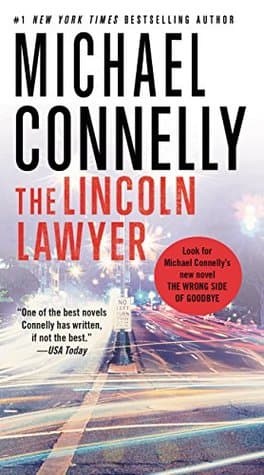
- The Lincoln Lawyer
Michael Connelly
4.2 (193k) average on GoodreadsThrillerFeatures a complex protagonist navigating the morally ambiguous world of crime and justice.
- The Road
Cormac McCarthy
4.0 (716k) average on GoodreadsScience FictionShares a bleak, post-apocalyptic atmosphere and exploration of human survival in extreme conditions.
- Angels & Demons
Dan Brown
3.9 (2.7M) average on GoodreadsThrillerA Harvard symbologist races through Rome's ancient sites, deciphering cryptic clues to unmask the Illuminati and stop a vengeful plot to destroy the Vatican with a stolen antimatter weapon.
- Gone Girl
Gillian Flynn
4.1 (2.3M) average on GoodreadsThrillerA wife's sudden disappearance on her fifth anniversary reveals a web of lies and psychological warfare, exposing the secrets within a seemingly perfect marriage.
- The Girl on the Train
Paula Hawkins
3.9 (2.1M) average on GoodreadsThrillerA woman’s fascination with a seemingly perfect couple she watches from her daily train commute leads her into a dark investigation when she witnesses something that shatters their idyllic image.





Enjoyed the summary?
A summary gives you the shape of the book. The book itself has the detail, the examples and the voice.
Find The Tin Roof Blowdown on AmazonAs an Amazon Associate, BookBrief earns from qualifying purchases. How we're funded