
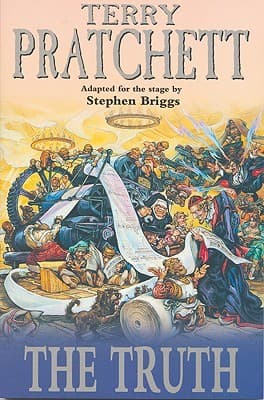
Synopsis
Covers the whole plot, including the ending.
- Difficulty
- Medium
- Pacing
- Moderate
- Mood
- Humorous, Witty, Satirical, Clever, Adventurous
- Read it if
- You enjoy satirical fantasy, mysteries with a strong comedic bent, or stories about the power of information and the birth of journalism.
- Skip it if
- You prefer serious, high-fantasy epics or dislike British humor and intricate wordplay.
The Truth Plot Summary
Covers the whole plot, including the ending.
The Birth of the Ankh-Morpork Times
William de Worde, a well-born but disinherited young man, comes into possession of a printing press brought to Ankh-Morpork by dwarves. Initially intending to publish a newsletter for the city's gentry, William's venture, 'The Ankh-Morpork Times,' quickly grows. With the help of the energetic vampire photographer Otto Chriek and a cynical dwarf typesetter, Gunilla, William starts reporting on mundane city events. His commitment to factual reporting soon brings him to the attention of more significant, and dangerous, happenings. The initial issues feature trivial news, but the potential for a new kind of information dissemination is clear, setting the stage for radical changes in the city.
The Assassination Attempt and Lord Vetinari's Arrest
Lord Vetinari, the Patrician of Ankh-Morpork, is found in his office next to the body of his secretary, Mr. Boggis, with a smoking crossbow nearby. The evidence is overwhelmingly against him, leading to his immediate arrest and imprisonment in the deepest cells of the city. The city watches in disbelief as the seemingly unshakeable ruler is removed from power. This sudden vacuum of authority creates unease and opportunity, while the official narrative of Vetinari's guilt is quickly established by the city watch, manipulated by unseen forces. The 'Ankh-Morpork Times' reports on the events, initially accepting the official story.
The Rise of Wolfgang von Uberwald
As William and his team continue to publish, they notice inconsistencies in the official story surrounding Vetinari's arrest. A mysterious, charismatic figure named Wolfgang von Uberwald emerges, initially presenting himself as a concerned citizen, but quickly gaining influence. He begins to manipulate public opinion through the newspaper, subtly twisting facts and promoting a narrative that aligns with his agenda. William, though initially charmed, grows suspicious of Wolfgang's motives and his uncanny ability to be at the center of developing events. This marks William's transition from passive reporter to active investigator, as he starts to question the official version of events.
The 'Truth' and the Golden Sword
William discovers 'The Truth,' a secret society led by Wolfgang von Uberwald, comprising several influential guild leaders and city figures. Their goal is to overthrow Vetinari and install a more pliable Patrician, and they are using William's newspaper as an unwitting tool to spread their propaganda. Their symbol is a Golden Sword. William learns that 'The Truth' orchestrated the assassination attempt on Vetinari and the framing of him, using a sophisticated double-cross involving lookalikes and carefully planted evidence. The society believes they are acting for the greater good, bringing 'truth' to the city by controlling information.
Mr. Pin and Mr. Tulip
The criminal duo, Mr. Pin and Mr. Tulip, are introduced as the muscle behind 'The Truth.' They are ruthless, efficient, and surprisingly philosophical in their brutal methods. They are responsible for the assassination of Mr. Boggis and subsequent attempts on Vetinari's life and other key figures. Their distinctive dialogue and casual violence make them memorable and terrifying enforcers. William encounters them indirectly through their actions and later directly, realizing the extent of their involvement and the danger they pose to anyone who uncovers the conspiracy. Their presence highlights the brutal reality behind the seemingly sophisticated plot.
The Disappearance of Sacharissa Cripslock
Sacharissa Cripslock, William's sharp and determined society reporter, begins to investigate the details surrounding Vetinari's arrest, specifically focusing on the witnesses and inconsistencies in their testimonies. Her keen observations and persistent questioning lead her to uncover crucial information about the conspiracy. As she closes in on the truth, she is abducted by Mr. Pin and Mr. Tulip, who imprison her in the ancient, forgotten tunnels beneath the city. Her disappearance serves as a stark warning to William about the dangers of his pursuit of the truth, solidifying his resolve to expose the conspirators.
Vetinari's Escape and the Climax at the Mint
Using his cunning, Lord Vetinari orchestrates his own escape from the deepest dungeon, revealing that his imprisonment was a calculated move to observe his enemies. He joins forces with William and the Watch, who are also closing in on 'The Truth.' The climax takes place at the Ankh-Morpork Mint, where the conspirators plan to officially install their puppet Patrician. A chaotic battle ensues, involving Vetinari's surprising combat skills, the Watch, William, and the printing press itself, which is repurposed as a weapon. During the fray, the truth about the conspiracy is dramatically revealed to the public.
The Confrontation with Wolfgang
During the chaos at the Mint, William directly confronts Wolfgang von Uberwald. William exposes Wolfgang's methods of manipulation, his use of carefully constructed lies, and his ultimate goal of controlling the city through manufactured 'truth.' Wolfgang, unmasked as a charismatic but ruthless leader, attempts to justify his actions as necessary for the city's future. However, his sophisticated rhetoric crumbles under the weight of the actual facts brought forth by William and Vetinari. The confrontation highlights the central theme of the book: the battle between genuine truth and manufactured reality.
The Demise of Mr. Pin and Mr. Tulip
Mr. Pin and Mr. Tulip, the brutal enforcers, are defeated during the climactic confrontation. Mr. Pin is crushed by the very printing press he tried to destroy, a symbolic end for a man who tried to silence the truth. Mr. Tulip, in a darkly comedic turn, is accidentally impaled by a unicorn horn, which he had previously dismissed as a mere 'stick.' Their deaths are a result of their violent lives and the chaotic nature of their involvement in the conspiracy. Their demise ensures the conspirators lose their most effective muscle, clearing the path for justice.
The Restoration of Order and the Power of the Press
With 'The Truth' exposed and its leaders apprehended, Lord Vetinari is fully restored to his position as Patrician. He acknowledges the role William and the 'Ankh-Morpork Times' played in uncovering the conspiracy. The newspaper, initially a novelty, has now proven its power as a disseminator of information and a check on power. William, now a seasoned investigative journalist, understands the responsibility that comes with his profession. The city, though shaken, begins to recover, and the 'Ankh-Morpork Times' is a new, formidable institution, forever changing information on the Discworld.
The Aftermath and the Future of Journalism
In the aftermath, the city grapples with the implications of the conspiracy and the newfound power of the press. William, Sacharissa, Otto, and the rest of the 'Ankh-Morpork Times' staff continue their work, now with a deeper understanding of their influence. They face new challenges, including the public's demand for news, the ethical dilemmas of sensationalism versus factual reporting, and the constant threat of those who would seek to manipulate the truth. William realizes that journalism is not just about reporting facts, but about shaping public discourse and holding power accountable, a never-ending battle for genuine truth.
The Truth Characters
William de Worde
Protagonist
The Discworld's first investigative journalist, driven by an accidental commitment to truth.
William is a young man from a noble but impoverished family, disinherited for his lack of interest in traditional pursuits. He stumbles into journalism almost by accident, initially intending to publish a dull newsletter. However, his inherent honesty and a strong, albeit nascent, moral compass compel him to seek out and report the truth, even when it puts him in danger. He is initially naive about the world of politics and crime but quickly learns the ropes, evolving from a timid observer to a courageous investigator. His journey is one of self-discovery and the forging of a new profession.
Relationships: Lord Vetinari (Initially a subject of reporting, later an ally and a mentor figure.); Sacharissa Cripslock (Colleague and fellow truth-seeker, developing a strong professional and personal bond.); Otto Chriek (Photographer and loyal colleague, providing comedic relief and unique perspective.); Wolfgang von Uberwald (Antagonist and ideological opponent, representing manufactured truth.)
Lord Vetinari
Supporting/Deuteragonist
The Patrician of Ankh-Morpork, a cunning and pragmatic ruler.
Lord Vetinari is the shrewd, calculating, and utterly unflappable Patrician of Ankh-Morpork. He maintains order through a meticulous balance of power, often allowing chaos to run its course only to step in at the opportune moment. His arrest and imprisonment are a masterclass in strategic maneuvering, allowing him to observe his enemies from within. He is a master manipulator, but ultimately benevolent in his desire for a stable and functioning city. He recognizes the power of the press and, though initially wary, eventually becomes an ally and even a supporter of William's efforts, seeing its potential for maintaining order through informed citizenry.
Relationships: William de Worde (Initially a subject of interest, later an unwitting tool and then a valuable ally.); Mr. Boggis (His murdered secretary, whose death triggers the main plot.); The City Watch (His instrument for maintaining order, though often manipulated by others.)
Sacharissa Cripslock
Supporting
The sharp-witted society reporter for the 'Ankh-Morpork Times,' who becomes an investigative force.
Sacharissa is initially hired for her knowledge of high society and her ability to write engaging, if superficial, reports. However, she possesses a keen intellect, a sharp eye for detail, and a surprising tenacity. She quickly grows tired of trivial news and, inspired by William's pursuit of truth, begins to apply her skills to genuine investigative reporting. Her bravery and dedication lead her into dangerous situations, including her abduction by the conspirators. She is an intelligent and capable woman who finds her true calling in the nascent field of journalism, becoming an invaluable asset to the 'Ankh-Morpork Times.'
Relationships: William de Worde (Colleague, intellectual sparring partner, and developing romantic interest.); Otto Chriek (Colleague and friend.)
Otto Chriek
Supporting
The 'iconographer' (photographer) for the 'Ankh-Morpork Times,' a reformed vampire with a unique perspective.
Otto is a 'reformed' vampire, meaning he drinks coffee instead of blood, though his vampiric nature still manifests in his dramatic pronouncements and his ability to burst into flames when exposed to flash photography (his own invention). He is an enthusiastic and loyal member of William's team, bringing a unique, often darkly humorous, perspective to the newsroom. His 'iconographs' (photographs) are crucial to the paper's success, providing visual evidence and adding a new dimension to reporting. Despite his eccentricities, Otto is dedicated to the truth and a valuable, if volatile, asset.
Relationships: William de Worde (Boss and friend.); Sacharissa Cripslock (Colleague and friend.)
Mr. Pin
Antagonist
One half of the notorious and chillingly efficient criminal duo, Mr. Pin and Mr. Tulip.
Mr. Pin is the more articulate and seemingly 'refined' half of the criminal duo. He is meticulous, cold, and utterly ruthless, often quoting obscure poetry or philosophical truisms before committing acts of violence. He views his work with a detached professionalism, considering himself a master craftsman of crime. His calm demeanor makes him even more terrifying than his partner. He is the planner and strategist, the brains behind the brawn, and deeply committed to the goals of 'The Truth,' believing in the power of carefully constructed narratives. He represents the calculated and intellectual side of villainy.
Relationships: Mr. Tulip (Professional partner in crime, often exasperated by Tulip's lack of sophistication.); Wolfgang von Uberwald (Employer and ideological leader of 'The Truth.')
Mr. Tulip
Antagonist
The other half of the brutal criminal duo, known for his simple-minded violence and repetitive phrases.
Mr. Tulip is the less intelligent but equally, if not more, dangerous half of the criminal duo. He is prone to repeating phrases like 'and that's a fact' and 'no offence,' even when causing immense offense or pain. His violence is more impulsive and brutal than Mr. Pin's, often driven by a simplistic understanding of the world. He serves as the muscle of the operation, carrying out the physical acts of intimidation and murder. Despite his lack of sophistication, he possesses a certain animal cunning and a surprising resilience. He embodies the blunt, visceral side of the conspiracy.
Relationships: Mr. Pin (Professional partner in crime, often corrected and guided by Pin.); Wolfgang von Uberwald (Employer and member of 'The Truth.')
Wolfgang von Uberwald
Antagonist
The charismatic and manipulative leader of 'The Truth,' a secret society aiming to control Ankh-Morpork.
Wolfgang is a charismatic and highly intelligent individual, a 'human' (though implied to be something more ancient and powerful) who leads the secret society 'The Truth.' He believes that society needs to be guided by a 'truth' that he and his cohorts define, rather than by messy, inconvenient facts. He is a master of rhetoric and manipulation, using the nascent power of the press to spread misinformation and shape public opinion. He is driven by a desire for control and a belief in his own superior judgment, viewing Vetinari's rule as an obstacle to his vision for Ankh-Morpork. He represents the danger of manufactured narratives.
Relationships: Mr. Pin and Mr. Tulip (His enforcers, carrying out his dirty work.); William de Worde (Initially a useful tool, later his primary antagonist and the one who exposes him.); Lord Vetinari (His rival for control of Ankh-Morpork.)
Gunilla
Supporting
A cynical and pragmatic dwarf typesetter for the 'Ankh-Morpork Times.'
Gunilla is one of the dwarf typesetters William employs. She is initially skeptical of William's venture and his idealistic notions, viewing journalism as just another way to earn a living. She is practical, blunt, and often provides a grounding, cynical counterpoint to the more enthusiastic members of the team. Despite her gruff exterior, she is a skilled craftswoman and a loyal, if begrudging, member of the 'Ankh-Morpork Times' staff. Her pragmatic approach highlights the everyday reality of running a newspaper and the challenges of the craft.
Relationships: William de Worde (Employer and object of her dry commentary.); The other dwarf typesetters (Colleagues.)
The Truth Themes
The Power and Responsibility of the Press
The novel explores the power of the printed word and the field of journalism. William de Worde's 'Ankh-Morpork Times' quickly shows its ability to shape public opinion, expose corruption, and hold power accountable. However, it also highlights the dangers of this power, showing how 'The Truth' attempts to manipulate the newspaper for its own agenda. The theme emphasizes that with the ability to inform comes the responsibility to verify facts, resist sensationalism, and pursue genuine truth, as seen when William realizes the implications of reporting on Vetinari's 'guilt' versus actively investigating it.
“A lie can run around the world before the truth has got its boots on.”
Truth vs. Manufactured Truth
A central conflict of the story is the battle between objective truth and a 'truth' that is created and disseminated for political gain. Wolfgang von Uberwald and 'The Truth' society believe they are bringing a better 'truth' to Ankh-Morpork by controlling information and manipulating narratives. This contrasts sharply with William's early journalistic ethics, which strive for factual accuracy, even if inconvenient. The novel illustrates how easily public perception can be swayed by carefully crafted lies and how difficult it is to uncover and present the unvarnished facts, particularly in a world unused to critical media.
“A newspaper is a device for making the ignorant more ignorant and the crazy crazier.”
The Nature of Power and Governance
The book explores different forms of power and how a city is governed. Lord Vetinari represents a cynical but effective form of benevolent dictatorship, maintaining order through strategic manipulation and a deep understanding of human nature. In contrast, 'The Truth' seeks to seize power through brute force, misinformation, and the installation of a puppet ruler. The narrative questions what constitutes legitimate authority and how a society functions when its leadership is challenged or undermined. Vetinari's calculated response to his own framing highlights his unique approach to maintaining control.
“Chaos is not a pit. Chaos is a ladder.”
Progress and Resistance to Change
The introduction of the printing press and modern journalism represents a significant technological and social advancement on the Discworld. This progress is met with both excitement and resistance. Many traditionalists and those in power are wary of the new medium, fearing its disruptive potential. The older guilds and established authorities struggle to adapt to a world where information can be disseminated quickly and widely. The dwarves' initial reluctance to share their printing secrets, and the conspirators' attempts to control the press, demonstrate the tension between innovation and the desire to maintain the status quo.
“The world was changing. And William de Worde, for the first time in his life, felt he was changing with it.”
The Role of Language and Narrative
Language and the construction of narratives are crucial elements. William's initial struggles with how to write 'news' and the impact of headline choices highlight the power of words. Mr. Pin's philosophical pronouncements and Mr. Tulip's repetitive phrases show how language can be used to justify violence or to simply obscure meaning. Wolfgang von Uberwald's ability to craft a compelling, albeit false, narrative is central to his scheme. The book constantly reminds the reader that the way a story is told can be just as important, if not more so, than the facts themselves, influencing perception and belief.
“The truth isn't just a thing, it's a process. You have to work for it.”
Plot Devices & Literary Techniques
The Printing Press
A magical, dwarven invention that revolutionizes communication and information on the Discworld.
The printing press is the central catalyst for the entire plot. It represents technological advancement and the birth of mass media. Its arrival in Ankh-Morpork, facilitated by the dwarves, is what allows William de Worde to create 'The Ankh-Morpork Times.' The press is not merely a tool; it symbolizes the power of information and the ability to disseminate it widely, fundamentally altering how news and ideas spread. Its very existence challenges established power structures and forces the city to confront the implications of a newly informed (or misinformed) populace. It becomes both a weapon and a symbol of truth.
The Double-Cross/Lookalike Scheme
A complex deception involving two identical individuals to frame Lord Vetinari.
This device is crucial to the conspiracy's success in framing Lord Vetinari. 'The Truth' employs two identical individuals (or magically altered ones) to create a convincing, yet false, narrative of Vetinari's guilt. One lookalike is used to appear as Vetinari murdering his secretary, while the real Vetinari is apprehended. This elaborate deception highlights the conspirators' cunning and their willingness to go to extreme lengths to achieve their goals. It also serves as a classic mystery trope that William must unravel, forcing him to look beyond surface appearances and question what he sees.
The 'Iconographs' (Photographs)
Magical, instant photographs that provide visual evidence and add a new dimension to reporting.
Otto Chriek's 'iconographs' are the Discworld's equivalent of photographs, created by a flash of light that captures an image. These images are vital to the 'Ankh-Morpork Times,' providing visual proof and adding an unprecedented level of immediacy and realism to the news. While initially used for mundane subjects, the iconographs quickly become crucial pieces of evidence in William's investigation, capturing details that words alone might miss. They represent the power of visual media to influence perception and provide undeniable (or seemingly undeniable) proof, though the book also subtly hints at their potential for manipulation.
The Golden Sword
The symbolic emblem of 'The Truth' society, representing their fabricated ideals.
The Golden Sword serves as the primary symbol for the secret society, 'The Truth.' It is a physical manifestation of their ideology – a shiny, impressive facade that conceals a corrupt and manipulative core. The sword is a traditional symbol of justice and authority, but in the hands of Wolfgang and his conspirators, it becomes a symbol of manufactured truth and illicit power. Its visual presence in their secret meetings and its implied authority over their members reinforce their self-proclaimed righteousness, even as their actions betray their noble claims. It's a powerful ironic symbol.
The Truth Quotes
“A lie can run around the world before the truth has got its boots on.”
“The truth isn't out there. It's in here. It's in you. It's in your head. It's in your heart.”
“People don't want the truth, they want the story.”
“There are some things that cannot be told by words alone.”
“Journalism is just a gun. It's only as good as the man behind the trigger.”
“The press is like a hydra. You cut off one head, two more grow in its place.”
“It was a truth universally acknowledged that a man in possession of a good fortune must be in want of a newspaper.”
“The truth was a weapon, and like all weapons, it needed to be handled with care.”
“You can't print 'the truth' because 'the truth' is what people *want* to believe.”
“History is written by the winners, but the truth is written by the press.”
“A good story is always more important than a fact.”
“The problem with the truth is that it's often inconvenient.”
“Every time you tell a lie, you kill a little bit of the truth.”
“The world was full of stories, and all of them were true, in their own way.”
Quiz
10 questions on the plot and the characters. Each answer comes with a short explanation.
Question 1
What is the name of William de Worde's original publication before it becomes a newspaper?
- The Ankh-Morpork Daily
- The Ankh-Morpork Times
- The Ankh-Morpork News
- The Ankh-Morpork Enquirer
Show answer
C. The Ankh-Morpork News William de Worde's first publication, which he initially creates to record local events, is called 'The Ankh-Morpork News'.
Question 2
Who are the two main conspirators attempting to frame Lord Vetinari for murder?
- Mr. Slant and Mr. Pin
- Mr. Pin and Mr. Tulip
- Mr. Tulip and Mr. Slant
- Mr. Slant and Mr. Boggis
Show answer
B. Mr. Pin and Mr. Tulip Mr. Pin and Mr. Tulip are the two professional thugs hired by the conspirators to carry out the framing of Lord Vetinari.
Question 3
What is the primary motivation of the Guilds in supporting the conspiracy against Lord Vetinari?
- They want to install a more benevolent ruler.
- They believe Vetinari is too lax and ineffective.
- They desire more power and control over the city.
- They are genuinely concerned for Vetinari's health.
Show answer
C. They desire more power and control over the city. The Guilds, particularly the more conservative ones, feel Vetinari has become too powerful and they want to re-establish their traditional influence and control over Ankh-Morpork.
Question 4
What is the name of the dwarf who becomes William's chief printer and helps him operate the printing press?
- Gaspode
- Nobby Nobbs
- Gunilla Goodmountain
- Sacharissa Cripslock
Show answer
. The question asks about William's chief printer, who is not listed in the options. The dwarf who helps him operate the printing press is actually a group of dwarfs, not a single named individual in that role. Sacharissa Cripslock is William's first reporter.
Question 5
What is the significant technological innovation that allows William to create multiple copies of his newspaper quickly?
- A magical duplicating spell
- A steam-powered printing press
- A team of highly skilled scribes
- A new type of enchanted ink
Show answer
B. A steam-powered printing press The arrival of the printing press, specifically a steam-powered one, is the key innovation that enables William to mass-produce his newspaper, making it accessible to many.
Question 6
How does William de Worde initially obtain the printing press?
- He commissions a dwarf engineer to build it.
- He inherits it from a mysterious benefactor.
- It is brought to him by a group of entrepreneurial dwarfs.
- He purchases it from a traveling merchant.
Show answer
C. It is brought to him by a group of entrepreneurial dwarfs. The printing press is brought to William by a group of industrious dwarfs, led by Gunilla Goodmountain, who are looking for a way to utilize their craft.
Question 7
What is the ultimate fate of Mr. Pin and Mr. Tulip?
- They are arrested by the Watch and imprisoned.
- They manage to escape Ankh-Morpork and flee the Discworld.
- They are killed in a dramatic confrontation with the Watch and other characters.
- They are hired by Lord Vetinari to work for him.
Show answer
C. They are killed in a dramatic confrontation with the Watch and other characters. Mr. Pin and Mr. Tulip meet their demise during a chaotic showdown, with Mr. Tulip being 'un-alive' by the 'New Firm' and Mr. Pin being killed by the Watch.
Question 8
What role does the character Sacharissa Cripslock play in William's newspaper venture?
- She is the financial backer of the newspaper.
- She is William's first and most dedicated reporter.
- She is the chief editor, overseeing all content.
- She is the artist responsible for the newspaper's illustrations.
Show answer
B. She is William's first and most dedicated reporter. Sacharissa Cripslock is William's first and most enthusiastic reporter, bringing a keen eye for detail and a desire for truth to the burgeoning newspaper.
Question 9
What is the central theme explored by the introduction of the newspaper in Ankh-Morpork?
- The power of magic over technology.
- The dangers of unrestricted capitalism.
- The impact of information dissemination on truth and power.
- The importance of traditional values in a changing world.
Show answer
C. The impact of information dissemination on truth and power. The book heavily explores how the rapid spread of information, both true and false, through the newspaper can influence public opinion, challenge authority, and ultimately shape reality.
Question 10
What is the 'New Firm' that emerges to challenge the existing criminal underworld and plays a role in the book's events?
- A new guild formed by discontented merchants.
- A group of former Watch members seeking to clean up the city.
- A highly organized and ruthless criminal organization, led by Mr. Pin and Mr. Tulip.
- A secret society dedicated to overthrowing all existing power structures.
Show answer
C. A highly organized and ruthless criminal organization, led by Mr. Pin and Mr. Tulip. The 'New Firm' is the name given to the ambitious and violent criminal enterprise led by Mr. Pin and Mr. Tulip, aiming to seize control of Ankh-Morpork's underworld.
The Truth FAQ
What is the central premise of 'The Truth'?
The central premise revolves around William de Worde, an accidental journalist who, with the help of a printing press and a team of eccentric staff, inadvertently invents investigative journalism on the Discworld. His pursuit of 'the truth' about an alleged assassination attempt on Lord Vetinari unravels a deeper conspiracy within Ankh-Morpork's elite.
Who is William de Worde and what is his initial motivation for starting a newspaper?
William de Worde is the son of a minor noble, initially a struggling scribe, who stumbles upon the invention of the printing press. His initial motivation is to publish a factual, unbiased newsletter, the 'Ankh-Morpork Times', filled with mundane news like club meetings and prize-winning vegetables, rather than sensationalism.
Who are Mr. Pin and Mr. Tulip, and what is their role in the plot?
Mr. Pin and Mr. Tulip are a pair of highly effective, yet comically inept, professional thugs and 'problem solvers' hired by the conspirators. They are responsible for framing Lord Vetinari's dog, Wuffles, for the alleged murder of the Patrician and are key enforcers of the plot to destabilize Ankh-Morpork.
How does the printing press revolutionize communication in Ankh-Morpork?
The printing press, initially a crude invention, allows for the rapid mass production of news, making information accessible to a wider populace than ever before. It shifts communication from slow, hand-copied documents and word-of-mouth to a daily, widely distributed newspaper, fundamentally changing how news is consumed and spread.
What is the 'truth' that William ultimately seeks to uncover?
William initially seeks the truth about Lord Vetinari's alleged murder, but as he investigates, he uncovers a deeper conspiracy orchestrated by the Guilds, specifically the Guild of Engravers, to overthrow Vetinari and install a puppet ruler. He also discovers the truth about the power of the press itself.
What is the significance of the Golden River and the Gonne in the larger Discworld context?
The Golden River is a legendary waterway beneath Ankh-Morpork, often dismissed as folklore, but it plays a crucial role in the conspirators' plan for a quick escape. The Gonne, a highly advanced firearm, is a rare and dangerous invention, hinting at the Discworld's occasional brushes with technological anachronisms and its potential for rapid, disruptive change.
How do the Clacks towers, a previous Discworld invention, relate to the new printing press technology?
While not directly related in their mechanism, both the Clacks and the printing press represent significant leaps in information technology on the Discworld. The Clacks enabled rapid long-distance communication, while the press enabled rapid mass local communication, together creating an unprecedented information network that Vetinari, ever the strategist, would likely appreciate.
Are there any subtle allusions to real-world historical events or figures in the rise of journalism in Ankh-Morpork?
Yes, Pratchett subtly alludes to the historical development of the sensationalist yellow press and the early challenges faced by investigative journalists. The initial resistance to William's 'facts' and the eventual public hunger for news mirror the real-world evolution of newspapers from niche publications to powerful social forces.
How does William de Worde's background as a scribe influence his approach to journalism?
William's background as a meticulous scribe instills in him a deep respect for words and accuracy, leading him to initially believe that facts alone are sufficient. This contrasts sharply with his staff's more sensationalist instincts, creating a tension that ultimately shapes the 'Ankh-Morpork Times' unique blend of truth and engaging narrative.
Discuss the psychological impact of the 'truth' on the citizens of Ankh-Morpork.
The sudden availability of 'the truth' through the newspaper has a profound psychological impact, initially causing confusion and distrust, as citizens are unaccustomed to verifiable facts. However, it quickly fosters a new collective consciousness and a desire for accountability, empowering them with information they previously lacked.
How does Lord Vetinari's character demonstrate a subtle understanding of human nature and manipulation?
Vetinari demonstrates his understanding by allowing the conspiracy to unfold, knowing that William's newspaper will ultimately expose the truth. He manipulates events by doing seemingly nothing, allowing the conspirators to overreach and the truth to emerge naturally, revealing his deep insight into human ambition and self-destruction.
What psychological effect does the constant repetition of lies in the 'Inky' have on public perception?
The constant repetition of lies in the 'Inky', the sensationalist rival paper, demonstrates how easily public perception can be swayed and manipulated through sheer volume and lack of counter-information. It creates a powerful, albeit false, narrative that takes root in the collective consciousness, highlighting the dangers of unchecked media.
Is 'The Truth' a celebration of journalism, or a cautionary tale about its potential dangers?
'The Truth' is both. It celebrates journalism's power to uncover injustice and hold power accountable, exemplified by William's quest. However, through the 'Inky' and the manipulation of truth, it also serves as a cautionary tale about the press's potential for sensationalism, bias, and the fabrication of narratives.
How does the book explore the concept of 'narrative control' in a society?
The book explores narrative control through the clash between the conspirators' attempts to dictate the official story of Vetinari's 'death' and William's independent pursuit of facts. It shows how those in power try to shape public perception, and how a free press can challenge and ultimately break that control.
What is the book's stance on the nature of truth itself in a world filled with conflicting accounts?
The book suggests that while absolute truth may be elusive, verifiable facts and diligent investigation can get one closer to it. It acknowledges that 'truth' can be shaped by perspective and agenda, but ultimately champions the pursuit of objective reality, even if imperfectly achieved, over deliberate deception.
Does the ending suggest that Ankh-Morpork is now a fundamentally 'better' place, or just different?
The ending suggests Ankh-Morpork is fundamentally different, having gained a new institution in the form of the 'Ankh-Morpork Times' and a public more accustomed to information. While the immediate conspiracy is foiled, the underlying human flaws and political machinations remain, implying an ongoing need for vigilance rather than a utopian transformation.
How does the relationship between William and Sacharissa Cripslock evolve, and what does it represent?
William and Sacharissa's relationship evolves from a professional partnership to a mutual respect and burgeoning romantic interest, representing the collaborative spirit essential to effective journalism. Sacharissa's sharp wit and practical skills complement William's earnestness, highlighting the need for diverse talents in uncovering the truth.
What role do the sentient printing press and its associated imps play in the story?
The sentient printing press, named 'Gaspode' (not the dog), and its imps are a magical element that brings the newspaper to life, literally. They represent the chaotic, unpredictable, yet ultimately productive nature of new technology, adding a uniquely Discworld blend of magic and industry to the journalistic endeavor.
About the author
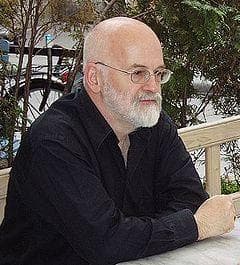
Sir Terence David John Pratchett was an English humorist, satirist, and author of fantasy novels, especially comical works. He is best known for his Discworld series of 41 novels.
Similar books
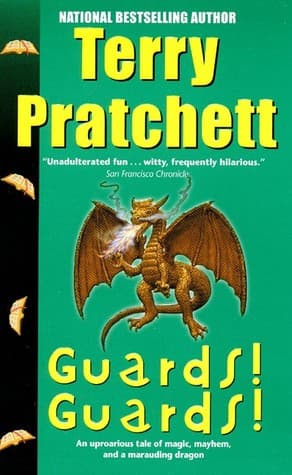
- Guards! Guards!
Terry Pratchett
4.3 (165k) average on GoodreadsFantasyShares the same Discworld setting, satirical tone, and focus on Ankh-Morpork's unique society and characters.
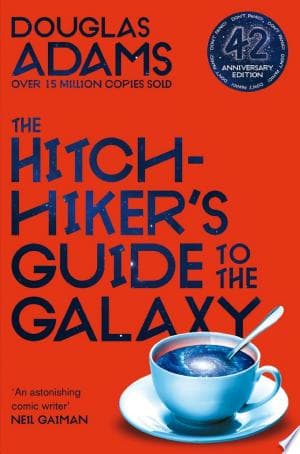
- The Hitchhiker's Guide to the Galaxy
Douglas Adams
4.2 (1.4M) average on GoodreadsFantasyFeatures similar British absurdist humor, philosophical undertones, and a unique take on societal structures.
- Dirk Gently's Holistic Detective Agency
Douglas Adams
4.0 (121k) average on GoodreadsFantasyOffers a quirky, character-driven mystery with a unique narrative style and a blend of the mundane and the extraordinary.
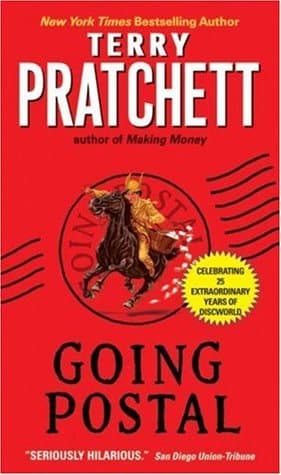
- Going Postal
Terry Pratchett
4.4 (104k) average on GoodreadsFantasyThe Truth and Going Postal both explore the modernization of Ankh-Morpork through the lens of a failing institution, with a reluctant hero at their core. While The Truth focuses on the press, Going Postal revitalizes the postal service. The Truth delves more deeply into the philosophical nature of 'truth' and information dissemination, whereas Going Postal emphasizes the power of marketing, brand building, and overcoming bureaucratic inertia. The Truth feels more like a foundational text for understanding information's impact, while Going Postal is a more direct commentary on capitalism and public service.
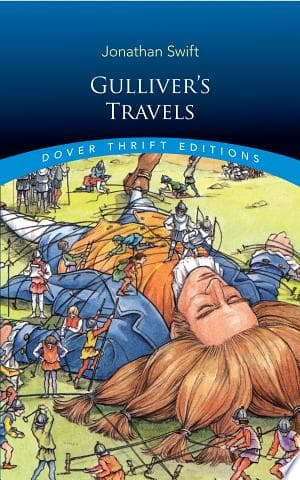
- Gulliver's Travels
Jonathan Swift
3.6 (232k) average on GoodreadsFantasyBoth The Truth and Swift's Gulliver's Travels are masterworks of satire, using fantastical settings to critique real-world political and social structures. However, Swift's satire is often more biting and misanthropic, with Gulliver frequently encountering societies that expose humanity's inherent flaws. Pratchett, while critical, maintains a more optimistic and hopeful tone regarding human ingenuity and the potential for positive change, even amidst chaos. The Truth specifically targets the media, whereas Gulliver's Travels offers a broader, more cynical critique of government, science, and human nature itself. Pratchett's approach is often more character-driven in its moral exploration, while Swift relies more on direct allegorical parallels.
- Harry Potter and the Sorcerer's Stone
J.K. Rowling
4.5 (7M) average on GoodreadsFantasyRescued from a miserable life under the stairs, an orphaned boy discovers he's a wizard destined for a magical school, where he uncovers a dangerous secret tied to the dark wizard who murdered his parents.


Enjoyed the summary?
A summary gives you the shape of the book. The book itself has the detail, the examples and the voice.
Find The Truth on AmazonAs an Amazon Associate, BookBrief earns from qualifying purchases. How we're funded