
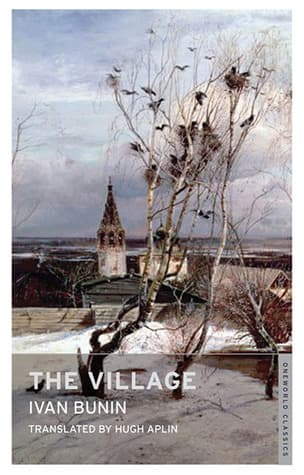
Synopsis
Covers the whole plot, including the ending.
- Difficulty
- Medium
- Pacing
- Slow
- Mood
- Bleak, Realistic, Melancholy, Dark, Uncompromising
- Read it if
- You are interested in a classic of Russian literature, enjoy bleak realism, or want to understand the harsh realities of pre-revolutionary Russian peasant life.
- Skip it if
- You prefer optimistic stories, dislike grim themes, or are looking for a plot with clear character arcs and a hopeful resolution.
The Village Plot Summary
Covers the whole plot, including the ending.
The Brothers' Origins and Kuzma's Early Wanderings
The story introduces brothers Kuzma and Tikhon Krasov. As children in the poor village of Durnovka, Kuzma is more sensitive, while Tikhon is practical and wants money. An early event is a fire set by the brothers, leading to Kuzma being badly beaten by their father. This, along with the stifling village life, makes Kuzma leave Durnovka to wander and take odd jobs in towns. He thinks about how harsh peasant life is and how pointless their existence seems. Tikhon, meanwhile, stays. He slowly gets rich and becomes a small merchant and landowner, despite the village's general dirtiness and backwardness.
Tikhon's Rise to Proprietor
Tikhon Krasov, by working hard, making smart deals, and being very stingy, manages to get land and power in Durnovka. He buys out his poor neighbors, uses others' labor, and lends money at very high rates. His success comes from the village's desolation, as he profits from the bad luck and ignorance of the local peasants. He is a practical and cold man, driven by a wish for power and money, often without caring about others. His house, while better than others, still shows the village's general lack of comfort and beauty.
Kuzma's Return and Observation
After years of wandering without purpose and failed plans, Kuzma Krasov returns to Durnovka, disappointed and tired. He takes Tikhon's offer to be his manager, looking after his small estate. This job puts Kuzma in the middle of the village life he once ran from. It lets him see its inherent dirt, laziness, and harshness with a distant, almost scientific eye. He thinks about how peasant life never changes, their deep old beliefs, their sudden acts of violence, and their strong sense of fate. His return marks a time of deep inner struggle and thinking about the Russian peasantry.
The Peasant's Plight and Ignorance
Kuzma's job as manager gives him a close look at the peasants' lives, which are marked by constant hard work, poverty, and a deep lack of education or understanding. He observes their old customs, their belief in superstitions, their frequent drinking, and their casual cruelty to each other and animals. Villagers, like Gray-haired Denis, show this lack of change. Their lives are set by the seasons and old habits, not by any sense of progress or ambition. Kuzma tries to make sense of his own intellectual thoughts with the hard facts of their lives. He often feels deep pity mixed with despair for their hopeless state.
The Impact of the 1905 Revolution
The distant noise of the 1905 Revolution eventually reaches the isolated village of Durnovka, though its effect is mostly misunderstood and broken. News of trouble, strikes, and social upheaval comes in, causing a stir among the peasants. However, their understanding of these events is limited, often twisted by rumors and their own complaints. Some peasants express a vague hope for change or a wish to get even, while others remain uninterested or see it as another strange misfortune. Tikhon, always practical, sees it as a threat to his land and order. Kuzma observes the brief and mostly weak signs of rebellion, noting its lack of clear purpose or real revolutionary spirit among the villagers.
Tikhon's Fear and Control
As news of the revolution gets stronger, Tikhon becomes more worried about his land and standing. He views any talk of change or peasant uprising with deep suspicion and fear. He sees it as a direct threat to his hard-earned money. He tries to keep order through threats and by using his influence, often reminding the peasants of their debts or past mistakes. His fear shows how uncertain his position is, built as it is on using others. He struggles to understand the wider political events, seeing them only through the lens of his own safety and keeping his small empire.
Kuzma's Philosophical Despair
Amid the lack of change and brief revolutionary echoes, Kuzma's inner life becomes one of deep philosophical sadness. He thinks about the history of Russian peasants, how they never change, and the repeating pattern of their suffering and ignorance. He reads and thinks, but finds no comfort or answer. His observations lead him to believe that the village, and perhaps the Russian spirit itself, is stuck in a cycle of harshness and stopped growth. It cannot break free from its basic instincts and crushing poverty. He sees little hope for progress or understanding, strengthening his feeling of personal uselessness and the grimness of their shared fate.
The Death of Gray-haired Denis
The death of Gray-haired Denis, an old and largely unremarkable peasant, is a stark reminder of the harsh facts of life and death in Durnovka. His passing is handled with a mix of rough practicality and old superstitions. There is little real sadness, but more a focus on the rituals and practical parts of burial. Kuzma observes this event with his usual detachment, seeing it as another example of the raw, simple existence of the villagers. Denis's life, full of hard work, ends without much impact. It shows the anonymous and often brutal end that many in the village face.
The Affair with Molodaya
Kuzma, despite his intellectual thoughts, has a brief, unfeeling affair with Molodaya, one of the peasant women. This relationship lacks tenderness, romance, or real connection. It reflects the harsh and transactional nature of relationships in Durnovka. It is a physical act born more from boredom and the basic urges of village life than any emotional bond. The affair ultimately leaves Kuzma feeling even more alone and disappointed. It strengthens his belief in the village's spiritual emptiness and the inability to find real human connection there. It further solidifies his despair about the chance for beauty or love in this place.
The Village's Unchanging Cycle
As the revolutionary passion dies down, Durnovka mostly returns to its former state of stagnation. The brief waves of unrest fade, and the peasants go back to their usual laziness, drinking, and small fights. The underlying problems of poverty, ignorance, and lack of ambition remain untouched. Tikhon continues to manage his land, making his power stronger, while Kuzma continues his observations, now with an even deeper sense of acceptance. The village, a small picture of rural Russia, seems caught in an endless, unchanging cycle. It resists outside forces of change and cannot evolve past its basic state. The future, for Durnovka, seems set to be like its past.
The Village Characters
Kuzma Krasov
Protagonist
The intellectual, melancholic brother who observes and reflects on peasant life.
Kuzma is the more sensitive and introspective of the Krasov brothers. He is a wanderer, having left Durnovka in his youth to seek a different life, only to return disillusioned. He possesses a rudimentary education and a philosophical bent, constantly observing and reflecting on the squalor, ignorance, and brutality of peasant existence. He is a detached observer, often feeling a mix of pity, despair, and intellectual superiority towards the villagers. His journey is one of internal struggle against the overwhelming bleakness he perceives.
Relationships: Tikhon Krasov (Brother; Kuzma works for Tikhon and observes his ruthlessness.); Molodaya (Brief, unsatisfying sexual encounter.)
Tikhon Krasov
Antagonist/Protagonist's foil
The pragmatic, ruthless brother who becomes a prosperous, albeit unfeeling, landowner.
Tikhon is Kuzma's younger brother, characterized by his pragmatism, cunning, and unyielding drive for material wealth. He remains in Durnovka, systematically accumulating land and power through shrewd dealings, exploitation, and usury. He is devoid of sentimentality, driven by a desire for security and dominance. Tikhon embodies the darker, more exploitative aspects of the peasant character, thriving in the very desolation that Kuzma despises. He represents the survival instinct stripped of all ethical considerations.
Relationships: Kuzma Krasov (Brother; Tikhon employs Kuzma and represents everything Kuzma despises about the village.); The Villagers (Employer/moneylender; he exploits their labor and poverty.)
Molodaya
Supporting
A peasant woman, embodying the physical and spiritual barrenness of village relationships.
Molodaya is a young peasant woman with whom Kuzma has a brief affair. Her name, meaning 'young woman,' is ironic given her prematurely aged appearance and the lack of vibrancy in her life. She represents the typical peasant woman, burdened by toil, devoid of romantic illusions, and living a life of physical necessity. Her interaction with Kuzma highlights the absence of tenderness, love, or genuine human connection in the village's social fabric, underscoring the spiritual poverty that permeates Durnovka.
Relationships: Kuzma Krasov (Brief, passionless sexual partner.)
Gray-haired Denis
Supporting
An old, impoverished peasant who symbolizes the anonymity and hardship of peasant life.
Gray-haired Denis is an old peasant who works for Tikhon. He is a representative figure of the typical Durnovka inhabitant: old, poor, uneducated, and resigned to a life of endless toil and hardship. His character underscores the cyclical nature of poverty and the lack of individual agency among the villagers. His eventual death is treated with a crude pragmatism, further emphasizing the harshness of existence where individual lives hold little intrinsic value beyond their labor.
Relationships: Tikhon Krasov (Employer; Denis is one of the peasants Tikhon exploits.)
The Villagers of Durnovka
Collective Character
The collective body of impoverished, ignorant, and often brutal peasants.
The general mass of villagers in Durnovka function as a collective character, embodying the traits Bunin wishes to portray about the Russian peasantry. They are characterized by their deep-seated ignorance, superstition, idleness, drunkenness, and sporadic bursts of violence. Their lives are dictated by primitive instincts and the harsh realities of their environment, with little ambition for progress or enlightenment. They are often exploited by Tikhon and observed with despair by Kuzma, representing a stagnant and seemingly unredeemable segment of society.
Relationships: Kuzma Krasov (Observed and pitied by Kuzma.); Tikhon Krasov (Exploited and controlled by Tikhon.)
The Village Themes
The Brutality and Stagnation of Peasant Life
This is the main theme, showing the Russian village as a place of constant hard work, ignorance, and spiritual emptiness. Bunin shows the peasants as stuck in a cycle of poverty, old beliefs, and casual cruelty, without intellectual curiosity or ambition. Scenes like Tikhon's casual violence, the old customs around Denis's death, and Durnovka's overall dirtiness show this theme. Kuzma's despair comes directly from seeing this unchanging, harsh existence.
“The village was a cesspool, a stagnant pond where nothing ever changed, nothing ever grew.”
The Failure of Idealism and Progress
The novel questions the romantic view of Russian peasants and suggests that attempts at social or intellectual progress in this setting are useless. Kuzma, with his intellectual thoughts, represents a failed attempt to escape and then a disappointed return. The brief and confused effect of the 1905 Revolution on Durnovka further highlights this theme. It shows how outside forces of change are either misunderstood or quickly absorbed back into the village's unchanging rhythm. Bunin suggests a built-in resistance to understanding.
“They were not a people to be reformed, but a people to be endured, perhaps to be pitied, but never to be changed.”
Materialism vs. Spirituality
This theme is shown by the opposing brothers, Tikhon and Kuzma. Tikhon represents pure, unfeeling focus on money, driven only by getting rich and powerful, even if it means being unkind. Kuzma, in contrast, deals with spiritual and philosophical questions, but finds no answers or comfort in Durnovka's grim reality. The village itself is shown as spiritually empty, with religion reduced to superstition and human relationships lacking real affection. This highlights how basic material needs win over any higher goals.
“One lived for the belly, the other for a soul that found no sustenance.”
The Nature of Russian Identity
Bunin uses Durnovka as a small example to explore bigger questions about Russian identity. This includes the perceived flaws and strengths of the Russian character. The novel presents a grim view, emphasizing the historical burden of serfdom, the deep-seated sense of fate, and the potential for both huge suffering and casual cruelty. Kuzma's inner thoughts often go into this national self-reflection, asking if the 'Russian soul' is naturally flawed or simply a product of its harsh conditions. It is a pessimistic look at Russia's potential future.
“This was Russia, unadorned, unidealized, a land of vast emptiness and the eternal, unchanging peasant.”
Plot Devices & Literary Techniques
Foil Characters
The contrasting personalities of Kuzma and Tikhon highlight key thematic elements.
The two brothers, Kuzma and Tikhon Krasov, serve as foil characters, their opposing natures illuminating the novel's central themes. Kuzma, the intellectual wanderer, embodies introspection, disillusionment, and a failed search for meaning. Tikhon, the pragmatic and ruthless landowner, represents the raw, materialistic drive for survival and power within the harsh village environment. Their differing reactions to Durnovka and their contrasting life paths allow Bunin to explore the spiritual vs. material, idealism vs. pragmatism, and the potential for both despair and exploitation inherent in Russian peasant life.
Symbolism of Durnovka
The village of Durnovka symbolizes the broader state of rural Russia.
The village of Durnovka ('Durnovka' meaning 'bad place' or 'foul place' in Russian) is not merely a setting but a powerful symbol. It represents the stagnation, ignorance, and spiritual decay that Bunin perceived in rural Russia at the turn of the 20th century. Its squalor, the unchanging nature of its inhabitants, and its resistance to progress are all symbolic of a deeper malaise within the national character. The village acts as a microcosm, its isolated existence reflecting the broader challenges and perceived backwardness of the Russian Empire.
Stream of Consciousness/Internal Monologue
Kuzma's thoughts and reflections provide deep insight into the novel's philosophical concerns.
Much of the novel's philosophical depth is conveyed through Kuzma's internal monologues and stream-of-consciousness reflections. These passages allow the reader direct access to his despair, his observations on peasant life, and his broader contemplation of Russian history and identity. This device is crucial for developing the theme of the failure of idealism and for presenting Bunin's critical perspective on the peasantry, as Kuzma often acts as the author's intellectual proxy, dissecting and lamenting the bleak realities around him.
The Village Quotes
“The village, the Russian village... it's a special world, a world of its own.”
“The muzhik is a beast, a brute, but he is also a man, a human being.”
“Life here is like a bog: you try to pull yourself out, but you only sink deeper.”
“The soul of Russia is in its fields, its forests, its endless plains.”
“They live like animals, without thought, without hope, just existing.”
“The wind howled like a hungry wolf, tearing at the thatched roofs.”
“They drank to forget, but forgetting only brought more sorrow.”
“The old ways are dying, but the new ones are not yet born.”
“There is a terrible beauty in this desolation, a stark grandeur.”
“They were bound to the land, generation after generation, like slaves.”
“The silence of the village was not peaceful, but heavy, suffocating.”
“Every spring, the same hope, every autumn, the same disappointment.”
“He carried the weight of the land on his shoulders, and it was crushing him.”
“The church bells rang, calling them to prayer, but their hearts were elsewhere.”
“Fear was a constant companion, a shadow that never left them.”
Quiz
10 questions on the plot and the characters. Each answer comes with a short explanation.
Question 1
Which historical event provides the backdrop for the events in 'The Village'?
- The Crimean War
- The Decembrist Revolt
- The 1905 Revolution
- The Emancipation of the Serfs
Show answer
C. The 1905 Revolution The novel is explicitly set during the 1905 Revolution in southwest Russia, which influences the social and political unrest depicted.
Question 2
What is the primary relationship between the two main characters of 'The Village'?
- Landlord and serf
- Father and son
- Brothers
- Master and apprentice
Show answer
C. Brothers The novel focuses on the lives of two peasant brothers, referred to as the main characters in the description.
Question 3
Which of the following best describes the overall tone and portrayal of rural life in 'The Village'?
- Idyllic and romanticized
- Bleak and uncompromising
- Humorous and lighthearted
- Mysterious and suspenseful
Show answer
B. Bleak and uncompromising The description states the novel is a 'bleak and uncompromising portrayal' and a 'triumph of bitter realism,' highlighting its harsh tone.
Question 4
The description mentions the characters are 'sunk so far below the average of intelligence as to be scarcely human.' What specific human traits are most frequently highlighted as lacking or distorted in the peasants?
- Creativity and artistic talent
- Emotional sensitivity and empathy
- Physical strength and endurance
- Religious piety and devotion
Show answer
B. Emotional sensitivity and empathy The description emphasizes 'pettiness, violence, and ignorance,' which points to a lack of emotional sensitivity and empathy as key human traits distorted or absent in the characters' portrayal.
Question 5
What kind of realism is 'The Village' characterized by, according to the description?
- Magical realism
- Socialist realism
- Bitter realism
- Romantic realism
Show answer
C. Bitter realism The description explicitly calls the novel a 'triumph of bitter realism,' defining its specific approach to depicting reality.
Question 6
The novel is set in which geographical region of Russia?
- Siberia
- The Far East
- Southwest Russia
- The Arctic Circle
Show answer
C. Southwest Russia The setting is specified as 'southwest Russia' in the introductory paragraph.
Question 7
Besides being a 'bleak and uncompromising portrayal,' what dual perspective does the novel offer regarding the past and future?
- Condemnation of the past and optimism for the future
- Nostalgia for a bygone age and foreshadowing of future turbulences
- Indifference to the past and focus solely on the present
- Celebration of the past and denial of future challenges
Show answer
B. Nostalgia for a bygone age and foreshadowing of future turbulences The description states the novel is 'At once nostalgic for a bygone, more innocent age and foreshadowing the turbulences of the 20th century.'
Question 8
Given the portrayal of 'pettiness, violence, and ignorance,' what is a likely central conflict explored through the peasant brothers?
- Their struggle against foreign invaders
- Their internal moral dilemmas and spiritual awakening
- Their struggle for wealth and social mobility within the village hierarchy
- Their intellectual pursuit of knowledge and enlightenment
Show answer
C. Their struggle for wealth and social mobility within the village hierarchy The description of 'pettiness, violence, and ignorance' among 'scarcely human' characters suggests that their struggles would be rooted in base desires and social positioning within their confined world, like acquiring wealth or status, rather than intellectual or spiritual growth.
Question 9
The phrase 'characters sunk so far below the average of intelligence as to be scarcely human' implies a significant thematic focus on what aspect of human existence?
- The triumph of the human spirit over adversity
- The dehumanizing effects of poverty and harsh living conditions
- The inherent goodness of mankind, even in difficult circumstances
- The importance of education for social advancement
Show answer
B. The dehumanizing effects of poverty and harsh living conditions The description directly links their low intelligence and 'scarcely human' state to the 'brutal honesty' revealing 'pettiness, violence, and ignorance,' strongly suggesting a theme of how harsh conditions can strip away humanity.
Question 10
What does the description suggest about the author's view of the 'bygone, more innocent age' contrasted with the present of the novel?
- He believes the past was entirely fabricated and never truly existed.
- He views the past with genuine nostalgia, implying it was indeed better in some aspects.
- He satirizes the idea of an 'innocent age,' seeing it as naive.
- He uses the 'innocent age' as a literary device without personal sentiment.
Show answer
B. He views the past with genuine nostalgia, implying it was indeed better in some aspects. The phrase 'nostalgic for a bygone, more innocent age' explicitly indicates a sentimental longing for a past that is perceived as better or simpler, suggesting the author's genuine sentiment.
The Village FAQ
What is the central conflict in 'The Village'?
The central conflict revolves around the two peasant brothers, Tikhon and Kuzma, and their struggle against the harsh realities of rural life in southwest Russia during the 1905 Revolution. Their personal failures, mutual resentment, and the brutal environment of Durnovka village highlight a broader conflict between human aspirations and the crushing weight of poverty, ignorance, and societal stagnation.
Who are Tikhon and Kuzma, and what are their primary differences?
Tikhon is the older brother, a pragmatic, often cruel, and somewhat successful landowner who prioritizes material gain and survival. Kuzma, the younger, is more introspective, educated, and prone to philosophical musings and poetic aspirations, though ultimately he is just as trapped and ineffective as his brother in the village's grim reality. Their differing temperaments lead to constant friction and a deep-seated antagonism.
How does the 1905 Revolution influence the events in Durnovka?
The 1905 Revolution acts as a backdrop, manifesting not as direct political action but as a pervasive sense of unrest, fear, and heightened tension in the village. Rumors of uprisings, increased violence, and a general breakdown of order filter into Durnovka, exacerbating the already brutal conditions and reflecting the broader societal collapse that the brothers, particularly Tikhon, try to navigate and exploit.
Describe the setting of Durnovka village.
Durnovka is depicted as a desolate, impoverished, and morally decaying village in southwest Russia, characterized by its squalid conditions, lack of infrastructure, and the brutal ignorance of its inhabitants. It serves as a microcosm of rural Russia, a place where life is cheap, violence is common, and any hope for progress or enlightenment is quickly extinguished by the overwhelming harshness of the environment.
What is the significance of the character Mitka?
Mitka is a young, wild, and often violent peasant who embodies the raw, untamed brutality of Durnovka, particularly in his interactions with Tikhon's wife, Olya. His actions, including the attempted rape and the subsequent murder of Olya, underscore the pervasive savagery and lack of justice in the village, highlighting the vulnerability of women and the breakdown of moral order.
Are there any symbolic objects or recurring motifs in the novel?
The recurring motif of dirt, squalor, and the physical decay of the village symbolizes the moral and spiritual degradation of its inhabitants. The harsh, unforgiving landscape itself, with its endless fields and bleak horizons, functions as a symbol of the inescapable fate of the peasants. The dilapidated churches and icons suggest a loss of spiritual guidance and hope.
How does Bunin use animal imagery to describe the characters or their lives?
Bunin frequently employs animalistic descriptions to portray the peasants, emphasizing their primitive instincts, lack of refinement, and struggle for survival. Characters are often described with the brutishness of livestock, such as Tikhon's 'bull-like neck' or the villagers' 'wolfish' hunger, reinforcing the idea that they are 'scarcely human' and driven by base desires.
What is the underlying cause of Tikhon's cruelty and avarice?
Tikhon's cruelty and avarice stem from a deep-seated fear of poverty and a relentless drive for survival, shaped by generations of hardship. His experiences have taught him that compassion is a weakness, and only through ruthless self-interest and accumulation of wealth can one escape the crushing fate of the village, even if it means exploiting others, including his own brother.
Analyze Kuzma's intellectual aspirations and their failure.
Kuzma's intellectual aspirations, including his attempts at poetry and his yearning for a more meaningful existence, are ultimately thwarted by his own weaknesses and the overwhelming inertia of Durnovka. His education provides him with a critical perspective but not the strength to escape or change his environment, leading to profound disillusionment and a sense of futility, as his internal world clashes with external reality.
How does the novel explore the concept of inherited trauma or generational suffering?
The novel subtly suggests that the peasants of Durnovka are trapped in a cycle of inherited trauma and suffering, passed down through generations. The ignorance, violence, and fatalism are not just individual traits but deeply ingrained patterns of behavior and thought, a legacy of serfdom and continuous hardship. The brothers, Tikhon and Kuzma, embody different manifestations of this inherited plight, unable to break free from their ancestral burdens.
What role does fatalism play in the lives of the characters?
Fatalism is a dominant force in the lives of the characters, especially the villagers, who often accept their miserable lot with a shrug, believing their suffering to be an unchangeable part of their existence. This fatalism stifles ambition, discourages resistance, and contributes to the pervasive inertia and despair that define Durnovka, making any attempt at progress seem futile.
Is 'The Village' a critique of the Russian peasantry or a sympathetic portrayal of their struggles?
'The Village' is arguably both a harsh critique and a sympathetic portrayal. Bunin unflinchingly exposes the peasants' ignorance, brutality, and pettiness, but he also contextualizes these flaws within the crushing poverty and lack of opportunity that define their lives. It's a critique of the conditions that create such lives, rather than merely condemning the individuals themselves, highlighting their humanity despite their actions.
How does the novel foreshadow the turbulent events of 20th-century Russia?
The novel's depiction of widespread unrest, societal decay, and the deep-seated resentment among the peasantry, against a backdrop of the 1905 Revolution, powerfully foreshadows the greater upheavals of 1917. The brutal realism and the sense of an impending societal collapse suggest that the conditions in Durnovka are symptomatic of a larger national crisis, ripe for revolution and further violence.
What is the significance of the novel's bleak ending?
The bleak ending, with no resolution for the brothers or the village, reinforces Bunin's pessimistic view of rural Russia's prospects. It suggests that despite the revolutionary ferment, the fundamental conditions of poverty, ignorance, and human depravity will persist, leaving little hope for genuine change or redemption. The cycle of suffering appears unbroken, emphasizing the novel's bitter realism.
How does Bunin's personal background influence the novel's themes?
Bunin, himself from a gentry family that experienced decline, had intimate knowledge of both the beauty and the brutality of Russian rural life. His personal observations and disillusionment with the peasantry, whom he saw as both victims and perpetrators of their own misery, heavily influenced the novel's uncompromising realism and its critical yet nuanced portrayal of their existence.
Discuss the role of women in 'The Village'.
Women in 'The Village', such as Tikhon's wife Olya and the various peasant women, are largely depicted as victims of male violence, sexual exploitation, and the harsh demands of labor. They possess little agency and are often reduced to objects of desire or domestic servitude, reflecting the patriarchal and brutal nature of rural society where their lives are cheap and their suffering is often ignored.
What is the 'nostalgia for a bygone, more innocent age' mentioned in the synopsis?
This nostalgia is primarily felt by Kuzma, who occasionally reflects on an idealized past or a simpler, more spiritually connected Russia that he believes has been lost. It's a yearning for a mythical innocence that contrasts sharply with the grim reality of Durnovka, highlighting his disillusionment with the present and his inability to find solace or beauty in his surroundings.
How does Bunin's narrative style contribute to the novel's 'bitter realism'?
Bunin's narrative style is characterized by its stark, unadorned prose, precise observations, and lack of sentimentalism, which contribute directly to the novel's 'bitter realism'. He uses vivid, often brutal imagery and a detached, almost journalistic tone to present the grim realities of peasant life without romanticization, forcing the reader to confront the harsh truths of Durnovka directly.
About the author
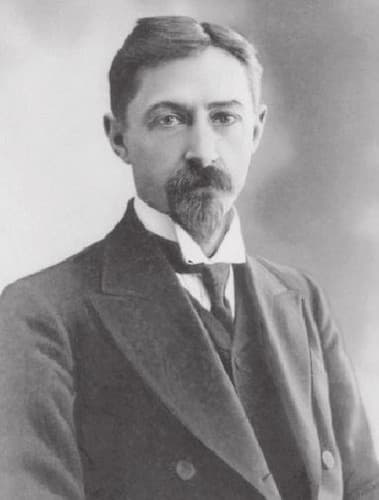
Ivan Alekseyevich Bunin was a Russian author known for his contributions to literature in the early 20th century. He is recognized for his poignant storytelling and vivid depictions of rural life, as exemplified in his work "The Village." Bunin received the Nobel Prize in Literature in 1933, making him the first Russian writer to be honored with this award.
Similar books
- The Grapes of Wrath
John Steinbeck
4.0 (750k) average on GoodreadsHistorical FictionDepicts the struggles and dehumanization of impoverished rural populations with stark realism.
- One Day in the Life of Ivan Denisovich
Aleksandr Solzhenitsyn
4.0 (93k) average on GoodreadsHistorical FictionOffers a similarly unsparing, day-to-day look at the harshness of life under oppressive conditions.
- Anna Karenina
Leo Tolstoy
4.0 (682k) average on GoodreadsHistorical FictionWhile Tolstoy's 'Anna Karenina' also features extensive portrayals of Russian peasant life, particularly through Levin's pursuit of agricultural reform, his depiction is often imbued with a sense of moral instruction and potential for spiritual growth. Tolstoy, despite acknowledging hardships, finds dignity and wisdom in the peasantry, often romanticizing their connection to the land and traditional values. Bunin, in contrast, offers no such romanticism or moral uplift; his peasants are largely portrayed as ignorant, brutal, and consumed by superstition, offering a stark and cynical counterpoint to Tolstoy's more hopeful, albeit complex, vision of rural Russia.
- Dead Souls
Nikolai Gogol
4.0 (8k) average on GoodreadsThrillerGogol's 'Dead Souls' also critiques the provincial Russian gentry and the institution of serfdom through satire and grotesque characterization. However, Gogol's critique often employs humor and hyperbole, even in its darkest moments, and focuses more on the absurdities and moral bankruptcy of the landowning class. Bunin's 'The Village,' while sharing a critical stance on Russian society, is far more naturalistic and devoid of Gogol's comedic elements. Bunin's focus is less on the satirical exposure of individual vices and more on the pervasive, systemic stagnation and spiritual emptiness of the peasantry itself, presented with a stark, unvarnished realism that lacks Gogol's playful, albeit dark, irony.
- Nineteen Eighty-Four
George Orwell
4.2 (5.5M) average on GoodreadsFictionWinston Smith dreams of truth and rebellion in a world where Big Brother watches all, but he confronts the terrifying power of a regime that controls not just actions, but thoughts.
- The Frozen River
Ariel Lawhon
4.4 (600k) average on GoodreadsFictionIn 1789 Maine, a heroic midwife's diary helps her expose a murder and get justice in a town that wants to silence her.





Enjoyed the summary?
A summary gives you the shape of the book. The book itself has the detail, the examples and the voice.
Find The Village on AmazonAs an Amazon Associate, BookBrief earns from qualifying purchases. How we're funded