

Synopsis
Covers the whole plot, including the ending.
- Difficulty
- Medium
- Pacing
- Fast
- Mood
- Gritty, Suspenseful, Intense, Dark
- Read it if
- You enjoy gritty, fast-paced urban thrillers with strong social commentary and a focus on gang culture.
- Skip it if
- You prefer gentle narratives or are sensitive to violence and mature themes.
The Warriors Plot Summary
Covers the whole plot, including the ending.
The Conclave
On a sweltering Fourth of July night, every major gang in New York City, including the Dominators from Coney Island, converges on Van Cortlandt Park in the Bronx. Cyrus, the charismatic and influential leader of the Gramercy Riffs, has called this unprecedented meeting, promising a city-wide truce and a united front against the police. The atmosphere is thick with tension and anticipation as thousands of gang members, many armed, listen to Cyrus's vision for a unified gang empire. Among the Coney Island contingent are Hinton, the reluctant leader, and his younger brother, Lunk, who is eager for action. The vast assembly of rival gangs creates an uneasy truce, held together only by Cyrus's powerful presence and the shared, albeit fragile, hope for a new order.
Cyrus's Assassination
Cyrus stands atop a makeshift stage, delivering a fiery speech about the gangs' potential power if they unite. He envisions a future where gangs control the city, free from police interference. As he reaches the climax of his address, a single gunshot rings out, and Cyrus collapses, dead. Pandemonium immediately erupts. The vast crowd, already on edge, dissolves into a panicked, violent mob. Accusations fly, and the fragile truce shatters. In the ensuing chaos, the Dominators, led by Hinton, find themselves disoriented and vulnerable, caught in a stampede of fleeing and fighting gangs. The dream of peace is shattered, replaced by an immediate struggle for survival as the police sirens begin to wail in the distance.
The Great Escape
Following Cyrus's death, the Dominators, specifically Hinton, Lunk, and their core crew, realize they are prime targets. They are far from their home turf in Coney Island, deep in enemy territory, and now implicated in a city-wide manhunt for Cyrus's killer. They make a desperate dash from Van Cortlandt Park, trying to blend into the fleeing crowds. The police are swarming the area, and rival gangs, believing the Dominators are responsible for the assassination, are actively hunting them. Hinton struggles to maintain order within his small group, while Lunk, fueled by youthful bravado, often acts impulsively. Their journey begins as a frantic escape, dodging both law enforcement and vengeful gangs through the confusing streets of the Bronx.
Subway Perils
Believing the subway system offers the fastest route back to Coney Island, the Dominators descend into the underground. However, the subway platforms and trains prove to be just as dangerous as the streets above. They encounter hostile gangs who recognize them or are simply looking for a fight. One particularly tense confrontation occurs with the Turnbull AC's, a heavily armed and aggressive gang. Hinton's strategic thinking is put to the test as he tries to navigate these encounters without losing any of his members. The claustrophobic environment of the subway amplifies their paranoia and fear, making every stop a potential ambush. The constant threat of discovery by both police and rival gangs keeps them on high alert.
Street Brawls
After a close call or a disrupted subway line, the Dominators are forced back onto the city streets. This exposes them to the full wrath of the city's gangs, all of whom are now actively hunting them, fueled by misinformation spread by the Riffs that the Dominators killed Cyrus. They clash with the Orphans, a smaller, less organized gang, in a brutal alleyway fight, where Hinton's leadership is tested as he tries to protect his younger brother, Lunk, and the rest of his crew. These street brawls are visceral and desperate, highlighting the raw violence that underpins the gang world. Each fight is a desperate struggle for survival, pushing the Dominators further into exhaustion and despair.
The Lizzies' Deception
Exhausted and desperate for rest, the Dominators encounter a group of women, the Lizzies, who appear friendly and offer them shelter and comfort. Lunk and the other younger members are easily lured by the promise of respite and female companionship. However, this proves to be a treacherous trap. The Lizzies, loyal to the Riffs and seeking to avenge Cyrus's death, drug the Dominators and attempt to turn them over to other gangs. Hinton, ever vigilant, senses the danger and manages to escape with his core group, but not without a violent struggle. This incident is a stark reminder of the pervasive danger and the betrayal that can come from unexpected sources in the city.
The Furies' Pursuit
As the Dominators push further into Manhattan, they are relentlessly pursued by the Baseball Furies, a notorious gang known for their distinctive baseball uniforms and bat-wielding aggression. This chase is one of the most iconic and terrifying sequences, as the Furies hunt the Dominators through the dark, deserted streets and parks. Hinton's strategic mind is crucial in evading their relentless attacks. The pursuit highlights the sheer endurance and courage required to survive this night. The Furies represent the raw, unthinking violence that the Dominators must overcome to reach home, pushing them to their physical and mental limits.
A Moment of Respite
After narrowly escaping the Baseball Furies, the Dominators find a brief moment of uneasy calm, perhaps in a deserted subway station or a forgotten corner of the city. This respite allows them to tend to their wounds, regroup, and reflect on their dangerous journey. Hinton tries to rally his dispirited crew, reminding them of their shared goal of reaching Coney Island. However, the constant threat and the exhaustion are taking their toll, and morale is low. This short pause emphasizes the psychological strain of their ordeal, offering a glimpse into their individual fears and the fragile bonds holding them together before the next challenge inevitably arises.
The Resolution
After an arduous and violent night, the Dominators finally stumble onto the familiar sands of Coney Island. Exhausted but alive, they have made it home. However, their ordeal isn't over. They discover that the true killer of Cyrus was Luther, the leader of the Rogues, who confessed over a radio broadcast. The Gramercy Riffs, having learned the truth, have issued a new command: Luther is to be dealt with. The Dominators, despite their exhaustion, must now decide how to confront Luther and clear their name. The final confrontation on the beach brings the themes of loyalty, justice, and the cyclical nature of violence to a head, leaving the Dominators forever changed by their night of survival.
Aftermath and Reflection
Having confronted Luther and survived the night, the Dominators are left to grapple with the aftermath of their harrowing journey. The experience has forged a deeper bond among them, but also left indelible scars. Hinton, having successfully led his crew through impossible odds, has solidified his leadership, but at a personal cost. Lunk, having witnessed the true brutality of the gang world, begins to mature beyond his earlier bravado. The novel concludes with the Dominators reflecting on their survival and the precariousness of their existence. The peace Cyrus envisioned remains elusive, but the Dominators have, against all odds, found their way home, forever marked by the night of the Conclave.
The Warriors Characters
Hinton
Protagonist
The reluctant, strategic leader of the Dominators.
Hinton is the thoughtful and strategic leader of the Dominators. Unlike many gang leaders, he is not driven by pure aggression but by a sense of responsibility for his crew, especially his younger brother, Lunk. He often acts as the voice of reason, trying to de-escalate conflicts and find the most pragmatic path to survival. His intelligence and ability to think under pressure are crucial to the Dominators' continued existence. He carries the weight of leadership with a quiet burden, preferring to avoid unnecessary violence but ready to defend his own when pushed.
Relationships: Lunk (Older brother, protector, mentor); Cyrus (Respected, albeit distant, figure whose vision he initially considers); Luther (Antagonist, the true killer of Cyrus)
Lunk
Supporting
Hinton's younger brother, eager for action and recognition.
Lunk is Hinton's younger brother, characterized by his youthful exuberance, impulsiveness, and a desire to prove himself within the gang. He often rushes into situations without thinking, driven by a need for excitement and recognition. While brave, he lacks Hinton's strategic foresight and can be naive. His journey is one of harsh lessons, as he witnesses the brutal realities of gang life firsthand. He looks up to Hinton but also resents his brother's cautious nature at times, yearning for more direct confrontation.
Relationships: Hinton (Younger brother, protected by, sometimes resentful of); Cyrus (Symbol of power he aspires to)
Cyrus
Mentioned/Catalyst
The charismatic leader of the Gramercy Riffs whose assassination sparks the conflict.
Cyrus is the powerful and charismatic leader of the Gramercy Riffs, the most influential gang in New York City. He is a visionary, dreaming of uniting all gangs into a single, unstoppable force that could challenge the establishment. His authority is immense, and his call for the Conclave is a testament to his influence. Though he appears only briefly before his death, his presence looms large over the entire narrative, as his assassination is the inciting incident that propels the Dominators' perilous journey. He represents a fleeting hope for a different future for the gangs.
Relationships: Hinton (Respected leader, his vision is briefly considered); Luther (His killer, an ultimate act of betrayal)
Luther
Antagonist
The treacherous leader of the Rogues and Cyrus's true assassin.
Luther is the cunning and malevolent leader of the Rogues. He is the true antagonist, responsible for assassinating Cyrus, an act that plunges the city into chaos and frames the Dominators. Luther is driven by a desire for power and a perverse sense of nihilism, completely devoid of loyalty or honor. His actions are calculated to sow discord and eliminate rivals. His confession over the radio, while revealing the truth, only serves to intensify the hunt for him, making him a central figure in the climax of the Dominators' journey.
Relationships: Cyrus (His victim, whom he betrayed); Hinton (The leader of the gang he framed)
Cleon
Supporting
The original leader of the Warriors, blamed for Cyrus's death.
Cleon is the original and more traditional leader of the Warriors (often referred to as the Dominators in the novel, but the film's name for them is more widely known). He is a strong, assertive figure who commands respect within his crew. At the Conclave, he is positioned as one of the key figures, but in the immediate aftermath of Cyrus's assassination, he is unfairly singled out by the Riffs and brutally beaten, presumed to be the killer. His fate serves as a brutal warning to the rest of the Dominators, emphasizing the dire consequences of being wrongly accused.
Relationships: Hinton (Fellow gang member, leader before Hinton takes over); Cyrus (Respected, but ultimately betrayed by his supposed allies)
Ajax
Supporting
A hot-headed, aggressive member of the Dominators.
Ajax is a physically imposing and highly aggressive member of the Dominators. He is characterized by his short temper, eagerness for a fight, and a generally rebellious attitude. He often chafes under Hinton's more cautious leadership, preferring direct confrontation. While his brute strength is an asset in skirmishes, his impulsiveness can also put the group in danger. He represents the raw, untamed energy of the gang, often acting as the muscle and the instigator in many of the Dominators' encounters.
Relationships: Hinton (Follower, often challenges Hinton's decisions); Lunk (Fellow gang member, often shares Lunk's eagerness for action)
Mercy
Supporting
A street-smart woman who allies with the Dominators.
Mercy is a tough, street-smart woman who the Dominators encounter during their journey. She is initially part of the Orphans, a smaller, less organized gang, but she quickly recognizes the Dominators' resilience and strength. She is pragmatic and resourceful, offering a different perspective and often providing crucial information or assistance. Her presence adds a layer of complexity to the all-male gang dynamic, highlighting themes of survival and unexpected alliances in a dangerous city. She is a survivor in her own right, capable of holding her own in a harsh environment.
Relationships: Hinton (Ally, potential romantic interest); Orphans (Former affiliation)
The Gramercy Riffs
Supporting/Antagonistic
The most powerful gang, initially seeking peace, then revenge.
The Gramercy Riffs are the dominant gang in New York City, led by the charismatic Cyrus. They are the orchestrators of the peace treaty, and their authority is unparalleled. After Cyrus's assassination, they become a central force in the hunt for his killers, initially believing the Dominators are responsible. Their vast network and influence mean that their word carries weight across the city, making them both a source of initial hope and later, a formidable antagonistic force against the Dominators until the truth about Luther is revealed. They represent the established order within the gang world.
Relationships: Cyrus (Their revered leader); Dominators (Initially allies, then perceived enemies, then allies again)
The Warriors Themes
The Quest for Home and Identity
The Dominators' dangerous journey back to Coney Island is not merely a physical trek but a quest for belonging and self-definition. Stripped of their usual territory and reputation, they are forced to rely on their inner strength and the bonds of their 'family.' Each step closer to home reinforces their identity as Dominators, survivors against overwhelming odds. The physical journey symbolizes their struggle to maintain their sense of self in a world that has cast them aside, as seen in Hinton's relentless drive to protect his crew and Lunk's desperate attempts to prove himself worthy of his gang's name.
“Home was a place, but it was also a feeling, a place inside themselves where they belonged.”
The Illusion of Order and the Reality of Chaos
The novel begins with Cyrus's grand vision of unity and order among the gangs, a powerful but ultimately fragile illusion shattered by his assassination. This event immediately plunges the city into chaos, revealing the underlying brutality and lawlessness that always simmer beneath the surface. The Dominators' journey is a constant navigation of this chaos, where alliances are fleeting, and violence is ever-present. The police, meant to enforce order, are often just another source of danger, highlighting the breakdown of societal structures and the pervasive sense of anarchy in the urban setting. The Conclave itself, meant to bring peace, becomes the catalyst for widespread pandemonium.
“Cyrus had promised them a kingdom, but all they inherited was a war.”
Brotherhood and Loyalty
Despite the constant threats and internal tensions, the bond among the Dominators—their 'family'—is a central theme. Hinton's unwavering commitment to protecting Lunk and the rest of his crew, even at great personal risk, exemplifies this loyalty. The shared ordeal strengthens their camaraderie, forging an unbreakable bond born of survival. This brotherhood provides comfort and strength in a hostile world where trust is scarce, as evidenced by their collective efforts to overcome each new challenge, from the Lizzies' deception to the Furies' pursuit. Their survival hinges entirely on their ability to stick together and trust one another.
“They were not just a gang; they were a family, and families stuck together, no matter what.”
Survival Against All Odds
The Dominators' entire journey is a testament to human resilience and the will to survive. From being falsely accused of murder to navigating hostile territories, evading both rival gangs and the police, they face an endless barrage of life-threatening challenges. Each encounter—the subway fights, the street brawls, the Lizzies' trap, the Furies' pursuit—tests their physical and mental endurance to its limits. Their survival is a triumph of grit, quick thinking, and collective determination, highlighting their primal instinct to live and return to their sanctuary. The narrative constantly emphasizes the precariousness of their existence and their sheer will to push forward.
“Every step was a gamble, every shadow a threat, but they kept moving, because what else was there?”
Plot Devices & Literary Techniques
The MacGuffin (Cyrus's Assassination)
The central plot driver, whose true perpetrator is initially unknown.
Cyrus's assassination serves as the primary MacGuffin of the story. While the identity of the killer (Luther) is eventually revealed, the initial ambiguity and the false accusation against the Dominators drive the entire plot. It forces the Dominators to flee, initiates the city-wide manhunt, and creates the pervasive sense of danger and urgency. The true killer's identity becomes less important than the immediate consequences of the act, which sets the Dominators' perilous journey in motion. The focus shifts from solving the murder to surviving its fallout.
The Journey/Odyssey Motif
A classic narrative structure where protagonists undertake a long, perilous journey home.
The entire novel is structured as an urban odyssey, mirroring ancient heroic tales. The Dominators' journey from the Bronx back to Coney Island is a modern-day epic, filled with trials, temptations, and confrontations with various 'monsters' (rival gangs). Each district they pass through represents a new challenge or 'land' they must navigate, testing their courage, loyalty, and resourcefulness. This motif elevates the gang's struggle beyond mere street violence, imbuing it with a mythic quality and highlighting their resilience in the face of overwhelming odds, much like Odysseus's return to Ithaca.
Misinformation and False Accusation
The spreading of false information that fuels the conflict and hunt.
The pervasive misinformation that the Dominators killed Cyrus is a crucial plot device. This false accusation, spread by the Riffs and believed by most other gangs, turns the Dominators into targets across the city. It justifies the relentless pursuit by numerous rival gangs and intensifies the danger they face. This device creates dramatic irony, as the audience knows the Dominators are innocent, but the characters must fight for their lives against those who believe them guilty. It underscores the theme of chaos and the breakdown of truth in their world, making their journey even more desperate.
The Urban Labyrinth
The city itself acts as a complex, dangerous maze.
New York City, with its intricate subway lines, dark alleys, and distinct gang territories, functions as a vast, unforgiving labyrinth. The Dominators must navigate this complex environment, where every turn can lead to danger or a dead end. The city's geography is not just a backdrop but an active antagonist, presenting obstacles, hiding enemies, and disorienting the protagonists. The subway system, in particular, becomes a claustrophobic and unpredictable passage, embodying the bewildering and perilous nature of their quest through the urban jungle.
The Warriors Quotes
“The long, hot, terrible summer was almost over. It had been a summer of riots and burning and looting. The city was a smoldering ruin. And now, as the summer drew to a close, the gangs were gathering.”
“We're going to take over the city. We're going to run this town. We're going to be the kings.”
“Can you dig it?”
“There are nine of us. Nine. And the rest of them are coming after us.”
“We're the Warriors. We're the best. We're going to make it back.”
“Everybody blames everybody else. Nobody wants to take the rap.”
“The city was a labyrinth, and they were trapped inside it.”
“You got to be tough to survive in this city. Real tough.”
“They were all animals, just different kinds of animals.”
“There were thousands of them out there, and only nine of us.”
“Sometimes you just gotta fight. No other way out.”
“The night was endless, and every shadow held a threat.”
“They had to stick together. It was the only way.”
“Nobody was going to help them. They were on their own.”
Quiz
10 questions on the plot and the characters. Each answer comes with a short explanation.
Question 1
What is the name of the gang whose journey back to their home territory is chronicled in 'The Warriors'?
- The Rogues
- The Dominators
- The Punks
- The Destroyers
Show answer
B. The Dominators The novel specifically follows 'The Dominators' as they make their way back home after the peace rally.
Question 2
On what specific holiday does the fateful peace rally take place in the Bronx park?
- Memorial Day
- Labor Day
- July 4th
- Halloween
Show answer
C. July 4th The story begins on a 'sweltering July 4 night' when the gangs gather for the rally.
Question 3
What event immediately precedes the breakdown of order and the onset of chaos at the peace rally?
- A sudden police raid
- A prominent gang leader is killed
- A rival gang attacks the stage
- The power goes out in the park
Show answer
B. A prominent gang leader is killed The summary states that 'The crowd of miscreants turns violent after a prominent gang leader is killed'.
Question 4
The novel is set in which major American city and during which decade?
- Chicago, 1970s
- Los Angeles, 1960s
- New York City, 1960s
- Philadelphia, 1950s
Show answer
C. New York City, 1960s The book chronicles 'one New York City gang's nocturnal journey through the... city streets of the 1960s'.
Question 5
Beyond the literal journey, what broader concept does the novel explore regarding the identity of the New York City teenagers?
- The pursuit of higher education
- The formation of identity and personal strength through gang affiliation
- The desire to escape the city for rural life
- The importance of individual entrepreneurship
Show answer
B. The formation of identity and personal strength through gang affiliation The novel 'examines New York City teenagers, left behind by society, who form identity and personal strength through their affiliation with their 'family''.
Question 6
What is the primary danger the Dominators face as they attempt to return home after the rally?
- Natural disasters like floods or storms
- Attacks from other gangs and pursuit by the police
- Lack of food and water in the city
- Loss of directions and getting lost in the subway system
Show answer
B. Attacks from other gangs and pursuit by the police The Dominators must make their way back 'without being killed' while 'The police are prowling the city in search of anyone involved in the mayhem'.
Question 7
The novel is described as weaving together social commentary with what other narrative element?
- Modern scientific theories
- Ancient legends
- Contemporary political manifestos
- Futuristic dystopian visions
Show answer
B. Ancient legends The summary explicitly states that 'The Warriors weaves together social commentary with ancient legends'.
Question 8
What does the phrase 'left behind by society' suggest about the social standing of the teenagers portrayed in the novel?
- They are affluent and privileged individuals seeking thrills.
- They are marginalized or neglected by the mainstream societal structures.
- They have voluntarily chosen to abandon societal norms for personal freedom.
- They are recent immigrants struggling to assimilate into American culture.
Show answer
B. They are marginalized or neglected by the mainstream societal structures. The phrase 'left behind by society' implies a sense of neglect or abandonment by the larger social system, leading them to find community and identity elsewhere, such as in gangs.
Question 9
The 'seedy, dangerous subways and city streets' serve what primary purpose in the narrative?
- They are merely a backdrop for romantic encounters.
- They represent the challenging and hostile environment the characters must navigate.
- They symbolize the characters' aspirations for a better life.
- They are a source of income for the gang members.
Show answer
B. They represent the challenging and hostile environment the characters must navigate. The description highlights the 'dangerous' nature of these locations, emphasizing the perilous journey the Dominators undertake through a hostile urban landscape.
Question 10
How does the novel's examination of gang affiliation as a source of 'identity and personal strength' relate to its classification as a 'coming-of-age tale'?
- It suggests that gang life is a temporary phase that teenagers quickly outgrow without lasting impact.
- It illustrates how young people, in the absence of traditional support, find belonging and self-definition within a chosen 'family' during a formative period.
- It implies that the characters are already fully formed adults, merely revisiting past experiences.
- It focuses on the physical maturation of the characters rather than their psychological development.
Show answer
B. It illustrates how young people, in the absence of traditional support, find belonging and self-definition within a chosen 'family' during a formative period. A coming-of-age tale typically focuses on a protagonist's journey from childhood to adulthood, often involving the discovery of identity. For these 'New York City teenagers,' their gang affiliation serves as a crucial, albeit unconventional, means of establishing identity and strength during this developmental stage.
The Warriors FAQ
What is the central premise of 'The Warriors'?
'The Warriors' follows the Dominators, a Coney Island gang, as they attempt to return to their home turf from a massive gang summit in the Bronx. Their journey becomes a desperate fight for survival after the leader of the host gang, Ismael, is assassinated, and they are wrongly implicated, making them targets for every other gang and the police.
Who are the main characters in the Dominators gang?
The primary characters from the Dominators are Kid, the de facto leader who navigates the gang through the city's dangers; Lunk, the strong but sometimes impulsive member; and Junior, the youngest and most vulnerable, whose experiences highlight the brutal reality of their world. Their interactions showcase the internal dynamics and loyalties within the gang.
What event triggers the Dominators' perilous journey?
The perilous journey begins after Ismael, the charismatic and influential leader of the Delancey Thrones, is murdered during a city-wide gang summit in Van Cortlandt Park. The Dominators are erroneously blamed for his death, turning them into targets for all the other gangs seeking revenge and the police who are cracking down on the ensuing chaos.
How does the novel portray the New York City setting?
The novel vividly portrays 1960s New York City as a hostile, decaying urban landscape, particularly the subway system and neglected neighborhoods. It emphasizes the city's role as both a maze and a battleground, reflecting the characters' alienation and the societal neglect that breeds gang culture. The heat of July 4th further amplifies the oppressive atmosphere.
What role do the police play in the story?
The police are depicted as an omnipresent and often brutal force, adding another layer of threat to the Dominators' journey. They are not protectors but rather antagonists, actively pursuing and arresting gang members, often with excessive force, intensifying the feeling of being hunted from all sides.
What is the significance of the novel's title, 'The Warriors'?
The title 'The Warriors' directly refers to the gang members, particularly the Dominators, who are constantly fighting for survival and identity in a hostile urban environment. It also subtly alludes to historical and mythological warrior archetypes, connecting their struggle to ancient tales of heroism and perilous journeys, despite their modern, gritty context.
Does the novel explicitly reference the Anabasis by Xenophon, like its film adaptation?
While the novel does not explicitly name 'Anabasis' as its inspiration, the narrative structure of a band of warriors stranded deep in enemy territory and fighting their way home is a clear thematic echo of Xenophon's account. Yurick's novel uses this classical framework to elevate the street gangs' struggle to an epic scale.
Are there any symbolic objects or recurring motifs in the book?
The subway system itself acts as a significant motif, symbolizing a labyrinthine underworld and a gauntlet that must be run for survival. The summer heat and the constant presence of other gangs or the police also serve as recurring motifs, highlighting the relentless pressure and danger faced by the Dominators.
How does the novel explore the concept of 'family' within gangs?
The novel deeply explores the concept of 'family' as a crucial support system for these marginalized teenagers. Gangs provide a sense of belonging, loyalty, and protection that is often absent in their lives, as seen in the Dominators' reliance on each other for survival and their shared identity, even amidst internal conflicts.
What psychological impact does the constant threat of violence have on the characters?
The constant threat of violence profoundly impacts the characters, fostering a state of hyper-vigilance, paranoia, and a hardened emotional shell. This environment forces them to make brutal decisions and internalize a 'kill or be killed' mentality, shaping their identities and relationships within the gang.
How does the author portray the transition from innocence to experience, particularly for younger characters like Junior?
The author portrays the transition from innocence to experience as a brutal and rapid process, especially for younger characters like Junior. Junior's initial naivety is quickly shattered by the harsh realities of violence and betrayal, forcing him to confront the grim consequences of his environment and mature in a traumatic way.
What societal critiques does 'The Warriors' offer regarding youth and poverty?
'The Warriors' offers a scathing critique of societal neglect, illustrating how poverty and lack of opportunity push young people into gang life for identity and survival. It highlights the systemic failures that create these marginalized communities, where violence becomes a primary mode of communication and power.
Is there a clear antagonist beyond the general threat of other gangs and the police?
While there isn't a singular, overarching antagonist in the traditional sense, the primary antagonist is arguably the hostile urban environment itself, coupled with the pervasive system of societal neglect that fuels gang warfare. The character of Ismael's killer, though brief, represents the catalyst for the Dominators' immediate peril.
How does the novel's ending resolve the Dominators' journey?
The novel's ending sees the Dominators successfully make it back to Coney Island, but it's not a triumphant return. They are exhausted, scarred, and forever changed by their ordeal. The resolution emphasizes survival over victory, leaving a lingering sense of the cyclical nature of their struggles rather than a definitive happy ending.
What is the significance of the July 4th setting?
The July 4th setting is deeply ironic and significant. It's a day of national celebration and independence, yet for the gang members, it becomes a night of violence, fear, and a fight for their very survival and freedom from societal oppression. This contrast highlights the profound disconnect between the American ideal and their lived reality.
How does the novel handle themes of leadership and responsibility within the gang?
The novel examines themes of leadership and responsibility through Kid, who shoulders the burden of guiding the Dominators home. His decisions, often made under immense pressure, reflect the moral ambiguities and difficult choices inherent in leading a group in such dire circumstances, highlighting the weight of responsibility in their 'family' structure.
Does the book offer any hope for the future of its characters?
The book offers a grim and realistic perspective, with little overt hope for a brighter future for its characters. While the Dominators survive their immediate ordeal, the ending suggests they remain trapped within the cycle of gang life and societal neglect, implying that their struggles are ongoing rather than resolved.
How does the novel's depiction of gangs differ from or align with common stereotypes?
The novel both aligns with and subverts common gang stereotypes. It portrays the violence and territorialism often associated with gangs but delves deeper into the psychological underpinnings, showing the gangs as surrogate families and sources of identity for marginalized youth, adding a layer of empathy and complexity often missing in stereotypical portrayals.
Similar books
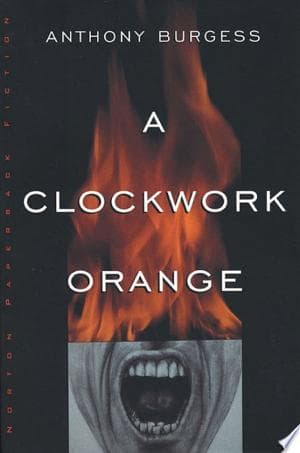
- A Clockwork Orange
Anthony Burgess
4.0 (601k) average on GoodreadsThrillerExplores youth delinquency and societal breakdown in a stylized, intense manner.
- Angels & Demons
Dan Brown
3.9 (2.7M) average on GoodreadsThrillerA Harvard symbologist races through Rome's ancient sites, deciphering cryptic clues to unmask the Illuminati and stop a vengeful plot to destroy the Vatican with a stolen antimatter weapon.
- Gone Girl
Gillian Flynn
4.1 (2.3M) average on GoodreadsThrillerA wife's sudden disappearance on her fifth anniversary reveals a web of lies and psychological warfare, exposing the secrets within a seemingly perfect marriage.
- The Girl on the Train
Paula Hawkins
3.9 (2.1M) average on GoodreadsThrillerA woman’s fascination with a seemingly perfect couple she watches from her daily train commute leads her into a dark investigation when she witnesses something that shatters their idyllic image.
- The Lovely Bones
Alice Sebold
3.8 (2M) average on GoodreadsFantasyA murdered teenage girl watches from the afterlife as her family struggles with grief and her killer remains free, wanting to bridge the gap between worlds to bring him to justice.
- The Da Vinci Code
Dan Brown
3.9 (1.9M) average on GoodreadsThrillerA symbologist and a cryptologist race through European landmarks, deciphering ancient codes and uncovering a conspiracy that could rewrite the foundations of Christianity.





Enjoyed the summary?
A summary gives you the shape of the book. The book itself has the detail, the examples and the voice.
Find The Warriors on AmazonAs an Amazon Associate, BookBrief earns from qualifying purchases. How we're funded