“The bus is a great leveler. It takes the rich and the poor, the good and the bad, and it shakes them all up together.”
— Narrator reflecting on the bus journey as a microcosm of society.

Sign in to track this book
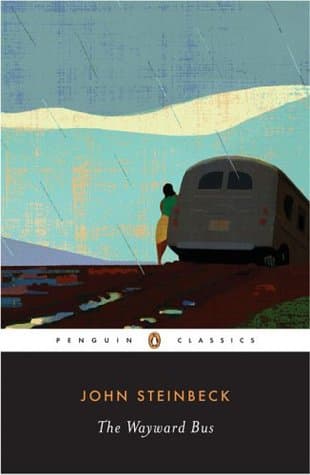
On a rickety bus traversing California's forgotten byways, a group of dreamers, schemers, saints, and sinners are jolted from their pasts toward an uncertain, yet hopeful, future.
Ask anything about The Wayward Bus and get instant answers grounded in the summary.
The story opens at Rebel Corners, a desolate bus stop and lunch counter run by Juan Chicoy, a Mexican-American mechanic and driver, and his wife, Alice. Juan is a man of quiet dignity and skill, but feels tired of his life. Alice, a frustrated woman, constantly argues with him and their waitress, Norma. Norma, a naive girl, is obsessed with movie stars, especially Clark Gable. The bus stop is a place of stagnation and tensions, reflecting the trapped lives of its residents. As dawn breaks, they prepare for the day's journey, unaware of the passengers who will soon arrive, each carrying their own problems and desires.
The first passengers arrive, including the wealthy Ernest Horton and his wife, Mildred, who is secretly bored. Soon after, Camille Oaks, a striptease artist, makes her entrance, immediately getting the attention of the men, especially Horton. Later, the young couple, Kit and George, arrive, on their way to elope, but clearly struggling with their decision. Each passenger brings a distinct energy and set of expectations to the small, isolated bus stop, creating a small society about to start a journey, both physical and emotional. The initial interactions are polite but have underlying tensions.
Juan finally gets the old bus, 'Sweetheart,' running, and the group departs Rebel Corners. The close quarters of the bus immediately amplify the passengers' personalities and hidden resentments. Alice, riding along, continues her nagging, while Norma, excited by the presence of new people, moves about. Camille's presence causes discomfort and fascination. Horton tries to maintain his respectable facade, but his interest in Camille is clear. The journey is hard, the old bus struggling on the rough, unpaved back roads of California, like the internal struggles of its occupants. The initial politeness begins to break down as the journey continues.
As the bus rattles along, the sexual tensions among the passengers become clearer. Horton, despite his marriage, is captivated by Camille, and she enjoys the attention. George, the young groom-to-be, is also drawn to Camille, upsetting his fiancée, Kit. Juan observes these dynamics with understanding, but his own frustrations are present. Alice, watchful and bitter, makes snide remarks, increasing the tension. The bus acts as a pressure cooker, bringing out the unacknowledged desires and prejudices of the passengers, leading to unease.
The journey takes an unexpected turn when they encounter a washed-out bridge, forcing Juan to take a detour through a remote dirt road. This deviation from the planned route makes everyone feel more isolated and vulnerable. As they navigate the difficult terrain, the old bus, 'Sweetheart,' finally breaks down. Stranded in the middle of nowhere, far from help, the passengers must confront their situation and, by extension, their own limits. The breakdown removes their illusions of control and comfort.
With the bus broken down, the passengers must make camp in the desolate wilderness. The forced closeness and lack of amenities remove their social masks. Horton, usually reserved, becomes agitated and demanding. Camille remains a source of fascination. George and Kit's relationship is strained, while Norma's naive dreams clash with the harsh reality. Alice's bitterness grows, and she continues to criticize Juan. Juan, however, remains calm and methodical, focusing on repairing the bus. His quiet competence contrasts with the passengers' anxieties. The wilderness reveals their true characters.
Overwhelmed by the constant arguing and the weight of responsibility, Juan temporarily leaves the bus and its passengers, going into the woods for solitude. During his absence, the passengers are left to themselves, their helplessness increased. Meanwhile, Norma, who has been focused on her movie star fantasies, experiences disillusionment. She overhears a conversation that shatters her idealized view of the world, realizing the difference between her dreams and the messy reality of human relationships. This moment marks a change in her understanding of life, moving her away from childish innocence.
Later, in the darkness of their camp, Ernest Horton, under the influence of alcohol and stress, shows insecurity and unhappiness beneath his respectable appearance. He confides in Camille, expressing his loneliness and dissatisfaction with his life. Unexpectedly, Camille, often seen as cynical, responds with empathy and kindness, offering him comfort. This interaction shows the hidden complexities of their characters, demonstrating that even superficial individuals have deeper emotions.
After his short break, Juan returns to the bus and, with his skill and patience, meticulously repairs the broken engine. It is a long task, but he works with focus, showing the dignity of labor. As he works, the passengers observe him, some with renewed respect, others still self-absorbed. Finally, Juan fixes 'Sweetheart.' The bus sputters back to life, and the journey resumes. The shared experience in the wilderness has changed the group, leaving them with an unspoken, altered perspective on themselves and each other.
The bus eventually reaches its destination, a small town. The passengers disembark, each going their separate ways. Horton and Mildred continue their strained marriage, but perhaps with a faint self-awareness. George and Kit, after their trials, seem to have a renewed, if more realistic, commitment to each other. Camille disappears into the crowd. Norma, having shed some of her naive illusions, faces the future with a new understanding. Juan and Alice return to their bus stop, their relationship still difficult but having survived another storm. The journey has ended, but the impact of their shared experience lingers, suggesting that while their destinations are reached, their internal journeys continue.
The Protagonist
Juan begins as a man burdened by routine and a difficult marriage, and while his circumstances don't drastically change, his journey reinforces his quiet dignity and essential competence amidst human chaos.
The Supporting
Alice remains largely unchanged, her bitterness a constant, though the journey slightly shifts her focus from pure self-pity to a shared, albeit begrudging, resilience.
The Supporting
Norma starts as a dreamy, naive girl and, through a moment of disillusionment, begins to understand the complexities and disappointments of the real world, marking a transition to a more mature perspective.
The Supporting
Camille maintains her worldly persona but reveals unexpected layers of empathy and kindness, showing that her character is more nuanced than her initial appearance suggests.
The Supporting
Horton's respectable facade cracks under pressure, revealing his deep insecurities and unhappiness, though he ultimately returns to his established life, perhaps with a flicker of self-awareness.
The Supporting
Mildred remains largely a static character, her boredom and resentment a consistent presence, reflecting the stagnant nature of her life.
The Supporting
George begins as an easily swayed youth but, through the journey's trials, seems to solidify his commitment to Kit, moving towards a more mature understanding of love.
The Supporting
Kit faces anxieties about her relationship but emerges with a stronger, more realistic commitment to George, having weathered the challenges together.
The Mentioned
Pimples undergoes no significant arc, serving more as a background character who endures the journey.
Many characters in 'The Wayward Bus' deal with disillusionment in their lives. Alice is bitter about her marriage, while Ernest Horton hides unhappiness. Norma constantly escapes into movie star fantasies to avoid reality. The bus breakdown and forced encampment in the wilderness remove these illusions, making characters like Norma confront the difference between fantasy and reality. The journey, initially a path to a 'better future' for some, often leads to a deeper understanding of their current, inescapable problems.
“''What good is it to be a man, if you have to do what other people want?'”
The book explores the complexities of marriage and relationships. The marriage of Juan and Alice is a main example, characterized by bitterness and lack of communication. The Hortons' marriage is also strained, marked by Mildred's boredom and Ernest's hidden dissatisfaction. Even the young, eloping couple, George and Kit, face immediate challenges, showing their bond's fragility. Steinbeck portrays these relationships as often transactional or unfulfilling, suggesting that true connection is rare amid personal frustrations.
“''A woman can make a man's life hell, but she can't make him do what he don't want to do.'”
Despite being confined together on a bus, many characters experience isolation. Juan Chicoy, though competent, is emotionally distant. Alice's bitterness isolates her. Even within couples, there are vast emotional distances, as seen with the Hortons. While moments of unexpected connection occur, such as Camille's empathy for Horton, these are often fleeting and from shared vulnerability rather than deep understanding. The bus becomes a symbol of forced closeness and the loneliness of individuals, showing how people can be physically near yet emotionally far apart.
“''It's a strange thing,' he thought, 'how you can be so close to people and not know anything about them.'”
Juan Chicoy shows the dignity of labor and craftsmanship. His quiet competence and deep understanding of his bus, 'Sweetheart,' contrast with the anxieties of his passengers. When the bus breaks down, Juan's skill, patience, and effort save them. His work is not just a job; it is an extension of himself, giving him purpose that others lack. Through Juan, Steinbeck shows the value of practical skill and the quiet pride in doing a job well, contrasting it with the perceived failures of the more 'respectable' characters.
“''He was a good mechanic, and he loved the bus.'”
The group of passengers on the bus offers a look at society, allowing Steinbeck to explore social class and hypocrisy. Ernest Horton, a wealthy businessman, initially projects an image of moral superiority, yet he has insecurities. Camille Oaks, a striptease artist, is initially judged by others, but often shows more genuine empathy than her 'respectable' counterparts. The confined space of the bus and shared adversity remove social facades, revealing flaws and virtues regardless of economic standing. Steinbeck suggests that social status often hides personal failings and that true character is shown under pressure, not by outward appearances.
“''People don't change much. They just get older.'”
A literal and symbolic vehicle for the journey of life and self-discovery.
The bus itself, named 'Sweetheart,' is a central plot device. Literally, it transports the characters, but symbolically, it represents the journey of life, often taking unexpected detours and facing breakdowns. Its old age and constant need for repair mirror the fragility and imperfections of the human condition and the relationships within. The bus acts as a confined microcosm of society, forcing diverse individuals into close proximity and amplifying their interactions. Its breakdown in the wilderness serves as a catalyst, stripping away social facades and forcing characters to confront their true selves and dependencies, making it a critical element in the narrative's exploration of human nature.
A physical obstacle symbolizing the disruption of plans and the unpredictable nature of life.
The washed-out bridge serves as a crucial plot device that forces the bus off its intended path. It is a literal barrier that represents the unpredictable obstacles and disruptions that life throws in one's way. This unforeseen event directly leads to the bus's breakdown and the passengers being stranded, which is the turning point for much of the character development and revelation. Symbolically, it disrupts the 'straight path' that characters might envision for their lives, pushing them into uncomfortable detours that expose their vulnerabilities and force them to adapt, or fail to, in the face of unforeseen adversity.
A setting that strips away social conventions and reveals characters' true selves.
The forced encampment in the desolate wilderness after the bus breaks down is a significant plot device. This isolated setting removes the characters from the comforts and social conventions of civilization, creating a raw environment where their true natures and hidden anxieties come to the forefront. Without the usual distractions and societal pressures, characters are forced to interact more authentically, revealing their insecurities, desires, and prejudices. The wilderness acts as a crucible, intensifying conflicts and fostering unexpected moments of connection or revelation. It underscores the theme that human beings, stripped of their external trappings, are often left to grapple with their fundamental selves.
Place names that subtly foreshadow themes and character states.
Steinbeck uses symbolic place names to subtly enhance the novel's themes. 'Rebel Corners' where the bus stop is located, suggests a place on the fringe, a corner of resistance or stagnation, where characters are perhaps rebelling against their own lives or trapped by circumstances. The bus itself, 'Sweetheart,' despite its old and unreliable nature, hints at a romanticized, perhaps naive, view of journey or escape. These names are not just labels but contribute to the atmosphere and thematic depth of the narrative, giving readers clues about the emotional and psychological landscape of the story before specific events even unfold, embedding meaning into the very fabric of the setting.
“The bus is a great leveler. It takes the rich and the poor, the good and the bad, and it shakes them all up together.”
— Narrator reflecting on the bus journey as a microcosm of society.
“People are always looking for something, and they never find it.”
— Alice Chicoy observes the passengers' restless desires.
“A man can be lonely in a crowd, but he can be lonelier when he's by himself.”
— Thoughts of Juan Chicoy, the bus driver, on isolation.
“The trouble with people is they don't know what they want, but they want it bad.”
— Mildred Pritchard commenting on human impulsiveness.
“You can't run away from yourself. Wherever you go, there you are.”
— Juan Chicoy reflecting on his own attempts to escape his past.
“Hope is a funny thing. It keeps you going when there's nothing to go on.”
— Narrator on the passengers' persistence despite uncertainty.
“We're all just passengers on this bus, going nowhere in particular.”
— Ernest Horton, a traveling salesman, philosophizing about life.
“Sometimes the best way to find yourself is to get lost.”
— Juan Chicoy considering the detours in life and the bus route.
“Money can buy you a seat on the bus, but it can't buy you a destination.”
— Narrator contrasting material wealth with purpose.
“The road is full of potholes, but you have to keep driving.”
— Juan Chicoy's practical wisdom about persevering through difficulties.
“We're all actors on a stage, and the bus is our little theater.”
— Camille Oaks, an aspiring actress, viewing the journey dramatically.
“You can't judge a person by the seat they take on the bus.”
— Narrator on the superficial judgments made among passengers.
“The world is full of broken people trying to fix each other.”
— Alice Chicoy observing the interactions and dependencies among passengers.
“Sometimes the journey is more important than the destination.”
— Juan Chicoy reflecting on the bus's unexpected stops and delays.
“We're all just stories waiting to be told, and the bus is full of them.”
— Narrator emphasizing the diverse backgrounds of the passengers.
Ready to see how well you understood this book? Take our interactive quiz with 10 questions.
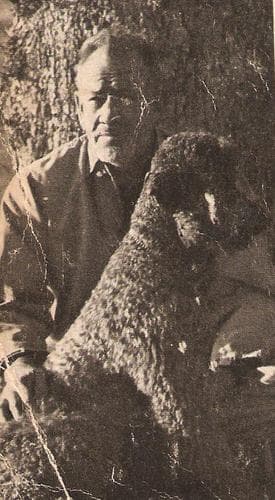
John Ernst Steinbeck was an American writer. He won the 1962 Nobel Prize in Literature "for his realistic and imaginative writings, combining as they do sympathetic humor and keen social perception". He has been called "a giant of American letters."
Support the author — grab the full book.
As an Amazon Associate, BookBrief earns from qualifying purchases, at no extra cost to you. How we're funded.