
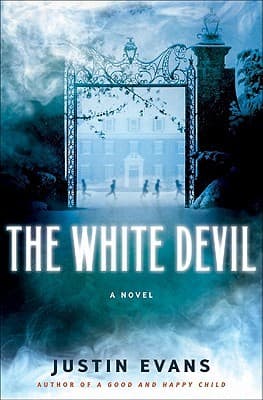
Synopsis
Covers the whole plot, including the ending.
- Difficulty
- Medium
- Pacing
- Moderate
- Mood
- Atmospheric, Suspenseful, Dark, Mysterious, Gothic
- Read it if
- You enjoy atmospheric boarding school mysteries with a dark, supernatural edge and literary allusions.
- Skip it if
- You dislike horror elements, ambiguous endings, or stories with a strong focus on historical figures and their occult interpretations.
The White Devil Plot Summary
Covers the whole plot, including the ending.
Arrival at Harrow
Seventeen-year-old Andrew Taylor arrives at the Harrow School in England with his father. Andrew, an American, was sent there after a traumatic incident at his previous school where a student died, though Andrew was cleared. His father, a wealthy man, hopes the change will help Andrew move past his dark history. Andrew is immediately struck by Harrow's old buildings and strong sense of history. He gets his room and starts to navigate the complex social rules of the elite boarding school, feeling like an outsider.
Initial Encounters and the Byronic Club
Andrew quickly meets his quiet, intellectual roommate, Simon, and other students like the charming but somewhat threatening Julian, and the more reserved Edward. He learns about the 'Byronic Club,' a secret society obsessed with Lord Byron, a famous former student, and his dark legacy. The club is rumored to hold unusual rituals and discussions about Byron's poetry and life. Julian seems to be a key figure in this club, and Andrew feels an immediate, unsettling pull toward their activities, sensing a link to the darkness he thought he'd escaped.
The First Mystery: A Past Suicide
Andrew starts to hear rumors about a former Harrow student, Alistair, who died by suicide years ago under strange circumstances. The official story is that Alistair jumped from a high window, but many believe there was more to it. While exploring the old school buildings, Andrew finds a hidden compartment in his room—a secret space left by previous occupants. Inside, he finds an old, leather-bound diary belonging to Alistair. The diary entries are cryptic, full of poetic thoughts, disturbing drawings, and mentions of ancient mythology and a 'white devil,' hinting at a deeper, more sinister truth behind Alistair's death.
The Byronic Club's Invitation
Julian, sensing Andrew's interest and perhaps his own inner turmoil, invites Andrew to join the Byronic Club. Andrew, drawn by the mystery and a desire to understand Alistair's fate, accepts. The club meetings are held in secret, late at night, in candlelit rooms. They involve intense discussions of Byron's poetry, philosophy, and the nature of good and evil. Andrew observes their rituals, which include dramatic readings, debates, and a shared fascination with the darker parts of human nature. He notices a growing intensity among the members, especially Julian, who seems to have a strong influence over the others, pushing them toward more extreme interpretations of Byron's legacy.
Deciphering Alistair's Diary
Andrew tells Simon about Alistair's diary, and together they begin to understand its increasingly disturbing contents. The diary shows Alistair's growing obsession with Lord Byron and a poem about a 'white devil'—a malevolent entity or force. Alistair's entries describe his belief that this 'white devil' was influencing him and others at Harrow. The boys discover that Alistair was convinced that the 'white devil' was not just a metaphor but a real, corrupting presence in the school, passed down through generations of students, possibly even connected to Byron himself. Their investigation deepens, making them question Harrow's history.
Escalating Tensions and Julian's Influence
As Andrew gets deeper into Alistair's mystery, the Byronic Club's activities become more intense and unsettling. Julian, with his strong personality, starts to push the limits of their philosophical discussions, subtly manipulating members and encouraging them to embrace their darker impulses. Andrew notices a change in the club's dynamic, with some members becoming more withdrawn or agitated. He starts to suspect that Julian might be using the 'white devil' myth for his own goals, or that he truly believes in its power. The line between literary discussion and dangerous reality begins to blur, creating a clear sense of unease among Andrew and Simon.
The Vision and the Ritual
During an intense Byronic Club meeting, held in a secluded, old part of the school grounds, Julian leads the members in a ritual to invoke Byron's spirit or the 'white devil.' Andrew, increasingly disturbed by the club's direction, participates unwillingly. Influenced by the atmosphere, perhaps helped by substances or mind games, Andrew has a vivid and terrifying vision. He sees glimpses of Alistair's last moments, a shadowy figure, and feels a strong sense of evil. The experience leaves him shaken, making him wonder if the 'white devil' is a shared delusion, a psychological event, or something truly supernatural.
Confrontation and Betrayal
Andrew, now convinced that Julian knows more about Alistair's death than he admits, confronts him. He shows evidence from Alistair's diary and shares his growing suspicions. Julian first dismisses Andrew's claims, but as Andrew pushes him, a darker side of Julian appears. Julian reveals a twisted view of Byron's philosophy, suggesting that some people are meant for greatness by embracing their darker selves, and that Alistair was a 'weak link.' The confrontation escalates, and Julian subtly threatens Andrew, revealing his dangerous control over other club members and hinting at the true, disturbing nature of the 'white devil' and its influence within Harrow.
The Truth About Alistair
Using Alistair's diary, his own investigation, and indirect confessions from other club members, Andrew puts together the horrifying truth. Alistair did not die by suicide; Julian and the Byronic Club drove him to his death. Julian, believing he was acting out Byron's darker spirit and removing weakness, manipulated Alistair, tormenting him psychologically and finally cornering him on the night he died. The 'white devil' was a shared delusion, a powerful psychological entity created and maintained by Julian, used to justify his cruel actions and control over the club members. The school, wanting to protect its reputation, had covered up the truth, calling it a tragic suicide.
The Final Showdown
Armed with the truth, Andrew knows he must expose Julian and the Byronic Club. He tries to gather evidence and rally the other, now terrified, club members. Julian, realizing Andrew is a threat, plans a final, dangerous confrontation, mirroring the circumstances of Alistair's death. Andrew finds himself in a dangerous situation, fighting Julian physically and psychologically, as Julian is now fully consumed by his 'white devil' persona. The showdown happens in a dramatic part of the school, symbolizing the old struggle between good and evil that has run through Harrow's history and Andrew's own past. Andrew's own past trauma resurfaces, forcing him to face his inner demons.
Aftermath and Consequences
In the chaotic climax, Julian's control ends, but not without further tragedy or sacrifice. The full extent of his manipulation and the truth about Alistair's death are finally revealed to the school authorities. The scandal shakes Harrow, threatening its reputation. Andrew, though he survived and exposed the truth, is deeply affected. He is left to deal with the psychological scars of his experiences, the weight of Alistair's death, and the realization that darkness can appear even in the most respected institutions. The novel ends with Andrew thinking about the nature of evil, the power of belief, and his own uncertain future.
The White Devil Characters
Andrew Taylor
Protagonist
A troubled American teenager haunted by a dark past, seeking redemption and answers.
Andrew is a seventeen-year-old American boy, intelligent and perceptive, but burdened by a mysterious incident at his previous school involving a student's death. He arrives at Harrow hoping for a fresh start, but his inherent curiosity and a sense of justice draw him into the school's hidden mysteries. He is initially an outsider, observant and wary, but possesses a strong moral compass that compels him to uncover the truth, even at great personal risk. His past trauma makes him particularly vulnerable to the psychological manipulations within Harrow, but also gives him a unique insight into the darkness he encounters.
Relationships: Julian (rival, antagonist, complex fascination); Simon (loyal friend, intellectual ally); Alistair (victim whose story Andrew seeks to uncover)
Julian
Antagonist
A charismatic and manipulative Harrow student obsessed with Lord Byron's darker philosophies.
Julian is a highly intelligent, charismatic, and deeply disturbed Harrow student who leads the Byronic Club. He possesses a magnetic personality that allows him to exert significant influence over his peers. Julian is obsessed with Lord Byron's more nihilistic and amoral philosophies, interpreting them as a justification for his own darker impulses. He believes in the existence of a 'white devil' – a corrupting force that he both embraces and manipulates to control others. His actions are driven by a desire for power, a twisted sense of intellectual superiority, and a profound lack of empathy, making him a dangerous psychological manipulator.
Relationships: Andrew Taylor (rival, target of manipulation); Simon (member of his club, object of disdain); Alistair (victim of his manipulation)
Simon
Supporting
Andrew's intellectual and loyal roommate, who helps him decipher the mystery.
Simon is Andrew's roommate at Harrow, a quiet, intelligent, and somewhat socially awkward boy. He is studious and possesses a keen analytical mind, making him an invaluable ally in deciphering Alistair's cryptic diary. Simon is initially hesitant to get involved in the darker aspects of the Byronic Club but remains loyal to Andrew. He represents a grounding force, often providing rational perspectives to counter the more abstract and unsettling theories presented by Julian. He is less susceptible to Julian's charisma, providing a moral counterpoint within the club's sphere of influence.
Relationships: Andrew Taylor (close friend, confidant); Julian (acquaintance, object of suspicion)
Alistair
Mentioned/Catalyst
The former Harrow student whose mysterious death sets the central mystery in motion.
Alistair is a former Harrow student whose apparent suicide years prior is the central mystery of the novel. He was a member of the Byronic Club and, as revealed through his diary, became increasingly obsessed with Lord Byron and the concept of the 'white devil.' His diary entries are poetic, intelligent, and increasingly disturbed, detailing his psychological torment and his belief that he was being influenced by a malevolent force. Alistair represents the tragic victim of the school's dark undercurrents and Julian's manipulations, serving as a warning to Andrew and a catalyst for his investigation.
Relationships: Andrew Taylor (posthumous connection, source of mystery); Julian (tormentor)
Lord Byron
Mentioned/Influence
The historical poet and Harrow alumnus whose dark legacy inspires the Byronic Club.
Lord Byron, though not a living character, is a pervasive and powerful influence throughout the novel. As Harrow's most famous and infamous alumnus, his poetry, scandalous life, and philosophical musings on rebellion, romanticism, and the darker aspects of human nature form the intellectual and spiritual foundation of the Byronic Club. His legacy is interpreted and twisted by Julian, who uses Byron's words to justify his own dangerous ideology and actions. Byron represents the allure of the forbidden and the potential for genius to be intertwined with destructive tendencies, serving as a complex symbol of Harrow's historical identity.
Edward
Supporting
A member of the Byronic Club, artistic and initially drawn to Julian's charisma.
Edward is another member of the Byronic Club, initially drawn to Julian's charisma and the intellectual allure of the group. He is portrayed as more artistic and sensitive than some of the others, making him somewhat more susceptible to the club's psychological pressures. As the club's activities become more extreme, Edward shows signs of distress and internal conflict, gradually becoming disillusioned with Julian's leadership. He represents the wavering loyalty and moral ambiguity of those caught in Julian's web, eventually playing a small but significant role in helping Andrew.
Relationships: Julian (initially admirer, then disillusioned follower); Andrew Taylor (potential ally)
The White Devil Themes
The Corrupting Power of Ideology
This theme explores how intellectual ideas, especially those from figures like Lord Byron, can be twisted to justify bad actions. Julian's reading of Byron's poetry, particularly the 'white devil' concept, changes from literary study into a dangerous belief system that allows for psychological manipulation and violence. The Byronic Club, initially for intellectual debate, becomes a tool for Julian's destructive will, showing how unchecked shared beliefs can lead to moral decay and tragedy, as seen in Alistair's fate and Andrew's near-fall.
“The mind is its own place, and in itself can make a heaven of hell, a hell of heaven.”
The Burden of the Past
Both Andrew and Harrow School are affected by their pasts. Andrew carries trauma from a previous incident, which makes him both sensitive to and cautious of the darkness he encounters. Harrow, with its old traditions and respect for figures like Byron, struggles to reconcile its prestigious history with the hidden tragedies and cover-ups within its walls. The mystery of Alistair's death directly shows this theme, illustrating how unresolved historical events can continue to strongly and destructively influence the present, threatening to repeat cycles of violence and deceit.
“The past is never dead. It's not even past.”
Identity and Belonging
Andrew's time at Harrow is about finding his place and understanding himself in a new, elite, and often intimidating environment. As an American outsider, he struggles to fit into the strict social structures of the British boarding school. His involvement with the Byronic Club and Alistair's death forces him to confront not only the school's identity but also his own capacity for darkness and heroism. The theme is further explored through the club members, who seek belonging and meaning through their shared, though twisted, identity as Byron's followers.
“Who are we, if not the stories we tell ourselves about ourselves?”
Truth vs. Deception
The novel is driven by Andrew's search for the truth behind Alistair's 'suicide' and the true nature of the 'white devil.' This theme highlights how institutions and people can conspire to create and maintain elaborate lies to protect reputations or personal power. The official story of Alistair's death sharply contrasts with the sinister reality Andrew uncovers. Julian's skillful manipulation and gaslighting show the power of deception, while Andrew's determined pursuit of the truth, despite the dangers, underscores its importance when facing widespread deceit and psychological warfare.
“The truth, like all things, will out. But sometimes it needs a little help.”
Plot Devices & Literary Techniques
The Secret Diary
Alistair's hidden diary serves as a primary source of clues and a window into his tormented mind.
Alistair's leather-bound diary, discovered by Andrew, is a classic plot device for revealing backstory and deepening mystery. Its cryptic entries, poetic allusions, and disturbing drawings provide Andrew with crucial insights into Alistair's psychological state, his obsession with Byron, and the developing threat of the 'white devil.' The diary acts as a breadcrumb trail, guiding Andrew's investigation and giving him a direct, personal connection to the victim, making the stakes more immediate and emotional. It also serves as a tangible piece of evidence against Julian's manipulations.
The 'White Devil' Motif
A recurring symbolic and literal representation of malevolent influence.
The 'white devil' functions as a central motif, evolving from a poetic reference in Byron's work and Alistair's diary into a potent symbol of psychological corruption and, for Julian, a self-justifying ideology. It represents the darker aspects of human nature, the allure of transgression, and the potential for a shared delusion to become a powerful, destructive force. The ambiguity of whether it's supernatural or purely psychological keeps the reader guessing, heightening the tension and reflecting the characters' internal struggles with good and evil.
The Elite Boarding School Setting
Harrow School provides an atmospheric and socially complex backdrop for the mystery.
The setting of Harrow School is more than just a location; it's a character in itself. Its ancient architecture, rigid traditions, and prestigious reputation create an insular, almost gothic atmosphere that is ripe for secrets and hidden dangers. The elite environment, with its emphasis on legacy and reputation, provides a strong motive for covering up scandal, while the hierarchical social structure among the students allows for manipulation and the formation of secret societies like the Byronic Club. This setting amplifies the sense of isolation and contributes to the novel's 'dark academia' aesthetic.
The Byronic Club
A secret society whose activities drive the central conflict and character development.
The Byronic Club is a key plot device, serving as the central hub of intrigue and the catalyst for many events. It provides the framework for Julian's manipulation and the spread of the 'white devil' ideology. Through the club's rituals, discussions, and internal dynamics, the novel explores themes of power, influence, and the corrupting nature of unchecked intellectualism. Its secrecy and exclusive nature heighten the sense of danger and draw Andrew deeper into the mystery, forcing him to confront the dark side of ambition and charisma.
The White Devil Quotes
“The past is a country we can never truly leave, no matter how far we travel.”
“Sometimes the greatest monsters are not those with fangs and claws, but those who wear the mask of humanity.”
“Fear is a weapon, and those who wield it best are often those who understand its deepest roots.”
“There are secrets that burn, secrets that fester, and secrets that simply wait.”
“The line between madness and genius is often blurred by the light of obsession.”
“History is not just dates and names; it's the echo of choices made, of lives lived, and of the darkness that sometimes lingers.”
“Some truths are too heavy to carry alone, and too dangerous to share.”
“The world is full of shadows, but it is in the shadows that some of the most important things are found.”
“Belief is a powerful thing, capable of building empires or tearing them down.”
“Even the most carefully constructed lies eventually unravel, often at the worst possible moment.”
“The past doesn't just inform the present; it actively haunts it, a ghost in every decision.”
“There are forces in the world that operate beyond human understanding, and it is folly to ignore them.”
“Justice is not always swift, nor is it always kind. Sometimes, it is simply inevitable.”
“To truly know a place, you must know its ghosts.”
Quiz
10 questions on the plot and the characters. Each answer comes with a short explanation.
Question 1
What is the name of the British boarding school Andrew Taylor is transplanted to?
- Eton College
- Winchester College
- Harrow School
- Rugby School
Show answer
C. Harrow School Andrew Taylor is sent to Harrow School, a high-profile academy for the sons of England's finest.
Question 2
Which famous enigmatic poet's unsolved mystery does Andrew find himself struggling with?
- William Shakespeare
- Lord Byron
- John Keats
- Percy Bysshe Shelley
Show answer
B. Lord Byron The synopsis explicitly states that Andrew struggles with a deadly mystery left unsolved by Lord Byron, a former student of Harrow School.
Question 3
What is Andrew Taylor's father's primary hope for his son by sending him to the British boarding school?
- To improve his academic grades
- To escape his dark past from across the Atlantic
- To experience a different culture
- To make new, influential friends
Show answer
B. To escape his dark past from across the Atlantic His father hopes that Andrew's dark past will not follow him from across the Atlantic, indicating a desire for a fresh start away from previous troubles.
Question 4
The novel is described as meeting 'Joe Hill’s Horns' and 'Donna Tartt’s The Secret History'. What genre elements do these comparisons suggest for 'The White Devil'?
- Classic horror and historical romance
- Supernatural thriller and dark academia/mystery
- Coming-of-age drama and political intrigue
- Science fiction and espionage
Show answer
B. Supernatural thriller and dark academia/mystery Joe Hill's Horns is known for its supernatural thriller elements, while Donna Tartt's The Secret History is a prime example of dark academia with a mystery at its core. These comparisons highlight the blend of fantasy/supernatural and mystery/thriller in 'The White Devil'.
Question 5
What is the primary characteristic that quickly surrounds Andrew upon his arrival at the British boarding school?
- Academic success and social acceptance
- Blood, suspense, and intrigue
- Athletic achievements and school rivalries
- New friendships and personal growth
Show answer
B. Blood, suspense, and intrigue The synopsis explicitly states, 'But blood, suspense, and intrigue quickly surround Andrew once again,' indicating the immediate onset of sinister events.
Question 6
The title 'The White Devil' is not directly explained in the synopsis, but given the themes of 'dark past', 'blood, suspense, and intrigue', and a 'deadly mystery', what might 'The White Devil' imply thematically?
- A benevolent but misunderstood supernatural entity.
- A deceptive evil that appears innocent or pure on the surface.
- A historical figure known for both good and evil deeds.
- The purity of the English boarding school tradition.
Show answer
B. A deceptive evil that appears innocent or pure on the surface. Given the thriller/mystery genre and the contrast between 'white' (purity/innocence) and 'devil' (evil), the title likely suggests a hidden or deceptive evil, where something seemingly benign or respectable (like a prestigious school) harbors darkness.
Question 7
The novel blends elements of thriller, fantasy, historical fiction, and mystery. Which of these genres is most directly linked to the character of Lord Byron in the synopsis?
- Fantasy
- Thriller
- Historical Fiction
- Mystery
Show answer
C. Historical Fiction Lord Byron was a real historical figure. The inclusion of his 'unsolved mystery' firmly places the novel within the historical fiction genre, as it engages with a past event involving a real person.
Question 8
Considering the blend of genres and the mention of 'blood, suspense, and intrigue', what specific kind of 'dark past' is Andrew most likely trying to escape from?
- Academic failure or social awkwardness.
- A personal tragedy or involvement in a past crime/scandal.
- A history of poor athletic performance.
- Financial difficulties faced by his family.
Show answer
B. A personal tragedy or involvement in a past crime/scandal. The phrase 'dark past' combined with 'blood, suspense, and intrigue' suggests something more serious than mere social or academic issues. It points towards a past event involving violence, crime, or a deeply disturbing personal tragedy that his father hopes to distance him from.
Question 9
How does the setting of a 'high-profile academy for the sons of England’s finest' at Harrow School contribute to the potential for the novel's 'mystery' and 'intrigue'?
- It implies a setting where rules are strictly enforced, making any mystery harder to solve.
- It suggests a closed, elite environment where secrets can be well-kept and power dynamics play a role in concealing truths.
- It guarantees access to advanced technology for solving crimes.
- It ensures that only minor, trivial mysteries occur.
Show answer
B. It suggests a closed, elite environment where secrets can be well-kept and power dynamics play a role in concealing truths. Elite boarding schools are often depicted in fiction as insular worlds where social hierarchies, prestige, and a desire to protect reputation can lead to secrets being buried and truths being obscured, making them ideal settings for complex mysteries and intrigue.
Question 10
Given the description, what is the most likely narrative structure or primary conflict Andrew will face throughout the story?
- A coming-of-age story focused on Andrew adapting to British culture.
- Andrew's internal struggle to overcome his past while simultaneously investigating a historical mystery that parallels his own experiences.
- A political thriller about the British aristocracy and their secrets.
- A fantasy quest where Andrew discovers he has magical powers.
Show answer
B. Andrew's internal struggle to overcome his past while simultaneously investigating a historical mystery that parallels his own experiences. The synopsis highlights Andrew's 'dark past' and his struggle with a 'deadly mystery left unsolved by a student from Harrow School’s past—the enigmatic poet Lord Byron.' This suggests a dual narrative or a strong thematic link between his personal struggles and the historical mystery he uncovers, likely with both informing and complicating the other.
The White Devil FAQ
What is the core premise of 'The White Devil'?
The novel follows seventeen-year-old American Andrew Taylor as he transfers to a prestigious British boarding school, Harrow. His father hopes this move will help Andrew escape a troubled past, but Andrew quickly becomes entangled in a supernatural mystery connected to the school's history and the enigmatic poet Lord Byron.
Who is Andrew Taylor and what is his 'dark past'?
Andrew Taylor is the protagonist, an American teenager with a history of unexplained violence and disturbing incidents in his previous life. His 'dark past' hints at supernatural abilities or a connection to something malevolent, which his father believes can be left behind with the move to Harrow.
How does Lord Byron factor into the plot?
Lord Byron, a famous alumnus of Harrow School, is central to the mystery. Andrew discovers a hidden history involving Byron's time at Harrow, suggesting Byron was involved in or aware of the same supernatural forces Andrew encounters, leaving behind clues for future generations.
What kind of atmosphere does the book cultivate?
The book cultivates a dark, Gothic atmosphere, blending the traditional setting of an old British boarding school with elements of supernatural horror and psychological thriller. The isolated, ancient environment of Harrow enhances the sense of dread and mystery.
Is 'The White Devil' a standalone novel or part of a series?
'The White Devil' is presented as a standalone novel, offering a complete narrative arc for Andrew Taylor's experiences at Harrow and the resolution of the Byron-related mystery. While it could inspire further stories, it concludes its primary plotlines.
What is the significance of the title, 'The White Devil'?
The title 'The White Devil' refers to a specific entity or force that Andrew encounters, embodying a deceptive and malevolent presence. It suggests something outwardly pure or benign but inherently evil, mirroring the hidden darkness beneath Harrow's prestigious facade and potentially Andrew's own nature.
Are there any subtle literary allusions beyond Lord Byron?
Yes, the novel subtly references other Gothic literature and Romantic poets, enriching its atmosphere. The themes of forbidden knowledge, ancient evil, and the corrupting influence of power echo works by authors like Mary Shelley and Edgar Allan Poe, adding layers to the supernatural elements.
What role do Andrew's new friends at Harrow play in uncovering the mystery?
Andrew's friends, particularly his roommate and other close confidantes, initially provide a sense of normalcy but eventually become integral. They help Andrew piece together clues from Byron's past, navigate the school's secrets, and confront the supernatural threats, often putting themselves in danger.
How does the author use the historical setting of Harrow School to enhance the fantasy elements?
The author leverages Harrow's rich history and architecture, making the ancient buildings and traditions feel like fertile ground for ancient evils. The long-standing legacy of the school, its hidden passages, and the ghosts of its famous alumni provide a believable backdrop for the supernatural occurrences and Byron's involvement.
How does Andrew's 'dark past' psychologically affect him throughout the novel?
Andrew's 'dark past' creates a constant undercurrent of self-doubt and fear of his own nature. He struggles with whether he is inherently evil or simply a victim of circumstances, leading to significant internal conflict and making him question his sanity and his ability to form genuine connections.
What psychological themes are explored through the boarding school setting?
The boarding school setting explores themes of isolation, conformity, and the pressure to excel, which heighten Andrew's psychological vulnerability. The strict hierarchy and insular nature of the school amplify feelings of being an outsider and contribute to a sense of paranoia and mistrust among the students.
How does the novel explore the psychology of fear and paranoia?
The novel meticulously builds an atmosphere of fear and paranoia through Andrew's experiences. The gradual revelation of supernatural events, coupled with his own questionable past and the dismissiveness of adults, forces Andrew to constantly question reality, making the reader experience his growing dread and isolation.
What is the psychological impact of the 'White Devil' entity on its victims?
The 'White Devil' entity psychologically manipulates and corrupts its victims, often preying on their desires or insecurities. It causes them to act against their own interests, experience terrifying visions, and ultimately lose their sanity or succumb to malevolent impulses, reflecting a profound psychological violation.
Is Andrew truly a 'chosen one' or simply a magnet for supernatural occurrences?
This is open to interpretation; Andrew appears to be more than just a magnet. His 'dark past' suggests a pre-existing connection or inherent ability that makes him uniquely susceptible to, and perhaps uniquely capable of confronting, the supernatural forces at Harrow, hinting at a deeper destiny.
How ambiguous is the ending regarding the true nature of the supernatural elements?
While the immediate threat is resolved, the ending leaves some ambiguity about the ultimate source and true extent of the supernatural elements. It hints that such forces are ancient and persistent, suggesting that while one battle is won, the war against them may continue or manifest elsewhere, leaving room for debate.
Could Byron's involvement be interpreted as a form of possession or influence rather than active participation?
Byron's involvement can be interpreted in multiple ways. While he left clues, it's debatable if he was a willing participant, a victim of influence, or even possessed by the same entity Andrew encounters. His enigmatic nature allows for interpretations ranging from a cunning manipulator to a tormented soul trying to warn the future.
Does the novel suggest that evil is inherent in certain places or people, or is it an external force?
The novel explores both aspects. It suggests that evil can be an external, ancient force that latches onto specific places like Harrow, but also implies that certain individuals, like Andrew, might possess an inherent susceptibility or connection to such darkness, making them either targets or conduits for its power. This duality is a central interpretive debate.
What is the ultimate message or moral lesson conveyed by 'The White Devil'?
The novel conveys a message about confronting one's inner demons and the hidden evils that lurk beneath respectable facades. It suggests that ignoring or suppressing darkness, whether personal or historical, only allows it to fester and grow, emphasizing the importance of courage and self-acceptance in the face of profound malevolence.
How does the book blend its genres (thriller, fantasy, historical fiction, mystery)?
The book skillfully blends genres by using the historical setting of Harrow and Lord Byron for its mystery and historical fiction elements. The supernatural forces introduce fantasy and horror, while Andrew's personal struggle and the escalating danger maintain a thriller's pace, creating a unique and multi-layered narrative experience.
Similar books
- The Secret History
Donna Tartt
3.9 (2k) average on GoodreadsPoliticsFeatures an elite, secretive academic group and a dark mystery within a prestigious institution.
- Horns
Joe Hill
3.9 (101k) average on GoodreadsThrillerCombines supernatural horror with a mystery, exploring dark themes and moral ambiguity.
- Angels & Demons
Dan Brown
3.9 (2.7M) average on GoodreadsThrillerA Harvard symbologist races through Rome's ancient sites, deciphering cryptic clues to unmask the Illuminati and stop a vengeful plot to destroy the Vatican with a stolen antimatter weapon.
- Gone Girl
Gillian Flynn
4.1 (2.3M) average on GoodreadsThrillerA wife's sudden disappearance on her fifth anniversary reveals a web of lies and psychological warfare, exposing the secrets within a seemingly perfect marriage.
- The Girl on the Train
Paula Hawkins
3.9 (2.1M) average on GoodreadsThrillerA woman’s fascination with a seemingly perfect couple she watches from her daily train commute leads her into a dark investigation when she witnesses something that shatters their idyllic image.
- The Da Vinci Code
Dan Brown
3.9 (1.9M) average on GoodreadsThrillerA symbologist and a cryptologist race through European landmarks, deciphering ancient codes and uncovering a conspiracy that could rewrite the foundations of Christianity.





Enjoyed the summary?
A summary gives you the shape of the book. The book itself has the detail, the examples and the voice.
Find The White Devil on AmazonAs an Amazon Associate, BookBrief earns from qualifying purchases. How we're funded