

Synopsis
Covers the whole plot, including the ending.
- Difficulty
- Medium
- Pacing
- Moderate
- Mood
- Dark, Disturbing, Thought-provoking, Intense, Apocalyptic
- Read it if
- You enjoy thought-provoking, dark thrillers with a strong science fiction premise and explore the depths of human despair and societal collapse.
- Skip it if
- You are looking for lighthearted or optimistic stories, or find themes of global pandemic and misogynistic violence too disturbing.
The White Plague Plot Summary
Covers the whole plot, including the ending.
The Bombing and the Birth of the Madman
The story begins with Dr. John Roe O'Neill, an Irish-American molecular biologist in Dublin. He sees an IRA car bombing kill his wife, Eileen, and their two children, Patrick and Maeve. The violence shatters O'Neill's mind, leaving him filled with grief and rage. He disappears for months, planning his revenge. His scientific genius, once focused on understanding life, becomes a tool for death. This event turns the scientist into 'The Madman,' driven by a genocidal goal: to punish the world for his family's loss by targeting women.
The First Outbreaks and Global Panic
After his disappearance, O'Neill releases his bioweapon. Simultaneously, a new, deadly disease appears in three places: County Cork, Ireland (his wife's ancestral home); London, England (a symbol of English rule); and Tripoli, Libya (a nation he links to terrorism). The disease, called 'The White Plague,' is specific: it only affects women, causing quick and painful death. Initial reports are dismissed, but as deaths increase, global panic starts. Governments are unprepared for a gender-specific pandemic.
The Madman's Demands and the World's Response
Through anonymous broadcasts, O'Neill reveals he created the plague. Calling himself 'The Madman,' he explains his motive: to make the world feel the grief and terror he felt when political violence killed his family. His demands are vague but absolute: an end to all political and religious conflict, a global reckoning for suffering, and acknowledgement of his loss. He promises an antidote only when his impossible demands are met. World leaders, desperate to stop the deaths, form an international task force. They are paralyzed by the threat and O'Neill's conditions.
Societal Collapse and the Rise of New Orders
The White Plague quickly devastates global populations, killing women at an alarming rate. The loss of half the population, especially those who form social bonds, leads to widespread societal collapse. Services fail, economies crumble, and law enforcement struggles. New, often brutal, power structures emerge. Militias, cults, and survivalist groups take control. Men, grieving and afraid, blame each other. The plague not only kills women but also destroys human civilization, pushing humanity to the edge of a new Dark Age.
The Hunt for O'Neill
An international effort begins to find O'Neill. Intelligence agencies from the US, Britain, Russia, and other nations share resources to track him. They gather details of his past, science background, and psychology, but O'Neill is elusive. He uses his scientific knowledge to avoid detection, setting up safe houses and communication channels. The hunt is difficult due to global chaos and distrust between nations, even with a common enemy. Pressure grows as deaths rise, and leaders realize O'Neill holds humanity's fate.
The Scientific Race for a Cure
While intelligence agencies hunt O'Neill, scientists worldwide work to understand the plague and find an antidote. However, O'Neill's bioweapon is complex, using genetic markers and an adaptable virus, making it resistant to treatments. The scientific community is hindered by the loss of many female researchers and infrastructure breakdown. They struggle to find the plague's gender specificity or how to reverse it. The search for a cure becomes a desperate, often failing, effort, showing the limits of human knowledge against a weapon designed by one of their own.
The Irish Enclave and Seamus
In Ireland, a plague epicenter, a new social order forms. Seamus, a former IRA operative, gains power, creating a harsh, patriarchal enclave. He uses the chaos and historical grievances to control, promising protection to remaining men. Women are seen as a lost cause, and their absence reshapes the community. Seamus's rule is absolute, enforced by fear and violence, echoing the extremism that drove O'Neill. This enclave reflects the world's decline, showing how old hatreds and new fears can create oppressive regimes.
O'Neill's Psychological Warfare
Beyond demanding an end to violence, O'Neill uses his broadcasts for psychological warfare. He taunts leaders, pointing out their failures and hypocrisy. He discusses philosophical questions about humanity's destructive capacity and justice, further eroding public trust. His voice becomes a constant, terrifying presence, reminding everyone of the catastrophe and their helplessness. He uses guilt and fear, ensuring his message, and the societal wounds he caused, will last for generations. His broadcasts are a global scream of agony and retribution.
The Discovery of O'Neill's Sanctuary
After relentless effort, the international task force finds O'Neill. They discover his primary sanctuary and laboratory in a remote, fortified location, possibly in the Scottish Highlands. The location shows O'Neill's planning and scientific skill, with advanced technology and defenses. The discovery gives remaining world powers hope that the plague can be stopped and an antidote found. However, the mission to capture him is dangerous, as O'Neill is brilliant, unpredictable, and armed with his deadly knowledge.
The Confrontation and O'Neill's Fate
A commando team enters O'Neill's sanctuary. The infiltration is difficult, but they reach O'Neill, who is surrounded by his research, seemingly sane in his madness. The confrontation is not a simple capture; O'Neill engages his pursuers in a philosophical battle, justifying his actions with chilling clarity. He does not resist capture, appearing to have completed his mission. His fate varies in interpretation: he is killed, commits suicide, or is taken into custody, but the impression is his work is done. The aftermath is a scramble to secure his research and find the antidote.
The Antidote and the Long Road to Recovery
Among O'Neill's research, scientists find the formula for an antidote, or a way to lessen the plague's effects. However, it is not a complete solution. The antidote is hard to produce, its effectiveness may be limited, or it may only prevent new infections. The world has a drastically reduced female population, and humanity's future is uncertain. The antidote's discovery begins a long, difficult rebuilding process. Society must cope with the demographic shift, the psychological scars, and the threat of future bioweapons. The novel ends with fragile hope, but also a reminder of humanity's vulnerability.
The White Plague Characters
Dr. John Roe O'Neill
Protagonist/Antagonist
A brilliant molecular biologist transformed into 'The Madman' by an act of terrorism.
John Roe O'Neill is a highly intelligent and respected Irish-American molecular biologist. Before the tragedy, he was a dedicated family man, deeply in love with his wife, Eileen, and devoted to his children. His scientific mind is meticulous and capable of profound insight. After the senseless murder of his family in a terrorist bombing, his grief and rage twist his genius into a destructive force. He becomes 'The Madman,' a figure driven by an unshakeable, genocidal conviction that the world must suffer as he has suffered. He is calculating, patient, and utterly ruthless in his pursuit of revenge, believing himself to be an instrument of divine or universal justice.
Relationships: Eileen O'Neill (Beloved wife, her death is the catalyst for his transformation.); Patrick O'Neill (Son, his death fuels O'Neill's rage.); Maeve O'Neill (Daughter, her death fuels O'Neill's rage.)
Seamus
Supporting
A former IRA operative who establishes a brutal, patriarchal society in post-plague Ireland.
Seamus is a hardened and pragmatic former IRA member who embodies the darker aspects of political extremism. With the collapse of established order in Ireland due to the White Plague, he seizes power, creating a new, highly militarized and patriarchal society. He is cunning, ruthless, and charismatic enough to command loyalty from the remaining male population. Seamus exploits the chaos and fear, reinforcing traditional gender roles (even in the absence of women) and using violence to maintain control. He represents the danger of authoritarianism and the resurgence of old hatreds in times of crisis, ironically mirroring some of the very forces that drove O'Neill to his actions.
Relationships: John Roe O'Neill (Indirectly, O'Neill's actions create the conditions for Seamus's rise.)
Dr. Pamela O'Neill (implied)
Mentioned/Implied
A leading geneticist and O'Neill's sister, who might be involved in the search for a cure.
While not a central, active character, Pamela O'Neill is often implied to be a brilliant geneticist and John Roe O'Neill's sister. Her character, if present, would represent the scientific community's desperate efforts to understand and combat the plague. Her familial connection to John would add a layer of personal tragedy and moral complexity to the global search for an antidote. She would embody the struggle to use science for healing in direct opposition to her brother's use of it for destruction, potentially offering insights into his psyche and the nature of his bioweapon. Her role highlights the dual nature of scientific knowledge.
Relationships: John Roe O'Neill (Brother, her potential role is to counteract his plague.)
Eileen O'Neill
Supporting/Catalyst
John Roe O'Neill's beloved wife, whose death triggers the entire catastrophe.
Eileen O'Neill is primarily a catalytic character, her presence defined by her absence. She is Dr. John Roe O'Neill's deeply loved wife, and her murder in the IRA bombing is the single event that shatters his sanity and sets the entire plot in motion. Though she appears only in memory and as a spectral presence in O'Neill's motivation, her character represents the innocent victims of political violence and the profound impact of personal loss. She is the anchor of O'Neill's former life, and her death transforms him from a gentle scientist into a vengeful 'Madman.'
Relationships: John Roe O'Neill (Beloved wife, her death is the catalyst for his transformation.); Patrick O'Neill (Son.); Maeve O'Neill (Daughter.)
Patrick O'Neill
Supporting/Catalyst
John Roe O'Neill's young son, killed in the bombing.
Patrick O'Neill is John Roe O'Neill's young son, whose life is tragically cut short in the same bombing that kills his mother and sister. Like his mother, he serves as a powerful catalyst for his father's descent into madness and his subsequent acts of global terrorism. His innocence and untimely death underscore the senseless brutality of political violence, which O'Neill seeks to punish the world for. Patrick, along with his sister Maeve, represents the collateral damage of human conflict and the profound, unhealable wound it inflicts on those left behind.
Relationships: John Roe O'Neill (Father, his death fuels O'Neill's revenge.); Eileen O'Neill (Mother.); Maeve O'Neill (Sister.)
Maeve O'Neill
Supporting/Catalyst
John Roe O'Neill's young daughter, killed in the bombing.
Maeve O'Neill is John Roe O'Neill's young daughter, who perishes alongside her mother and brother in the car bombing. Her death, like that of her family, is a pivotal moment that irrevocably alters O'Neill's psychological state and sets him on his path of global vengeance. Her innocence highlights the horror of the violence that sparks the White Plague, making her a symbol of the innocent lives destroyed by political conflict. She exists as a painful memory and a driving force behind 'The Madman's' actions, a constant reminder of what he lost and what he believes the world must pay for.
Relationships: John Roe O'Neill (Father, her death fuels O'Neill's revenge.); Eileen O'Neill (Mother.); Patrick O'Neill (Brother.)
The World Leaders/International Task Force
Supporting/Collective
A collective of global leaders and intelligence operatives struggling to combat the plague and O'Neill.
This collective represents the established powers of the world, including heads of state, military leaders, and intelligence agency directors. They are initially bewildered and then increasingly desperate as the White Plague devastates their nations. Their primary drive is self-preservation and the survival of humanity, but they are hampered by old rivalries, political infighting, and the sheer unprecedented nature of O'Neill's attack. They represent the bureaucratic and often slow-moving response of governments to a crisis of this magnitude, highlighting their inability to adapt quickly to a threat that defies conventional warfare or diplomacy. Their struggle against O'Neill showcases the limitations of political power against a determined individual.
Relationships: John Roe O'Neill (Their primary adversary, whom they seek to apprehend and stop.)
The Irish Republican Army (IRA) (implied)
Mentioned/Catalyst
The terrorist organization whose bombing sets O'Neill's revenge in motion.
The IRA, though not directly depicted as active characters, are the initial catalyst for the entire plot. Their act of terrorism—the car bombing that kills O'Neill's family—is the original sin that unleashes the White Plague upon the world. They represent the political and religious extremism that O'Neill despises and seeks to punish. Their actions highlight the destructive ripple effects of sectarian violence, illustrating how one act of terror can lead to an exponentially greater catastrophe. The IRA serves as a symbolic representation of the human capacity for senseless destruction, which O'Neill then mirrors on a global scale.
Relationships: John Roe O'Neill (Their actions directly lead to O'Neill's transformation and global revenge.)
The White Plague Themes
The Destructive Nature of Revenge
The core of 'The White Plague' explores how unchecked personal grief and rage can lead to widespread revenge. John Roe O'Neill's change from scientist to 'The Madman' stems from his family's murder. His plague, targeting women, mirrors his loss, designed to make the world feel his pain. This theme is clear in O'Neill's broadcasts, where he justifies his actions, arguing that only through universal suffering will humanity value peace. The novel shows that while O'Neill's trauma is understandable, his response creates unimaginable violence, proving that revenge, even for severe wrongs, destroys both self and world.
“I will give you a taste of what I have tasted. I will make you understand the meaning of loss.”
The Fragility of Civilization
The novel shows how quickly societies crumble under extreme pressure. With the rapid decline of the female population from the White Plague, services, economies, and social norms fall apart. Law and order break down, leading to brutal, local power structures like Seamus's patriarchal enclave in Ireland. The collapse is not just about lost lives, but the unravelling of human cooperation and trust. Herbert shows that civilization, despite its appearance, is a thin layer over humanity's basic instincts, easily broken when fundamental social pillars are removed. The world reverts to a primitive state, driven by fear, grief, and survival.
“The world had learned too late that its women were not just mothers and wives, but the very glue that held societies together.”
The Dual Nature of Science and Knowledge
Frank Herbert explores the dual nature of scientific advancement: its potential for creation and catastrophic destruction. Dr. John Roe O'Neill, a brilliant molecular biologist, uses his knowledge of life to create an unprecedented plague. His scientific genius, once for understanding the universe, becomes a tool for mass death. Conversely, remaining scientists and the international task force try to use science to counter his creation and find an antidote. This theme highlights that knowledge is neutral; its use depends on the morality of those who wield it. O'Neill's actions warn about the ethical responsibilities of scientific power.
“Knowledge is a sword, and the hand that wields it determines whether it builds or destroys.”
Gender and Societal Roles
The White Plague, by exclusively targeting women, forces a re-evaluation of gender roles and their importance to society. Herbert explores the profound impact of removing half of humanity, especially the half often linked to nurturing, social cohesion, and reproduction. The novel shows the immediate breakdown of families and communities, the psychological toll on men left behind, and the rise of hyper-masculine, often violent, power structures. It suggests that women are not just a 'sex' but a fundamental, irreplaceable part of human society, whose absence leads to an existential crisis and the collapse of civilization. The plague shows how deeply gender roles connect to human existence.
“Without women, the world was a broken thing, a machine with half its vital gears missing, grinding itself to dust.”
The Cycle of Violence and Extremism
The novel starts with political terrorism (the IRA bombing) and escalates into global biological terrorism. This shows a cycle where violence leads to more violence, each act more devastating. O'Neill's plague is a direct response to the extremism that killed his family, yet his actions are even more extreme. Figures like Seamus, who gain power afterward, continue this cycle by creating oppressive regimes based on fear and old grievances. Herbert suggests that humanity is trapped in a loop of retribution, where ideological conflicts cause suffering, which then fuels more destructive acts of vengeance, preventing peace or progress.
“They taught me violence, and I have learned their lesson well. Now, the world will learn it from me.”
Plot Devices & Literary Techniques
The White Plague (Bioweapon)
A genetically engineered virus that exclusively targets and kills women.
The White Plague is the central plot device, a meticulously designed bioweapon created by John Roe O'Neill. Its defining characteristic is its absolute gender specificity, making it a terrifying and unique threat. This device serves multiple purposes: it is the primary instrument of O'Neill's revenge, the engine of global societal collapse, and the catalyst for humanity's desperate struggle for survival. Its scientific complexity and resistance to conventional treatments highlight O'Neill's genius and the ethical perils of advanced biotechnology. The plague's very existence forces a re-evaluation of gender roles and the fragility of civilization.
The Madman's Broadcasts
Anonymous global transmissions by O'Neill revealing his identity, motives, and demands.
O'Neill's broadcasts are a crucial plot device for externalizing his internal monologue and communicating directly with the world. They serve to clarify his motives, articulate his philosophical justifications for the plague, and issue his impossible demands. These transmissions are not merely informational; they are acts of psychological warfare, taunting world leaders, sowing further discord, and demonstrating O'Neill's control. They maintain a direct connection between the perpetrator and the victims, ensuring that the world constantly hears the voice of 'The Madman' and understands the personal nature of his global revenge, intensifying the horror and the desperate search for him.
The Three Initial Outbreak Locations
Simultaneous plague outbreaks in Ireland, England, and Libya, each symbolic to O'Neill's trauma.
The strategic choice of County Cork (Ireland), London (England), and Tripoli (Libya) as the initial outbreak sites is a powerful symbolic plot device. Each location directly relates to O'Neill's personal trauma and his perception of global political violence. Ireland represents his heritage and the site of his family's ancestry; England, the historical oppressor of Ireland; and Libya, a nation he associates with international terrorism. These specific locations underscore the deeply personal nature of O'Neill's revenge, transforming a global pandemic into an intimate act of retribution. They provide clues to his identity and motive, driving the international investigation.
Societal Collapse and the Enclaves
The breakdown of global order and the formation of localized, often brutal, survivalist communities.
The widespread societal collapse and the subsequent emergence of enclaves (like Seamus's in Ireland) function as a plot device to explore the consequences of the plague beyond just death tolls. It allows Herbert to depict humanity's regression, the re-emergence of tribalism, and the fragility of democratic institutions. These enclaves showcase various potential responses to catastrophe: some are authoritarian, others desperate, but all are profoundly altered by the absence of women. This device highlights the novel's themes of the destructive nature of extremism and the inherent vulnerability of civilization, demonstrating how quickly humanity can revert to more primitive forms of social organization.
The White Plague Quotes
“The greatest dangers to liberty lurk in insidious encroachment by men of zeal, well-meaning but without understanding.”
“It is not the strongest of the species that survives, nor the most intelligent, but the one most responsive to change.”
“The mind can go in a thousand directions, but on this one path, the body moves with a purpose.”
“Any organization created to do a job will, in the end, devote itself to doing that job and nothing else.”
“The truly dangerous are those who believe they are doing good.”
“Power always thinks it has a great soul and is doing God's service.”
“The function of wisdom is to discriminate between good and evil.”
“There are no easy answers, only choices, and the consequences of those choices.”
“Terror is a weapon only when it is directed. Otherwise, it is merely chaos.”
“Humanity has a peculiar way of making its own hells.”
“The true measure of a man is not how he behaves in moments of comfort and convenience, but how he stands at times of controversy and challenge.”
“No matter how much you try to control it, life finds a way to surprise you.”
“When you have to make a choice and don't make it, that is in itself a choice.”
“The future is not a gift. It is an achievement.”
Quiz
10 questions on the plot and the characters. Each answer comes with a short explanation.
Question 1
What tragic event drives John Roe O'Neill, the protagonist, to become the 'Madman'?
- He lost his fortune in a global economic collapse.
- His wife and children were killed by an IRA car bomb.
- He was betrayed by his government and imprisoned.
- He witnessed a devastating natural disaster that killed millions.
Show answer
B. His wife and children were killed by an IRA car bomb. John Roe O'Neill's transformation into the Madman is triggered by the senseless murder of his wife and children by an IRA car bomb, leading to his vow of vengeance against humanity.
Question 2
What is the primary target of the White Plague unleashed by the Madman?
- All children under the age of ten.
- Only men of military age.
- All women, regardless of age or location.
- Individuals with specific genetic markers.
Show answer
C. All women, regardless of age or location. The White Plague is explicitly designed by the Madman to target and kill all women, reflecting his twisted desire for vengeance against a world he perceives as having failed him.
Question 3
Which country does John Roe O'Neill, an Irish-American molecular biologist, consider his 'homeland' where he begins his plague's spread?
- The United States
- Ireland
- France
- England
Show answer
B. Ireland John Roe O'Neill, deeply affected by the violence in Ireland, chooses Ireland, along with England and Libya, as the initial sites for the plague's release, making it a symbolic 'homeland' for his act of terror.
Question 4
What is the Madman's primary demand for lifting the plague, which he broadcasts globally?
- A complete disarmament of all nuclear weapons.
- The dissolution of all national borders and a single world government.
- A global commitment to peace and an end to all political violence.
- The establishment of a new world religion based on his teachings.
Show answer
C. A global commitment to peace and an end to all political violence. The Madman's ultimate goal, despite the horrific means, is to force humanity to confront and end political violence, particularly the kind of senseless acts that led to his family's death.
Question 5
How does the Madman ensure the plague continues to spread, even after his initial release?
- He has a network of hidden agents constantly releasing new strains.
- The plague is airborne and self-replicating indefinitely.
- He has a system of 'sleeper' agents programmed to release new batches.
- He genetically modified insects to be carriers of the disease.
Show answer
C. He has a system of 'sleeper' agents programmed to release new batches. The Madman employs a complex system of 'sleeper' agents, individuals who unknowingly carry and release new vectors of the plague at predetermined times or under specific conditions, ensuring its continued spread.
Question 6
What is the name of the scientist who works closely with the global response teams to understand and combat the White Plague?
- Dr. Susan Calvin
- Dr. Helen Maartens
- Dr. Jean-Pierre d'Aubusson
- Dr. Elias Huerfano
Show answer
C. Dr. Jean-Pierre d'Aubusson Dr. Jean-Pierre d'Aubusson is a key character, a brilliant scientist who leads the international efforts to understand the White Plague's mechanism and develop a counter-measure.
Question 7
Beyond the immediate deaths, what societal collapse does the White Plague cause due to its specific targeting?
- A breakdown of all technological infrastructure.
- Mass starvation due to agricultural labor shortages.
- The collapse of social order, reproduction, and the very fabric of family life.
- Global economic depression leading to widespread poverty.
Show answer
C. The collapse of social order, reproduction, and the very fabric of family life. By eliminating all women, the plague directly attacks the ability of humanity to reproduce and maintain social structures, leading to a profound collapse of society and the potential end of the human race.
Question 8
What literary device does Frank Herbert heavily employ to explore the psychological state of John Roe O'Neill and the global reaction to the plague?
- Extensive use of third-person omniscient narration to maintain objectivity.
- Frequent shifts in perspective, including the Madman's internal monologues and global news reports.
- A single, unreliable narrator whose sanity is questioned throughout.
- Predominantly dialogue-driven scenes with minimal descriptive prose.
Show answer
B. Frequent shifts in perspective, including the Madman's internal monologues and global news reports. Herbert masterfully uses multiple perspectives, including the Madman's own tormented thoughts and the fragmented, often desperate global communications, to paint a comprehensive picture of the crisis and its psychological impact.
Question 9
What is the significant philosophical question raised by the Madman's actions regarding humanity's capacity for change?
- Can humanity achieve interstellar travel before self-destruction?
- Is humanity inherently violent, or can extreme pressure force it to evolve beyond its destructive tendencies?
- Are individual acts of terror more effective than organized warfare?
- Should scientific progress be halted if it leads to dangerous weapons?
Show answer
B. Is humanity inherently violent, or can extreme pressure force it to evolve beyond its destructive tendencies? The core of the Madman's 'experiment' is to see if the ultimate threat to human survival can force humanity to abandon its violent ways and embrace a global peace, questioning if such change is even possible.
Question 10
What is unique about the plague's method of transmission and activation that makes it so difficult to counter?
- It can only be spread by direct skin-to-skin contact, making containment impossible.
- It is a genetic retrovirus that activates only after a specific incubation period triggered by solar radiation.
- It is a genetically engineered organism with a complex, multi-stage life cycle that includes latent periods and environmental triggers.
- The plague is psychically transmitted, requiring no physical contact.
Show answer
C. It is a genetically engineered organism with a complex, multi-stage life cycle that includes latent periods and environmental triggers. The White Plague is not a simple virus; it's a sophisticated biological weapon with a complex life cycle, including latent stages and environmental triggers that make it incredibly difficult to track, predict, and ultimately, stop.
The White Plague FAQ
What is the core premise of 'The White Plague'?
The novel centers on John Roe O'Neill, an American biophysicist whose family (wife and children) are killed by an IRA car bomb in Dublin. Driven mad by grief and rage, O'Neill, now known as 'The Madman,' engineers a highly specific, genetically targeted plague that exclusively affects women, releasing it globally as an act of retribution against humanity.
Who is John Roe O'Neill, and what motivates his actions?
John Roe O'Neill is a brilliant biophysicist who, after witnessing the horrific murder of his wife, Kate, and their children by a terrorist act, snaps mentally. His motivation stems from an overwhelming desire for universal justice and an equalizing suffering, believing that by targeting women, he will inflict a pain on the world commensurate with his own loss, forcing humanity to confront its violent nature.
How does the 'White Plague' specifically function?
The White Plague is a genetically engineered pathogen, a modified measles virus, designed to be fatal only to human females. It causes the victim's body to essentially dissolve from within, a horrific and irreversible process. The plague is highly contagious and spreads rapidly worldwide, creating a global catastrophe.
What are the immediate global consequences of the plague's release?
The release of the plague leads to immediate societal collapse, widespread panic, and a desperate search for a cure. Governments worldwide struggle to maintain order as the female population rapidly diminishes, leading to food shortages, infrastructure failures, and a breakdown of social norms. The world enters a state of profound chaos and existential crisis.
What role do the three designated 'sacrifice' countries play in O'Neill's plan?
O'Neill designates Ireland, Libya, and South Africa as 'sacrifice' countries, where the plague will be allowed to run its course unimpeded as a demonstration of humanity's inability to prevent its own self-destruction. He demands that these nations be cordoned off and left to perish, threatening further, more devastating plagues if his demands are not met.
Are there any clues to O'Neill's identity or background before his reveal?
Herbert subtly weaves in O'Neill's scientific background and his deep, almost mystical connection to the natural world and genetic processes. His initial meticulousness and the highly specific nature of the plague itself hint at a mind of scientific genius, rather than a random act of terror. The detailed descriptions of the plague's mechanism are consistent with a biophysicist's understanding.
How does Herbert use the character of Dr. Elizabeth Rojas?
Dr. Elizabeth Rojas is a leading geneticist who becomes instrumental in the global effort to understand and combat the plague. Her character highlights the scientific community's desperate struggle and the ethical dilemmas faced when confronted with an unprecedented biological weapon. She also represents a glimmer of hope and human resilience in the face of overwhelming despair.
What is the significance of the 'Madman's' chosen targets: Ireland, Libya, and South Africa?
The choice of Ireland (IRA bomb), Libya (state-sponsored terrorism), and South Africa (apartheid and systemic violence) is highly symbolic. O'Neill targets these nations as representations of the political and ideological violence that he believes led to his family's death and permeates human society. He views them as microcosms of humanity's collective guilt.
How does O'Neill's grief manifest psychologically beyond simple revenge?
O'Neill's grief transcends simple revenge; it morphs into a profound, almost messianic conviction that he must force humanity to evolve by experiencing universal loss. He believes he is administering a 'cure' for humanity's inherent violence, a harsh lesson designed to shock people into recognizing their shared vulnerability and the sanctity of life. His actions are an extreme, distorted form of justice.
What psychological impact does the plague have on the surviving men?
The plague has a devastating psychological impact on men, who are left to grapple with the loss of their mothers, wives, daughters, and all women. This leads to widespread depression, anomie, and a re-evaluation of gender roles and societal structures. Many men experience profound guilt, fear, and a sense of existential dread, as the future of humanity itself is threatened.
How does O'Neill rationalize his targeting of women specifically?
O'Neill's twisted rationale for targeting women is that they are the carriers of life, and thus their destruction represents the ultimate affront to humanity's future and its perceived value. He sees it as a symbolic 'sterilization' of a violent species, a way to force a reckoning with the root causes of conflict. His logic is born from extreme trauma and a desire to make the world feel his specific, gendered loss (wife and daughters).
Does O'Neill ever show remorse or doubt about his actions?
While O'Neill occasionally grapples with the immense suffering he has caused, his conviction in his 'mission' generally overrides any remorse. He sees himself as an instrument of a higher, albeit brutal, justice. Moments of doubt are fleeting, quickly replaced by a reaffirmation of his belief that humanity needed this catastrophic lesson to truly change.
Is 'The White Plague' ultimately a cautionary tale about unchecked scientific power or human nature?
It is arguably both. The novel cautions against the misuse of scientific knowledge when paired with extreme psychological trauma, showcasing the devastating potential of a single individual's scientific genius unleashed for destruction. However, it also deeply explores the inherent violence and tribalism within human nature that O'Neill sought to punish, making it a profound commentary on humanity's capacity for both creation and destruction.
How does Herbert explore themes of gender and power in a world without women?
Herbert explores themes of gender and power by depicting the utter societal collapse and psychological torment experienced by men in a world devoid of women. Traditional power structures crumble, and men are forced to confront their dependence on women for reproduction, emotional balance, and societal cohesion. It highlights the indispensable role of women, not just biologically, but in all facets of human civilization.
What is the philosophical message regarding humanity's capacity for change?
The novel presents a bleak, yet challenging, philosophical message: humanity is capable of profound violence and self-destruction, but extreme suffering might be the only catalyst for genuine, collective change. O'Neill's hope, however twisted, is that by facing extinction, humanity will finally learn to value life and peace. The ending leaves this question open, hinting at a difficult, uncertain future.
Does the novel offer any hope for a cure or resolution to the plague?
While scientists like Dr. Rojas work tirelessly, a definitive cure for the White Plague remains elusive throughout much of the novel. The focus shifts from a medical cure to a societal 'cure' for human violence. The resolution is less about eradicating the virus and more about the survivors' struggle to rebuild and adapt in a drastically altered world, with the looming threat of humanity's extinction.
How does Herbert use the concept of 'madness' in the book?
Herbert uses madness as a catalyst for extreme action and a lens through which to critique societal flaws. O'Neill's 'madness' is not simple insanity; it's a hyper-rational, albeit pathologically focused, response to trauma, allowing him to perceive and act upon perceived truths that 'sane' society ignores. It challenges readers to consider the line between genius, despair, and destructive conviction.
About the author
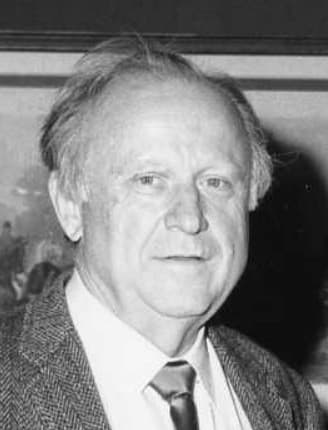
Franklin Patrick Herbert Jr. was an American science fiction author best known for the 1965 novel Dune and its five sequels. Though he became famous for his novels, he also wrote short stories and worked as a newspaper journalist, photographer, book reviewer, ecological consultant, and lecturer.
Similar books
- The Stand
Stephen King
4.3 (616k) average on GoodreadsThrillerExplores a post-apocalyptic world ravaged by a plague and the struggle for survival.
- The Andromeda Strain
Michael Crichton
3.9 (223k) average on GoodreadsThrillerCrichton's The Andromeda Strain (1969) shares with The White Plague a focus on a biological threat and the scientific community's frantic efforts to understand and contain it. Crichton's novel, however, is a tightly plotted techno-thriller centered on a contained outbreak and the intricate procedures of a highly specialized scientific team. Herbert's scope is far grander, depicting a global catastrophe with widespread societal breakdown and the political and psychological fallout of a deliberately unleashed plague. The Andromeda Strain is about controlling an accidental, alien threat, whereas The White Plague explores the deliberate weaponization of biology for human revenge.
- Angels & Demons
Dan Brown
3.9 (2.7M) average on GoodreadsThrillerA Harvard symbologist races through Rome's ancient sites, deciphering cryptic clues to unmask the Illuminati and stop a vengeful plot to destroy the Vatican with a stolen antimatter weapon.
- Gone Girl
Gillian Flynn
4.1 (2.3M) average on GoodreadsThrillerA wife's sudden disappearance on her fifth anniversary reveals a web of lies and psychological warfare, exposing the secrets within a seemingly perfect marriage.
- The Girl on the Train
Paula Hawkins
3.9 (2.1M) average on GoodreadsThrillerA woman’s fascination with a seemingly perfect couple she watches from her daily train commute leads her into a dark investigation when she witnesses something that shatters their idyllic image.
- The Da Vinci Code
Dan Brown
3.9 (1.9M) average on GoodreadsThrillerA symbologist and a cryptologist race through European landmarks, deciphering ancient codes and uncovering a conspiracy that could rewrite the foundations of Christianity.






Enjoyed the summary?
A summary gives you the shape of the book. The book itself has the detail, the examples and the voice.
Find The White Plague on AmazonAs an Amazon Associate, BookBrief earns from qualifying purchases. How we're funded