
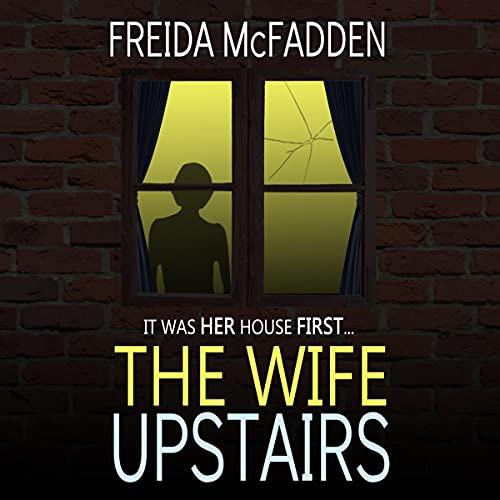
Synopsis
Covers the whole plot, including the ending.
- Difficulty
- Medium
- Pacing
- Moderate
- Mood
- Suspenseful, mysterious, unsettling, intriguing
- Read it if
- you enjoy psychological thrillers with twists, unreliable narrators, and a sense of underlying mystery. Perfect for fans of domestic suspense where not everything is as it seems.
- Skip it if
- you prefer fast-paced action thrillers or dislike stories centered around characters with communication impairments.
The Wife Upstairs Plot Summary
Covers the whole plot, including the ending.
A New Beginning for Sylvia
Sylvia Robinson, a young woman with a difficult past and in need of money, takes a job as a live-in caregiver for Victoria Barnett. Victoria is a beautiful, rich woman, but she is paralyzed and cannot speak. This happened in a car accident that also killed her husband, Adam. Sylvia moves into the Barnett estate, a large house in a quiet area. She quickly learns how to care for Victoria, which includes feeding, bathing, and helping her with daily needs. Even though Victoria cannot speak, Sylvia feels a deep sadness and an urgency in her eyes, making her think there is more to Victoria's situation than it seems.
Unsettling Discoveries
As Sylvia gets used to her job, she starts to notice strange things about the Barnett house and Victoria's past. She finds old photos of Victoria, full of life and love, with Adam. But there are also small oddities: a locked study, a maid who seems too protective of Victoria's privacy, and a general sadness in the house. Sylvia also finds Victoria's old diaries and secretly starts to read them. The diaries show a complicated and sometimes difficult relationship between Victoria and Adam, hinting at secrets and tensions beneath their seemingly perfect life.
A Glimmer of Communication
Sylvia suspects Victoria is trying to tell her something, so she tries to find a way for them to communicate. She uses a simple system of blinking and eye movements for yes/no questions. At first, it is slow and frustrating, but Victoria slowly starts to respond. Through this hard work, Victoria tries to share a message of fear and urgency. She indicates that Adam was not who he seemed and that her accident was not what it appeared. Sylvia's desire to understand Victoria grows, and she realizes Victoria's life, and maybe her own, might be in danger.
The Maid's Secrets
Mrs. Gable, the long-time housemaid, becomes more and more suspicious. She is very loyal to the Barnett family and seems to dislike Sylvia being there and her growing connection with Victoria. Mrs. Gable constantly watches Sylvia and subtly tries to stop her from talking to Victoria. Sylvia suspects Mrs. Gable knows more about Victoria's past and Adam's death than she lets on. Her interactions with Mrs. Gable are tense, and Sylvia realizes the maid is either part of a cover-up or truly believes she is protecting Victoria from outsiders, which makes Sylvia's investigation harder.
Adam's True Nature
As Sylvia reads more of Victoria's diaries, a troubling picture of Adam appears. He is shown not as the loving husband people thought, but as a controlling, manipulative, and emotionally abusive man. The diaries describe Victoria's growing unhappiness and fear in her marriage, hinting at Adam's dark secrets and his increasingly strange behavior. Sylvia also finds hidden compartments and documents in the house that further confirm Adam's bad nature, suggesting he was involved in illegal activities or had a hidden life. This makes Sylvia believe that Adam's death was not a simple accident.
The Accident's Aftermath
Sylvia focuses her investigation on the car accident that left Victoria paralyzed and killed Adam. She looks at police reports, newspaper articles, and even visits the crash site. The official story is that Adam lost control of the car, causing a tragic accident. But Victoria's subtle messages suggest otherwise. Through her blinking, Victoria indicates that the accident was not an accident at all and that Adam was somehow responsible for her current state. Sylvia starts to put together a new version of events, one that suggests foul play and a deliberate act rather than a random tragedy, which raises the stakes considerably.
A Hidden Confession
With Sylvia's patience and growing understanding, Victoria manages to share a shocking confession. Through a difficult system of eye movements and blinks, Victoria reveals that she was not just a victim in the car accident; she played an active role in Adam's death. She confesses that Adam had been trying to kill her, and in a desperate act to save herself, she caused the crash, intending to kill him and save herself. However, her plan failed, leaving her alive but completely helpless, trapped in her own body, haunted by her actions and unable to speak the truth.
The Twist: Sylvia's True Identity
Just as Victoria's confession is understood, a big twist is revealed: Sylvia Robinson is not who she says she is. It comes out that 'Sylvia' is actually Sarah, Adam's first wife, who was thought to have died years ago. Sarah faked her own death to escape Adam's abuse, changed her identity, and lived in hiding. She took the caregiver job specifically to get close to Victoria and find out the truth about Adam's death, suspecting Victoria was involved. Her entire time in the house has been a carefully planned effort for revenge and justice, driven by her own painful past with Adam.
Confrontation and Resolution
With her true identity known, Sarah confronts Victoria. The two women, united by their shared suffering because of Adam, form an unexpected bond. Victoria, unable to speak, shows her regret and the pain of her situation. Sarah, understanding Victoria's desperation and how cruel Adam was, realizes that Victoria was also a victim, even though she fought back. The confrontation is not angry, but one of shared trauma and a desire for justice. They realize they are both survivors of Adam's control, and their common enemy brings them together against the memory of the man who destroyed their lives.
A New Alliance and Future
Recognizing their shared experience and Adam's dark secrets, Sarah and Victoria form an alliance. Sarah decides to protect Victoria, understanding the difficulty of Victoria's situation and the results of her confession. They make a plan to ensure Victoria is cared for and that the truth, in some way, is known without putting Victoria in more danger. The ending suggests a future where Sarah, now free from Adam's influence, can finally live her life, and Victoria, though still unable to move, finds some peace and friendship in Sarah's understanding. Their shared trauma becomes a unique bond of sisterhood and mutual protection.
The Wife Upstairs Characters
Sylvia Robinson / Sarah
Protagonist
The mysterious caregiver with a hidden agenda.
Sylvia is introduced as a resourceful and determined young woman with a troubled past, seeking a fresh start. She is observant, empathetic, and persistent in her efforts to understand Victoria. Initially, she appears to be a compassionate caregiver, but her true identity as Sarah, Adam Barnett's first wife, is eventually revealed. This revelation recontextualizes her actions as a calculated quest for truth and justice, driven by years of trauma and a desire to expose Adam's true nature. She is intelligent and capable of elaborate deception.
Relationships: Victoria Barnett (Caregiver/Patient, then shared victim/ally); Adam Barnett (Ex-wife/Abuser); Mrs. Gable (Antagonistic colleague)
Victoria Barnett
Supporting
The paralyzed and mute victim of a tragic accident, holding a dark secret.
Victoria is presented as a beautiful, wealthy woman, now completely incapacitated and unable to communicate verbally due to a severe car accident. Despite her physical limitations, she possesses a strong will and an urgent desire to convey her truth. Her eyes are often described as holding a deep sadness and fear. She is a complex character, initially appearing as a helpless victim, but later revealed to have played an active, albeit desperate, role in her husband's death. Her past reveals a woman who was trapped and abused by Adam.
Relationships: Sylvia Robinson / Sarah (Patient/Caregiver, then shared victim/ally); Adam Barnett (Husband/Abuser); Mrs. Gable (Loyal housemaid)
Adam Barnett
Antagonist (deceased)
The seemingly perfect, wealthy husband with a dark, abusive nature.
Adam Barnett is the deceased husband of Victoria and the former husband of Sarah (Sylvia). He is initially portrayed as a successful and beloved figure, a victim of a tragic accident. However, through diary entries and flashbacks, his true character is revealed to be deeply manipulative, controlling, and emotionally and physically abusive. He orchestrated a life of deceit and cruelty, preying on the women in his life. His presence, though posthumous, drives much of the narrative's tension and mystery, as his actions continue to impact the living characters.
Relationships: Victoria Barnett (Husband/Abuser); Sylvia Robinson / Sarah (Ex-husband/Abuser)
Mrs. Gable
Supporting
The loyal and protective housemaid with her own secrets.
Mrs. Gable is the long-serving housemaid of the Barnett estate. She is fiercely loyal to Victoria and the family's reputation, often appearing suspicious and subtly hostile towards Sylvia. She seems to guard the family's secrets and Victoria's privacy with a possessive intensity. Her actions initially make her seem like an antagonist, obstructing Sylvia's investigation. However, her true motivations are rooted in a deep, albeit misguided, desire to protect Victoria and maintain the illusion of the Barnett family's perfection, hinting at her own knowledge of Adam's true nature.
Relationships: Victoria Barnett (Loyal employee/Protector); Sylvia Robinson / Sarah (Suspicious colleague)
The Wife Upstairs Themes
The Deceptive Nature of Appearances
The novel carefully shows how a perfect life can be an illusion, revealing the dark truths hidden under wealth and happiness. Adam Barnett first appears as a successful, loving husband, but his real character as a manipulative abuser is slowly shown. Similarly, Victoria's 'tragic accident' is not what it seems. This theme highlights how easily public perceptions can be controlled, and how people can hide terrible realities behind carefully built fronts, making the reader constantly question what is real.
“The perfect life, the perfect husband, the perfect house… it was all a lie, wasn't it?”
Survival and Resilience
Both Victoria and Sarah (Sylvia) show great strength in the face of extreme abuse and trauma. Victoria, despite being paralyzed, fights hard to communicate her truth, showing a strong will to expose her husband's actions and her own desperate act of survival. Sarah, having faked her own death to escape Adam, returns years later, driven by a deep need for justice and closure. Their stories emphasize how people can endure terrible situations and find ways to regain control, even when everything seems lost.
“I had to survive. That's all I thought about. Just survive.”
The Search for Truth and Justice
The story is about Sylvia's persistent search for the truth behind Victoria's accident and Adam's death. This search is driven by her intuition and later, by a personal connection. The novel explores how far people will go to uncover hidden secrets and ensure some form of justice, even when official methods fail. It questions what justice means, especially when victims must take extreme actions to escape their tormentors.
“I knew there was more to it. I felt it in my bones. And I wouldn't stop until I knew the truth.”
Female Solidarity and Shared Trauma
A strong theme is the unexpected bond between Victoria and Sarah. Despite their initial roles (caregiver and patient, then wife and ex-wife of the same abusive man), their shared experience of Adam's cruelty overcomes their differences. They become allies, finding understanding and support in each other, and ultimately protecting one another. This shows how women can connect and empower each other through shared trauma, forming a unique solidarity against a common oppressor.
“We were both his victims. We were both survivors. And now, we were both free.”
Plot Devices & Literary Techniques
Unreliable Narrator
The protagonist's true identity and motives are hidden, creating suspense.
Initially, Sylvia presents herself as a compassionate caregiver with a mysterious past, but her true identity as Sarah, Adam's first wife, is concealed until a pivotal twist. This makes the reader question Sylvia's every action and motive throughout the first two-thirds of the book. The information provided is filtered through her perspective, which is deliberately incomplete, leading to a shocking revelation that recontextualizes the entire narrative and challenges the reader's assumptions about her character and intentions.
Red Herring
Misleading clues and characters divert attention from the true culprit and plot twist.
The novel employs several red herrings to mislead the reader, primarily focusing suspicion on Mrs. Gable and the general mystery surrounding Victoria's accident. Mrs. Gable's secretive behavior and protective nature initially suggest she might be hiding something sinister or be complicit in a crime. The initial portrayal of Adam as a tragic victim also serves as a red herring, diverting attention from his true abusive nature and the real circumstances of his death, making the ultimate revelations more impactful.
Flashback/Diary Entries
Past events are revealed through Victoria's secret diaries, unraveling the mystery.
Victoria's hidden diaries serve as a crucial plot device, offering glimpses into her past life with Adam. These entries gradually reveal Adam's manipulative and abusive nature, providing the backstory necessary to understand the present mystery. The diaries are a vital source of information for Sylvia (and the reader), slowly piecing together the timeline of abuse, Victoria's growing desperation, and the events leading up to the car accident, without relying solely on direct exposition.
Non-Verbal Communication
Victoria's limited communication creates tension and drives Sylvia's investigation.
Victoria's complete paralysis and inability to speak force Sylvia to develop a rudimentary system of communication through blinks and eye movements. This device creates immense tension and frustration, as every piece of information Victoria conveys is hard-won and often ambiguous. It underscores Victoria's helplessness and urgency, while also highlighting Sylvia's patience and determination. This challenging form of communication is central to unlocking the critical confession about Adam's death, making it a slow-burn reveal.
The Wife Upstairs Quotes
“I'm the wife upstairs. The one nobody sees. The one nobody knows.”
“He was a man of many secrets, and I was a woman who loved to uncover them.”
“The house was old, full of shadows and whispers. Perfect for hiding things.”
“She was the perfect wife. Too perfect. And that's when I knew something was terribly wrong.”
“Sometimes, the most dangerous people are the ones you least expect.”
“I didn't want to be the other woman. I wanted to be the only woman.”
“He had a way of making me feel like I was the only person in the world. And I craved that feeling.”
“The truth has a way of coming out, no matter how hard you try to bury it.”
“I was playing a dangerous game, and I knew it. But I couldn't stop.”
“He was a puzzle, and I was determined to solve him, piece by piece.”
“The past has a way of catching up to you, whether you're ready or not.”
“She was a ghost in her own life, haunting the halls of what used to be.”
“I learned to be invisible. It's a useful skill when you're living in the shadows.”
“He told me he loved me. And for a moment, I almost believed him.”
Quiz
10 questions on the plot and the characters. Each answer comes with a short explanation.
Question 1
What is Victoria Barnett's profession?
- Teacher
- Nurse Practitioner
- Lawyer
- Chef
Show answer
B. Nurse Practitioner The text states that Victoria has 'A great career as a nurse practitioner.'
Question 2
What event significantly changes Victoria's life?
- She loses her job.
- Her husband leaves her.
- She has a terrible accident.
- They decide not to have children.
Show answer
C. She has a terrible accident. The passage mentions, 'Then she’s in a terrible accident… and her life is forever changed.'
Question 3
Who is hired to care for Victoria?
- Her sister
- Sylvia Robinson
- A physical therapist
- A lawyer
Show answer
B. Sylvia Robinson The text explicitly states, 'Sylvia Robinson is hired as a caregiver for Victoria.'
Question 4
What does Sylvia do as part of her caregiving duties for Victoria?
- She manages Victoria's finances.
- She cooks all of Victoria's meals.
- She moves into a spare room, feeds Victoria, and takes her on walks.
- She helps Victoria with her physical therapy exercises.
Show answer
C. She moves into a spare room, feeds Victoria, and takes her on walks. The passage details Sylvia's duties: 'Sylvia moves into a spare room, feeds Victoria, and takes her on long walks.'
Question 5
What does Sylvia realize about Victoria as their friendship grows?
- Victoria is secretly planning to leave her husband.
- Victoria is trying to communicate something important.
- Victoria is faking her injuries.
- Victoria wants to sell the house.
Show answer
B. Victoria is trying to communicate something important. The text states, 'As Sylvia and Victoria's friendship grows, Sylvia realizes that Victoria is desperately trying to tell her something.'
Question 6
What is the primary obstacle preventing Victoria from communicating?
- She is mute due to her accident.
- She has lost her memory.
- She is unable to speak.
- She is too weak to form words.
Show answer
C. She is unable to speak. The final sentence of the provided text is, 'If only she could speak.' This directly implies her inability to speak is the communication barrier.
Question 7
What is the underlying implication of the nursing job being 'more than what it seems'?
- Victoria is actually a doctor, not a nurse.
- Sylvia is being paid an unusually high salary.
- There are hidden secrets or dangers associated with the job.
- Victoria's husband is secretly a famous author.
Show answer
C. There are hidden secrets or dangers associated with the job. The phrase 'more than what it seems' in the context of a mystery or thriller novel typically suggests that the situation is not as straightforward as it appears and may involve underlying secrets or intrigue.
Question 8
Based on the description, what genre does 'The Wife Upstairs' most likely belong to?
- Science Fiction
- Historical Romance
- Mystery/Thriller
- Fantasy
Show answer
C. Mystery/Thriller Elements like a seemingly perfect life disrupted by an accident, a caregiver who uncovers secrets, and a character unable to communicate point towards a mystery or thriller genre.
Question 9
What can be inferred about Victoria's initial life situation before the accident?
- It was unstable and filled with stress.
- It was idyllic and lacked any apparent problems.
- She was struggling financially.
- She was isolated and lonely.
Show answer
B. It was idyllic and lacked any apparent problems. The opening lines describe Victoria's life as 'perfect—or so it seems,' highlighting a seemingly flawless existence with a great career, loving husband, and a beautiful home, suggesting an idyllic situation before the accident.
Question 10
The phrase 'desperately trying to tell her something' suggests that Victoria's message is likely:
- A trivial observation.
- A cry for help or a warning.
- A request for more medication.
- An expression of gratitude.
Show answer
B. A cry for help or a warning. The word 'desperately' implies urgency and significant importance. In the context of a mystery, this usually means Victoria is trying to convey something critical, like a warning about danger or a plea for help, rather than something mundane.
The Wife Upstairs FAQ
What is The Wife Upstairs about?
The Wife Upstairs is a psychological thriller about Victoria Barnett, a nurse practitioner whose life is shattered by an accident. Her caregiver, Sylvia Robinson, is hired to help her recover and discovers Victoria is trying to communicate a dangerous secret.
Who are the main characters in The Wife Upstairs?
The main characters are Victoria Barnett, the patient who has suffered a life-altering accident, and Sylvia Robinson, the caregiver who becomes her friend and confidante.
Is The Wife Upstairs a thriller or a mystery?
The Wife Upstairs is primarily a psychological thriller, focusing on suspense, twists, and the unraveling of secrets within a seemingly perfect suburban life.
What kind of secrets does Victoria try to reveal?
Victoria is desperately trying to communicate something important to Sylvia, hinting at a hidden danger or deception within her own home and marriage. The nature of the secret is central to the plot's suspense.
What is the central conflict in The Wife Upstairs?
The central conflict arises from Sylvia's growing suspicion that Victoria is trying to warn her about something sinister, putting Sylvia in a potentially dangerous situation as she uncovers the truth.
Does The Wife Upstairs have a twist ending?
Like many psychological thrillers, The Wife Upstairs is known for its surprising twists and turns that keep readers guessing until the very end.
Is The Wife Upstairs a standalone novel?
Yes, The Wife Upstairs is a standalone novel and does not require reading any other books to understand the story.
What themes are explored in The Wife Upstairs?
The book explores themes of deception, vulnerability, the facade of perfection, and the courage it takes to uncover and confront hidden truths.
Who would enjoy reading The Wife Upstairs?
Readers who enjoy suspenseful psychological thrillers with unreliable narrators, unexpected plot twists, and domestic suspense would likely enjoy this book.
Similar books
- The Silent Patient
Alex Michaelides
4.1 (507k) average on GoodreadsThrillerFeatures a female protagonist who cannot speak and a psychotherapist trying to uncover the truth.
- The Woman in Cabin 10
Ruth Ware
3.7 (375k) average on GoodreadsThrillerA confined setting where the protagonist witnesses something unsettling and struggles to be believed.
- Verity
Colleen Hoover
4.3 (158k) average on GoodreadsThrillerExplores dark secrets within a seemingly perfect family and a caregiver uncovering disturbing truths.
- Gone Girl
Gillian Flynn
4.1 (2.3M) average on GoodreadsThrillerCompared to Gillian Flynn's "Gone Girl," "The Wife Upstairs" lacks the same level of sophisticated character manipulation and intricate plotting. "Gone Girl" masterfully crafts unreliable narrators and explores the dark underbelly of marriage with chilling psychological precision. The twists in Flynn's novel are not only surprising but also deeply rooted in the characters' twisted psychologies, making them incredibly impactful. McFadden's book, while aiming for a similar domestic suspense vibe, doesn't achieve the same level of complexity or moral ambiguity. The characters in "The Wife Upstairs" feel more like archetypes, whereas Flynn's characters are disturbingly real and multi-faceted, making their actions and motives far more compelling and unsettling.
- Harry Potter and the Sorcerer's Stone
J.K. Rowling
4.5 (7M) average on GoodreadsFantasyRescued from a miserable life under the stairs, an orphaned boy discovers he's a wizard destined for a magical school, where he uncovers a dangerous secret tied to the dark wizard who murdered his parents.
- The Hunger Games
Suzanne Collins
4.3 (6.4M) average on GoodreadsFantasyIn a future where children fight to the death on live television, Katniss Everdeen volunteers for the arena, turning a death sentence into a fight for survival and a spark of rebellion.





Enjoyed the summary?
A summary gives you the shape of the book. The book itself has the detail, the examples and the voice.
Find The Wife Upstairs on AmazonAs an Amazon Associate, BookBrief earns from qualifying purchases. How we're funded