

Synopsis
Covers the whole plot, including the ending.
- Difficulty
- Easy
- Pacing
- Moderate
- Mood
- Humorous, Witty, Quirky, Darkly Comedic
- Read it if
- You enjoy clever parodies of classic children's literature, dark humor, and stories about found families.
- Skip it if
- You prefer straightforward, wholesome narratives without any dark or satirical elements, or stories where parents are portrayed positively.
The Willoughbys Plot Summary
Covers the whole plot, including the ending.
A Most Unpleasant Family Dynamic
The Willoughby family includes the neglectful and self-absorbed Mr. and Mrs. Willoughby, and their four old-fashioned children: Timothy, the oldest and most responsible; the identical twins, Barnaby A and Barnaby B, who share one sweater; and the youngest, Jane, a sensitive and musical girl. The parents dislike their children, finding them noisy and bothersome. The children, equally unhappy with their parents, want to be independent. The parents decide to go on a 'dangerous journey' to Switzerland, hoping the children will die from neglect or hunger while they are gone. They pack their bags, leaving a small amount of money for the children and a note telling them not to make contact. The children are secretly happy to be rid of their awful parents.
The Children's Plot: Orphanhood by Design
After their parents leave, the Willoughby children immediately enjoy their new freedom, though they quickly see they lack proper care. Timothy, always practical, finds a pamphlet for 'How to Be an Orphan' and decides they should become orphans. They plan to mail themselves, by express delivery, to an orphanage, believing this will secure their future. They pack their few belongings, including their shared sweater and Jane's ukulele. After a funny struggle, they get into a large shipping crate. They address it to 'The Orphanage, Somewhere, USA,' and send themselves into the postal system, wanting their new, parent-free life.
Ruth's Arrival and a Sweet Discovery
While the Willoughby children are on their way to the orphanage, a new character arrives at their now-empty house: a baby, left on the doorstep in a picnic basket. This baby, later named Ruth, is found by the Willoughbys' former nanny, a kind woman named Nanny. Nanny, who had been fired by the parents before they left, returns to the house because she is worried about the children. She finds the baby, with a note from its desperate mother, and takes her in. Nanny, with her natural motherly feelings, immediately likes Ruth and starts to care for her, not knowing that the Willoughby children have already mailed themselves away and that the house is otherwise empty.
A Misguided Delivery and a New Home
The shipping crate with the Willoughby children, because of a mistake in the postal system, does not go to an orphanage. Instead, it arrives at the house of Commander Melanoff, a private and very rich candy maker. Commander Melanoff, a lonely man who has lost his own family, is at first confused by the large crate. When he opens it, he is surprised to find four old-fashioned children inside. Despite the strange situation, Melanoff, seeing they need care, takes them in. The children, though not in an orphanage, are happy with the luxury and endless candy in their new, unexpected home.
Nanny's Dilemma and Melanoff's Offer
Back at the Willoughby house, Nanny continues to care for baby Ruth, but struggles with money and the mystery of the Willoughby children's disappearance. She places an ad in the newspaper, looking for a family for Ruth and quietly mentioning the empty Willoughby house. Commander Melanoff, having seen Nanny's ad and now with four more children to care for, realizes he needs help. He contacts Nanny, inviting her to his house to talk about her becoming a nanny for his new, larger household, including the four Willoughby children and baby Ruth. Nanny, needing a solution, accepts the invitation.
The Parents' Perilous Journey
Meanwhile, Mr. and Mrs. Willoughby, on their 'dangerous journey' to Switzerland, are having a truly bad time. They face many problems, from getting sick to being robbed. Their carefully planned, though fake, dangerous trip quickly becomes a series of actual dangers. They get weaker, poorer, and more desperate, a strong difference from the comfortable, though neglected, lives they left behind. Their early joy at being rid of their children is replaced by growing regret and the hard facts of their own poorly planned idea.
A New Family Forms
Nanny arrives at Commander Melanoff's fancy house and is very happy to find the Willoughby children safe, though surprised by their unusual trip. She brings baby Ruth, and the children immediately like their new baby sister. Commander Melanoff, a kind but lonely man, finds great joy in having a busy house. He suggests that Nanny stay permanently as the children's guardian and his companion. Together, they form an unusual, but loving, family unit. The Willoughby children, baby Ruth, Nanny, and Commander Melanoff all find a sense of belonging and happiness they had never known before.
The Parents' Demise
As the Willoughby children do well in their new home, their parents' 'dangerous journey' ends tragically. Mr. and Mrs. Willoughby, weak from illness and hunger, climb a difficult mountain in the Swiss Alps, thinking they will find a shortcut to town. However, they are caught in an avalanche and die. Their bodies are never found. Their fate is told to the children much later through a telegram, confirming they are true orphans. The children, having already found a loving family, receive the news with calm acceptance rather than sadness, making their new, happier lives solid.
Happily Ever After, Willoughby Style
With the parents officially gone, the new, unusual Willoughby family thrives. Commander Melanoff legally adopts the Willoughby children and Ruth, giving them a safe and loving home. Nanny becomes a beloved mother figure, bringing warmth and order to their lives. The children continue their old-fashioned hobbies, reading classic books, playing their instruments, and going on small adventures, now with the support of their new guardians. They live a life with love, laughter, and sometimes candy, truly finding their happy ending, a strong difference from their sad beginnings.
Principal Figures
Timothy Willoughby
Protagonist
The eldest and most responsible of the Willoughby children.
Timothy is the eldest of the four Willoughby children. He is the most pragmatic and responsible, often taking on a leadership role among his siblings. He devises the plan to mail themselves to an orphanage and is generally the one who tries to make sense of their unusual circumstances. Despite his old-fashioned demeanor, he possesses a quick wit and a desire for a stable, loving environment, which he eventually finds with Commander Melanoff and Nanny. He yearns for a proper family, even if it means becoming an orphan.
Relationships: Barnaby A and Barnaby B (Younger brothers, whom he often directs); Jane Willoughby (Younger sister, whom he protects); Mr. and Mrs. Willoughby (Neglectful parents); Nanny (Caring guardian/nanny); Commander Melanoff (Adoptive father figure); Ruth (Adoptive baby sister)
Barnaby A and Barnaby B Willoughby
Protagonists
Identical twins who share a single sweater and a singular mischievous spirit.
Barnaby A and Barnaby B are identical twin brothers, known for sharing a single, striped sweater and often speaking in unison or finishing each other's sentences. They are imaginative and prone to mischief, embracing the idea of becoming orphans with enthusiasm. Their shared identity and quirky habits make them memorable. They are loyal to each other and to their siblings, and they adapt quickly to new, more pleasant circumstances, finding joy in Commander Melanoff's candy-filled mansion and the love of Nanny.
Relationships: Timothy Willoughby (Older brother); Jane Willoughby (Younger sister); Mr. and Mrs. Willoughby (Neglectful parents); Nanny (Caring guardian/nanny); Commander Melanoff (Adoptive father figure); Ruth (Adoptive baby sister)
Jane Willoughby
Protagonist
The youngest Willoughby child, sensitive and musical.
Jane is the youngest of the Willoughby children. She is sensitive, artistic, and often carries her ukulele, using music to express herself or cope with difficult emotions. She is less outwardly pragmatic than Timothy but equally longs for a loving family. Her gentle nature and musical talent add a touch of sweetness to the otherwise cynical Willoughby household. She quickly bonds with Nanny and baby Ruth, finding the maternal affection she craved.
Relationships: Timothy Willoughby (Older brother); Barnaby A and Barnaby B (Older twin brothers); Mr. and Mrs. Willoughby (Neglectful parents); Nanny (Caring guardian/nanny); Commander Melanoff (Adoptive father figure); Ruth (Adoptive baby sister)
Mr. Willoughby
Antagonist
The self-absorbed, neglectful patriarch of the Willoughby family.
Mr. Willoughby is one half of the notoriously neglectful Willoughby parents. He is utterly devoid of parental affection, viewing his children as an inconvenience and a financial burden. He is vain, selfish, and more interested in his own comfort and leisure than in the well-being of his offspring. He masterminds the 'perilous journey' scheme, hoping to be rid of the children permanently. His character serves as a satirical representation of truly terrible parenting.
Relationships: Mrs. Willoughby (Equally neglectful spouse); Timothy, Barnaby A, Barnaby B, Jane (Unwanted children)
Mrs. Willoughby
Antagonist
The equally self-absorbed and neglectful matriarch of the Willoughby family.
Mrs. Willoughby mirrors her husband's complete lack of parental affection. She is shallow, self-centered, and equally eager to be rid of her children. Her primary concerns are her appearance, her comfort, and her husband's approval, never her children's welfare. She enthusiastically participates in the 'perilous journey' scheme. Her character, like her husband's, is a satirical take on bad parenting, highlighting the absurdity of their neglect.
Relationships: Mr. Willoughby (Equally neglectful spouse); Timothy, Barnaby A, Barnaby B, Jane (Unwanted children)
Nanny
Supporting
The kind-hearted former nanny who becomes a loving guardian.
Nanny is a warm, maternal figure who was previously employed by the Willoughbys but was dismissed due to their stinginess. She genuinely cares for children and possesses a strong moral compass. She discovers baby Ruth and takes her in, demonstrating immediate compassion. Her kindness and practicality make her an ideal guardian, and she ultimately provides the love and stability the Willoughby children and Ruth desperately need. She is the epitome of good parenting, a direct contrast to the Willoughbys.
Relationships: Ruth (Adoptive baby daughter); Timothy, Barnaby A, Barnaby B, Jane (Adoptive children/wards); Commander Melanoff (Partner and co-guardian)
Commander Melanoff
Supporting
A reclusive, wealthy candy magnate who becomes an adoptive father.
Commander Melanoff is a lonely, wealthy candy magnate who lives in a vast mansion filled with sweets. He has lost his own family and yearns for companionship. His life changes dramatically when the Willoughby children are mistakenly delivered to his doorstep. Despite his initial bewilderment, he is kind-hearted and quickly takes to the children, providing them with a lavish and loving home. He eventually partners with Nanny to create a new, unconventional family, finding immense joy in his new role as a father figure.
Relationships: Timothy, Barnaby A, Barnaby B, Jane (Adoptive children); Ruth (Adoptive baby daughter); Nanny (Partner and co-guardian)
Ruth
Supporting
A baby abandoned on the Willoughbys' doorstep, who finds a loving home.
Ruth is a baby, abandoned in a picnic basket on the Willoughby doorstep by her desperate mother. She is found by Nanny and quickly becomes the center of Nanny's affection. Her presence at the Willoughby house, and later in Commander Melanoff's home, acts as a catalyst for the formation of the new, loving family. She represents innocence and the potential for new beginnings, solidifying the emotional core of the unconventional family.
Relationships: Nanny (Adoptive mother); Commander Melanoff (Adoptive father); Timothy, Barnaby A, Barnaby B, Jane (Adoptive siblings)
Themes & Insights
The Nature of Family and Parenthood
The book shows a clear difference between biological parents and chosen family. The Willoughby parents are examples of extreme neglect and selfishness, showing that blood relation does not mean love or care. In contrast, Nanny and Commander Melanoff, who are not related to the children, show deep love, responsibility, and what family truly means. The children's journey to 'orphanhood' is a search for a working, loving family, which they find in an unexpected group of people. This theme challenges old ideas of family, suggesting that love and care define it, not genes.
“For the truth was, the Willoughby parents were as selfish and as horrid as parents could possibly be, and the Willoughby children were just as unloved as children could possibly be.”
Childhood Independence and Agency
The Willoughby children, though old-fashioned, show strong independence. Faced with neglect, they take action, planning their own escape by mailing themselves to an orphanage. This theme explores children's strength and their ability to handle hard situations. Their active approach, from Timothy's leadership to Jane's quiet strength, shows that children are not just passive recipients of their circumstances but active in shaping their futures, especially when adults fail them. Their wish for orphanhood is a wish for self-control and a better life.
“They had, after all, made their own decision, and they would stand by it. They would be orphans.”
The Power of Love and Compassion
Love and compassion are shown as forces that change things. Nanny's natural kindness and her immediate care for baby Ruth, despite her own uncertain situation, set a moral standard. Commander Melanoff, a lonely person, finds his life better and his heart opened by the children's arrival. These characters choose to give love and care, creating a new, successful family unit. This theme highlights that real affection and understanding can heal past hurts and build strong, meaningful connections, standing against the Willoughbys' cold lack of feeling.
“He had never felt so happy. He had never felt so much like a father.”
Satire and Parody of Classic Children's Literature
The book is a clever parody of classic children's stories, especially those with orphans or absent parents (e.g., 'A Series of Unfortunate Events,' 'Mary Poppins'). It uses exaggerated characters, absurd plot points (like mailing oneself), and a sarcastic narrative tone to make fun of these common story elements. The 'How to Be an Orphan' pamphlet is a direct satirical joke. This theme allows the author to explore difficult subjects like neglect with humor, making the story both fun and thought-provoking, while also honoring the literary tradition it spoofs.
“The children, being old-fashioned, were fond of old-fashioned things. They liked to read books that had been read by their grandparents.”
Plot Devices & Literary Techniques
The 'Perilous Journey' Scheme
A device used by the parents to rid themselves of their children.
The 'Perilous Journey' is a fabricated scheme concocted by Mr. and Mrs. Willoughby to abandon their children. They pretend to embark on a dangerous adventure to Switzerland, hoping the children will perish from neglect. This device immediately establishes the parents' cruelty and sets the plot in motion, freeing the children to pursue their own 'orphan' plan. It serves as a darkly humorous catalyst, highlighting the absurdity of the parents' neglect and ironically leading to their actual demise.
Mailing Themselves to an Orphanage
The children's ingenious, albeit absurd, method of achieving orphanhood.
The children's decision to mail themselves in a crate to an orphanage is a key plot device. It showcases their resourcefulness, their old-fashioned determination, and the book's satirical tone. This act directly leads to their mistaken delivery to Commander Melanoff's house, a pivotal turning point in the story. It is a fantastical element that underscores their desperate desire for a better life and creates the necessary circumstances for the formation of their new family.
The Unsent Letter / Misplaced Delivery
A narrative twist that redirects the children's fate.
The children's letter, intended for an orphanage, is never properly delivered, and the crate is mistakenly sent to Commander Melanoff's home. This classic narrative device of a 'misplaced delivery' or 'unsent message' is crucial to the plot. It prevents the children from ending up in a traditional orphanage and instead places them in a unique and ultimately beneficial situation, allowing for the creation of their unconventional family with Melanoff and Nanny. It signifies destiny intervening in their plans for a happier outcome.
The Candy Magnate's Mansion
A symbolic setting representing abundance and unexpected kindness.
Commander Melanoff's mansion, filled with candy and opulent comforts, serves as a symbolic setting. It represents the stark contrast to the Willoughbys' neglectful and emotionally barren home. For the children, it's a place of material abundance, but more importantly, it becomes a haven of emotional warmth and security. The mansion, initially a symbol of Melanoff's loneliness, transforms into a vibrant home bustling with life and love, signifying the sweet new life the children find.
The Shared Sweater of the Barnabys
A visual and character device symbolizing the twins' bond and old-fashioned nature.
The fact that Barnaby A and Barnaby B share a single, striped sweater is a recurring visual and character device. It emphasizes their identical nature and their strong, inseparable bond. It also contributes to their 'old-fashioned' persona, suggesting a quaintness and a slight lack of resources under their parents' care. This quirky detail adds to the book's whimsical tone and reinforces the idea of their unique individuality within their shared identity.
The Willoughbys Quotes
“They were not orphans, but they were, in fact, worse than orphans, for they had parents.”
“They were, in fact, quite determined to be rid of them.”
“It was a dark and stormy night. No, it wasn't. It was a bright and sunny morning.”
“One must always be prepared for the unexpected, especially when one is trying to get rid of one's parents.”
“He was a foundling, which meant he had been found.”
“The parents, meanwhile, were having the time of their lives.”
“What a delightful notion, to be rid of them!”
“They were, in short, a very old-fashioned family.”
“But of course, one never knows what one will find when one looks closely at things.”
“He felt a sudden surge of something that might have been affection, or indigestion.”
“For it is a truth universally acknowledged that a single man in possession of a good fortune must be in want of a foundling.”
“The world, you see, is full of surprises.”
“It was a perfect plan, really, except for the part about it not working.”
“And so, as often happens in stories, everything turned out for the best.”
Quiz
10 questions on the plot and the characters. Each answer comes with a short explanation.
Question 1
What is the primary motivation for the Willoughby parents sending their children on a 'dangerous' vacation?
- They genuinely believe the children need a cultural experience.
- They want to get rid of the children permanently.
- They are trying to win a contest for the most adventurous family.
- They hope the children will learn self-reliance.
Show answer
B. They want to get rid of the children permanently. The Willoughby parents are incredibly self-absorbed and cruel, and their 'dangerous' vacation plan is a thinly veiled attempt to ensure their children never return, leaving them free to enjoy their wealth alone.
Question 2
Which of the following is NOT one of the Willoughby children?
- Timothy
- Barnaby A
- Prudence
- Jane
Show answer
C. Prudence The Willoughby children are Timothy, Jane, and the twins Barnaby A and Barnaby B. Prudence is not a character in this book.
Question 3
What kind of 'old-fashioned' things are the Willoughby children particularly fond of?
- Old-fashioned clothing and etiquette
- Old-fashioned adventures
- Old-fashioned toys and games
- Old-fashioned recipes and cooking
Show answer
B. Old-fashioned adventures The book explicitly states that the Willoughby children are fond of all old-fashioned things, 'but especially old-fashioned adventures.' This love for adventure drives much of their actions.
Question 4
Who is Nanny, the character who comes to care for the children after their parents leave?
- A distant relative hired by the parents.
- A professional nanny agency employee.
- An orphan who was dropped on the Willoughbys' doorstep.
- The former housekeeper of the Willoughby family.
Show answer
C. An orphan who was dropped on the Willoughbys' doorstep. Nanny, who later reveals herself to be an orphan named Ruth, was literally abandoned on the Willoughbys' doorstep as a baby. Her arrival introduces a new dynamic to the children's lives.
Question 5
What is the name of the kind, wealthy man who eventually adopts the Willoughby children?
- Mr. Mellanoff
- Commander Melanoff
- Professor Plum
- Doctor Doolittle
Show answer
B. Commander Melanoff The children are eventually adopted by the kind and wealthy Commander Melanoff, who had previously adopted an orphan named 'Roo' (Ruth, or Nanny). He provides them with the loving home they never had.
Question 6
What literary device is the book primarily an example of, as described in its synopsis?
- A tragedy
- A historical fiction novel
- A parody
- A science fiction epic
Show answer
C. A parody The synopsis explicitly calls the book a 'hilarious and wonderfully old-fashioned parody' that pays homage to classic children's literature, highlighting its satirical and imitative nature.
Question 7
What happens to the Willoughby parents at the end of their 'dangerous' journey?
- They return home, having learned a valuable lesson.
- They are arrested for child neglect.
- They freeze to death on a mountaintop, fulfilling their own 'dangerous' plan.
- They run out of money and are forced to work for a living.
Show answer
C. They freeze to death on a mountaintop, fulfilling their own 'dangerous' plan. The Willoughby parents meet a grim, yet ironically fitting, end by freezing to death on a mountaintop during their perilous 'vacation,' a consequence of their own selfish and ill-conceived plans.
Question 8
What is the significance of the 'cheeky glossary and bibliography' mentioned in the book's description?
- It provides factual historical context for the story's setting.
- It serves as a teaching tool for vocabulary and research skills.
- It enhances the book's parodic nature by mimicking academic texts.
- It offers additional plot details not covered in the main narrative.
Show answer
C. It enhances the book's parodic nature by mimicking academic texts. The 'cheeky glossary and bibliography' are part of the book's parodic style, playfully mimicking academic conventions often found in more serious texts, thus adding to its humorous, tongue-in-cheek tone.
Question 9
How do the Willoughby children react when they realize their parents have abandoned them?
- They are heartbroken and immediately try to find them.
- They are relieved and decide to send themselves away to an orphanage.
- They become angry and plot revenge against their parents.
- They are indifferent and continue their daily routine as usual.
Show answer
B. They are relieved and decide to send themselves away to an orphanage. Far from being upset, the Willoughby children are delighted by their parents' departure. They then hatch their own plan to send themselves to an orphanage, believing it will be a better living situation.
Question 10
What overarching theme does 'The Willoughbys' explore through its satirical lens?
- The importance of traditional family values and structure.
- The dark humor in dysfunctional family dynamics and the search for belonging.
- The dangers of excessive wealth and materialism.
- The challenges of growing up in a modern, technological world.
Show answer
B. The dark humor in dysfunctional family dynamics and the search for belonging. 'The Willoughbys' satirizes the concept of the 'perfect' family by presenting an extremely dysfunctional one. It uses dark humor to explore the children's search for a loving home and belonging outside of their biological parents.
The Willoughbys FAQ
What is The Willoughbys about?
The Willoughbys is a satirical children's novel about four old-fashioned children—Timothy, twins Barnaby A and Barnaby B, and Jane—who are neglected and disliked by their equally awful parents. Both parents and children scheme to get rid of each other, leading to a series of darkly humorous adventures that ultimately bring the children into contact with other lonely adults who become their unexpected new family.
Why should I read The Willoughbys?
You should read The Willoughbys for its unique blend of dark humor, witty prose, and playful homage to classic children's literature. Lois Lowry subverts traditional family narratives, offering a refreshingly cynical yet ultimately heartwarming tale that appeals to both children and adults with its clever satire and memorable characters.
What is the background/setting of The Willoughbys?
The story is set in a deliberately old-fashioned, almost timeless world, reminiscent of classic children's tales. The Willoughby children live in a large, unloved house, and their adventures take them to various locations like a Swiss orphanage, a tropical island, and a candy factory, all described with a slightly exaggerated, theatrical flair that enhances the book's parodic tone.
What are the most memorable quotes?
One memorable quote is the narrator's frequent interjection, 'As you know,' which adds to the book's self-aware, conversational style. Another is when the parents declare their intention to 'rid ourselves of our four children, for good,' setting the darkly humorous tone for their selfish schemes.
What writing style does the author use?
Lois Lowry employs a highly distinctive, tongue-in-cheek narrative style, characterized by a knowing, often sarcastic, and omniscient narrator who frequently addresses the reader directly. The language is sophisticated yet accessible, filled with literary allusions, a cheeky glossary, and a mock bibliography, all contributing to its parodic nature.
What minor details add significant meaning?
The children's names, Timothy, Barnaby A, Barnaby B, and Jane, are deliberately generic and old-fashioned, emphasizing their longing for a bygone era of adventure. The parents' decision to mail their baby, Ruth, highlights their extreme neglect and serves as a catalyst for her adoption by the kind Commander Melanoff, setting up a parallel story of found family.
What are some subtle foreshadowing moments?
The narrator's frequent asides about the children's eventual happiness, despite their dire circumstances, subtly foreshadow the positive outcomes of their adventures. The repeated references to their 'old-fashioned' nature hint at their desire for classic, storybook resolutions, which they ultimately achieve in unexpected ways.
What unexpected character connections exist?
The most unexpected connection is between the orphaned baby Ruth and the lonely Commander Melanoff, who adopts her and cares for her deeply, contrasting sharply with her biological parents. Additionally, the Willoughby children's connection with the equally lonely Nanny and the kind Mrs. Periwinkle leads to them forming a new, unconventional family unit.
What are unspoken character motivations?
The parents' unspoken motivation is a profound, almost pathological selfishness and a desire for freedom from responsibility, disguised as a quest for adventure. The children, conversely, yearn for love and attention, even if their expressed desire is simply for adventure and freedom from their 'beastly' parents.
What psychological complexities do characters exhibit?
The children exhibit a complex blend of resilience, resourcefulness, and a deep-seated longing for affection despite their detached demeanor. The parents, on the other hand, show a chilling lack of empathy, bordering on sociopathy, which is played for dark comedic effect rather than psychological depth, highlighting their role as satirical villains.
What are the major emotional turning points?
A major emotional turning point occurs when the children realize their parents genuinely want to be rid of them, solidifying their own resolve to be independent. Another is when the children, particularly Jane, begin to form genuine bonds with Nanny and Mrs. Periwinkle, recognizing a loving alternative to their biological family.
How do relationship dynamics evolve?
The primary relationship dynamic evolves from the mutual animosity between the Willoughby children and their parents to the formation of new, loving, and unconventional family units. The children's bond with each other strengthens, and they develop trusting relationships with Nanny, Mrs. Periwinkle, and Commander Melanoff, replacing their biological family with chosen ones.
Which parts remain ambiguous or open-ended?
While the children's fates are happily resolved, the ultimate fate of the Willoughby parents after they are frozen in the Alps remains somewhat ambiguous. The narrator suggests they might have been eaten by a yeti, but the exact details are left to the reader's imagination, fitting the book's whimsical and slightly macabre tone.
What are controversial scenes or decisions?
The most 'controversial' aspects are the parents' extreme neglect and outright attempts to kill their children, and the children's reciprocal desire to be rid of their parents. While presented satirically, these themes challenge traditional notions of parental love and family dynamics, making it a distinctly unconventional children's story.
The Willoughbys ending explained: how it ends & what it means
The book ends with the Willoughby parents freezing to death in the Swiss Alps, fulfilling their children's wish to be rid of them. The children find new, loving homes: Timothy goes to a boarding school, the twins Barnaby A and Barnaby B are adopted by Commander Melanoff (along with baby Ruth), and Jane is adopted by Nanny and Mrs. Periwinkle. The ending signifies that family is not solely defined by blood, but by love, care, and mutual affection, emphasizing the triumph of chosen family and the children's well-deserved happiness.
About the author
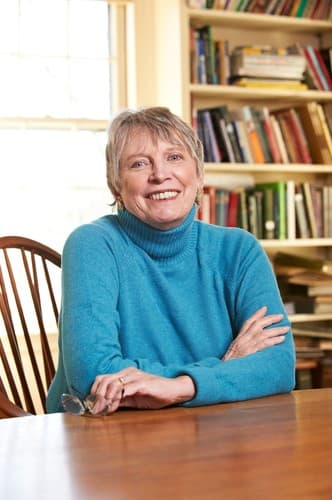
Lois Lowry is an American author known for her contributions to children's and young adult literature. Her notable works include "The Giver," "Number the Stars," "Gathering Blue," and the books in "The Giver Quartet," which explore themes of memory, identity, and the human experience. Lowry has received multiple awards for her writing, including the Newbery Medal.
Similar books
- Mary Poppins
P.L. Travers
4.0 (115k) average on GoodreadsFantasyParodies the classic governess trope and features an eccentric family dynamic.
- The Witches
Roald Dahl
4.2 (314k) average on GoodreadsFantasyOffers a slightly macabre, adventurous take on children facing off against evil adults.
- Matilda
Roald Dahl
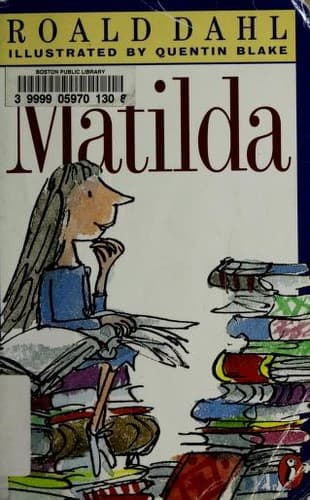
4.3 (648k) average on GoodreadsFantasyDahl's Matilda features a virtuous, intelligent child hero battling cruel adults, a clear moral dichotomy. The Willoughbys presents morally ambiguous protagonists whose positive transformations are more circumstantial than inherent goodness. Lowry's characters are less clearly defined as 'good' or 'bad,' offering a more nuanced and satirical look at childhood.
- Harry Potter and the Sorcerer's Stone
J.K. Rowling
4.5 (7M) average on GoodreadsFantasyRescued from a miserable life under the stairs, an orphaned boy discovers he's a wizard destined for a magical school, where he uncovers a dangerous secret tied to the dark wizard who murdered his parents.
- The Hunger Games
Suzanne Collins
4.3 (6.4M) average on GoodreadsFantasyIn a future where children fight to the death on live television, Katniss Everdeen volunteers for the arena, turning a death sentence into a fight for survival and a spark of rebellion.
- 1984
George Orwell
4.2 (3.1M) average on GoodreadsPoliticsIn a future where surveillance and thought control are absolute, a man's search for truth clashes with the Party, showing that hope can be a form of rebellion.





Enjoyed the summary?
A summary gives you the shape of the book. The book itself has the detail, the examples and the voice.
Find The Willoughbys on AmazonAs an Amazon Associate, BookBrief earns from qualifying purchases. How we're funded