

Synopsis
Covers the whole plot, including the ending.
- Difficulty
- Easy
- Pacing
- Moderate
- Mood
- Humorous, Hopeful, Redemptive, Bittersweet
- Read it if
- You enjoy heartwarming stories about redemption and second chances with a touch of Irish humor and a unique take on the afterlife.
- Skip it if
- You prefer highly realistic fiction or are put off by a blend of dark themes and lighthearted fantasy.
The Wish List Plot Summary
Covers the whole plot, including the ending.
The Heist Gone Wrong
Meg Finn, a troubled, recently orphaned teenager living on the streets, is coerced by her dim-witted but dangerous friend, Belch Boyle, into robbing the home of an elderly man, Lowrie McCall. Belch, obsessed with explosives, plans to use a small bomb to blow open a safe he believes Lowrie possesses. During the botched robbery, Lowrie, a kind and frail man, confronts them. Belch panics and accidentally triggers a much larger explosion than intended, destroying the house and killing himself, Meg, and Lowrie instantly. This sudden, violent end sends Meg into an unexpected afterlife predicament.
Limbo and the Soul Allocation Department
After the explosion, Meg's spirit finds herself in a sterile, bureaucratic waiting room in the afterlife. This place, called Limbo, is run by the Soul Allocation Department. She meets a cynical angel, Saint Peter, who explains her unique situation: her soul, having died at the exact same moment as Lowrie's, has become intertwined with his. Because Lowrie was exceptionally good and Meg was exceptionally bad, her soul is effectively 'stuck' to his, preventing her from being immediately sent to hell. She learns that her final destination depends on a celestial challenge.
The Wish List and the Challenge
Saint Peter tells Meg that due to the soul entanglement, she has a unique chance for redemption. She must return to Earth as a spirit and fulfill Lowrie McCall's ten deepest wishes. If she successfully completes the 'wish list' within a set timeframe, her soul will be released from Belch's demonic influence and allowed into heaven. If she fails, both her soul and Lowrie's will go to hell. This challenge sets the stage for Meg's spiritual journey and her reluctant partnership with Lowrie's spirit.
Belch's Demonic Apprenticeship
Meanwhile, Belch Boyle's spirit, unburdened by any good deeds, is immediately sent to hell. There, he is recruited by the demon Beelzebub, who sees Belch's ineptitude and malice as a perfect tool for his own schemes. Beelzebub tasks Belch with returning to Earth as a newly minted, low-level demon to hinder Meg's progress on Lowrie's wish list. Belch, now with minor demonic abilities and a more menacing appearance, enjoys the chance to torment Meg and ensure her damnation, unknowingly becoming a pawn in a larger celestial game.
Return to Earth and First Wishes
Meg and Lowrie return to Earth as invisible spirits, able to interact with the physical world only through subtle influences. Their first wish involves Lowrie's desire to help his former neighbor, an elderly woman named Mrs. Fogarty, who he believes is lonely. Meg, initially cynical, finds herself surprisingly moved by Lowrie's compassion. At the same time, Belch, now with a demonic appearance and the ability to cause minor chaos, begins to interfere. He creates small but frustrating obstacles for Meg, often by tempting humans to act on their worst impulses.
Lowrie's Past and Meg's Empathy
As they work through the wish list, Lowrie shares stories from his life, revealing his quiet acts of kindness and his deep love for his late wife, Mary. Meg, who has never experienced unconditional love or a stable family, starts to see the world through Lowrie's eyes. She helps him fulfill wishes like encouraging his estranged son, Michael, to reconnect with an old friend, and subtly guiding a young couple to find love. Each fulfilled wish chips away at Meg's tough exterior, replacing her cynicism with a growing sense of empathy and purpose.
Belch's Escalating Interference
Belch's demonic powers grow slightly, and his interference becomes more direct and dangerous. He tries to sow discord and misfortune, attempting to prevent Meg from completing wishes. For instance, he tries to make a young boy steal from a charity box, knowing it would upset Lowrie. Meg, despite her growing frustration with Belch, learns to use her own ingenuity and Lowrie's guidance to counteract his schemes. Their ghostly cat-and-mouse game across Dublin creates both humorous and tense moments, showing the struggle between good and evil for Meg's soul.
The Wish for Forgiveness
One of Lowrie's most poignant wishes is to forgive his estranged son, Michael, for a past grievance. This wish forces Meg to confront her own unresolved anger and pain regarding her mother's death and her stepfather's cruelty. Through Lowrie's example, Meg begins to understand the power of forgiveness, not just for others, but for oneself. This particular wish is heavily contested by Belch, who tries to amplify Michael's resentment. It becomes an important moment in Meg's emotional development.
The Final Wish and the Confrontation
The final wish on Lowrie's list is for Meg herself: to find peace and happiness. This wish is a selfless act from Lowrie. At the same time, Belch, desperate to claim Meg's soul, orchestrates a major event, attempting to trap her permanently in despair. Meg, now transformed by her experiences, must make a truly selfless decision. She puts Lowrie's spiritual well-being above her own, even if it means sacrificing her own chance at redemption. This climax tests the true extent of her character development.
Redemption and Aftermath
In a selfless act, Meg sacrifices her own chance at heaven to ensure Lowrie's soul finds peace. This choice paradoxically secures her own redemption. Her soul is finally separated from Belch's demonic taint. Lowrie ascends to heaven, and Meg, having completed the wish list in spirit, is also granted entry, though not without a final, humorous interaction with Saint Peter. Belch is dragged back to hell, having failed his mission. Meg's journey ends with her finding a deep sense of belonging and peace in the afterlife, having truly earned her second chance.
The Wish List Characters
Meg Finn
Protagonist
A cynical, troubled teenager given a second chance at redemption.
Meg is initially a hardened, street-smart teenager, orphaned and abandoned, with a history of petty crime and a deep-seated cynicism towards the world. Her tough exterior masks profound grief, loneliness, and a yearning for love and acceptance. She is intelligent and resourceful but has been shaped by hardship, leading her to make poor choices. Her initial motivation is self-preservation, but through her journey, she learns empathy and selflessness.
Relationships: Lowrie McCall (Spiritual guide and mentor; their souls are intertwined.); Belch Boyle (Former partner in crime, now demonic adversary.); Saint Peter (Bureaucratic angel overseeing her redemption.)
Lowrie McCall
Supporting
A kind, gentle old man whose pure soul guides Meg to redemption.
Lowrie is an exceptionally good-hearted, gentle, and forgiving elderly man. He lived a simple life filled with quiet acts of kindness and an enduring love for his late wife, Mary. Despite being a victim of Meg and Belch's robbery, he harbors no ill will. His spiritual presence is one of unwavering compassion and wisdom, serving as Meg's moral compass and guide throughout her journey. His innocence and profound goodness are central to the plot.
Relationships: Meg Finn (Spiritual protégé and companion; their souls are intertwined.); Mary McCall (His beloved late wife, a source of his enduring love.); Michael McCall (His estranged son, whom he wishes to reconcile with.)
Belch Boyle
Antagonist
Meg's dim-witted former accomplice, now a low-level demon.
Belch is dim-witted, easily manipulated, and prone to violence, with an unhealthy obsession with explosives. He lacks empathy and a moral compass, making him a perfect candidate for hell. After his death, he becomes a low-level demon, still largely incompetent but now endowed with minor supernatural powers and a desire to cause mischief and torment Meg. He represents pure, unadulterated malice and serves as a constant obstacle to Meg's redemption.
Relationships: Meg Finn (Former partner in crime, now target of his demonic torment.); Beelzebub (His demonic master and manipulator.)
Saint Peter
Supporting
The cynical, bureaucratic angel of the Soul Allocation Department.
Saint Peter is portrayed as a weary, cynical, and bureaucratic angel in charge of the Soul Allocation Department in Limbo. He is overworked and jaded by the endless stream of souls passing through, but beneath his gruff exterior, he upholds divine justice. He is the one who explains Meg's unique predicament and sets the terms of her redemption, acting as a detached but ultimately fair arbiter of her fate. He provides much of the exposition about the afterlife mechanics.
Relationships: Meg Finn (Overseer of her redemption trial.); Beelzebub (Opposing force in the celestial battle for souls.)
Beelzebub
Antagonist
A high-ranking demon who manipulates Belch to thwart Meg.
Beelzebub is a cunning and powerful demon, a high-ranking official in hell's bureaucracy. He is the mastermind behind Belch's mission to sabotage Meg's redemption, viewing it as an opportunity to claim both Meg's and Lowrie's souls and gain an advantage over heaven. He is charismatic and manipulative, using Belch's stupidity to his advantage. He represents the forces of evil actively working against Meg's chance at salvation.
Relationships: Belch Boyle (His demonic apprentice and pawn.); Saint Peter (Celestial adversary.)
Mrs. Fogarty
Mentioned
Lowrie's lonely elderly neighbor, the subject of one of his wishes.
Mrs. Fogarty is an elderly woman living alone, who Lowrie had been concerned about before his death. She represents the quiet loneliness that many elderly people experience and is the subject of one of Lowrie's first wishes: for her to have company. Her brief appearance highlights Lowrie's compassionate nature and provides Meg with an early, tangible example of the positive impact of fulfilling a wish.
Relationships: Lowrie McCall (Former neighbor, recipient of his posthumous kindness.)
Michael McCall
Supporting
Lowrie's estranged son, a key figure in Lowrie's wish list.
Michael is Lowrie's only son, with whom he has an estranged relationship due to a past misunderstanding. He carries a burden of unspoken resentment and grief. His reconciliation with his father (through Meg's subtle influence) is a crucial part of Lowrie's wish list, allowing Lowrie to find peace and demonstrating the power of forgiveness. Michael's character embodies the idea of unresolved family conflict and the healing power of understanding.
Relationships: Lowrie McCall (His late father, with whom he has an estranged relationship.)
Mary McCall
Mentioned
Lowrie's deceased wife, whose memory profoundly influenced him.
Mary McCall is Lowrie's beloved late wife, whose memory is a constant source of comfort and inspiration for him. Though she never appears directly, her presence is felt through Lowrie's stories and his enduring love for her. She represents the ideal of enduring love and a happy life, contrasting sharply with Meg's own experiences with family. Her memory underpins many of Lowrie's wishes, particularly those related to love and companionship.
Relationships: Lowrie McCall (His deeply loved deceased wife.)
The Wish List Themes
Redemption and Second Chances
The main theme is Meg's chance to atone for her past mistakes and earn her way into heaven. Her journey of fulfilling Lowrie's wish list is a literal second chance at an afterlife. This theme is clear in Saint Peter's explanation of her unique predicament and the challenge he sets. Meg's initial reluctance and eventual embrace of the task show that even troubled souls can find a path to redemption through selfless acts, as seen when she sacrifices her own initial chance for Lowrie's.
“You see, Meg, your soul and Lowrie's are... entangled. And because Lowrie was so good, and you were... well, you, it's created a rather unique situation. A loophole, if you will, for a second chance.”
The Power of Empathy and Compassion
Meg's transformation comes from her growing empathy for Lowrie and the people he wished to help. Initially cold and self-centered, she slowly learns to see the world through Lowrie's kind eyes, understanding the value of connection and small acts of kindness. This is clear when she helps Mrs. Fogarty or helps Michael reconcile with his father's memory. Her journey shows how understanding and caring for others can heal one's own emotional wounds and lead to personal growth.
“It's funny, thought Meg, how much you could learn about a person from their wishes. And how much you could learn about yourself, by helping to grant them.”
The Nature of Good vs. Evil
The novel shows a clear, often humorous, struggle between good (heaven, represented by Saint Peter and Lowrie) and evil (hell, represented by Beelzebub and Belch). This conflict is not just external, but also internal for Meg, as she battles her own cynical impulses and the demonic temptations from Belch. The story suggests that good is found in selfless acts, forgiveness, and love, while evil is seen in selfishness, malice, and manipulation. Ultimately, good triumphs through Meg's final, selfless choice.
“There are two paths, Meg Finn. One of light, one of shadow. And you, my dear, are standing right on the dividing line.”
The Importance of Connection and Family
Many of Lowrie's wishes involve reconnecting with loved ones or forming new connections, such as his desire for Mrs. Fogarty to have company or for his son Michael to find peace. Meg, having been orphaned and estranged from her stepfather, initially struggles with the idea of healthy relationships. Through Lowrie's example, she learns the deep importance of family, friendship, and community, realizing that true happiness comes from these bonds. This theme highlights that love and connection are essential for a fulfilling life, both on Earth and in the afterlife.
“All Lowrie ever wanted was for people to be happy. For them to be connected. And that, Meg realized, was a pretty good thing to wish for.”
Plot Devices & Literary Techniques
The Wish List
A literal list of ten wishes that Meg must fulfill to earn redemption.
The wish list serves as the central driver of the plot. It provides a clear objective and a structured progression for Meg's journey. Each wish acts as a mini-challenge, forcing Meg to interact with the human world and confront her own prejudices and limitations. The list is not merely a task; it's a vehicle for her emotional and spiritual growth, as each fulfilled wish chips away at her cynicism and builds her empathy. It also allows the narrative to explore various aspects of human kindness and connection through Lowrie's desires.
Soul Entanglement
Meg's and Lowrie's souls are intertwined, creating a unique afterlife predicament.
This device is the magical catalyst for the entire story. The entanglement of Meg's 'bad' soul with Lowrie's 'good' soul creates the 'loophole' that allows Meg a chance at redemption. It physically binds her to Lowrie, ensuring she cannot escape the mission and forcing her to work alongside him. This entanglement also raises the stakes, as Lowrie's pure soul is also at risk of damnation if Meg fails, adding a layer of moral responsibility to Meg's actions that she initially lacks.
Limbo and Afterlife Bureaucracy
A humorous, bureaucratic depiction of the waiting room for souls.
The portrayal of Limbo as a sterile, paperwork-filled department run by jaded angels like Saint Peter introduces a unique, often comedic, tone to the afterlife. It demystifies the spiritual realm, making it relatable and accessible. This setting provides the rules and stakes of Meg's challenge and contrasts sharply with the chaotic, more traditional depiction of hell. It allows for exposition about the spiritual mechanics of the world while injecting a dose of Colfer's characteristic irreverent humor into a potentially heavy subject.
Demonic Interference
Belch Boyle, as a low-level demon, actively tries to sabotage Meg's mission.
Belch's transformation into a demon and his subsequent attempts to thwart Meg introduce an active, personalized antagonist to the plot. His interference provides external conflict and raises the stakes for each wish. His bumbling, yet malicious, efforts create both comedic moments and genuine tension, highlighting the constant struggle between good and evil. This device ensures that Meg's journey is not merely an internal one, but a race against time and an opposing force, making her redemption harder-won and more impactful.
The Wish List Quotes
“Being dead doesn't stop you from doing things. It just makes it a bit harder to get served in shops.”
“The problem with being good is that you get to see how bad everyone else is.”
“Every single action, no matter how small, has a consequence. And every single consequence, no matter how small, has a ripple.”
“You can't buy happiness. But you can buy chocolate, and that's kind of the same thing.”
“Sometimes, the only way to find out what you really want is to lose everything else.”
“It's not about being perfect, it's about trying to be better.”
“Fear is a powerful motivator. But so is hope.”
“You can't change the past, but you can definitely mess up the future.”
“Even villains have their own twisted sense of right and wrong.”
“The greatest trick the devil ever pulled was convincing the world he didn't exist. The second greatest was convincing everyone that good deeds were boring.”
“A good deed, even a small one, shines brighter in the darkness than a thousand evil acts.”
“It's hard to be a bad person when you're surrounded by so much good.”
“Sometimes, the most important journey you can take is the one inside yourself.”
“Heaven isn't a place, it's a state of mind. And sometimes, a state of very good plumbing.”
Quiz
10 questions on the plot and the characters. Each answer comes with a short explanation.
Question 1
What is the name of Meg Finn's partner in crime who gets her involved in the attempted robbery?
- Lowrie McCall
- Belch
- Artemis Fowl
- Conor
Show answer
B. Belch Belch is Meg's partner in crime who gets her involved in the ill-fated robbery attempt that leads to her death.
Question 2
Where is Meg Finn's spirit flung after the accidental explosion during the robbery?
- Heaven
- Hell
- Limbo
- The underworld
Show answer
C. Limbo After the explosion, Meg's spirit is flung into limbo, where the battle for her soul begins.
Question 3
Who is the elderly man that Meg and Belch attempt to rob?
- Mr. Higgins
- Lowrie McCall
- Father Michael
- Artemis Fowl
Show answer
B. Lowrie McCall The target of the robbery is Lowrie McCall, an elderly man whose house they attempt to break into.
Question 4
What is the primary reason Meg Finn becomes a wanderer and troublemaker?
- She was bored with her life.
- She was cast out of her home by her stepfather after her mother's death.
- She ran away to join a gang.
- She was seeking adventure.
Show answer
B. She was cast out of her home by her stepfather after her mother's death. The synopsis explicitly states she was 'Cast out of her home by her stepfather after her mother's death,' which explains her troubled path.
Question 5
What is the central conflict or 'race' that unfolds after Meg's spirit enters limbo?
- A race against time to revive her body.
- A competition between angels to guide her soul.
- A battle between the demonic and the divine to win her soul.
- A quest for her to find her own way back to life.
Show answer
C. A battle between the demonic and the divine to win her soul. The synopsis states 'a race begins between the demonic and the divine to win her soul' after she enters limbo.
Question 6
What kind of opportunity is Meg Finn given in limbo, according to the description?
- The opportunity to become an angel.
- The opportunity for a special kind of redemption.
- The opportunity to choose her next life.
- The opportunity to meet her deceased mother.
Show answer
B. The opportunity for a special kind of redemption. The description introduces Meg as a 'lovable but troubled heroine, who has been given the opportunity for a special kind of redemption.'
Question 7
What is the ultimate lesson or theme highlighted by the phrase 'where joy is found in the most unexpected places'?
- The importance of material wealth.
- The unpredictable nature of happiness and second chances.
- The necessity of following a strict spiritual path.
- The idea that suffering always leads to joy.
Show answer
B. The unpredictable nature of happiness and second chances. This phrase speaks to the theme of finding unexpected happiness and the journey of second chances, which is central to Meg's story.
Question 8
Given the description of Meg Finn as 'irreverent, hilarious, and touchingly hopeful,' what literary tone can readers expect from the book?
- Dark and somber.
- Strictly academic and philosophical.
- Lighthearted yet emotionally resonant.
- Cynical and pessimistic.
Show answer
C. Lighthearted yet emotionally resonant. The combination of 'irreverent, hilarious, and touchingly hopeful' suggests a tone that is both humorous and emotionally engaging, not overly dark or academic.
Question 9
How does the author's previous success with 'Artemis Fowl' relate to 'The Wish List' in terms of genre or target audience, based on the provided text?
- Both are strictly adult thrillers.
- Both feature a dark, gritty realism.
- Both are likely within the fantasy/young adult/children's genre, appealing to a similar readership.
- They are completely unrelated in genre and audience.
Show answer
C. Both are likely within the fantasy/young adult/children's genre, appealing to a similar readership. The description mentions Artemis Fowl and then introduces 'The Wish List' in the context of Eoin Colfer's work, which is categorized as 'Fantasy, Children's, Young Adult,' implying a consistent genre appeal.
Question 10
What specific consequence immediately follows the 'accidental explosion' during the robbery attempt?
- Belch is arrested.
- Lowrie McCall is injured.
- Meg's spirit is flung into limbo.
- The police arrive immediately.
Show answer
C. Meg's spirit is flung into limbo. The text states: 'After an accidental explosion, Meg's spirit is flung into limbo,' directly linking the explosion to her entry into limbo.
The Wish List FAQ
What is the central premise of 'The Wish List'?
The Wish List follows Meg Finn, a recently deceased teenage troublemaker, whose soul is in limbo after a botched robbery attempt and an accidental explosion. Due to a bureaucratic mix-up between Heaven and Hell, she is sent back to Earth as a ghost to help Lowrie McCall, the elderly man she attempted to rob, fulfill his own wish list, in hopes of earning redemption and a place in Heaven.
Who is Meg Finn and what is her initial situation?
Meg Finn is a troubled teenager, recently orphaned after her mother's death and subsequently cast out by her abusive stepfather. She's a wanderer and petty criminal, whose latest misadventure, an attempted robbery with her partner Belch, leads to her untimely death and subsequent spiritual predicament.
Who is Lowrie McCall and what role does he play?
Lowrie McCall is the elderly man Meg and Belch try to rob. He is a widower living alone, and unknowingly becomes the key to Meg's redemption. Meg, as a ghost, must help him complete his wish list, which includes tasks like reuniting with his estranged daughter and fixing his old car.
What is the 'wish list' that Meg must help Lowrie fulfill?
Lowrie's wish list is a series of simple, heartfelt desires he'd written down, including things like fixing his old car, visiting his wife's grave, and most importantly, reconnecting with his estranged daughter, Susie. Completing these tasks is Meg's only path to potentially earning a place in Heaven.
Who is Belch and what happens to him after the explosion?
Belch is Meg's partner in crime, a violent and cruel individual who also dies in the explosion. Unlike Meg, his soul is immediately claimed by Hell and he is sent back to Earth as a demon to torment Meg and Lowrie, attempting to sabotage Meg's efforts and claim her soul for damnation.
How does the bureaucratic system of Heaven and Hell influence the plot?
The novel humorously portrays Heaven and Hell as bureaucratic organizations with rules and quotas. Meg's soul ends up in limbo due to a clerical error, leading to a 'race' between the divine (represented by Saint Peter) and the demonic (represented by Beelzebub) to win her soul, setting the stakes for her mission with Lowrie.
What is the significance of the 'aura' that Meg possesses?
Meg's aura is a visible representation of her spiritual state, initially dark and troubled. As she genuinely helps Lowrie and performs good deeds, her aura begins to lighten and glow, signaling her progress towards redemption and making her presence more noticeable to others, particularly Lowrie.
Are there any hidden connections between characters beyond their immediate interactions?
Yes, Lowrie McCall unknowingly has a deeper connection to Meg's past. It's revealed that he was once a kind neighbor to Meg and her mother, offering small acts of kindness that Meg vaguely remembers. This subtle link reinforces the idea that their paths were destined to cross for Meg's redemption.
How does Meg's perspective on her past actions change throughout the book?
Initially, Meg is defiant and unrepentant, viewing herself as a victim. As she witnesses the positive impact of her actions on Lowrie and begins to genuinely care for him, she starts to reflect on her past mistakes with remorse and regret, understanding the pain she caused and the opportunities she squandered.
What psychological factors contribute to Belch's villainy?
Belch's villainy appears rooted in deep-seated cruelty, a lack of empathy, and a desire for control and destruction. Even as a demon, he revels in tormenting others and seems driven purely by malicious intent, suggesting a profound absence of moral compass, possibly stemming from his own life experiences.
How does Lowrie McCall cope with his loneliness and grief?
Lowrie copes with his loneliness and grief by creating his wish list, a tangible way to remember his wife and find purpose. He also finds solace in his routines, his old car, and the memories of his wife, though his estrangement from his daughter weighs heavily on him, contributing to his quiet despair.
What role does empathy play in Meg's journey of redemption?
Empathy is crucial to Meg's transformation. Initially self-absorbed, her forced proximity to Lowrie and the need to understand his desires gradually cultivates empathy within her. As she genuinely feels for his struggles and joys, her own hardened heart begins to soften, driving her towards selfless acts.
Is 'The Wish List' primarily a story about a second chance, or about the inherent goodness of humanity?
It's arguably both, but leans heavily towards being a story about second chances and the potential for redemption. While it highlights the inherent goodness that Lowrie embodies, Meg's journey explicitly explores the idea that even troubled souls can find a path to goodness and make amends, given the opportunity and the right motivation.
How does the book challenge traditional notions of good and evil?
The book challenges traditional notions by portraying Heaven and Hell with bureaucratic flaws, suggesting that divine judgment isn't always clear-cut. Meg, despite her criminal past, is given a chance at redemption, while Belch, seemingly irredeemable, serves as a stark contrast, implying that the distinction between good and evil can be fluid and depends on an individual's capacity for change.
What is the significance of the ending for Meg and Lowrie?
The ending signifies Meg's complete redemption and Lowrie's renewed sense of purpose. Meg earns her place in Heaven, having truly transformed, while Lowrie, with Meg's help, reconnects with his daughter and finds happiness, fulfilling his wish list. It's a bittersweet but ultimately hopeful conclusion for both characters.
Could Meg have achieved redemption without the intervention of Heaven and Hell?
It's debatable, but highly unlikely. The direct intervention of Heaven and Hell, particularly the 'race' for her soul and the specific task of helping Lowrie, provides the structured motivation and consequence that forces Meg to confront her actions and develop empathy. Without this supernatural push, her path as a living troublemaker seemed set.
How does the author use humor to balance the serious themes of death and redemption?
Eoin Colfer employs irreverent humor, particularly through the bureaucratic depiction of the afterlife and the witty dialogue between Meg, Saint Peter, and Beelzebub. This lighthearted approach prevents the heavy themes of death, guilt, and the afterlife from becoming overly somber, making the story accessible and engaging for its target audience while still delivering its profound messages.
About the author

Eoin Colfer is an Irish author best known for his work in children's and young adult fiction. He gained prominence with the Artemis Fowl series, which includes titles such as The Lost Colony, The Arctic Incident, The Opal Deception, The Eternity Code, and The Supernaturalist. His stories often blend fantasy and adventure, appealing to a wide range of readers.
Similar books
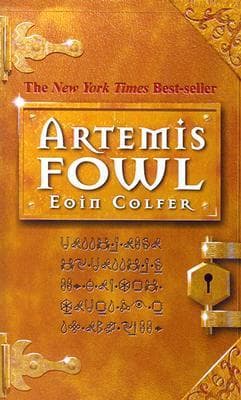
- Artemis Fowl
Eoin Colfer
3.9 (496k) average on GoodreadsFantasyShares Colfer's distinctive humor and imaginative world-building, though 'The Wish List' is more character-driven.
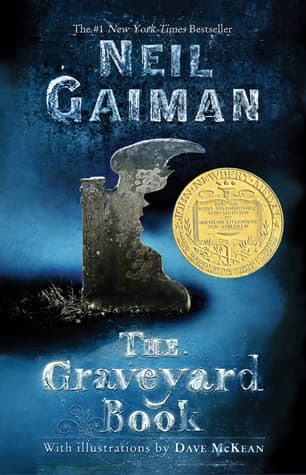
- The Graveyard Book
Neil Gaiman
4.1 (438k) average on GoodreadsFantasyFeatures a unique blend of supernatural elements, coming-of-age themes, and a slightly melancholic yet hopeful tone.
- A Monster Calls
Patrick Ness
4.3 (208k) average on GoodreadsFantasyExplores complex emotional themes, grief, and the struggle for forgiveness, with a touch of magical realism.
- Harry Potter and the Sorcerer's Stone
J.K. Rowling
4.5 (7M) average on GoodreadsFantasyRescued from a miserable life under the stairs, an orphaned boy discovers he's a wizard destined for a magical school, where he uncovers a dangerous secret tied to the dark wizard who murdered his parents.
- The Hunger Games
Suzanne Collins
4.3 (6.4M) average on GoodreadsFantasyIn a future where children fight to the death on live television, Katniss Everdeen volunteers for the arena, turning a death sentence into a fight for survival and a spark of rebellion.
- 1984
George Orwell
4.2 (3.1M) average on GoodreadsPoliticsIn a future where surveillance and thought control are absolute, a man's search for truth clashes with the Party, showing that hope can be a form of rebellion.




Enjoyed the summary?
A summary gives you the shape of the book. The book itself has the detail, the examples and the voice.
Find The Wish List on AmazonAs an Amazon Associate, BookBrief earns from qualifying purchases. How we're funded