
Estimated read time: 9 min read
One Sentence Summary
A young solicitor encounters ghostly terror and tragic secrets while settling the affairs of a deceased client in a remote English village.
Table of Contents
Introduction
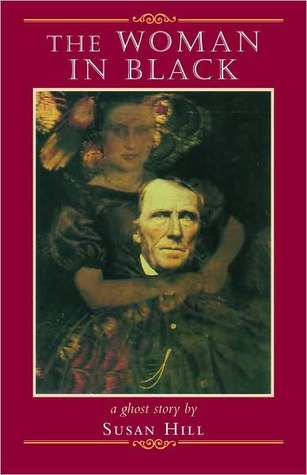
Imagine yourself in a fog-choked English marsh, where every creak of an old floorboard and distant cry of a child whispers of secrets better left undisturbed. Welcome to The Woman in Black by Susan Hill, a masterfully chilling novel that has haunted readers since its first publication in 1983. This modern gothic tale, beloved by college literature classes and general readers alike, revitalizes the ghost story tradition with its elegant prose, psychological depth, and an atmosphere so thick you’ll want to keep the lights on. Whether you’re a student dissecting gothic motifs or just love a good scare, Hill’s novel offers both literary merit and genuine goosebumps.
Historical Context
Set in the early twentieth century, The Woman in Black draws from classic Victorian and Edwardian ghost story traditions. The period was marked by fascination with the supernatural, spiritualism, and a lingering fear of the unknown—a perfect breeding ground for Hill’s tale. The book’s rural English setting, with its misty moors and decaying manor houses, evokes both Charles Dickens and Henry James, nodding to a literary lineage of psychological horror and gothic suspense.
Notably, the novel emerged during a late twentieth-century revival of interest in classic ghost stories. Susan Hill, inspired by the likes of M.R. James and Wilkie Collins, crafted a narrative that feels at once timeless and eerily contemporary, touching on enduring anxieties about grief, loss, and the limits of rationality.
Brief Synopsis
Plot Overview
The Woman in Black follows Arthur Kipps, a young London solicitor, as he is dispatched to the remote village of Crythin Gifford to settle the estate of the recently deceased Alice Drablow. There, he encounters the mysterious Eel Marsh House and its spectral inhabitant—a woman dressed in black whose presence seems to herald tragedy. As Arthur unravels the secrets of the house and the surrounding marsh, he is drawn into a web of supernatural terror that will change his life forever.
Setting
The story unfolds in the bleak marshlands outside Crythin Gifford, a fictional English village. At the heart is Eel Marsh House, isolated by tidal causeways and surrounded by treacherous fogs. The landscape is as much a character as any person in the novel: desolate, haunting, and filled with a creeping sense of dread. The atmospheric setting amplifies the novel’s tension, making every shadow loom larger and every sound echo with menace.
Main Characters
| Name | Role | Key Traits | Importance to Plot |
|---|---|---|---|
| Arthur Kipps | Protagonist/Narrator | Rational, earnest, emotionally scarred | Central figure; unravels mystery |
| Jennet Humfrye | The Woman in Black | Vengeful, tragic, spectral | Source of haunting and curse |
| Samuel Daily | Local Landowner | Practical, sympathetic, protective | Aids Arthur and provides warnings |
| Mr. Jerome | Drablow’s Agent | Nervous, evasive, secretive | Hints at local fears |
| Alice Drablow | Deceased Widow | Mysterious, reclusive, tragic history | Her past triggers events |
| Stella Kipps | Arthur’s Fiancée/Wife | Loving, innocent, symbolic of hope | Emotional anchor for Arthur |
| Spider | Dog | Loyal, courageous, perceptive | Arthur’s companion at Eel Marsh |
Plot Summary
Arrival in Crythin Gifford
Arthur Kipps, eager to prove himself, journeys from bustling London to the windswept wilds of Crythin Gifford. Almost immediately, he is greeted with unease—the locals shrink from any mention of Eel Marsh House or the Drablow family. Arthur, though slightly unnerved, remains determined to carry out his professional duty.
Eel Marsh House and First Encounters
Upon his first visit to the isolated Eel Marsh House, Arthur experiences a series of unsettling events. The house itself is a monument to gloom, filled with locked rooms, faded grandeur, and the omnipresent stench of the marsh. It is here that Arthur first glimpses the Woman in Black—a gaunt, wasted figure dressed in mourning, her eyes burning with malice.
The marsh seems to conspire against him, with sudden fogs and the chilling sound of a pony and trap crashing in the distance—a mysterious echo of a past tragedy. Arthur’s rational mind struggles to make sense of these ghostly phenomena, even as he becomes increasingly convinced that something is terribly amiss.
Unraveling the Mystery
With the reluctant help of local landowner Samuel Daily and the nervous Mr. Jerome, Arthur begins to piece together the tragic history of the Drablow family. He learns that Jennet Humfrye, the Woman in Black, was once a young woman who lost her child in a tragic accident on the marsh. Consumed by grief and rage, her spirit now haunts Eel Marsh House, seeking vengeance on the living.
Arthur’s investigations are punctuated by terrifying encounters with the Woman in Black, whose presence is always followed by inexplicable accidents and untimely deaths. The line between past and present blurs, and Arthur finds himself ensnared in a cycle of supernatural retribution from which there seems no escape.
The Climax and Aftermath
Arthur’s final confrontation with the Woman in Black pushes him to the brink of sanity. Though he manages to unearth the full story of Jennet Humfrye’s anguish, the knowledge comes at a steep personal cost. The haunting leaves an indelible mark on Arthur’s life, altering his fate in ways both devastating and irrevocable.
Themes and Motifs
| Theme | Description | Broader Context |
|---|---|---|
| Grief and Loss | Explores the destructive power of unresolved grief, particularly through Jennet’s tragic story | Reflects universal human anxieties |
| Rationality vs. Supernatural | Arthur’s struggle to reconcile logic with the inexplicable events at Eel Marsh House | Echoes Enlightenment vs. Gothic tropes |
| Isolation | Physical and emotional isolation heightens terror and vulnerability | Common in gothic literature |
| Revenge | Jennet’s ghost embodies vengeance, punishing the innocent for past wrongs | Raises moral questions about justice |
| The Power of the Past | The inescapability of history and memory; the past haunts the present | Connects to trauma and inheritance |
| Fear | Both psychological and supernatural; fear as a shaping force in human experience | Central to horror genre |
Motifs such as fog, locked doors, and the recurring sound of the doomed pony and trap serve as potent symbols of the unknown and the persistence of trauma.
Literary Techniques and Style
Susan Hill’s narrative style is a love letter to classic ghost stories—elegant, restrained, and deeply atmospheric. She employs:
- First-person narration: Arthur’s reflective, sometimes unreliable perspective adds intimacy and suspense.
- Gothic imagery: Hill conjures chilling settings with vivid, sensory detail—decaying corridors, swirling mists, creaking floorboards.
- Foreshadowing: Subtle hints and local superstitions build dread long before overt supernatural events.
- Ambiguity: Hill rarely explains the ghost’s powers, maintaining mystery and leaving much to the reader’s imagination.
- Symbolism: Objects and sounds (the marsh, the dog, the pony and trap) are laden with symbolic meaning, representing both literal and psychological peril.
The novel’s pacing is deliberate, ratcheting up tension with each encounter, while moments of humor and warmth (often thanks to the dog, Spider) provide brief respite from the relentless gloom.
Author's Background
Susan Hill, born in 1942, is a distinguished British novelist and playwright. Her work spans literary fiction, children’s books, and psychological thrillers. Hill’s fascination with the supernatural is evident in much of her oeuvre, but The Woman in Black stands as her most celebrated gothic tale.
Hill has cited influences including M.R. James, Charles Dickens, and Henry James. Her writing is noted for its clarity, emotional resonance, and ability to evoke the uncanny. Beyond The Woman in Black, Hill’s other notable works include I’m the King of the Castle and the Simon Serrailler crime series.
Her impact is significant: The Woman in Black has been adapted into a long-running stage play, a television film, and a major motion picture—each bringing Hill’s eerie vision to new audiences.
Key Takeaways
- The Woman in Black is a masterclass in gothic suspense, blending classic horror tropes with modern psychological insight.
- The novel explores the destructive power of grief and the human need to make sense of the inexplicable.
- Susan Hill’s restrained, evocative style creates a world that is both believably mundane and deeply uncanny.
- The ambiguous ending invites readers to ponder the boundaries between reality and the supernatural.
- The book’s enduring popularity is a testament to its emotional depth, atmospheric setting, and universal themes.
Reader's Takeaway
The Woman in Black is more than a ghost story—it’s a meditation on grief, memory, and the limits of rationality. Readers will find themselves gripped by the slow-burning terror, haunted by the tragic tale at its core, and compelled to reflect on the persistence of the past. The novel invites you to confront your own fears, both supernatural and psychological, and leaves a lingering sense of unease long after the last page is turned.
Whether you are analyzing the gothic tradition for a college essay or seeking a spine-tingling read on a stormy night, Susan Hill’s novel delivers both intellectual depth and visceral thrills.
Conclusion
In the tradition of the finest gothic fiction, The Woman in Black envelops readers in a world where sorrow and vengeance linger like mist over the marsh. Susan Hill’s haunting tale proves that true horror lies not in gore or spectacle, but in the slow, inexorable revelation of secrets that refuse to stay buried.
The book’s atmospheric setting, complex characters, and profound themes make it a rewarding read for students, scholars, and casual readers alike. Don’t just take our word for it—dare to enter Eel Marsh House yourself, and discover why the Woman in Black continues to cast her spectral shadow over the world of literature.
The Woman in Black FAQ
What is 'The Woman in Black' about?
'The Woman in Black' is a gothic horror novel by Susan Hill. The story follows Arthur Kipps, a young solicitor who is sent to a remote village to handle the estate of Alice Drablow. There, he encounters a mysterious woman dressed in black and uncovers a series of chilling events connected to her tragic past.
Who is the main character in the book?
The main character is Arthur Kipps, a young solicitor who is tasked with settling the affairs of the deceased Mrs. Drablow at Eel Marsh House.
What genre does 'The Woman in Black' belong to?
'The Woman in Black' is a gothic horror novel, known for its atmospheric setting, suspenseful plot, and supernatural elements.
What is the significance of the woman dressed in black?
The woman in black is a ghostly figure whose appearance is linked to tragic events, especially the death of children in the village. Her presence is central to the novel's mystery and horror.
Is 'The Woman in Black' based on a true story?
No, 'The Woman in Black' is a work of fiction. Susan Hill created the story as an original ghost tale in the tradition of classic gothic literature.
Has 'The Woman in Black' been adapted into other media?
Yes, the novel has been adapted into a successful stage play, several television films, and a feature movie starring Daniel Radcliffe.
What themes are explored in 'The Woman in Black'?
The novel explores themes such as grief, revenge, the supernatural, isolation, and the impact of the past on the present.
Is 'The Woman in Black' suitable for young readers?
'The Woman in Black' contains frightening scenes and mature themes, making it more suitable for older teens and adult readers.
Where does most of the story take place?
Most of the story takes place in and around Eel Marsh House, an isolated and eerie mansion situated on the marshes near the fictional village of Crythin Gifford.
What makes 'The Woman in Black' a classic in the horror genre?
Susan Hill's masterful use of atmosphere, suspense, and traditional gothic motifs, coupled with a haunting and emotional storyline, has made 'The Woman in Black' a modern classic in the horror genre.