
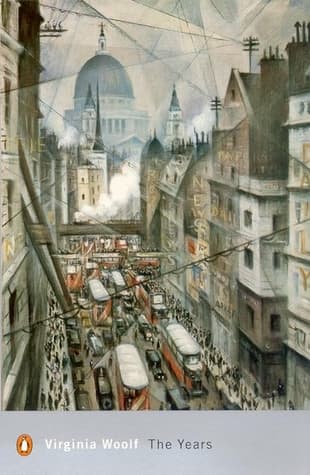
Synopsis
Covers the whole plot, including the ending.
- Difficulty
- Medium
- Pacing
- Slow
- Mood
- Reflective, Melancholy, Observational, Atmospheric
- Read it if
- You enjoy sweeping family sagas, introspective character studies, and novels that explore social change over time with a focus on interiority and atmosphere.
- Skip it if
- You prefer fast-paced plots, clear narrative arcs with definitive resolutions, or find stream-of-consciousness style challenging.
The Years Plot Summary
Covers the whole plot, including the ending.
The Pargiter Household in 1880
The novel starts in 1880, showing the Pargiter family in their London home. Colonel Pargiter is a strict, traditional father, and Mrs. Pargiter is often ill, always cared for by her daughters. Eleanor, the oldest, does her duty and manages the house. Delia is rebellious and interested in Irish politics, while Milly is shy and observant. Rose is a young girl, who has a bad experience with a man in the park. Edward, the only son, is focused on his studies. The children's lives are limited by Victorian rules and their mother's illness, creating a mood of unspoken desires and frustrations. They begin to struggle for their own identities within their family's strict structure.
Changing Times and Emerging Selves in 1891
By 1891, the Pargiter children are older, and their mother has died. Eleanor, still unmarried, continues to care for the family, though she secretly wants her own life. Delia is deeply involved in political action, her passion clashing with what society expects of women. Rose, now a young woman, still feels the effects of her childhood experience, making her careful and quiet. Edward is a student, following his intellectual interests. Martin, a younger brother, has joined the army. This chapter shows the siblings starting to become more individual, as they each face the limits and possibilities of their lives in a changing world, often feeling alone despite being family.
Shifting Social Landscapes in 1907
The year is 1907, and the Pargiters meet for a Christmas dinner, a scene that shows the changing society. Eleanor, now middle-aged, thinks about her life of service, feeling a quiet sadness for her lost youth and dreams that did not come true. Delia, still passionate, says she is frustrated with how slowly social change happens. Martin, back from serving abroad, brings a worldly view but also feels detached. The younger generation, like North Pargiter (Delia's son) and Peggy (Eleanor's niece), starts to express new ideas and question their elders' traditions. The dinner is a small picture of the era, showing the conflict between Victorian ways and the new modern way of thinking, with each character having their own quiet problems.
War and its Aftermath: 1914
The story moves to 1914, with World War I threatening London. The Pargiter family experiences the war in different ways. Martin is in military service, while Eleanor, always caring, works for the war effort. The general mood is one of worry and uncertainty, with air raids and rationing becoming part of daily life. The war makes many characters rethink their values and priorities. It further breaks up the family, sending them to different roles and experiences, while also showing how vulnerable they all are in the face of such a huge global event. The war speeds up social change and personal thought.
A New Generation's Discontent: 1917
In 1917, the war continues, and the younger Pargiters struggle with the past's burdens and the present's chaos. North Pargiter, now a young man, feels very disappointed with the older generation's values and the war's pointlessness. He wants a more real life, often finding comfort in nature and intellectual pursuits. Peggy, a medical student, sees the harsh realities of suffering and death daily, which shapes her cynical but determined outlook. Their talks show a growing impatience with social fakeness and a desire to make new paths, questioning the very ideas their parents and grandparents set, even as they remain part of the family's past.
The Roaring Twenties: 1918-1920
The years after the war, specifically 1918-1920, see London embracing a new, though fragile, sense of freedom and modern life. The Pargiter siblings, now older, think about their lives and choices. Eleanor continues her quiet life, watching the world around her. Delia stays involved in politics, though perhaps with less fiery hope. Martin, having seen the horrors of war, struggles to get used to civilian life, finding comfort in relationships and travel. The younger Pargiters, like North and Peggy, are active in the social and intellectual excitement of the time, going to parties and having debates. This period shows the tension between the lingering past and the exciting, but uncertain, promise of the future.
A Day in London: 1930
The novel then focuses on a single day in 1930, showing the separate experiences of various Pargiter family members and their friends across London. Eleanor walks through the city, her mind full of memories and observations. Peggy deals with her medical career and personal relationships, feeling the weight of what society expects. North thinks about his own identity and purpose, often feeling separate from city life. Martin is seen in a more home setting, thinking about his past. The story moves between these individual thoughts, showing the everyday and important moments of their lives, highlighting how personal time and experience are, and showing how connected, yet alone, they remain in the busy city.
The Final Party: 1930
The novel ends with a large, somewhat disconnected party hosted by Delia in 1930. Almost all the remaining Pargiter siblings and their extended family, along with many friends and acquaintances, are there. The party is a loud mix of conversations, broken thoughts, and unspoken histories. Eleanor watches the younger generation, thinking about the many changes she has seen. Delia, still the host, tries to keep things in order amid the chatter. North and Peggy have serious discussions, representing the future. The gathering is a symbolic summary of the Pargiter family's journey over decades, a moment where past, present, and future meet, showing the lasting human need for connection despite time passing and the unavoidable changes in society and self.
Whispers of Dawn: The End of the Party
As the party starts to break up in the early morning, a smaller group of Pargiters and close friends stay, sharing a moment of quiet thought and closeness. Eleanor, North, Peggy, and others have broken conversations, talking about time, identity, and the future. There is a feeling of both tiredness and hope. The morning light coming through the windows stands for a new day and, perhaps, a new era. The final scenes show how fluid human connection is and how life keeps going in cycles, suggesting that while 'years' pass, people keep looking for meaning and connection, even when things are uncertain and unknown.
The Years Characters
Eleanor Pargiter
Protagonist
The eldest Pargiter daughter, a dutiful caretaker who quietly observes the world and reflects on her unfulfilled life.
Eleanor is the eldest daughter of Colonel Pargiter and a central figure throughout the novel. Initially dedicated to caring for her invalid mother and managing the household, she embodies the Victorian ideal of female sacrifice. As the years pass, she remains unmarried, often feeling a quiet regret for her unlived life and lost opportunities. She is deeply observant, sensitive, and reflective, often serving as a lens through which the reader experiences the passage of time and the changing social landscape. Her journey is one of quiet endurance and a gradual, almost melancholic, acceptance of her lot, always seeking meaning in human connection and the flow of life.
Relationships: Colonel Pargiter (daughter, caregiver); Mrs. Pargiter (daughter, primary caregiver); Delia Pargiter (sister, contrasting personalities); North Pargiter (aunt, observer of the younger generation)
Delia Pargiter
Protagonist/Supporting
A passionate and politically engaged Pargiter daughter, always striving for social change.
Delia is one of the more spirited Pargiter daughters, characterized by her fiery temperament and passionate involvement in political and social causes, particularly Irish politics. Unlike Eleanor, she actively rebels against the constraints of Victorian society and later embraces the more liberated atmosphere of the early 20th century. She is a hostess and a social organizer, often bringing people together, including at the novel's climactic party. While she champions social justice, she also carries a sense of frustration with the slow pace of change and the limitations she faces as a woman. Her energy and idealism drive much of the family's social interactions.
Relationships: Eleanor Pargiter (sister, contrasting personalities); North Pargiter (mother); Colonel Pargiter (daughter, often in conflict); Patrick (husband (implied))
Martin Pargiter
Supporting
A Pargiter son who experiences military life and travel, bringing a detached, worldly perspective.
Martin is one of the Pargiter sons who joins the army and spends time abroad. His experiences give him a more detached and worldly perspective compared to his siblings who remain in London. He is often portrayed as charming but somewhat aimless, seeking pleasure and companionship. The war profoundly affects him, leaving him with a quiet melancholy. He represents a certain masculine archetype of the era, navigating social expectations and personal desires. His presence in the narrative often serves to highlight the broader societal changes and the impact of global events on individual lives.
Relationships: Eleanor Pargiter (brother); Delia Pargiter (brother); Sara (lover/companion)
Rose Pargiter
Supporting
A Pargiter daughter marked by a childhood trauma, leading to a reserved and wary demeanor.
Rose is a Pargiter daughter whose childhood is scarred by a traumatic encounter with a man in a park. This event leaves a lasting impression on her, making her reserved, wary, and somewhat withdrawn throughout her life. She is often seen observing rather than actively participating, her inner world colored by this early experience. Her character highlights the vulnerability of women in Victorian society and the long-term psychological impact of such events. She represents the quiet suffering and resilience of those who carry hidden burdens.
Relationships: Eleanor Pargiter (sister); Delia Pargiter (sister)
Colonel Pargiter
Supporting
The autocratic patriarch of the Pargiter family, embodying rigid Victorian values.
Colonel Pargiter is the stern and traditional patriarch of the Pargiter family. He embodies the rigid Victorian values of his era, demanding obedience and maintaining a sense of patriarchal authority over his household. He is often depicted as emotionally distant, particularly from his children, and preoccupied with his own comforts and routines. His strictness and conventional worldview contribute to the stifling atmosphere of the Pargiter home in the early sections of the novel. His decline and eventual death mark the passing of an old order, paving the way for the younger generations to forge their own paths.
Relationships: Mrs. Pargiter (husband); Eleanor Pargiter (father, demanding); Delia Pargiter (father, often in conflict)
Mrs. Pargiter
Supporting
The invalid mother of the Pargiter children, whose illness casts a shadow over their early lives.
Mrs. Pargiter is the ailing mother of the Pargiter children. Her chronic illness renders her an invalid, requiring constant care, primarily from her daughters, especially Eleanor. Though largely confined to her bed, her presence casts a significant shadow over the early lives of her children, influencing their roles and responsibilities within the household. Her illness contributes to the somber and constrained atmosphere of the Victorian Pargiter home. Her eventual death marks a turning point for the family, freeing some of the children from their caretaking duties and allowing them to pursue more independent lives.
Relationships: Colonel Pargiter (wife); Eleanor Pargiter (mother, dependent); Delia Pargiter (mother)
North Pargiter
Supporting
Delia's son, representing the disillusioned, intellectually curious younger generation.
North Pargiter is Delia's son, a member of the younger generation who comes of age during and after World War I. He is intellectually inclined, often feeling a sense of alienation and disillusionment with the values and traditions of his elders. He grapples with questions of identity, purpose, and the meaning of life in a rapidly changing world. North represents the search for authenticity and a rejection of societal hypocrisies, often finding solace in nature and philosophical contemplation. His character embodies the post-war generation's quest for new ways of living and thinking.
Relationships: Delia Pargiter (son); Eleanor Pargiter (nephew); Peggy Pargiter (cousin, intellectual companion)
Peggy Pargiter
Supporting
Eleanor's niece, a pragmatic and determined medical student who faces the realities of suffering.
Peggy Pargiter is Eleanor's niece and another prominent member of the younger generation. She is a pragmatic and determined medical student, directly confronting the realities of illness, suffering, and death, particularly during the war. Her experiences shape her into a somewhat cynical yet resilient individual, dedicated to her profession. Peggy represents the emerging independence and professional aspirations of women in the early 20th century, challenging traditional gender roles. She often engages in earnest conversations with North, reflecting the intellectual ferment of their generation and their shared search for meaning in a chaotic world.
Relationships: Eleanor Pargiter (niece); North Pargiter (cousin, intellectual companion)
Edward Pargiter
Supporting
A Pargiter son, an intellectual and scholar, often withdrawn into his studies.
Edward Pargiter is one of the Pargiter sons, characterized by his scholarly pursuits and intellectual leanings. From a young age, he is often engrossed in his books and studies, somewhat detached from the immediate family dynamics. He represents the academic and intellectual life of the period, valuing knowledge and contemplation. His presence in the narrative highlights the different paths and temperaments within the Pargiter family, offering a contrast to the more socially engaged or emotionally driven siblings. He embodies a quieter, more internal form of existence.
Relationships: Eleanor Pargiter (brother); Delia Pargiter (brother)
The Years Themes
The Passage of Time and Memory
The novel clearly follows the Pargiter family over fifty years, from 1880 to 1930, showing how people and society change. Woolf highlights how time feels different to each person, where strong moments can feel long or short. Characters like Eleanor often think about the past, comparing their young hopes with their current lives. The changing views across generations show how historical events, from Victorian rules to World War I, shape personal stories and shared memories. There is often a feeling of loss for what was and excitement for what is coming. The novel's broken structure itself mirrors how memory is not linear.
“And the years went by, and they changed, and they did not change.”
Identity and Self-Discovery
Each Pargiter sibling tries to build their identity among society's expectations and their own desires. Eleanor gives up her own goals for family duty, quietly questioning her choices. Delia actively fights, seeking political and personal freedom. Rose is affected by childhood trauma, making her reserved. The younger generation, like North and Peggy, questions old values and searches for real selves after the war. The novel explores how identity changes, shaped by family, gender, class, and history, often staying hard to grasp even for the characters themselves.
“What does it mean, this life? What do we want?”
Societal Change and Modernity
The novel carefully shows how British society changed from the strict Victorian era to the more free, but uncertain, time between the world wars. This is seen in everything from clothes and manners to gender roles and political ideas. The Pargiter family is like a small example of this, with the older generation holding onto tradition while the younger generation accepts new ideas, jobs (like Peggy's medical career), and freedoms. The impact of big historical events like World War I on individual lives and London's shared consciousness is a main focus, showing the big differences between eras.
“The past was over; the future was about to begin.”
Gender Roles and Female Experience
Woolf strongly criticizes the strict gender roles of the Victorian and Edwardian eras, especially through the experiences of the Pargiter women. Eleanor's life is defined by caring for others and house duties, leading to her feeling unfulfilled. Delia fights against political and social limits. Rose suffers from how vulnerable women are. The novel explores the pressure on women to marry, their limited job chances, and their struggle for intellectual and personal freedom. The later generations, like Peggy, show a move toward more independence and professional action, though challenges remain.
“Women have their own lives; they have their own thoughts.”
Communication and Isolation
Even though it is a large family, the Pargiters often feel very alone and have trouble truly connecting or saying their deepest thoughts and feelings. Conversations are often broken, full of unspoken feelings, or become superficial. Characters often feel lonely even when surrounded by others, especially at the main party where many voices are heard but real understanding is still hard to find. This theme shows the barriers to real communication, how personal experience is, and how alone each person's mind often is.
“Nobody understood anybody.”
Plot Devices & Literary Techniques
Chronological Chapters by Year
Organizes the narrative around specific years, highlighting the passage of time and societal evolution.
The novel is structured into distinct chapters, each labeled with a specific year (e.g., 1880, 1891, 1907, 1914, 1917, 1918, 1920, 1930). This explicit chronological framework serves as the backbone of the narrative, allowing Woolf to demonstrate the sweeping changes in society and the Pargiter family over fifty years. It emphasizes the relentless forward march of time, creating a sense of both continuity and radical discontinuity between eras. The gaps between years also invite the reader to infer developments, contributing to the novel's expansive yet fragmented feel.
Stream of Consciousness
Captures the internal thoughts, feelings, and perceptions of characters, often in a non-linear fashion.
Woolf extensively uses stream of consciousness to delve into the inner lives of her characters. The narrative frequently shifts from external events to the subjective flow of thoughts, memories, and sensations within a character's mind. This technique provides deep psychological insight into characters like Eleanor and North, revealing their unspoken desires, regrets, and observations. It often results in fragmented sentences, associative leaps, and a blurring of past and present, reflecting the complex and often chaotic nature of human consciousness, particularly at the party scene where multiple internal monologues intertwine.
Shifting Omniscient Narration
Moves freely between the perspectives of various characters, offering a panoramic view.
While heavily employing stream of consciousness, the narration in 'The Years' is not limited to a single character's perspective. Instead, it fluidly shifts between the Pargiter siblings and other characters, often within the same scene or even paragraph. This allows Woolf to present a multifaceted view of events and relationships, showing how different individuals perceive and react to the same situations. This shifting perspective creates a rich tapestry of experiences and opinions, contributing to the novel's comprehensive portrayal of a family and an era, while also highlighting the inherent isolation of individual consciousness.
Symbolism of Light and Darkness / Weather
Uses atmospheric conditions to reflect emotional states and societal moods.
Woolf frequently employs symbolism related to light, darkness, and weather to underscore the emotional tone and broader societal atmosphere of different periods. For instance, the oppressive darkness and fog of Victorian London often reflect the stifling constraints on the Pargiter children. Conversely, moments of sunlight or dawn can symbolize hope, clarity, or new beginnings, particularly towards the novel's end. The changing seasons and weather patterns mirror the internal states of characters and the shifting moods of the city, adding a poetic and atmospheric layer to the narrative without explicit commentary.
The Years Quotes
“The future is dark, which is the best thing the future can be, I think.”
“Life is not a series of gig-lamps symmetrically arranged; life is a luminous halo, a semi-transparent envelope surrounding us from the beginning of consciousness to the end.”
“She had always been a solitary; and the older she grew the more she liked to be alone.”
“But what is the point of it all? What is the point of the years?”
“One could not be angry with the past, any more than one could be angry with a river.”
“She felt as if she had been left out of something, as if the party had gone on without her.”
“The older one grew, the more one realised how little one knew.”
“It was the first time she had ever known that there was such a thing as a private life, a life lived behind the public one.”
“She looked at the clock. It was still early. The whole day was before her. The whole day, the whole life.”
“And the world went on, whether one was happy or unhappy.”
“But it was not merely a question of knowing; it was a question of feeling.”
“She felt as if she were a fish in a glass bowl, watched by everyone.”
“The past, she thought, is not a dead thing; it is a living power.”
“What did it all mean? Nothing, perhaps. Or everything.”
Quiz
10 questions on the plot and the characters. Each answer comes with a short explanation.
Question 1
Which family is at the center of 'The Years'?
- The Ramsay family
- The Pargiter family
- The Dalloway family
- The Brinsley family
Show answer
B. The Pargiter family The book explicitly states that 'The Years' is the story of three generations of the Pargiter family, tracing their lives across several decades.
Question 2
The novel primarily depicts British society during which period?
- The Georgian era
- The Edwardian era
- The turn of the century and the first decades of the twentieth century
- The post-World War II period
Show answer
C. The turn of the century and the first decades of the twentieth century The description states the novel is 'a savage indictment of British society at the turn of the century' and maps the family's lives 'during the first decades of the twentieth century.'
Question 3
According to the description, 'The Years' eschews a simple line of development in favor of what?
- A linear, chronological narrative focusing on a single protagonist
- A varied and constantly changing style, emphasizing the discontinuity of experiences
- An epistolary format, told through letters between family members
- A stream-of-consciousness narrative from the perspective of one character
Show answer
B. A varied and constantly changing style, emphasizing the discontinuity of experiences The text highlights that the novel 'eschews a simple line of development in favour of a varied and constantly changing style, emphasises the radical discontinuity of personal experiences and historical events.'
Question 4
What significant shift in societal rules do the Pargiter children experience?
- From rural farm life to urban factory work
- From strict religious observances to secular humanism
- From Victorian drawing-room etiquette to the realities of the air-raid shelter
- From a patriarchal system to a matriarchal one
Show answer
C. From Victorian drawing-room etiquette to the realities of the air-raid shelter The description states: 'the Pargiter children must learn to find their footing in an alternative world, where the rules of etiquette have shifted from the drawing-room to the air-raid shelter.'
Question 5
Which of the following best describes the novel's overall tone regarding British society?
- A nostalgic celebration of past traditions
- A lighthearted comedy of manners
- A savage indictment
- An objective historical account
Show answer
C. A savage indictment The introduction explicitly calls 'The Years' 'a savage indictment of British society at the turn of the century.'
Question 6
What does the novel celebrate, according to the description?
- The stability of traditional family structures
- The triumph of the British Empire
- The resilience of the individual self
- The inevitability of social decline
Show answer
C. The resilience of the individual self The text states: 'Virginia Woolf's penultimate novel celebrates the resilience of the individual self.'
Question 7
How does the novel portray the relationship between personal experiences and historical events?
- As directly causal and interconnected
- As largely irrelevant to each other
- As radically discontinuous
- As seamlessly integrated and continuous
Show answer
C. As radically discontinuous The description notes that the novel 'emphasises the radical discontinuity of personal experiences and historical events,' which is a key stylistic and thematic choice.
Question 8
What kind of household do the Pargiter children grow up in initially?
- A bohemian, artistic household
- A strictly Puritanical household
- A typically Victorian household
- A progressive, socialist household
Show answer
C. A typically Victorian household The text clearly states they grow up 'in a typically Victorian household,' setting the stage for the societal shifts they experience.
Question 9
Which characteristic best describes Virginia Woolf's narrative voice in 'The Years'?
- Detached and purely observational
- Didactic and overtly moralizing
- Fluid, dazzlingly lucid, and distinctive
- Fragmented and experimental to the point of obscurity
Show answer
C. Fluid, dazzlingly lucid, and distinctive The description praises Woolf's 'dazzlingly fluid and distinctive voice' and refers to the work as one of 'fluid and dazzling lucidity.'
Question 10
What is the broader scope of Woolf's 'canvas' in 'The Years'?
- A narrow focus on a single character's internal monologue
- A detailed examination of London's specific architectural changes
- A broad depiction across time, generation, and class
- A comparative study of European aristocratic families
Show answer
C. A broad depiction across time, generation, and class The text concludes by stating Woolf 'confidently paints a broad canvas across time, generation and class,' indicating the expansive scope of the novel.
The Years FAQ
What is 'The Years' about?
'The Years' chronicles three generations of the Pargiter family, depicting their lives, relationships, and individual struggles from the 1880s to the early 1930s. It explores their transition from a rigid Victorian upbringing to a rapidly changing 20th-century London, highlighting the evolution of societal norms and personal identities amidst historical upheaval.
Why should I read 'The Years'?
You should read 'The Years' for its intricate portrayal of British society's transformation and its deep dive into the inner lives of its characters. Woolf's fluid prose masterfully captures the passage of time and the discontinuity of experience, offering a compelling study of resilience, intimacy, and estrangement across generations.
What is the background/setting of 'The Years'?
The novel is set primarily in London, spanning from the late Victorian era (1880s) through the early decades of the 20th century, culminating around 1932. It vividly depicts the city's bustling streets, drawing-rooms, and later, even air-raid shelters, reflecting the significant social and historical changes occurring in Britain during this period.
What writing style does the author use in 'The Years'?
Virginia Woolf employs a fluid, luminous, and constantly changing style, marked by its rejection of a simple linear plot. She uses stream of consciousness, vivid sensory details, and an emphasis on the radical discontinuity of personal experiences and historical events, creating a broad, impressionistic canvas across time and class.
What minor details add significant meaning in 'The Years'?
Minor details, such as the shifting significance of objects like a tea set or a particular view from a window, often symbolize the passage of time and the characters' evolving perspectives. The repeated motif of characters looking out of windows, observing the city, subtly underscores their internal reflections and their connection to the external world's changes.
What are some subtle foreshadowing moments in 'The Years'?
Subtle foreshadowing appears in the early chapters through the children's budding personalities and their reactions to societal expectations. For example, Eleanor's quiet observations and her later dedication to social work are hinted at in her youthful thoughtfulness, while the constrained lives of the Pargiter sisters in their youth subtly foreshadow their later struggles for independence.
What unexpected character connections exist in 'The Years'?
Beyond the immediate family, connections often emerge through shared social circles or chance encounters that highlight the interconnectedness of London society. Characters like Sara Pargiter's bohemian acquaintances or Eleanor's involvement in social causes reveal a broader network of relationships that challenge the confines of the traditional family unit.
What are unspoken character motivations in 'The Years'?
Many characters are driven by unspoken desires for independence, love, or purpose, often suppressed by societal expectations. For instance, Rose Pargiter's fierce independence and adventurous spirit are a quiet rebellion against the prescribed roles for women, while Martin's wanderlust hints at a dissatisfaction with conventional life.
What psychological complexities do characters exhibit in 'The Years'?
Characters like Eleanor Pargiter grapple with the complexities of finding personal meaning in a changing world, balancing duty with individual aspirations. Sara Pargiter's eccentricities and her unique way of perceiving the world reveal a mind struggling to reconcile inner sensitivity with external harshness, showcasing profound psychological depth.
What are the major emotional turning points in 'The Years'?
Major emotional turning points often revolve around deaths within the family, unfulfilled romantic longings, or moments of profound self-realization for individual characters. The shared experience of the New Year's Eve party in the final section, where characters reflect on their past and future, serves as a significant collective emotional turning point.
How do relationship dynamics evolve in 'The Years'?
Relationship dynamics evolve from the rigid, hierarchical structure of the Victorian Pargiter household to more fluid and individualistic connections. Sibling bonds, initially defined by childhood proximity, mature into complex adult relationships marked by varying degrees of intimacy, estrangement, and understanding, reflecting broader societal shifts in gender roles and personal freedom.
Which parts of 'The Years' remain ambiguous or open-ended?
Many of the characters' ultimate fates and the full implications of their life choices remain ambiguous, particularly regarding their happiness or fulfillment. The novel often concludes scenes with characters in moments of contemplation or unresolved feeling, leaving the reader to infer the long-term consequences of their experiences and the meaning of their personal journeys.
What are controversial scenes or decisions in 'The Years'?
While not overtly scandalous, the novel's radical departure from traditional plot structures and its focus on internal consciousness over external action could be seen as controversial at the time of its publication. Furthermore, certain characters' choices to defy societal expectations, such as Peggy's pursuit of a medical career or Sara's unconventional lifestyle, challenge prevailing norms.
'The Years' ending explained: how it ends & what it means
The novel culminates at a large, somewhat chaotic New Year's Eve party in 1932, bringing together many Pargiter family members and their acquaintances. There isn't a definitive resolution for any character; instead, the ending emphasizes the ongoing, open-ended nature of life and human connection. It signifies a moment of collective reflection and the acceptance of life's inherent discontinuity, with a sense of hope for the future despite past struggles, as characters attempt to 'make a beginning' together.
About the author
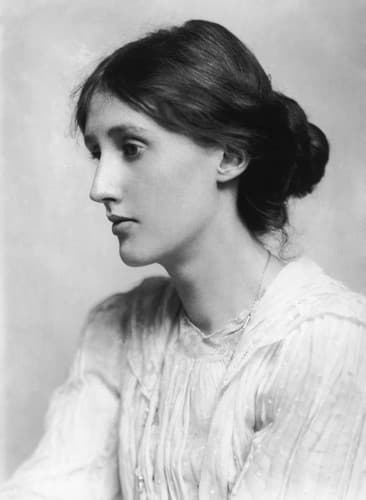
Adeline Virginia Woolf was an English writer. She is considered one of the most important modernist 20th-century authors and a pioneer in the use of stream of consciousness as a narrative device.
Similar books
- To the Lighthouse
Virginia Woolf
3.8 (133k) average on GoodreadsLiterary FictionExplores family dynamics and the passage of time through a modernist lens with a focus on internal thought.
- Middlemarch
George Eliot
4.0 (136k) average on GoodreadsHistorical FictionProvides a detailed portrait of society and individual lives in a specific historical period in England.
- The Death of the Heart
Elizabeth Bowen
3.7 (7k) average on GoodreadsLiterary FictionBoth novels explore the psychological impact of family dynamics and societal expectations. However, The Years offers a much broader historical sweep and a multi-generational perspective, focusing on a wider cast of characters over decades, whereas Bowen's novel is more intensely focused on the emotional turmoil and coming-of-age of a single, central character within a more confined time frame.
- Nineteen Eighty-Four
George Orwell
4.2 (5.5M) average on GoodreadsFictionWinston Smith dreams of truth and rebellion in a world where Big Brother watches all, but he confronts the terrifying power of a regime that controls not just actions, but thoughts.
- The Frozen River
Ariel Lawhon
4.4 (600k) average on GoodreadsFictionIn 1789 Maine, a heroic midwife's diary helps her expose a murder and get justice in a town that wants to silence her.
- A Man Called Ove
Fredrik Backman
4.4 (569k) average on GoodreadsFictionA stubborn widower, who lives by strict rules, finds his quiet world changed by a lively new family next door, making him face his past and find happiness in human connection.




Enjoyed the summary?
A summary gives you the shape of the book. The book itself has the detail, the examples and the voice.
Find The Years on AmazonAs an Amazon Associate, BookBrief earns from qualifying purchases. How we're funded