
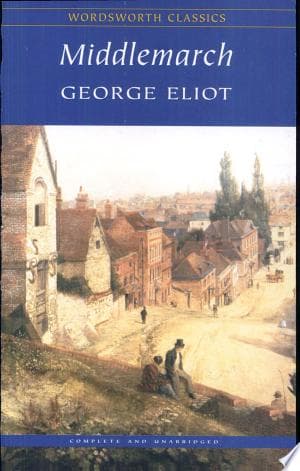
Synopsis
Covers the whole plot, including the ending.
- Difficulty
- Hard
- Pacing
- Slow
- Mood
- Reflective, Introspective, Expansive, Victorian
- Read it if
- You love richly detailed character studies, intricate plots, and a deep dive into Victorian society and its moral complexities. Perfect for fans of classic literature with a focus on psychological realism and social commentary.
- Skip it if
- You prefer fast-paced plots, simple narratives, or contemporary language. The sheer length and intricate prose might be daunting for some.
Middlemarch Plot Summary
Covers the whole plot, including the ending.
Dorothea's Idealism and the Choice of Casaubon
Dorothea Brooke, a wealthy and religious young woman in Middlemarch, wants to do good, often improving her tenants' homes. Sir James Chettam, a kind neighbor, courts her, but Dorothea finds him too traditional. Instead, she is drawn to the older scholar, Reverend Edward Casaubon, who is writing a 'Key to All Mythologies.' Dorothea believes marrying him will let her help with a big intellectual project and live a life of purpose, despite her sister Celia's practical concerns. She sees Casaubon as the intellectual and spiritual person she wants, ignoring his dry personality.
Lydgate's Arrival and Medical Ambitions
Around the same time, Dr. Tertius Lydgate, a young, ambitious, and educated doctor, arrives in Middlemarch. He wants to bring modern medicine and scientific research to the town. He wants to challenge old medical ways and start a new fever hospital. Lydgate, a man of science, also has some pride and wants a comfortable life. He first tries to stay out of town politics, but his good looks and skill quickly make him popular, especially with Rosamond Vincy, who is charming but shallow and sees him as a good match to improve her social standing.
Dorothea's Disillusionment in Marriage
The honeymoon in Rome shows Dorothea the truth about her marriage to Casaubon. She finds that his 'Key to All Mythologies' is disorganized and based on old theories. Casaubon is emotionally distant, dislikes her help, and is insecure about his own lack of knowledge. He sees her excitement as an invasion. Dorothea's dreams of an intellectual partnership disappear, replaced by loneliness. During this time, she meets Casaubon's young cousin, Will Ladislaw, who shows sympathy for her and gently criticizes Casaubon's work, further highlighting her marriage's emptiness.
Lydgate's Entanglement with Rosamond
Lydgate finds himself drawn to Rosamond Vincy, even though he first decided to avoid romance and focus on science. Rosamond, beautiful and refined, wants to marry Lydgate, seeing him as a way to a higher social status. She uses her charm and seeming gentleness to get him. Lydgate, charmed by her beauty and wanting a pleasant home life, proposes to her. He overlooks her shallowness and expensive tastes. Their marriage, though passionate at first, soon shows Rosamond's materialism and her inability to understand Lydgate's professional goals. This causes big financial problems and Lydgate's growing sadness.
Casaubon's Death and the Codicil
Casaubon's health worsens, and he has a heart attack. Dorothea, despite her unhappiness, cares for him. He becomes more possessive and jealous, especially of Will Ladislaw, whom he suspects has feelings for Dorothea. Before he dies, Casaubon makes Dorothea promise to follow his wishes for his manuscript, though she does not fully understand what this means. After his death, his will is read. It includes a cruel condition: Dorothea will lose his inheritance if she marries Will Ladislaw. This shocks Dorothea and makes a future with Will seem impossible without great sacrifice.
Ladislaw's Growing Affection and Social Position
After Casaubon's death, Will Ladislaw, who had been in Middlemarch to help Casaubon (though mostly unwelcome), starts working in journalism and gets involved in local reform politics, supporting Mr. Brooke's campaign. He visits Freshitt Grange, Dorothea's childhood home, often, and their intellectual and emotional connection grows. Will knows about the will's condition and how society would view it, which makes him not want to tell Dorothea he loves her, fearing he would seem to be after her money. His true affection and respect for Dorothea are clear, but their path to a relationship faces social disapproval and the will's terms.
Fred Vincy's Recklessness and Love for Mary Garth
Fred Vincy, Rosamond's irresponsible but good-hearted brother, loves Mary Garth, the sensible daughter of Caleb Garth, the estate manager. Fred's expensive habits and repeated failures to get a good job, including losing money meant for Mary's family, constantly upset Mary and her father. Caleb Garth, an honest and hardworking man, disapproves of Fred's lack of steady work and says Fred must prove himself worthy of Mary. Fred must overcome his laziness and find a career that will earn Mary's respect, eventually becoming a farmer.
Bulstrode's Hidden Past and Downfall
Nicholas Bulstrode, a rich and seemingly religious banker, has a lot of power in Middlemarch. He often uses his money for religious and charity work. However, he has a secret from his past: he made his money through questionable means, including marrying a rich widow whose previous husband had disappeared, and later hiding information about the missing heir (Will Ladislaw's mother) to keep the inheritance. John Raffles, a man from Bulstrode's past who knows his secret, threatens to expose him. Bulstrode's attempts to silence Raffles lead to a moral compromise that ruins his reputation in the community.
Lydgate's Financial Ruin and Association with Bulstrode
Lydgate and Rosamond's financial situation gets bad because of her spending and his refusal to do less ethical but more profitable work. They get into a lot of debt, leading to public shame. In desperation, Lydgate accepts a loan from Bulstrode. When Raffles dies under suspicious circumstances while Lydgate is caring for him and Bulstrode is involved, rumors spread that Lydgate helped Bulstrode silence Raffles. Lydgate is innocent of wrongdoing, but his connection to Bulstrode, plus his debts, destroys his professional reputation in Middlemarch, making him consider leaving town.
Dorothea's Choice and Redemptive Love
Dorothea is affected by Lydgate's disgrace. She believes he is innocent despite the town's judgment. She visits Rosamond, hoping to get her to support Lydgate. During this visit, she mistakenly thinks Rosamond and Will Ladislaw are together. Heartbroken, Dorothea faces her feelings for Will. Eventually, Will, unable to hide his love, tells Dorothea. Despite the social disapproval and losing her inheritance from Casaubon's will, Dorothea chooses to marry Will. She puts love and intellectual partnership over money and social approval. Their marriage, while not achieving the big public projects she once imagined, brings her personal happiness and a supportive partner.
The Fates of the Characters
Dorothea and Will Ladislaw move to London. Will becomes a successful public figure, and Dorothea finds satisfaction supporting his work and raising their children. Lydgate and Rosamond leave Middlemarch; Lydgate's medical career is ruined, and he becomes a popular but unhappy doctor to the wealthy, dying young. Rosamond, still beautiful and shallow, marries a rich man after Lydgate's death. Fred Vincy, having shown his worth through hard work, marries Mary Garth and becomes a successful land agent, finding happiness in his practical life. Bulstrode, disgraced, lives out his days alone with his devoted wife. The novel's 'Finale' reflects on the quiet lives of many, and how even those with big dreams like Dorothea often have their influence channeled in unseen ways.
Middlemarch Characters
Dorothea Brooke
Protagonist
An idealistic and intelligent young woman seeking a meaningful life and intellectual fulfillment.
Dorothea is a passionate and high-minded young woman, yearning to dedicate her life to noble causes and intellectual pursuits. She possesses a deep spiritual sensibility and a strong desire to improve the lives of others, often through practical means like architectural reforms for her tenants. Her idealism, however, is often naive, leading her to misjudge character and situations, particularly in her marriage to Casaubon. She struggles with the constraints placed upon women in Victorian society, her intelligence and ambition often finding no suitable outlet. Despite her initial missteps, she learns to temper her idealism with realism, retaining her compassion and strength of character.
Relationships: Edward Casaubon (Husband, intellectual disappointment); Will Ladislaw (Love interest, second husband, intellectual companion); Celia Brooke (Sister); Sir James Chettam (Suitor, brother-in-law)
Tertius Lydgate
Protagonist
An ambitious and principled young doctor determined to bring modern medicine to Middlemarch.
Dr. Lydgate is a brilliant and well-educated physician, full of scientific ambition and a desire to reform provincial medicine. He is proud, somewhat aristocratic in his bearing, and initially believes he can remain aloof from the petty squabbles of Middlemarch society. However, his personal desires, particularly his attraction to beauty and comfort, prove to be his undoing. He is genuinely committed to his medical ideals but lacks the practical judgment and financial acumen to navigate the social and economic pressures of his life. His downfall is a tragic illustration of how personal choices and societal forces can thwart even the most noble aspirations.
Relationships: Rosamond Vincy (Wife, source of financial ruin); Nicholas Bulstrode (Benefactor, whose scandal taints Lydgate); Fred Vincy (Brother-in-law)
Reverend Edward Casaubon
Antagonist/Supporting
Dorothea's much older, pedantic, and emotionally cold first husband.
Casaubon is a dry, self-absorbed scholar whose life's work is the 'Key to All Mythologies,' a project that is revealed to be a muddled and outdated endeavor. He is deeply insecure about his intellectual capabilities and resentful of any challenge or inquiry into his work. He marries Dorothea not for love, but for her admiration and the expectation that she will serve as an uncritical amanuensis. He is emotionally cold, jealous, and incapable of genuine connection, making Dorothea's marriage a profound disappointment. His character embodies intellectual vanity and the tragic emptiness of a life devoid of true human warmth and self-awareness.
Relationships: Dorothea Brooke (Wife); Will Ladislaw (Cousin, object of jealousy)
Will Ladislaw
Supporting/Love Interest
Casaubon's penniless cousin, an artistic and politically reform-minded young man who falls in love with Dorothea.
Will Ladislaw is a charming, intelligent, and artistic young man, initially without a clear profession, who works as Casaubon's assistant. He is a passionate advocate for social reform and possesses a keen critical intellect. He sees through Casaubon's intellectual pretensions and is deeply sympathetic to Dorothea's plight. Will is fiercely independent and struggles with his financial dependence, particularly in relation to his feelings for Dorothea, as he doesn't want to be perceived as a fortune-hunter. He eventually finds his calling in journalism and political advocacy, proving himself worthy of Dorothea's love through his integrity and genuine affection.
Relationships: Dorothea Brooke (Love interest, second wife); Edward Casaubon (Cousin, employer (briefly)); Nicholas Bulstrode (Uncle by marriage, source of his inheritance)
Rosamond Vincy
Supporting
A beautiful but superficial and self-absorbed young woman who marries Lydgate.
Rosamond Vincy is the epitome of Victorian superficiality and self-absorption. Beautiful, graceful, and accomplished in genteel arts, she is solely driven by a desire for social advancement and a comfortable, fashionable life. She is incapable of understanding Lydgate's intellectual and professional ambitions, consistently undermining his efforts with her extravagance and lack of empathy. Her apparent gentleness masks a stubborn, unyielding will, and she proves to be a significant obstacle to Lydgate's happiness and success. Her character highlights the dangers of prioritizing outward appearances and social status over genuine connection and shared purpose.
Relationships: Tertius Lydgate (Husband, whom she financially ruins); Fred Vincy (Brother)
Fred Vincy
Supporting
Rosamond's charming but irresponsible brother, who eventually finds his calling and marries Mary Garth.
Fred Vincy is a good-natured but initially irresponsible young man, prone to idleness and debt. He is deeply in love with Mary Garth, whose sensible nature and strong moral compass provide a constant challenge and inspiration for him to improve. Fred struggles to find a suitable profession, often disappointing his family and Mary's father, Caleb Garth. His journey involves overcoming his youthful recklessness, learning the value of hard work and integrity, and proving himself worthy of Mary's respect and affection. He represents the potential for growth and redemption through love and practical endeavor.
Relationships: Mary Garth (Love interest, wife); Rosamond Vincy (Sister); Caleb Garth (Father-in-law, mentor)
Mary Garth
Supporting
A sensible, principled, and intelligent young woman, daughter of Caleb Garth, who loves Fred Vincy.
Mary Garth is a sharp-witted, practical, and morally upright young woman. Unlike Rosamond, she values integrity, hard work, and genuine character over social status or material wealth. She loves Fred Vincy but refuses to marry him until he proves himself capable of responsibility and a steady profession. She is loyal to her family and possesses a strong sense of duty. Mary's clear-sightedness and moral strength act as a grounding force, particularly for Fred, and she represents the novel's appreciation for quiet virtue and practical wisdom. She is also compassionate, showing kindness to Casaubon in his final days.
Relationships: Fred Vincy (Love interest, husband); Caleb Garth (Father)
Nicholas Bulstrode
Supporting/Antagonist
A wealthy, pious, and influential banker in Middlemarch with a dark, hidden past.
Bulstrode is a prominent figure in Middlemarch, known for his fervent evangelical piety and his substantial wealth, which he uses to support various religious and philanthropic causes. However, his outward rectitude conceals a deeply compromised past. He built his fortune through morally questionable means, including concealing the true heir to a fortune from his first wife. His attempts to suppress this secret, particularly through his interactions with John Raffles, lead to his ultimate downfall and public disgrace. Bulstrode represents religious hypocrisy and the corrosive power of guilt and hidden sin, highlighting the conflict between outward appearance and inner moral corruption.
Relationships: Harriet Bulstrode (Devoted wife); Tertius Lydgate (Benefactor, whose career he inadvertently ruins); Will Ladislaw (Nephew by marriage, whose inheritance he suppressed)
Caleb Garth
Supporting
An honest, hardworking, and principled land agent, father of Mary Garth.
Caleb Garth is a man of immense integrity, diligence, and practical skill. He is an estate manager and surveyor, deeply passionate about his work and dedicated to honest labor. He values competence and moral rectitude above all else, and his word is his bond. He serves as a moral compass in the novel, embodying the quiet virtues of duty, hard work, and genuine goodness. He is a loving father who instills strong values in his children, particularly Mary, and acts as a mentor to Fred Vincy, guiding him towards a path of responsibility. He represents the dignified and essential work that underpins society.
Relationships: Mary Garth (Daughter); Fred Vincy (Future son-in-law, mentee)
Mr. Brooke
Supporting
Dorothea and Celia's eccentric, well-meaning but ineffectual uncle and guardian.
Mr. Brooke is a wealthy landowner, an amiable but utterly muddled and indecisive man. He fancies himself an intellectual and a reformer, dabbling in various projects and political ambitions without ever achieving anything substantial. His well-meaning but impractical nature often causes mild embarrassment for Dorothea and Celia. He is easily swayed by opinions and lacks genuine conviction, making him a figure of gentle satire. He represents the dilettantism and superficiality that can exist even among the respectable gentry, providing a contrast to Dorothea's earnest idealism and Lydgate's scientific rigor.
Relationships: Dorothea Brooke (Niece, ward); Celia Brooke (Niece, ward); Will Ladislaw (Political agent)
Middlemarch Themes
Idealism vs. Reality
The novel shows how noble goals often meet the ordinary, compromising realities of life. Dorothea Brooke's strong idealism leads her to marry Casaubon, thinking she can help a great scholar, but she finds herself in a lonely marriage with a dry, insecure man. Lydgate's goal to change medicine is stopped by his own mistakes, especially his marriage to Rosamond, and the social and financial pressures of Middlemarch. The characters' big ideas are often brought back to reality by their own human flaws, social limits, and complex relationships.
“For the married woman, an existence of pleasing and of being pleased, of adorning and being adorned, of nothing more, was a fate to be endured rather than chosen.”
Marriage and Its Discontents
Marriage is a key part of Middlemarch. It is shown not as an ideal romance but as a complex social and economic agreement with big effects on people's lives. The novel shows different kinds of marriages: Dorothea's disappointing marriage to Casaubon, Lydgate's financially ruinous marriage to Rosamond, and Fred and Mary's more harmonious but hard-won union. Eliot carefully examines the expectations, compromises, and power in these relationships. She shows how a bad choice in a spouse can stop ambition, ruin happiness, and even lead to financial disaster, especially for women.
“We are all of us born in moral stupidity, taking for granted that the world is as we find it and that things will go on for ever in the same way.”
The Nature of Ambition and Professionalism
Eliot looks at different kinds of ambition, from Dorothea's wish for a life of purpose to Lydgate's scientific goals, and Casaubon's scholarly pride. The novel asks what real success and fulfillment mean, often showing how outside factors, personal flaws, and the limits of a small town can hinder even promising efforts. Lydgate's professional honesty is hurt by his financial problems and town gossip, while Casaubon's 'great work' turns out to be an empty pursuit. The theme suggests that true ambition needs not only talent but also moral strength and a realistic understanding of one's situation.
“For the fragment of a life, however typical, is not the whole, and the best of us are but poor interpreters of the larger whole.”
Hidden Lives and Moral Compromise
The novel explores the secrets and moral compromises hidden in respectable society. Nicholas Bulstrode's careful image of piety is broken when his dark past is revealed. This shows how past sins can haunt and destroy reputations. This theme looks at cause and effect, where small acts of dishonesty can have far-reaching and destructive results. It also highlights how judgmental society is and how hard it is to truly know someone's inner life or past actions, often leading to unfair judgment.
“There is no general doctrine which is not capable of a false application, no profession which does not carry its own dangers of a peculiar bias.”
The Web of Society and Interconnectedness
Eliot calls Middlemarch a 'web,' showing how different lives and events are connected. One character's actions, whether a big decision like Dorothea's marriage or a small one like Fred's debt, affect the whole community in unexpected ways. Lydgate's professional fall, for example, is not only because of his own choices but also because of Bulstrode's scandal, Rosamond's spending, and town gossip. This theme highlights how much community, social structures, and individual choices influence the shared fate of its members, making it hard for anyone to live alone.
“A human life, I think, should be well rooted in some spot of a native country, where it may get the love of tender kinship for the earth.”
Plot Devices & Literary Techniques
Omniscient Narrator
A highly intrusive and philosophical narrator who offers extensive commentary on characters and society.
George Eliot's narrator is a distinct character in itself, frequently interjecting with philosophical observations, moral judgments, and psychological insights into the characters' inner lives and the broader human condition. This omnipresent voice guides the reader, offering context, foreshadowing, and often ironic commentary on the events and motivations within Middlemarch. The narrator's extensive reflections deepen the novel's thematic explorations and provide a critical lens through which to view Victorian society, human nature, and the complexities of moral choice, making the novel more than just a story but a profound social and psychological study.
Multiple Interweaving Plotlines
Several distinct but interconnected storylines follow different characters, illustrating the 'web' of society.
Instead of a single protagonist, Middlemarch employs multiple, carefully interwoven plotlines centered around different characters (Dorothea, Lydgate, Fred, Bulstrode, etc.). These storylines, while initially appearing separate, gradually converge and influence one another, demonstrating the intricate social fabric of the town. This structure allows Eliot to explore a wide range of social classes, ambitions, and moral dilemmas, showing how individual lives are shaped by and, in turn, shape their community. The interconnectedness reinforces the novel's central metaphor of society as a complex, interdependent 'web.'
Social Realism
Detailed and accurate portrayal of Victorian provincial life, its customs, and social hierarchies.
Eliot employs social realism to meticulously depict the everyday life, customs, political factions, and class structures of a provincial English town in the 1830s. This includes detailed descriptions of domestic scenes, medical practices, political campaigns, and the gossip networks that define community life. The realism extends to the psychological depth of the characters, portraying their motivations, flaws, and internal struggles with unflinching honesty. This device grounds the novel in a specific historical and social context, making the characters and their struggles feel authentic and providing a rich tapestry against which the larger themes are explored.
Irony and Satire
Subtle and sharp commentary on human folly, societal pretensions, and moral hypocrisy.
Eliot uses irony and satire, often delivered through the omniscient narrator, to critique the limitations and absurdities of Victorian society and human nature. This is evident in the portrayal of characters like Mr. Brooke, whose well-meaning but muddled intellect is gently mocked, or Casaubon, whose scholarly pretensions are exposed as hollow. The irony often highlights the gap between characters' self-perception or public image and their true nature or impact. This device adds intellectual depth and humor to the novel, allowing Eliot to make incisive social commentary without resorting to overt didacticism.
Middlemarch Quotes
“It is a narrow mind which cannot look at a subject from various points of view.”
“But the effect of her being on those around her was incalculably diffusive: for the growing good of the world is partly dependent on unhistoric acts; and that things are not so ill with you and me as they might have been, is half owing to the number who lived faithfully a hidden life, and rest in unvisited tombs.”
“We are all of us born in moral stupidity, taking the world as an udder to feed our supreme selves.”
“What do we live for, if it is not to make life less difficult for each other?”
“The growing good of the world is partly dependent on unhistoric acts.”
“I like trying to get the utmost possible amount of sweetness out of all things.”
“Our deeds still travel with us from afar, and what we have been makes us what we are.”
“To be a poet is to have a soul so quick to discern that no shade of quality escapes it, and so quick to feel, that discernment is but a hand playing with finely ordered variety on the chords of emotion.”
“Marriage is so unlike everything else. There is something even awful in the nearness it brings.”
“The troublesome ones in a family are usually either the wits or the idiots.”
“It is always fatal to have music or poetry interrupted.”
“We mortals, men and women, devour many a disappointment between breakfast and dinner-time; keep back the tears and look a little pale about the lips, and in answer to inquiries say, 'Oh, nothing!' Pride helps us; and pride is not a bad thing when it only urges us to hide our own hurts—not to hurt others.”
“The best piety is to enjoy—when you can. You are doing the most then to save the earth's character as an agreeable planet.”
“An eminent philosopher among my friends, who can dignify even your ugly furniture by lifting it into the serene light of science.”
Quiz
10 questions on the plot and the characters. Each answer comes with a short explanation.
Question 1
What is Dorothea Brooke's primary motivation for marrying Edward Casaubon?
- To escape her restrictive life with her uncle
- To gain social status and wealth in Middlemarch
- She believes he embodies intellectual and moral principles she admires
- To make her sister Celia jealous
Show answer
C. She believes he embodies intellectual and moral principles she admires Dorothea is idealistic and seeks meaning through good deeds; she mistakenly sees Casaubon's scholarly work as profound, hoping to assist him in his 'Key to All Mythologies' project.
Question 2
What is Tertius Lydgate's professional goal when he arrives in Middlemarch?
- To become the town's wealthiest doctor through private practice
- To establish a modern hospital and advance medical science in the provinces
- To write a medical textbook based on his European studies
- To marry into a wealthy family and retire early
Show answer
B. To establish a modern hospital and advance medical science in the provinces Lydgate is a progressive doctor inspired by scientific advances; he aims to reform provincial medicine, but his ideals are complicated by personal and financial struggles.
Question 3
Which character serves as a foil to Dorothea through her pragmatic and conventional approach to marriage?
- Rosamond Vincy
- Mary Garth
- Celia Brooke
- Harriet Bulstrode
Show answer
C. Celia Brooke Celia, Dorothea's sister, contrasts with Dorothea's idealism by choosing a sensible marriage to Sir James Chettam, highlighting different Victorian female perspectives.
Question 4
Why does Dorothea's marriage to Casaubon become unhappy?
- Casaubon is physically abusive towards her
- She discovers he is having an affair with another woman
- Casaubon is cold, self-absorbed, and his scholarly work is stagnant
- Dorothea loses her inheritance and they face poverty
Show answer
C. Casaubon is cold, self-absorbed, and his scholarly work is stagnant Casaubon's emotional distance and the futility of his lifelong project disillusion Dorothea, trapping her in a marriage devoid of the intellectual partnership she envisioned.
Question 5
How does Lydgate's marriage to Rosamond Vincy impact his medical ambitions?
- It provides him with financial stability to fund his hospital
- Rosamond actively supports his work and helps him network in Middlemarch
- Her extravagant tastes and social aspirations lead to debt, compromising his ideals
- They move to London where he achieves greater success
Show answer
C. Her extravagant tastes and social aspirations lead to debt, compromising his ideals Rosamond's materialism and desire for high society conflict with Lydgate's reformist goals, forcing him into financial decisions that undermine his professional integrity.
Question 6
What role does the town of Middlemarch itself play in the novel?
- It is merely a picturesque backdrop with little influence on events
- It symbolizes isolation and escape from Victorian society
- It acts as a microcosm of Victorian society, with gossip and social pressures shaping characters' lives
- It is a utopian community where all characters find happiness
Show answer
C. It acts as a microcosm of Victorian society, with gossip and social pressures shaping characters' lives Middlemarch's interconnected social web, with its rumors, class dynamics, and provincial attitudes, critically affects characters like Lydgate and Dorothea, reflecting broader Victorian themes.
Question 7
Which theme is central to both Dorothea's and Lydgate's storylines?
- The triumph of science over superstition
- The conflict between individual ideals and societal constraints
- The importance of wealth in achieving happiness
- The inevitability of tragic love in Victorian England
Show answer
B. The conflict between individual ideals and societal constraints Both characters struggle to realize their aspirations—Dorothea's moral idealism and Lydgate's scientific progress—against the limitations imposed by marriage, money, and provincial society.
Question 8
After Casaubon's death, what condition in his will creates tension for Dorothea?
- He leaves everything to a distant relative, disinheriting Dorothea
- He requires her to complete his manuscript or lose her inheritance
- He stipulates that she will lose her inheritance if she marries Will Ladislaw
- He demands she never leave Middlemarch
Show answer
C. He stipulates that she will lose her inheritance if she marries Will Ladislaw Casaubon's codicil reflects his jealousy and desire to control Dorothea posthumously, posing a moral and financial dilemma as she develops feelings for Ladislaw.
Question 9
How does George Eliot use the character of Mary Garth to comment on Victorian values?
- Mary represents the ideal Victorian woman through her submission to male authority
- She embodies practical integrity and moral strength, contrasting with materialistic characters like Rosamond
- Mary's story shows that education is unnecessary for women's happiness
- She demonstrates that social climbing is essential for survival in Middlemarch
Show answer
B. She embodies practical integrity and moral strength, contrasting with materialistic characters like Rosamond Mary's loyalty, honesty, and rejection of Fred Vincy until he reforms highlight Eliot's critique of superficiality and praise for inner virtue over social pretension.
Question 10
What is the significance of the novel's subtitle, 'A Study of Provincial Life'?
- It indicates the book is a historical account of Middlemarch's founding
- It emphasizes the novel's focus on scientific studies conducted by Lydgate
- It reflects Eliot's anthropological approach to examining society through individual stories
- It suggests the story is only relevant to rural communities, not urban readers
Show answer
C. It reflects Eliot's anthropological approach to examining society through individual stories Eliot uses Middlemarch as a lens to explore universal human experiences—ambition, love, reform—within the specific context of provincial Victorian England, blending detailed observation with emotional insight.
Middlemarch FAQ
What is 'Middlemarch' about?
'Middlemarch' follows multiple interconnected lives in a provincial English town during the 1830s. It centers on idealistic Dorothea Brooke's disastrous marriage to the pedantic scholar Edward Casaubon, and progressive doctor Tertius Lydgate's struggles to reform local medicine while entangled in an unsuitable marriage to Rosamond Vincy. The novel explores how personal ambitions collide with social constraints in Victorian society.
Why should I read 'Middlemarch'?
You should read 'Middlemarch' for its profound psychological insight into complex characters and its masterful portrayal of an entire community. George Eliot's humane wisdom about marriage, idealism, reform, and compromise remains strikingly relevant, while the intricate plot weaves together stories of love, ambition, and failure with both compassion and irony.
What is the background/setting of 'Middlemarch'?
The novel is set in the fictional Midlands town of Middlemarch during 1829-1832, a period of political reform (the First Reform Bill) and scientific advancement. This provincial setting allows Eliot to examine how national changes affect ordinary lives, particularly through characters like Lydgate bringing new medical ideas and Mr. Brooke dabbling in political reform.
What are the most memorable quotes?
Key quotes include the famous final line: 'But the effect of her being on those around her was incalculably diffusive,' describing Dorothea's quiet impact. Another is: 'It is a narrow mind which cannot look at a subject from various points of view,' reflecting Eliot's narrative approach. Casaubon's dread of 'having my notes made use of' reveals his petty insecurity.
What writing style does the author use?
George Eliot employs an omniscient, psychologically penetrating narrator who frequently comments on characters and themes with philosophical depth. Her style blends detailed realism with ironic humor and moral seriousness, using extended metaphors (like the 'web' of society) and shifting between multiple viewpoints to create a comprehensive social portrait.
What minor details add significant meaning?
Small details like Casaubon's 'Key to All Mythologies' manuscript—which Dorothea discovers is hopelessly outdated—symbolize his intellectual sterility. The emerald ring given to Dorothea by Casaubon's cousin Will Ladislaw becomes a token of their suppressed attraction. Lydgate's microscope represents his scientific ideals, later neglected due to financial pressures.
What are some subtle foreshadowing moments?
Early descriptions of Casaubon as having 'a mind as dry as a desert' foreshadow Dorothea's emotional starvation in their marriage. Lydgate's casual loan to Mr. Farebrother hints at his later financial recklessness. Rosamond's manipulation of her piano playing to attract Lydgate previews her controlling nature in their relationship.
What unexpected character connections exist?
Will Ladislaw is revealed to be Casaubon's cousin, creating tension as he and Dorothea grow close. Bulstrode, the pious banker, is connected to Lydgate through financial support, but his shady past involving Raffles eventually implicates them both. Mary Garth's family works for Featherstone, linking her to Fred Vincy's inheritance struggles.
What are unspoken character motivations?
Dorothea seeks intellectual fulfillment through Casaubon, unaware she craves emotional connection. Casaubon marries Dorothea not for love but to secure a caretaker for his work and ego. Rosamond desires social status through Lydgate, while Lydgate underestimates how much he needs domestic harmony to pursue his medical reforms.
What psychological complexities do characters exhibit?
Dorothea embodies the conflict between lofty idealism and practical happiness. Lydgate struggles with pride in his profession versus vulnerability in his marriage. Bulstrode displays deep hypocrisy, using religion to justify past crimes. Casaubon's scholarly insecurity masks a fear of being exposed as mediocre.
What are the major emotional turning points?
Dorothea's disillusionment peaks when she realizes Casaubon's work is worthless after his death. Lydgate's despair deepens when Rosamond's spending forces him to abandon his hospital plans. Will Ladislaw's declaration of love to Dorothea breaks her isolation. Bulstrode's public shaming destroys his moral authority in the town.
How do relationship dynamics evolve?
Dorothea and Casaubon's marriage deteriorates from reverence to silent resentment. Lydgate and Rosamond's relationship shifts from romantic attraction to bitter mutual disappointment. Dorothea and Will's connection grows from intellectual sympathy to passionate love, though socially frowned upon. Fred Vincy matures through his steadfast love for Mary Garth.
Which parts remain ambiguous or open-ended?
The exact nature of Casaubon's posthumous codicil excluding Dorothea from marrying Will is ambiguous—whether it stems from jealousy or principle. Lydgate's ultimate professional fate after leaving Middlemarch is only briefly mentioned. Whether Dorothea finds complete fulfillment in her second marriage is left for readers to ponder.
What are controversial scenes or decisions?
Dorothea's decision to marry Casaubon despite clear warnings seems foolishly idealistic. Lydgate's marriage to Rosamond based on superficial attraction is often criticized. Bulstrode's indirect responsibility for Raffles' death raises moral questions about guilt and redemption. Dorothea's eventual marriage to Will, a socially inferior man, challenged Victorian norms.
'Middlemarch' ending explained: how it ends & what it means
The novel ends with Dorothea marrying Will Ladislaw after Casaubon's death, sacrificing wealth for love, though her grand ambitions are tempered to supporting Will's political career. Lydgate abandons his medical reforms, dying relatively young after a conventional practice. The ending suggests that most lives involve compromise, but small acts of goodness still diffuse through society.
What does the novel say about marriage versus idealism?
Eliot shows how marriage often forces characters to confront reality: Dorothea's idealistic view of Casaubon shatters, while Lydgate's progressive ideals are undermined by his unhappy marriage. Yet through Fred and Mary's relationship, she also presents marriage as a potential source of mutual growth when grounded in realistic affection rather than illusion.
How does Eliot portray social reform in the novel?
Reform is portrayed as difficult and compromised: Lydgate's medical advances face resistance from traditionalists, while Mr. Brooke's political campaigning is shallow and ineffective. Eliot suggests genuine change requires not just ideals but patience and understanding of human nature, as seen in Dorothea's more modest but meaningful local improvements.
About the author
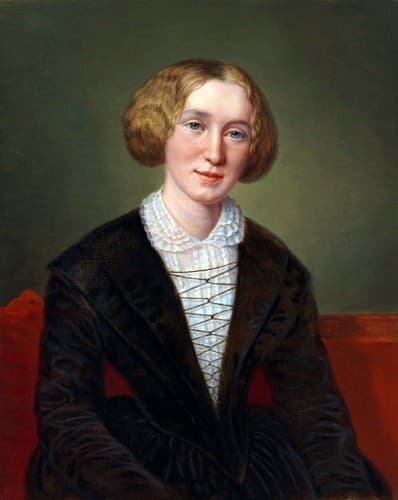
Mary Ann Evans, known by her pen name George Eliot, was an English novelist, poet, journalist, translator, and one of the leading writers of the Victorian era. She wrote seven novels: Adam Bede (1859), The Mill on the Floss (1860), Silas Marner (1861), Romola (1862–63), Felix Holt, the Radical (1866), Middlemarch (1871–72) and Daniel Deronda (1876). Like Charles Dickens and Thomas Hardy, she emerged from provincial England; most of her works are set there. Her works are known for their realism, psychological insight, sense of place and detailed depiction of the countryside.
Similar books
- Anna Karenina
Leo Tolstoy
4.0 (682k) average on GoodreadsHistorical FictionBoth are expansive 19th-century novels exploring societal pressures, moral dilemmas, and the complexities of love and marriage through multiple interwoven plotlines.
- Vanity Fair
William Makepeace Thackeray
3.8 (118k) average on GoodreadsHistorical FictionOffers a panoramic view of society, focusing on character and social satire, with a similar scope and intricate character web.
- Pride and Prejudice
Jane Austen
4.3 (3M) average on GoodreadsHistorical FictionExplores themes of marriage, social standing, and individual idealism versus societal expectations, though 'Middlemarch' is far grander in scale and ambition.
- Great Expectations
Charles Dickens
3.8 (652k) average on GoodreadsHistorical FictionBoth Eliot and Dickens are masters of Victorian realism, but their narrative foci differ. 'Great Expectations' is primarily a bildungsroman, centering on the personal growth and moral education of a single protagonist, Pip. While it features a rich cast of supporting characters, their roles are largely in relation to Pip's journey. 'Middlemarch,' however, is a polyphonic novel with multiple protagonists whose stories are given equal weight, creating a broader canvas of interconnected lives and societal forces. Dickens often employs more overtly melodramatic elements and caricatured figures for dramatic effect, while Eliot's characterizations are generally more subtly drawn and psychologically nuanced, eschewing overt villainy for complex moral ambiguity. Eliot's realism is often considered more 'intellectual' and introspective compared to Dickens' more 'social' and externalized storytelling.
- To Kill a Mockingbird
Harper Lee
4.3 (4.5M) average on GoodreadsHistorical FictionIn the 1930s Jim Crow South, Harper Lee writes about racial injustice, moral growth, and the quiet courage of a lawyer father, Atticus Finch, as seen through his young daughter's eyes.
- The Great Gatsby
F. Scott Fitzgerald
3.9 (3.8M) average on GoodreadsHistorical FictionIn the opulent Roaring Twenties, a mysterious millionaire's lavish parties hide his desperate, tragic pursuit of a lost love, exposing the emptiness within the American Dream.



Enjoyed the summary?
A summary gives you the shape of the book. The book itself has the detail, the examples and the voice.
Find Middlemarch on AmazonAs an Amazon Associate, BookBrief earns from qualifying purchases. How we're funded