

Synopsis
Covers the whole plot, including the ending.
- Difficulty
- Easy
- Pacing
- Moderate
- Mood
- Intriguing, Hopeful, Mysterious, Reflective
- Read it if
- You enjoy a blend of mystery, mild sci-fi, and coming-of-age themes with a focus on music and friendship.
- Skip it if
- You prefer high-stakes fantasy or hard science fiction, or a very fast-paced thriller.
Things Hoped For Plot Summary
Covers the whole plot, including the ending.
A Disappearing Act and a Distressing Message
Seventeen-year-old Gwen is in New York City, staying with her grandfather, Mr. Eliot, a famous violinist. She is preparing for auditions at music schools like Juilliard. The day before her first audition, Gwen wakes to find her grandfather gone. He leaves a voicemail, telling her not to worry and to focus on her auditions. This message, however, makes Gwen more anxious. She tries calling him back, but his phone goes to voicemail. The apartment feels empty and quiet without him, adding to her worry and the pressure of her upcoming auditions.
An Unwanted Visitor and a Necessary Lie
Just as Gwen deals with her grandfather's disappearance, her great-uncle, Reverend Eliot, an imposing figure, arrives unannounced. He expects to see his brother and discuss family matters. Panicked, Gwen lies, saying her grandfather is out for a walk and will return later. This first lie forces her into more lies as Reverend Eliot insists on waiting. His presence adds stress, threatening to distract her from auditions and making her feel more alone and burdened by her grandfather's absence.
A Chance Encounter in Central Park
Seeking a break from her worries, Gwen goes to Central Park to practice her violin. There, she meets Robert, a boy her age also practicing his cello for auditions. They talk, finding they have similar goals and face the same pressure of classical music auditions. Robert is staying in a hotel with his musician mother. Their shared experiences and love for music create an instant connection, giving Gwen a needed sense of companionship and a distraction from her worries about her grandfather and great-uncle.
The First Audition and Lingering Doubts
Gwen attends her first audition at Juilliard. She performs well despite her emotional state. Her mind, however, keeps going back to her grandfather. She wonders where he is, if he is safe, and how long she can keep up the act with her great-uncle. The audition process, usually a source of deep focus, is now shadowed by constant anxiety. Later, she meets Robert again, finding comfort in his company and their shared musical pursuits, but the mystery of her grandfather's location remains unsolved.
Reverend Eliot's Growing Impatience
Reverend Eliot grows more impatient and suspicious of his brother's continued absence. He questions Gwen more aggressively, pressing her for details she does not have or cannot share. He starts hinting that something is wrong, making Gwen's attempts to cover for her grandfather harder and more stressful. His demands and imposing presence make Gwen feel trapped and alone, increasing her need to find out what happened to Mr. Eliot before her great-uncle discovers the truth and possibly harms her future.
Exploring the City and Sharing Secrets
Gwen and Robert spend time exploring New York City, finding moments of lightness amid their individual pressures. They visit landmarks and share their dreams and fears about their musical futures. During one outing, Gwen tells Robert about her grandfather's disappearance and the difficult situation with her great-uncle. Robert, in turn, shares his own quiet worries about his auditions. This shared openness deepens their friendship, and Robert offers Gwen his support, becoming her only confidant during this challenging time.
A Clue in the Apartment
Back at her grandfather's apartment, driven by urgency, Gwen carefully searches for clues. She finds a hidden compartment in one of his old violin cases. Inside, she finds a small, folded note in her grandfather's handwriting. The note contains numbers and a fragmented, unusual phrase, suggesting something more complex than a simple walk. This discovery points her search in a new direction, hinting that her grandfather's disappearance is deliberate and perhaps linked to a secret.
Deciphering the Message
Gwen shares the cryptic note with Robert, and they try to understand its meaning. The numbers and odd phrase seem to be a code. They brainstorm ideas, connecting it to her grandfather's past and his known quirks. Their combined efforts lead them to believe the numbers might correspond to specific pages or lines in a book, or perhaps a musical score. This shared intellectual challenge strengthens their bond, turning their friendship into a partnership focused on solving the mystery.
The Library and the Old Journal
Following a hint from the decoded message, Gwen and Robert visit a specialized music library. There, they find an old, obscure book her grandfather often referenced. Within its pages, they find another clue: a hidden journal belonging to Mr. Eliot. This journal is not a typical diary. It is filled with scientific drawings, mathematical equations, and philosophical thoughts, revealing a side of her grandfather Gwen never knew. The journal suggests a secret project he had been working on for years, which seems to be the real reason for his disappearance.
The Truth Revealed: A Scientific Endeavor
As Gwen and Robert read the journal, they uncover the truth: her grandfather, Mr. Eliot, is not just a musician but also a brilliant, reclusive scientist. He has been secretly working on a project involving time manipulation or interdimensional travel. His disappearance is not an abduction or accident, but a deliberate journey into his own scientific creation. The journal entries detail his progress, hopes, and fears, showing he began this journey to explore the unknown, driven by curiosity and a desire to understand the universe.
Reverend Eliot's Confrontation
With the truth known to Gwen and Robert, Reverend Eliot's patience breaks. He returns to the apartment, furious and demanding to know the truth about his brother. Gwen, with her new knowledge, is torn. She can no longer keep up the simple lie, but revealing the full, fantastical truth about a time-traveling grandfather seems impossible to explain to her strict, skeptical great-uncle. The confrontation is tense, and Reverend Eliot threatens to involve the authorities, making the situation critical.
A Shared Destiny
As Gwen and Robert consider the meaning of her grandfather's scientific work, they notice something unusual in the journal entries. There are subtle references, almost prophecies, about two young musicians who would encounter his work. They realize her grandfather, through his scientific explorations, had foreseen their arrival and their role in understanding his legacy. This discovery connects them not just by shared experience and friendship, but by a deeper, almost fated link to Mr. Eliot's project and its potential impact on their lives.
Facing the Future
With knowledge of her grandfather's journey, Gwen's view of her own life and goals changes. Her musical auditions, though still important, now seem part of a larger, more mysterious story. She and Robert, having shared this secret, decide to face the future together. They understand their lives are now tied to Mr. Eliot's scientific legacy. The book ends with them accepting this new reality, ready to explore what her grandfather's work means, suggesting a future of wonder and further discoveries beyond their musical aspirations.
Things Hoped For Characters
Gwen
Protagonist
A talented and anxious violinist preparing for music school auditions.
Gwen is a seventeen-year-old aspiring violinist, deeply devoted to her music and her grandfather. She is initially portrayed as highly focused and somewhat introverted, burdened by the pressure of her upcoming auditions. Her grandfather's disappearance forces her out of her comfort zone, compelling her to lie, investigate, and confront unexpected challenges. She is intelligent, resourceful, and possesses a strong moral compass, even when faced with difficult decisions. Her anxiety about her grandfather and her future is a driving force throughout the story.
Relationships: Mr. Eliot (Granddaughter, deeply caring and admiring of his musical talent.); Reverend Eliot (Great-niece, feels pressured and intimidated by his authoritative presence.); Robert (Close friend and confidant, developing into a partner in discovery.)
Mr. Eliot
Supporting/Mysterious Figure
Gwen's grandfather, a renowned violinist with a secret scientific life.
Mr. Eliot is a world-famous, elderly violinist and Gwen's guardian. Initially, he is presented as a beloved, eccentric figure, deeply supportive of Gwen's musical talents. His mysterious disappearance is the catalyst for the entire plot. As the story unfolds through his journal, he is revealed to be a brilliant, reclusive scientist secretly working on advanced theoretical physics, possibly involving time or interdimensional travel. He is driven by profound curiosity and a desire to push the boundaries of human understanding, leaving behind clues for Gwen to find.
Relationships: Gwen (Grandfather, loving and supportive, but also secretive about his scientific pursuits.); Reverend Eliot (Brother, seems to have a strained or distant relationship, implying differing worldviews.)
Robert
Supporting/Co-protagonist
A talented cellist who becomes Gwen's confidant and partner in solving the mystery.
Robert is a young cellist, also in New York for music auditions, who meets Gwen in Central Park. He is calm, observant, and possesses a quiet strength. Like Gwen, he is passionate about music but also carries his own anxieties about the intense audition process. He is intelligent and thoughtful, quickly becoming Gwen's trusted friend and the only person she confides in about her grandfather's disappearance. He proves to be a valuable partner in deciphering clues, offering a different perspective and unwavering support.
Relationships: Gwen (Close friend and confidant, later a partner in solving a profound mystery.)
Reverend Eliot
Antagonist/Obstacle
Gwen's rigid, demanding great-uncle who obstructs her search for her grandfather.
Reverend Eliot is Mr. Eliot's brother and Gwen's great-uncle. He is a stern, imposing, and self-important figure, deeply rooted in conventional thinking and authority. His unexpected arrival and insistence on seeing his brother create immediate conflict for Gwen, forcing her to lie and adding immense pressure to her already stressful situation. He is skeptical, demanding, and lacks empathy for Gwen's predicament, serving as an external obstacle that constantly threatens to expose Gwen's secret and interfere with her search.
Relationships: Gwen (Great-uncle, an intimidating and demanding figure who causes her significant stress.); Mr. Eliot (Brother, a relationship characterized by distance and a lack of mutual understanding.)
Things Hoped For Themes
The Nature of Hope and Ambition
The story shows how hope and ambition can change. Initially, Gwen's hope centers on her musical goals and getting into a top music school. Her ambition is clear. However, as her grandfather's mystery unfolds, her hopes grow to include understanding the unknown and embracing a fantastical reality. Her ambition expands to include discovery and connection beyond the usual. This is clear in how she still auditions, but her focus shifts from 'winning' to understanding the larger meaning of her grandfather's work, as seen in the final chapters where she and Robert decide to pursue the scientific legacy.
“And suddenly Gwen's hopes were turned upside down, and she and Robert were united in ways neither of them could have foretold.”
The Power of Hidden Lives and Secret Knowledge
A central theme is that people, even those we know well, can have deep secrets and hidden lives. Gwen thinks she knows her grandfather as a famous musician, but she discovers he is also a brilliant, reclusive scientist. This theme appears through Mr. Eliot's secret scientific work, detailed in his hidden journal and revealed through clues. It suggests that reality is often more complex and mysterious than it seems, and that true understanding requires looking past surface appearances, as Gwen does when she searches his apartment for clues.
“He had a secret, a grand, impossible secret, and he had been working on it for years, right under her nose.”
The Strength of Unexpected Connections
The novel highlights how unexpected friendships can offer vital support and lead to remarkable discoveries. Gwen, initially isolated by stress and secrecy about her grandfather, finds an important ally in Robert. Their shared love for music forms their initial bond, but their work together to solve the mystery strengthens it into a deep, trusting partnership. Robert's calm nature and logical thinking complement Gwen's more anxious personality, helping them overcome challenges together. Their connection ultimately leads them to the truth about Mr. Eliot and a shared destiny, showing the impact of human connection when facing the unknown.
“They were two musicians, alone in the city, but together they were something more: a team, bound by a secret.”
The Conflict Between Art and Science
The story subtly explores the perceived separation and eventual merging of artistic and scientific pursuits. Mr. Eliot is a master violinist, an artist, but also a brilliant scientist. This dual nature challenges the common idea that art and science are separate. His secret work shows that both fields require great creativity, discipline, and a desire to understand the unknown. Gwen, an artist, must use scientific logic to uncover her grandfather's truth, suggesting that both are paths to deep insight. The narrative implies that true genius can go beyond these traditional boundaries, finding harmony between the two.
“He saw music in the stars, and equations in a sonata. For him, there was no division.”
Plot Devices & Literary Techniques
The Disappearing Figure
A central character's sudden, unexplained disappearance drives the entire plot.
Mr. Eliot's mysterious disappearance serves as the inciting incident, immediately establishing a central mystery and creating suspense. This device not only propels Gwen into action but also isolates her, forcing her to confront challenges independently. It also generates the initial conflict with Reverend Eliot, who demands answers Gwen doesn't have. The device is crucial because the 'whereabouts' of Mr. Eliot is the primary question that needs answering, leading to all subsequent discoveries and character developments.
The Cryptic Clue/Scavenger Hunt
A series of hidden messages and objects that guide the protagonist to the truth.
Gwen's discovery of the voicemail, followed by the hidden note with numbers and a phrase, and then the journal within a specific book, constitutes a classic scavenger hunt. This device creates a sense of progression and intellectual engagement, allowing Gwen and Robert to actively participate in solving the mystery. Each clue builds upon the last, gradually revealing the larger truth about Mr. Eliot's secret life and scientific endeavors, maintaining narrative momentum and suspense.
The Unreliable Narrator (of events)
The protagonist's initial understanding of reality is incomplete or false.
Initially, Gwen (and thus the reader) believes her grandfather is simply a musician and that his disappearance is either accidental or a simple evasion. Her understanding of his life and motivations is based on limited information. As she uncovers more clues, her perception of reality shifts dramatically. This device creates a powerful reveal when Mr. Eliot's scientific life is exposed, challenging both Gwen's and the reader's preconceived notions and adding layers of complexity to the narrative.
The Mentor Figure (absent)
A wise, guiding character who provides direction through their absence and legacy.
Although Mr. Eliot is physically absent for most of the story, he functions as a mentor figure through the clues and journal entries he leaves behind. His 'guidance' is posthumous or from a distance, but it directs Gwen's actions and understanding. His legacy, both musical and scientific, shapes Gwen's journey and ultimately influences her future choices, demonstrating how a mentor's impact can extend beyond their immediate presence, pushing the protagonist towards growth and discovery.
Things Hoped For Quotes
“The thing about hope, though, is that it's not a thing. It's an idea. And ideas are powerful.”
“Sometimes, the biggest mysteries aren't out there in the stars, but right here, in the hearts of people.”
“You can't really lose something if you never truly had it to begin with, can you?”
“The future isn't something that just happens. It's something you make, with every choice you make today.”
“Even in the darkest places, a tiny spark of curiosity can light the way.”
“Knowing what you don't know is just as important as knowing what you do.”
“Stories aren't just entertainment; they're maps. Maps to understanding ourselves and the world.”
“Fear can be a useful warning, but it should never be the only voice in your head.”
“The greatest adventures often begin with the smallest, most unexpected discoveries.”
“Sometimes, the truth isn't a single thing, but a collection of whispers, each one adding to the whole.”
“What you believe often shapes what you see, more than what you see shapes what you believe.”
“Even if you can't change the whole world, you can always change a little piece of it.”
“The most valuable things aren't always the ones you can hold in your hand.”
“Imagination isn't just for making up stories; it's for figuring out what could be.”
Quiz
10 questions on the plot and the characters. Each answer comes with a short explanation.
Question 1
What is Gwen primarily preparing for at the beginning of the story?
- A major piano competition
- Auditions for New York City's top music schools
- A scholarship interview for a prestigious university
- A performance with a youth orchestra
Show answer
B. Auditions for New York City's top music schools The synopsis states that Gwen is 'preparing to audition for New York City's top music schools.'
Question 2
What is the initial mystery that Gwen faces?
- Her audition piece goes missing.
- Her great-uncle suddenly appears unannounced.
- Her grandfather mysteriously disappears.
- She loses her way in the unfamiliar city.
Show answer
C. Her grandfather mysteriously disappears. The synopsis clearly states that 'her grandfather mysteriously disappears, leaving Gwen only a phone message.'
Question 3
What is the only thing Gwen's grandfather leaves her after his disappearance?
- A cryptic note
- A map with a marked location
- A phone message telling her not to worry
- A key to a hidden box
Show answer
C. A phone message telling her not to worry The synopsis mentions he leaves 'only a phone message telling her not to worry.'
Question 4
Who is Robert, and what is his connection to Gwen's situation?
- He is a detective hired to find Gwen's grandfather.
- He is also in town for music auditions and becomes Gwen's companion.
- He is a distant relative of Gwen's who offers help.
- He is a rival musician who tries to sabotage Gwen's auditions.
Show answer
B. He is also in town for music auditions and becomes Gwen's companion. The text states, 'Then Gwen meets Robert, also in town for music auditions, and the two pair up to brave the city without supervision.'
Question 5
What difficult task is Gwen forced to undertake due to her grandfather's absence?
- She has to find a new place to stay in New York City.
- She must practice twice as hard to compensate for her stress.
- She is forced to lie about her grandfather's whereabouts to her great-uncle.
- She has to manage all the travel arrangements for her auditions herself.
Show answer
C. She is forced to lie about her grandfather's whereabouts to her great-uncle. The synopsis highlights her being 'forced to lie about his whereabouts when her insistent great-uncle demands an audience with him.'
Question 6
What is described as more stressful than practicing for her auditions?
- Navigating the crowded streets of New York City.
- Not knowing where her grandfather is and having to lie about it.
- Meeting new people and making friends in the city.
- Dealing with the pressure from her music teachers.
Show answer
B. Not knowing where her grandfather is and having to lie about it. The text explicitly states, 'But there's nothing more stressful than practicing for her auditions, not knowing where her grandfather is, and being forced to lie about his whereabouts.'
Question 7
What is the nature of the relationship between Gwen and Robert as they explore the city?
- They are fierce rivals, constantly trying to outdo each other.
- They are casual acquaintances who occasionally cross paths.
- They pair up to brave the city without supervision, forming a partnership.
- Robert acts as Gwen's mentor, guiding her through the audition process.
Show answer
C. They pair up to brave the city without supervision, forming a partnership. The synopsis states they 'pair up to brave the city without supervision,' indicating a close partnership.
Question 8
What significant event occurs as auditions approach and her great-uncle's pressure increases?
- Gwen's grandfather suddenly reappears, explaining everything.
- Gwen and Robert make a startling discovery.
- Gwen decides to give up on her music school dreams.
- Her great-uncle finally gives up searching for her grandfather.
Show answer
B. Gwen and Robert make a startling discovery. The text indicates, 'As auditions approach and her great-uncle becomes more aggressive, Gwen and Robert make a startling discovery.'
Question 9
How does the 'startling discovery' impact Gwen's initial aspirations?
- It reinforces her determination to succeed in music.
- It makes her question her choice of music schools.
- Her hopes are turned upside down.
- It provides a clear path to achieving her musical goals.
Show answer
C. Her hopes are turned upside down. The synopsis explicitly states, 'Suddenly Gwen's hopes are turned upside down,' indicating a major shift in her perspective or priorities.
Question 10
What is the ultimate outcome for Gwen and Robert following the 'startling discovery'?
- They decide to go their separate ways to focus on their auditions.
- They are united in ways neither of them could have foretold.
- They uncover a grand conspiracy involving the music schools.
- They successfully find Gwen's grandfather and resolve the mystery.
Show answer
B. They are united in ways neither of them could have foretold. The final sentence of the synopsis states, 'and she and Robert are united in ways neither of them could have foretold.'
Things Hoped For FAQ
What is the central mystery that drives the plot of 'Things Hoped For'?
The central mystery revolves around the sudden disappearance of Gwen's grandfather, a renowned scientist. He leaves only a cryptic phone message, forcing Gwen to navigate her stressful music auditions while simultaneously trying to uncover his whereabouts and manage her suspicious great-uncle.
Who is Robert, and what is his initial role in Gwen's story?
Robert is another aspiring musician Gwen meets in New York City, also in town for auditions. He becomes her confidante and companion, providing emotional support and practical assistance as they explore the city and Gwen grapples with her grandfather's disappearance.
What kind of music does Gwen play, and why are her auditions so important to her?
Gwen is a talented violinist, preparing to audition for prestigious music schools in New York City. These auditions represent her lifelong dream and the culmination of years of dedicated practice, making the added stress of her grandfather's absence particularly challenging.
How does Gwen's great-uncle complicate the situation surrounding her grandfather's disappearance?
Gwen's great-uncle is an insistent and increasingly aggressive figure who demands to see her grandfather, putting immense pressure on Gwen to lie about his whereabouts. His persistence suggests he has his own agenda related to the grandfather, adding to Gwen's stress and suspicion.
What is the 'startling discovery' Gwen and Robert make, and how does it change their understanding of the situation?
Gwen and Robert discover that Gwen's grandfather has not simply disappeared but has undergone a radical transformation, likely due to his scientific work. This revelation shatters their initial assumptions and reveals a deeper, more fantastical layer to the mystery, connecting it to science fiction elements.
What specific scientific field or experiment was Gwen's grandfather involved in that led to his disappearance?
Gwen's grandfather, a brilliant but reclusive scientist, was deeply involved in quantum physics and temporal mechanics. His disappearance is directly linked to an experimental device he was developing, designed to manipulate perception of time or reality, which inadvertently transformed him.
Are there any subtle clues early in the story that hint at the fantastical nature of the grandfather's disappearance?
Early clues include Gwen's grandfather's eccentric habits, his heavily secured laboratory, and the unusual 'static' or 'flickering' sensations Gwen occasionally experiences. The cryptic nature of his phone message, telling her 'not to worry, everything is changing,' also subtly foreshadows a non-mundane event.
What is the true motivation behind Gwen's great-uncle's aggressive pursuit of her grandfather?
Gwen's great-uncle is revealed to be aware of the grandfather's groundbreaking, potentially world-altering research. He seeks to either control or exploit the grandfather's discoveries for personal gain, possibly financial or power-related, rather than genuine concern for his brother's well-being.
How does the 'science fiction' element manifest beyond the grandfather's transformation?
Beyond the grandfather's transformation, the science fiction elements manifest through the advanced technology in his hidden lab, the theoretical concepts Gwen and Robert must grasp to understand what happened, and the potential implications of the grandfather's discovery for the broader world, hinting at alternate realities or altered perceptions of time.
How does Gwen's ambition and dedication to music affect her ability to cope with her grandfather's disappearance?
Gwen's intense focus on her music initially provides a coping mechanism and a distraction, but it also amplifies her stress. The pressure to perform perfectly for her auditions clashes with the emotional turmoil and secrecy surrounding her grandfather, creating significant internal conflict and anxiety.
What psychological impact does being forced to lie about her grandfather's whereabouts have on Gwen?
Being forced to lie, especially to an insistent family member like her great-uncle, creates immense psychological strain for Gwen. It fosters feelings of isolation, guilt, and a loss of control, eroding her trust in her own judgment and forcing her into a deceptive role she's uncomfortable with.
How does Robert's presence influence Gwen's emotional state and decision-making throughout the ordeal?
Robert provides crucial emotional support and a sense of normalcy, helping Gwen feel less alone. His calm demeanor and practical approach offer a counterbalance to Gwen's anxiety, enabling her to think more clearly and make bolder decisions than she might have on her own, fostering a sense of shared responsibility.
What internal struggles does Gwen face regarding her identity as a musician versus her role in solving the mystery?
Gwen struggles with prioritizing her personal ambition as a musician against her filial duty and the urgent need to solve the mystery. She feels torn between practicing for her future and confronting the immediate crisis, questioning whether she can truly pursue her passion while her family is in turmoil.
How does the concept of 'things hoped for' evolve for Gwen from the beginning to the end of the book?
Initially, 'things hoped for' refers to Gwen's musical aspirations and a stable future. By the end, it expands to encompass her hope for her grandfather's well-being, for understanding the new reality, and for the possibility of a different kind of future united with Robert, transcending her initial, narrower dreams.
Is the grandfather's transformation ultimately a tragic event or a new beginning?
The grandfather's transformation is open to interpretation. While initially appearing tragic due to his 'disappearance' from conventional reality, it can also be seen as a new beginning, a profound evolution into a different state of being. It challenges traditional notions of life and existence, suggesting a higher form of consciousness or reality.
What is the significance of the novel's setting in New York City for Gwen's journey?
New York City, with its vastness and anonymity, serves as a metaphor for Gwen's journey into the unknown. It represents both the daunting challenge of her auditions and the freedom from immediate supervision, allowing her and Robert to uncover secrets and forge a new path without the constraints of home.
How does the book blend elements of mystery, fantasy, and science fiction without feeling disjointed?
The book skillfully blends genres by grounding the initial mystery in realistic character struggles (Gwen's auditions, family drama). As the plot unfolds, the mystery gradually reveals fantastical and then science fiction elements, escalating the stakes and expanding the scope organically, making the genre shifts feel like a natural progression of discovery.
What is the implied future for Gwen and Robert after the events of the book?
The implied future for Gwen and Robert is one of shared purpose and continued exploration. United by their extraordinary experience, they are likely to continue investigating the grandfather's work and the implications of his transformation, forging a bond that transcends their initial musical aspirations and points towards a future together in this altered reality.
About the author

Andrew Clements was a prolific author of children's literature, celebrated for his engaging and relatable stories. His notable works include the beloved "Frindle," "A Week in the Woods," and the "Jake Drake" series, which often explored themes of school, friendship, and growing up. Clements' accessible writing style and keen understanding of young readers earned him widespread critical acclaim and a dedicated fanbase.
Similar books
- A Wrinkle in Time
Madeleine L'Engle
4.0 (1.1M) average on GoodreadsFantasyInvolves young characters on an adventure with scientific and time-related concepts.
- From the Mixed-Up Files of Mrs. Basil E. Frankweiler
E.L. Konigsburg
4.2 (189k) average on GoodreadsChildren'sKonigsburg's book also features a central mystery and children embarking on an adventure, but it maintains a strong sense of realism and focuses on character development within a grounded setting. "Things Hoped For" diverges by introducing significant fantasy and science fiction elements, which could make its world feel less consistent compared to Konigsburg's tightly constructed realistic narrative.
- The Lightning Thief
Rick Riordan
4.3 (2M) average on GoodreadsFantasyRiordan's novel is a prime example of successful children's fantasy, renowned for its extensive world-building, mythological depth, and clear genre commitment. "Things Hoped For" attempts fantasy, but may lack the immersive and detailed mythological framework that makes Riordan's series so compelling, potentially making its fantastical elements feel less developed in comparison.
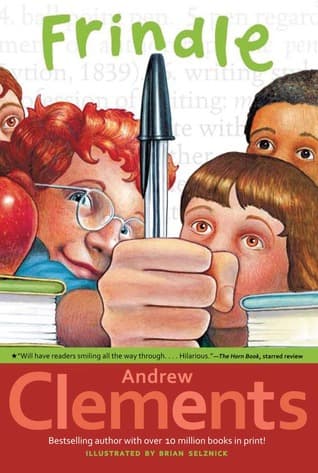
- Frindle
Andrew Clements
3.8 (104k) average on GoodreadsChildren'sClements' own "Frindle" is a highly successful realistic children's fiction, celebrated for its relatable school setting and sharp social commentary. "Things Hoped For" departs significantly from this style by venturing into speculative fiction, which, while showcasing Clements' versatility, might dilute the focused, character-driven realism that is a hallmark of his best-known work.
- Harry Potter and the Sorcerer's Stone
J.K. Rowling
4.5 (7M) average on GoodreadsFantasyRescued from a miserable life under the stairs, an orphaned boy discovers he's a wizard destined for a magical school, where he uncovers a dangerous secret tied to the dark wizard who murdered his parents.
- The Hunger Games
Suzanne Collins
4.3 (6.4M) average on GoodreadsFantasyIn a future where children fight to the death on live television, Katniss Everdeen volunteers for the arena, turning a death sentence into a fight for survival and a spark of rebellion.





Enjoyed the summary?
A summary gives you the shape of the book. The book itself has the detail, the examples and the voice.
Find Things Hoped For on AmazonAs an Amazon Associate, BookBrief earns from qualifying purchases. How we're funded