
Synopsis
Covers the whole plot, including the ending.
- Difficulty
- Medium
- Pacing
- Fast
- Mood
- Intense, Suspenseful, Tragic, Emotional
- Read it if
- You want a raw, multi-perspective thriller about a school shooting that explores difficult themes and character relationships under extreme duress.
- Skip it if
- You are sensitive to graphic violence, school shooting scenarios, or emotionally heavy and potentially triggering content.
This Is Where It Ends Plot Summary
Covers the whole plot, including the ending.
The Locked Auditorium
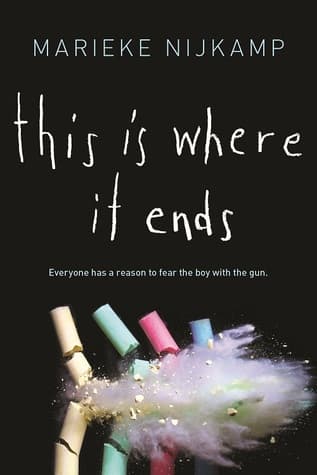
The novel opens on the first day of the new semester at Opportunity High School. Principal Amari gives a welcome speech to the student body in the auditorium. As the assembly ends, students try to leave, but the doors are locked. Suddenly, shots are fired, and panic starts. Students hide under seats and behind the stage. Claire, a track star, and Chris, her boyfriend, are among those trapped. Many quickly identify the shooter as Tyler Browne, a student with a history of anger and a troubled past, who targets people he feels have wronged him or his sister, Autumn.
Initial Chaos and Communication
Amidst the chaos, students react differently. Tomás, a tech enthusiast, immediately tries to alert authorities and help others using his hacking skills. Fareed, a popular student and former friend of Tyler's, tries to calm classmates and assess the situation. Autumn Browne, Tyler's sister, also trapped, is horrified and conflicted, knowing her brother is the shooter. Outside, police and media gather but cannot enter. Inside, whispers and shouts fill the air as students try to understand what is happening and how to escape.
Autumn's Dilemma
Autumn Browne is torn between her love for her brother, Tyler, and the reality of his actions. She knows his history of abuse and mental health struggles, but never thought he would go this far. Tyler targets specific students, including Autumn's ex-girlfriend, Sylvia, and other students involved in an incident that led to Tyler's suspension. Autumn tries to understand Tyler's reasons while fearing for her own life and her friends' lives. She struggles with the urge to confront him or stop him, knowing the danger.
Claire's Resourcefulness
Claire, a track athlete, uses her agility and knowledge of the school to move through the auditorium, trying to find an exit or a way to help her friends. She leads in her area, guiding students to safer spots and looking for escape routes. Her boyfriend, Chris, tries to stay near her, but her determination often puts her in more dangerous situations. Claire's main goal is to protect those around her, especially Chris and her best friend, who are also trapped.
Tomás's Hacking and Fareed's Leadership
Tomás, hidden backstage, hacks into the school's communication system. He starts broadcasting information and pleas for help to the outside, giving updates to the police and worried parents. Meanwhile, Fareed, a natural leader, tries to organize students, offering comfort and guidance during the terror. He tries to talk to Tyler, appealing to their past friendship, hoping to calm the situation, but Tyler's rage is too strong. Fareed's efforts, though brave, often put him in direct danger.
Confrontations and Revelations
As the shooting continues, Tyler's targets become clear. He goes after students he believes wronged him, including Sylvia, Autumn's ex-girlfriend, and student council members involved in his past disciplinary issues. Flashbacks show the events leading to the shooting, including Tyler's troubled home life with an abusive father, his suspension, and his growing anger. The story shows how a series of small slights and betrayals, plus his mental health issues, led to this event. The students realize how deep Tyler's pain and anger are.
Sacrifices and Heroism
During the ordeal, several students show great bravery. Chris, despite his fear, tries to shield Claire. Fareed puts himself in harm's way to distract Tyler from others. Autumn, despite her fear, tries to reason with Tyler, appealing to their shared past and family bond. These acts of heroism, though sometimes useless, show the students' resilience and their commitment to protect each other during unimaginable terror. The auditorium becomes a test where true character is shown under extreme pressure.
The Escalation and The Call
The police outside get live updates from Tomás and other students, but they hesitate to enter without a clear plan, fearing more casualties. Inside, Tyler's rampage continues, and the death count rises. Principal Amari talks with the police, agonizing over hard choices. Tension builds as the 54-minute time limit nears. A key moment comes when the police decide on a tactical entry, realizing that waiting longer will only cause more tragedy. The students prepare for the inevitable fight.
The Climax
The climax happens as police enter the auditorium. Tyler, cornered and desperate, makes a final stand. Autumn, in a sad moment, tries one last time to reach her brother, begging him to stop. But Tyler's rage and despair have consumed him. In the chaos, shots are exchanged. Several students are caught in the crossfire or injured during the standoff. The principal and police focus on stopping the threat, leading to Tyler's death. The auditorium falls silent, but the damage is done, and everyone's lives are changed forever.
Aftermath and Reflection
In the immediate aftermath, the auditorium is a scene of destruction. First responders rush in to help the wounded and count the dead. Survivors are led out, traumatized and in shock. The novel ends with the characters dealing with their survival and the loss of their friends. Claire, Chris, Autumn, Tomás, and Fareed are forever changed by that day. The community of Opportunity, Alabama, is left to mourn and rebuild, facing hard questions about how such a tragedy happened and how to prevent it again. The 54 minutes are over, but the effects will last a lifetime.
This Is Where It Ends Characters
Autumn Browne
Protagonist
Tyler's sister, torn between loyalty and horror.
Autumn is Tyler's younger sister, a student at Opportunity High. She is deeply conflicted by her brother's actions, having endured an abusive home life with him and their father. She has a complicated relationship with Tyler, marked by both love and fear. Autumn is brave, empathetic, and struggles with guilt and responsibility, believing she could have prevented the tragedy. Her past relationship with Sylvia adds another layer of complexity to her emotional state during the shooting.
Relationships: Tyler Browne (Brother, abuser, victim); Sylvia (Ex-girlfriend, target); Fareed (Friend)
Tyler Browne
Antagonist
The school shooter, driven by resentment and past trauma.
Tyler is the troubled student who orchestrates the school shooting. He is depicted as a victim of severe emotional and physical abuse by his father, which, combined with bullying and perceived betrayals at school, fuels his deep-seated anger and resentment. He targets specific individuals he believes wronged him, including former friends and those involved in his suspension. Tyler is mentally unstable and consumed by a desire for revenge, seeing himself as an avenger rather than a perpetrator.
Relationships: Autumn Browne (Sister, target of his protection/control); Fareed (Former friend, target); Sylvia (Sister's ex-girlfriend, target)
Claire
Protagonist
A determined track star who prioritizes helping others.
Claire is a strong-willed and resourceful track athlete. When the shooting begins, she immediately focuses on survival and protecting those around her, particularly her boyfriend, Chris. Her athletic training gives her an advantage in navigating the chaotic environment. She is courageous and decisive, often taking risks to assess situations or find escape routes. Claire embodies resilience and a fierce loyalty to her friends.
Relationships: Chris (Boyfriend); Matt (Friend)
Tomás
Protagonist
The tech-savvy student who broadcasts the crisis.
Tomás is an intelligent and quick-thinking student with exceptional technical skills. He is initially portrayed as an outsider, but his expertise becomes invaluable during the crisis. From his hiding spot backstage, he manages to hack into the school's systems, providing critical information to the outside world and acting as a lifeline for the trapped students. He is driven by a desire to help and prove his worth.
Relationships: Fareed (Acquaintance, fellow survivor)
Fareed
Protagonist
A popular student and natural leader attempting to de-escalate.
Fareed is a popular and charismatic student, known for his leadership qualities and his ability to connect with people. He was once friends with Tyler, which gives him a unique perspective on the shooter's motivations. During the shooting, Fareed tries to maintain order, comfort his classmates, and even attempts to reason with Tyler, putting himself in immense danger. He represents the voice of reason and compassion amidst the terror.
Relationships: Tyler Browne (Former friend, target); Autumn Browne (Friend); Tomás (Acquaintance, fellow survivor)
Chris
Supporting
Claire's protective, but fearful, boyfriend.
Chris is Claire's boyfriend, a generally good-natured and protective individual. During the shooting, he is primarily concerned with Claire's safety and tries to stay by her side. He is brave in his attempts to shield her but also struggles with fear and the overwhelming nature of the situation. Chris represents the vulnerability and human fear that many students experience.
Relationships: Claire (Girlfriend)
Principal Amari
Supporting
The principal of Opportunity High, making impossible decisions.
Principal Amari is the head of Opportunity High School. She is a dedicated and compassionate leader who finds herself in an impossible situation. Trapped outside the auditorium, she is in constant communication with the police and tries to manage the crisis from a distance, making agonizing decisions about how to proceed and how to protect her students and staff. She represents the burden of leadership in a crisis.
Relationships: Tyler Browne (Student (past disciplinary issues))
Sylvia
Supporting
Autumn's ex-girlfriend and a target of Tyler's.
Sylvia is Autumn's ex-girlfriend and becomes one of Tyler's specific targets. Her past involvement in an incident that led to Tyler's suspension is a key motivator for his actions. She represents the innocent victims caught in Tyler's web of revenge, and her presence complicates Autumn's emotional struggle.
Relationships: Autumn Browne (Ex-girlfriend); Tyler Browne (Perpetrator)
This Is Where It Ends Themes
The Impact of Trauma and Bullying
The novel explores how past trauma and bullying can lead to destructive actions. Tyler Browne's violence is directly linked to his abusive home life and the constant bullying he faced at school, including incidents with the student council and his father's violence. The story does not excuse his actions but tries to explain the psychological breakdown that caused them. This theme is clear in Autumn's struggle as she deals with her brother's past and present, understanding the source of his pain while recoiling from his violence.
“He didn't start like this. He wasn't born a monster.”
Heroism and Sacrifice in Crisis
Amidst the terror, the book shows acts of great bravery and self-sacrifice. Characters like Claire, who tries to protect others, and Fareed, who tries to reason with Tyler despite the danger, show this theme. Tomás's actions in broadcasting the crisis to the outside are also heroic. These moments show the human ability for courage and compassion even in the worst situations, showing how people rise to protect loved ones and fellow students.
“You don't just stand there. You help.”
The Weight of Responsibility and Guilt
Several characters deal with feelings of responsibility and guilt. Autumn blames herself for not seeing the signs or doing enough to help Tyler. Principal Amari carries the heavy burden of her students' safety. Even characters like Fareed, who had been Tyler's friend, wonder if they could have done more. This theme explores the psychological aftermath of tragedy, showing how survivors often blame themselves and struggle with 'what ifs,' even when events were beyond their control. It is a powerful look at the emotional cost of such a catastrophic event.
“I should have known. I should have seen it coming.”
The Fragility of Life and Community
The fast and brutal nature of the school shooting highlights how fragile life is and how quickly a normal day can become a nightmare. The once-safe Opportunity High School is shattered, and the community is changed forever. The novel explores how such an event tears apart a community, leaving lasting scars on survivors, families, and the town. It shows the vulnerability of young lives and the devastating effect of violence on everyone's well-being.
“Fifty-four minutes. That’s all it took to change everything.”
The Power of Connection and Disconnection
The story explores the important role of human connection, both when it is there and when it is missing. Bonds between friends, siblings, and romantic partners are tested and strengthened during the crisis. In contrast, Tyler's deep feeling of disconnection from his peers and family, made worse by his trauma, is a main reason for his actions. The struggle to communicate, both inside the auditorium and with the outside, further shows how important connection is for survival and understanding. Tomás's use of technology to connect is a direct example of this theme.
“We're all in this together. We have to be.”
Plot Devices & Literary Techniques
Multiple Perspectives
The story is told through alternating points of view of four students.
The novel employs multiple first-person perspectives, primarily from Autumn, Claire, Tomás, and Fareed. This device allows the reader to experience the unfolding tragedy from different vantage points, offering varied emotional responses, physical locations within the auditorium, and insights into Tyler's motivations through their personal connections to him. It builds suspense and provides a comprehensive, albeit fragmented, understanding of the event.
Real-Time Narrative
The entire story unfolds within a 54-minute timeframe.
The narrative meticulously tracks the events of the shooting in real-time, emphasizing the urgency and limited window of opportunity for escape or intervention. This device creates intense suspense and a sense of immediacy, making every second count. The constant ticking clock heightens the stakes and the feeling of claustrophobia within the locked auditorium, mirroring the characters' increasing desperation.
Flashbacks
Brief glimpses into the past of Tyler and other characters.
Interspersed throughout the real-time narrative are brief flashbacks, primarily revealing Tyler Browne's troubled past, including his abusive home life and the incidents that led to his suspension. These flashbacks provide crucial context for his motivations and the underlying resentments that fuel his rampage. They also offer insights into the relationships between the characters before the shooting, deepening the emotional impact of their current struggles.
Social Media/External Communication
Tweets and news reports provide an outside perspective.
The novel incorporates snippets of social media posts (tweets) and news reports from outside the school. This device serves to broaden the scope of the story beyond the auditorium, showing the public's reaction, the gathering of first responders, and the fear of parents. It contrasts the immediate, visceral horror inside with the desperate, often misinformed, attempts to understand and respond from the outside world, highlighting the communication challenges during a crisis.
This Is Where It Ends Quotes
“Everyone always says high school is supposed to be the best time of your life. They’re wrong.”
“We are all just stories in the end, aren't we? Stories waiting to be told. Stories waiting to be heard.”
“Sometimes you have to break a few rules to save yourself.”
“Fear can make you do things you never thought you were capable of.”
“Silence can be louder than any scream.”
“You can never truly know what goes on inside someone else's head.”
“Hope is a dangerous thing. It can keep you alive, but it can also break your heart.”
“Every hero has a breaking point. Every villain has a reason.”
“Sometimes the most dangerous places are the ones you think are safe.”
“The past isn't just behind us. It's inside us.”
“It's easy to judge from the outside. It's harder to understand when you're trapped inside.”
“We all make choices. Some big, some small. But every choice has a consequence.”
“Even in the darkest moments, there can be light. You just have to look for it.”
Quiz
10 questions on the plot and the characters. Each answer comes with a short explanation.
Question 1
At what specific time does the shooting incident begin in Opportunity High School?
- 10:00 a.m.
- 10:02 a.m.
- 10:03 a.m.
- 10:05 a.m.
Show answer
D. 10:05 a.m. According to the book's premise, the shooting starts at 10:05 a.m., after the auditorium doors become locked.
Question 2
How long is the entire school shooting event described in the book, from start to finish?
- 50 minutes
- 54 minutes
- 1 hour
- Under 30 minutes
Show answer
B. 54 minutes The synopsis explicitly states, 'In 54 minutes, four students must confront their greatest hopes, and darkest fears, as they come face-to-face with the boy with the gun.'
Question 3
Which of the following is NOT one of the main characters whose perspective is followed during the shooting?
- Autumn
- Sylv
- Tomas
- The principal
Show answer
D. The principal While the principal gives a speech, the story primarily follows the perspectives of four students: Autumn, Sylv, Tomas, and Claire.
Question 4
What is the name of the high school where the shooting takes place?
- Freedom High
- Opportunity High
- Hopewell Academy
- Liberty High
Show answer
B. Opportunity High The book is set at Opportunity, Alabama's high school.
Question 5
What is the primary narrative structure used by Marieke Nijkamp in 'This Is Where It Ends'?
- A single, omniscient narrator
- Multiple first-person perspectives from different students
- A third-person limited perspective focusing on the shooter
- Flashbacks interspersed with a present-day investigation
Show answer
B. Multiple first-person perspectives from different students The novel is known for its structure of telling the story through the alternating first-person perspectives of several students trapped in the auditorium.
Question 6
What is the relationship between Autumn and Sylv mentioned in the book?
- They are best friends who recently had a falling out.
- They are sisters, and Autumn is protective of Sylv.
- They are former romantic partners.
- They are strangers who meet during the shooting.
Show answer
B. They are sisters, and Autumn is protective of Sylv. Autumn and Sylv are established as sisters, with Autumn feeling a strong sense of responsibility for Sylv.
Question 7
What key detail signals the beginning of the crisis, even before the shooting starts?
- A fire alarm goes off unexpectedly.
- The principal's speech is interrupted by a power outage.
- The auditorium doors are found to be locked, preventing students from leaving.
- An announcement warns of an active shooter drill.
Show answer
C. The auditorium doors are found to be locked, preventing students from leaving. The book's timeline explicitly states that at 10:03 a.m., 'The auditorium doors won't open,' signaling that something is wrong.
Question 8
The novel explores the theme of how past relationships and secrets can impact individuals during a crisis. Which character's past actions or relationships are particularly central to understanding the shooter's motives?
- Tomas's rivalry with a football player
- Autumn's complicated history with the shooter, Tyler
- Sylv's involvement in a school club
- Claire's popularity among her peers
Show answer
B. Autumn's complicated history with the shooter, Tyler Autumn's past relationship with Tyler, the shooter, is a crucial element in understanding his motivations and the unfolding events.
Question 9
One of the difficult themes explored in the book is the concept of heroism versus self-preservation. Which character most struggles with the idea of sacrificing their own safety for others?
- Tomas, who attempts to confront the shooter
- Autumn, who is focused on protecting her sister
- Sylv, who is primarily trying to survive
- Claire, who is often portrayed as calculating her own chances of survival
Show answer
D. Claire, who is often portrayed as calculating her own chances of survival Claire is often depicted as prioritizing her own survival and making decisions based on self-interest, contrasting with characters who try to help others.
Question 10
Beyond the immediate crisis, what broader societal issue does 'This Is Where It Ends' primarily aim to highlight and provoke thought about?
- The importance of school funding for extracurricular activities.
- The impact of social media on teenage relationships.
- The tragic reality and consequences of school shootings in the nation.
- The challenges of academic pressure on high school students.
Show answer
C. The tragic reality and consequences of school shootings in the nation. The praise and description clearly indicate the book's purpose is to address the 'problematic and harrowing issue across the nation' of school shootings.
This Is Where It Ends FAQ
What is the central premise of 'This Is Where It Ends'?
The book chronicles a harrowing 54-minute period during a school shooting at Opportunity High School in Opportunity, Alabama. It follows multiple student perspectives as they are trapped in the auditorium, forced to confront a shooter and make life-or-death decisions.
Who are the main characters whose perspectives we follow?
The story is primarily told through the alternating perspectives of four students: Autumn, Sylvia, Tomás, and Fez. Each has a unique connection to the shooter, Tyler Browne, and their own personal struggles unfolding during the crisis.
What is the relationship between Autumn and the shooter, Tyler Browne?
Autumn is Tyler's sister, and their relationship is deeply complex and strained. She carries the burden of knowing his past struggles and the family dynamics that may have contributed to his actions, making her internal conflict particularly intense.
How does the author create suspense and urgency throughout the narrative?
Nijkamp employs a real-time countdown, marking the minutes as the shooting unfolds, which heightens the tension. The alternating, short chapters from multiple viewpoints also keep the reader immersed in the immediate, unfolding terror and the characters' desperate attempts to survive.
What role do social media and technology play in the story?
Social media platforms are used by students inside and outside the auditorium to communicate, spread information, and try to get help. This element highlights both the potential for connection and the dangers of misinformation and public spectacle during a crisis.
What is the significance of the school's name, 'Opportunity High School'?
The name 'Opportunity' serves as a tragic irony, contrasting sharply with the lack of opportunity and the devastating loss of life experienced by the students. It underscores the shattered innocence and the failure of the system to protect its youth.
Are there any clues early on that hint at Tyler's intentions or mental state?
The narrative subtly reveals Tyler's past bullying, feelings of isolation, and a history of being overlooked or dismissed. These details, though not explicitly pointing to a shooting, illustrate a pattern of instability and resentment that culminates in his violent act.
What is the underlying motivation behind Tyler Browne's actions?
Tyler's motivations are complex, stemming from a deep sense of injustice, resentment from past bullying, and feelings of being misunderstood and abandoned. He targets specific individuals he feels wronged him, seeking a perverse form of revenge and recognition.
How do the different characters cope with the extreme stress and trauma?
Each character copes differently: Autumn struggles with guilt and the desire to stop her brother; Sylvia tries to protect her girlfriend, Jody; Tomás acts heroically to save others; and Fez grapples with his own past and a desire for redemption. Their reactions highlight varied human responses to terror.
What psychological impact does the event have on the survivors?
The book implies profound and lasting psychological trauma for the survivors, including PTSD, survivor's guilt, and a loss of innocence. The experience fundamentally alters their perception of safety, trust, and their own futures, as shown in the aftermath.
How does the book explore the bystander effect and personal responsibility?
The narrative touches on moments where characters question why no one intervened earlier or how their own past actions might have contributed to the shooter's isolation. It implicitly asks readers to consider collective responsibility and the impact of seemingly small actions.
What is the significance of the alternating perspectives in conveying the story?
The multiple perspectives offer a fragmented yet comprehensive view of the chaos, fear, and heroism within the auditorium. It emphasizes the individualized nature of trauma while also highlighting the interconnectedness of the characters' lives and the communal impact of the tragedy.
Does the book offer any definitive answers or solutions to school violence?
No, the book does not offer simplistic answers or solutions. Instead, it aims to humanize the victims and explore the complex factors that can lead to such events, prompting readers to reflect on the societal issues and personal responsibilities involved.
What message about hope and resilience does the book convey amidst the tragedy?
Despite the horrific events and significant loss, the book subtly conveys messages of resilience through acts of courage, self-sacrifice, and the enduring bonds between characters. It suggests that even in the darkest moments, human connection and the will to survive can prevail.
How does the author use the setting of the school auditorium to enhance the narrative?
The auditorium, a place typically associated with gatherings and performances, becomes a symbolic trap and a stage for terror. Its enclosed nature intensifies the claustrophobia and helplessness, while its layout dictates the characters' movements and desperate attempts to hide or escape.
Are there any characters who initially seem insignificant but play a crucial role?
Fez, initially presented as a somewhat troubled outsider with a past connection to Tyler, ultimately plays a pivotal role. His actions, driven by a desire for redemption and protection, significantly impact the survival of others and the confrontation with Tyler.
What is the role of the principal's speech at the beginning of the book?
The principal's speech, welcoming students to a new semester and encouraging achievement, serves as a stark and tragic contrast to the horror that immediately follows. It underscores the abrupt shattering of normalcy and the loss of the future she envisioned for the students.
About the author

Marieke Nijkamp is a writer known for her work in young adult fiction. Her notable book, "This Is Where It Ends," explores themes of trauma and resilience in the context of a school shooting. Nijkamp's writing often addresses complex social issues and the experiences of marginalized individuals.
Similar books
- We Need to Talk About Kevin
Lionel Shriver
4.0 (162k) average on GoodreadsLiterary FictionDelves into the complex psychology of a school shooter and the aftermath from a family perspective.
- Long Way Down
Jason Reynolds
4.3 (58k) average on GoodreadsYoung AdultA fast-paced, intense narrative focused on a short, critical period with deep character introspection.
- Angels & Demons
Dan Brown
3.9 (2.7M) average on GoodreadsThrillerA Harvard symbologist races through Rome's ancient sites, deciphering cryptic clues to unmask the Illuminati and stop a vengeful plot to destroy the Vatican with a stolen antimatter weapon.
- Gone Girl
Gillian Flynn
4.1 (2.3M) average on GoodreadsThrillerA wife's sudden disappearance on her fifth anniversary reveals a web of lies and psychological warfare, exposing the secrets within a seemingly perfect marriage.
- The Girl on the Train
Paula Hawkins
3.9 (2.1M) average on GoodreadsThrillerA woman’s fascination with a seemingly perfect couple she watches from her daily train commute leads her into a dark investigation when she witnesses something that shatters their idyllic image.
- The Da Vinci Code
Dan Brown
3.9 (1.9M) average on GoodreadsThrillerA symbologist and a cryptologist race through European landmarks, deciphering ancient codes and uncovering a conspiracy that could rewrite the foundations of Christianity.





Enjoyed the summary?
A summary gives you the shape of the book. The book itself has the detail, the examples and the voice.
Find This Is Where It Ends on AmazonAs an Amazon Associate, BookBrief earns from qualifying purchases. How we're funded