
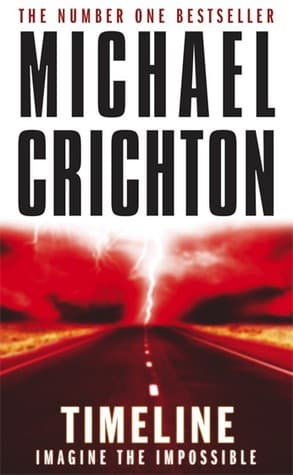
Synopsis
Covers the whole plot, including the ending.
- Difficulty
- Medium
- Pacing
- Fast
- Mood
- Suspenseful, Adventurous, Intense, Dangerous
- Read it if
- You love high-stakes action, historical settings, and the thrilling possibilities (and dangers) of time travel, with a focus on scientific plausibility.
- Skip it if
- You prefer character-driven dramas over plot-heavy thrillers, or find detailed descriptions of medieval warfare and technology tedious.
Timeline Plot Summary
Covers the whole plot, including the ending.
The Arizona Anomaly and the ITC Inquiry
In the Arizona desert, a man named Gordon is found confused and speaking old French before he dies. A mysterious company, ITC, quickly cremates his body. At the same time, Professor Edward Johnston, leading an archaeological dig in France, finds a partially deciphered 14th-century document. It seems to be from his missing mentor, Professor Rudy Stern. ITC representatives, Robert Doniger and John Gordon (not the deceased man), approach Johnston and his team, which includes graduate students Kate Erickson, Chris Hughes, and Dr. André Marek. They reveal Stern is alive but trapped in the past, and ITC has quantum technology that allows travel to parallel universes, including one that perfectly matches 14th-century France.
The Quantum Leap and the Initial Misstep
Doniger explains ITC's quantum technology, which moves matter to a specific time. He asks Johnston's team to rescue Professor Stern from 1357 in Castelgard, France. The team trains rigorously, learning 14th-century French and combat skills. Before they leave, Chris accidentally breaks a critical 'transponder' component needed for their return. Despite this, Marek insists they go, believing Stern is in danger. They receive replacement transponders and are told not to change history, though Doniger assures them their universe is parallel, making paradoxes irrelevant. They prepare for the jump, unaware of the full problems with their damaged equipment.
Arrival in 1357 and Immediate Danger
The team—Marek, Kate, Chris, and two ITC security guards, Frank Gordon and Jimmy Gomez—arrives in 1357 France, near contested territory during the Hundred Years' War. Their arrival is chaotic; they land in a skirmish. Jimmy Gomez is killed by a French knight, and Frank Gordon is captured. Marek, Kate, and Chris are separated and flee. They quickly see the harsh reality of medieval warfare and how fragile their modern technology is. Marek, surprisingly good at medieval combat, leads their survival.
The Siege of La Roque and Sir Guy's Treachery
Marek, Kate, and Chris reach the fortress of La Roque, hoping to find Stern. They learn La Roque is under siege by the English and their allies. Inside, they meet Lord Oliver, the castle's old commander, and his ruthless nephew, Sir Guy de Malegant. Marek, using his historical knowledge and language skills, tries to fit them in. They find Professor Stern is indeed held captive there, as Sir Guy thinks Stern has a secret that could change the war. Sir Guy, however, is a traitor, secretly working with the English to betray La Roque for his own gain.
The Search for Stern and the Transponder Dilemma
As the siege grows, Marek, Kate, and Chris continue searching for Professor Stern inside the castle. They learn their return window to the present is closing, as the portal to their specific parallel universe is open for a limited time. The damaged transponders become a major problem, as they realize they have limited 'charges' for returning. Frank Gordon, the captured security guard, is being tortured by Sir Guy, who believes Frank is a spy with information about a new weapon. The team must not only find Stern but also secure their return, all while dealing with medieval politics and violence.
The Rescue Attempt and Sir Guy's Betrayal
Marek, Kate, and Chris plan to free Professor Stern. They find him, but Stern is weak and injured from Sir Guy's torture. As they try to escape with Stern, Sir Guy's betrayal becomes clear. He opens the castle gates to the English forces, letting them overrun La Roque. Lord Oliver and many of his men are killed. The team, with Stern, is caught in the chaos and must fight through the invading soldiers. Frank Gordon, held in the same dungeon, also tries to escape, leading to a desperate struggle.
The Escape from La Roque and the Mill Ambush
After La Roque falls, Marek, Kate, Chris, a weakened Professor Stern, and Frank Gordon escape the castle grounds. Sir Guy and his men pursue them. Their path leads them toward a water mill, a planned meeting point for their return to the present. However, Sir Guy, expecting their route, sets an ambush at the mill. Another brutal fight happens, during which Frank Gordon is badly wounded protecting the others. The team is further reduced and desperate, seeing the true danger of their mission and their medieval enemies' ruthlessness.
The Monastery and the Parchment's Secret
The survivors—Marek, Kate, Chris, and Stern—evade Sir Guy and find refuge in a nearby monastery. Here, Professor Stern reveals the full truth: the document he found was not just an artifact, but a message from his future self. He had found evidence of ITC's past activities and was trying to warn them. The parchment they found in the present was a transponder instruction manual, hidden in a medieval context. Stern explains the transponders are faulty and they have only one 'charge' left, not enough for all of them to return. This creates a difficult choice for the group.
The Final Battle and the Return Dilemma
Sir Guy, still pursuing them, tracks the team to the monastery. A final fight breaks out. Marek, using his combat skills and knowledge of medieval warfare, leads the defense against Sir Guy's forces. During the battle, Professor Stern dies from his injuries. The transponder is further damaged, leaving only one charge. Kate and Chris realize only one of them can return to the present. Marek selflessly decides to stay, feeling a connection to the era and unable to abandon the past. He helps Kate and Chris activate the final return sequence.
The Present Day and the Aftermath
Kate and Chris successfully return to the present, landing at the ITC facility just as the temporal window closes. They are angry with Doniger, exposing the faulty transponders and their colleagues' deaths. Doniger tries to cover up the incident and discredit their story. However, their experiences are confirmed by the historical records they now have, including the parchment Professor Johnston first found. Johnston, having figured out ITC's plan, confronts Doniger. The team exposes ITC's negligence and the dangers of their technology, ensuring such a mission cannot happen again.
Marek's Fate and the Historical Record
Afterward, Kate and Chris, with Professor Johnston, piece together Marek's fate. They find historical documents and artifacts confirming Marek not only survived in the past but thrived. He became a respected knight, Sir André de Maregnac, known for his bravery. He married Lady Claire, a character they had met briefly in the past, and lived out his life in medieval France, becoming a notable, though obscure, historical figure. This gives a moving end to Marek's story, showing his decision to stay was not in vain and that he found purpose in the past.
Timeline Characters
Chris Hughes
Protagonist
A graduate student specializing in medieval history and an accidental time traveler.
Chris is a brilliant but somewhat naive graduate student, initially focused on the academic study of medieval history. He possesses a photographic memory and a deep understanding of historical texts. However, he lacks practical skills and confidence in real-world situations, especially combat. His initial eagerness to experience the past quickly turns into terror as he faces its brutal realities. He is driven by a desire to rescue Professor Stern and return safely, struggling with the moral dilemmas presented by their limited resources.
Relationships: Kate Erickson (fellow student, close friend, and eventual romantic interest); Dr. André Marek (colleague and mentor figure in medieval survival); Professor Edward Johnston (mentor and academic advisor)
Kate Erickson
Protagonist
A strong-willed graduate student specializing in medieval architecture and archaeology.
Kate is intelligent, resourceful, and physically capable, with a practical understanding of medieval structures and a strong sense of self-preservation. She is more grounded than Chris, often taking the lead in critical situations and adapting quickly to the dangers of 14th-century France. Her expertise in architecture proves invaluable in navigating castles and understanding defensive strategies. She is driven by loyalty to her team and a fierce determination to survive and protect those she cares about.
Relationships: Chris Hughes (fellow student, close friend, and eventual romantic interest); Dr. André Marek (colleague and respected leader); Professor Edward Johnston (mentor and academic advisor)
Dr. André Marek
Protagonist/Supporting
A charismatic and skilled historian with an unexpected proficiency in medieval combat.
Marek is a brilliant and passionate historian, known for his unconventional methods and deep immersion in his subject. Unbeknownst to his colleagues, he has secretly trained in medieval combat and survival, a skill set that becomes crucial in 1357. He is courageous, decisive, and possesses a strong moral compass, often taking charge and making difficult decisions for the group's survival. He develops a profound connection to the past, feeling more at home in the 14th century than in his own time, which ultimately influences his final choice.
Relationships: Chris Hughes (colleague and mentee); Kate Erickson (colleague and trusted companion); Professor Rudy Stern (mentor and friend); Lady Claire (romantic interest in the past)
Professor Edward Johnston
Supporting
The lead archaeologist and mentor to the graduate students.
Professor Johnston is an experienced and highly respected archaeologist, dedicated to historical accuracy and the ethical pursuit of knowledge. He is the initial point of contact for ITC and is deeply concerned about the welfare of his students and Professor Stern. He possesses a keen intellect and a strong sense of responsibility, quickly becoming suspicious of ITC's motives and methods. His role is primarily in the present, trying to understand and mitigate the dangers his team faces in the past.
Relationships: Chris Hughes (academic advisor and mentor); Kate Erickson (academic advisor and mentor); Professor Rudy Stern (colleague and friend); Robert Doniger (antagonist, head of ITC)
Professor Rudy Stern
Supporting
The initial time traveler and the catalyst for the rescue mission.
Professor Stern is a brilliant but somewhat reckless historian whose initial, unauthorized journey to the past sets the entire plot in motion. He is highly intelligent and resourceful, managing to survive in 14th-century France for a significant period. His discovery of ITC's technology and his attempt to warn his colleagues from the past through a coded message highlight his foresight and dedication. Though he is mostly seen in a weakened state, his actions are central to the unfolding crisis.
Relationships: Professor Edward Johnston (colleague and friend); Dr. André Marek (mentor and friend)
Robert Doniger
Antagonist
The CEO of International Technology Corporation (ITC) and the orchestrator of the time travel project.
Doniger is a brilliant but ruthlessly ambitious technocrat, driven by profit and scientific advancement at any cost. He views human lives as expendable in the pursuit of his corporate goals, showing a callous disregard for the safety of the archaeological team and his own security personnel. He is manipulative and deceptive, constantly downplaying the risks of his quantum technology and attempting to cover up any failures. His primary motivation is to exploit the past for commercial gain and maintain control over his groundbreaking invention.
Relationships: Professor Edward Johnston (adversary); Chris Hughes (victim of his corporate negligence); Kate Erickson (victim of his corporate negligence)
Sir Guy de Malegant
Antagonist
A ruthless and treacherous French knight in 1357.
Sir Guy is a cunning and brutal medieval lord, driven by ambition, greed, and a desire for power. He is Lord Oliver's nephew but secretly plots with the English to betray his own people for personal gain. He is a formidable warrior but lacks honor, resorting to torture and deceit to achieve his goals. He represents the darker, more violent aspects of the medieval world, posing a direct and immediate threat to the time travelers.
Relationships: Lord Oliver (nephew, betrayer); Dr. André Marek (adversary); Chris Hughes (adversary); Kate Erickson (adversary)
Frank Gordon
Supporting
An ITC security guard accompanying the team to the past.
Frank is a seasoned and pragmatic security professional, initially skeptical of the academic team but dedicated to his duty. He is one of the two security guards assigned to protect the time travelers. He possesses combat training and a no-nonsense attitude, but is ultimately outmatched by the brutal realities of medieval warfare. Despite his tough exterior, he demonstrates loyalty and courage, ultimately sacrificing himself to protect the others. He represents the human cost of ITC's reckless venture.
Relationships: Chris Hughes (colleague, protected); Kate Erickson (colleague, protected); Dr. André Marek (colleague, protected)
Lord Oliver
Mentioned
The aging and honorable commander of La Roque castle.
Lord Oliver is a traditional and honorable medieval lord, dedicated to defending his castle and his people. He is a figure of integrity and courage, contrasting sharply with his treacherous nephew, Sir Guy. He is a victim of Sir Guy's betrayal, ultimately dying in the siege of La Roque. He provides a glimpse into the noble, albeit often doomed, aspects of medieval chivalry.
Relationships: Sir Guy de Malegant (nephew, betrayer)
Timeline Themes
The Dangers of Unchecked Technology
The novel examines the ethical problems of advanced technology when corporations prioritize profit over safety. ITC's quantum displacement technology, though advanced, is rushed out without enough testing, leading to faulty equipment and a disastrous mission. Robert Doniger's disregard for human life and his attempts to hide failures show the moral issues that can come with unchecked scientific ambition. The deaths of Jimmy Gomez, Frank Gordon, and Professor Stern are direct results of this corporate greed and carelessness, showing the deadly potential when science lacks ethical responsibility.
“History is not a tourism destination. It's a living, breathing thing, and you've just broken it.”
The Romance vs. Reality of the Past
The story contrasts an idealized academic view of the past with its brutal reality. Chris and Kate, initially excited to experience medieval France, quickly lose their romantic ideas as they see and take part in warfare, disease, and torture. Marek, who had a deeper, almost spiritual connection to the past, is paradoxically the best prepared for its harshness, eventually choosing to stay. The novel suggests that while history can be studied, living it is far more complex and dangerous than modern people can easily grasp, forcing the characters to confront their assumptions.
“You can't study the Middle Ages in a library. You have to live it.”
Survival and Adaptation
A main theme is the characters' fight for survival and their ability to adapt to extreme situations. Thrown into a hostile medieval environment, the academic team quickly learns that their modern knowledge is often useless without practical skills. Chris and Kate, initially helpless, must develop resilience, combat skills, and cunning. Marek, already having these, becomes their main guide. Their ability to give up modern comforts and accept the harsh realities of 1357, including learning to fight and navigate medieval politics, is key to their survival. This theme highlights human adaptability when facing overwhelming odds.
“In the Middle Ages, you didn't have to be a genius to survive. You just had to be tough.”
Identity and Belonging
The story explores how people find their place, both physically and emotionally. For Marek, the journey to 1357 reveals a deep sense of belonging he never fully felt in his own time. He finds purpose and community in the past, choosing to stay and create a new identity as Sir André de Maregnac. This contrasts with Chris and Kate, who desperately hold onto their modern identities and try to return home. The novel suggests that true belonging can cross time, and identity is not just defined by one's birth era but by where one feels most alive and purposeful.
“Some people are born in the wrong time.”
The Nature of History and Time
Crichton explores philosophical questions about history and time. The idea of parallel universes allows time travel without changing one's 'original' timeline, yet the characters still deal with the moral implications of interfering with the past. The discovery that Professor Stern sent a message from the past to the future creates a fascinating time loop, challenging linear views of time. The novel suggests that history is not a fixed story but a complex, many-sided reality, always being shaped and discovered, and that even 'parallel' histories offer important lessons for the present.
“The past is not dead. It's not even past.”
Plot Devices & Literary Techniques
Quantum Displacement Technology
ITC's proprietary method for parallel universe travel.
This is the central plot device that enables the entire narrative. It allows for the instantaneous transport of matter to a specific temporal and spatial location in a parallel universe. The technology is initially presented as a marvel of science but quickly becomes a source of extreme danger due to its inherent instability and ITC's rushed, unethical deployment. Its limitations, such as the finite 'temporal windows' and the need for transponders, drive much of the plot's urgency and conflict, particularly when the transponders prove faulty.
The Transponder
A device crucial for returning from the past, which becomes a source of mounting tension.
The transponder is a small, personal device given to each time traveler, essential for their return to the present. Its accidental damage by Chris and the subsequent revelation of its limited 'charges' and unreliability create intense suspense. The dwindling number of working transponders and the final single charge force agonizing moral choices among the survivors, highlighting the theme of sacrifice and the dire consequences of technological failure. It serves as a ticking clock mechanism, constantly reminding the characters and the reader of their precarious situation.
The Medieval Parchment/Stern's Message
A historical artifact that is actually a message from the future.
Initially presented as a partially deciphered 14th-century document, this parchment is a crucial plot device that links the past and present. It is eventually revealed to be a coded message from Professor Stern, written in the past to warn his colleagues in the future about ITC's dangerous technology and the faulty transponders. This creates a temporal paradox (or at least a causal loop within parallel universes) and drives the initial motivation for the rescue mission. It also provides the critical information needed to understand the transponder's true function and limitations.
The 'Parallel Universe' Justification
ITC's explanation for time travel, allowing for historical intervention without paradoxes.
ITC explains that their technology doesn't alter 'our' past but rather sends travelers to a parallel universe that perfectly mirrors the chosen historical period. This device theoretically absolves the characters of paradox concerns and the fear of altering their own timeline. However, the story still explores the ethical implications of intervention, and the emotional impact of leaving someone in the past remains profound. It allows Crichton to explore historical detail and adventure without getting bogged down in traditional time travel paradoxes, while still maintaining high stakes for the characters.
Timeline Quotes
“If you don't know history, then you don't know anything. You are a leaf that doesn't know it is part of a tree.”
“The past is not a place. It's a perception.”
“Nothing is ever so bad that it can't be made worse.”
“They had learned that the past was a foreign country, and they were very much strangers in it.”
“What you call the past is just a different present.”
“The truth is, there are no good guys or bad guys. There are just guys.”
“History is not what happened. History is what is written.”
“You can't change the past, but the past can certainly change you.”
“In the Middle Ages, the only way to get a message across was to kill the messenger.”
“It's never the technology that's the problem. It's always the people.”
“The world of the past was far more vibrant, more immediate, and more dangerous than any history book could convey.”
“Death was never far away. It was a constant companion in the past.”
“They were archaeologists, trained to dig up the past. Now they were living it.”
“The past was not a museum. It was a battleground.”
Quiz
10 questions on the plot and the characters. Each answer comes with a short explanation.
Question 1
What is the name of the secretive multinational corporation that developed the astounding technology allowing travel to the past?
- Chronos Corp
- International Technology Corporation (ITC)
- Temporal Dynamics Inc.
- Past Forward Systems
Show answer
B. International Technology Corporation (ITC) The corporation responsible for the time travel technology is the International Technology Corporation, often referred to as ITC.
Question 2
Which historical period do the archaeologists primarily travel to in 'Timeline'?
- The Roman Empire
- The Renaissance
- 14th Century France
- The Viking Age
Show answer
C. 14th Century France The primary setting for the historical events in 'Timeline' is 14th Century France, specifically during the Hundred Years' War.
Question 3
What artifact discovered by Professor Johnston's team initially suggests something unusual about the medieval site?
- A perfectly preserved medieval manuscript
- A modern spectacle lens
- A working medieval clock
- A map with modern annotations
Show answer
B. A modern spectacle lens The discovery of a modern spectacle lens, which appears to be Professor Johnston's, is the first major clue that something is amiss and that he may have traveled back in time.
Question 4
What is the primary danger associated with the 'quantum foam' during the time travel process?
- Loss of memory
- Physical disintegration or mutation
- Being stranded in an alternate timeline
- Aging rapidly
Show answer
B. Physical disintegration or mutation The 'quantum foam' is a dangerous aspect of the time travel technology, capable of causing severe physical damage, including disintegration or mutation, if not properly navigated.
Question 5
Who is the main antagonist among the medieval characters the group encounters?
- Sir Guy de Malegant
- Lord Oliver de Vannes
- Bishop Jean-Paul
- Robert de Kere
Show answer
A. Sir Guy de Malegant Sir Guy de Malegant is the cruel and ambitious knight who serves as the primary medieval antagonist, pursuing the time travelers and holding Professor Johnston captive.
Question 6
What is the specific, time-sensitive problem that forces the group to retrieve Professor Johnston quickly?
- A plague is sweeping through the region
- The Hundred Years' War is about to escalate dramatically
- A critical component of the time machine is failing
- A historical event will erase their existence
Show answer
C. A critical component of the time machine is failing The group is under immense pressure because a critical component of the time machine, a 'transponder', is degrading and will soon make return travel impossible, trapping them in the past.
Question 7
How does Kate Erickson, the expert on medieval architecture, use her knowledge to help the group survive in the past?
- By forging documents to gain passage through enemy lines
- By identifying secret passages and weaknesses in castles
- By negotiating with local lords using her knowledge of customs
- By constructing defensive barricades from period materials
Show answer
B. By identifying secret passages and weaknesses in castles Kate's expertise in medieval architecture proves invaluable as she can identify hidden passages, structural weaknesses, and defensive strategies within the castles and fortifications they encounter, aiding their escape and survival.
Question 8
What is the ultimate fate of Robert Doniger, the CEO of ITC, regarding his involvement with the time travel project?
- He successfully commercializes the technology and becomes immensely wealthy.
- He is arrested for endangering the lives of his employees.
- He becomes trapped in the past due to a malfunction.
- He is exposed as a medieval descendant of one of the characters.
Show answer
C. He becomes trapped in the past due to a malfunction. Doniger, despite his attempts to manipulate the situation, ultimately becomes trapped in the 14th century when the last working transponder is used by the surviving archaeologists to return to their own time.
Question 9
What specific historical event, central to the conflict in 14th century France, does the team inadvertently become caught up in?
- The Battle of Agincourt
- The siege of La Roque Castle
- The Black Death epidemic
- The Jacquerie peasant revolt
Show answer
B. The siege of La Roque Castle The team finds themselves caught in the midst of the siege of La Roque Castle, a key stronghold that is being contested between the French and English forces, making their mission much more dangerous.
Question 10
How do the protagonists ultimately manage to return to their own time, given the severe technical malfunctions and dangers?
- They find a hidden second time machine in the past.
- They are rescued by a future version of ITC technology.
- They use a single, damaged transponder and a 'quantum bypass' method.
- A new transponder is sent back to them from the present.
Show answer
C. They use a single, damaged transponder and a 'quantum bypass' method. With only one functional (and deteriorating) transponder remaining, the survivors utilize a risky 'quantum bypass' method, which involves sending the transponder through a less precise and more dangerous 'side channel' of the quantum foam, to return to their present.
Timeline FAQ
What is the central premise of Michael Crichton's 'Timeline'?
The central premise of 'Timeline' involves a group of archaeologists, led by Professor Edward Johnston, who are transported to 14th-century France by a secretive corporation, ITC, using a quantum-teleportation technology. They must rescue Johnston and decipher the mysteries of the past while fighting for survival against historical dangers and corporate machinations.
Who are the main characters and what are their primary roles in the story?
The main characters include Chris Hughes, a graduate student specializing in medieval history; Kate Erickson, an expert in medieval castles; and André Marek, a linguist and medievalist. They are initially tasked by ITC to retrieve Professor Johnston, who is stranded in 1357 France, and later find themselves fighting to return to their own time.
What is the significance of the archaeological dig in Dordogne, France?
The archaeological dig in Dordogne uncovers a previously unknown monastery and castle, providing crucial clues to the past and the existence of ITC's technology. Specifically, they find a lens from Professor Johnston's glasses and a cryptic message, indicating his presence in the 14th century and prompting the rescue mission.
How does ITC's 'quantum foam' technology work, and what are its limitations?
ITC's technology utilizes quantum teleportation through what they call 'quantum foam,' allowing instantaneous travel across space and time. However, the technology has severe limitations, including a strict 37-hour return window for travelers due to 'quantum decoherence,' and a high risk of molecular instability or death if parameters are not precisely met.
What are the primary dangers faced by the team in 14th-century France?
The team faces numerous dangers in 14th-century France, including the ongoing Hundred Years' War between the English and French, brutal medieval warfare, treacherous lords like Lord Oliver, and the suspicion of the local populace. They must also contend with the harsh realities of medieval life, disease, and the constant threat of being discovered as outsiders.
What is the true purpose behind ITC sending people to the past, beyond historical research?
ITC's true purpose extends beyond mere historical research; they are primarily interested in exploiting the past for commercial gain, specifically acquiring intellectual property and potentially natural resources before their historical destruction. They view the past as a resource to be plundered, not merely studied, which is why they are so secretive and ruthless.
How does the 'template' concept factor into the success or failure of time travel?
The 'template' concept refers to the need for a physical artifact from the past to serve as a stable anchor for the teleportation process. Without a precise template, the traveler risks arriving in the wrong location, wrong time, or suffering severe physical degradation, as seen with the disfigured ITC security guard.
What is the significance of the fire that destroyed the monastery and the role of Lord Oliver?
The fire that destroyed the monastery was not an accident but an act of sabotage by Lord Oliver, who sought to cover up his own treachery and betrayal. He was working with the English against the French, and the monastery held evidence of his dealings, making its destruction crucial to his plans.
How does the character of André Marek evolve throughout the story?
André Marek begins as a somewhat academic and cynical linguist, but his immersion in 14th-century France unleashes a dormant warrior spirit within him. He adapts quickly to the brutal environment, becoming a skilled fighter and strategist, ultimately choosing to remain in the past, embracing the life he feels he was meant for.
What psychological impact does experiencing 14th-century life have on the modern characters?
Experiencing 14th-century life profoundly impacts the modern characters, forcing them to confront their own mortality and the fragility of their modern comforts. They develop heightened survival instincts, a deeper appreciation for history, and some, like Marek, find a sense of belonging that was absent in their own time, leading to significant personal transformations.
How do the different characters cope with the moral dilemmas of interacting with historical figures?
The characters cope differently with interacting with historical figures; Chris and Kate attempt to maintain a respectful distance and avoid altering history, while Marek embraces the opportunity to live within it. This creates moral tension, especially when their actions inadvertently influence events or when they must decide whether to save historical individuals knowing the potential consequences.
What is the psychological motivation behind Robert Doniger's actions and the creation of ITC?
Robert Doniger's primary motivation is a blend of scientific ambition, unchecked corporate greed, and a desire for power and legacy. He sees the past as a vast, untapped resource for exploitation, driven by a cold, calculating pragmatism that prioritizes profit and scientific advancement over ethical considerations or human safety.
Is 'Timeline' more a cautionary tale about technology or a celebration of historical immersion?
'Timeline' functions as both a cautionary tale about unchecked technological ambition and a celebration of historical immersion. It warns against the dangers of corporations exploiting scientific breakthroughs without ethical oversight, while simultaneously highlighting the profound allure and transformative power of directly experiencing history, as exemplified by Marek's choice.
What is the ultimate fate of the main characters who return to their own time?
Chris Hughes and Kate Erickson successfully return to their own time, profoundly changed by their experiences. They are left with the knowledge of ITC's duplicity and the reality of time travel, but also with a deeper understanding of history and their bond strengthened by shared survival, though they must carry the weight of their secrets.
How does the book explore the concept of free will versus determinism within the context of time travel?
The book explores free will versus determinism through the characters' actions in the past. While some events appear predetermined (like the monastery's destruction), the characters' choices, especially Marek's decision to stay, suggest that individual agency can alter or create new historical paths, blurring the lines between what is fixed and what can be changed.
What are the ethical implications of ITC's time travel technology, particularly regarding historical preservation?
The ethical implications are vast. ITC's technology poses a severe threat to historical preservation by allowing corporate entities to exploit the past for profit, potentially altering timelines or destroying historical artifacts in the name of gain. It raises questions about who has the right to access and manipulate history, and at what cost.
Does the book suggest that history is mutable or largely fixed, despite the characters' interventions?
The book offers a nuanced view, suggesting history is largely resilient but not entirely immutable. While major events might resist significant change, individual actions can have localized impacts, and the very act of observing or interacting with the past creates minor ripples. Marek's choice to remain in the past is the most significant deviation, implying a degree of mutability.
What becomes of Professor Johnston after his rescue, and what role does he play in the aftermath?
Professor Johnston is successfully rescued from 14th-century France, albeit with physical and psychological scars. Upon his return, he becomes a key witness against ITC, providing crucial information that helps expose the corporation's unethical practices and dangerous technology, though his experience leaves him deeply shaken and changed.
About the author
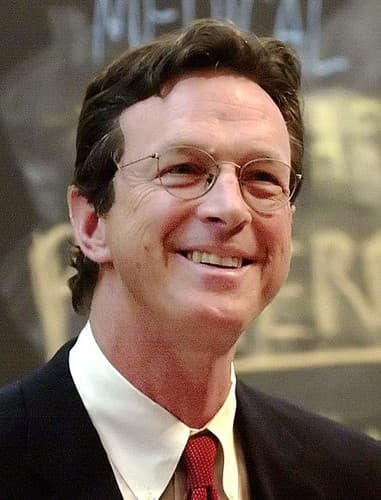
Michael Crichton was an American author and filmmaker known for his contributions to the science fiction genre. His notable works include Jurassic Park, The Andromeda Strain, Timeline, Sphere, Congo, and State of Fear, many of which explore themes of technology and its impact on society. Crichton's writing often blends scientific concepts with thrilling narratives, making him a significant figure in contemporary literature.
Similar books
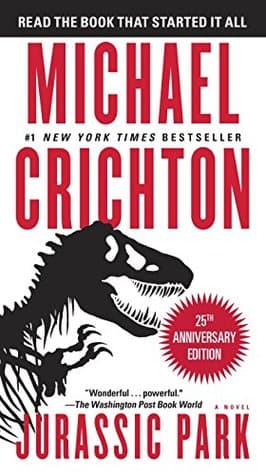
- Jurassic Park
Michael Crichton
4.0 (803k) average on GoodreadsThrillerShares Crichton's signature blend of scientific realism, fast-paced action, and the dangers of unchecked technological ambition.
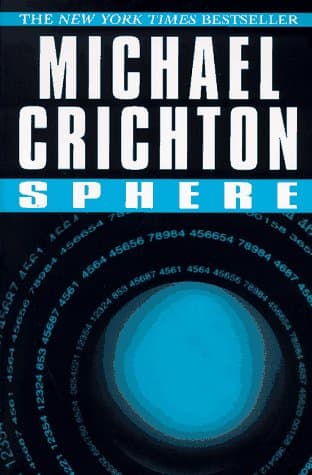
- Sphere
Michael Crichton
3.8 (167k) average on GoodreadsThrillerAnother Crichton novel involving a team of scientists facing extreme danger in an isolated environment with a mysterious, advanced technology.
- Angels & Demons
Dan Brown
3.9 (2.7M) average on GoodreadsThrillerA Harvard symbologist races through Rome's ancient sites, deciphering cryptic clues to unmask the Illuminati and stop a vengeful plot to destroy the Vatican with a stolen antimatter weapon.
- Gone Girl
Gillian Flynn
4.1 (2.3M) average on GoodreadsThrillerA wife's sudden disappearance on her fifth anniversary reveals a web of lies and psychological warfare, exposing the secrets within a seemingly perfect marriage.
- The Girl on the Train
Paula Hawkins
3.9 (2.1M) average on GoodreadsThrillerA woman’s fascination with a seemingly perfect couple she watches from her daily train commute leads her into a dark investigation when she witnesses something that shatters their idyllic image.
- The Da Vinci Code
Dan Brown
3.9 (1.9M) average on GoodreadsThrillerA symbologist and a cryptologist race through European landmarks, deciphering ancient codes and uncovering a conspiracy that could rewrite the foundations of Christianity.




Enjoyed the summary?
A summary gives you the shape of the book. The book itself has the detail, the examples and the voice.
Find Timeline on AmazonAs an Amazon Associate, BookBrief earns from qualifying purchases. How we're funded