
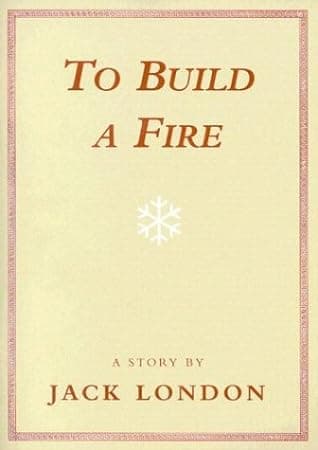
Synopsis
Covers the whole plot, including the ending.
- Difficulty
- Easy
- Pacing
- Moderate
- Mood
- Bleak, Suspenseful, Melancholy, Grim
- Read it if
- You enjoy classic naturalist fiction, stories of survival against extreme odds, or a stark portrayal of humanity versus nature.
- Skip it if
- You prefer lighthearted stories, happy endings, or find detailed descriptions of suffering in the cold difficult to read.
To Build a Fire Plot Summary
Covers the whole plot, including the ending.
The Journey Begins
A man, new to the Yukon and ignoring warnings, begins a journey through the sub-zero Alaskan wilderness to meet companions at an old mining camp. He is accompanied only by a large husky, which instinctively understands the danger of the severe cold, fifty degrees below zero. The man is confident in his ability to endure the cold, relying on his judgment and preparedness, despite the dog's reluctance and its fear of the biting frost. He focuses on avoiding hidden springs and misjudges the true danger of the environment, believing his experience is enough.
Initial Encounters with the Cold
As the man travels, he experiences the cold's immediate effects: his beard freezes, and his spittle crackles in the air. He chews tobacco, and the frozen spittle forms an icicle on his chin. The dog, driven by instinct, occasionally licks the ice from its paws to prevent them from freezing, a behavior the man observes but does not fully take as a warning. The man thinks about the old-timer's advice about never traveling alone in such conditions but dismisses it, believing his own skill and the thought of a warm fire and bacon at camp are enough. He continues to underestimate nature's power.
The First Fire
Around midday, the man stops to build a fire to warm himself and eat his biscuits and bacon. He gathers small twigs, then larger branches, and skillfully ignites a fire. The dog, sensing the warmth, curls up near the flames, experiencing temporary relief. While eating, the man notices his fingers are numb, a subtle warning sign he attributes to the cold rather than a critical loss of sensation. He feels a sense of accomplishment and reinforces his belief in his own competence, further dismissing the old-timer's warnings. He believes he has successfully overcome a minor challenge.
The Hidden Spring
After lunch, the man continues his journey. He is careful about the hidden springs beneath the snow, a constant danger. However, despite his care, he misjudges a section of ice. Suddenly, the ice gives way, and he plunges through, soaking his feet and lower legs in the frigid water. This incident is a critical turning point, immediately threatening his survival. The man must now build another fire quickly to prevent his feet from freezing, realizing the seriousness of his mistake and the immediate need for action. The dog instinctively knows the danger and watches him intently.
The Second Fire Attempt
With his feet rapidly freezing, the man knows he must build a fire immediately. He finds a suitable spot under a spruce tree, where he has already gathered some kindling. His fingers, however, are now stiff and clumsy, making the simple act of striking a match and feeding the tiny flame a monumental task. He struggles to hold the matches, dropping them multiple times. The frostbite begins to set in, reducing his dexterity and his ability to control his movements. The dog watches, understanding the man's predicament and the importance of the fire for both their lives.
The Falling Snow
As the man carefully nurses the tiny flame, a critical error occurs. He has built the fire directly beneath a snow-laden spruce tree. In his haste and numbed state, he accidentally jostles the branches above, or the heat from the fire weakens the snow's hold. A large amount of snow falls from the branches, smothering the new fire. This event is devastating; the man's only hope for survival is extinguished, and he is left with no warmth and rapidly freezing extremities. He is now acutely aware of his dire situation and nature's true indifference.
Desperate Measures
With the fire gone, the man's situation becomes desperate. He tries to build another fire, but his hands are now completely frozen and useless, unable to hold matches or manipulate kindling. Panic begins to set in. He remembers a story of a man who saved himself by killing a steer and warming his hands inside its carcass. He considers killing his dog and burying his hands in its warm body, but he cannot grasp his knife. His thoughts become increasingly frantic and illogical as his body succumbs to the cold, and he starts to lose his grip on reality.
The Run for Life
In a final, desperate attempt to generate warmth and reach his companions, the man decides to run. He imagines himself reaching the camp, surprising the men, and being praised for his endurance. He starts running, but his frozen feet and legs are unresponsive. He stumbles, falls, and struggles to get up. The effort is immense, and his body is rapidly failing him. He cannot feel his feet or hands, and his breathing becomes labored. The dog trots alongside him, observing his erratic behavior, sensing the man's impending doom with its primal instincts.
The Final Delirium
Exhausted and hypothermic, the man collapses for the final time. He lies in the snow, his thoughts drifting. He imagines himself with the old-timer from Sulphur Creek, admitting the old man was right. He experiences a strange sense of peace, a detachment from his physical suffering. He sees himself from above, a figure lying in the snow, and understands that he is dying. The cold is no longer painful; it is a gentle numbing embrace. He feels an irresistible urge to sleep, a sleep from which he knows he will not wake.
The End
The man succumbs to the cold, his last breath a faint cloud in the frigid air. His body lies still in the snow, a stark example of the unforgiving wilderness. The dog, after waiting patiently for a while, senses the man's death. It whines once, then sniffs the body, confirming the absence of life. Driven by its instincts and the need for warmth and food, the dog turns and trots away from the lifeless form, heading towards the distant camp where it knows there will be fire and food. The wilderness remains indifferent, and life continues for the animal.
To Build a Fire Characters
The Man
Protagonist
An unnamed newcomer to the Yukon, overconfident and ill-prepared for the extreme cold.
The Man is a chechaquo, new to the Yukon and lacking the deep, instinctive understanding of the environment that the native inhabitants and experienced old-timers possess. He is portrayed as intelligent and observant in a mechanical sense, able to perform tasks and follow rules, but he lacks imagination and spiritual insight into the true power of nature. His primary drive is a stubborn self-reliance and a belief in his own competence, leading him to disregard crucial advice and underestimate the perils of the natural world. He is not malicious, merely ignorant and hubristic.
Relationships: The Dog (Master and companion, but the dog's loyalty is primarily to the fire and its own survival, not the man's abstract will.); The Old-Timer from Sulphur Creek (A wise elder whose advice the man dismisses, representing traditional knowledge and experience.)
The Dog
Supporting
A native husky, representing instinct and primal understanding of the wilderness.
The Dog is a large, wolf-like husky, perfectly adapted to the harsh Yukon environment. It operates purely on instinct, possessing an innate understanding of the dangers of the extreme cold that the man utterly lacks. Its actions are driven by the primal needs for warmth, food, and self-preservation. It is loyal to the man in a practical sense, following him and benefiting from his fire-building, but its loyalty does not extend to sacrificing its own survival. It serves as a foil to the man, highlighting his intellectual arrogance versus the dog's profound, non-verbal wisdom.
Relationships: The Man (Master and provider of warmth/food, but the dog's relationship is utilitarian and less emotional than human companionship.)
The Old-Timer from Sulphur Creek
Mentioned
A seasoned miner whose warnings are ignored by the protagonist.
The Old-Timer from Sulphur Creek never physically appears in the story but serves as a crucial voice of wisdom and experience. His warnings against traveling alone in fifty-below-zero weather are recounted by the man and represent the accumulated knowledge of those who have survived the wilderness. He embodies the practical, life-saving understanding that the man so fatally lacks. His advice is a constant, nagging presence in the man's mind, a counterpoint to the man's overconfidence, and ultimately, a prophecy of his doom.
Relationships: The Man (An unheeded mentor whose advice the man dismisses to his peril.)
To Build a Fire Themes
Man vs. Nature
This is the central theme, exploring the brutal indifference of the natural world to human life and the futility of human arrogance against its power. The Yukon wilderness is not actively malicious, but simply exists, its laws absolute and unforgiving. The man's struggle to build a fire, his frozen hands, and ultimately his death, all show nature's overwhelming dominance. London emphasizes that survival in such an environment requires more than just intelligence; it demands instinct, respect, and a deep understanding of its dangers. The man's intellectual approach fails where the dog's instinctual one would have succeeded.
“He was a man of the Yukon, who had learned to travel in the snow, and to be careful of his fire. He had never been lost, and he had never been cold. He had never been afraid. But now he was afraid.”
The Role of Instinct vs. Intellect
London clearly contrasts the man's reliance on intellect and learned knowledge with the dog's deep, innate instincts. The man calculates, plans, and dismisses warnings, believing his logic and skill are enough. He sees the cold as a problem to be solved with practical steps. The dog, however, feels the cold deeply, instinctively knowing when to seek shelter, lick its paws, or huddle by a fire. Its survival mechanism is an unthinking, ancient wisdom. The story argues that in extreme environments, instinct is a better guide than abstract thought, highlighting the man's tragic flaw in underestimating this fundamental difference.
“The trouble with him was that he was not able to imagine. He was quick and alert in the things of life, but only in the things, themselves, not in the significances.”
Hubris and Humility
The man's journey is a cautionary tale about human hubris. He sets out with an overconfident attitude, dismissing the old-timer's sound advice and believing himself superior to the environment. His initial successes in building a fire and enduring the cold only reinforce this arrogance. It is only when he is utterly defeated by the cold, his body failing and his life slipping away, that he experiences a moment of humility, acknowledging the old-timer was right. This theme emphasizes that true wisdom often comes from recognizing one's limitations and respecting forces greater than oneself, a lesson the man learns too late.
“The man had been very serious, and had told him that no man must travel alone in the Klondike after fifty below zero. Well, here he was; he had had his accident; he was alone; and he had had his fire all right.”
Survival and Death
The story explores the harsh realities of survival in a hostile environment and the certainty of death when one fails to adapt. Every action the man takes is a fight for survival, from building a fire to trying to run. London details the physical effects of the cold, from numbness to freezing, showing the gradual process of dying. The man's ultimate failure emphasizes the fragility of human life and the unforgiving nature of the wilderness. Death is presented not as a dramatic event, but as a quiet, inevitable surrender to nature's overwhelming power, a process that is both terrifying and, in its final moments, strangely peaceful.
“He would die, that was all. He would freeze to death. He would go to sleep. He closed his eyes and dreamed of the fire.”
Plot Devices & Literary Techniques
Foreshadowing
Hints and warnings about the man's eventual demise.
From the very beginning, London employs strong foreshadowing. The old-timer's warning not to travel alone, the dog's instinctive reluctance, the man's numb fingers during the first fire, and the constant threat of hidden springs all hint at the coming tragedy. These elements create a sense of impending doom and underscore the man's fatal arrogance in ignoring them, making his ultimate demise feel inevitable rather than random.
Third-Person Omniscient Narration
A detached, all-knowing narrator provides insight into both human and animal perspectives.
The story is told from a third-person omniscient perspective, allowing the narrator to delve into the man's thoughts and internal struggles, while also providing insight into the dog's instinctual understanding and the objective, indifferent reality of the environment. This narrative distance emphasizes the man's isolation and highlights the contrast between his intellectual processes and the dog's primal awareness, reinforcing the story's themes of man vs. nature and instinct vs. intellect.
Symbolism of Fire
Fire represents life, hope, and human control against the wilderness.
Fire is a powerful symbol in the story, representing life, warmth, and the man's precarious hold on existence. Each attempt to build a fire is a struggle for survival, and its presence brings temporary relief and hope. Its extinguishing is a direct metaphor for the man's fading life force and the triumph of the cold. The man's inability to build a final fire signifies his complete defeat by nature and the ultimate loss of his life.
Setting as Antagonist
The Yukon wilderness itself acts as the primary opposing force.
The extreme cold and vast, indifferent wilderness of the Yukon are not merely a backdrop but the story's main antagonist. London personifies the cold as a palpable, active force that 'struck' and 'bit,' creating a relentless enemy that is neither good nor evil, but utterly unforgiving. The environment systematically strips the man of his abilities and ultimately his life, demonstrating its overwhelming power and the futility of human struggle against it.
To Build a Fire Quotes
“He had been out too many times to be frightened by a mere twinge of cold.”
“The dog knew; all its ancestry knew, and it had inherited the knowledge.”
“It was true cold, not the kind that numbs a little, but the kind that kills.”
“The trouble with him was that he was not much of an imagination.”
“He was a man of the land, and of the sea, and of the wilderness.”
“He was not worried. The Yukon was no stranger to him.”
“He had no chance whatever to build a fire.”
“He was a man who did not understand the meaning of life, and therefore, did not understand the meaning of death.”
“He was a newcomer to the land, a chechaquo, and this was his first winter.”
“He had a fine contempt for the man who was afraid of the cold.”
“It was an unthinking, primitive, and savage fear that now possessed him.”
“He would die. It was like a game, and he had lost.”
“The dog was not concerned with the man's thoughts, but with the fire.”
“He was going to be all right. All he had to do was to build a fire.”
Quiz
10 questions on the plot and the characters. Each answer comes with a short explanation.
Question 1
What is the primary reason the man in 'To Build a Fire' is traveling through the Yukon Territory?
- He is a prospector heading to a new gold strike.
- He is meeting 'the boys' at an old claim on Henderson Creek.
- He is a trapper checking his snares.
- He is exploring uncharted territory.
Show answer
B. He is meeting 'the boys' at an old claim on Henderson Creek. The man is going to meet 'the boys' at a camp on Henderson Creek, which is an old claim.
Question 2
What is the most significant advice the 'old-timer from Sulphur Creek' gave the man, which he disregards?
- Never travel alone in the Yukon when the temperature is fifty below zero.
- Always carry extra matches and kindling.
- Beware of thin ice over hidden springs.
- Keep your dog close for warmth.
Show answer
A. Never travel alone in the Yukon when the temperature is fifty below zero. The old-timer from Sulphur Creek specifically warned him against traveling alone in such extreme cold, a warning the man dismisses as 'womanish'.
Question 3
What is the man's initial attitude towards the extreme cold of the Yukon?
- He is terrified and constantly worried.
- He respects it but feels he can master it with his intelligence.
- He is completely oblivious to the danger it poses.
- He views it as a minor inconvenience.
Show answer
B. He respects it but feels he can master it with his intelligence. The man believes his human intelligence and ability to build a fire make him superior to the cold, underestimating its power.
Question 4
What is the crucial mistake the man makes when building his second fire after falling into the spring?
- He uses green wood that won't burn.
- He builds it directly under a snow-laden spruce tree.
- He runs out of matches before it can properly catch.
- He chooses a spot too exposed to the wind.
Show answer
B. He builds it directly under a snow-laden spruce tree. He makes the fatal error of building his fire beneath a heavy-laden spruce tree, which later dumps its snow and extinguishes the flames.
Question 5
Why does the man's attempt to kill his dog for warmth fail?
- The dog runs away before he can catch it.
- His frozen hands are unable to hold and use the knife effectively.
- He has a change of heart and can't bring himself to do it.
- The dog is too large and strong for him to overpower.
Show answer
B. His frozen hands are unable to hold and use the knife effectively. His hands are so numb and frozen that he cannot grasp the knife or control his movements well enough to kill the dog.
Question 6
What is the primary thematic conflict explored in 'To Build a Fire'?
- Man versus other men.
- Man versus nature.
- Man versus himself.
- Man versus society.
Show answer
B. Man versus nature. The entire story revolves around the man's struggle against the overwhelming and indifferent forces of the Yukon wilderness and its extreme cold.
Question 7
How does the dog's perception of the cold differ from the man's?
- The dog is oblivious to the cold, relying solely on instinct.
- The dog instinctively understands the deadly seriousness of the cold, while the man relies on intellect.
- The dog is more afraid of the man than the cold.
- The dog enjoys the cold more than the man.
Show answer
B. The dog instinctively understands the deadly seriousness of the cold, while the man relies on intellect. The dog's instincts constantly warn it of the danger, and it desires to be safe by a fire, contrasting with the man's intellectual but flawed assessment.
Question 8
Which of the following best describes the man's final, desperate attempt to survive after his fire fails and he cannot kill the dog?
- He tries to build another fire with his teeth.
- He attempts to run to the camp in a frantic effort to restore circulation.
- He digs a snow cave for shelter.
- He tries to call for help from his companions.
Show answer
B. He attempts to run to the camp in a frantic effort to restore circulation. In a last, desperate surge of energy, he tries to run towards the camp, hoping the exertion will bring warmth back to his body.
Question 9
What ultimately causes the man's death?
- He is attacked by a wild animal.
- He succumbs to hypothermia and freezes to death.
- He falls through thin ice and drowns.
- He starves to death.
Show answer
B. He succumbs to hypothermia and freezes to death. Despite his efforts, the extreme cold overwhelms him, and he eventually resigns himself to freezing to death, drifting into a peaceful sleep.
Question 10
What is the significance of the man's final thought about the old-timer from Sulphur Creek?
- He finally acknowledges the old-timer's wisdom and his own foolishness.
- He curses the old-timer for giving him bad advice.
- He wishes the old-timer were there to help him.
- He plans to tell the old-timer about his ordeal if he survives.
Show answer
A. He finally acknowledges the old-timer's wisdom and his own foolishness. In his dying moments, the man finally understands and accepts the truth of the old-timer's warning about traveling alone in extreme cold, recognizing his own error.
To Build a Fire FAQ
What is the central conflict in 'To Build a Fire'?
The central conflict pits the protagonist, an unnamed chechaquo (newcomer) to the Yukon, against the unforgiving and lethally cold natural environment. His primary struggle is to survive the extreme sub-zero temperatures, which necessitates building a fire, a task he ultimately fails to accomplish.
Who is the protagonist of the story, and what are his key character traits?
The protagonist is a nameless gold prospector, a 'chechaquo,' characterized by his overconfidence, lack of imagination, and reliance on acquired knowledge rather than instinct or deep understanding of nature. He consistently underestimates the severity of the cold and the dangers it poses.
What role does the dog play in the narrative?
The husky dog serves as a foil to the man, representing instinctual wisdom and a deeper understanding of the brutal environment. Its actions, such as sensing danger and wanting to seek shelter, highlight the man's intellectual arrogance and his detachment from nature's cues.
What is the significance of the protagonist's repeated misjudgments about the cold?
His repeated misjudgments, such as scoffing at the old-timer's advice and underestimating the danger of wet feet, underscore his lack of practical experience and his intellectual rather than visceral understanding of the Yukon. This hubris directly contributes to his fatal outcome.
Describe the protagonist's ultimate downfall and the immediate cause.
The man's ultimate downfall is caused by his inability to build a sustaining fire after falling through ice and soaking his feet and legs. His frozen hands become useless, preventing him from lighting matches or gathering kindling, leading to his eventual freezing to death.
What is the 'old-timer of Sulphur Creek's' warning, and why is it important?
The old-timer of Sulphur Creek warned the man never to travel alone in temperatures below fifty degrees below zero. This advice serves as a crucial piece of foreshadowing and highlights the man's fatal disregard for experienced wisdom, emphasizing his overconfidence.
How does London use sensory details to convey the extreme cold?
London uses vivid sensory details like the 'sharp, stinging blow' of the cold, the 'snapping' of his spit in the air, and the 'numbness' spreading through the man's body. These details immerse the reader in the hostile environment and emphasize the omnipresent danger.
What is the significance of the man's initial success in building a fire for lunch?
His initial success in building a fire for lunch creates a false sense of security and reinforces his belief in his own capabilities, making him even more complacent about the dangers ahead. This momentary triumph contrasts sharply with his later desperate failure.
How does the story comment on the relationship between humanity and nature?
The story starkly portrays nature as an indifferent, powerful force, utterly unconcerned with human life or ambition. It suggests that humanity, especially when arrogant and unprepared, is insignificant in the face of nature's raw power and unforgiving laws.
What psychological state does the man experience as his situation deteriorates?
As his situation deteriorates, the man experiences a progression from confidence to growing fear, then panic, followed by a brief period of delusion where he imagines killing the dog for warmth, and finally a resigned acceptance of death, marked by drowsiness.
How does the man's internal monologue reveal his character flaws?
His internal monologue frequently reveals his intellectual rather than instinctual approach, his dismissal of the old-timer's wisdom, and his initial underestimation of the cold. He 'thinks' about the cold rather than 'feels' it deeply until it's too late, showing his lack of imagination.
What is the symbolic meaning of the 'trap' of snow that extinguishes the man's second fire?
The 'trap' of snow falling from the spruce tree symbolizes nature's random and indifferent cruelty, an unforeseen event that seals the man's fate. It represents the unpredictability of the wilderness and how a minor oversight can have catastrophic consequences.
Why does the man initially refuse to consider the advice of the old-timer of Sulphur Creek?
The man, being a newcomer (chechaquo), is full of intellectual pride and overconfidence, believing his own judgment and acquired knowledge are sufficient. He dismisses the old-timer's advice as overly cautious, failing to appreciate the wisdom gained through harsh experience.
What is the significance of the dog's reaction to the man's death?
The dog's reaction, sniffing the man's body and then trotting off towards the camp, emphasizes nature's pragmatism and indifference to individual loss. It highlights the stark contrast between human sentiment and the animal's purely survival-driven instincts.
Could the man have survived if he had made different choices earlier in the story?
Yes, if he had heeded the old-timer's advice, not traveled alone, or exercised more caution around the ice and the spruce tree, his chances of survival would have been significantly higher. His lack of foresight and experience were his undoing.
What is the central theme London explores regarding human intelligence versus instinct?
London explores the theme that raw human intelligence, especially when unaccompanied by practical experience or imagination, is inferior to primal instinct in a hostile natural environment. The dog's survival highlights the man's intellectual failings.
How does the story build suspense despite its predictable outcome?
The story builds suspense through detailed descriptions of the escalating cold, the man's repeated near-misses and errors, and the vivid internal monologue that charts his deteriorating physical and mental state. The reader anticipates the inevitable but is gripped by the struggle.
What does the story suggest about the limits of human will?
The story suggests that human will, no matter how strong, has definite physical limits when confronted with overwhelming natural forces. The man's determination is ultimately futile against the paralyzing cold and his own physical incapacitation.
Is the man a tragic hero, or merely foolish?
While he faces a tragic end, the man is more often seen as foolish due to his hubris and lack of imagination. A tragic hero usually possesses a noble quality or profound insight, which the man largely lacks, making his fall less about a noble flaw and more about simple unpreparedness.
About the author
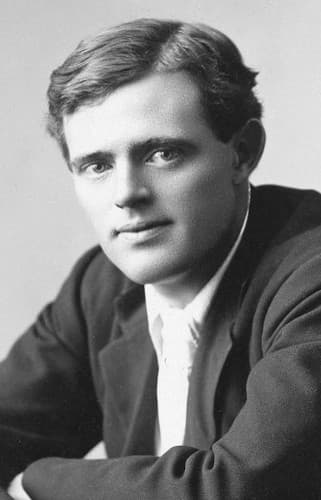
John Griffith Chaney, better known as Jack London, was an American novelist, journalist and activist. A pioneer of commercial fiction and American magazines, he was one of the first American authors to become an international celebrity and earn a large fortune from writing. He was also an innovator in the genre that would later become known as science fiction.
Similar books
- The Call of the Wild
Jack London
3.9 (341k) average on GoodreadsChildren'sExplores themes of survival and the primal struggle against nature in the Yukon.
- White Fang
Jack London
4.0 (154k) average on GoodreadsChildren'sAnother classic London tale set in the harsh wilderness, focusing on animal and human survival.
- The Old Man and the Sea
Ernest Hemingway
3.8 (831k) average on GoodreadsLiterary FictionA concise, powerful story of a lone individual's struggle against nature and their own limits.
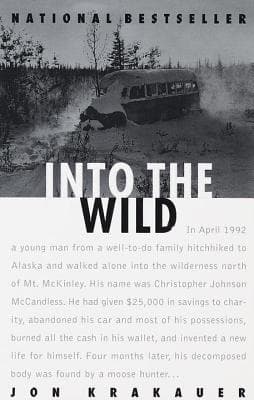
- Into the Wild
Jon Krakauer
3.7 (2k) average on GoodreadsFantasyBoth deal with individuals facing the harsh wilderness, but Krakauer's non-fiction work delves into the protagonist's complex philosophical motivations and psychological journey, exploring themes of societal rejection and individual freedom. London's 'To Build a Fire' is more singularly focused on the immediate, physiological fight for survival and the unforgiving laws of nature, with less emphasis on internal thought processes beyond the practicalities of survival.
- Nineteen Eighty-Four
George Orwell
4.2 (5.5M) average on GoodreadsFictionWinston Smith dreams of truth and rebellion in a world where Big Brother watches all, but he confronts the terrifying power of a regime that controls not just actions, but thoughts.
- The Frozen River
Ariel Lawhon
4.4 (600k) average on GoodreadsFictionIn 1789 Maine, a heroic midwife's diary helps her expose a murder and get justice in a town that wants to silence her.





Enjoyed the summary?
A summary gives you the shape of the book. The book itself has the detail, the examples and the voice.
Find To Build a Fire on AmazonAs an Amazon Associate, BookBrief earns from qualifying purchases. How we're funded