
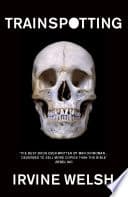
Synopsis
Covers the whole plot, including the ending.
- Difficulty
- Medium
- Pacing
- Variable
- Mood
- Gritty, Darkly Humorous, Desperate, Chaotic, Realistic
- Read it if
- You're looking for a raw, unflinching, and darkly humorous portrayal of drug addiction and subculture in 1980s Scotland, with a unique narrative voice.
- Skip it if
- You prefer conventional storytelling, are sensitive to explicit language, violence, and drug use, or dislike morally ambiguous characters.
Trainspotting Plot Summary
Covers the whole plot, including the ending.
Choosing Not to Choose: The Opening Salvo
Mark Renton, a heroin addict in Leith, Edinburgh, introduces himself and his friends: the violent Begbie, the not-so-smart but kind Spud, the womanizing Sick Boy, and Tommy, who is relatively 'clean' but later becomes an addict. Renton explains his 'Choose Life' speech, which makes fun of the ordinary choices of society and explains why he chooses addiction. The story moves between their drug-filled adventures, small crimes, and the constant need for money to buy drugs. Renton often tries to get clean, but he always goes back to drugs, showing how addiction keeps repeating and how strong his friends' bad influence is.
The Grim Reality of Addiction
The daily lives of Renton, Sick Boy, Spud, and Begbie are shown in a raw, honest way. They create different plans to get money for their heroin, from shoplifting to selling drugs, often with bad or funny results. Renton goes through a terrible withdrawal, including the famous 'Worst Toilet in Scotland' scene, where he dives into a dirty toilet to get opium suppositories. The sad facts of their lives are also shown by the death of Dawn, Sick Boy's baby daughter, because of neglect when her parents are high. This event, though very sad, does not change the group's destructive path much, showing how little they care and how self-absorbed they are.
Tommy's Downward Spiral
Tommy, who at first is the only friend who does not use heroin, becomes an addict after his girlfriend, Lizzy, breaks up with him because he loves Iggy Pop bootlegs too much. He quickly gets worse, which is different from the more experienced addicts. He struggles much more with the lifestyle, quickly becoming very thin and getting HIV from shared needles. His story is a sad contrast to Renton's more cynical view. It shows that addiction affects everyone, even those who were not involved at first. His decline is a clear warning to the others, but they mostly ignore it.
Escaping to London, Briefly
Renton moves to London, wanting a new start and a break from Edinburgh's drug scene and his bad friends. He tries to live a 'normal' life, working as a real estate agent and trying to stay clean. But his past soon catches up with him as Sick Boy, then Spud, and finally Begbie, all move to London, bringing their problems and criminal ways. Renton's attempts at a new identity are always ruined by their presence, forcing him back into old habits and conflicts. This move shows how hard it is to escape one's past and how strong, though destructive, friendships can be.
A Life of Petty Crime and Violence
In London, the friends keep living lives of small crimes, drinking, and sometimes using drugs, though Renton tries to live a more legitimate life. Begbie, especially, becomes a main part of their criminal activities, often starting violent fights and robberies. His unpredictable and extreme aggression always puts the others at risk, making Renton more and more angry and scared. Their criminal adventures range from bar fights to more serious muggings, showing the group's increasing desperation and recklessness. It also shows Begbie's dangerous power over them, fueled by his angry personality.
The HIV Crisis and Tommy's Decline
Tommy's fight with HIV becomes a main, sad part of the story. His health gets much worse, shown by increasing weakness, sickness, and eventually, his body breaking down. The friends visit him, often awkwardly, seeing his suffering directly. His illness reminds them of the bad results of their lifestyle, especially sharing needles. While some, like Renton, feel real sadness and guilt, others, like Begbie, are mostly unaffected or even mean. Tommy's death, though expected, is a sad moment, making the remaining friends face their own mortality and the terrible effects of their choices, though only for a short time.
The Big Score: A Drug Deal
After Tommy's death, the remaining friends – Renton, Sick Boy, Spud, and Begbie – get involved in a big drug deal with a lot of heroin. Mikey Forrester, a more experienced dealer, sets up this deal, and it is their chance for a big score, possibly allowing them to escape their poor lives. The tension grows as they get ready for the exchange, with each character approaching it with their own mix of greed, worry, and desperation. The deal itself is full of danger and paranoia, typical of the criminal world they live in, and it is a main point for their group activities.
The Betrayal and Escape
After the successful drug deal, the group celebrates in a hotel room. As his friends sleep, Renton, disgusted by their continued self-destruction, especially Begbie's violence and Sick Boy's cynicism, makes a clear decision. He takes all the money from the deal and quietly leaves, leaving his 'friends' behind. He at first thinks about giving Spud a share but decides against it, fearing Spud would waste it. Renton's act is a planned betrayal, a desperate attempt to cut ties with his past and truly 'choose life' on his own terms, even if it means leaving those he once called friends.
The Aftermath and New Beginning
Renton escapes to Amsterdam, thinking about what he did and the life he left behind. He knows his choice was difficult and morally unclear, but he feels free. He decides to use the money to build a new, clean life, free from heroin and the bad influence of his former friends. Meanwhile, back in London, Begbie, when he finds out about the theft, gets very angry and violent, while Sick Boy is left furious. Spud is later arrested for a small, unrelated crime, giving him a brief moment of unexpected freedom from the immediate aftermath. Renton's final thoughts are about starting a future, uncertain but his own, away from his past.
Trainspotting Characters
Mark Renton
Protagonist
Intelligent but cynical heroin addict seeking an escape from his life and friends
Mark Renton is the primary narrator and protagonist, an intelligent and articulate heroin addict from Leith, Edinburgh. He possesses a sharp wit and a cynical worldview, often providing philosophical monologues on life, addiction, and society. Despite his intelligence, he struggles profoundly with his heroin habit and the toxic influence of his friends. He frequently attempts to get clean, driven by a desire for a 'normal' life, but is constantly pulled back into the cycle of addiction and petty crime. His internal conflict between self-destruction and self-preservation is central to the narrative, culminating in his decisive betrayal of his friends.
Relationships: Sick Boy (Childhood friend, fellow addict, rival in cynicism); Spud (Childhood friend, fellow addict, often feels pity for him); Begbie (Childhood friend, deeply fears his violence and unpredictability); Tommy (Childhood friend, witnesses his tragic decline with a mix of sadness and self-preservation)
Francis Begbie
Antagonist/Supporting
Violent, volatile sociopath who rarely uses drugs but thrives on chaos
Francis 'Franco' Begbie is a terrifying and unpredictable character, known for his extreme violence and sociopathic tendencies. Unusually for the group, he rarely uses heroin, preferring alcohol and a constant state of aggression. He instigates most of the fights and criminal activities, deriving pleasure from intimidation and physical assault. Begbie functions as a terrifying anchor to the group's destructive lifestyle, a force of pure, unadulterated chaos that the others fear but are also, to some extent, drawn to. His presence makes any situation tense and dangerous, and his ultimate rage after Renton's betrayal is a major consequence.
Relationships: Renton (Childhood friend, deeply feared by Renton); Sick Boy (Childhood friend, often collaborates on schemes); Spud (Childhood friend, frequently victimizes Spud); Tommy (Childhood friend, shows little empathy for Tommy's plight)
Simon 'Sick Boy' Williamson
Supporting
Cynical, amoral womanizer and heroin addict obsessed with James Bond
Simon 'Sick Boy' Williamson is Renton's best friend and intellectual sparring partner. He shares Renton's cynicism but lacks his occasional moral compass. Sick Boy is a womanizer, a petty criminal, and a heroin addict, often devising schemes and hustles. He is obsessed with James Bond and frequently rates people based on their 'Bond villains' potential. His character is marked by a deep-seated amorality and a detached, almost academic, view of human suffering, even when it involves his own infant daughter. He is manipulative and self-serving, always looking for an angle.
Relationships: Renton (Close friend, intellectual foil, rival); Spud (Childhood friend, often exploits Spud's naivety); Begbie (Childhood friend, sometimes collaborates with Begbie's schemes); Tommy (Childhood friend, shows limited empathy for Tommy)
Daniel 'Spud' Murphy
Supporting
Dim-witted but good-hearted heroin addict, often the victim of circumstances
Daniel 'Spud' Murphy is the most naive and vulnerable member of the group. He is a heroin addict with a kind heart but very little intelligence or self-preservation instinct. Spud is frequently the butt of jokes, the victim of Begbie's violence, and often finds himself in absurd, humiliating situations due to his drug use or general incompetence. Despite his flaws, he elicits sympathy from Renton, who often feels a protective instinct towards him. Spud represents the tragic innocence lost to addiction, a character who simply drifts through life, unable to escape the gravitational pull of his friends and his habit.
Relationships: Renton (Childhood friend, Renton often feels pity and a sense of responsibility for him); Sick Boy (Childhood friend, often manipulated by Sick Boy); Begbie (Childhood friend, frequently abused by Begbie); Tommy (Childhood friend, shared sense of vulnerability)
Tommy Mackenzie
Supporting
Initially clean friend, tragically succumbs to heroin and HIV
Tommy Mackenzie is initially the most 'normal' and clean-cut member of the group, a fit football fan with a stable relationship. He serves as a stark contrast to the other characters' destructive lifestyles. His tragic descent into heroin addiction, triggered by a breakup and a moment of vulnerability, is one of the most poignant arcs in the book. He quickly contracts HIV through shared needles, and his rapid physical and mental deterioration highlights the devastating and indiscriminate nature of the drug. Tommy's story functions as a grim warning and a symbol of lost potential, deeply affecting Renton.
Relationships: Renton (Childhood friend, Renton feels guilt and sadness over his decline); Lizzy (Ex-girlfriend, their breakup precipitates his drug use); Sick Boy (Childhood friend, Sick Boy is less affected by his suffering); Spud (Childhood friend, shares a sense of marginalization)
Lizzy
Supporting
Tommy's girlfriend, who leaves him due to his obsessive hobbies
Lizzy is Tommy Mackenzie's girlfriend, initially a stable and grounding presence in his life. She eventually breaks up with him due to his obsessive hobby of collecting Iggy Pop bootlegs, which he prioritizes over their relationship. Her departure is the catalyst for Tommy's tragic descent into heroin addiction, as he struggles to cope with the loss. Lizzy represents the 'normal' life that Tommy once had and the consequences of choosing addiction or obsession over healthy relationships. Her absence underscores Tommy's isolation and vulnerability.
Relationships: Tommy (Ex-girlfriend, her leaving leads to his drug use)
June
Supporting
Renton's brief love interest during his London attempt at sobriety
June is a woman Renton meets in London while attempting to live a 'normal' life and stay clean. She works as a waitress and represents a potential connection to a healthier existence, away from his past. Renton is genuinely attracted to her and enjoys their time together, seeing her as a symbol of the future he craves. However, his past and the eventual arrival of his friends sabotage their burgeoning relationship. June serves as a brief glimpse into an alternative life for Renton, highlighting his internal conflict and the difficulty of escaping his old habits and associations.
Relationships: Renton (Brief love interest, represents a healthier alternative)
Mikey Forrester
Mentioned
Minor drug dealer who facilitates the climactic drug deal
Mikey Forrester is a more established drug dealer who orchestrates the significant heroin deal that the main characters become involved in towards the end of the book. While not a central character, he represents a more professional, if still dangerous, level of the drug trade. His involvement provides the opportunity for the large sum of money that Renton eventually steals. He is pragmatic and focused on the business, contrasting with the chaotic personal lives of Renton and his friends. He is a conduit for the plot's climax, setting the stage for Renton's final act.
Relationships: Renton (Business associate in the drug deal); Sick Boy (Business associate in the drug deal)
Dawn
Mentioned
Sick Boy's infant daughter who dies due to neglect
Dawn is Sick Boy's infant daughter, whose tragic death due to neglect while her parents are high is a grim and shocking event in the narrative. Her death underscores the devastating consequences of the characters' addiction and self-absorption. While her passing briefly affects the group, the long-term impact on their behavior is minimal, highlighting their deep-seated apathy and inability to escape their destructive cycle. Dawn's brief existence and death serve as a stark symbol of innocence lost and the collateral damage of addiction.
Relationships: Sick Boy (Daughter, neglected by him and her mother)
Trainspotting Themes
Addiction and Its Consequences
This theme explores heroin addiction not as a moral failing but as a complex social and psychological issue. The book shows the poverty, desperation, small crimes, and physical decline that come with addiction, as seen in Renton's many attempts to get clean and his relapses. Tommy's sad death from HIV is the ultimate result. The book looks at how appealing the drug is, the rituals around it, and how hard it is to escape it, even when someone wants a better life.
“Choose life. Choose a job. Choose a career. Choose a family. Choose a fucking big television, choose washing machines, cars, compact disc players and electrical tin openers. Choose good health, low cholesterol and dental insurance. Choose fixed interest mortgage payments. Choose a starter home. Choose your friends. Choose leisurewear and matching luggage. Choose a three piece suit on hire purchase in a range of fucking fabrics. Choose DIY and wondering who the fuck you are on a Sunday morning. Choose sitting on that couch watching mind-numbing and spirit-crushing game shows, stuffing fucking junk food into your mouth. Choose rotting away, pishing and shiteing yersel in a home, a total fucking embarrassment tae the selfish, fucked-up brats ye've produced. Choose life. But why would I want to do a thing like that? I chose not to choose life. I chose something else. And the reasons? There are no reasons. Who needs reasons when you've got heroin?”
Escapism and Identity
The characters, especially Renton, use heroin and their chaotic lives to escape what they see as the boring and oppressive nature of normal society. Renton's 'Choose Life' speech shows his rejection of a predefined identity, seeking a different, though destructive, path. His move to London is an attempt to create a new identity, free from his past and his friends, but it is a constant struggle to change. The book questions if real escape is possible or if a person's identity is always connected to their environment and relationships.
“Ah hate healthy people. They make me sick. The self-righteousness. The smug self-satisfaction. The belief that they have a right tae exist. They dinnae. They're parasites. They're the problem.”
Toxic Masculinity and Friendship
The relationships between the male characters are defined by a very harmful type of masculinity, shown by violence, aggression, hidden emotions, and a destructive loyalty. Begbie shows this most clearly with his random attacks and constant need to be in charge. The 'friendship' is often based on shared addiction and crime rather than real affection, making it hard for anyone to leave. Renton's final betrayal is his desperate attempt to escape this stifling, harmful dynamic, showing how destructive these bonds are.
“He's a mate. You look after your mates. That's what you do. Even if they're a fuckin' psycho.”
Social Critique and Disillusionment
The book criticizes British society, especially the working-class experience in Scotland under Thatcher. Renton's opening speech directly attacks consumerism, conformity, and the lack of real opportunities. The characters' lack of hope and their use of addiction can be seen as a response to systemic neglect and disappointment. Welsh shows a generation that feels abandoned and without hope, where the 'choice' of addiction becomes a rebellious act against a future they see as equally bleak and unfulfilling.
“We're all fucked, so we might as well get fucked up.”
Mortality and Loss
The theme of death is very clear, especially through Tommy's story. His quick decline because of HIV and eventual death forces the characters, especially Renton, to face the grim reality of their lifestyle choices. The death of Dawn, Sick Boy's baby daughter, also shows how fragile life is and the terrible effect of neglect. These losses, though very sad, often only make the characters think for a short time, showing how numb they are and how strong their destructive habits are.
“He just got slower and slower. Losing weight. Lost the plot. Lost everything. Just faded away.”
Plot Devices & Literary Techniques
Multiple Narrators / Shifting Perspectives
The story is told through various first-person accounts, offering diverse insights.
While Renton is the primary narrator, the novel employs multiple first-person perspectives, often shifting abruptly between characters like Sick Boy, Spud, and Begbie. Each character's unique voice, dialect, and internal monologue provide different angles on the same events and relationships. This device allows Welsh to explore the subjective experience of addiction and friendship, highlighting the characters' individual motivations and perceptions, and often revealing their hypocrisy or self-deception. It adds depth and complexity to the narrative, preventing a singular, biased viewpoint.
Stream of Consciousness / Interior Monologue
Characters' inner thoughts and unfiltered musings are presented directly.
The novel heavily utilizes stream of consciousness, particularly with Renton's narration. His thoughts, philosophical musings, cynical observations, and internal debates are presented in an unfiltered, often rambling, manner. This technique immerses the reader directly into the characters' minds, revealing their deep-seated neuroses, desires, and rationalizations for their destructive behavior. It gives the narrative a raw, authentic feel, mirroring the chaotic and uninhibited nature of their lives, and allowing for Renton's famous 'Choose Life' rant to be delivered with maximum impact.
Vernacular Language / Scottish Dialect
Authentic use of Scottish slang and dialect to establish setting and character.
Irvine Welsh famously writes 'Trainspotting' largely in a phonetic rendering of working-class Edinburgh Scots dialect. This distinctive language is not just a stylistic choice but a crucial plot device. It immediately immerses the reader in the specific cultural and social milieu of Leith, grounding the story in its setting. The dialect also serves to define the characters, reflecting their background, education, and social standing. It creates a sense of authenticity and rawness, making the characters' voices unique and memorable, and reinforcing their identity as distinct from mainstream British society.
Black Humor / Satire
Darkly comedic situations and cynical wit to highlight the absurdity of their lives.
Despite its grim subject matter, 'Trainspotting' is replete with black humor and biting satire. The characters often find themselves in absurd, grotesque, or darkly comedic situations, such as Renton's dive into the 'Worst Toilet in Scotland' or Spud's disastrous job interview. This humor serves a dual purpose: it makes the otherwise bleak narrative more palatable and highlights the characters' own cynical coping mechanisms. The satire, particularly Renton's 'Choose Life' monologue, critiques societal norms and exposes the hypocrisy and emptiness of both conventional life and the drug-addled alternative.
Trainspotting Quotes
“Choose life. Choose a job. Choose a career. Choose a family. Choose a fucking big television, choose washing machines, cars, compact disc players and electrical tin openers.”
“It's nae good blamin it oan the English for colonising us. Ah don't hate the English. They're just wankers. We are colonised by wankers.”
“Ah've never felt a hit as good as the first time. But ah still keep tryin tae feel it that way again.”
“The sweat wis lashing oafay Sick Boy; he wis trembling. Ah wis jist sitting thair, focusing oan the telly, tryin no tae notice the cunt. He wis bringing me doon.”
“Ah dinnae hate the English. They're just wankers. We are colonised by wankers. We can't even pick a decent, vibrant, healthy culture to be colonised by.”
“When you're on junk you have only one worry: scoring. When you're off it you are suddenly obliged to worry about all sorts of other shite.”
“People think it's all about misery and desperation and death and all that shite, which is not to be ignored, but what they forget is the pleasure of it.”
“Ah've got this terrible constipation. Ah cannae shite. Ah've goat piles fae straining.”
“The world is fucked, and the only thing that matters is getting your hole.”
“Ah don't regret the past, ah just regret that ah cannae change it.”
“We'd be better off building a big wall around Scotland and declaring ourselves a separate country.”
“The trouble with heroin is it's so moreish.”
“Ah like the feeling of being in control, even if it's just for a wee while.”
“You're an addict, so be addicted. Just be addicted to something else.”
Quiz
10 questions on the plot and the characters. Each answer comes with a short explanation.
Question 1
What is the name of the protagonist who narrates much of the novel and struggles with heroin addiction?
- Sick Boy
- Mark Renton
- Spud
- Begbie
Show answer
B. Mark Renton Mark Renton is the central character and primary narrator of 'Trainspotting'. His internal monologues and struggles with addiction form the core of the novel, and he famously delivers the 'Choose life' monologue that critiques conventional society.
Question 2
In the novel, what tragic event happens to the baby Dawn?
- She is kidnapped
- She dies of sudden infant death syndrome (SIDS)
- She is given up for adoption
- She is injured in an accident
Show answer
B. She dies of sudden infant death syndrome (SIDS) Dawn, the baby of Allison and Sick Boy, dies of sudden infant death syndrome (SIDS). This event is a pivotal and harrowing moment in the novel, highlighting the consequences of neglect and addiction in the characters' lives.
Question 3
What is the primary setting of 'Trainspotting', reflecting the urban decay and drug culture of the 1980s?
- Glasgow, Scotland
- Edinburgh, Scotland
- London, England
- Manchester, England
Show answer
B. Edinburgh, Scotland The novel is set primarily in Edinburgh, Scotland, specifically in the working-class areas like Leith. This setting is crucial for depicting the heroin epidemic and socioeconomic struggles of the time, with Welsh using local dialect to enhance authenticity.
Question 4
Which character is known for his violent and unpredictable behavior, often terrorizing the group?
- Spud
- Sick Boy
- Begbie
- Tommy
Show answer
C. Begbie Francis 'Franco' Begbie is a psychopathic character who frequently engages in brutal violence without provocation. His presence creates tension and fear among the other characters, symbolizing the destructive aspects of their environment.
Question 5
What scheme do Renton and his friends undertake in London to make money, which leads to a major betrayal?
- Selling counterfeit goods
- A drug deal involving heroin
- Robbery of a bank
- Insurance fraud
Show answer
B. A drug deal involving heroin In London, Renton, Sick Boy, Spud, and Begbie plan a heroin deal. After securing the money, Renton betrays his friends by stealing the entire sum and fleeing, which is the climax of the novel and reflects themes of selfishness and survival.
Question 6
How does the novel primarily critique conventional society, as exemplified in the 'Choose life' monologue?
- By advocating for political revolution
- By mocking consumerism and mundane routines
- By promoting religious values
- By criticizing technological advancement
Show answer
B. By mocking consumerism and mundane routines The 'Choose life' monologue sarcastically lists aspects of mainstream life—like mortgages and TV shows—as empty and oppressive. This critique underscores the novel's theme of rejecting societal norms in favor of the chaotic freedom of addiction, albeit with dire consequences.
Question 7
What happens to Tommy after he contracts HIV from sharing needles?
- He recovers and quits drugs
- He becomes an activist
- He dies from AIDS-related complications
- He moves abroad for treatment
Show answer
C. He dies from AIDS-related complications Tommy, initially a healthy and drug-free character, turns to heroin after a breakup and contracts HIV. His subsequent death from AIDS is a grim portrayal of the real-life risks of intravenous drug use during the epidemic, adding to the novel's bleak realism.
Question 8
Which character is portrayed as more intellectual and manipulative, often scheming and discussing philosophy?
- Spud
- Begbie
- Sick Boy
- Renton
Show answer
C. Sick Boy Sick Boy (Simon Williamson) is characterized by his cunning and narcissism. He frequently engages in theoretical debates and manipulates others for personal gain, representing a more calculated side of the group's dysfunction compared to the raw addiction of others.
Question 9
What literary technique is prominently used in 'Trainspotting' to reflect the characters' dialects and social backgrounds?
- Stream of consciousness
- Phonetic spelling and Scots dialect
- Rhyming verse
- Formal prose
Show answer
B. Phonetic spelling and Scots dialect Irvine Welsh writes much of the novel in phonetic spelling and Scots dialect (e.g., 'oan' for 'on', 'intae' for 'into'). This technique immerses readers in the authentic speech patterns of working-class Edinburgh, enhancing the novel's gritty realism and cultural specificity.
Question 10
In the context of the novel, what does 'trainspotting' metaphorically represent beyond its literal meaning?
- A hobby of watching trains
- The pursuit of meaningless obsessions
- A political movement
- A religious ritual
Show answer
B. The pursuit of meaningless obsessions While trainspotting literally refers to the hobby of observing trains, in the novel it serves as a metaphor for the characters' futile and addictive behaviors—particularly heroin use. It symbolizes how they fixate on destructive pursuits as a way to escape their bleak realities, much like a trivial hobby.
Trainspotting FAQ
What is 'Trainspotting' about?
'Trainspotting' follows a group of heroin addicts in the economically depressed Leith area of Edinburgh during the late 1980s, focusing on their struggles with addiction, poverty, and the search for meaning. The narrative centers on Mark Renton and his friends Sick Boy, Spud, and Begbie as they navigate crime, relationships, and attempts at sobriety. The book explores themes of alienation, consumerism, and the rejection of conventional society through their chaotic lives.
Why should I read 'Trainspotting'?
You should read 'Trainspotting' for its raw, unflinching portrayal of addiction and working-class life in Scotland, written in a distinctive Scots dialect that immerses you in the characters' world. It offers dark humor, psychological depth, and social commentary on topics like poverty, AIDS, and the emptiness of consumer culture. The novel's fragmented structure and multiple perspectives provide a visceral, challenging experience that has made it a cult classic.
What is the background/setting of 'Trainspotting'?
The book is set in the late 1980s in Leith, a deprived port district of Edinburgh, Scotland, during a period of high unemployment and social decay under Thatcherism. The setting includes grim housing schemes, pubs, and drug dens, reflecting the characters' marginalization and the bleak urban environment. This backdrop emphasizes themes of hopelessness and rebellion against societal norms.
What are the most memorable quotes?
Memorable quotes include the iconic 'Choose life' monologue that critiques consumerism, and lines like 'The world is fucked, but we're all still here' reflecting the characters' nihilism. Other notable quotes are 'Ah hate cunts like that' from Begbie, showcasing his violent temperament, and Renton's reflections on addiction such as 'It's nae good blamin it oan the junk, that's whit they want ye tae dae.'
What writing style does the author use?
Irvine Welsh uses a stream-of-consciousness style written in a thick Scots dialect, with phonetic spelling and slang that captures the characters' voices and regional identity. The narrative shifts between first-person and third-person perspectives across different characters, creating a fragmented, episodic structure. This style enhances the raw, immersive feel and highlights the chaos of addiction.
What minor details add significant meaning?
Minor details like the recurring motif of trains and trainspotting symbolize the characters' futile pursuits and transient lives, as they watch life pass by without direction. The use of brand names and consumer goods in scenes critiques materialism, such as when characters obsess over possessions they can't afford. Small acts of kindness, like Spud's loyalty, contrast with the overall brutality, adding depth to the themes of humanity.
What are some subtle foreshadowing moments?
Early scenes of Renton's failed attempts at sobriety foreshadow his eventual betrayal of his friends at the end for money. Begbie's unpredictable violence is hinted at through minor outbursts before his major confrontations. The death of Tommy from AIDS is foreshadowed by discussions of risky behavior and the broader AIDS epidemic mentioned throughout the book.
What unexpected character connections exist?
Unexpected connections include the reveal that Sick Boy and Renton share a complex, competitive friendship that masks deep-seated resentment and envy. Begbie, though not a heroin user, is intertwined with the group through his violent dominance, showing how addiction affects even those not directly using. The relationship between Spud and Renton highlights loyalty versus self-interest, with Spud often being the moral compass despite his struggles.
What are unspoken character motivations?
Renton's unspoken motivation is a desire for escape and control over his life, driving his heroin use and eventual betrayal to secure financial independence. Sick Boy is motivated by a need for superiority and manipulation, using charm to exploit others. Begbie's violence stems from deep insecurity and a need to assert power in a world where he feels powerless.
What psychological complexities do characters exhibit?
Renton exhibits complexity through his internal conflict between addiction and ambition, often rationalizing his actions with cynical humor. Sick Boy shows narcissistic traits, using intelligence and charisma to mask vulnerability and fear of failure. Begbie's psychopathic tendencies are layered with moments of loyalty, revealing a twisted sense of honor within his brutality.
What are the major emotional turning points?
Major emotional turning points include the death of baby Dawn from neglect, which forces characters to confront the consequences of their lifestyle. Renton's overdose and near-death experience lead to a pivotal attempt at rehab and sobriety. The final betrayal in London, where Renton steals the drug money and abandons his friends, marks a climax of selfishness and liberation.
How do relationship dynamics evolve?
Relationship dynamics evolve from camaraderie to distrust, as seen in Renton and Sick Boy's friendship deteriorating due to competition and betrayal. Spud remains a constant, loyal figure, but his relationships suffer from his addiction and poverty. Begbie's dominance creates tension that escalates into violence, ultimately leading to his being double-crossed by Renton.
Which parts remain ambiguous or open-ended?
The ending is ambiguous regarding whether Renton's escape to Amsterdam represents true freedom or just another cycle of addiction and isolation. The fates of characters like Spud and Sick Boy after the betrayal are left unclear, allowing readers to speculate on their futures. The moral implications of Renton's actions are open to debate, with no clear judgment on his choices.
What are controversial scenes or decisions?
Controversial scenes include the neglect and death of baby Dawn, which sparked debate about parental responsibility and societal neglect. Renton's decision to steal the drug money and betray his friends is controversial, seen as either a necessary act of self-preservation or a morally bankrupt betrayal. The graphic depictions of drug use and violence have been criticized for glorifying addiction, though others argue they serve as cautionary tales.
'Trainspotting' ending explained: how it ends & what it means
The ending sees Renton betraying his friends by stealing £16,000 from a drug deal and fleeing to Amsterdam, leaving them behind. This act symbolizes his rejection of the destructive cycle of addiction and his pursuit of a 'choose life' ethos, albeit through selfish means. It raises questions about whether his escape is a genuine rebirth or just another form of alienation, reflecting the novel's themes of individualism versus community.
About the author

Irvine Welsh is a Scottish novelist, playwright and short story writer. His 1993 novel Trainspotting was made into a film of the same name. He has also written plays and screenplays, and directed several short films.
Similar books
- A Clockwork Orange
Anthony Burgess
4.0 (601k) average on GoodreadsThrillerExplores youth subculture, violence, and social commentary with a distinct linguistic style.
- Angels & Demons
Dan Brown
3.9 (2.7M) average on GoodreadsThrillerA Harvard symbologist races through Rome's ancient sites, deciphering cryptic clues to unmask the Illuminati and stop a vengeful plot to destroy the Vatican with a stolen antimatter weapon.
- Gone Girl
Gillian Flynn
4.1 (2.3M) average on GoodreadsThrillerA wife's sudden disappearance on her fifth anniversary reveals a web of lies and psychological warfare, exposing the secrets within a seemingly perfect marriage.
- The Girl on the Train
Paula Hawkins
3.9 (2.1M) average on GoodreadsThrillerA woman’s fascination with a seemingly perfect couple she watches from her daily train commute leads her into a dark investigation when she witnesses something that shatters their idyllic image.
- The Da Vinci Code
Dan Brown
3.9 (1.9M) average on GoodreadsThrillerA symbologist and a cryptologist race through European landmarks, deciphering ancient codes and uncovering a conspiracy that could rewrite the foundations of Christianity.
- The Guest List
Lucy Foley
3.8 (1.3M) average on GoodreadsThrillerOn a remote Irish island, a glamorous wedding descends into a deadly whodunnit when a guest is found murdered, trapping everyone with their secrets as a storm rages.





Enjoyed the summary?
A summary gives you the shape of the book. The book itself has the detail, the examples and the voice.
Find Trainspotting on AmazonAs an Amazon Associate, BookBrief earns from qualifying purchases. How we're funded