

Synopsis
Covers the whole plot, including the ending.
- Difficulty
- Medium
- Pacing
- Fast
- Mood
- Suspenseful, Intense, Gritty, Action-packed
- Read it if
- You enjoy high-stakes political thrillers with a lone wolf operative against overwhelming odds and government conspiracy.
- Skip it if
- You prefer character-driven dramas over action-packed plots or dislike intense violence and political intrigue.
Transfer of Power Plot Summary
Covers the whole plot, including the ending.
The White House Under Siege
On a seemingly ordinary morning in Washington D.C., the White House is suddenly engulfed in chaos. A highly coordinated terrorist group, led by the ruthless Abu Sayed, storms the Executive Mansion. They gain entry through a meticulously planned assault, leaving dozens of Secret Service agents, staff, and tourists dead. President Alexander Sherman is quickly ushered into the Presidential Emergency Operations Center (PEOC) by his Secret Service detail, led by Mike Nash. Nearly one hundred people, including First Lady Betsy Sherman and Vice President Al Hirsch, are taken hostage. The terrorists, initially believed to want to release prisoners, quickly demonstrate a deeper agenda, demanding access to the President himself.
Rapp's Infiltration and Initial Assessment
Amidst the panic and political infighting in the Situation Room, CIA Director Thomas Stansfield and National Security Advisor Dr. Irene Kennedy decide to deploy their top counterterrorism operative, Mitch Rapp, into the besieged White House. Rapp, known for his unconventional methods, is brought in discreetly. He uses his knowledge of the building's hidden passages and his tactical expertise to infiltrate the complex, avoiding detection by the terrorists. His initial assessment reveals a sophisticated, highly trained enemy, far more organized than the government's initial intelligence suggested. He quickly identifies key terrorist positions and begins to formulate a plan, while gathering crucial intel on their numbers and weaponry.
The Hostage Crisis Escalates
As negotiations falter, Abu Sayed demonstrates his resolve by executing several hostages, including a Secret Service agent, broadcasting the brutal act to the outside world. This shocking display of violence increases the tension and puts immense pressure on President Sherman's administration. Inside the White House, Rapp observes the terrorists' meticulous control and their psychological manipulation of the remaining hostages. He witnesses the courage of individuals like First Lady Betsy Sherman, who attempts to maintain morale among the captives despite the dire circumstances. Rapp realizes the terrorists are not bluffing, and a direct assault could lead to a catastrophic loss of life, making his covert operation even more critical.
Uncovering a Deeper Conspiracy
While navigating the corridors, Rapp makes a discovery: the terrorists possess intimate knowledge of the White House's security systems and layout, far beyond what any external group could acquire. He finds evidence of internal assistance, suggesting a mole within the U.S. government. This revelation shifts the entire dynamic of the crisis, indicating that the attack is not merely a foreign terrorist operation but a sophisticated plot with domestic complicity. Rapp suspects that the terrorists' true objective extends beyond just the hostages, possibly aiming to extract President Sherman from the PEOC, and that the mole is actively working to ensure their success, sabotaging rescue efforts from within.
The Hunt for the Mole
Rapp, communicating sporadically with Stansfield and Kennedy, relays his suspicions about an inside man. This intel throws the Situation Room into disarray, as they grapple with the idea of treason at the highest levels. Rapp begins a dangerous cat-and-mouse game, not only with the terrorists but also with the unknown traitor who is actively working against him. He uses his tactical skills to gather more evidence, narrowing down the potential suspects. His efforts are hampered by the terrorists' constant movement and their increasing desperation as the government considers a military assault. Rapp knows he must act quickly to expose the mole before their machinations lead to a complete catastrophe.
A Deadly Encounter with Sayed
Rapp manages to corner Abu Sayed in a tense confrontation within the White House. During their deadly exchange, Rapp gleans crucial information about Sayed's true identity and his fanatical motivations. Sayed, a highly educated and ideologically driven individual, reveals his deep hatred for American foreign policy and his desire to destabilize the U.S. government. He also alludes to the support he receives from powerful figures who share his disillusionment. Rapp realizes Sayed is not just a mercenary but a dangerous ideologue, making the situation even more perilous. The encounter is brutal, with both men sustaining injuries, but Rapp manages to escape, gathering more intelligence on the terrorists' remaining forces and their plans.
The PEOC Compromised
Despite the Secret Service's best efforts, the terrorists, guided by the mole's information, manage to breach the PEOC's defenses. President Sherman, Vice President Hirsch, and the remaining staff are now directly threatened. Mike Nash and his agents engage in a fierce firefight, but they are outmatched by the terrorists' superior numbers and knowledge of the bunker's weak points. President Sherman is faced with an impossible choice: surrender and risk becoming a pawn in the terrorists' game, or resist and potentially sacrifice everyone in the bunker. Rapp, aware of the breach, redoubles his efforts, knowing that time is running out to save the President and prevent a national disaster.
Exposing the Traitor
Through deduction, intercepted communications, and his own observations, Rapp finally unmasks the traitor: Deputy National Security Advisor Roger Cross. Cross, disillusioned and seeking to reshape American foreign policy through extreme measures, had been feeding intelligence to Abu Sayed, believing that a crippled presidency would allow for a new order. Rapp confronts Cross in a tense standoff within the White House, forcing him to admit his treachery. The revelation sends shockwaves through the command center, as Stansfield and Kennedy grapple with the betrayal from within their own ranks, realizing the depth of the conspiracy and the danger it posed to the nation.
The Final Assault
With the mole exposed and the PEOC compromised, Rapp launches a daring, high-stakes counterattack. He rallies the remaining Secret Service agents and any available personnel, leveraging his knowledge of the White House to strike at the terrorists from unexpected angles. It becomes a brutal, close-quarters battle throughout the historic building, with Rapp leading the charge. He prioritizes saving the First Lady and Vice President, recognizing their strategic importance. The terrorists, now desperate and cornered, fight fiercely, but Rapp's relentless assault and tactical brilliance begin to turn the tide, pushing them back and creating opportunities for the hostages to escape.
Aftermath and Lingering Questions
Rapp, with the help of the surviving Secret Service, ultimately eliminates Abu Sayed and his remaining forces, securing the White House and rescuing President Sherman and the remaining hostages. The nation breathes a collective sigh of relief, but the fallout is immense. Roger Cross is apprehended, and the full extent of his treason and the conspiracy he was involved in begins to unravel. While the immediate threat is neutralized, the events of the siege expose vulnerabilities within the government and highlight the insidious nature of internal threats. Rapp, though successful, is left with the somber realization that the battle against terrorism and betrayal is far from over, leaving him with a deeper sense of vigilance and distrust.
Principal Figures
Mitch Rapp
Protagonist
The CIA's top counterterrorism operative, known for his ruthless efficiency and unconventional methods.
Mitch Rapp is a highly skilled and fiercely independent CIA operative, driven by a personal vendetta against terrorists who killed his fiancée. He is an expert in close-quarters combat, infiltration, and intelligence gathering, possessing a keen tactical mind and an unwavering resolve. Rapp operates outside conventional rules, often clashing with bureaucratic figures, but his results speak for themselves. His methods are brutal when necessary, but always focused on neutralizing threats and protecting American interests. He is haunted by his past, which fuels his dedication to his dangerous work.
Relationships: Thomas Stansfield (Mentor and handler); Dr. Irene Kennedy (Confidante and strategic partner); President Alexander Sherman (Target of protection); Abu Sayed (Arch-nemesis and primary target)
President Alexander Sherman
Supporting
The President of the United States, caught in the heart of the White House siege.
President Sherman is depicted as a pragmatic and resilient leader, thrust into an unprecedented crisis. He is deeply concerned for the safety of his staff and family, while also grappling with the immense pressure of leading the nation during a terrorist attack on its most symbolic building. He demonstrates courage under fire and struggles with the political and military decisions that could determine the fate of the hostages and the country. His character highlights the immense burden of presidential responsibility during a national emergency.
Relationships: First Lady Betsy Sherman (Wife and fellow hostage); Vice President Al Hirsch (Political ally and fellow hostage); Mitch Rapp (Reluctant savior); Roger Cross (Trusted advisor who betrays him)
Abu Sayed
Antagonist
The ruthless and ideologically driven leader of the terrorist attack on the White House.
Abu Sayed is a highly intelligent, fanatical, and meticulously organized terrorist leader. He is not merely a mercenary but a deeply ideological individual, driven by a profound hatred for American foreign policy and a desire to dismantle the U.S. government. Sayed is highly trained, charismatic, and utterly ruthless, willing to execute hostages to achieve his objectives. His backstory suggests a sophisticated education, making him a formidable and cunning adversary who understands both military tactics and psychological warfare. He represents the external threat that, unknown to many, has found internal allies.
Relationships: Mitch Rapp (Primary adversary); Roger Cross (Covert collaborator)
Dr. Irene Kennedy
Supporting
The National Security Advisor, a brilliant strategist and Rapp's primary contact.
Dr. Irene Kennedy is a sharp, intelligent, and highly capable National Security Advisor. She is one of the few individuals who truly understands Mitch Rapp and can effectively manage his unorthodox methods. Kennedy serves as Rapp's primary liaison to the Situation Room, navigating the political bureaucracy while providing Rapp with crucial intelligence and support. She is a pragmatic and decisive leader, often clashing with other officials but always prioritizing national security. Her trust in Rapp is unwavering, even when his actions are controversial.
Relationships: Mitch Rapp (Strategic partner and close confidante); Thomas Stansfield (Colleague and ally); President Alexander Sherman (Advisor)
Thomas Stansfield
Supporting
The Director of the CIA, a seasoned intelligence veteran and Rapp's mentor.
Thomas Stansfield is a veteran CIA Director, wise and experienced, who serves as Rapp's mentor and staunchest defender within the intelligence community. He understands the necessity of Rapp's extreme methods to combat terrorism effectively. Stansfield often acts as a buffer between Rapp and the political establishment, providing cover for his operations. He is a pragmatic and loyal public servant, deeply committed to national security, and is one of the few who fully grasps the gravity of the threats facing the nation. His trust in Rapp is absolute.
Relationships: Mitch Rapp (Mentor and handler); Dr. Irene Kennedy (Colleague and ally)
Roger Cross
Antagonist
The Deputy National Security Advisor and the traitor within the White House.
Roger Cross initially appears as a competent and trusted Deputy National Security Advisor. However, he is the insidious mole within the U.S. government, secretly collaborating with Abu Sayed. Cross is driven by a deep-seated disillusionment with American foreign policy and a misguided belief that a catastrophic event is necessary to force a radical change in the nation's direction. He is cunning, manipulative, and uses his position to feed critical intelligence to the terrorists, actively sabotaging rescue efforts. His betrayal highlights the danger of internal threats.
Relationships: Abu Sayed (Covert collaborator); President Alexander Sherman (Betrayed superior); Dr. Irene Kennedy (Colleague he deceives)
Mike Nash
Supporting
The lead Secret Service agent protecting President Sherman.
Mike Nash is a dedicated and highly professional Secret Service agent, responsible for the President's personal security. He is a man of integrity and courage, demonstrating unwavering loyalty to President Sherman even under the most extreme duress. Nash leads the Secret Service detail in the PEOC, fighting valiantly to protect the President and his staff against the terrorist onslaught. He represents the frontline defense, embodying the commitment and sacrifice of law enforcement during a crisis.
Relationships: President Alexander Sherman (Primary protectee); Mitch Rapp (Reluctant ally during the crisis)
First Lady Betsy Sherman
Supporting
The First Lady, taken hostage during the attack.
Betsy Sherman is depicted as a resilient and compassionate First Lady, who, despite being a hostage, bravely attempts to maintain morale and offer comfort to her fellow captives. She embodies grace under pressure and demonstrates a quiet strength in the face of extreme danger. Her capture adds a deeply personal dimension to President Sherman's predicament and serves as a powerful symbol of the terrorists' reach and brutality. Her safety becomes a key objective for both Rapp and her husband.
Relationships: President Alexander Sherman (Husband); Mitch Rapp (One of the people he aims to rescue)
Vice President Al Hirsch
Supporting
The Vice President, also taken hostage during the siege.
Vice President Al Hirsch is a significant figure in the line of succession, and his capture alongside the First Lady and other officials underscores the severity of the attack. He represents another high-value hostage, whose safety is critical to national stability. Hirsch is portrayed as a loyal and concerned member of the administration, sharing the terrifying experience of captivity with the other hostages. His presence complicates the government's response, as his life is also on the line.
Relationships: President Alexander Sherman (Political ally and fellow hostage); Mitch Rapp (One of the people he aims to rescue)
Themes & Insights
The Nature of Terrorism and Radicalism
The novel explores the evolving nature of terrorism, moving beyond simple hostage-taking to examine deeply ideological motives. Abu Sayed is portrayed not as a mere criminal, but as a highly intelligent and fanatical individual driven by a hatred for American foreign policy. The attack on the White House is a symbolic act, aimed at destabilizing the U.S. government and forcing a radical shift. This theme is evident in Sayed's detailed planning and his willingness to execute hostages, demonstrating a cold, calculated commitment to his cause rather than mere negotiation. The book suggests that countering such radicalism requires unconventional and often brutal methods, as embodied by Mitch Rapp.
“They don't want money. They want to tear down everything we stand for.”
Internal Betrayal and Trust
A central theme is the devastating impact of internal betrayal. The conspiracy reveals a mole, Roger Cross, within the U.S. government. This betrayal amplifies the danger of the external terrorist threat, as Cross provides critical intelligence that allows the terrorists to breach the White House's most secure areas, including the PEOC. The theme explores how trust, especially within the highest echelons of power, can be exploited and shattered, leading to great vulnerability. Mitch Rapp's inherent distrust of bureaucracy is validated by this discovery, highlighting the insidious nature of enemies from within. The revelation of Cross's motives—a twisted desire to reshape the nation—shows the complexity of threats.
“The greatest danger isn't always from outside. Sometimes, it's the person you least expect, sitting across the table.”
The Price of Power and Leadership
The novel explores the immense pressure and moral dilemmas faced by leaders during a crisis. President Sherman is forced to make agonizing decisions, balancing the lives of hostages, including his own family, against national security and the need to project strength. The theme highlights the isolation of leadership, as Sherman navigates conflicting advice from advisors and the terrifying reality of his own vulnerability. The political infighting and bureaucratic inertia in the Situation Room further emphasize the challenges of effective leadership under extreme duress, contrasting with Mitch Rapp's decisive, if controversial, actions. The personal toll on the President and First Lady is clear.
“Every decision I make means someone lives or dies. And sometimes, it means both.”
The Morality of Counterterrorism
This theme is embodied by Mitch Rapp, whose character constantly challenges conventional notions of morality in the fight against terrorism. Rapp operates in a grey area, employing brutal and often extra-legal methods to achieve his objectives. The novel implicitly questions whether traditional rules of engagement are effective against enemies who adhere to no such rules. His actions, though effective, are often violent and uncompromising, leading to friction with more by-the-book officials. The story suggests that in the face of extreme evil, extreme measures might be necessary, forcing readers to confront uncomfortable truths about what it takes to protect national security.
“Some fights aren't won by playing fair. They're won by being faster, smarter, and willing to do what the other guy won't.”
Plot Devices & Literary Techniques
The ticking clock
A constant sense of urgency drives the narrative.
The ticking clock is a crucial device, evident from the moment the White House is breached. The terrorists' deadlines for hostage executions, their escalating demands, and the constant threat of them reaching President Sherman's bunker create an unbearable tension. This device forces Rapp to act quickly, making his infiltration and counter-operations a race against time. It also pressures the government to make rapid decisions, often leading to mistakes or desperate measures, intensifying the drama and the feeling that every second counts.
The inside man/mole
A hidden traitor within the government aids the antagonists.
The discovery of Roger Cross as the mole is a pivotal plot device. It transforms the crisis from a purely external terrorist attack into a complex internal conspiracy, adding a layer of paranoia and distrust. The mole's actions provide the terrorists with critical intelligence, making them far more effective and dangerous than they would have been otherwise. This device raises the stakes significantly, as Rapp must not only fight the visible enemy but also uncover and neutralize the invisible one, who is actively working against his efforts.
Limited communication
Rapp's sporadic and difficult communication with command.
Rapp's limited and intermittent communication with Dr. Kennedy and Thomas Stansfield is a key device that heightens suspense and emphasizes his isolation. Operating deep within enemy territory, Rapp is often cut off, forcing him to make critical decisions independently without immediate backup or validation. This lack of real-time information flow creates dramatic tension, as the command center struggles to understand the true scope of the threat and Rapp's progress, while Rapp faces life-or-death situations with minimal external support. It underscores his self-reliance and the inherent risks of his mission.
Symbolic Setting
The White House itself as a character and symbol.
The White House serves as more than just a setting; it is a powerful symbolic character in the narrative. Its status as the heart of American power and democracy makes its violation particularly shocking and impactful. The terrorists' ability to breach it represents an attack on the very core of the nation. Rapp's intimate knowledge of its secret passages and historical significance contrasts with the terrorists' destructive presence, highlighting the struggle to reclaim and protect what the building represents. The siege transforms a symbol of stability into a battleground, amplifying the stakes.
Transfer of Power Quotes
“The price of freedom is eternal vigilance.”
“There are no rules when it comes to saving lives.”
“Terrorism isn't just about killing people; it's about breaking their will.”
“Sometimes you have to do bad things to bad people to keep good people safe.”
“The worst kind of enemy is the one you don't know you have.”
“Fear is a powerful weapon, but it can also be a powerful motivator.”
“In this business, trust is a luxury you can rarely afford.”
“When the rules fail, you make your own.”
“The line between patriot and terrorist can sometimes blur, depending on whose side you're on.”
“Every decision has a consequence, and some consequences are irreversible.”
“You can't negotiate with fanatics. You can only defeat them.”
“The greatest weapon against chaos is order, even if it's an order you have to impose yourself.”
“Power is never given; it is taken.”
“Sometimes, the hardest thing to do is nothing at all.”
Quiz
10 questions on the plot and the characters. Each answer comes with a short explanation.
Question 1
What event shatters the calm of the White House at the beginning of the story?
- A massive protest outside the gates.
- A hail of gunfire from a terrorist attack.
- A sudden power outage affecting the entire building.
- The discovery of a bomb threat in the Oval Office.
Show answer
B. A hail of gunfire from a terrorist attack. The story explicitly states, 'the stately calm of the White House is shattered in a hail of gunfire' by a group of terrorists.
Question 2
How do the terrorists initially gain access to the White House?
- They infiltrated through an underground tunnel.
- They posed as a tour group.
- By means of a violent massacre of innocent bystanders.
- They were let in by an inside accomplice.
Show answer
C. By means of a violent massacre of innocent bystanders. The synopsis mentions the terrorists 'gained access by means of a violent massacre that has left dozens of innocent bystanders murdered.'
Question 3
Who is sent into the White House to deal with the crisis?
- The head of the Secret Service.
- A high-ranking general from the Pentagon.
- Mitch Rapp, the CIA's top counterterrorism operative.
- A special FBI negotiator.
Show answer
C. Mitch Rapp, the CIA's top counterterrorism operative. Mitch Rapp is explicitly identified as 'the CIA's top counterterrorism operative' and the one sent in to break through the panicked responses.
Question 4
Where is the president evacuated to during the initial attack?
- A nearby secure government facility.
- His underground bunker within the White House.
- Air Force One, waiting on the tarmac.
- A secret location outside of Washington D.C.
Show answer
B. His underground bunker within the White House. The Secret Service evacuates the president 'to his underground bunker' during the attack.
Question 5
What is Mitch Rapp's primary objective upon entering the White House?
- To negotiate directly with the terrorist leader.
- To gather intelligence on the terrorists' demands.
- To save the hostages before the terrorists can extract the president.
- To disable the White House security systems.
Show answer
C. To save the hostages before the terrorists can extract the president. Rapp 'scrambles to save the hostages before the terrorists can extract the president from the safety of his bunker.'
Question 6
What alarming discovery does Mitch Rapp make about the president's safety?
- The bunker has been compromised by a gas leak.
- The president is not as safe as Washington's power elite had thought.
- The terrorists have a direct line of communication to the bunker.
- The Secret Service agents guarding the bunker are corrupt.
Show answer
B. The president is not as safe as Washington's power elite had thought. Rapp 'soon discovers that the president is not as safe as Washington's power elite had thought.'
Question 7
Approximately how many hostages are taken by the terrorists?
- Around fifty.
- Almost one hundred.
- Over two hundred.
- A small group of ten.
Show answer
B. Almost one hundred. The text states, 'almost one hundred hostages are taken.'
Question 8
What is the chilling discovery Rapp makes that 'could rock Washington to its core'?
- The terrorists are planning a larger attack on the Capitol.
- There's a mole within the Secret Service aiding the terrorists.
- Someone within his own government is maneuvering for his rescue attempt to fail.
- The terrorists have WMDs hidden inside the White House.
Show answer
C. Someone within his own government is maneuvering for his rescue attempt to fail. Rapp makes a 'chilling discovery that could rock Washington to its core: someone within his own government is maneuvering in hopes that his rescue attempt will fail.'
Question 9
What is the central conflict Rapp faces beyond the immediate terrorist threat?
- Lack of proper equipment for the mission.
- The terrorists' superior tactical knowledge.
- Political agendas and internal government sabotage.
- A personal vendetta by one of the terrorists against him.
Show answer
C. Political agendas and internal government sabotage. The synopsis highlights Rapp's struggle against 'the barrage of panicked responses and political agendas surrounding the chaotic crisis' and the internal government maneuvering.
Question 10
How does Rapp navigate the White House to achieve his objectives?
- He uses a detailed blueprint provided by the Secret Service.
- He moves stealthily among the corridors and secret passageways.
- He openly confronts the terrorists, creating diversions.
- He communicates with the hostages for guidance.
Show answer
B. He moves stealthily among the corridors and secret passageways. The text describes Rapp 'Moving stealthily among the corridors and secret passageways of the White House.'
Transfer of Power FAQ
What is the central premise of 'Transfer of Power'?
The book centers on a terrorist attack on the White House, where a group of heavily armed assailants takes nearly one hundred hostages and attempts to extract the President from his secure bunker. CIA operative Mitch Rapp is covertly sent in to neutralize the threat and rescue the hostages amidst political infighting and a race against time.
Who is Mitch Rapp and what is his role in the crisis?
Mitch Rapp is the CIA's top counterterrorism operative, known for his ruthless efficiency. He is the protagonist tasked with infiltrating the besieged White House, navigating its secret passages, and single-handedly combating the terrorists to save the hostages and the President.
How do the terrorists gain access to the White House?
The terrorists gain access to the Executive Mansion through a violent massacre on a busy Washington morning, overwhelming security and leaving dozens of innocent bystanders murdered. Their sophisticated planning allowed them to breach the perimeter despite the White House's formidable defenses.
What immediate actions are taken to protect the President?
Following the initial attack, the Secret Service swiftly evacuates the President to his secure underground bunker within the White House complex. This quick action ensures his immediate safety from the initial assault, though the terrorists' ultimate goal is to reach him there.
What shocking discovery does Rapp make during his mission?
Rapp uncovers a chilling conspiracy: someone within his own government is actively maneuvering in hopes that his rescue attempt will fail. This internal betrayal adds a treacherous layer to an already perilous situation, making Rapp question who he can trust.
Are the terrorists' motives purely ideological, or is there a deeper agenda?
While the initial attack appears to be a standard terrorist siege, Rapp's discovery of an internal government plot suggests a deeper, more complex agenda at play. The terrorists might be pawns in a larger scheme orchestrated by the shadowy figure within the government, making their motives intertwined with political machinations.
How does the political landscape within Washington complicate the rescue efforts?
The politicians and military leaders are shown arguing over negotiation strategies and response protocols, creating a barrage of panicked responses and political agendas. This internal disunity and bureaucratic red tape hinder decisive action and create obstacles for Rapp's covert operation.
What specific 'secret passageways' does Rapp utilize within the White House?
Rapp, with his expertise, navigates the White House's lesser-known corridors and secret passageways, which are crucial for his stealth operations. These hidden routes allow him to move undetected by the terrorists, gather intelligence, and position himself for crucial strikes, exploiting the building's historical architecture.
How does Mitch Rapp cope with the immense pressure and isolation of his mission?
Rapp thrives under pressure, using his training and singular focus to maintain control. His isolation is inherent to his role as a solo operative, relying solely on his skills and instincts, which allows him to bypass bureaucratic delays but also shoulders him with immense psychological burden.
What psychological impact does the discovery of an internal traitor have on Rapp?
The discovery of an internal traitor forces Rapp to operate with extreme paranoia and distrust, knowing that his own government might be actively working against him. This betrayal likely intensifies his sense of isolation and fuels his determination, as he now faces enemies on multiple fronts.
How does the author portray the psychological state of the hostages?
While not explicitly detailed, the narrative implies the hostages are in a state of terror and vulnerability, serving as leverage for the terrorists. Their desperate situation underscores the urgency of Rapp's mission and the high stakes involved in every decision he makes.
What does the 'transfer of power' in the title ultimately refer to?
The title 'Transfer of Power' ambiguously refers to several potential shifts: the terrorists' attempt to seize control from the President, the internal government conspiracy to usurp authority, or even Rapp's own assertion of power to unilaterally resolve the crisis outside traditional channels. It hints at a struggle for ultimate control.
Is the government official attempting to sabotage Rapp's mission motivated by personal gain or a larger ideological agenda?
The text doesn't explicitly state the saboteur's motivation, but it could be interpreted as either personal ambition to seize power, a differing ideological belief on how the country should be run, or even a misguided attempt to achieve a perceived greater good. This ambiguity adds to the mystery and moral complexity of the plot.
How does the book critique or comment on Washington's political elite?
The book critiques Washington's political elite by portraying them as indecisive, prone to infighting, and more concerned with political agendas than immediate action during a crisis. Their arguments and delays highlight a perceived bureaucratic inefficiency that Rapp, as an independent operative, must circumvent.
What ethical dilemmas does Mitch Rapp face while trying to save the hostages and the President?
Rapp likely faces ethical dilemmas regarding the use of extreme force, operating outside established protocols, and potentially sacrificing some lives to save many. His mission to save the hostages while navigating a treacherous internal conspiracy forces him to make morally ambiguous choices in a high-stakes environment.
Does the book suggest that extraordinary measures are always necessary in times of crisis?
The narrative strongly suggests that extraordinary measures, embodied by Mitch Rapp's unconventional and ruthless approach, are not only necessary but crucial when traditional governmental responses are paralyzed by politics and bureaucracy. It champions decisive, albeit brutal, action over cautious deliberation in extreme circumstances.
How does the author build suspense throughout the White House infiltration?
The author builds suspense through Rapp's stealthy movements, constantly placing him 'terrifyingly close to the enemy,' and emphasizing the 'race against time.' The confined, iconic setting of the White House, combined with the ticking clock and the unknown internal threat, ratchets up the tension with every step Rapp takes.
About the author

Vince Flynn was an American author known for his political thriller novels. His notable works include "American Assassin," "Transfer of Power," "Memorial Day," "The Third Option," "Pursuit of Honor," and "Protect and Defend," which often feature themes of espionage and counterterrorism. Flynn's writing has garnered a dedicated readership and has contributed significantly to the genre of contemporary thrillers.
Similar books
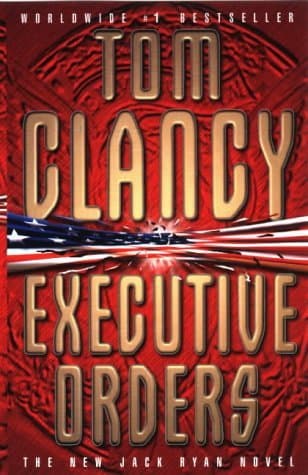
- Executive Orders
Tom Clancy
4.1 (46k) average on GoodreadsPoliticsFeatures a high-stakes government crisis and a President under immense pressure.
- Point of Impact
Stephen Hunter
4.3 (15k) average on GoodreadsThrillerFocuses on a former military sniper caught in a conspiracy, similar to Rapp's independent action.
- The Bourne Identity
Robert Ludlum
4.0 (397k) average on GoodreadsThrillerLudlum's novel introduces an iconic operative but centers on themes of amnesia and identity reconstruction. "Transfer of Power" immediately establishes Rapp's known capabilities and focuses on his mission-driven actions, with less emphasis on psychological self-discovery and more on direct conflict and conspiracy unraveling.
- Angels & Demons
Dan Brown
3.9 (2.7M) average on GoodreadsThrillerA Harvard symbologist races through Rome's ancient sites, deciphering cryptic clues to unmask the Illuminati and stop a vengeful plot to destroy the Vatican with a stolen antimatter weapon.
- Gone Girl
Gillian Flynn
4.1 (2.3M) average on GoodreadsThrillerA wife's sudden disappearance on her fifth anniversary reveals a web of lies and psychological warfare, exposing the secrets within a seemingly perfect marriage.
- The Girl on the Train
Paula Hawkins
3.9 (2.1M) average on GoodreadsThrillerA woman’s fascination with a seemingly perfect couple she watches from her daily train commute leads her into a dark investigation when she witnesses something that shatters their idyllic image.




Enjoyed the summary?
A summary gives you the shape of the book. The book itself has the detail, the examples and the voice.
Find Transfer of Power on AmazonAs an Amazon Associate, BookBrief earns from qualifying purchases. How we're funded