

Core Idea
- Difficulty
- Easy
- Read it if
- You appreciate classic travelogues, enjoy reflections on solitude and nature, or are interested in 19th-century French rural life and the art of slow travel.
- Skip it if
- You prefer fast-paced narratives, modern travel guides, or books with a strong plot-driven story rather than introspective observations.
Key Takeaways from Travels with a Donkey in the Cévennes
The Burden of Companionship
Travel with a beast of burden reveals more about the traveler than the journey.
Stevenson's journey with Modestine, his stubborn donkey, shows the unexpected challenges and insights that come from traveling with a companion, especially one with a mind of its own. He often complains about Modestine's resistance, slow speed, and general uncooperativeness. This constant friction, however, forces Stevenson to confront his own patience, planning, and expectations. The donkey, more than just transport, becomes a mirror reflecting the traveler's inner state, highlighting the often-unseen difficulties and joys of shared experience, even with an animal that cannot speak.
“For my part, I travel not to go anywhere, but to go. I travel for travel's sake. The great affair is to move; to feel the needs and hitches of life at a few points; to come down off the feather-bed of civilization, and find the globe granite underfoot and strewn with cutting flints.”
In the book: Stevenson's repeated struggles to get Modestine to move, often resorting to physical persuasion (the goad) and verbal reprimands, illustrate the constant negotiation required. His detailed descriptions of harnessing and unharnessing Modestine, and her tendency to wander off or refuse to cross streams, are prime examples.
Try this: When embarking on any collaborative project or journey, anticipate that your 'companion' (be it a person, a tool, or even a concept) will have its own quirks and resistances. Embrace these as opportunities for self-reflection and growth, rather than viewing them solely as obstacles. Learn to adapt and negotiate, rather than solely dictate.
Related ideas: travel-philosophy, companionship-challenges, self-reflection-through-adversity
The Solace of Solitude
True introspection flourishes when one is truly alone with their thoughts amidst nature.
Despite Modestine's constant presence, Stevenson often finds himself in deep solitude, especially during his nights camping under the stars. These moments are when his most poetic and philosophical thoughts appear. Away from societal distractions, he engages in deep self-reflection, thinking about human nature, the vastness of the natural world, and his place within it. Solitude allows for a direct experience of the environment, sharpening his senses and encouraging a rich internal conversation often silenced in daily life. This highlights how intentional solitude is important for mental clarity and creative thought.
“Night is a dead monotonous period under a roof; but in the open world, under the living heaven, night is now a storm, now a sob of wind, now a hush, now a new creation of man and beast.”
In the book: His vivid descriptions of sleeping out under the trees, observing the changing night sky, and listening to the sounds of the forest, such as the wind and the rustling leaves, are central to this theme. He explicitly states his preference for sleeping outdoors over inns.
Try this: Actively seek out periods of solitude, especially in natural settings. Whether it's a long walk, a weekend camping trip, or simply an hour spent in a quiet park, intentionally disconnect from digital noise and social demands to allow your mind to wander and reflect. Journaling during these times can amplify the benefits.
Related ideas: solitude-benefits, nature-connection, introspection-practices
The Spirit of Place
Landscapes are not merely backdrops, but active participants in human experience and history.
Stevenson deeply connects with the 'spirit of place,' especially the historical and cultural significance of the Cévennes region. He regularly includes historical stories, particularly about the Camisard Wars (Protestant uprisings), in his narrative. The landscape itself, with its old paths, ruined castles, and remote villages, becomes a living reminder of past struggles and lasting ways of life. He does not just pass through; he feels the weight of history in the stones and trees. This shows how understanding a place's past enriches the present experience and offers a deeper connection than just enjoying the scenery.
“The Cévennes are a land of hills and valleys, of woods and streams; a land where the old order lingers, and where men still live by the sweat of their brow.”
In the book: His detailed recounting of the Camisard persecutions and the stories of the Protestant 'prophets' he encounters or hears about. He frequently remarks on the 'old world' feel of the villages and the hardy nature of the inhabitants, directly linking them to the region's history.
Try this: When traveling or exploring a new area, go beyond tourist attractions. Research the local history, folk tales, and significant events. Seek out older residents or local historians to gain a deeper appreciation for the unique character and 'spirit' of the place. Visit historical markers and consider what events transpired there.
Related ideas: sense-of-place, historical-geography, cultural-landscape
The Kindness of Strangers
Despite perceived dangers, unexpected human connection often emerges in unfamiliar territories.
Stevenson often travels with some apprehension, especially about the Cévennes inhabitants' reputation as 'wild' or 'suspicious' due to their history of religious conflict. However, throughout his journey, he repeatedly experiences unexpected acts of kindness and hospitality. From villagers offering directions and lodging to a local priest sharing conversation and food, these interactions challenge his preconceptions and reveal the basic human desire for connection. It shows that openness and genuine engagement can often break down perceived barriers and create warmth where one might expect indifference or hostility.
“It is not the least of the pleasures of a journey that you may have a new set of acquaintances, and that you may be able to make a fresh impression on them.”
In the book: His encounters with the innkeepers, the hospitable priest who offers him dinner and conversation, the various peasants who give him directions or help with Modestine, and even the 'tramp' he shares a night with under the stars, all demonstrate this theme.
Try this: Approach new places and people with an open mind and a willingness to engage. Don't let stereotypes or initial fears prevent you from interacting. A simple smile, a polite question, or an offer of help can often lead to enriching and unexpected human connections. Trust in the inherent good will of most people.
Related ideas: hospitality-travel, overcoming-prejudice, human-connection-journey
The Art of Slow Travel
Embracing a slower pace allows for deeper observation and richer engagement with the environment.
Stevenson's journey with Modestine is, by necessity, slow. This forced slowness, however, becomes a benefit. It allows him to carefully observe the plants and animals, the subtle changes in the landscape, and the daily rhythms of village life. Unlike modern hurried travel, where destinations are simply checked off a list, Stevenson's pace encourages deeper immersion. He notices details that would otherwise be missed, hears stories he would not have time for, and truly 'lives' in the moments of his journey. This emphasizes that the quality of travel often improves as speed decreases.
“To travel hopefully is a better thing than to arrive, and the true success is to labour.”
In the book: His detailed descriptions of the various trees, flowers, and insects he encounters. His ability to stop and chat with locals, to spend extended periods observing a view, or to simply rest and reflect, all enabled by Modestine's leisurely pace.
Try this: Consciously choose to slow down on your next trip. Instead of rushing from one sight to the next, dedicate time to simply being present in a place. Walk more, take public transport, or even consider a multi-day hike. Spend an afternoon people-watching in a cafe, or truly explore a single museum instead of trying to see five. Prioritize experience over itinerary.
Related ideas: slow-travel-benefits, mindful-exploration, experiential-journey
The Illusion of Control
Nature and circumstance often dictate the journey, challenging human will and planning.
From Modestine's stubbornness to unexpected weather changes and difficult terrain, Stevenson's journey is a constant lesson in letting go of control. His carefully planned itinerary often goes wrong, forcing him to adapt, improvise, and accept the unpredictable nature of travel and life. This highlights how useless it is to stick rigidly to plans when faced with the realities of the natural world and the independent will of others (even donkeys). It is a strong reminder that resilience and flexibility are more valuable than perfect foresight, and that true adventure often means embracing the unexpected.
“The great affair is to move; to feel the needs and hitches of life at a few points; to come down off the feather-bed of civilization, and find the globe granite underfoot and strewn with cutting flints.”
In the book: His ongoing battles with Modestine's refusal to move or follow instructions, the unforeseen difficulties of navigating through dense forests in the dark, and his struggles with the heavy pack and the goad.
Try this: In any endeavor, build flexibility into your plans. Recognize that external factors will inevitably disrupt your intentions. Instead of becoming frustrated by deviations, practice adapting and problem-solving on the fly. View unexpected challenges as opportunities to develop resilience and creative solutions.
Related ideas: embracing-uncertainty, resilience-building, adaptability-mindset
Finding Beauty in the Mundane
The extraordinary is often hidden within the ordinary, if one takes the time to truly see.
Stevenson's narrative is full of beautiful descriptions of seemingly ordinary things: a specific tree, the quality of light at dawn, a simple meal shared with a stranger, the sound of a distant bell. He has a keen ability to elevate these everyday observations into moments of beauty and meaning. He does not need grand views or dramatic events to inspire him; instead, he finds richness in the subtle textures of life on the road. This teaches us that true appreciation often comes from a willingness to slow down and observe the small details that make up our existence, transforming the ordinary into the special.
“There are no foreign lands. It is the traveler only who is foreign.”
In the book: His detailed observations of the changing light, the sounds of the forest at night, the taste of his simple provisions, and the specific characteristics of individual trees or rock formations. His ability to find poetry in the routine tasks of setting up camp or dealing with Modestine.
Try this: Cultivate a practice of mindful observation in your daily life. Take a few minutes each day to truly notice something specific – the pattern of light on a wall, the taste of your coffee, the sound of birds outside your window. Keep a journal of these small observations to heighten your awareness and appreciation for the present moment.
Related ideas: mindful-observation, everyday-beauty, present-moment-awareness
The Weight of History and Belief
Religious and cultural histories shape landscapes and people in enduring ways.
The Cévennes region is deeply shaped by its history of religious conflict, especially the Camisard Wars. Stevenson often refers to this past, noting how it continues to influence the people and the land's atmosphere. He observes the lasting effects of Protestantism, the austere nature of the people, and the historical memory embedded in the landscape. This shows how deeply ingrained historical beliefs and struggles can become in a place and its inhabitants, shaping their identity and worldview across generations. It is a strong reminder that to understand a place, one must understand its past struggles and defining stories.
“For these mountains are the theatre of the Camisard war, and it is in these woods and rocks that the persecuted Protestants found a refuge.”
In the book: His detailed recounting of the persecution of the Camisards, his discussions with locals about their Protestant heritage, and his observations of the solemnity and hardiness of the Cévenol people, which he links to their religious history.
Try this: When seeking to understand a community or culture, delve into its historical narratives, especially those related to significant conflicts or belief systems. Recognize that current social dynamics and individual characteristics may be deeply rooted in past events. Engage with local stories and historical accounts to gain a more nuanced perspective.
Related ideas: historical-impact, cultural-identity, religious-heritage
The True Cost of Freedom
Independence often comes with discomfort, inconvenience, and the heavy weight of responsibility.
Stevenson actively seeks freedom and independence on his journey, choosing to travel on foot with a donkey and camp outdoors rather than rely on the comforts of inns. However, this freedom has costs. He endures physical discomfort, hunger, loneliness, and the constant struggle of managing Modestine and his provisions. This highlights a critical truth: true independence often requires significant effort, self-reliance, and a willingness to give up convenience. It is a romantic ideal tempered by the gritty reality of personal responsibility and the challenges of self-sufficiency. The 'feather-bed of civilization' offers comfort, but at the price of true adventure.
“I had made my preparations for a life of freedom and the open air, and was now embarked on the adventure.”
In the book: His descriptions of his heavy pack, the difficulties of finding suitable camping spots, the cold nights, the simple and often unsatisfying meals, and the relentless effort required to manage Modestine.
Try this: When pursuing greater independence in any aspect of life (career, lifestyle, personal projects), anticipate and prepare for the associated challenges and sacrifices. Understand that freedom often demands more effort and self-reliance, not less. Embrace the discomfort as part of the journey towards genuine autonomy.
Related ideas: personal-autonomy, self-reliance-challenges, freedom-vs-comfort
The Enduring Allure of the Journey Itself
The process of moving through the world holds more value than the arrival at any destination.
Stevenson's famous opening quote perfectly captures the book's core philosophy: the journey is the destination. His narrative is not driven by a specific goal or an urgent need to reach a particular place; it is about the act of moving, observing, and experiencing. The challenges with Modestine, the encounters with strangers, the nights spent under the stars – these are not obstacles to overcome but integral parts of the adventure. This emphasizes that deep growth and insight often happen in the process, in the 'going,' rather than solely in the 'arriving.' It is a strong argument for embracing process over outcome in all aspects of life.
“For my part, I travel not to go anywhere, but to go. I travel for travel's sake. The great affair is to move; to feel the needs and hitches of life at a few points; to come down off the feather-bed of civilization, and find the globe granite underfoot and strewn with cutting flints.”
In the book: The entire structure of the book, which is a chronological account of his daily progress and experiences, rather than a narrative building towards a climactic destination. His constant reflections on the act of walking and observing.
Try this: Shift your focus from solely achieving outcomes to appreciating and learning from the process. In work, relationships, or personal development, find joy and meaning in the daily efforts, the small steps, and the unexpected detours. Recognize that true fulfillment often lies in the journey itself, not just the final destination.
Related ideas: process-over-outcome, journey-not-destination, experiential-learning
Travels with a Donkey in the Cévennes Quotes
“For my part, I travel not to go anywhere, but to go. I travel for travel's sake. The great affair is to move.”
“I have been for some time a believer in the effect of walks upon the brain.”
“It is not the eye, but the heart, that makes the prospect.”
“The great difficulty of the life of a man who lives by himself is to eat.”
“There is no part of the world in which the traveller is more at home than among the mountains.”
“He must be a man of a very ill habit of mind who does not find himself bettered by a day among the mountains.”
“The world is so full of a number of things, I'm sure we should all be as happy as kings.”
“I was aware of a perpetual glow of pleasure, a constant, unobtrusive exhilaration.”
“A man who has been much at sea, may not be much at home on shore.”
“To be truly at home, is to be at the top of a mountain.”
“I had made my bed, and I must lie in it.”
“It is better to be a good man than a good book.”
“I looked forward with a kind of childish glee to my new experience.”
“The most beautiful thing in the world is, of course, the world itself.”
Quiz
10 questions on the main ideas. Each answer comes with a short explanation.
Question 1
What is the name of the donkey Stevenson travels with?
- Rosalind
- Modestine
- Clementine
- Josephine
Show answer
B. Modestine Stevenson's faithful, if sometimes stubborn, companion throughout his journey is named Modestine.
Question 2
What kind of animal does Stevenson choose for his travel companion?
- A horse
- A mule
- A dog
- A donkey
Show answer
D. A donkey The title of the book, 'Travels with a Donkey in the Cévennes,' explicitly states the type of animal Stevenson travels with.
Question 3
What region of France does Stevenson's journey primarily take place in?
- Provence
- Brittany
- The Cévennes
- The Loire Valley
Show answer
C. The Cévennes The title clearly indicates the geographical setting of Stevenson's travels: 'in the Cévennes'.
Question 4
What is Stevenson's primary mode of lodging during his journey through the Cévennes?
- Staying in grand hotels
- Camping outdoors, often under the stars
- Relying on the hospitality of local villagers exclusively
- Renting small cottages along the way
Show answer
B. Camping outdoors, often under the stars A significant aspect of Stevenson's adventure is his preference for sleeping outdoors, often describing his experiences under the stars.
Question 5
What historical religious conflict is frequently referenced by Stevenson during his travels through the Cévennes?
- The Hundred Years' War
- The French Revolution
- The Camisard Wars (Protestant struggles)
- The Napoleonic Wars
Show answer
C. The Camisard Wars (Protestant struggles) Stevenson often reflects on the history of the Camisards, the Protestant rebels who fought against religious persecution in the Cévennes, adding a layer of historical context to his journey.
Question 6
What specific challenge does Stevenson face regarding Modestine at the beginning of his journey?
- She refuses to carry any load.
- She is too fast and difficult to keep up with.
- Her initial reluctance to move and the difficulty in packing her.
- She frequently tries to run away.
Show answer
C. Her initial reluctance to move and the difficulty in packing her. Stevenson spends a considerable amount of time and effort at the start trying to get Modestine to move and properly pack her, highlighting her stubborn nature.
Question 7
Beyond the physical journey, what is a significant theme explored by Stevenson in the book?
- The importance of material wealth.
- The superiority of urban life over rural life.
- The joys and solitude of walking, self-reliance, and connection with nature.
- The challenges of international diplomacy.
Show answer
C. The joys and solitude of walking, self-reliance, and connection with nature. The memoir deeply delves into Stevenson's personal reflections on the simplicity of travel, the beauty of the natural world, and the introspection that solitude brings.
Question 8
How does Stevenson generally describe the local people he encounters in the Cévennes?
- Universally hostile and unwelcoming.
- Mostly indifferent to his presence.
- Initially cautious but often hospitable and kind, especially the poor.
- Overly eager to exploit travelers for money.
Show answer
C. Initially cautious but often hospitable and kind, especially the poor. While there are moments of reserve, Stevenson often finds warmth and generosity among the rural inhabitants, particularly those living in simpler conditions.
Question 9
What is the primary literary device Stevenson employs to convey his experiences and observations?
- Dramatic dialogue between multiple characters.
- Extensive use of third-person omniscient narration.
- First-person narrative, blending travelogue with philosophical reflection.
- A series of letters exchanged with a friend.
Show answer
C. First-person narrative, blending travelogue with philosophical reflection. As a memoir and travelogue, the book is written from Stevenson's personal perspective, allowing for direct insight into his thoughts, feelings, and descriptions of the landscape.
Question 10
What is Stevenson's ultimate fate for Modestine at the end of his journey?
- He sells her for a profit to a wealthy farmer.
- He releases her into the wild.
- He gives her away for a single franc to a local innkeeper.
- He takes her back home with him to Scotland.
Show answer
C. He gives her away for a single franc to a local innkeeper. At the conclusion of his travels, Stevenson sells Modestine to a local innkeeper for a very modest sum, reflecting the practical end to their companionship.
Travels with a Donkey in the Cévennes FAQ
What is 'Travels with a Donkey in the Cévennes' about?
'Travels with a Donkey in the Cévennes' is a travel memoir by Robert Louis Stevenson, chronicling his 12-day, 120-mile solo hiking trip through the Cévennes mountains in France in 1878, accompanied only by a stubborn donkey named Modestine. The book offers reflections on nature, solitude, and the human spirit.
Who was Modestine in Stevenson's travels?
Modestine was the donkey Robert Louis Stevenson purchased for his journey through the Cévennes. She is a central character in the memoir, known for her strong will and slow pace, which often tested Stevenson's patience but also provided companionship and comedic relief.
Does 'Travels with a Donkey' offer practical advice for long-distance hiking?
While the book vividly describes the challenges and experiences of a long-distance hike in the late 19th century, it is more a personal reflection and literary work than a practical guide. Readers will find insights into the mindset of a solitary traveler, rather than specific gear recommendations or trail tips.
What is the historical significance of the Cévennes region in the book?
The Cévennes region holds historical significance as a stronghold for French Protestants (Huguenots) who faced persecution, particularly during the Wars of Religion and the Camisard rebellions. Stevenson touches upon this history, adding depth to his observations of the landscape and its people.
How does 'Travels with a Donkey' differ from modern travelogues?
Unlike many modern travelogues that often focus on adventure tourism or cultural commentary, Stevenson's work is characterized by its introspective nature, detailed descriptions of the natural world, and philosophical musings. It predates the modern concept of 'tourism' and offers a more personal, contemplative journey.
Is 'Travels with a Donkey' suitable for all ages?
Yes, as a classic work of literature, 'Travels with a Donkey' is generally suitable for all ages, particularly for young adults and adults. Its themes of nature, perseverance, and self-discovery are universal, though younger readers might find the prose style of the 19th century challenging at times.
What kind of lifestyle does Stevenson portray in the book?
Stevenson portrays a minimalist, adventurous lifestyle focused on direct engagement with nature and simple living. His journey reflects a desire for solitude, self-reliance, and an escape from urban life, embracing the challenges and rewards of traveling on foot with minimal possessions.
Why is this work considered 'culturally important'?
This work is considered culturally important because it is a pioneering example of outdoor travel writing and a significant contribution to the memoir genre. It showcases Stevenson's literary skill, offers insights into 19th-century European life, and has inspired countless readers and writers interested in walking and nature.
About the author
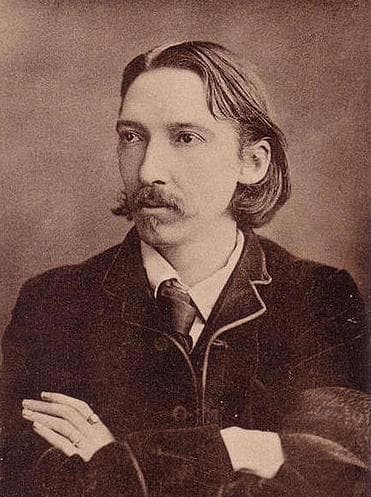
Robert Louis Stevenson was a Scottish novelist, essayist, poet and travel writer. He is best known for works such as Treasure Island, Strange Case of Dr Jekyll and Mr Hyde, Kidnapped and A Child's Garden of Verses.
Similar books
- A Walk in the Woods: Rediscovering America on the Appalachian Trail
Bill Bryson
4.1 (346k) average on GoodreadsLifestyleA humorous account of hiking a long trail, blending personal experience with historical and natural observations.
- Wild: From Lost to Found on the Pacific Crest Trail
Cheryl Strayed
4.0 (615k) average on GoodreadsLifestyleA memoir of a challenging solo journey through nature, focusing on personal transformation and resilience.
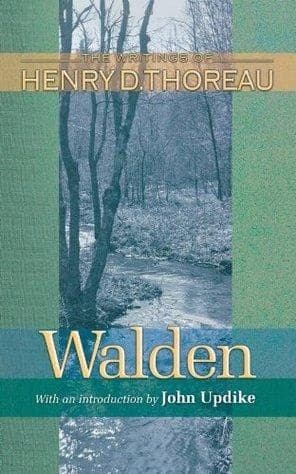
- Walden
Henry David Thoreau
3.8 (158k) average on GoodreadsBiographyA classic reflection on simple living, nature, and solitude, though less of a travelogue.
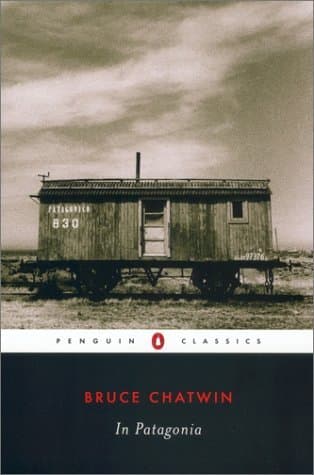
- In Patagonia
Bruce Chatwin
3.7 (13k) average on GoodreadsLifestyleChatwin's narrative is more fragmented, journalistic, and consciously blurs fact and fiction, focusing on myth and quirky characters. Stevenson offers a more linear, personal, and poetic recounting of his direct experience.
- Eat, Pray, Love
Elizabeth Gilbert
3.6 (1.5M) average on GoodreadsLifestyleA heartbroken writer leaves her conventional life for a year-long global search for pleasure in Italy, spiritual devotion in India, and unexpected love and balance in Bali.
- Into Thin Air: A Personal Account of the Mount Everest Disaster
Jon Krakauer
4.2 (395k) average on GoodreadsLifestyleOn May 10, 1996, ambition and a sudden, violent storm turned Mount Everest into a deadly trap, leaving Jon Krakauer to tell the harrowing story of a disaster that took lives and shattered climbers' dreams.




Enjoyed the summary?
A summary gives you the shape of the book. The book itself has the detail, the examples and the voice.
Find Travels with a Donkey in the Cévennes on AmazonAs an Amazon Associate, BookBrief earns from qualifying purchases. How we're funded