

Core Idea
- Difficulty
- Easy
- Read it if
- You yearn for evocative travel writing, appreciate lyrical prose, or are curious about pre-Civil War Spain through a personal lens.
- Skip it if
- You prefer plot-driven narratives, dislike descriptive writing, or seek a deep political analysis of the Spanish Civil War.
Key Takeaways from As I Walked Out One Midsummer Morning
The Allure of the Open Road
Embracing uncertainty and the freedom of transient living.
Lee's first journey from his quiet Cotswold village to London, then to Spain, is driven by a strong desire to wander and a clear rejection of normal stability. He purposely leaves behind the comforts of home and work, choosing instead a life of uncertainty and constant movement. This choice comes not from desperation but from a romantic idea of freedom — the belief that real experience lies beyond the familiar. His ability to find beauty and support in unexpected places, from playing the violin for strangers to working on building sites, shows a deep trust in the world's generosity and his own cleverness. This point highlights how much one can change by stepping into the unknown with an open heart and mind, where the trip itself becomes the goal and every meeting a lesson.
“I was a young man, and the world was my oyster, or so I believed. I had no money, no plans, and no fear, only the open road ahead.”
In the book: Lee's decision to leave his village with only his violin and a few shillings, his subsequent busking in London, and his spontaneous decision to travel to Spain with minimal preparation.
Try this: Cultivate a mindset of curiosity and adaptability. Embrace small acts of adventurousness—try a new route to work, talk to a stranger, or learn a new skill without a clear end goal. Practice resourcefulness by making do with less and finding creative solutions to everyday challenges.
Related ideas: wanderlust, nomadic-lifestyle, existential-freedom
Music as Universal Language
Connecting across cultural divides through the power of melody.
Throughout his travels, especially in Spain, Lee's violin is more than just a way to earn money; it is his main tool for talking and connecting. In a foreign country where he knows only one Spanish phrase, music crosses language barriers, opening doors to hospitality, friendship, and even moments of deep closeness. His playing brings smiles, tears, and shared humanity from people of all kinds, from villagers to soldiers. This shows the unique power of art, specifically music, to build connections and express feelings that words often miss. It highlights how shared cultural experiences can bridge big differences and create understanding in a divided world, creating a sense of belonging on an otherwise lonely journey.
“My violin was my passport, my voice, my shield against the silence of strangers. It spoke a language all understood, even if I spoke none of theirs.”
In the book: Lee's anecdotes of playing his violin in Spanish villages, receiving food and shelter in exchange for his music, and the emotional responses of his audiences who often understood little of his spoken language.
Try this: Engage with art forms that transcend language—music, dance, visual art—to connect with diverse communities. Learn a few simple phrases in a new language, but also seek out non-verbal ways to communicate and build rapport. Attend local cultural events to foster a sense of shared experience.
Related ideas: cultural-exchange, non-verbal-communication, art-as-connection
The Beauty of Pre-War Spain
A romanticized yet poignant glimpse into a country on the brink.
Lee's memoir paints a clear, almost dreamlike picture of Spain in 1934, just before the start of its terrible Civil War. He captures the country's raw beauty: its stark landscapes, lively festivals, old traditions, and the deep hospitality of its people. His descriptions are filled with a sense of nostalgia, as if he is saving a world he knows is about to be broken. This beauty is often set against subtle, yet increasingly threatening, signs of political unrest — a tension that adds a sad layer to his observations. This point emphasizes how important it is to see and record cultures and places, especially those about to undergo big historical changes, keeping their essence before it is permanently altered.
“Spain, in those days, was a country still sleeping, still dreaming, a land of ancient rhythms and sun-baked dust, unaware of the storm gathering on its horizon.”
In the book: Lee's lyrical descriptions of Spanish villages, the customs of their inhabitants, the natural beauty of the land, and the growing undercurrents of political tension he observes in conversations and public displays.
Try this: Seek out opportunities to experience cultures and places before they become overly commercialized or drastically altered by global forces. Engage with local history and traditions to understand the context of a place. Practice mindful observation, documenting your experiences through writing, photography, or sketching.
Related ideas: historical-memory, cultural-preservation, pre-war-era
Poverty and Dignity
Finding grace and resilience amidst material scarcity.
Lee often sees extreme poverty during his travels, both in London and especially in rural Spain. However, his story consistently shows the remarkable dignity, generosity, and strength of the people he meets. Despite their own difficulties, they often share what little they have with a stranger, offering food, shelter, and company without expecting anything in return. This challenges common ideas of wealth and poverty, suggesting that true richness is not in things but in human connection, community, and an unbreakable spirit. It is a strong reminder that hardship can often bring out the best in people, encouraging empathy and mutual support instead of despair.
“Though they had little, they gave everything. Their poverty was not a source of shame, but a shared condition that bound them together with an unbreakable dignity.”
In the book: Numerous instances where Lee, penniless and hungry, is taken in by Spanish families, fed, and housed, often in very humble circumstances, simply for playing his violin or sharing a moment of human connection.
Try this: Challenge your own assumptions about wealth and happiness. Seek opportunities to connect with people from different socioeconomic backgrounds, offering help or simply listening. Practice gratitude for what you have and consider ways to give back, even in small ways, to those with less.
Related ideas: resilience, humanitarianism, social-empathy
Sensory Immersion
Experiencing the world with heightened awareness and vivid detail.
Lee's writing uses rich, vivid sensory details. He does not just say what he sees; he makes the reader feel the smells of dust and cooking oil, taste cheap wine and fresh bread, hear church bells and distant talks, and feel the sun on his skin or a hard stone bed. This heightened sensory awareness comes partly from his traveling life, where every experience is new and immediate, not dulled by routine. It teaches us the value of truly being present in our surroundings, using all our senses to fully take in and enjoy the world. This deep immersion lifts his memoir from a simple story to a poetic look at lived experience.
“Every smell, every taste, every sound was amplified, as if my senses, stripped of familiar comforts, had sharpened to an almost painful degree.”
In the book: Lee's detailed descriptions of the specific aromas of Spanish markets, the texture of the food he eats, the particular sounds of different villages, and the tactile sensations of his surroundings.
Try this: Practice mindful observation in your daily life. Take a 'sensory walk' where you consciously focus on what you see, hear, smell, taste, and touch. Keep a journal to record these sensory details, training yourself to notice the nuances of your environment.
Related ideas: mindfulness, sensory-experience, descriptive-writing
The Disillusionment of Idealism
Confronting the harsh realities beneath romanticized notions of escape.
While Lee's first journey is fueled by youthful dreams and a romantic idea of adventure, his experiences slowly show him the harsher realities of the world. The beautiful landscapes and generous people are increasingly overshadowed by the poverty, political tensions, and social inequalities he sees. His innocent travels take on a more serious tone as he becomes aware of the coming civil war, a conflict that will tear apart the society he has grown to love. This point suggests that while idealism can be a strong driver, real understanding comes from facing and accepting the complexities and contradictions of reality, rather than just holding onto an ideal vision. It is a process of growing up, where the traveler's eyes open to the full range of human experience.
“The dream of Spain had been one thing; the reality, another. The beauty was undeniable, but so was the bitterness, the poverty, and the growing shadow of conflict.”
In the book: Lee's growing awareness of political factions, the presence of soldiers, and the increasingly tense atmosphere in Spanish towns, contrasting sharply with his initial, purely aesthetic appreciation of the country.
Try this: Approach new experiences with an open mind, ready to challenge your preconceived notions. Engage with diverse perspectives, even those that contradict your own, to develop a more nuanced understanding of complex issues. Be willing to adjust your ideals in the face of reality, learning from both the beautiful and the difficult aspects of life.
Related ideas: post-idealism, political-awakening, reality-check
The Power of Observation
Learning from the world by simply watching and listening.
As a mostly solo traveler and an outsider, Lee often acts as a keen observer. With limited language skills, he relies heavily on watching interactions, reading body language, and listening to the rhythms of daily life. This quiet but deeply involved way of learning allows him to absorb the subtleties of Spanish culture in a way that active participation might not. He becomes like a sponge, soaking up the atmosphere, customs, and unspoken truths of the places he visits. This emphasizes the great value of slowing down, stepping back, and simply watching the world without immediate judgment or the need to interfere. It highlights how much can be understood and appreciated by having a quiet, open presence.
“I was a spectator, a silent witness, absorbing the world through my eyes and ears, allowing it to imprint itself upon me without judgment.”
In the book: Lee's detailed descriptions of people's habits, social customs, the architecture of villages, and the natural environment, often gleaned from simply sitting and watching, or walking through towns.
Try this: Dedicate time each day to quiet observation—in a park, a café, or even your own home. Practice 'active listening' in conversations, focusing on understanding rather than formulating a response. Keep a 'observation journal' to record details you notice, fostering a habit of mindful awareness.
Related ideas: mindful-observation, ethnography, passive-learning
Youthful Naiveté and Resilience
Navigating hardship with an unshakeable spirit and limited foresight.
Lee's journey shows a striking mix of youthful innocence and strong resilience. He starts big adventures with little planning, often finding himself in risky situations with no money, no connections, and little understanding of the local language or customs. Yet, again and again, he manages to get out of trouble, using his wits, his music, and the kindness of strangers. This is not always through careful planning but often through sheer courage and an almost innocent belief that things will work out. This point celebrates the unique strength of youth — the bravery to face the unknown without too much caution, and the natural ability to adapt and survive even when unprepared. It reminds us that sometimes, not planning ahead can be a good thing, forcing creative problem-solving and building an unshakeable spirit.
“I had no idea what I was doing, but I knew I had to do it. And somehow, despite all odds, I always managed to land on my feet.”
In the book: Lee's frequent accounts of running out of money, sleeping rough, getting lost, and yet always finding a way forward, often through serendipitous encounters or his own improvisational skills with the violin.
Try this: Embrace small challenges that push you slightly outside your comfort zone, trusting in your ability to adapt. Allow yourself to be spontaneous occasionally, even if it means a slight deviation from a planned course. Reflect on past challenges and recognize your own capacity for resilience.
Related ideas: grit, optimism, spontaneity
The Solace of Nature
Finding peace and perspective in the untamed wilderness.
Among the human interactions and growing political tension, Lee often goes to nature for comfort and thought. His descriptions of the Spanish landscapes — the mountains, valleys, rivers, and fields — are very personal and show deep respect. Nature provides a steady, grounding presence, a sharp contrast to the changing fortunes of human society. It is in these lonely moments, surrounded by the wild beauty of the land, that Lee often finds clarity, peace, and a renewed sense of purpose. This point stresses how important it is to connect with nature, not just for its beauty, but as a source of mental and emotional renewal, offering perspective amid life's complexities and a quiet refuge from its demands.
“When the towns became too much, or the people too demanding, I would seek the quiet comfort of the hills, where the earth itself seemed to breathe a silent wisdom.”
In the book: Lee's detailed descriptions of walking through the Spanish countryside, sleeping under the stars, and finding moments of profound peace and contemplation away from human settlements.
Try this: Integrate more time in nature into your routine, whether it's a walk in a local park or a hike in the mountains. Practice 'forest bathing' or simply sitting quietly in a natural setting. Pay attention to the subtle changes in seasons and the rhythms of the natural world.
Related ideas: nature-therapy, contemplation, wilderness-connection
Memory's Luminous Filter
The way time refines and enriches past experiences.
Lee writes this memoir three decades after his journey, and this time gap greatly shapes his story. His memories are not just factual accounts but are filtered through memory, given a lyrical quality and a deep sense of nostalgia. The passing of time allows him to get to the core of his experiences, highlighting the most vivid moments and giving them a poetic feel. This point explores how memory works not as a perfect record, but like an artist, choosing, refining, and often beautifying the past. It suggests that our understanding and enjoyment of events can deepen and change over time, offering a richer, more profound view than immediate recall might allow. The book itself shows how memory can powerfully shape stories and meaning.
“Thirty years later, the dust has settled, but the colors remain, perhaps even more vibrant, burnished by the passage of time.”
In the book: The entire book is written from a retrospective viewpoint, explicitly stated by Lee. His prose is highly poetic and reflective, often referencing the 'then' versus the 'now' of his understanding.
Try this: Engage in reflective practices like journaling or storytelling to revisit past experiences. Consider how your perspective on significant life events has changed over time. Appreciate the subjective nature of memory and its role in shaping your personal narrative.
Related ideas: retrospection, autobiographical-memory, narrative-construction
As I Walked Out One Midsummer Morning Quotes
“I was a boy of nineteen, with a good deal of hair and not much sense, and I was going to London.”
“I had a fiddle, a haversack, and a few shillings, and that was all.”
“The world was suddenly rich with strangers, and I was one of them.”
“I was always a country boy, and the city, for all its excitements, was always a little alien to me.”
“To be young, poor, and in love, and in London, was a condition of almost unbearable joy.”
“I had left home with nothing but a fiddle and a few shillings, and I was going to Spain.”
“Spain in those days was still a country of shadows, of ancient customs and a fierce, untamed beauty.”
“I played my fiddle in the squares and cafés, and people gave me food and money, and sometimes a bed for the night.”
“The Spanish sun was a constant, blinding presence, a benediction and a curse.”
“I learned to live by my wits, to trust in luck, and to accept the kindness of strangers.”
“The war, when it came, was like a sudden, brutal awakening, a shattering of the dream.”
“I had walked out one midsummer morning, a boy with a fiddle, and I was returning a man, with a rifle.”
“There was a smell of dust and blood and fear, and the distant rumble of guns.”
“Life had a sudden, terrible clarity, a sharpness that cut through all illusions.”
Quiz
10 questions on the main ideas. Each answer comes with a short explanation.
Question 1
What was Laurie Lee's primary mode of transport when he first left his home in the Cotswolds for London?
- He took a train.
- He hitchhiked.
- He walked.
- He cycled.
Show answer
C. He walked. The book begins with Laurie Lee walking out of his village 'one midsummer morning' to London, carrying only his violin and a few possessions.
Question 2
What musical instrument did Laurie Lee play to earn money during his travels?
- Guitar
- Flute
- Violin
- Harmonica
Show answer
C. Violin Laurie Lee consistently used his violin to busk and earn money, both in London and especially during his travels through Spain.
Question 3
What was the single Spanish phrase Laurie Lee knew before embarking on his journey to Spain?
- Dónde está la estación?
- Tiene usted fuego?
- Cuánto cuesta?
- Hola, cómo estás?
Show answer
B. Tiene usted fuego? Lee explicitly states that the only Spanish phrase he knew was 'Tiene usted fuego?' (Do you have a light?), which he used to initiate conversations and ask for help.
Question 4
Which historical event was visibly approaching in Spain during Laurie Lee's travels there in 1934?
- The Spanish-American War
- The end of the monarchy
- The Spanish Civil War
- The Reconquista
Show answer
C. The Spanish Civil War The memoir vividly describes the growing political tensions and divisions that foreshadowed the outbreak of the Spanish Civil War in 1936.
Question 5
Upon arriving in London, what kind of manual labor did Laurie Lee undertake to support himself?
- Dock work
- Factory work
- Building site labor
- Coal mining
Show answer
C. Building site labor The book mentions Laurie Lee working 'on a London building site' as one of his means of survival before heading to Spain.
Question 6
What is a prominent theme explored through Laurie Lee's observations of Spanish society?
- The rapid industrialization of rural areas.
- The stark contrast between traditional rural life and emerging political ideologies.
- The widespread embrace of modern entertainment.
- The decline of religious influence.
Show answer
B. The stark contrast between traditional rural life and emerging political ideologies. Lee's narrative frequently highlights the clash between the ancient, deeply rooted traditions of rural Spain and the burgeoning, often violent, political movements of the mid-1930s.
Question 7
How did Laurie Lee primarily sustain himself while tramping through Spain?
- He had a substantial inheritance.
- He worked as a farmhand for room and board.
- He played his violin for money and accepted hospitality from strangers.
- He received regular remittances from his family.
Show answer
C. He played his violin for money and accepted hospitality from strangers. Lee's survival in Spain was largely dependent on his ability to earn small sums by playing his violin in villages and the generosity of the Spanish people who offered him food and shelter.
Question 8
The memoir's title, 'As I Walked Out One Midsummer Morning,' refers to what specific event?
- His departure from London to Spain.
- His first day working on a London building site.
- His initial journey leaving his Cotswold home for London.
- His return to England after the Spanish Civil War.
Show answer
C. His initial journey leaving his Cotswold home for London. The opening lines of the book describe his youthful departure from his village, setting the stage for his adventures.
Question 9
What literary characteristic is most notable in Laurie Lee's depiction of Spain?
- A detached, journalistic objectivity.
- A focus on economic and political analysis.
- Lyrical prose and a vivid, sensory evocation of place and people.
- Primarily dialogue-driven narrative.
Show answer
C. Lyrical prose and a vivid, sensory evocation of place and people. The book is celebrated for its poetic language, rich descriptions, and the way Lee captures the atmosphere and sensory details of Spain through a 'young man's vision.'
Question 10
How long did Laurie Lee's initial stay in Spain last before he was compelled to leave?
- A few months
- Approximately one year
- Two years
- He never truly left Spain, returning later for the war.
Show answer
B. Approximately one year The summary states he 'tramped through a country' for 'a year' before the escalating tensions of the impending civil war made his return to England necessary.
As I Walked Out One Midsummer Morning FAQ
What is 'As I Walked Out One Midsummer Morning' about?
The book is a memoir by Laurie Lee, chronicling his journey in 1934 from the English Cotswolds to London, where he worked as a musician and labourer. It then follows his spontaneous decision to travel to Spain, where he tramped across the country just before the outbreak of the Spanish Civil War.
Does Laurie Lee play the violin throughout his travels?
Yes, playing his violin is a significant part of Laurie Lee's early experiences in the book. He uses his musical talent to earn money and connect with people, particularly during his time living in London and as he begins his journey through Spain.
What is the historical context of Spain in the book?
'As I Walked Out One Midsummer Morning' captures Spain in 1934, a period rife with political tension and social unrest. Lee's travels vividly portray the impending sense of doom and the stark divisions that would soon erupt into the Spanish Civil War.
How does this memoir differ from other travelogues of the period?
Unlike many objective travelogues, Lee's memoir is deeply personal and lyrical, focusing on sensory experiences and emotional responses rather than purely factual reporting. It blends youthful idealism with a keen observation of a country on the brink of profound change, viewed through the lens of a poet.
Is 'As I Walked Out One Midsummer Morning' a true story?
Yes, it is a non-fiction memoir based on Laurie Lee's actual experiences. While memoirs often involve selective memory and artistic license, the core events and journeys described in the book are drawn from his life in the 1930s.
What kind of lifestyle does Laurie Lee portray in the book?
Lee portrays a life of youthful wanderlust, poverty, and self-reliance. He lives by his wits, often sleeping rough and relying on the kindness of strangers, embodying a free-spirited, bohemian existence as he explores new places and cultures.
How does Laurie Lee manage to travel through Spain with only one Spanish phrase?
Lee's ability to navigate Spain with minimal language skills highlights his resourcefulness and the universal language of music and human connection. He often relies on gestures, observation, and the occasional helpful local, demonstrating a remarkable resilience and openness to new experiences.
What are the main themes explored in the book?
Key themes include the innocence and idealism of youth, the beauty and harshness of the natural world, the political turmoil leading up to the Spanish Civil War, the resilience of the human spirit, and the transformative power of travel and experience.
About the author
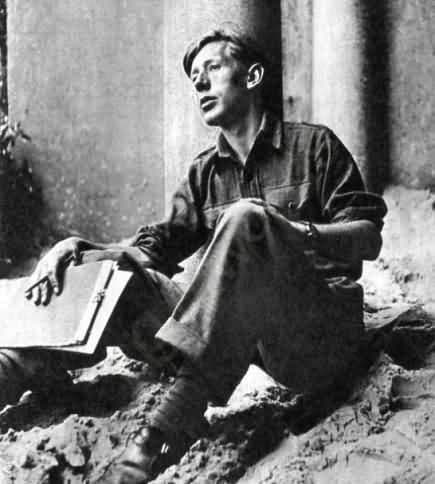
Laurence Edward Alan Lee, was an English poet, novelist and screenwriter, who was brought up in the small village of Slad in Gloucestershire.
Similar books
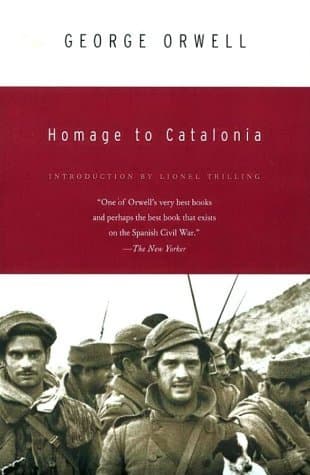
- Homage to Catalonia
George Orwell
4.1 (43k) average on GoodreadsPoliticsWhile more overtly political, it offers another firsthand account of Spain during a similar turbulent period, though from a different perspective.
- Eat, Pray, Love
Elizabeth Gilbert
3.6 (1.5M) average on GoodreadsLifestyleA heartbroken writer leaves her conventional life for a year-long global search for pleasure in Italy, spiritual devotion in India, and unexpected love and balance in Bali.
- Wild: From Lost to Found on the Pacific Crest Trail
Cheryl Strayed
4.0 (615k) average on GoodreadsLifestyleAfter losing her mother and her marriage, a young woman impulsively hikes over a thousand miles of the Pacific Crest Trail alone, finding strength and healing in the unforgiving wilderness.
- Into Thin Air: A Personal Account of the Mount Everest Disaster
Jon Krakauer
4.2 (395k) average on GoodreadsLifestyleOn May 10, 1996, ambition and a sudden, violent storm turned Mount Everest into a deadly trap, leaving Jon Krakauer to tell the harrowing story of a disaster that took lives and shattered climbers' dreams.
- On The Road
Jack Kerouac
3.6 (349k) average on GoodreadsLifestyleDean Moriarty and Sal Paradise go on a wild, cross-country trip with jazz, drugs, and a desperate search for meaning on America's post-war roads.
- A Walk in the Woods: Rediscovering America on the Appalachian Trail
Bill Bryson
4.1 (346k) average on GoodreadsLifestyleBill Bryson humorously describes his ill-prepared yet insightful attempt to hike the Appalachian Trail, meeting unique characters and the raw beauty of the wilderness.





Enjoyed the summary?
A summary gives you the shape of the book. The book itself has the detail, the examples and the voice.
Find As I Walked Out One Midsummer Morning on AmazonAs an Amazon Associate, BookBrief earns from qualifying purchases. How we're funded