

Synopsis
Covers the whole plot, including the ending.
- Difficulty
- Medium
- Pacing
- Moderate
- Mood
- Atmospheric, Unsettling, Disturbing, Philosophical, Melancholy
- Read it if
- You enjoy unsettling, thought-provoking science fiction with a dark, philosophical edge and a unique premise that challenges perceptions of humanity and morality.
- Skip it if
- You prefer fast-paced thrillers with clear-cut heroes and villains, or are sensitive to themes of body horror and exploitation.
Under the Skin Plot Summary
Covers the whole plot, including the ending.
The Routine of the Road
Isserley, a young woman with dark eyes and a strange walk, drives her old Toyota Corolla through the empty roads of the Scottish Highlands. Her routine involves looking for single male hitchhikers, specifically strong, muscular men. She carefully assesses them, talking casually to find out if they are married, have children, or if anyone would quickly notice their absence. Her thoughts, revealed to the reader, often show discomfort with her human disguise and a constant desire for her true form and home world. The process is a hunt, a planned selection of prey for a hidden purpose, and she is both the hunter and a reluctant part of this task.
The First Catch: A Vulnerable Victim
One day, Isserley sees a young, seemingly innocent man, barely out of his teens, hitchhiking. He is well-built, meeting her requirements, but his youth and apparent inexperience make him an easy target. She picks him up, offering a ride, and asks her usual questions. The boy, wanting company, readily shares details about his life, confirming he is unattached and unlikely to be missed soon. Isserley notices his strong body and somewhat simple nature. Despite her detached professional approach, a hint of pity, or perhaps just a practical assessment of his weakness, crosses her mind. He fits the profile, and she guides the conversation toward their destination, subtly leading him to the trap.
The Journey to the Facility
As it gets dark, Isserley drives the unsuspecting hitchhiker deeper into the remote, forested areas of the Highlands. The journey is long and sometimes quiet, broken by Isserley's thoughts about how inefficient her human body is and how unpleasant her task is. The young man, tired and trusting, eventually falls asleep. Isserley feels a growing urgency and a familiar disgust toward what she is about to do. She drives on increasingly secluded tracks until they reach a hidden, heavily secured facility. The outside looks plain, blending into the wilderness, but its real purpose is sinister. She prepares for the next step, her mind set on the procedure awaiting her passenger.
The 'Treatment' Begins
When they arrive at the facility, Isserley and other aliens, also in disguise, lead the hitchhiker inside. He is at first confused but quickly becomes alarmed as he is stripped and prepared for a 'treatment.' The facility is sterile and cold, with strange machines and the quiet, unsettling sounds of other 'patients.' The young man is put in a confined space, a 'pit,' where he is covered in a liquid. His struggles and cries for help are useless as the process begins. Isserley watches from a distance, her usual detachment wavering slightly as she sees his terror. This is her mission: to deliver human males for this transformation, a process to harvest their flesh.
Isserley's Internal Conflict and Her Past
Between hunts, Isserley returns to her simple living quarters inside the facility. She dislikes her human form, finding it awkward and foreign. Flashbacks reveal her true form as an alien creature, sleek and suited to her home planet's environment, and the accident that disfigured her and led to her assignment on Earth. She was once a beautiful and valued member of her species, but an accident left her severely injured, requiring a crude human-like reconstruction to survive on Earth. Her mission is a type of exile and punishment, a way to help her species survive by getting meat. She longs for the day she can return home, hoping her service will earn her a reprieve and a proper reconstruction.
A Near Miss and a Glimpse of Humanity
During one of her drives, Isserley sees an elderly woman hitchhiking. This is different from her usual targets of young, muscular men. The woman looks kind and fragile. For a moment, Isserley thinks about picking her up, a hint of human empathy or perhaps just curiosity stirring in her. However, her programming and mission rules quickly take over. The woman would be useless for her main purpose. Isserley drives past, leaving the woman stranded, but the encounter leaves her feeling unusually unsettled, a small crack in her emotional armor, showing the conflict between her alien nature and the human form she inhabits.
The Supervisor's Visit and Pressure
Amlis Vess, Isserley's supervisor and a higher-ranking alien, visits the facility. He is also in a human disguise, though better kept than Isserley's. Vess is efficient and constantly stresses the need for more 'product' to support their dying home world. He dismisses Isserley's complaints about her human body and the difficulties of her task, reminding her of her disfigurement and her debt to their species. Vess's presence makes Isserley anxious; he represents the ruthless practicality of their alien society and the constant pressure to succeed in her mission, no matter the ethics or personal cost.
A Growing Discomfort with the Hunt
As time passes, Isserley finds her task harder. Luring and capturing human males, once a detached necessity, now fills her with growing disgust. She often feels sick and deeply repulsed by the process and her part in it. Her human senses, which she first found dull, seem to be getting stronger, making the smells and sights of the facility more unbearable. She starts to question the morality of their operation, a concept foreign to her species but one that her human disguise seems to be putting into her mind, blurring the lines between her alien identity and the humanity she copies.
The Runaway Hitchhiker
Isserley picks up another hitchhiker, a strong, smart man who turns out to be more clever than her usual targets. As they near the facility, he senses something is wrong and tries to escape from the car. This makes Isserley abandon her usual passive role and engage in a physical struggle. She manages to subdue him, using her alien strength despite her human form, but the incident is deeply unsettling. It shows the danger of her work and the constant need for alertness. The man's desperate fight for survival leaves a lasting impression on Isserley, further eroding her emotional defenses and adding to her inner turmoil.
The Accident and Isserley's Transformation
During a time of intense self-doubt and increased nausea, Isserley gets into a serious car accident. Her vehicle goes off the road, crashing violently. The impact badly damages her human disguise, tearing away layers of synthetic skin and showing glimpses of her true, alien form underneath. She is severely injured, and the pain is immense, unlike anything she has felt in her human body. The accident is a turning point, stripping away her facade and making her face her true identity and the fragility of her borrowed form. She is now exposed, vulnerable, and facing the end of her mission and perhaps her life.
The Hunted Becomes the Hunted
After the crash, Isserley is stranded and badly injured in the remote Scottish wilderness. Her human disguise is failing, and she struggles to move, the pain excruciating. She is no longer the hunter but the hunted, vulnerable to the weather and any passing humans. Her thoughts become more desperate, a primal fight for survival overriding her previous philosophical ideas. She tries to call for help from her fellow aliens, but her communications are unclear or ignored. Alone and exposed, Isserley feels the terror and helplessness her victims must have felt, a cruel role reversal that makes her fully understand the cost of her actions.
The Finality
As days pass, Isserley's condition worsens. Her injuries are too severe, and the cold, harsh Scottish Highlands are unforgiving. She slowly dies from her wounds, exposure, and starvation. Her thoughts, once filled with longing for her home world and a return to her true form, become fragmented and focus on the immediate, agonizing reality of her death. There is no rescue, no relief. Her mission ends not with a triumphant return, but with a desolate, lonely death in a foreign land, her alien body decaying within its human shell, a tragic end for a creature caught between two worlds.
Under the Skin Characters
Isserley
Protagonist
An alien operative in a human disguise, tasked with harvesting humans for meat.
Isserley is the central character, an alien from a dying planet disguised as a young woman. She is assigned to Earth to procure human males, known as 'voddiss', for consumption back home. Internally, she is constantly uncomfortable in her human form, which she finds cumbersome and ugly, preferring her true, sleek alien body. She is intelligent, observant, and initially detached from her gruesome task, viewing humans as mere resources. However, as the story progresses, her human disguise begins to influence her, leading to increasing nausea, revulsion, and a growing, albeit reluctant, sense of empathy and moral questioning. She is driven by a desire to return to her homeworld and regain her original, unblemished body.
Relationships: Amlis Vess (subordinate to supervisor, fraught with tension and fear); Voddiss (hitchhikers) (predator to prey, later evolving into a complex, conflicted relationship)
Amlis Vess
Antagonist/Supporting
Isserley's supervisor, a ruthless and pragmatic alien focused on resource acquisition.
Amlis Vess is Isserley's direct supervisor, another alien in a more refined human disguise. He embodies the cold, utilitarian logic of their species, prioritizing the survival of their homeworld above all else. Vess is demanding, dismissive of Isserley's discomfort, and constantly pressures her to increase her efficiency in procuring 'voddiss'. He reminds Isserley of her disfigurement and her debt, using it as leverage to ensure her compliance. He represents the unfeeling, exploitative nature of their mission and the harsh hierarchy within their alien society. His presence reinforces Isserley's sense of entrapment and the futility of her moral qualms.
Relationships: Isserley (supervisor to subordinate, authoritative and unsympathetic)
The Young Hitchhiker
Mentioned
Isserley's first detailed victim, representing the innocence and vulnerability of her prey.
This unnamed young man is one of Isserley's early and most detailed victims. He is portrayed as naive, trusting, and physically strong, making him an ideal 'voddiss'. His willingness to share personal details with Isserley highlights his innocence and lack of suspicion. His subsequent terror and struggle within the facility serve to emphasize the horror of the alien operation and begin to chip away at Isserley's emotional detachment. He is a symbol of the countless anonymous victims, giving a face to the abstract concept of 'voddiss' and underscoring the brutality of their fate.
Relationships: Isserley (unwitting victim to predator)
The Resourceful Hitchhiker
Supporting
A strong, intelligent hitchhiker who attempts to escape Isserley's capture.
This unnamed hitchhiker is a significant figure because he is the first of Isserley's targets to actively resist and attempt to escape. He is depicted as intelligent and strong-willed, sensing danger and fighting for his life. His struggle forces Isserley into a direct physical confrontation, a deviation from her usual passive luring method. This encounter deeply unsettles Isserley, highlighting the inherent risks of her job and further intensifying her internal conflict. He represents the potential for human resilience and the moral complexity of her actions, as his fight for survival is a stark contrast to the passive acceptance of her previous victims.
Relationships: Isserley (resisting victim to struggling predator)
The Other Alien Workers
Supporting
Isserley's fellow alien operatives in the facility, also in human disguises.
These unnamed characters are the other aliens working within the hidden facility, also inhabiting human disguises. They assist in processing the 'voddiss' and maintaining the operation. They appear to be as detached and efficient as Amlis Vess, lacking the growing internal conflict that Isserley experiences. They represent the collective, unquestioning nature of their alien society and serve as a contrast to Isserley's developing individuality. Their presence reinforces the scale and organization of the alien operation on Earth, showing that Isserley is not alone in her gruesome task, but also highlighting her increasing isolation in her moral struggles.
Relationships: Isserley (colleagues in a shared, grim mission)
The Elderly Woman
Mentioned
A kind, vulnerable woman Isserley passes by, highlighting her selective hunting.
This unnamed elderly woman is a hitchhiker Isserley encounters but does not pick up. She is explicitly described as vulnerable and kind, a stark contrast to Isserley's usual targets. The brief moment of consideration Isserley gives to picking her up, followed by her decision to drive past, is a small but significant moment. It subtly hints at a nascent, suppressed empathy within Isserley, or at least a recognition of a different kind of human value beyond mere physical utility. She serves as a symbol of humanity's broader spectrum, beyond just the 'voddiss' classification, and underscores Isserley's strict adherence to her mission's parameters.
Relationships: Isserley (unseen human to detached alien observer)
The 'Voddiss'
Mentioned
The collective term for the human males harvested by the aliens.
The 'voddiss' is the collective term used by the aliens for the human males they harvest. They are primarily chosen for their muscular physique and lack of immediate social ties. They represent the raw material, the commodity that the aliens require for their survival. The term dehumanizes them, reflecting the aliens' perspective and their detachment from the moral implications of their actions. Throughout the book, the 'voddiss' are a constant presence, either as specific victims or as the abstract goal of Isserley's mission, driving the entire plot forward.
Relationships: Isserley (prey to predator)
Under the Skin Themes
Identity and Otherness
The novel explores identity through Isserley, an alien in a human body. She constantly struggles with being 'other,' disliking her human form and wanting her true alien self. Her thoughts show the deep separation between her appearance and her inner being. This theme extends to how the aliens see humans as 'voddiss' — just meat — emphasizing the alien view of humanity as 'other.' Isserley's slow development of human sensations and emotions further blurs her identity, making her confront what it means to be both alien and, to some extent, human.
“She had become accustomed to her human body, yes, but it was an accommodation of the flesh, not of the spirit. Her spirit remained unregenerate, a spark of the true, sleek, unburdened self.”
Exploitation and Dehumanization
A main theme is the exploitation and dehumanization of humans by the aliens. Humans are not seen as thinking beings but as a resource ('voddiss') to be harvested for meat, needed for the alien species to survive. The aliens' cold, clinical way of treating their victims, stripping them of clothes and individuality before processing them, clearly shows this dehumanization. Isserley's role as a hunter, luring unsuspecting men to their death, directly shows this exploitation. The novel makes the reader think about the ethics of using another species purely for survival, similar to real-world discussions about animal farming.
“The voddiss were like cattle, only more difficult to herd. And more noisy.”
The Nature of Empathy and Morality
As Isserley spends more time in her human disguise, she slowly and painfully develops a sense of empathy and morality, which is foreign to her species. Her initial detachment changes to nausea, disgust, and even a hint of pity for her victims. The increasing discomfort she feels with her task, especially after encounters like the resourceful hitchhiker or the elderly woman, shows a gradual awakening of conscience. This theme explores whether empathy is something you are born with or something you can learn or get from circumstances, suggesting that even a creature from a different world can be affected by the human condition.
“She felt a strange, unwelcome stirring, something like an ache in her chest, a sympathy for the raw, exposed vulnerability of this creature.”
Environmentalism and Resource Scarcity
The reason for the alien invasion and human harvesting is the desperate need for resources. Their home world is dying, and they have used up their own food, leading them to Earth as a last resort. This theme touches on environmentalism and the results of using too many resources. It shows a situation where one species' survival requires exploiting another, making readers consider how far a species might go when facing extinction. The aliens' actions, though horrific, are set within extreme scarcity, raising questions about ecological responsibility.
“Our world is dying, Isserley. Every cell of our bodies screams for sustenance. This is not a choice, it is a necessity.”
Appearance vs. Reality
The whole idea of the novel relies on misleading appearances. Isserley and her fellow aliens look like human women, but they are entirely different — they are predatory extraterrestrials. This contrast creates a constant sense of unease. The everyday setting of the Scottish Highlands hides a gruesome, advanced operation. The 'beauty' of Isserley's human form is a grotesque cover for her true alien nature and her predatory purpose. This theme makes the reader question what is beneath the surface, both literally and figuratively, and shows the dangers of judging by appearances.
“Her human skin was a mockery, a crude, ill-fitting garment over the sleek, efficient truth of her.”
Plot Devices & Literary Techniques
First-Person Limited Perspective (Isserley)
Provides direct access to the alien protagonist's unique internal world and perceptions.
The novel is primarily told from Isserley's perspective, offering intimate access to her thoughts, feelings, and alien perceptions. This device is crucial for understanding her internal conflict, her revulsion towards her human body, and her gradual, reluctant shift towards empathy. It allows the reader to experience the world through alien eyes, making the mundane seem strange and the horrific seem, at first, coldly logical. The limited perspective also builds suspense, as the true nature of the 'treatment' is only slowly revealed through Isserley's detached observations and the victims' terror.
The Human Disguise (The 'Skin')
A literal and metaphorical facade that enables the plot and drives the central themes of identity and otherness.
Isserley's human disguise is not just a costume; it's a central plot device and a powerful symbol. It allows her to blend into human society and execute her mission. Metaphorically, it represents the theme of appearance vs. reality. The discomfort Isserley feels in her 'skin' highlights her otherness and her longing for her true identity. Crucially, the disguise also acts as a catalyst for her character arc, as prolonged exposure to human sensations and the limitations of the body begin to influence her alien consciousness, leading to her developing empathy and moral qualms.
The Remote Scottish Highlands Setting
A desolate and isolated backdrop that facilitates the alien operation and enhances the atmosphere of dread.
The rugged, sparsely populated landscape of the Scottish Highlands serves as an ideal setting for the alien operation. Its remoteness ensures privacy for the hidden facility and provides an abundance of isolated roads for Isserley to hunt. The bleak, often harsh weather conditions mirror the grimness of the aliens' mission and Isserley's internal state. The isolation of the setting also amplifies the vulnerability of the hitchhikers and the sense of dread for the reader, creating an atmosphere that is both beautiful and deeply unsettling, perfectly complementing the novel's dark themes.
The 'Voddiss' Terminology
A linguistic device used by the aliens to dehumanize their human prey.
The consistent use of the term 'voddiss' by the aliens to refer to human males is a powerful linguistic device. It strips the victims of their humanity, reducing them to a mere commodity or resource. This terminology highlights the aliens' detached, utilitarian perspective and their complete lack of empathy. By adopting this term in her internal thoughts, Isserley initially reinforces her own alien identity and distance from her actions. However, as her empathy grows, the term itself becomes increasingly jarring, underscoring the conflict between her alien programming and her developing human-like conscience.
The Unseen Horrors
The strategic withholding of explicit details about the 'treatment' to amplify psychological terror.
Faber masterfully employs the device of unseen horrors. While the purpose of the harvesting is made clear, the explicit details of what happens inside the 'pits' and the exact nature of the 'treatment' are largely left to the reader's imagination. This ambiguity amplifies the psychological terror, as the unknown is often more frightening than the explicitly shown. We witness the victims' terror and hear their screams, but the precise mechanics of their transformation are obscured, making the implications more chilling and allowing the reader to fill in the gruesome blanks, thus engaging their own fears.
Under the Skin Quotes
“She was a vessel, and she was being filled.”
“The world was full of things that were not what they seemed.”
“You could get used to anything, if you had to.”
“Human beings were just meat on legs.”
“There was no such thing as a free lunch.”
“The body was a machine, and it could be fixed.”
“She had forgotten what it was like to be whole.”
“Every creature had its place in the food chain.”
“Compassion was a luxury she could not afford.”
“The sky was a lid on a pot, and they were all boiling inside.”
“Nothing was ever simple, not even cruelty.”
“She was a monster, but so was everyone else, in their own way.”
“The road went on forever, and so did the hunt.”
Quiz
10 questions on the plot and the characters. Each answer comes with a short explanation.
Question 1
What is the primary physical characteristic that Isserley looks for in the hitchhikers she picks up?
- They are wealthy and well-dressed
- They have big muscles
- They are traveling alone
- They are hitchhiking at night
Show answer
B. They have big muscles Isserley specifically targets hitchhikers with large muscles because they are considered prime specimens for her purposes, as revealed early in the book when she scans for muscular men while driving.
Question 2
What does Isserley do to the hitchhikers after she picks them up?
- She robs them and leaves them stranded
- She drugs them and transports them to a farm
- She interviews them for a research study
- She recruits them for a secret organization
Show answer
B. She drugs them and transports them to a farm Isserley uses a spiked seat to drug the hitchhikers, then takes them to a remote farm where they are processed, tying into the book's themes of exploitation and alienation.
Question 3
Why does Isserley listen for clues about who might miss the hitchhikers?
- To ensure they have no family or friends who will search for them
- To learn about their personal lives for her own curiosity
- To report them as missing persons anonymously
- To help them reconnect with loved ones
Show answer
A. To ensure they have no family or friends who will search for them Isserley assesses whether the hitchhikers are likely to be missed to minimize the risk of investigation into their disappearances, highlighting her methodical and detached approach to her work.
Question 4
What is the true nature of Isserley and the other beings on the farm?
- They are aliens from another planet
- They are human scientists conducting experiments
- They are mythological creatures in disguise
- They are government agents running a covert operation
Show answer
A. They are aliens from another planet Isserley and her kind are extraterrestrials who have come to Earth to harvest humans for meat, a revelation that unfolds gradually and adds to the book's unsettling science fiction elements.
Question 5
How does Isserley's physical appearance differ from that of humans?
- She has undergone extensive surgery to look human but experiences chronic pain
- She wears a realistic mask to blend in
- She is naturally identical to humans except for her eyes
- She uses holographic technology to appear human
Show answer
A. She has undergone extensive surgery to look human but experiences chronic pain Isserley has been surgically altered to pass as human, but this causes her constant physical discomfort, reflecting themes of body modification and suffering in the pursuit of assimilation.
Question 6
What is the primary purpose of the farm where the hitchhikers are taken?
- To conduct medical experiments on humans
- To breed humans for labor
- To process humans into meat for consumption
- To study human behavior in captivity
Show answer
C. To process humans into meat for consumption The farm is a slaughterhouse where humans are butchered and packaged as 'vodsels' (meat) for the alien society, critiquing industrial farming and ethical consumption.
Question 7
Which theme is most central to 'Under the Skin' as suggested by its comparison to 'Animal Farm'?
- The corruption of power in political systems
- The exploitation of beings treated as lesser, akin to livestock
- The importance of rebellion against authority
- The dangers of technological advancement
Show answer
B. The exploitation of beings treated as lesser, akin to livestock Like 'Animal Farm', the book uses allegory to explore exploitation, specifically how humans are dehumanized and farmed like animals, prompting reflection on ethics and empathy.
Question 8
What internal conflict does Isserley grapple with throughout the novel?
- Her desire to return to her home planet versus her duty on Earth
- Her growing empathy for humans versus her role in their exploitation
- Her rivalry with other aliens on the farm
- Her fear of being discovered by human authorities
Show answer
B. Her growing empathy for humans versus her role in their exploitation Isserley begins to question her actions and feel sympathy for the humans she captures, leading to moral ambiguity and character development that drives the narrative.
Question 9
How does the novel's setting in the Scottish Highlands contribute to its atmosphere?
- It provides a cheerful backdrop that contrasts with the dark plot
- It emphasizes isolation and bleakness, mirroring Isserley's alienation
- It symbolizes technological progress and human dominance
- It serves as a historical reference to local folklore
Show answer
B. It emphasizes isolation and bleakness, mirroring Isserley's alienation The remote, desolate landscape of the Highlands enhances the sense of loneliness and moral desolation, reflecting Isserley's internal struggle and the secrecy of the farm's operations.
Question 10
What pivotal event causes Isserley to reconsider her mission on Earth?
- A hitchhiker escapes and reports her to the police
- She forms a bond with a hitchhiker who shows her kindness
- The alien authorities order her to increase her harvest quota
- She discovers that humans are planning an invasion of her planet
Show answer
B. She forms a bond with a hitchhiker who shows her kindness Isserley's encounter with a compassionate hitchhiker challenges her dehumanization of 'vodsels' and sparks her moral awakening, a key turning point in the story.
Under the Skin FAQ
What is 'Under the Skin' about?
The novel follows Isserley, a female driver who cruises Scottish highways picking up muscular male hitchhikers. She assesses their physical fitness and social connections before delivering them to a mysterious farm, where they are processed into meat for her alien species, the vodsel. The story explores her growing moral conflict as she interacts with humans and questions her role in this brutal system.
Why should I read 'Under the Skin'?
It's a profound and unsettling exploration of morality, exploitation, and alienation through a unique sci-fi lens. Faber's blend of thriller pacing with philosophical depth creates a haunting critique of factory farming and societal indifference, making readers question their own complicity in systems of consumption.
What is the background/setting of 'Under the Skin'?
The story is set in the remote Scottish Highlands, with its bleak, rainy landscapes mirroring Isserley's isolation. The alien farm where humans are processed is hidden underground, contrasting the natural beauty above with the horrific industrial reality below, emphasizing themes of hidden exploitation.
What are the most memorable quotes?
Key quotes include Isserley's reflection, 'She was a hunter, a predator, but she was also a victim,' highlighting her dual nature. Another is her thought, 'The world was full of people who would never be missed,' which underscores the novel's chilling justification for exploitation.
What writing style does the author use?
Faber employs a sparse, clinical prose that mirrors Isserley's detached perspective, gradually shifting to more emotional tones as her humanity emerges. The narrative blends thriller suspense with introspective passages, creating an eerie, atmospheric tension throughout.
What minor details add significant meaning?
Isserley's constant physical pain from her surgically altered body—designed to appear human—symbolizes the cost of assimilation and exploitation. The detailed descriptions of the hitchhikers' muscles and tattoos dehumanize them, mirroring how industrial systems reduce beings to mere commodities.
What are some subtle foreshadowing moments?
Early scenes where Isserley notes hitchhikers' family ties or lack thereof foreshadow their fate, as those with fewer connections are deemed more disposable. Her fleeting moments of empathy, like hesitating with a hitchhiker, hint at her eventual moral crisis and rebellion.
What unexpected character connections exist?
Isserley's relationship with Amlis Vess, the son of her alien overlords, reveals a shared disillusionment with their species' cruelty. Their bond highlights how both are trapped in the system—Isserley as a worker, Amlis as a privileged yet revolted observer—creating a poignant alliance against the establishment.
What are unspoken character motivations?
Isserley is driven by a deep-seated desire for belonging and redemption, having undergone painful surgeries to fit into her role. Her interactions with humans stem from a latent curiosity about their world, masking her inner conflict over participating in their slaughter.
What psychological complexities do characters exhibit?
Isserley embodies cognitive dissonance, rationalizing her actions as necessary while grappling with guilt. The hitchhikers, often portrayed as naive or vulnerable, represent the psychological ease with which society overlooks victims, adding layers to the novel's critique of empathy and morality.
What are the major emotional turning points?
Key moments include Isserley's encounter with a hitchhiker who shares personal stories, humanizing him and intensifying her guilt. Her decision to spare one hitchhiker marks a shift from compliance to rebellion, culminating in her alliance with Amlis Vess to expose the farm's horrors.
How do relationship dynamics evolve?
Isserley starts isolated and dutiful to her alien superiors, but her growing empathy for humans and bond with Amlis Vess lead to defiance. This evolution mirrors a breakdown in the exploitative hierarchy, as she transitions from a tool of the system to an agent of change.
Which parts remain ambiguous or open-ended?
The fate of Isserley and the farm after her rebellion is left unclear, inviting debate on whether change is possible. The novel's ending doesn't resolve if humanity will ever discover the aliens, leaving readers to ponder the ongoing hidden nature of exploitation.
What are controversial scenes or decisions?
Isserley's methodical selection and processing of hitchhikers are deeply unsettling, sparking debate on her morality. Some readers criticize the graphic depictions of the farm as overly brutal, while others see them as essential to the novel's anti-exploitation message.
'Under the Skin' ending explained: how it ends & what it means
The novel ends with Isserley and Amlis Vess attempting to sabotage the farm, but their success is uncertain. This ambiguous conclusion suggests that fighting systemic cruelty is fraught with risk and may not lead to clear victory, emphasizing the ongoing struggle against exploitation.
About the author

Michel Faber is a Dutch-born writer of English-language fiction, including his 2002 novel The Crimson Petal and the White. His latest book is a novel for young adults, D: A Tale of Two Worlds, published in 2020. His next book, Listen, a non-fiction work about music, is due in 2023.
Similar books
- The Road
Cormac McCarthy
4.0 (716k) average on GoodreadsScience FictionFeatures a bleak, post-apocalyptic setting and explores the darker aspects of survival and humanity.
- Never Let Me Go
Kazuo Ishiguro
3.8 (471k) average on GoodreadsLiterary FictionDeals with the quiet horror of human harvesting and the moral implications of creating a disposable class.
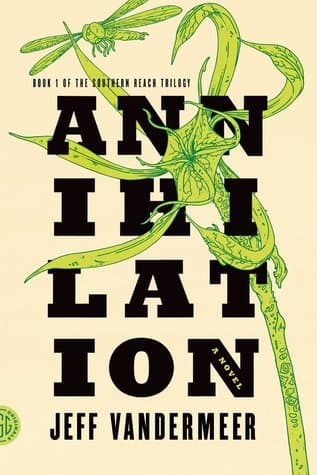
- Annihilation
Jeff VanderMeer
4.0 (5k) average on GoodreadsFantasyBoth Under the Skin and Annihilation are examples of 'New Weird' fiction, characterized by their unsettling atmospheres, biological horror, and exploration of the alien and unknown. VanderMeer's novel, however, focuses on a group of human explorers venturing into an ecologically transformed, mysterious zone, with the horror stemming from the environment itself and its effect on the human psyche. Faber's narrative, in contrast, places the alien among humanity, inverting the perspective and making the familiar world appear uncanny and dangerous from the alien's viewpoint. While both are deeply atmospheric and feature non-human perspectives, Annihilation leans into cosmic horror and environmental mystery, whereas Under the Skin uses its alien protagonist to critique human society directly.
- Angels & Demons
Dan Brown
3.9 (2.7M) average on GoodreadsThrillerA Harvard symbologist races through Rome's ancient sites, deciphering cryptic clues to unmask the Illuminati and stop a vengeful plot to destroy the Vatican with a stolen antimatter weapon.
- Gone Girl
Gillian Flynn
4.1 (2.3M) average on GoodreadsThrillerA wife's sudden disappearance on her fifth anniversary reveals a web of lies and psychological warfare, exposing the secrets within a seemingly perfect marriage.
- The Girl on the Train
Paula Hawkins
3.9 (2.1M) average on GoodreadsThrillerA woman’s fascination with a seemingly perfect couple she watches from her daily train commute leads her into a dark investigation when she witnesses something that shatters their idyllic image.





Enjoyed the summary?
A summary gives you the shape of the book. The book itself has the detail, the examples and the voice.
Find Under the Skin on AmazonAs an Amazon Associate, BookBrief earns from qualifying purchases. How we're funded