
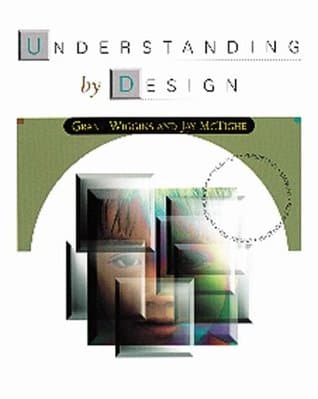
Core Idea
- Difficulty
- Medium
- Read it if
- You are an educator, curriculum developer, or school administrator looking for a robust framework to design curriculum, assessments, and instruction that foster deep student understanding and transfer of learning. Ideal for those seeking to move beyond traditional content delivery towards more meaningful educational experiences.
- Skip it if
- You are looking for a quick fix or a superficial approach to lesson planning without a commitment to rethinking foundational pedagogical practices. This book requires careful study and a willingness to implement significant changes in design thinking.
Key Takeaways from Understanding by Design
Backward Design: Start with the End in Mind
Effective curriculum planning begins with identifying desired results, not activities.
The main idea of Understanding by Design (UbD) is 'backward design.' Instead of thinking about activities or content, educators must first clearly state what students should know and be able to do at the end of a unit or course. This means identifying lasting understandings, key questions, and specific knowledge and skills. This 'starting with the end' method ensures that all later planning—assessments, activities, and materials—is directly aimed at those desired results. It's a shift from teaching based on activities to learning based on results, which stops instruction from being driven by activities that might not lead to deep understanding.
“The UbD framework unpacks and elaborates the critical insight that design should be 'backward'—that is, designers should start with the desired results and then work backward to develop instruction.”
In the book: The book introduces the three stages of backward design: 1. Identify desired results, 2. Determine acceptable evidence, and 3. Plan learning experiences and instruction. This systematic process is central to the entire UbD framework.
Try this: Before planning any lesson, clearly articulate the 'big ideas' and 'essential questions' you want students to grapple with. Define specific, measurable learning objectives and what successful performance will look like.
Related ideas: backward-design, desired-results, enduring-understandings
Understanding is More Than Knowing
True understanding involves transferring knowledge, not just recalling facts.
UbD separates 'knowing' facts from 'understanding' concepts. Understanding is a deeper, more solid mental state where someone can use knowledge in new situations, explain information, describe events in their own words, see different viewpoints, understand others' perspectives, and think about their own learning. The book lists six parts of understanding: explanation, interpretation, application, perspective, empathy, and self-knowledge. This varied view encourages educators to create learning experiences that go beyond memorization and help students actively build meaning and use their learning in new situations.
“Understanding is a 'six-sided' or 'six-faceted' phenomenon. To truly understand, one must be able to explain, interpret, apply, have perspective, empathize, and self-assess.”
In the book: The 'Six Facets of Understanding' are a cornerstone of UbD, providing a detailed rubric for what genuine understanding looks like in practice. For instance, explaining a concept in one's own words demonstrates a different level of understanding than simply reciting a definition.
Try this: When designing assessments, move beyond recall questions. Ask students to explain 'why,' interpret data, apply concepts to real-world problems, consider different viewpoints, or reflect on their own learning process.
Related ideas: six-facets-of-understanding, transfer-of-learning, deep-understanding
Evidence of Understanding: The Assessment Imperative
Assessments should directly measure desired understandings, not just what's easy to test.
The second stage of backward design focuses on finding 'acceptable evidence' of student learning. This means creating assessments that directly match the understandings and key questions set in Stage 1. UbD suggests using various assessment methods, including real-world tasks that ask students to use knowledge and skills in practical situations, rather than just traditional tests that often only check recall. The book emphasizes that assessments are not just for grades, but are important tools for giving feedback, guiding teaching, and making sure learning goals are met. Without clear proof, understanding is just an assumption.
“If we want students to understand, then we must ask for evidence of their understanding. We must determine acceptable evidence of understanding before we design lessons.”
In the book: UbD promotes the use of 'performance tasks' as a primary form of assessment, where students demonstrate their understanding through complex, multi-step applications. An example given might be designing a sustainable city or debating a historical event.
Try this: Design at least one authentic performance task for each unit that requires students to apply their understanding. Create clear rubrics that evaluate the 'six facets of understanding' where appropriate.
Related ideas: performance-tasks, authentic-assessment, acceptable-evidence
Essential Questions Drive Inquiry
Well-crafted questions provoke thought, spark inquiry, and promote deeper learning.
Essential questions are a key part of UbD; they drive a unit's intellectual work. Unlike questions that ask for facts, essential questions are open-ended, make people think, and often have no single 'right' answer. They encourage students to explore big ideas, connect different subjects, and engage in ongoing inquiry. These questions give learning a purpose and direction for students' investigations, helping them build their own understanding. By revisiting essential questions throughout a unit, educators can reinforce the 'big picture' and ensure students are tackling core concepts, not just isolated facts.
“Essential questions are at the heart of UbD. They are questions that are not answerable with a quick search; they are arguable, open-ended, and designed to stimulate thought and inquiry.”
In the book: The book provides numerous examples of well-crafted essential questions (e.g., 'To what extent is history the story of progress?' or 'What makes a story a classic?'). It contrasts these with 'content questions' which are more factual.
Try this: For every unit, develop 2-4 essential questions that are enduring, open-ended, and intellectually engaging. Display them prominently and refer to them regularly during instruction.
Related ideas: essential-questions, inquiry-based-learning, big-ideas
Curriculum as a Means, Not an End
The curriculum serves understanding; it is not merely content to be 'covered'.
UbD challenges the traditional idea of curriculum as just a list of topics to 'cover.' Instead, it says the curriculum is a tool for achieving desired understandings and developing specific skills. This view encourages educators to choose content carefully, prioritizing what is most important for deep understanding and avoiding superficial coverage. The focus moves from simply 'getting through' material to making sure students truly grasp and can use core concepts. This often means 'less is more,' allowing for deeper study of key ideas instead of a wide, shallow look at many topics.
“The curriculum is not an end in itself, but a means to an end: student understanding. We must therefore design curriculum backward from the desired understandings.”
In the book: The UbD template explicitly asks designers to prioritize content and skills based on their relevance to the desired results, rather than just listing everything from a textbook or standard. It encourages 'uncovering' rather than 'covering.'
Try this: Review your current curriculum. For each topic, ask: 'What essential understanding does this content serve?' Be willing to eliminate or de-emphasize content that doesn't directly contribute to significant learning goals.
Related ideas: curriculum-design, uncovering-content, prioritization
The Role of Exemplars and Criteria
Clear criteria and examples illuminate expectations and guide student performance.
To ensure students know what 'success' looks like, UbD stresses the importance of clear criteria and examples. Rubrics, scoring guides, and examples of high-quality work are valuable tools for both teaching and assessment. They make expectations clear, helping students understand the standards their work will be judged against and allowing them to self-assess and improve. By making the evaluation process transparent, educators can encourage student ownership and help students better understand what 'understanding' means in a specific context. This also creates consistency in grading and feedback.
“To enable students to achieve desired results, they need to know what constitutes quality work. Exemplars and explicit criteria are indispensable tools for this purpose.”
In the book: The book recommends developing rubrics (e.g., GRASPS model for performance tasks) and sharing 'anchor papers' or student work samples that illustrate different levels of proficiency with students before they begin a task.
Try this: Develop clear rubrics for all major assessments. Show students examples of strong and weak work (anonymously) and discuss why they meet or do not meet the criteria.
Related ideas: rubrics, exemplars, criteria-for-success
Instruction is a Means to Understanding
Learning activities are designed to build understanding and prepare for assessment.
The third stage of backward design focuses on planning learning experiences and instruction. This stage happens after desired results and acceptable evidence are clearly set. This ensures that all activities, lessons, and resources are chosen specifically to help students achieve the identified understandings and prepare them for performance tasks. UbD promotes varied teaching methods, including direct instruction, guided inquiry, group learning, and chances for students to explore and use concepts. The main point is that every teaching decision should be justified by how it helps meet the unit's learning goals, avoiding random or unconnected activities.
“Instructional activities are not ends in themselves; they are means to achieving the desired understandings and preparing students to demonstrate them through acceptable evidence.”
In the book: The WHERETO framework (Where, Hook, Explore, Rethink, Exhibit, Tailor, Organize) is presented as a guide for planning effective learning experiences, ensuring they are purposeful and student-centered.
Try this: When planning lessons, continually ask: 'How does this activity help students achieve the desired understanding or prepare them for the performance task?' Eliminate activities that don't directly serve these ends.
Related ideas: instructional-design, whereto-framework, learning-experiences
Reflection and Revision are Continuous
Curriculum design is iterative, requiring ongoing feedback and refinement.
UbD is not a one-time planning task but an ongoing cycle of thinking and improving. Good curriculum designers constantly check how well their units work based on student performance, feedback, and new insights. This repetitive process involves asking questions like: Are students reaching the desired understandings? Does the assessment truly show understanding? Are the learning activities engaging and effective? This dedication to ongoing improvement ensures that curricula stay relevant, responsive, and most effective in building deep understanding. It recognizes that even the best initial designs can be improved with practical experience.
“Design is not a linear process; it is iterative. Effective designers continually reflect on their work, seek feedback, and revise their plans based on new insights and results.”
In the book: The UbD template itself includes sections for 'Review and Revision,' prompting designers to reflect on the unit's strengths, weaknesses, and areas for improvement after implementation.
Try this: After teaching a unit, dedicate time to review student work, reflect on what went well and what didn't, and make specific notes for revisions to the desired results, assessments, and learning activities for the next time.
Related ideas: iterative-design, curriculum-revision, feedback-loop
The Challenge of Uncovering vs. Covering
Prioritizing depth over breadth is crucial for fostering genuine understanding.
A common problem in education is the pressure to 'cover' a lot of content, which often leads to superficial learning. UbD directly addresses this by promoting 'uncovering' key ideas. This means making careful choices about which content is truly essential for students to understand deeply, then designing learning experiences that allow for in-depth exploration, questioning, and use of those core concepts. It's a call to resist rushing through topics and instead create room for students to work with complex ideas, make their own discoveries, and build strong understanding that they can use elsewhere. Less content, taught more deeply, leads to greater understanding.
“The greatest enemy of understanding is coverage. When we try to cover too much, we necessarily prevent students from uncovering the deeper meanings and connections.”
In the book: Wiggins frequently critiques the 'mile wide, inch deep' curriculum syndrome prevalent in many educational systems, arguing that it inherently works against the development of true understanding.
Try this: Identify the absolute 'must-knows' and 'must-dos' for each unit. Be ruthless in cutting content that doesn't directly serve these core understandings, even if it's 'traditionally' taught.
Related ideas: depth-over-breadth, curriculum-coverage, uncovering-content
Understanding by Design Quotes
“The best designs are 'backward' designs: they begin with the desired results and then identify the evidence needed to determine whether those results have been achieved.”
“Understanding is a matter of being able to use knowledge and skill in new situations.”
“If we want students to understand, we must design for understanding.”
“Understanding is revealed when students are able to transfer their learning to new situations and contexts.”
“The six facets of understanding—explanation, interpretation, application, perspective, empathy, and self-knowledge—provide a framework for developing and assessing understanding.”
“Assessment is not merely an add-on; it is integral to curriculum design.”
“Essential questions are at the heart of UbD because they focus on the big ideas and provoke inquiry and deeper thought.”
“What is worth understanding? What should students be able to do as a result of their learning?”
“Teaching for understanding is not just about covering content; it's about uncovering it.”
“Teachers are not just deliverers of content but designers of learning experiences.”
“The aim is not merely to cover content, but to uncover it for student understanding.”
“Authentic tasks require students to use knowledge and skills in realistic contexts.”
“Understanding by Design is a framework, not a rigid prescription.”
“The focus should always be on what students will understand and be able to do, not just what the teacher will teach.”
Quiz
10 questions on the main ideas. Each answer comes with a short explanation.
Question 1
Which of the following best describes the core principle of Understanding by Design (UbD)?
- Starting curriculum development with engaging activities.
- Beginning with desired results and working backward.
- Focusing primarily on content delivery and coverage.
- Designing assessments only after all instruction is complete.
Show answer
B. Beginning with desired results and working backward. UbD advocates for 'backward design,' meaning educators should first identify desired learning outcomes (Stage 1), then determine acceptable evidence of learning (Stage 2), and finally plan learning experiences and instruction (Stage 3).
Question 2
In UbD, what is the primary purpose of 'essential questions'?
- To provide students with explicit answers to key content.
- To cover every fact and detail within a unit.
- To provoke inquiry, stimulate thought, and organize content around big ideas.
- To serve as a checklist for teachers to ensure all topics are addressed.
Show answer
C. To provoke inquiry, stimulate thought, and organize content around big ideas. Essential questions are designed to be open-ended, thought-provoking, and recurring. They frame the 'big ideas' of a unit, fostering deeper understanding and transfer of learning, rather than just recall of facts.
Question 3
Which of the following is NOT one of the three stages of backward design as outlined in Understanding by Design?
- Stage 1: Identify Desired Results
- Stage 2: Determine Acceptable Evidence
- Stage 3: Plan Learning Experiences and Instruction
- Stage 4: Evaluate Teacher Performance
Show answer
D. Stage 4: Evaluate Teacher Performance The three stages of backward design are: 1. Identify Desired Results, 2. Determine Acceptable Evidence, and 3. Plan Learning Experiences and Instruction. Evaluating teacher performance is not a direct stage of the curriculum design process within UbD.
Question 4
According to UbD, what does 'understanding' primarily involve?
- The ability to recall facts and definitions accurately.
- The ability to explain, interpret, apply, gain perspective, empathize, and self-assess.
- Mastery of a wide range of disparate skills.
- Compliance with all given instructions.
Show answer
B. The ability to explain, interpret, apply, gain perspective, empathize, and self-assess. UbD defines understanding through 'the six facets of understanding': explanation, interpretation, application, perspective, empathy, and self-knowledge/self-assessment. It goes beyond mere recall to encompass deeper cognitive abilities.
Question 5
Why does UbD emphasize 'enduring understandings'?
- To ensure that students memorize all content for standardized tests.
- To focus on the big ideas and core concepts that have lasting value beyond the classroom.
- To limit the scope of curriculum to easily digestible facts.
- To provide teachers with a rigid script for daily lessons.
Show answer
B. To focus on the big ideas and core concepts that have lasting value beyond the classroom. Enduring understandings are the big ideas, principles, and concepts that students should grasp and retain long after the unit is over. They represent the transferable knowledge that makes learning meaningful and applicable.
Question 6
What kind of assessment is most highly valued in UbD's Stage 2: Determine Acceptable Evidence?
- Primarily traditional multiple-choice tests.
- Only informal observations of student participation.
- Performance tasks that require students to apply understanding in authentic contexts.
- Standardized tests designed externally.
Show answer
C. Performance tasks that require students to apply understanding in authentic contexts. UbD strongly advocates for performance tasks as the primary form of evidence. These tasks allow students to demonstrate their understanding by applying knowledge and skills in realistic, complex situations, aligning with the idea of transfer.
Question 7
When designing learning experiences in Stage 3, what is the significance of the acronym 'W.H.E.R.E.T.O.'?
- It's a mnemonic for remembering the sequence of content topics.
- It provides a framework for ensuring effective and engaging learning activities.
- It lists the essential resources needed for a unit.
- It outlines the grading criteria for performance tasks.
Show answer
B. It provides a framework for ensuring effective and engaging learning activities. W.H.E.R.E.T.O. (Where, Hook, Explore, Rethink/Revise, Exhibit, Tailored, Organized) is a design tool that helps educators craft learning experiences that are purposeful, engaging, and aligned with desired results, ensuring students understand the 'why' and 'how' of their learning.
Question 8
A common critique of traditional curriculum design that UbD aims to address is 'coverage over depth.' How does UbD tackle this issue?
- By encouraging teachers to cover more content at a faster pace.
- By prioritizing enduring understandings and essential questions, thus focusing on fewer, but deeper, concepts.
- By eliminating all assessment to free up time for more instruction.
- By providing detailed lesson plans that must be followed verbatim.
Show answer
B. By prioritizing enduring understandings and essential questions, thus focusing on fewer, but deeper, concepts. UbD directly addresses 'coverage over depth' by forcing designers to prioritize. By starting with desired results (enduring understandings and essential questions), it encourages a focus on what is truly important and transferable, rather than attempting to 'cover' every single detail.
Question 9
What is the primary benefit of designing assessments BEFORE planning daily lessons, according to UbD?
- It reduces the overall workload for teachers.
- It ensures that instruction is purposefully aligned to what students need to understand and be able to do.
- It allows for more spontaneous and flexible teaching.
- It guarantees higher student grades on all assignments.
Show answer
B. It ensures that instruction is purposefully aligned to what students need to understand and be able to do. Designing assessments early ensures that all subsequent instructional activities are directly aimed at preparing students to succeed on those assessments and, more importantly, to achieve the desired understandings and proficiencies. This alignment prevents 'activity-oriented' teaching that lacks clear purpose.
Question 10
How does UbD differentiate between 'knowledge' and 'understanding'?
- Knowledge is about knowing facts; understanding is about applying those facts in complex situations.
- Knowledge is gained through direct instruction; understanding is gained through independent study.
- There is no significant difference; the terms are interchangeable.
- Knowledge is what the teacher possesses; understanding is what the student possesses.
Show answer
A. Knowledge is about knowing facts; understanding is about applying those facts in complex situations. UbD distinguishes between 'knowing that' (knowledge of facts, skills) and 'understanding that' (the ability to make meaning of knowledge, connect it, and apply it effectively in new situations). Understanding involves the 'six facets' and demonstrates transferability, while knowledge can be more inert.
Understanding by Design FAQ
What is Understanding by Design (UbD)?
Understanding by Design (UbD) is a framework for designing curriculum and instruction that prioritizes 'backward design.' It focuses on starting with desired learning outcomes and then planning assessments and learning experiences to achieve those understandings.
Does Understanding by Design improve student learning?
Proponents of UbD argue that its focus on clear learning goals, essential questions, and authentic assessments leads to deeper student understanding and transfer of knowledge, rather than rote memorization. Many educators report positive impacts on student engagement and comprehension.
What is 'backward design' in the context of UbD?
Backward design is the core principle of UbD, involving three stages: identifying desired results, determining acceptable evidence of learning, and then planning learning experiences and instruction. This ensures all teaching is aligned with the ultimate learning goals.
How is Understanding by Design different from traditional curriculum planning?
Traditional curriculum planning often starts with activities or content. UbD, in contrast, begins with the end in mind – what students should understand and be able to do – before designing assessments and learning activities, ensuring greater coherence and purpose.
What are the three stages of backward design?
The three stages are: Stage 1 - Identify Desired Results (goals, understandings, essential questions); Stage 2 - Determine Acceptable Evidence (assessments); and Stage 3 - Plan Learning Experiences & Instruction (activities, resources).
What is an 'essential question' in UbD?
An essential question is a thought-provoking, open-ended question that promotes inquiry and deep understanding of a topic. It guides student learning and encourages them to make connections and grapple with important ideas.
Can Understanding by Design be used for all subjects and grade levels?
Yes, UbD is a flexible framework that can be adapted for any subject area, from kindergarten to higher education. Its principles of clear goals and evidence-based planning are universally applicable to effective teaching and learning.
What role do rubrics play in UbD?
Rubrics are crucial in UbD as they provide clear criteria for evaluating student performance against desired learning outcomes. They help students understand expectations and allow for consistent and fair assessment of their understanding and skills.
Similar books
- The Story of Art
E.H. Gombrich
3.9 (311k) average on GoodreadsReferenceExplore thousands of years of human creativity, from ancient cave art to modern masterpieces, with Gombrich's classic account, updated with new insights into art's changing story.
- The New Drawing on the Right Side of the Brain
Betty Edwards
3.9 (297k) average on GoodreadsPsychologyLearn to draw by using the often-ignored visual side of your brain, changing how you see the world.
- Go Ask Alice
Anonymous
3.7 (293k) average on GoodreadsReferenceA teenage girl's diary chronicles her swift decline into 1970s drug culture, from an innocent game to addiction, ending in her tragic death.
- Their Eyes Were Watching God
Zora Neale Hurston
3.9 (266k) average on GoodreadsReferenceIn early 20th-century Florida, Janie Crawford searches for identity, love, and independence, defying social norms to find her voice.
- On Writing: A Memoir of the Craft
Stephen King
4.3 (222k) average on GoodreadsBiography - Holy Bible: King James Version
Anonymous
4.4 (220k) average on GoodreadsReferenceThis foundational text, spanning millennia and continents, combines divine revelation, human history, and lasting wisdom, shaping the spiritual and ethical outlook of Western civilization.





Enjoyed the summary?
A summary gives you the shape of the book. The book itself has the detail, the examples and the voice.
Find Understanding by Design on AmazonAs an Amazon Associate, BookBrief earns from qualifying purchases. How we're funded