

Synopsis
Covers the whole plot, including the ending.
- Difficulty
- Medium
- Pacing
- Fast
- Mood
- Suspenseful, Dark, Mysterious, Thrilling, Intense
- Read it if
- You enjoy dystopian YA thrillers with a strong mystery element, high stakes, and a focus on survival and rebellion against an oppressive system.
- Skip it if
- You prefer fantasy without science fiction elements, or are looking for a lighthearted story with minimal violence and dark themes.
Variant Plot Summary
Covers the whole plot, including the ending.
A Mysterious Scholarship and a Trapped Arrival
Benson Fisher, an orphan in a group home, gets a full scholarship to Maxfield Academy, a boarding school. He accepts, wanting a new start, despite the unusual application process and lack of information. A silent driver drops him off at a normal-looking gate, but he quickly finds the school empty of adults and surrounded by a razor-wire fence. Other students explain the rules: survive, follow orders from unseen 'staff' on monitors, and never try to escape. Food comes via dumbwaiters, and cameras watch them. Benson is disoriented and realizes he is trapped, with no way out and no clear understanding of his situation.
Introduction to the Factions and the Rules of Survival
Benson learns about the school's social structure, controlled by three groups: the Society, led by Jane; the Vipers, an aggressive group led by Adam; and the Praetorians, the enforcers led by Mason. He learns that 'staff' assign tasks via monitors, and failure or rule-breaking leads to severe, often fatal, punishments. Students who are 'removed' are never seen again. Benson tries to understand the school's purpose and the dangerous environment, initially trying to stay neutral but constantly on edge as he deals with the social dynamics and the threat of punishment.
Benson's First Assignment and Growing Suspicion
Benson's first assignment is to clean the school's swimming pool. He notices unusual details and mechanics, suggesting a hidden infrastructure. He also starts to connect with Becky, a quiet and smart girl from the Society, who seems open to questioning their reality. Benson's doubt grows as he sees the other students' fear and obedience, and the arbitrary nature of the 'staff's' punishments. He suspects the school is more complex than a prison, and that a deeper, more sinister purpose drives their confinement, fed by constant surveillance and the students' conditioned obedience.
The First Escape Attempt and Its Brutal Aftermath
A student named Dylan tries to escape over the razor-wire fence. The 'staff' quickly and brutally intervene, using automated turrets to shoot him down. This public execution reminds all students of the lethal consequences of challenging the system. Benson, horrified, sees the event, which destroys any hope he had for an easy escape. The incident also confirms his understanding of the Praetorians' role in maintaining order and the absolute power of the unseen 'staff,' pushing him further into fear and determination to find the truth.
Uncovering the Tunnels and the School's Deeper Layers
Driven by his suspicions, Benson, with Becky's help, explores the school's hidden areas. They find a network of maintenance tunnels and secret passages under the main building. These tunnels show advanced technology and infrastructure, far beyond a typical boarding school, suggesting a sophisticated, controlled environment. Their exploration is dangerous, risking detection by the 'staff's' cameras. Through these tunnels, they start to find clues about the school's true nature, realizing it is a complex, purpose-built facility designed for something sinister.
The Truth About the 'Staff' and the School's Purpose
During a risky exploration, Benson and Becky find a control room. Here, they discover that the 'staff' are not adults, but other students, operating the cameras, monitors, and punishment systems. They realize Maxfield Academy is a social experiment, where students are manipulated and conditioned to form societies, enforce rules, and survive under extreme pressure. The 'staff' students are the puppet masters, watching and controlling their peers, creating a hierarchy where some students are unknowingly involved in the oppression of others. This is a shock to Benson, changing his view of everyone around him.
Confronting the 'Staff' and the Experiment's Scope
Benson confronts the student 'staff,' led by Cassie, in the control room. Cassie explains that Maxfield Academy is a research facility studying human behavior under stress, focusing on leadership, social structures, and obedience. The 'staff' students are those who have completed the 'student' phase of the experiment and now have control. They reveal that the students are all 'variants,' genetically modified individuals with enhanced abilities or traits, though the specific nature of these modifications is vague. The experiment identifies the strongest leaders and most adaptable individuals among them, for an unknown future purpose.
The Revelation of Their 'Variant' Nature
Cassie explains that all students at Maxfield Academy are 'variants,' from a secret genetic engineering project. They were chosen for their specific genetic makeups, which are meant to make them superior or more adaptable. The academy tests these enhanced traits, to see how they perform under extreme psychological and physical pressure. The 'staff' students, having passed these tests, now watch the next generation of 'variants.' This adds to Benson's dread, as he realizes his whole life, including his orphan status, was likely a fabrication to bring him to this controlled environment and test his abilities.
The Choice: Join the 'Staff' or Remain a Prisoner
Having shown his intelligence, resourcefulness, and leadership potential by finding the truth, Benson is offered a choice: join the 'staff' and participate in the experiment, watching and controlling the next group of 'variants,' or remain a prisoner, subject to the same rules and punishments as the other students. This choice creates a moral problem for Benson. Joining the 'staff' offers safety, comfort, and power, but it means becoming an oppressor, involved in the suffering of others. Remaining a student means continued danger and uncertainty, but preserves his integrity and offers a chance to dismantle the system from within, or to finally escape.
The Escape and the Unseen World Beyond
Benson refuses to join the 'staff,' choosing instead to find a way out for himself and Becky. Using what he learned about the school's infrastructure and the 'staff's' routines, he plans an escape. He and Becky bypass the security systems and navigate the perimeter, breaking free from Maxfield Academy. Their escape is not an end, but a beginning. They emerge into an unfamiliar and seemingly deserted world, realizing that Maxfield was one part of a larger, global network of similar facilities. The implications are vast, suggesting a widespread, secret project involving 'variants' and a hidden society controlling their destinies, leaving them with more questions than answers about their true purpose and the world they now inhabit.
Variant Characters
Benson Fisher
Protagonist
An orphaned scholarship recipient who uncovers Maxfield Academy's dark secrets.
Benson is initially a cynical and wary orphan, but possesses a keen intellect and strong moral compass. He is observant, quick-witted, and driven by a desire for truth and justice. Despite the overwhelming odds and constant danger, he refuses to blindly accept his imprisonment, actively seeking answers and challenging the established order. His resourcefulness and courage make him a natural leader, even as he tries to maintain neutrality among the factions. He values freedom and human dignity above personal safety, leading him to make difficult choices.
Relationships: Becky (Close ally and romantic interest); Jane (Rival, leader of the Society faction); Adam (Rival, leader of the Vipers faction); Mason (Praetorian leader, initially an antagonist, later a complex ally); Cassie (Student 'staff' member, antagonist and revealer of truths)
Becky
Supporting
An intelligent and cautious girl from the Society faction who allies with Benson.
Becky is quiet, intelligent, and initially appears submissive within the Society. However, she possesses a sharp mind and a hidden desire for the truth. She is cautious but brave, willing to take risks when she believes in the cause. Her analytical skills and ability to notice small details prove invaluable to Benson's investigations. She is a loyal friend and a grounding presence for Benson, often providing insights and support when he feels overwhelmed.
Relationships: Benson Fisher (Close ally and romantic interest); Jane (Faction leader she initially follows)
Jane
Antagonist
The manipulative and charismatic leader of the Society faction.
Jane is the beautiful and cunning leader of the Society, the most outwardly organized and 'civilized' faction. She maintains her power through charisma, manipulation, and strict adherence to the 'staff's' rules, which she interprets to her advantage. She views the school as a system to be mastered, not escaped, and is fiercely protective of her position and her followers. She sees Benson as a threat to her established order and attempts to either control him or eliminate his influence.
Relationships: Benson Fisher (Rival); Becky (Follower within her faction); Adam (Rival faction leader)
Adam
Antagonist
The aggressive and rebellious leader of the Vipers faction.
Adam is the physically imposing and volatile leader of the Vipers, a faction known for its aggressive behavior and open defiance of the 'staff's' rules (though within limits). He is driven by a desire for power and control, often resorting to intimidation and violence. While he outwardly rebels, his actions are often reactive rather than strategic. He views Benson with suspicion and often clashes with him, seeing him as a rival for influence among the students.
Relationships: Benson Fisher (Rival); Jane (Rival faction leader)
Mason
Supporting
The stoic and enigmatic leader of the Praetorians, the school's enforcers.
Mason leads the Praetorians, the faction responsible for enforcing the 'staff's' rules and delivering punishments. He is often seen as cold, emotionless, and utterly dedicated to his role. He rarely speaks and his motivations are initially unclear, making him a formidable and intimidating presence. However, as the story progresses, Benson learns there may be more to Mason than meets the eye, and his actions are driven by a complex understanding of the school's true nature.
Relationships: Benson Fisher (Initial antagonist, later a reluctant informant/ally); Cassie (Subordinate to the 'staff' students)
Cassie
Antagonist
A student who has transitioned to 'staff' and reveals the experiment's true nature.
Cassie is one of the student 'staff' members who operates the control room and oversees the Maxfield experiment. She is intelligent, detached, and pragmatic, having fully embraced her role as an observer and manipulator. She reveals the truth about the 'variant' students and the purpose of the academy, explaining the scientific and social goals behind the elaborate charade. She is not necessarily malicious, but rather a product of the system, believing in the necessity and efficacy of the experiment.
Relationships: Benson Fisher (The one who uncovers her and her role); Mason (Overseer of Mason and the Praetorians)
Dylan
Mentioned
A student whose failed escape attempt serves as a brutal warning to others.
Dylan is a minor character whose desperation leads him to attempt an escape over the razor-wire fence. His brief appearance and swift, violent death serve as a critical plot point, demonstrating the lethal consequences of defying the 'staff' and establishing the extreme danger within Maxfield Academy. His fate instills fear in the other students and reinforces the perceived impossibility of escape.
Relationships: Benson Fisher (Witness to his death)
The 'Staff'
Antagonist
The unseen, controlling entity of Maxfield Academy, later revealed to be other students.
Initially perceived as omniscient adult overseers, the 'Staff' are the unseen force that controls every aspect of Maxfield Academy. They issue assignments, monitor students through cameras, and mete out severe punishments, including death. Their mysterious nature fuels much of the students' fear and compliance. Their true identity, as a group of former student 'variants' who have advanced to the observation phase of the experiment, is the central reveal of the book, shifting the power dynamic and moral implications.
Relationships: Benson Fisher (The one they are observing and testing); Cassie (A representative of this group)
Variant Themes
Identity and Self-Discovery
The novel looks at how individuals form identities under great stress and how outside forces can shape or try to define who they are. Benson, an orphan with no known past, defines himself by his choices within Maxfield's brutal confines. The revelation that all students are 'variants' questions their identity and whether they are just products of genetic engineering or can make their own destinies. The book asks what truly makes a person 'them' when their entire existence has been manipulated.
“I didn’t know who I was, or where I came from. But I knew what I wouldn’t be.”
Control vs. Free Will
A main theme is the struggle between the control by the 'staff' and the students' desire for free will. The academy removes autonomy, forcing students into social roles and punishing deviation. Benson's journey defies this control, as he tries to understand and subvert the system. The choice given to him—to join the 'staff' or remain a prisoner—tests his free will, showing the moral cost of complicity versus the dangers of resistance.
“We were all just pawns in their game, but I wasn’t going to play by their rules anymore.”
The Nature of Society and Leadership
Maxfield Academy shows how societies form and work under pressure. The Society, Vipers, and Praetorians show different approaches to leadership, governance, and survival. Jane's charisma, Adam's aggressive dominance, and Mason's enforcement reflect various leadership styles. The 'staff's' experiment observes these social dynamics, testing which forms of leadership and societal structures work best or are most resilient, and what moral compromises are made for survival and order.
“Some people adapted by becoming the system. Others, by fighting it. And some, by simply trying to disappear.”
Surveillance and Privacy
Constant surveillance through cameras removes student privacy, creating an atmosphere of paranoia and fear. This constant watching controls behavior and ensures compliance. Students' every move, conversation, and emotional reaction is potentially monitored and judged. The theme looks at the psychological impact of living under perpetual observation and its dehumanizing effect, showing the importance of privacy as a basic part of human dignity and freedom.
“Every wall had eyes. Every shadow, an ear. There was nowhere to hide, not even inside your own head.”
Moral Compromise and Complicity
The novel looks at the difficult choices individuals make when faced with oppressive systems. The students, especially those in the Praetorians or those like Jane who do well within the groups, often make moral compromises for their own survival or power. The ultimate test of this theme comes when Benson is offered a position on the 'staff,' forcing him to decide whether to become involved in the system he hates or to continue fighting for his freedom and integrity, no matter the cost.
“Was it better to be a victim, or to become one of the monsters just to survive?”
Plot Devices & Literary Techniques
The Maxfield Academy Setting
A seemingly utopian school transformed into a high-tech prison and social experiment.
The academy itself is a central plot device. Its initial appearance as a prestigious boarding school creates a false sense of security, which is quickly shattered. The razor-wire fence, lack of adults, and constant surveillance establish it as a prison. However, the discovery of hidden tunnels, control rooms, and advanced technology reveals its true nature as a purpose-built research facility. The setting is designed to isolate, manipulate, and test the students, making it an active character in shaping the plot and character development.
The Unseen 'Staff'
The mysterious, omnipotent overseers who control the academy, later revealed to be other students.
The 'Staff' functions as a powerful, unseen antagonist for much of the novel. Their anonymous nature creates immense fear and uncertainty, as students are punished without knowing who or what is judging them. This device builds suspense and allows for the significant plot twist where the 'Staff' are revealed to be former students, shifting the narrative's focus from an external, adult threat to an internal, peer-on-peer manipulation, deepening the moral complexity and sense of betrayal.
The Faction System
The three student-led groups (Society, Vipers, Praetorians) that organize and control the student body.
The division of students into the Society, Vipers, and Praetorians is a core plot device for illustrating social dynamics and conflict. It immediately establishes a power structure and rules of engagement for Benson, forcing him to navigate complex alliances and rivalries. These factions are not organic but are subtly encouraged and manipulated by the 'Staff' to observe leadership, obedience, and survival strategies, making them an integral part of the experiment Maxfield Academy is conducting.
The 'Variant' Revelation
The discovery that all students are genetically modified individuals.
The revelation that students are 'variants' is a critical plot twist that recontextualizes the entire narrative. It transforms Maxfield Academy from a simple prison into a scientific experiment with profound implications for the students' identities and futures. This device raises the stakes, explaining the 'Staff's' intense interest in their behavior and suggesting a larger, global conspiracy. It also introduces elements of science fiction and genetic engineering, broadening the scope of the story beyond just survival.
Surveillance Cameras and Monitors
Ubiquitous cameras and screens used for observation, communication, and punishment.
These devices are central to establishing the oppressive atmosphere of Maxfield Academy. The cameras symbolize the constant lack of privacy and the omnipresent threat of judgment and punishment, creating a panopticon effect. The monitors serve as the 'Staff's' primary means of communication, issuing tasks and displaying warnings or executions. They are a constant reminder of the students' lack of control and the arbitrary power wielded over them, driving Benson's determination to escape their gaze.
Variant Quotes
“I'm not a hero. I'm just a guy who got lucky.”
“In a world where everyone is a variant, being normal is the real anomaly.”
“Trust is a luxury we can't afford anymore.”
“Sometimes the only way to survive is to become what they fear.”
“The truth is a weapon, and everyone here is armed.”
“We're not just students; we're experiments.”
“Fear doesn't make you weak; it makes you careful.”
“In this place, every choice is a gamble with your life.”
“They told us we were special, but they never said why.”
“The walls have ears, and the shadows have eyes.”
“We're not fighting each other; we're fighting the system.”
“Sometimes the monster isn't in the dark; it's in the mirror.”
“Hope is the most dangerous thing in a place like this.”
“They built this prison and called it a school.”
Quiz
10 questions on the plot and the characters. Each answer comes with a short explanation.
Question 1
What is the main reason Benson Fisher initially comes to Maxfield Academy?
- He was forced to attend by social services
- He won a scholarship to escape his troubled life
- He was recruited for his athletic abilities
- His parents enrolled him for better education
Show answer
B. He won a scholarship to escape his troubled life Benson comes to Maxfield Academy through a scholarship, hoping it will provide an escape from his dead-end foster care life, as described in the book's opening.
Question 2
What happens to students who break the rules at Maxfield Academy?
- They are given extra chores
- They are expelled and sent home
- They face death
- They are isolated in detention
Show answer
C. They face death The book establishes that breaking rules at Maxfield Academy results in death, creating a constant atmosphere of fear and control among the students.
Question 3
Which of these is NOT one of the groups that students form at Maxfield Academy?
- The Society
- The Havoc
- The Guardians
- The V's
Show answer
C. The Guardians The main student factions are the Society (rule-followers), the Havoc (rebels), and the V's (violent group). 'The Guardians' is not a group in the book.
Question 4
What surveillance method constantly monitors the students at Maxfield Academy?
- Audio bugs in every room
- Undercover student spies
- Video cameras throughout the school
- GPS trackers in their uniforms
Show answer
C. Video cameras throughout the school Video cameras monitor every move of the students, contributing to the oppressive control and lack of privacy at the academy.
Question 5
Why does Benson initially trust Jane?
- She saves him from an attack by the V's
- She is the leader of the Society
- She reveals the school's secret to him immediately
- She helps him with his classes
Show answer
A. She saves him from an attack by the V's Jane earns Benson's trust early on by saving him from a violent encounter with members of the V's, establishing her as an ally.
Question 6
What is the 'real secret' of Maxfield Academy that Benson discovers?
- The school is a front for government experiments
- The students are actually androids
- The academy is a testing ground for a deadly virus
- The students are clones being tested for survival traits
Show answer
D. The students are clones being tested for survival traits Benson learns that Maxfield Academy is an experiment where clones (Variants) are tested in controlled environments to determine which traits make them most likely to survive.
Question 7
What major theme does 'Variant' explore through its setting and plot?
- The importance of academic excellence
- The corruption of political systems
- The loss of free will in controlled environments
- The power of romantic relationships
Show answer
C. The loss of free will in controlled environments The book explores themes of control, surveillance, and the loss of autonomy, as students are manipulated in a closed environment with strict rules and constant monitoring.
Question 8
How does the school maintain control without any adult staff present?
- Through elected student councils
- By using automated systems and student informants
- With periodic visits from mysterious overseers
- Through psychological conditioning alone
Show answer
B. By using automated systems and student informants Control is maintained through automated systems (cameras, announcements), the threat of death for rule-breaking, and some students acting as informants for the unseen authorities.
Question 9
What realization makes Benson understand that 'playing by the rules could spell a fate worse than death'?
- Discovering that compliant students are turned into permanent guards
- Learning that rule-followers are eventually killed anyway
- Finding out that obedient clones are used for further experimentation
- Realizing that the school plans to brainwash all students
Show answer
C. Finding out that obedient clones are used for further experimentation Benson discovers that clones who follow the rules and survive the tests are not freed but are instead used for more invasive and potentially worse experiments, making compliance ultimately futile.
Question 10
What makes escape from Maxfield Academy particularly challenging beyond the physical barriers?
- The students have implanted trackers
- The surrounding area is a radioactive wasteland
- The psychological manipulation makes students doubt reality
- There are hidden landmines around the perimeter
Show answer
C. The psychological manipulation makes students doubt reality Beyond the razor-wire fence and surveillance, escape is complicated by psychological manipulation, misinformation, and the students' uncertain understanding of what lies outside and who they really are.
Variant FAQ
What is 'Variant' by Robison Wells about?
'Variant' follows Benson Fisher, a scholarship student who becomes trapped at Maxfield Academy, a school surrounded by razor-wire fences with no adults, monitored by cameras, and run by student factions. As Benson uncovers the school's dark secret, he realizes escape might be impossible, and survival requires navigating deadly rules and alliances.
Why should I read 'Variant'?
Readers should dive into 'Variant' for its gripping blend of thriller, mystery, and dystopian sci-fi, featuring a tense survival plot with constant twists. The novel explores themes of trust, control, and rebellion through Benson's desperate attempts to escape a seemingly inescapable prison-like school.
What is the background/setting of 'Variant'?
The story is set at Maxfield Academy, an isolated school surrounded by razor-wire fences in a remote location, with no adult supervision and constant video surveillance. Students are divided into factions like the Society, Havoc, and Variant, each with its own rules for survival in this controlled environment.
What are the most memorable quotes from 'Variant'?
Key quotes include Benson's realization, 'I thought Maxfield would be my escape, but it's just a bigger prison,' and the ominous rule, 'Breaking the rules equals death.' These lines highlight the novel's themes of entrapment and the harsh consequences of defiance in this controlled setting.
What writing style does Robison Wells use in 'Variant'?
Robison Wells employs a fast-paced, first-person narrative from Benson's perspective, creating immediate tension and suspense. The style is direct and action-driven, with short chapters and cliffhangers that enhance the thriller and mystery elements, keeping readers engaged in the plot's twists.
What minor details add significant meaning in 'Variant'?
Minor details like the precise layout of the school's cameras and the specific rules posted around campus subtly reinforce the theme of omnipresent control. For example, the constant mention of the razor-wire fence symbolizes the inescapable nature of the students' confinement, hinting at larger experiments at play.
What are some subtle foreshadowing moments in 'Variant'?
Early scenes where Benson notices inconsistencies in the school's operations, such as the lack of adult presence and the rigid faction divisions, foreshadow the reveal that Maxfield is a controlled experiment. The gradual discovery of hidden tunnels and secrets about the school's purpose builds suspense toward the climax.
What unexpected character connections exist in 'Variant'?
Unexpected connections emerge as Benson learns that some students, like Jane and Becky, have deeper ties to the school's experiments than initially apparent. Alliances shift, revealing that characters from different factions, such as the Society and Havoc, may share hidden agendas linked to the school's secretive controllers.
What are unspoken character motivations in 'Variant'?
Benson's primary unspoken motivation is not just survival but a deep-seated desire for freedom and truth, driven by his troubled past. Other characters, like those in the Society faction, are motivated by a fear of punishment and a need for order, often hiding their true intentions to maintain power or safety.
What psychological complexities do characters exhibit in 'Variant'?
Benson exhibits psychological complexity through his paranoia and determination, balancing trust and suspicion as he navigates alliances. Characters in factions like Havoc show aggression as a coping mechanism for trauma, while others in the Society display compliance rooted in fear, highlighting varied responses to oppression.
What are the major emotional turning points in 'Variant'?
Major emotional turning points include Benson's initial shock upon realizing the school's true nature, his betrayal by trusted allies, and moments of hope during escape attempts. The climax, where he confronts the school's secret, evokes a mix of despair and resolve, driving the emotional arc toward rebellion.
How do relationship dynamics evolve in 'Variant'?
Relationship dynamics shift from initial distrust to fragile alliances, as Benson forms bonds with characters like Jane and Becky, only to face betrayals that test his loyalty. Faction rivalries, such as between the Society and Havoc, evolve from mere survival tactics to deeper conflicts over control and escape plans.
Which parts of 'Variant' remain ambiguous or open-ended?
The novel leaves ambiguity around the full extent of the experiments at Maxfield Academy and the identities of the controllers behind the school. The fate of some characters and the long-term implications of Benson's discoveries are open-ended, inviting speculation about the broader world outside the fence.
What are controversial scenes or decisions in 'Variant'?
Controversial scenes include the violent confrontations between factions, such as Havoc's aggressive tactics, and Benson's risky decisions to break rules that lead to deaths. Some readers debate the morality of characters' choices, like alliances formed under duress or sacrifices made for potential escape.
'Variant' ending explained: how it ends & what it means
The ending reveals that Maxfield Academy is part of a larger experiment, with Benson uncovering secrets about the school's purpose but still trapped inside. It concludes on a cliffhanger, emphasizing that escape remains elusive and setting up for sequels, symbolizing the ongoing struggle against control and the quest for freedom.
Similar books
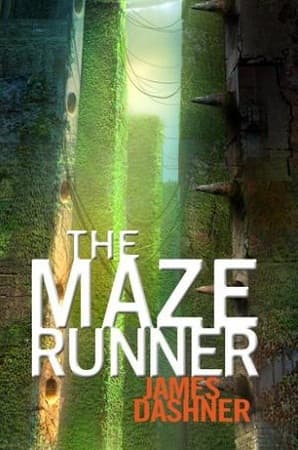
- The Maze Runner
James Dashner
4.0 (1.1M) average on GoodreadsFantasyFeatures teens trapped in a dangerous, enclosed environment with a mysterious purpose, forced to fight for survival and uncover secrets.
- Lord of the Flies
William Golding
3.7 (2.3M) average on GoodreadsYoung AdultExplores themes of societal breakdown and the formation of brutal hierarchies among children without adult supervision.
- Gone
Michael Grant
4.2 (41k) average on GoodreadsThrillerInvolves children and teens left alone in a confined area, developing powers and struggling to establish order and survive.
- The Giver
Lois Lowry
4.1 (1.8M) average on GoodreadsFantasyBoth novels explore seemingly utopian societies with dark underlying truths and feature protagonists who awaken to these realities. However, Variant emphasizes action and thriller elements more, while The Giver adopts a more contemplative and philosophical tone.
- Angels & Demons
Dan Brown
3.9 (2.7M) average on GoodreadsThrillerA Harvard symbologist races through Rome's ancient sites, deciphering cryptic clues to unmask the Illuminati and stop a vengeful plot to destroy the Vatican with a stolen antimatter weapon.
- Gone Girl
Gillian Flynn
4.1 (2.3M) average on GoodreadsThrillerA wife's sudden disappearance on her fifth anniversary reveals a web of lies and psychological warfare, exposing the secrets within a seemingly perfect marriage.





Enjoyed the summary?
A summary gives you the shape of the book. The book itself has the detail, the examples and the voice.
Find Variant on AmazonAs an Amazon Associate, BookBrief earns from qualifying purchases. How we're funded