
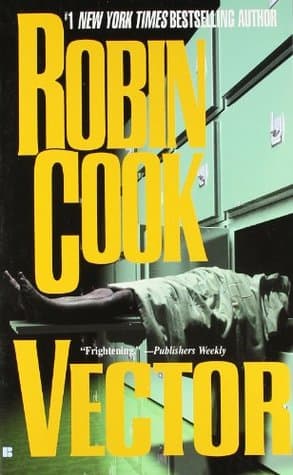
Synopsis
Covers the whole plot, including the ending.
- Difficulty
- Medium
- Pacing
- Fast
- Mood
- Suspenseful, Tense, Alarming, Scientific
- Read it if
- You enjoy medical thrillers with a strong focus on bioterrorism, scientific investigation, and a race against time.
- Skip it if
- You are sensitive to detailed descriptions of biological agents, illness, or feel uncomfortable with realistic depictions of bioterrorism.
Vector Plot Summary
Covers the whole plot, including the ending.
The First Victim: A Mysterious Illness
Yuri Davydov, a disgruntled Russian emigre and former Soviet bioweapons technician, begins his experiment. He targets a New York City cab driver, Mr. Mendoza, exposing him to a potent biological agent. Mendoza quickly develops severe symptoms, including high fever, respiratory distress, and bleeding. He is rushed to a hospital, where Dr. Marissa Blumenthal, a CDC epidemiologist, is called in because of the unusual illness. The medical team struggles to diagnose the rapidly deteriorating patient, who dies from the mysterious disease, leaving unanswered questions and a growing sense of unease.
CDC Investigation and Early Clues
Following Mr. Mendoza's death, Dr. Marissa Blumenthal and her CDC team launch a full investigation. They interview the cab driver's family and colleagues, trace his recent movements, and collect samples from his home and the hospital. Initial tests for common pathogens come back negative, deepening the mystery. Blumenthal notices a faint, unusual smell described by Mendoza's family, and she begins to suspect a deliberate act rather than a natural outbreak. The team also discovers a strange, almost imperceptible residue in Mendoza's cab, which they send for advanced analysis, the first tangible clue to a potentially man-made agent.
Yuri's Motives and Preparations
The narrative shifts to Yuri Davydov, revealing his background as a skilled microbiologist from a top-secret Soviet bioweapons facility. He resents the United States, believing it failed to deliver on the promise of the 'American Dream' after his defection. He feels marginalized and exploited, fueling his desire for vengeance. Yuri prepares his biological agent in a hidden, makeshift lab, using his knowledge to cultivate a highly virulent and antibiotic-resistant strain. He views his initial victims as test subjects, refining his delivery methods and observing the agent's effects, all while planning a larger attack on New York City.
A Second Victim and Escalating Alarm
A second person, a restaurant worker who had indirect contact with Mr. Mendoza's cab, falls gravely ill with symptoms identical to the first victim. This development alarms Dr. Blumenthal and her team. The similar symptoms and rapid progression of the disease suggest a targeted, highly infectious agent. The CDC raises its alert level, bringing in more resources and experts. Dr. Blumenthal connects the dots, theorizing about a possible bioterrorism attack. This hypothesis is initially met with skepticism by some, but gains traction as the evidence mounts, pushing the investigation into a more urgent phase.
The Breakthrough in the Lab
The samples from the victims and the cab undergo intense scrutiny at the CDC's high-security labs. Dr. Blumenthal collaborates with Dr. Jack Stapleton, a forensic pathologist, and other specialists. After painstaking work, they identify the pathogen: a genetically engineered form of anthrax, far more potent and resistant than naturally occurring strains. This discovery confirms their fears – they are dealing with a sophisticated bioweapon. The identification of the agent provides crucial information for developing countermeasures but also highlights the extreme danger and the calculated nature of the attack, confirming that a bioterrorist is at work.
The Search for the Perpetrator
With the nature of the threat confirmed, the CDC, led by Dr. Blumenthal, collaborates with the FBI and New York City law enforcement. The focus shifts from identifying the disease to finding the perpetrator. They begin to piece together profiles of potential suspects, looking for individuals with the necessary scientific knowledge and a motive. The FBI's behavioral analysis unit is brought in, and they start sifting through intelligence, immigration records, and any leads related to individuals with a background in bioweaponry or a history of anti-American sentiment, understanding that time is of the essence before a larger attack can be launched.
Yuri's Expanding Targets
Confident in the potency of his bioweapon, Yuri Davydov continues his experiments, expanding his scope beyond isolated incidents. He exposes more unsuspecting individuals in different public settings, such as subway stations and crowded markets, observing the spread and effectiveness of his agent. These new victims present themselves to various hospitals, creating a growing cluster of unexplained illnesses across the city. Yuri tracks the news and medical reports, deriving satisfaction from the chaos and fear he is instilling. Each new victim is a step closer to his ultimate goal of a large-scale attack, refining his technique for maximum impact.
Close Calls and Growing Panic
As the number of unexplained illnesses mounts, public awareness and panic grow. Dr. Blumenthal and her team work tirelessly, tracing connections between the victims. They discover a common thread: contact with specific public areas or transportation routes. The FBI intensifies its search, focusing on individuals with access to bioweapons knowledge. There are several close calls where investigators are near Yuri's locations, but he manages to evade capture. The pressure on the authorities escalates dramatically, as they race against time to prevent a city-wide catastrophe, knowing that the bioterrorist is becoming increasingly bold and dangerous.
The Climax: Yuri's Final Plan
Yuri Davydov finalizes his plans for the ultimate act of vengeance. He targets a densely populated public event in New York City – a major parade or festival – intending to release a massive aerosolized dose of his engineered anthrax. He believes this will cause widespread death and cripple the city, making a statement against the nation he feels betrayed him. He has perfected his delivery mechanism and chosen his location, confident that this final act will bring about the chaos and destruction he has long envisioned.
The Confrontation and Resolution
Through forensic analysis, surveillance, and a crucial tip, Dr. Blumenthal and the FBI finally identify Yuri Davydov as the bioterrorist. They pinpoint his location and learn of his imminent plan to release the bioweapon at the public event. A high-stakes chase ensues, culminating in a tense confrontation. Dr. Blumenthal and the FBI agents intercept Yuri just as he is about to deploy his device. In a desperate struggle, Yuri is subdued, and the bioweapon is secured, averting a catastrophic attack on New York City. The city breathes a collective sigh of relief, but the experience leaves a lasting mark on all involved.
Aftermath and Lessons Learned
In the aftermath of Yuri Davydov's capture, New York City begins a slow recovery. The surviving victims are treated, and decontamination protocols are implemented in areas Yuri had contaminated. Dr. Blumenthal and her team work on developing effective treatments and vaccines for the engineered anthrax, while the FBI and other agencies review their intelligence and security protocols. The incident is a stark reminder of the threat of bioterrorism and the need for constant vigilance and preparedness. The experience impacts Dr. Blumenthal, solidifying her commitment to public health and biodefense, recognizing the fragility of safety in a complex world.
Principal Figures
Dr. Marissa Blumenthal
Protagonist
A dedicated and brilliant CDC epidemiologist leading the investigation.
Dr. Marissa Blumenthal is a highly intelligent and tenacious epidemiologist with the Centers for Disease Control and Prevention. Driven by a deep sense of responsibility and an unwavering commitment to public health, she possesses exceptional analytical skills and an ability to connect seemingly disparate pieces of information. Her methodical approach and intuitive leaps are crucial in identifying the nature of the threat. She is initially skeptical of bioterrorism but quickly adapts her thinking as evidence mounts, demonstrating resilience under immense pressure.
Relationships: Yuri Davydov (Adversarial; the investigator pursuing the perpetrator); Dr. Jack Stapleton (Professional colleague and potential romantic interest); CDC Team (Leader and collaborator)
Yuri Davydov
Antagonist
A disgruntled Russian emigre and former bioweapons expert seeking vengeance.
Yuri Davydov is the novel's primary antagonist, a brilliant but deeply embittered Russian microbiologist. He was a key figure in the Soviet bioweapons program before defecting to the United States, where he felt marginalized and denied the 'American Dream' he was promised. His experiences fester into a profound hatred for his adoptive country, fueling a desire for catastrophic vengeance. He is meticulous, intelligent, and utterly ruthless, using his scientific expertise to create and deploy a deadly bioweapon, seeing his victims as mere tools for his grand design.
Relationships: Dr. Marissa Blumenthal (The target of her investigation, and ultimately her adversary)
Dr. Jack Stapleton
Supporting
A forensic pathologist who aids Marissa in identifying the pathogen.
Dr. Jack Stapleton is a skilled forensic pathologist who collaborates with Dr. Marissa Blumenthal. He brings a crucial perspective to the investigation, focusing on the physical evidence and the effects of the pathogen on the human body. His expertise in pathology helps in understanding the unique characteristics of the engineered disease. Jack is intelligent, often offering insightful observations, and provides both professional support and a burgeoning personal connection for Marissa amidst the crisis. He is grounded and pragmatic, balancing Marissa's epidemiological focus with a detailed understanding of the human toll.
Relationships: Dr. Marissa Blumenthal (Professional colleague and potential romantic interest)
Mr. Mendoza
Mentioned
The first unsuspecting victim of Yuri's bioweapon.
Mr. Mendoza is the unfortunate first victim of Yuri Davydov's bioweapon. A seemingly ordinary New York City cab driver, he is an unwitting test subject for Yuri's deadly creation. His rapid and mysterious illness is the catalyst for Dr. Marissa Blumenthal's investigation, setting the entire plot in motion. Though his presence in the narrative is brief, his death underscores the terrifying potency of the bioweapon and the indiscriminate nature of Yuri's vengeance, highlighting the vulnerability of everyday citizens to such a threat.
FBI Agent Stevens
Supporting
The lead FBI agent collaborating with the CDC.
Agent Stevens is the primary FBI liaison working with Dr. Marissa Blumenthal and the CDC. He represents the law enforcement perspective in the joint investigation, focusing on intelligence gathering, suspect profiling, and the eventual apprehension of the bioterrorist. He is pragmatic, disciplined, and initially cautious about the bioterrorism hypothesis but quickly accepts the evidence. Stevens provides crucial resources and manpower, bridging the gap between scientific investigation and criminal pursuit. He is dedicated to protecting the public and stopping the attack.
Relationships: Dr. Marissa Blumenthal (Professional collaborator)
Dr. Harken
Supporting
A senior CDC official and Marissa's superior.
Dr. Harken is a senior official at the CDC and Dr. Marissa Blumenthal's superior. He represents the institutional authority and the challenges of managing a crisis of national proportions. While initially cautious and concerned about public panic, he ultimately trusts Marissa's judgment and provides her with the necessary resources and backing. His role is to navigate the political and bureaucratic landscape of such a high-stakes investigation, ensuring that proper protocols are followed while enabling his team to work effectively. He serves as a voice of experience and caution.
Relationships: Dr. Marissa Blumenthal (Superior and mentor)
Dr. Chen
Supporting
A CDC lab technician specializing in microbiology.
Dr. Chen is a dedicated and highly skilled microbiologist working in the CDC's advanced laboratories. He is instrumental in the painstaking process of isolating, identifying, and characterizing the mysterious pathogen. His expertise in genetic sequencing and pathogen analysis is critical in confirming that the agent is an engineered form of anthrax. Dr. Chen works tirelessly under immense pressure, providing the scientific backbone for Marissa's epidemiological work, and his lab findings are often the breakthroughs that propel the investigation forward.
Relationships: Dr. Marissa Blumenthal (Professional colleague and collaborator)
The Restaurant Worker
Mentioned
The second victim, confirming the pattern of the bioweapon attack.
The restaurant worker is the second individual to fall gravely ill with symptoms identical to Mr. Mendoza. This victim's case is crucial because it confirms to Dr. Marissa Blumenthal and her team that they are dealing with a pattern, not an isolated incident. The worker's indirect connection to Mendoza's cab helps the investigators begin to trace the potential spread and method of exposure. Like Mendoza, this victim highlights the indiscriminate nature of the attack and the increasing urgency of the investigation.
Themes & Insights
Bioterrorism and Global Vulnerability
The novel explores the reality of bioterrorism, demonstrating how a single disgruntled individual with scientific knowledge can threaten an entire city. It highlights the vulnerability of modern society to biological weapons, even in developed nations. The initial confusion and difficulty in diagnosing the mysterious illness in Mr. Mendoza and subsequent victims underscore the challenges in identifying and responding to such attacks, exposing the thin line between public health and national security. The theme emphasizes that the threat is not just from state actors but also from individuals.
“The invisible enemy was the most terrifying, capable of striking anywhere, anytime, with devastating, silent force.”
The Peril of Unfulfilled Dreams and Resentment
Yuri Davydov's motivation for his attack stems from his resentment and the perceived failure of the 'American Dream' he sought. The novel explores how unfulfilled expectations and a sense of betrayal can fester into destructive rage. Yuri's past as a celebrated Soviet scientist who felt marginalized in the U.S. drives his desire for vengeance. This theme explores the psychological underpinnings of radicalization and how personal grievances, when combined with dangerous knowledge, can lead to widespread destruction, making a point about the human cost of cultural and economic displacement.
“They promised me a new life, a new beginning. Instead, they gave me nothing but scorn. Now, they will pay.”
Scientific Responsibility and Ethics
The book raises questions about scientific responsibility and the ethical implications of biological research. Yuri Davydov, a brilliant microbiologist, perverts his knowledge for destructive purposes, showing the dual-use dilemma of scientific advancements. Conversely, Dr. Marissa Blumenthal and her team use their scientific expertise to save lives and combat the threat, embodying the responsible application of science. The narrative contrasts these two paths, highlighting the moral imperative for scientists to consider the potential societal impact of their work and the dangers when knowledge is weaponized without ethical constraints.
“Knowledge is power, but in the wrong hands, it becomes a weapon of mass destruction.”
The Heroism of Public Health Officials
The novel champions the heroism of public health officials, particularly Dr. Marissa Blumenthal and her CDC team. They work tirelessly behind the scenes, often facing skepticism and immense pressure, to protect the populace from invisible threats. Their dedication, meticulous investigation, and scientific prowess are crucial in identifying the pathogen and ultimately preventing a city-wide catastrophe. This theme highlights the vital role of epidemiologists, lab technicians, and other public health professionals as the first line of defense against infectious diseases and bioterrorism, celebrating their commitment to societal well-being.
“We are the last line of defense, the silent guardians against the unseen.”
Plot Devices & Literary Techniques
The Unknown Pathogen
A mysterious, rapidly fatal disease that acts as the initial catalyst for the plot.
The unknown pathogen is the central plot device that drives the initial mystery and urgency of the narrative. By presenting a disease that defies immediate diagnosis and rapidly kills its victims, the author creates suspense and highlights the vulnerability of medical science. This device allows Dr. Marissa Blumenthal to showcase her epidemiological skills, as she must piece together clues without knowing the enemy. The gradual identification of the pathogen as an engineered bioweapon escalates the stakes, transforming a medical mystery into a bioterrorism thriller.
The Disgruntled Ex-Scientist
A highly skilled individual with a personal vendetta, possessing the means to execute a catastrophic attack.
Yuri Davydov, the disgruntled ex-Soviet bioweapons scientist, serves as a crucial plot device by providing the 'how' and 'why' of the bioterrorism threat. His background offers a plausible explanation for the sophisticated nature of the bioweapon and his deep-seated resentment provides a clear, albeit twisted, motivation. This device grounds the fantastical element of a man-made plague in a relatable human emotion (vengeance), making the threat more chilling and personal. It also allows the author to explore the dark side of scientific expertise when combined with extreme personal grievance.
Race Against Time
The escalating urgency to identify the threat and apprehend the perpetrator before a larger attack.
The 'race against time' is a classic thriller plot device, masterfully employed in 'Vector.' From the moment the first victim falls ill, the rapid progression of the disease and the increasing number of victims create an escalating sense of urgency. This device propels the narrative forward, adding tension and stakes to every discovery and every lead pursued by Dr. Blumenthal and the FBI. The looming threat of a large-scale attack on New York City constantly reminds the reader of the catastrophic consequences if the heroes fail, making the climax particularly intense.
The Collaborative Investigation
The inter-agency cooperation between scientific and law enforcement bodies.
This device highlights the necessity of multiple disciplines working together to combat a complex threat. The collaboration between the CDC (scientific expertise) and the FBI (law enforcement and intelligence) is crucial. It demonstrates how different skill sets—epidemiological tracking, laboratory analysis, forensic pathology, and criminal investigation—must converge to effectively identify, understand, and neutralize a bioterrorism threat. This device provides a realistic portrayal of crisis management, showing the challenges and triumphs of inter-agency cooperation, and allows for diverse perspectives to contribute to the plot's progression.
Vector Quotes
“The problem with secrecy was that it bred suspicion, and suspicion, in turn, often bred reality.”
“In the world of biological warfare, the most terrifying weapon was not the one that killed quickly, but the one that spread silently.”
“Fear was a powerful motivator, capable of making people do things they would never have considered in saner moments.”
“The line between genius and madness was often blurry, especially when ambition fueled the drive.”
“Sometimes, the biggest threats came not from foreign enemies, but from within.”
“Ignorance was a luxury no one could afford when facing an invisible enemy.”
“The human body, for all its complexity, was surprisingly vulnerable to the simplest of organisms.”
“Trust, once broken, was a difficult thing to mend, if it could be mended at all.”
“The allure of power, even destructive power, could corrupt even the most brilliant minds.”
“In the face of an epidemic, statistics became faces, and numbers became lives.”
“The greatest weapon against chaos was often simply the truth, however unpalatable it might be.”
“Revenge, like a virus, could consume its host, leaving nothing but devastation in its wake.”
“Science, in the wrong hands, was not a tool for progress, but a weapon of mass destruction.”
“The world was a far more interconnected and fragile place than most people dared to imagine.”
Quiz
10 questions on the plot and the characters. Each answer comes with a short explanation.
Question 1
What is the primary motivation for Yuri Davydov's plan to unleash a bioweapon in New York City?
- To extort money from the U.S. government.
- To prove his scientific superiority.
- Vengeance against the American nation he feels betrayed him.
- To start a new global pandemic for an unknown organization.
Show answer
C. Vengeance against the American nation he feels betrayed him. Yuri Davydov's core motivation stems from his disillusionment and anger at the U.S., believing it denied him the American dream, leading to a desire for vengeance.
Question 2
What was Yuri Davydov's profession in the Soviet Union?
- A nuclear physicist.
- A technician in Soviet biological weapons systems.
- A military general.
- A medical doctor.
Show answer
B. A technician in Soviet biological weapons systems. The book explicitly states that Yuri was a former technician in the Soviet biological weapons systems, providing him with the expertise to create the bioweapon.
Question 3
What city is the primary target for Yuri Davydov's bioweapon attack?
- Washington D.C.
- Los Angeles.
- New York City.
- Chicago.
Show answer
C. New York City. The synopsis clearly states Yuri's plan is to unleash the terror "into the streets of New York City."
Question 4
Before his final act of vengeance, what does Yuri Davydov do to refine his bioweapon?
- He conducts large-scale animal testing in a remote facility.
- He experiments on a few unsuspecting human victims.
- He consults with other former bioweapons experts.
- He tests it on himself to ensure its potency.
Show answer
B. He experiments on a few unsuspecting human victims. The synopsis mentions, "But before he executes his final act of vengeance, he must first experiment on a few unsuspecting victims..." indicating human trials.
Question 5
What type of weapon is Yuri Davydov planning to deploy?
- A nuclear device.
- A chemical agent.
- A modern bioweapon.
- High-yield conventional explosives.
Show answer
C. A modern bioweapon. The description clearly identifies the threat as 'a modern bioweapon,' leveraging Yuri's background in Soviet biological weapons systems.
Question 6
What is the overarching theme explored through Yuri Davydov's character and actions?
- The pursuit of scientific discovery at any cost.
- The dangers of unchecked corporate power.
- The destructive consequences of resentment and perceived injustice.
- The struggle for political freedom and democracy.
Show answer
C. The destructive consequences of resentment and perceived injustice. Yuri's motivation is rooted in his belief that the U.S. denied him the American dream, leading to a profound resentment that drives his destructive plan, highlighting the theme of vengeance born from perceived injustice.
Question 7
Which phrase best describes Yuri Davydov's emotional state regarding his adoptive nation?
- Patriotic and loyal.
- Indifferent and detached.
- Disgruntled and vengeful.
- Grateful and appreciative.
Show answer
C. Disgruntled and vengeful. The description characterizes Yuri as 'disgruntled' and poised to 'lash out at the adoptive nation he believes has denied him the American dream,' indicating a strong sense of vengeance.
Question 8
What specific knowledge does Yuri possess that makes his bioweapon threat credible?
- He has a vast network of international terrorists.
- He has access to top-secret U.S. government labs.
- His past experience as a technician in Soviet biological weapons systems.
- He inherited a fortune that funds advanced research.
Show answer
C. His past experience as a technician in Soviet biological weapons systems. His credibility as a threat comes directly from his 'knowledge to unleash... a modern bioweapon,' which is a direct result of his past as 'a former technician in the Soviet biological weapons systems.'
Question 9
The concept of 'the American dream' plays a significant role in Yuri's motivation. How does his perception of it fuel his actions?
- He believes the American dream is only attainable through illegal means.
- He feels he was unjustly denied the opportunities and success promised by the American dream, leading to profound bitterness.
- He wants to destroy the American dream for others as a political statement.
- He interprets the American dream as a call to violent revolution.
Show answer
B. He feels he was unjustly denied the opportunities and success promised by the American dream, leading to profound bitterness. Yuri's anger stems from his belief that the U.S. 'has denied him the American dream,' implying he feels cheated out of the success and opportunities he expected, which fuels his desire for vengeance.
Question 10
What is implied about the nature of the bioweapon Yuri plans to use, given his background and the setting?
- It is a highly localized, non-contagious agent.
- It is a slow-acting toxin designed for targeted assassinations.
- It is likely a highly virulent and potentially contagious pathogen, given its origin in Soviet biological weapons systems and its intended release in a densely populated city.
- It is a psychological weapon designed to induce mass panic without causing physical harm.
Show answer
C. It is likely a highly virulent and potentially contagious pathogen, given its origin in Soviet biological weapons systems and its intended release in a densely populated city. Given Yuri's background in 'Soviet biological weapons systems' and his intent to unleash 'the ultimate terror' in a city like New York, it's strongly implied he would use a highly virulent, potentially contagious pathogen to maximize its impact and sow widespread fear and destruction.
Vector FAQ
What is the central premise of 'Vector'?
The novel 'Vector' centers on Yuri Davydov, a disgruntled Russian emigre and former Soviet bioweapons technician, who plans to unleash a deadly bioweapon in New York City. Feeling betrayed by the American dream, he seeks vengeance against the nation he believes wronged him, using his knowledge to create a modern plague.
Who is Yuri Davydov and what is his motivation?
Yuri Davydov is the antagonist, a Russian emigre who worked in Soviet biological weapons programs. His primary motivation is a deep-seated resentment and desire for revenge against the United States, which he feels has denied him the success and prosperity he expected, leading him to believe he was cheated out of the American dream.
What kind of bioweapon does Yuri Davydov develop?
Yuri develops a highly virulent strain of Yersinia pestis, the bacterium responsible for the plague, specifically engineered to be resistant to common antibiotics. He uses his expertise from his time in the Soviet bioweapons program to modify this ancient pathogen into a modern and devastating biological weapon.
Who are the primary protagonists investigating the outbreaks?
The primary protagonists are Jack Stapleton, a medical examiner, and Laurie Montgomery, his girlfriend and also a medical examiner. They become deeply involved when they start noticing unusual patterns in seemingly unrelated deaths, leading them to suspect a deliberate, engineered cause behind the mysterious illnesses.
How does Yuri Davydov conduct his initial experiments?
Yuri conducts his initial experiments by infecting unsuspecting victims with his bioweapon, often targeting individuals he perceives as contributing to his failures or simply as convenient test subjects. He observes the progression of the disease and its lethality to refine his weapon before its large-scale deployment.
What subtle clues alert Jack and Laurie to the bioweapon threat?
Jack and Laurie are alerted by the unusual symptoms and rapid progression of illnesses in seemingly healthy individuals, coupled with the identification of Yersinia pestis in victims who had no exposure to traditional plague vectors. The lack of a natural explanation for these isolated cases raises their suspicions about a deliberate act.
Are there any deeper connections between Yuri's past and his specific choice of bioweapon?
Yuri's past as a technician in the Soviet biological weapons program directly informs his choice of Yersinia pestis. He leverages his specialized knowledge of how to culture, weaponize, and enhance the virulence of such pathogens, making his selection a direct reflection of his expertise and access to restricted information.
How does Yuri manage to evade detection for so long while preparing his attack?
Yuri evades detection by working in isolation, maintaining a low profile, and carefully selecting his initial victims to appear as isolated, naturally occurring cases. His methodical approach and the general public's lack of awareness about bioweapon threats allow him to operate under the radar while refining his deadly plans.
What role does the 'American dream' concept play in Yuri's psychological breakdown?
The 'American dream' plays a crucial role in Yuri's psychological breakdown, as he interprets his personal failures and struggles in the US as a deliberate denial of this promised prosperity. This perceived injustice fuels his paranoia and resentment, transforming his initial hope into a bitter desire for retribution against the system he believes betrayed him.
How does the psychological toll of investigating such a horrific weapon impact Jack and Laurie?
The investigation takes a significant psychological toll on Jack and Laurie, forcing them to confront the reality of man-made biological terror. They experience heightened stress, fear for public safety, and a profound sense of urgency, which strains their personal relationship and pushes them to their professional limits.
What psychological traits make Yuri a particularly dangerous antagonist?
Yuri's most dangerous psychological traits include his extreme paranoia, deep-seated resentment, and a chillingly methodical approach to vengeance. His ability to rationalize his horrific acts as justified retribution, combined with his scientific expertise and lack of empathy, makes him a highly effective and terrifying antagonist.
How does the novel explore the theme of xenophobia through Yuri's character?
The novel explores xenophobia by depicting Yuri's perception of being an outsider and his belief that his immigrant status contributed to his failures and mistreatment. While his actions are extreme, his character subtly touches upon the anxieties and isolation that some immigrants might experience, which can be exacerbated by societal prejudices or perceived slights.
Is Yuri Davydov's motivation solely personal revenge, or is there a broader ideological component?
While Yuri's motivation is deeply rooted in personal revenge for his perceived failures and betrayals, there is an underlying ideological component. He views his attack as a form of justice against a system he believes is inherently corrupt and unjust, extending beyond his individual grievances to a broader critique of American society.
What ethical dilemmas are raised by the existence and potential use of bioweapons in the book?
The novel raises profound ethical dilemmas regarding the creation and potential use of bioweapons, highlighting the terrifying ease with which such destructive power can fall into the wrong hands. It questions the morality of scientific research that can be weaponized and the responsibility of nations to control such dangerous knowledge.
How does 'Vector' comment on the post-Cold War anxieties regarding WMDs?
'Vector' directly comments on post-Cold War anxieties by illustrating the lingering threat of WMDs, particularly biological agents, even after the collapse of the Soviet Union. It suggests that the knowledge and materials from defunct weapons programs could still pose a significant danger if not properly secured, exploited by disaffected individuals.
Could Yuri's plan have been thwarted earlier, and what does this imply about public health preparedness?
Yuri's plan might have been thwarted earlier with more robust public health surveillance and communication systems, implying a need for better preparedness. The initial confusion and misdiagnosis of his victims highlight systemic vulnerabilities in identifying novel biological threats, underscoring the importance of rapid response and interagency cooperation.
What is the significance of the novel's title, 'Vector'?
The title 'Vector' is highly significant, referring to an organism that transmits a disease from one host to another. In the context of the book, it not only represents the biological means of disease transmission but also metaphorically refers to Yuri Davydov himself as a vector of vengeance and terror, spreading his destructive intent.
About the author
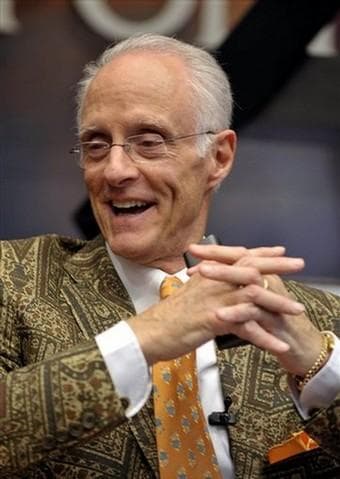
Robin Cook is an American author known for his medical thrillers. His notable works include "Outbreak," which explores the spread of a deadly virus, "Chromosome 6," focusing on genetic engineering, "Toxin," which delves into bioterrorism, and "Vector," centered around a new strain of a virus. Cook's fiction often combines elements of medicine and suspense.
Similar books
- The Andromeda Strain
Michael Crichton
3.9 (223k) average on GoodreadsThrillerFeatures a scientific team racing to contain a deadly biological threat.
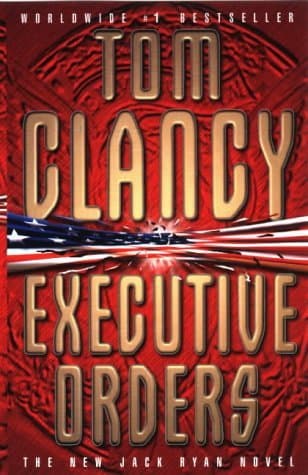
- Executive Orders
Tom Clancy
4.1 (46k) average on GoodreadsPoliticsInvolves a large-scale bioterrorism plot against the United States.
- Angels & Demons
Dan Brown
3.9 (2.7M) average on GoodreadsThrillerA Harvard symbologist races through Rome's ancient sites, deciphering cryptic clues to unmask the Illuminati and stop a vengeful plot to destroy the Vatican with a stolen antimatter weapon.
- Gone Girl
Gillian Flynn
4.1 (2.3M) average on GoodreadsThrillerA wife's sudden disappearance on her fifth anniversary reveals a web of lies and psychological warfare, exposing the secrets within a seemingly perfect marriage.
- The Girl on the Train
Paula Hawkins
3.9 (2.1M) average on GoodreadsThrillerA woman’s fascination with a seemingly perfect couple she watches from her daily train commute leads her into a dark investigation when she witnesses something that shatters their idyllic image.
- The Da Vinci Code
Dan Brown
3.9 (1.9M) average on GoodreadsThrillerA symbologist and a cryptologist race through European landmarks, deciphering ancient codes and uncovering a conspiracy that could rewrite the foundations of Christianity.





Enjoyed the summary?
A summary gives you the shape of the book. The book itself has the detail, the examples and the voice.
Find Vector on AmazonAs an Amazon Associate, BookBrief earns from qualifying purchases. How we're funded