
Synopsis
Covers the whole plot, including the ending.
- Difficulty
- Medium
- Pacing
- Moderate
- Mood
- Lyrical, Whimsical, Romantic, Mysterious, Enchanting
- Read it if
- You love lyrical prose, magical realism, queer romance, and stories about finding your true self.
- Skip it if
- You prefer fast-paced plots and clear-cut fantasy systems over atmospheric, character-driven narratives.
When the Moon Was Ours Plot Summary
Covers the whole plot, including the ending.
The Roses on Miel's Wrist
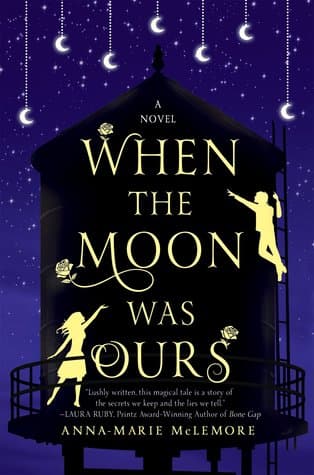
Miel and Sam have been best friends since childhood in their small, unnamed town. Miel is known for the roses that grow from her left wrist, which she tends to and sometimes gifts to Sam. Rumors circulate about her origin, with many believing she emerged from the town's water tower at age five. Sam, an artistic and quiet boy, paints moons that he hangs in the trees, creating a personal, luminous forest. He lives with his mother, who is often absent, and the details of his past before arriving in town are a mystery. Their unusual traits and close bond set them apart from other teenagers, but they find comfort and understanding in each other's company.
The Bonner Girls' Obsession
The Bonner girls—Erzebet, Lenore, Rosamund, and the youngest, Agnes—are four beautiful, enigmatic sisters from a wealthy family, widely rumored to be witches. They are known for their captivating presence and their ability to charm, or perhaps curse, anyone they choose. The Bonner girls become fixated on the roses growing from Miel's wrist, believing that the flowers possess a powerful magic: their scent, they are convinced, can make anyone fall in love with the person who holds them. Their desire for Miel's roses grows into an obsession, foreshadowing a direct confrontation with Miel and Sam.
Unraveling Miel's Past
As the Bonner girls increase their efforts to get Miel's roses, they begin to uncover and use the secrets surrounding Miel's past. They reveal details about her mysterious emergence from the water tower, hinting at a connection to magic and a life before her current existence. These revelations deeply unsettle Miel, who has always known her origins were unusual but has suppressed the full truth. The Bonner girls use this leverage to manipulate Miel, threatening to expose her secrets to the entire town if she doesn't give them the roses. This puts immense pressure on Miel, forcing her to confront her identity and the magical nature of her being.
Sam's Secret and the Moons
Sam has a deep secret: under the full moon, he transforms into a girl. This magical transformation is a personal and often painful experience for him, and he has kept it hidden from everyone, even Miel. His artistic obsession with painting moons and hanging them in the trees is a way for him to control and understand this part of himself, creating a safe, magical space. The moons he creates symbolize his dual identity and his longing for acceptance. This revelation explains much of Sam's reclusiveness and his deep connection to the celestial, while adding complexity to his relationship with Miel.
The Truth of Miel's Birth
Miel's true origin is revealed: she is a water spirit, brought to life when a lonely boy wished upon a water tower for a companion. The roses on her wrist are a physical sign of this magical birth, growing from her very essence. This powerful act of creation explains her unique connection to nature and her mysterious appearance in the town. This truth, when fully understood, gives Miel a sense of identity and purpose, but also highlights her vulnerability to those who seek to use her magic. It solidifies her unique place in the magical fabric of the town and her deep, almost fated, connection to Sam.
The Bonner Girls' Ritual
The Bonner girls, having acquired Miel's roses through coercion, begin to prepare a powerful love spell. They intend to use the roses' supposed magical properties to ensnare the affections of their desired targets, particularly a group of boys they covet. Their ritual is elaborate, steeped in family lore and dark magic, reflecting their reputation as witches. They believe the roses will grant them irresistible charm, allowing them to control the objects of their desire. This scene emphasizes the Bonner girls' ambition and their willingness to use manipulative magic to achieve their goals, setting the stage for a dramatic confrontation with Miel and Sam.
Sam's Confession and Miel's Acceptance
Driven by his love for Miel and the increasing danger from the Bonner girls, Sam finally confesses his deepest secret: his transformation into a girl under the full moon. He reveals the vulnerability and fear he lives with, expecting rejection. However, Miel, whose own existence is founded on magic and difference, embraces Sam completely. She sees his transformations not as a flaw, but as another beautiful and intrinsic part of him. This moment solidifies their bond, deepening their love and mutual understanding, and empowers them both to face the challenges ahead. Miel's acceptance validates Sam's identity and strengthens their partnership.
The Confrontation at the Bonner House
Miel and Sam, now united and stronger in their understanding of each other's true selves, confront the Bonner girls at their lavish, secluded home. Their goal is to reclaim Miel's roses and prevent the Bonner sisters from completing their love spell, which they fear will have unforeseen and potentially harmful consequences. The confrontation is tense, filled with magical threats and emotional accusations. The Bonner girls, confident in their power, initially mock Miel and Sam, but the pair's unwavering resolve and their combined magical presence begin to challenge the sisters' dominance. This scene marks the climax of the conflict between the two magical factions.
The Revelation of the Bonner Girls' Vulnerability
During the confrontation, Miel and Sam discover that the Bonner girls' desire for the roses and their pursuit of love is rooted in their own insecurities and loneliness. Despite their outward beauty and magical prowess, the sisters long for genuine connection and fear being unloved. Their magic, it is revealed, is often a desperate attempt to control what they perceive as uncontrollable: affection and belonging. This revelation humanizes the antagonists, showing that their villainy stems from a relatable desire, though one they pursue through manipulative means. It shifts the narrative from pure good versus evil to a more nuanced understanding of their motivations.
The True Nature of the Roses
The climax reveals the true nature of the roses growing from Miel's wrist. They are not a tool for forced love or magical manipulation, but rather a manifestation of genuine, selfless love and connection. Their scent doesn't compel affection but rather enhances existing feelings, creating a deeper, more authentic bond. Miel's roses symbolize the purity and power of true love, contrasting sharply with the Bonner girls' attempt to create artificial affection. This understanding allows Miel to use her magic not as a weapon, but as a source of healing and connection, ultimately disarming the Bonner girls' spell and their intentions.
A New Understanding and Forgiveness
Following the confrontation, a fragile truce is reached. Miel and Sam, now fully embracing their magical identities and their love for each other, offer a different path to the Bonner girls. They show that true love cannot be forced or stolen but must be given freely. This understanding begins to soften the Bonner sisters, particularly the youngest, Agnes, who shows signs of regret. While not an immediate friendship, there is a glimmer of mutual respect and the possibility of forgiveness, suggesting that the Bonner girls might eventually find genuine connection without resorting to manipulative magic. It marks a shift towards healing and acceptance within the magical community of the town.
Embracing Their True Selves
With the threat of the Bonner girls diminished and their secrets fully revealed to each other, Miel and Sam fully embrace their magical identities. Miel accepts her origin as a water spirit and the roses as a part of her essence. Sam finds peace and strength in his moon-induced transformations, no longer viewing them as a curse but as a unique aspect of his being. Their love for each other deepens, now built on complete honesty and acceptance of their individual magical natures. They become stronger, more confident versions of themselves, ready to face the world as their authentic, magical selves, together.
A Future of Shared Magic
In the aftermath of their trials, Miel and Sam look to a future where their intertwined magic can flourish. Miel's roses and Sam's moon transformations are no longer sources of fear or secrecy, but rather gifts they share and celebrate. They imagine a life where their unique abilities complement each other, creating a space of beauty and acceptance. Their love story shows the power of embracing one's true self, even when that self is magical and unconventional. The ending is hopeful, suggesting a continued journey of discovery and shared magic for the two protagonists, solidifying their bond and their place in the world.
Principal Figures
Miel
Protagonist
A girl with roses growing from her wrist, whose origin is a mystery.
Miel is a quiet, introspective girl whose left wrist is adorned with constantly blooming roses. She is fiercely loyal to Sam, her best friend, and deeply cares for their shared, unconventional life. Initially, Miel is somewhat passive about her magical nature, often trying to hide or downplay the roses. She carries the weight of her unknown origins, which makes her vulnerable to manipulation. Despite her soft demeanor, she possesses an inner strength and a deep capacity for love and acceptance.
Relationships: Sam (Best friend and romantic interest; deep, unconditional love and mutual understanding.); Bonner Girls (Antagonists; they covet her roses and exploit her secrets.)
Sam
Protagonist
An artistic boy who paints moons and secretly transforms under their light.
Sam is Miel's best friend and romantic interest, a sensitive and artistic boy who is known for painting and hanging moons in trees. He is protective of Miel and harbors a profound secret: he transforms into a girl under the full moon. This secret makes him reclusive and somewhat isolated, constantly fearing exposure. He is deeply in love with Miel and finds solace in their unique bond, but struggles with the shame and fear surrounding his transformations. He is observant, intuitive, and ultimately courageous in revealing his true self.
Relationships: Miel (Best friend and romantic interest; deep, unconditional love and mutual understanding.); Bonner Girls (Antagonists; they threaten his and Miel's secrets.)
Erzebet Bonner
Antagonist
The eldest and most formidable of the Bonner sisters, rumored to be a witch.
Erzebet is the eldest of the Bonner sisters, beautiful, commanding, and the primary instigator in their pursuit of Miel's roses. She is cunning and manipulative, using her family's reputation and wealth to exert influence. She genuinely believes in the power of the roses to grant love and is driven by a desire for control and affection, though she seeks it through magical coercion rather than genuine connection. Her ambition often overshadows any underlying vulnerability she might possess.
Relationships: Miel (Adversary; she covets Miel's roses for a love spell.); Sam (Adversary; she seeks to exploit his and Miel's secrets.); Lenore, Rosamund, Agnes Bonner (Sisters; leader of the group, maintains control over them.)
Lenore Bonner
Supporting/Antagonist
The second Bonner sister, who assists in their magical endeavors.
Lenore is the second of the Bonner sisters, often acting as Erzebet's closest confidante and enforcer. She is equally beautiful and shares her sisters' belief in their magical abilities. Lenore is less outwardly aggressive than Erzebet but is just as determined in their collective goals. She is skilled in supporting their rituals and maintaining their mysterious facade. Like her sisters, she is driven by a desire for love and acceptance, albeit through magical means.
Relationships: Miel (Adversary; helps in the pursuit of Miel's roses.); Erzebet, Rosamund, Agnes Bonner (Sisters; supportive of Erzebet's plans.)
Rosamund Bonner
Supporting/Antagonist
The third Bonner sister, who contributes to their magical schemes.
Rosamund is the third Bonner sister, known for her beauty and her participation in the family's magical schemes. She often follows the lead of her older sisters, particularly Erzebet, but she may occasionally show a flicker of doubt or a more introspective side. Her motivations are similar to her sisters', seeking love and attention through their perceived magical power. She is an active participant in their attempts to acquire Miel's roses and perform the love spell.
Relationships: Miel (Adversary; helps in the pursuit of Miel's roses.); Erzebet, Lenore, Agnes Bonner (Sisters; follows their lead in magical endeavors.)
Agnes Bonner
Supporting/Antagonist
The youngest Bonner sister, who shows a glimmer of conscience.
Agnes is the youngest of the Bonner sisters, and while she participates in their schemes, she often appears more vulnerable and less certain than her older siblings. She is beautiful like her sisters but seems to possess a nascent conscience or a greater capacity for empathy. Agnes is initially drawn into the pursuit of Miel's roses, but as the confrontation unfolds, she begins to question the morality and effectiveness of their manipulative magic. She represents the potential for change within the Bonner family.
Relationships: Miel (Adversary; later shows empathy towards Miel.); Erzebet, Lenore, Rosamund Bonner (Sisters; often follows their lead but shows signs of independent thought.)
Sam's Mother
Supporting/Mentioned
Sam's often absent mother, who knows of his secret.
Sam's mother is a somewhat mysterious and often absent figure in his life. She is aware of his magical transformations but struggles with how to support him, often leaving him to cope alone. Despite her physical absence, her presence looms as a reminder of his secret and his past. She represents the challenges of parental understanding and acceptance when faced with something as extraordinary as Sam's condition. Her love for Sam is implied, but her ability to act on it is limited.
Relationships: Sam (Mother-son; aware of his secret but often absent.)
Themes & Insights
Identity and Self-Acceptance
The novel explores identity, especially embracing one's true self, even if it is magical or unconventional. Miel's journey involves understanding and accepting her origin as a water spirit and the roses that manifest from her body. Sam grapples with his gender fluidity, hiding his transformations under the full moon. Both characters find peace and strength when they fully accept these intrinsic parts of themselves. This theme is central to their love story, as their acceptance of each other's unique identities solidifies their bond, exemplified when Miel embraces Sam's transformations without hesitation, allowing him to be his authentic self.
“You are the moon, and you are the sun. You are a boy, and you are a girl. You are everything, and you are mine.”
The Nature of Love (True vs. Forced)
A core theme is the contrast between genuine, selfless love and manipulative, forced affection. The Bonner girls believe Miel's roses can compel love, using them in a ritual to ensnare their desired partners. Their actions highlight the emptiness and danger of attempting to control another's emotions. In contrast, Miel and Sam's love is organic, built on acceptance, understanding, and shared vulnerability. The roses themselves are ultimately revealed not as tools for compulsion, but as manifestations of authentic connection, reflecting the idea that true love cannot be manufactured or stolen, but must be given freely. This distinction is crucial to the story's resolution and the characters' growth.
“Love wasn't something you took. It was something you were given.”
Belonging and Otherness
Miel and Sam are outsiders in their town due to their magical traits and mysterious pasts. They find a sense of belonging only with each other, creating their own world of acceptance. The town's rumors and fear of the Bonner girls further emphasize the discomfort with 'otherness.' The novel suggests that true belonging isn't found by conforming, but by embracing one's unique identity and finding those who accept it. Sam's moon forest and Miel's roses are symbols of their created space of belonging, a sanctuary from a world that often misunderstands them. Their journey is about finding their place in the world, together, on their own terms.
“Maybe the secret to being a human was to make yourself into a story that someone else could tell.”
Magic as a Reflection of Self
Magic in the novel is not just a plot device but an extension of the characters' inner selves and desires. Miel's roses are a physical manifestation of her origin and her capacity for pure love. Sam's moon transformations reflect his internal struggle with identity and his connection to celestial cycles. The Bonner girls' manipulative magic, though powerful, stems from their own insecurities and desperate longing for love and control. The story suggests that magic is deeply personal and reflects the wielder's true nature and intentions, making it a powerful metaphor for character and morality.
“Magic came from what you longed for, what you feared, what you were.”
Plot Devices & Literary Techniques
Magical Realism
Everyday settings imbued with fantastical elements.
The novel blends ordinary small-town life with extraordinary magical elements, such as roses growing from a girl's wrist, a boy who transforms under the moon, and a girl born from a water tower. These fantastical elements are presented matter-of-factly within the realistic setting, creating a sense of wonder and inviting the reader to accept the impossible as part of the characters' reality. This device allows for a deeper exploration of themes like identity and acceptance without requiring extensive world-building, grounding the magic in human experience and emotion.
Symbolism of the Moon
The moon represents transformation, hidden selves, and cycles.
The moon is a pervasive symbol, deeply connected to Sam's character and his secret. His artistic practice of painting and hanging moons reflects his internal struggle and his connection to his transformations. The moon's cyclical nature parallels Sam's own, representing his dual identity and the ebb and flow of his being. It also symbolizes hidden aspects, mystery, and the power of celestial forces on individual lives. The moon provides a backdrop for his most vulnerable moments and signifies the magic that shapes his existence.
Symbolism of the Roses
Roses represent love, vulnerability, and Miel's magical origin.
The roses growing from Miel's wrist are a central and multi-layered symbol. Initially, they represent her 'otherness' and vulnerability, attracting unwanted attention. As the story progresses, their true nature is revealed: they are not instruments of forced love but manifestations of genuine, selfless affection and Miel's unique, magical life force. They symbolize beauty, growth, and the delicate yet powerful nature of love. The roses become a metaphor for Miel's identity and her capacity for pure, unconditional love, contrasting with the Bonner girls' desire for manipulative magic.
The Water Tower
A place of mysterious origin and magical birth.
The town's water tower serves as a symbolic birthplace for Miel, linking her to the element of water and the magical circumstances of her arrival. It represents the unknown, the source of life, and the idea of being 'born' outside conventional means. The rumors surrounding Miel's emergence from the water tower highlight the town's perception of her as an anomaly. It is a tangible landmark that grounds Miel's fantastical origin in the otherwise mundane setting, emphasizing the magical realism of the narrative.
When the Moon Was Ours Quotes
“Miel was made of sunshine, and sometimes, when the light hit her just right, you could see the stars trapped in her skin.”
“Sometimes the people you thought were your enemies were just people who hadn't found their own kind of magic yet.”
“It was easy to fall in love with someone who made you feel like you were allowed to be your whole self.”
“The moon was ours, and it was a secret, and it was beautiful, and it was dangerous.”
“Some things are meant to be kept, even if you don't know why. They're just meant to be yours.”
“Boys like Sam were made of starlight and stories, and girls like Miel were made of sunflowers and secrets.”
“You can't choose who you love, but you can choose how you love them.”
“Every secret had a weight, and some were heavier than others.”
“Sometimes the most beautiful things grew out of the darkest places.”
“The world was full of magic, if you only knew where to look.”
“It wasn't a choice to be different; it was just how you were made.”
“Love wasn't about being perfect; it was about being perfectly imperfect together.”
“He braided flowers into her hair, and she braided stars into his.”
“To be seen, truly seen, was a kind of magic all its own.”
Quiz
10 questions on the plot and the characters. Each answer comes with a short explanation.
Question 1
What unusual physical characteristic does Miel possess that is a central plot point?
- She has hair that changes color with the moon phases.
- Roses grow out of her wrists.
- Her skin shimmers like moonlight.
- She has eyes that glow in the dark.
Show answer
B. Roses grow out of her wrists. The synopsis explicitly states, 'Roses grow out of Miel’s wrist,' and this unique feature is what the Bonner girls desire.
Question 2
What is Sam known for creating and hanging in the trees?
- Intricate dreamcatchers made of woven leaves.
- Tiny glass vials filled with starlight.
- Paintings of moons.
- Sculptures of animals from found objects.
Show answer
C. Paintings of moons. The synopsis mentions, 'Sam is known for the moons he paints and hangs in the trees.'
Question 3
What rumor circulates about Miel's origin when she was five?
- She was found abandoned in a field of sunflowers.
- She emerged from a mysterious fog in the woods.
- She spilled out of a water tower.
- She arrived on a boat that drifted ashore.
Show answer
C. She spilled out of a water tower. The synopsis states, 'rumors say that she spilled out of a water tower when she was five.'
Question 4
What do the Bonner girls believe the scent of the roses from Miel's skin can do?
- Grant wishes.
- Make anyone fall in love.
- Heal any illness.
- Reveal the future.
Show answer
B. Make anyone fall in love. The synopsis clearly states the Bonner girls 'are convinced that their scent can make anyone fall in love.'
Question 5
What is the primary reason the Bonner girls are interested in Miel?
- They want to befriend her and Sam.
- They are jealous of her unique beauty.
- They want the roses that grow from her skin.
- They suspect her of being a rival witch.
Show answer
C. They want the roses that grow from her skin. The synopsis explicitly states, 'Now they want the roses that grow from Miel’s skin,' indicating their primary motivation.
Question 6
What is the general perception of Miel and Sam by the townspeople?
- They are admired for their artistic talents.
- They are considered strange but inseparable best friends.
- They are seen as community leaders due to their unique abilities.
- They are feared due to their mysterious origins.
Show answer
B. They are considered strange but inseparable best friends. The synopsis begins by stating, 'To everyone who knows them, best friends Miel and Sam are as strange as they are inseparable.'
Question 7
What is hinted about the Bonner girls' nature?
- They are known for their philanthropy.
- They are rumored to be witches.
- They are celebrated musicians.
- They are reclusive scholars.
Show answer
B. They are rumored to be witches. The synopsis mentions the Bonner girls are 'four beautiful sisters rumored to be witches.'
Question 8
What tactic are the Bonner girls willing to employ to get what they want from Miel?
- They offer her a large sum of money.
- They threaten to reveal Miel's protected secrets.
- They attempt to charm her with gifts and flattery.
- They try to convince Sam to persuade Miel.
Show answer
B. They threaten to reveal Miel's protected secrets. The synopsis states, 'And they’re willing to use every secret Miel has fought to protect to make sure she gives them up.'
Question 9
What aspect of Sam's past is emphasized as being largely unknown?
- His artistic training.
- His family's history in the town.
- His life before he and his mother moved to town.
- His relationship with Miel's parents.
Show answer
C. His life before he and his mother moved to town. The synopsis highlights that 'little anyone knows about his life before he and his mother moved to town.'
Question 10
The conflict with the Bonner girls primarily revolves around what core theme?
- The power of artistic expression.
- The danger of forbidden love.
- The struggle to protect one's unique identity and secrets.
- The importance of community acceptance.
Show answer
C. The struggle to protect one's unique identity and secrets. The Bonner girls' desire for Miel's roses and their willingness to use her 'secrets Miel has fought to protect' directly relates to the theme of safeguarding one's unique identity and personal truths.
When the Moon Was Ours FAQ
What is the core premise of 'When the Moon Was Ours'?
The story centers on best friends Miel and Sam, who are both unique: Miel has roses growing from her wrists and a mysterious origin, while Sam paints moons and has an unknown past. Their bond is tested when the four Bonner sisters, rumored witches, demand Miel's roses, believing they hold the power to compel love, and are willing to exploit Miel's deepest secrets to get them.
Who are Miel and Sam, and what makes their friendship central to the plot?
Miel is a girl with literal roses blooming from her wrists, rumored to have emerged from a water tower. Sam is a boy who paints and hangs moons in trees, with a mysterious past before he arrived in town. Their deep, almost symbiotic friendship is the emotional anchor of the story, defining their identities and providing mutual support against a world that often sees them as oddities, especially when confronted by the Bonner sisters.
What role do the Bonner sisters play in the narrative?
The Bonner sisters are four beautiful, enigmatic siblings rumored to be witches. They act as the primary antagonists, fixated on acquiring the roses growing from Miel's wrists. Their desire for these roses, which they believe possess potent love magic, drives much of the conflict, as they use manipulation and threats to coerce Miel, forcing her and Sam to confront long-buried secrets.
What is the significance of the roses growing from Miel's wrists?
The roses are a physical manifestation of Miel's magical and mysterious origin, linked to her transformation from a boy into a girl and her connection to the water tower. They are not merely an oddity but a symbol of her unique identity and power, making them highly coveted by the Bonner sisters for their supposed ability to induce love, which becomes a central plot device.
How does the town's perception of Miel and Sam contribute to the story's atmosphere?
The town views Miel and Sam as strange but largely tolerates them, creating an atmosphere of subtle otherness and isolation. This perception reinforces their bond and highlights their reliance on each other, while also setting the stage for the more overt conflict with the Bonner sisters, who represent a different, more predatory kind of 'other' magic that directly threatens Miel.
What is the true origin of Miel's roses, beyond the rumors?
The roses are a magical consequence of Miel's transformation. She was originally a boy named Michael, who, after a traumatic event involving the Bonner sisters and a wish for beauty, was reborn from the water tower as Miel, with roses blooming from her wrists as a physical manifestation of her new, beautiful, and feminine identity.
What is the significance of Sam's painted moons?
Sam's painted moons are deeply symbolic of his own identity and his relationship with Miel. They represent his longing for a stable home and his hidden magical ability to create ephemeral beauty. More profoundly, they are a physical manifestation of his love and devotion to Miel, serving as guiding lights and a constant presence in her life.
How are the Bonner sisters connected to Miel's past transformation?
The Bonner sisters are directly implicated in Miel's past. They were involved in the event that led to Michael's initial wish for beauty and subsequent transformation in the water tower. Their magic and desires were instrumental in shaping the circumstances that brought Miel into being, creating a deep, unresolved history between them.
What is Sam's hidden magical ability, and how does it manifest?
Sam possesses the magical ability to paint objects into existence, specifically his moons. While they are temporary and fade, their creation is a genuine act of magic, reflecting his deep emotional connection to the world and Miel. This ability is a secret he guards, much like Miel's roses, and it underscores his unique nature.
How does Miel's gender identity journey influence her character development?
Miel's journey as a transgender girl, having been reborn from Michael, is central to her character. It informs her deep desire for acceptance and beauty, her protectiveness of her roses, and her reliance on Sam, who knew her before and loves her for who she is now. This internal struggle for self-acceptance and affirmation is a powerful undercurrent throughout the narrative.
Discuss the psychological impact of secrets on Miel and Sam.
Both Miel and Sam carry significant secrets, which create a shared burden and deepen their bond, but also cause anxiety and fear. Miel's secret about her past gender and origin, and Sam's secret about his magical abilities and his role in Miel's transformation, create internal conflict and make them vulnerable to manipulation, particularly by the Bonner sisters.
How does the theme of 'beauty' manifest psychologically for the characters?
Beauty is a complex theme. For Miel, it's tied to her identity and transformation; her roses are a symbol of her desired beauty and femininity. For the Bonner sisters, beauty is a tool of power and manipulation, something to be acquired and controlled. For Sam, beauty is something he creates and cherishes, particularly in Miel, showing a deeper appreciation beyond surface-level aesthetics.
What psychological motivations drive the Bonner sisters' obsession with Miel's roses?
The Bonner sisters are driven by a deep-seated desire for control, power, and perhaps a desperate need for genuine love or affection, which they believe the roses can compel. Their obsession stems from a belief that the roses hold the key to manipulating others' emotions, reflecting their own inability or unwillingness to form authentic connections.
Is the magic in the story literal or metaphorical, and why?
The magic in 'When the Moon Was Ours' is largely literal, with roses growing from wrists, painted moons appearing, and transformations occurring. However, it also functions metaphorically, representing the characters' inner truths, desires, and the unique ways they navigate their identities and relationships. The literal magic grounds the fantastical elements while allowing for deeper symbolic interpretations.
How does the book explore the concept of chosen family versus biological family?
The novel strongly emphasizes chosen family through Miel and Sam's bond, which is deeper and more supportive than any biological ties. Miel's experience of being 'reborn' and Sam's mysterious past highlight their reliance on each other for acceptance and understanding. The Bonner sisters, despite being biological siblings, demonstrate a dysfunctional and manipulative familial dynamic, contrasting sharply with Miel and Sam's loving connection.
What is the ultimate message about love that the book conveys?
The book conveys that true love is not something that can be compelled or forced, as the Bonner sisters attempt to do with the roses. Instead, it is an authentic, accepting, and transformative force built on mutual understanding, shared secrets, and unwavering support, as exemplified by Miel and Sam's profound relationship. Love is about seeing and cherishing someone for who they truly are, including their magical and hidden selves.
How does the setting of the small, insular town contribute to the themes of the book?
The small, insular town setting amplifies the themes of otherness, secrecy, and the struggle for acceptance. In such a close-knit community, Miel and Sam's peculiarities stand out more, fostering both curiosity and suspicion. This environment forces them to rely heavily on each other, and it also makes the Bonner sisters' manipulative tactics more effective within the confined social dynamics.
What is the significance of the water tower in Miel's story?
The water tower is a profoundly significant symbol and location in Miel's story. It is where Michael, after a traumatic event, makes a wish for beauty and is subsequently reborn as Miel, emerging with roses blooming from her wrists. The water tower represents transformation, rebirth, and the mystical origin of Miel's unique identity.
About the author

Anna-Marie McLemore is a renowned author celebrated for their magical realism and lyrical prose, often exploring themes of identity, family, and folklore. Their notable works include the award-winning "When the Moon Was Ours" and the critically acclaimed "Dark and Deepest Red." McLemore's writing is lauded for its rich imagery and authentic representation of diverse experiences within the young adult fiction genre.
Similar books
- The Strange and Beautiful Sorrows of Ava Lavender
Leslye Walton
4.1 (35k) average on GoodreadsFantasyShares a magical realism style, focus on unique family traits, and a bittersweet tone.
- The Scorpio Races
Maggie Stiefvater
4.1 (98k) average on GoodreadsFantasyBoth books feature strong magical realism and unique, often dangerous, magical elements. However, Stiefvater's novel is generally more plot-driven and action-oriented, with a clearer external conflict driving the narrative, whereas McLemore's focuses more on internal character journeys and atmospheric storytelling.
- A Court of Thorns and Roses
Sarah J. Maas
4.2 (476k) average on GoodreadsFantasyWhile both are YA fantasy with strong romantic elements, Maas's series tends to prioritize intricate world-building, high-stakes action, and explicit romantic tension. McLemore's When the Moon Was Ours offers a more introspective, symbolic, and gentle approach to magic and romance, with a deeper focus on identity and psychological depth rather than epic battles or political intrigue.
- Harry Potter and the Sorcerer's Stone
J.K. Rowling
4.5 (7M) average on GoodreadsFantasyRescued from a miserable life under the stairs, an orphaned boy discovers he's a wizard destined for a magical school, where he uncovers a dangerous secret tied to the dark wizard who murdered his parents.
- The Hunger Games
Suzanne Collins
4.3 (6.4M) average on GoodreadsFantasyIn a future where children fight to the death on live television, Katniss Everdeen volunteers for the arena, turning a death sentence into a fight for survival and a spark of rebellion.
- 1984
George Orwell
4.2 (3.1M) average on GoodreadsPoliticsIn a future where surveillance and thought control are absolute, a man's search for truth clashes with the Party, showing that hope can be a form of rebellion.





Enjoyed the summary?
A summary gives you the shape of the book. The book itself has the detail, the examples and the voice.
Find When the Moon Was Ours on AmazonAs an Amazon Associate, BookBrief earns from qualifying purchases. How we're funded