

Synopsis
Covers the whole plot, including the ending.
- Difficulty
- Medium
- Pacing
- Moderate
- Mood
- Suspenseful, Melancholy, Introspective, Dark
- Read it if
- You enjoy complex, character-driven mysteries with multiple perspectives and a strong focus on community secrets and past traumas.
- Skip it if
- You prefer fast-paced thrillers without extensive emotional depth or find stories involving infant death too distressing.
Where They Found Her Plot Summary
Covers the whole plot, including the ending.
The Discovery in the Woods
After a harsh winter, a newborn infant's body is found in the woods near Ridgedale University in Ridgedale, New Jersey. This discovery shocks the affluent community. Molly Anderson, a freelance journalist new to Ridgedale, reluctantly takes on the story for the local paper. Molly is still dealing with deep grief after losing her own baby, making this assignment especially difficult. Despite her hesitation, she starts investigating, hoping to find answers about the baby's identity and death.
Molly's Investigation Begins
Molly begins her investigation, attending press conferences and interviewing locals, including police chief Frank Giardello. She quickly notices the community's unwillingness to discuss the incident, met with silence and suspicion. Her first inquiries reveal conflicting reports and rumors about the baby's origins and possible university student involvement. As Molly digs deeper, the case brings up painful memories of her own past and infertility struggles, creating a personal connection that complicates her journalistic objectivity.
Barbara's Son and Unsettling Behavior
Barbara, a prominent PTA president and seemingly perfect mother in Ridgedale, grows worried about her young son, Toby. Toby starts showing concerning behaviors, drawing unsettling pictures and making strange comments about 'the baby.' These outbursts are unusual and deeply trouble Barbara, who struggles to understand them. She fears Toby might have seen something related to the infant's death or is somehow connected, adding stress to her carefully managed life. Barbara's attempts to get Toby to talk are met with resistance and more cryptic remarks.
Sandy's Search for Her Mother
Sandy, a high school dropout living on the edge of Ridgedale society, faces her own crisis: her mother, Lena, is missing. Lena is volatile and unpredictable with a history of drug abuse, but her sudden disappearance still alarms Sandy. Sandy's search is complicated by their strained relationship and Lena's unreliable nature. She checks their usual spots and contacts Lena's acquaintances, all while dealing with feelings of abandonment and responsibility. Sandy's desperate search connects with the broader mystery, hinting at a link to the town's darker side.
The First Clues to a Cover-Up
As Molly continues her investigation, she uncovers an old, hushed-up incident from twenty years prior involving a female university student and an alleged sexual assault that was never officially reported. This discovery makes Molly suspect the infant's death might be linked to a long pattern of secrecy within the university and the town's elite. She starts to connect the dots, realizing the community's facade might hide deeper, more sinister truths. Molly's research suggests powerful figures may want to keep certain past events hidden.
Barbara's Past Resurfaces
Toby's increasingly disturbing drawings and comments about the baby start to trigger Barbara's own repressed memories. She begins to recall fragments of a traumatic event from her past, specifically from her time as a student at Ridgedale University twenty years ago. These memories are hazy and painful, involving a party, alcohol, and a feeling of violation that she had long suppressed. Barbara's perfect life begins to fall apart as the past intrudes, forcing her to confront a buried truth she had tried to forget, and making her question her role in the town's history.
Sandy's Mother and the Woods
Sandy's search for Lena leads her to discover that her mother had an unexpected connection to the woods where the baby was found, and possibly to the university campus itself. She learns that Lena, despite her troubled life, had some knowledge or involvement with events that took place years ago, possibly linked to the same period Barbara is remembering. This revelation adds a new layer to Lena's disappearance and suggests her mother might be more than just a missing person; she could be a key witness or even a victim of the past events Molly is investigating, further connecting their lives.
The Intertwined Pasts
Molly's persistent investigation reveals a shocking link between Barbara, Lena, and the unreported sexual assaults from twenty years ago. She discovers that both women were students at Ridgedale University at the time and were, in different ways, involved in the events surrounding a specific incident. Molly pieces together how the town's powerful figures, including some connected to the university, actively worked to cover up these assaults to protect their reputations and the institution's image. This confirms Molly's suspicions of a deep conspiracy within Ridgedale.
The Truth About the Baby's Mother
Through evidence and confessions, Barbara is finally revealed as the infant's mother. The baby was conceived during the traumatic sexual assault Barbara experienced twenty years prior, an event she had repressed for decades. This shocking truth rocks Ridgedale, dismantling Barbara's carefully built life and exposing the hypocrisy beneath the town's surface. This explains Toby's disturbing behavior, as he had unknowingly stumbled upon evidence related to his mother's secret, possibly even finding the baby's body himself.
Lena's Role and Fate
It is revealed that Lena, Sandy's mother, was present during Barbara's assault twenty years ago and tried to help her, but was then silenced and marginalized by the powerful figures involved in the cover-up. Lena had lived with the guilt and trauma of that night, which contributed to her decline. Ultimately, it is discovered that Lena, in a desperate attempt to expose the truth and protect Barbara, had taken the baby from where Barbara had left her after giving birth, intending to bring the infant to safety or reveal the story. However, Lena herself died in the woods, likely from exposure or her drug use, leaving the baby's body to be discovered later.
Confrontation and Confession
Armed with the full truth, Molly confronts the people responsible for Barbara's assault and the twenty-year cover-up, including prominent university and community members. The weight of the evidence and public scrutiny from Molly's reporting force confessions. The scandal reveals deep corruption and abuse of power in Ridgedale, leading to arrests and the dismantling of the network that protected the perpetrators. Molly's pursuit of truth brings justice and accountability to the victims and their families, even as the town deals with its shattered image.
Aftermath and Healing
Afterward, Ridgedale faces its dark past. Barbara begins the long process of healing from her trauma and accepting the truth about her son's origins, finding support from unexpected sources. Sandy, though devastated by her mother's death, finds closure and purpose in understanding Lena's final actions and her attempt to do good. Molly, having confronted her own issues during the investigation, finds renewed purpose and peace. The three women, whose lives were connected by tragedy, start new paths forward, changed forever by the truths they uncovered.
Where They Found Her Characters
Molly Anderson
Protagonist
A freelance journalist grappling with personal loss, who uncovers Ridgedale's dark secrets.
Molly is a recent transplant to Ridgedale, working as a freelance journalist. She is haunted by the recent loss of her own baby, which has left her in a deep depression and struggling with infertility. Intelligent and tenacious, Molly is initially reluctant to cover the infant's death but finds herself drawn into the mystery, driven by a need for truth and perhaps a subconscious desire to find meaning in her own grief. She possesses a strong sense of justice and is unafraid to challenge authority, even when it puts her at risk.
Relationships: Barbara (Initially a source for the story, later revealed to be deeply connected to the central mystery.); Sandy (An investigative subject who eventually becomes an ally in uncovering the truth.); Frank Giardello (Local police chief, initially a source, later a reluctant ally.)
Barbara
Protagonist/Victim
A seemingly perfect PTA president whose curated life hides a devastating, repressed trauma.
Barbara is a pillar of the Ridgedale community, a devoted mother, and an active PTA president, meticulously maintaining an image of perfection. Beneath this polished exterior, she carries a deep, repressed trauma from her youth. Her life is upended when her young son, Toby, starts exhibiting disturbing behaviors related to the discovered infant, forcing her to confront the memories she has long buried. She is initially resistant to facing her past but is ultimately driven by a desire to protect her son and understand her own fractured history.
Relationships: Toby (Her young son, whose behavior triggers her repressed memories and is central to the mystery.); Molly Anderson (The journalist who uncovers Barbara's past, eventually leading to her truth being revealed.); Lena (A fellow university student who witnessed Barbara's assault and tried to help her.)
Sandy
Protagonist/Witness
A high school dropout searching for her missing mother, intertwined with Ridgedale's darker side.
Sandy is a young, marginalized woman from the working-class side of Ridgedale, a high school dropout who lives with her volatile, drug-addicted mother, Lena. She is fiercely loyal despite their difficult relationship and is desperate to find Lena when she disappears. Sandy navigates the town's underbelly, providing a stark contrast to the affluent world of Barbara and the university. Her journey reveals a different perspective on Ridgedale's secrets and the lasting impact of its past on those less privileged.
Relationships: Lena (Her missing, volatile mother, whose life and death are crucial to the plot.); Molly Anderson (Initially wary, she eventually provides Molly with crucial information about Lena and the town.); Barbara (Unbeknownst to her, her mother Lena's past is deeply intertwined with Barbara's.)
Lena
Supporting/Victim
Sandy's missing, troubled mother, whose past holds key answers to the central mystery.
Lena is Sandy's mother, a woman struggling with drug addiction and a volatile personality. She has a history of being unreliable, but her sudden disappearance raises alarm. Lena was a student at Ridgedale University twenty years prior and witnessed Barbara's sexual assault, attempting to intervene. She was subsequently marginalized and silenced, carrying the trauma and guilt of that night throughout her life, which contributed to her downward spiral. Her final actions are crucial to understanding the fate of the infant.
Relationships: Sandy (Her daughter, for whom she has a complex, troubled love.); Barbara (The victim of the assault Lena witnessed, whose secret she tried to protect.); Molly Anderson (The journalist who uncovers Lena's true role in the past events.)
Toby
Supporting
Barbara's young son, whose unsettling behavior inadvertently reveals hidden truths.
Toby is Barbara's young son, a seemingly normal child until he begins to exhibit disturbing behaviors, drawing unsettling pictures and making cryptic comments about 'the baby.' His actions serve as a catalyst for Barbara to confront her repressed memories and provide crucial, albeit innocent, clues to the central mystery. Toby's sensitivity and innocence are contrasted with the dark secrets he unknowingly unearths, making him a vulnerable and pivotal character in the narrative.
Relationships: Barbara (His mother, whose past trauma he unknowingly helps to expose.); Molly Anderson (His comments provide clues to Molly's investigation.)
Frank Giardello
Supporting
The local police chief who initially presents a facade of control but is part of the community's secrets.
Frank Giardello is the police chief of Ridgedale. He initially appears to be a straightforward law enforcement officer, but as Molly's investigation progresses, it becomes clear that he is either complicit in, or at least aware of, the town's historical cover-ups. He represents the institutional resistance to uncovering uncomfortable truths, prioritizing the town's image over justice. However, he is not entirely corrupt and eventually assists Molly, albeit reluctantly, when the evidence becomes undeniable.
Relationships: Molly Anderson (Initially a professional contact, then an adversary, eventually a reluctant collaborator.)
Dr. Miller
Mentioned/Antagonist
A prominent university figure involved in the original assault and subsequent cover-up.
Dr. Miller is a powerful and respected figure within Ridgedale University, implicated in the sexual assault on Barbara twenty years prior and instrumental in orchestrating the subsequent cover-up. He represents the corrupting influence of power and privilege, willing to go to great lengths to protect his reputation and the university's image, even at the expense of justice and victim well-being. His actions underscore the systemic nature of the town's secrets.
Relationships: Barbara (The victim of his assault.); Molly Anderson (The journalist who exposes his crimes.)
Molly's Husband (Patrick)
Supporting
Molly's supportive husband, who struggles with her grief and dedication to the case.
Molly's husband is a supportive but often concerned figure in her life. He grapples with Molly's deep depression following the loss of their baby and her intense dedication to the Ridgedale infant case. He represents the personal cost of Molly's investigation, as her immersion in the tragedy sometimes strains their relationship. He is a grounding force for Molly, reminding her of her own well-being, but also understands her need to pursue the truth.
Relationships: Molly Anderson (Her loving and supportive husband.)
Where They Found Her Themes
The Weight of Secrets and Repression
The novel explores how secrets, especially those involving trauma and injustice, can fester for decades, affecting individuals and communities. Barbara's repressed memory of her assault and her child's birth shapes her entire adult life, leading to a controlled but fragile existence. Ridgedale also actively suppresses the truth of past assaults to maintain its image, creating a culture of silence that allows further harm. Molly's investigation brings these hidden truths to light, showing the destructive power of repression and the need to confront the past, as seen when Barbara finally remembers the assault.
“Some memories aren't meant to be remembered. Some truths are meant to stay buried.”
Social Class and Privilege
The contrast between Ridgedale's affluent residents and those on its margins, like Sandy and Lena, is a central theme. The novel shows how social class affects access to justice and protection. Powerful, wealthy families linked to Ridgedale University can cover up sexual assaults and manipulate the legal system, while Lena, a marginalized woman, is silenced and suffers the consequences of trying to do right. Molly, as an outsider, sees these disparities clearly, exposing how privilege enables impunity and perpetuates injustice, exemplified by Dr. Miller's long-standing protection.
“In Ridgedale, some secrets were just better kept, especially if they involved the right people.”
Motherhood and Loss
Motherhood in its various forms—desired, lost, traumatic, and unconventional—is a poignant theme. Molly's deep grief over her lost baby and her struggles with infertility inform her empathy and drive to solve the infant's mystery. Barbara's traumatic motherhood, born from assault and leading to repression, forms the core of her character. Sandy's complicated love for her flawed mother, Lena, and Lena's desperate act to protect the baby, highlight the sacrifices and complexities of maternal bonds. The infant's discovery forces all three women to confront their relationships with motherhood and loss.
“The weight of what she'd lost, what she might never have, settled over her like a shroud, making the baby's story almost unbearable.”
The Search for Truth and Justice
Molly Anderson's relentless search for the truth about the infant's death drives the story. Her journalistic integrity and personal empathy push her to dig deeper than others, challenging official stories and the community's desire to bury uncomfortable facts. The novel illustrates the difficult and often dangerous path to finding justice when powerful institutions and people want to maintain secrecy. Ultimately, exposing the twenty-year-old cover-up and the perpetrators' identities demonstrates truth's power to dismantle corruption, even at a great personal cost to those who seek it.
“Truth had a way of refusing to stay buried, no matter how deep you dug the hole.”
Plot Devices & Literary Techniques
Multiple Perspectives
The story is told through the alternating viewpoints of Molly, Barbara, and Sandy.
This device allows the reader to gradually piece together the complex narrative from different angles. Molly's perspective provides the investigative drive, Barbara's reveals the internal struggle and repressed trauma, and Sandy's offers insight into the marginalized aspects of the community and the consequences of the past. The alternating viewpoints build suspense and reveal how deeply intertwined the characters' lives are, culminating in a comprehensive understanding of the central mystery that a single perspective could not achieve.
Repressed Memory
Barbara's traumatic past is locked away in her subconscious, slowly resurfacing.
The device of repressed memory is central to Barbara's character arc and the unlocking of the central mystery. Her inability to fully recall the events of twenty years ago, particularly the sexual assault, creates a psychological layer of suspense. Toby's disturbing behavior acts as a trigger, gradually bringing these painful memories to the forefront. This device highlights the lasting impact of trauma and the mind's protective mechanisms, while also serving as a critical narrative tool for revealing plot points in a staggered, impactful manner.
Red Herring
Misleading clues or suspects are introduced to divert attention from the true perpetrators.
Throughout Molly's investigation, several red herrings are introduced, such as initial suspicions falling on university students or various local figures, creating doubt and misdirection. These diversions keep the reader guessing and prevent the true nature of the crime and the long-standing cover-up from being immediately obvious. For example, the early focus on the immediate circumstances of the baby's discovery distracts from the decades-old roots of the tragedy, making the ultimate revelation more impactful.
The Outsider Protagonist
Molly Anderson, new to Ridgedale, provides an unbiased lens for the investigation.
As a recent transplant to Ridgedale, Molly Anderson serves as the outsider protagonist. Her lack of pre-existing ties or biases within the community allows her to approach the investigation with a fresh, objective perspective, unburdened by the town's social hierarchies or ingrained secrets. This device enables her to ask uncomfortable questions and challenge established narratives that an insider might overlook or be afraid to confront, making her the ideal character to uncover the deep-seated corruption.
Where They Found Her Quotes
“It was a shame, really, how easily a life could unravel, how quickly the threads of normalcy could snap.”
“The past, like a ghost, always found a way to haunt the present.”
“Sometimes the greatest monsters weren't the ones hiding in the shadows, but the ones we invited into our homes.”
“Truth was a slippery thing, always shifting, always just out of reach.”
“Fear was a powerful motivator, capable of driving people to do unthinkable things.”
“The silence in the house was a living thing, heavy with unspoken words and hidden secrets.”
“Every family had its secrets, but some were buried deeper than others, festering until they poisoned everything.”
“It wasn't just about finding out what happened; it was about understanding why.”
“Grief was a labyrinth, and sometimes you just kept walking in circles, unable to find your way out.”
“The idyllic surface of the town hid a multitude of sins, like a beautiful painting concealing a dark sketch beneath.”
“Sometimes you had to break things to see how they truly worked, or how broken they already were.”
“The hardest part wasn't discovering the lie, but accepting that the person who told it was someone you thought you knew.”
“Justice, she realized, wasn't always about the law. Sometimes it was about making things right, no matter the cost.”
Quiz
10 questions on the plot and the characters. Each answer comes with a short explanation.
Question 1
What is the initial discovery that sets the central mystery in motion in Ridgedale?
- A missing student from the university
- The body of an infant in the woods
- Evidence of a cold case murder
- A significant financial scandal
Show answer
B. The body of an infant in the woods The story begins with the discovery of an infant's body in the woods near the university campus, which is the core mystery Molly Anderson investigates.
Question 2
Who is the freelance journalist tasked with covering the infant's death for the Ridgedale Reader?
- Barbara
- Sandy
- Molly Anderson
- Kimberly McCreight
Show answer
C. Molly Anderson Molly Anderson is the recent Ridgedale transplant and freelance journalist who is unexpectedly called upon to cover the story.
Question 3
What personal tragedy does Molly Anderson struggle with that makes covering the infant's death particularly challenging for her?
- The loss of her husband
- A career-ending injury
- Severe depression following the loss of her own baby
- Financial ruin
Show answer
C. Severe depression following the loss of her own baby Molly's severe depression following the loss of her own baby makes covering the infant's death a significant personal risk for her.
Question 4
Besides the infant's death, what other dark secret does Molly begin to uncover in Ridgedale?
- A widespread drug trafficking ring
- A string of unreported sexual assaults going back twenty years
- Embezzlement within the university administration
- A cult operating in the town
Show answer
B. A string of unreported sexual assaults going back twenty years Molly's investigation leads her to unearth a string of unreported sexual assaults that date back two decades, adding another layer to the town's secrets.
Question 5
Which character is described as a high school dropout searching for her volatile and missing mother?
- Molly
- Barbara
- Sandy
- The baby's mother
Show answer
C. Sandy Sandy is one of the three main perspectives, and her storyline involves searching for her missing and volatile mother.
Question 6
What is Barbara's role in the community, and what challenge does she face with her son?
- She is a university professor whose son is involved in the drug trade.
- She is the PTA president whose young son is having disturbing outbursts.
- She owns a local business and her son is accused of vandalism.
- She is a police officer whose son is a suspect in the infant's death.
Show answer
B. She is the PTA president whose young son is having disturbing outbursts. Barbara is the PTA president, and her personal struggle involves helping her young son, who has started having disturbing outbursts.
Question 7
The novel is told from the perspectives of which three women?
- Molly, the baby's mother, and a detective
- Molly, Barbara, and Sandy
- Sandy, Barbara, and a university student
- Molly, the editor, and a victim of assault
Show answer
B. Molly, Barbara, and Sandy The book explicitly states it is 'Told from the perspectives of Molly, Barbara, and Sandy,' whose lives become intertwined.
Question 8
What overarching theme connects the seemingly disparate lives of Molly, Barbara, and Sandy by the end of the novel?
- Their shared professional aspirations in journalism.
- Their involvement in a town-wide political conspiracy.
- Their lives are more intertwined with what happened to the baby than they imagined, revealing commonalities.
- They are all victims of a single, powerful antagonist.
Show answer
C. Their lives are more intertwined with what happened to the baby than they imagined, revealing commonalities. The synopsis states that the novel reveals 'that these three women have far more in common than they realized. And that their lives are more intertwined with what happened to the baby than they ever could have imagined.'
Question 9
How long do the unreported sexual assaults Molly uncovers date back?
- Five years
- Ten years
- Twenty years
- Thirty years
Show answer
C. Twenty years The description specifically mentions Molly unearthing 'a string of unreported sexual assaults that goes back twenty years.'
Question 10
What is the primary genre of 'Where They Found Her'?
- Romantic Comedy
- Historical Fiction
- Thriller, Mystery
- Science Fiction
Show answer
C. Thriller, Mystery The book description clearly states the genre as 'Thriller, Mystery.'
Where They Found Her FAQ
What is the central mystery that drives the plot of 'Where They Found Her'?
The central mystery revolves around the discovery of an infant's body in the woods near Ridgedale University. The town is gripped by the question of who the baby is, how she died, and who left her there, prompting a freelance journalist, Molly Anderson, to investigate.
Who is Molly Anderson and what personal struggles does she face while covering the story?
Molly Anderson is a freelance journalist new to Ridgedale, who is unexpectedly asked to cover the infant's death. She struggles with severe depression and grief following the loss of her own baby, making her emotionally vulnerable to the details of the case.
Who are the other two main perspectives, besides Molly, and what are their immediate concerns?
The other two main perspectives are Sandy, a high school dropout searching for her missing and volatile mother, and Barbara, a PTA president struggling to understand and help her young son who is experiencing disturbing outbursts. Their individual struggles eventually intertwine with the central mystery.
What dark secret does Molly Anderson uncover during her investigation in Ridgedale?
Molly unearths a pervasive and long-standing secret: a string of unreported sexual assaults that spans two decades within the Ridgedale community, particularly linked to the university. This discovery reveals a culture of silence and protection for perpetrators.
How do the lives of Molly, Barbara, and Sandy ultimately connect to the found infant?
Their lives are deeply intertwined through a shared past event and the consequences of the sexual assaults Molly uncovers. The baby's death is a direct result of these hidden events, connecting all three women to the tragedy in ways they couldn't have initially imagined.
What is the significance of the 'Lioness Club' and its members in the context of the novel's secrets?
The 'Lioness Club' is a group of women, including Barbara, who were part of a pact formed during their college years at Ridgedale University to protect each other and cover up an incident. Their loyalty and secrecy directly contribute to the long-standing cover-up of the sexual assaults and the subsequent tragedy.
How does the character of Julian connect to the history of sexual assaults at Ridgedale University?
Julian, a prominent figure associated with the university, is revealed to be a serial perpetrator of sexual assaults, taking advantage of young women for years. His protected status by powerful individuals within the community allowed his actions to go unreported and unpunished.
What role does Sandy's mother, Rosemary, play in the overall unraveling of the truth?
Rosemary is crucial as she was one of Julian's victims and her past trauma deeply affected her and Sandy. Her disappearance and subsequent reappearance, along with her fragmented memories and testimony, help Molly piece together the timeline and identify the perpetrator.
What is the ultimate fate of the infant and who is revealed to be her mother?
The infant died from exposure after being left in the woods. It is revealed that the baby's mother is Sandy, a devastating consequence of the sexual abuse she suffered at the hands of Julian, which connects her directly to the core mystery.
How does Molly's personal grief over her lost child influence her approach to the investigation?
Molly's profound grief makes her uniquely empathetic to the infant's death, driving her to seek justice and truth with an intensity others might lack. However, it also makes her emotionally vulnerable, blurring the lines between professional detachment and personal investment.
Analyze Barbara's internal conflict regarding her son's behavior and her past involvement with the 'Lioness Club'.
Barbara is torn between protecting her son, whose disturbing outbursts are a reaction to witnessing something traumatic, and her loyalty to the 'Lioness Club' and the secrets they've kept. Her maternal instincts clash with her complicity in a long-standing cover-up, creating immense guilt and fear.
How does Sandy's upbringing with a volatile mother impact her ability to cope with her own trauma?
Sandy's volatile upbringing with Rosemary left her with deep-seated abandonment issues and a lack of stable support, making her particularly ill-equipped to process the trauma of her sexual assault and subsequent pregnancy. This contributes to her isolation and initial inability to confide in anyone.
Discuss the psychological impact of living in a community like Ridgedale, where secrets are kept for decades.
Living in Ridgedale, where powerful figures are protected and heinous crimes are swept under the rug, fosters a pervasive sense of distrust, fear, and complicity. It creates a 'bystander effect' where individuals prioritize reputation and comfort over justice, leading to collective psychological damage.
What is the novel's commentary on the concept of 'justice' within a privileged community?
The novel critiques how 'justice' in privileged communities is often subverted by power, wealth, and social standing. Perpetrators like Julian are shielded, while victims are silenced, highlighting a systemic failure to protect the vulnerable and hold the influential accountable.
How does the book explore the theme of motherhood, both in its protective and destructive aspects?
The book explores motherhood through Molly's grief, Barbara's struggle to protect her son, and Sandy's tragic situation. It shows the fierce, protective instinct of mothers, but also how societal pressures and personal trauma can lead to desperate, even destructive, choices regarding their children.
To what extent is the community of Ridgedale collectively responsible for the tragedy of the infant?
Ridgedale bears significant collective responsibility, as the long-standing culture of silence, protection of powerful individuals, and denial of the sexual assaults directly enabled Julian's actions and created the circumstances for the infant's death. The town's complicity is a major theme.
What message does the ending convey about the possibility of healing and accountability after deep-seated trauma?
The ending suggests that while healing is possible, it is a long and arduous process that requires truth and accountability. The unraveling of secrets, though painful, is the first step towards justice and allows the survivors, like Sandy and Rosemary, to begin to process their trauma, offering a glimmer of hope.
How does the alternating narrative perspective enhance the reader's understanding of the mystery?
The alternating perspectives of Molly, Barbara, and Sandy provide fragmented pieces of the puzzle, building suspense and revealing different facets of the community's secrets and the personal impact of the events. This structure allows the reader to gradually piece together the truth alongside the characters.
About the author

Kimberly McCreight is an author known for her fiction, particularly her novels "Reconstructing Amelia" and "Where They Found Her." Her works often explore themes of mystery and personal struggle, resonating with readers through their emotional depth and intricate storytelling.
Similar books
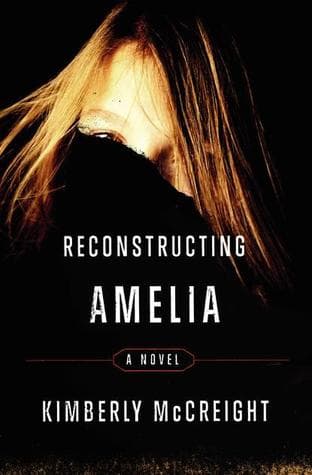
- Reconstructing Amelia
Kimberly McCreight
3.8 (122k) average on GoodreadsThrillerSimilar author, dual timeline, mother investigating daughter's death, uncovering dark secrets.
- Big Little Lies
Liane Moriarty
4.3 (748k) average on GoodreadsThrillerSuburban setting, intertwining lives of women, dark secrets, and a central mystery.
- The Silent Patient
Alex Michaelides
4.1 (507k) average on GoodreadsThrillerPsychological thriller with a focus on uncovering a traumatic past and a shocking revelation.
- Gone Girl
Gillian Flynn
4.1 (2.3M) average on GoodreadsThriller'Where They Found Her' shares Flynn's thematic interest in hidden truths and the decay beneath seemingly perfect surfaces, but McCreight focuses more on community-wide secrets and past traumas within a town, rather than the intense individual marital deception central to 'Gone Girl'.
- The Girl on the Train
Paula Hawkins
3.9 (2.1M) average on GoodreadsThrillerMcCreight's novel offers a more grounded and less unreliable narrator in Molly, providing a more direct investigative journey compared to Hawkins' masterful but often disorienting use of an unreliable perspective. Both build suspense effectively, but through different narrative strategies.
- Angels & Demons
Dan Brown
3.9 (2.7M) average on GoodreadsThrillerA Harvard symbologist races through Rome's ancient sites, deciphering cryptic clues to unmask the Illuminati and stop a vengeful plot to destroy the Vatican with a stolen antimatter weapon.





Enjoyed the summary?
A summary gives you the shape of the book. The book itself has the detail, the examples and the voice.
Find Where They Found Her on AmazonAs an Amazon Associate, BookBrief earns from qualifying purchases. How we're funded