
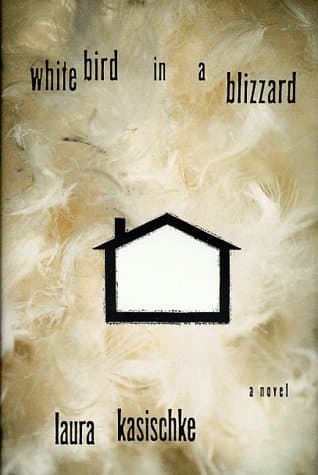
Synopsis
Covers the whole plot, including the ending.
- Difficulty
- Medium
- Pacing
- Moderate
- Mood
- Atmospheric, Eerie, Psychological, Melancholy, Suspenseful
- Read it if
- You enjoy psychological mysteries with a coming-of-age element, exploring themes of family dysfunction, repressed trauma, and the blurred lines between reality and dreams.
- Skip it if
- You prefer fast-paced, action-driven thrillers or are sensitive to themes of sexual awakening and psychological distress.
White Bird in a Blizzard Plot Summary
Covers the whole plot, including the ending.
The Disappearance of Eve
In 1989, sixteen-year-old Katrina "Kat" Connors comes home from school to find her mother, Eve, gone. There is no note, no sign of a struggle, just an empty house. Kat's father, Brock, seems strangely calm, almost accepting of his wife's disappearance. Kat herself is not entirely surprised, having seen Eve become more distant and sad over the past year. Eve had been a beautiful but restless woman, seemingly unhappy with her suburban life. Kat, however, is focused on her developing sexuality and her relationship with her older boyfriend, next-door neighbor Ted Sciezies. The initial police investigation finds no clues, and Eve's absence quickly becomes a cold case, leaving Kat and Brock to deal with their new, unsettling reality.
Life Without Eve
After Eve disappears, Kat's life continues with a strange sense of normalcy. This is marked by her father's quiet grief and her own growing independence. She moves into her mother's bedroom, taking her place in the house. Her relationship with Ted Sciezies becomes more intense, her main focus, and a source of comfort and distraction. Ted, a college student, is charming but also a bit possessive. Kat finds herself increasingly drawn to the excitement and closeness of their sexual encounters. Meanwhile, Brock handles the practicalities of Eve's absence calmly, rarely talking about the situation, which adds to the unsettling mood in their home. Kat often thinks about her mother's past behavior, trying to understand the lively woman she knew and the withdrawn person she had become.
Recurring Dreams and Haunting Visions
As time passes, Kat starts having vivid, unsettling dreams about her mother. These dreams are not just about absence; they are full of images of distress, struggle, and a chilling sense of being trapped. Eve appears frantic, bruised, and crying for help, often in a snowy, isolated place. At first, Kat dismisses these as products of her subconscious, but their repeated nature and growing intensity begin to disturb her. She also starts seeing quick glimpses of her mother while awake – a figure in her peripheral vision, a shadow in the house. These spectral appearances and disturbing dreams make Kat wonder: what if her mother didn't just leave, but was the victim of something far worse? She struggles with the growing feeling that her mother is not just gone, but actively suffering.
Ted's Growing Control
Kat's relationship with Ted Sciezies deepens, becoming the center of her emotional life. Ted, an older college student, gives Kat the attention and passion she craves, especially in the emptiness left by her mother. However, his affection sometimes borders on possessiveness. He often decides their activities, and Kat finds herself increasingly doing what he wants. She notices his subtle manipulations and his tendency to dominate their interactions. This dynamic quietly mirrors the power imbalances Kat vaguely remembers in her parents' marriage, particularly Eve's growing unhappiness and feeling of being confined. Kat, in her youthful vulnerability, mistakes Ted's control for devotion, further tying her identity to his.
The Police Re-Interview
Years after Eve's disappearance, Kat is in college. Detective Sciezies, Ted's father, who was the original officer on the case, reopens it. He talks to Kat and her father, Brock, for new interviews. Kat, now older and perhaps more detached, retells the story of her mother's disappearance, trying to recall details she might have missed. Detective Sciezies' questions are sharp, focusing on Eve and Brock's marriage, Eve's state of mind, and any secrets she might have kept. Kat feels a renewed sense of unease, realizing that her mother's fate is still unknown, and that the police still suspect foul play, with her father remaining a person of interest due to his quiet nature.
Brock's Confession
Under new pressure from Detective Sciezies and haunted by his own silence, Brock Connors finally confesses to Kat. He reveals that Eve did not just leave; she was murdered. The details are horrifying: Brock admits he accidentally killed Eve during a heated argument. He panicked, wrapped her body in a blue tarp, and buried her in the woods behind their house, near the old fort where Kat and Ted used to play. He describes the snowstorm that night, which helped him hide his tracks, and the immense guilt he has carried for years. Kat is completely shattered by this revelation, the truth far more brutal than any of her dreams. Her father, the quiet, ordinary man, is a killer, and her mother's absence was a carefully constructed lie.
The Aftermath of Truth
After Brock's confession, Kat is thrown into shock, grief, and betrayal. The image of her calm, seemingly harmless father is shattered, replaced by that of a murderer. She struggles to reconcile the man who raised her with the man who took her mother's life and then lived a lie for years. The revelation forces her to rethink every memory, every interaction, and every unspoken truth in her family. The dreams she had about her mother's suffering now make terrifying sense, adding another layer of trauma. Kat must also deal with the legal consequences, knowing her father will face justice. The quiet suburban life she once knew is destroyed, replaced by a harsh, unforgiving reality.
The Discovery of the Body
With Brock's confession, law enforcement, led by Detective Sciezies, searches for Eve's body. Brock leads them to the secluded spot in the woods behind their former home, near the childhood fort, where he buried her years ago. The area, now overgrown, is carefully dug up. As he said, Eve's remains are found, wrapped in the blue tarp, a chilling sign of Brock's crime. The discovery brings a grim end to the cold case, confirming the worst fears and proving Kat's haunting feelings. The physical evidence confirms Brock's confession, officially ending the mystery of Eve Connors' disappearance and solving the murder case.
Brock's Imprisonment
Following the discovery of Eve's body and his detailed confession, Brock Connors is arrested, charged, and imprisoned for her murder. The quiet, ordinary father is now a convicted killer, his life forever changed. Kat visits him in prison, a strained and painful meeting that shows the huge gap between them. She struggles to process her complex emotions – anger, pity, and a deep sense of loss for the family she once thought she had. With her mother dead and her father in jail, Kat is left to navigate adulthood alone, dealing with the weight of her family's dark secrets. She must find a new path, trying to find peace and understanding among the ruins of her past.
Kat's Future
Years after the truth of her mother's murder came out, Kat Connors continues to live with the lasting impact of her family's tragedy. She has, to some extent, processed her father's crime and her mother's fate. Her relationship with Ted Sciezies, a big part of her teenage years, is now a distant memory, mixed with the complicated feelings of first love and youthful intensity. Kat is left with lingering questions about identity, loss, and the nature of family secrets. She carries the weight of her past, forever shaped by her mother's disappearance and murder. Despite the trauma, she tries to build a future, understanding that the past will always be a part of her, but it does not have to define her completely. She finds a fragile sense of peace in the difficult truth.
Principal Figures
Katrina "Kat" Connors
Protagonist
A sixteen-year-old girl coming of age amidst her mother's mysterious disappearance.
Kat is initially presented as a typical teenager, preoccupied with her emerging sexuality, her relationship with her older boyfriend Ted, and shedding her childhood innocence. She is observant and introspective, though initially somewhat detached from her mother's increasing melancholy. As the mystery of Eve's disappearance deepens, Kat becomes haunted by dreams and a growing intuition that something violent occurred. She is resilient but struggles to reconcile the image of her parents with the dark truths she uncovers. Her journey is one from naive adolescence to a painful understanding of adult secrets and betrayal.
Relationships: Eve Connors (Mother-daughter, complex and distant due to Eve's depression.); Brock Connors (Father-daughter, initially supportive but built on a profound lie.); Ted Sciezies (Boyfriend, intense first love, sexually charged and somewhat controlling.)
Eve Connors
Victim/Central Mystery
Kat's beautiful but melancholic mother who mysteriously vanishes.
Eve is the elusive center of the story. She is portrayed through Kat's memories and observations as a once vibrant, beautiful woman who became increasingly withdrawn and unhappy in her suburban life. She possessed a restless spirit and a sense of unfulfillment, often seen staring out windows or expressing a desire for something more. Her beauty and quiet sadness make her absence all the more poignant and mysterious. Her disappearance is the catalyst for the entire plot, and her true fate is the driving force behind Kat's investigation and the family's eventual unraveling.
Relationships: Katrina Connors (Mother-daughter, loving but with an emotional distance due to Eve's internal struggles.); Brock Connors (Wife-husband, a strained and ultimately fatal relationship.); Ted Sciezies (Neighbor, a figure of fascination and possibly illicit attention.)
Brock Connors
Antagonist/Father
Kat's quiet and outwardly impassive father, hiding a dark secret.
Brock is initially presented as a stoic, somewhat distant father who reacts to his wife's disappearance with an unsettling calm. He is a man of few words, seemingly resigned to his fate. His quiet demeanor and lack of emotional expression make him an enigmatic figure throughout the early parts of the story, leading both Kat and the police to question his true feelings and involvement. He embodies the quiet desperation of suburban life, concealing a profound guilt and a horrifying secret that eventually shatters his family.
Relationships: Katrina Connors (Father-daughter, initially protective but ultimately revealed as deceptive.); Eve Connors (Husband-wife, a deteriorating relationship that ends in violence.)
Ted Sciezies
Supporting Character
Kat's older boyfriend and next-door neighbor, charismatic yet subtly manipulative.
Ted is Kat's first serious boyfriend, an older college student who lives next door. He is charismatic, sexually experienced, and provides Kat with an escape from her unsettling home life. Their relationship is intense and passionate, but Ted also exhibits a subtle possessiveness and a desire for control over Kat. He is a complex character who both provides comfort and introduces Kat to a more adult, sometimes unsettling, world. His father is the detective investigating Eve's disappearance, adding another layer of complication to his relationship with Kat.
Relationships: Katrina Connors (Boyfriend-girlfriend, intense first love, sexually charged, and somewhat manipulative.); Detective Sciezies (Father-son, a normal family relationship, though Ted's father investigates Kat's mother.)
Detective Sciezies
Supporting Character
The police detective who initially investigates Eve's disappearance and later reopens the case.
Detective Sciezies is Ted's father and the primary law enforcement figure in the story. He is persistent and methodical, initially unable to solve Eve's disappearance but never truly letting go of the case. Years later, he reopens the investigation, his renewed scrutiny eventually leading to Brock's confession. He represents the external force of justice, slowly chipping away at the facade of normalcy that the Connors family maintains. His questions are probing, and he senses the underlying tension and secrets within the family.
Relationships: Ted Sciezies (Father-son, a normal family relationship.); Brock Connors (Investigator-suspect, ultimately leading to Brock's arrest.)
Themes & Insights
The Illusion of Normalcy
The novel carefully looks at the appearance of normalcy kept by the Connors family and their suburban community. After Eve disappears, Kat and Brock try to live as if nothing terrible happened, but the tension and unspoken truths slowly break down this illusion. Kat's youthful focus on her own life at first lets her ignore the deeper implications, but her haunting dreams and later revelations expose the violent reality hidden beneath the calm surface. The theme shows how secrets can grow under a seemingly perfect exterior, damaging lives and relationships. This is clear in Brock's calm behavior after the murder and Kat's initial lack of interest in her mother's struggles.
“It was as if my mother had never existed, just like that. As if she'd been a ghost all along, and now she'd finally floated away.”
Coming of Age Amidst Trauma
Kat's journey to adulthood is tied to the traumatic event of her mother's disappearance and her eventual discovery as a murder victim. Her coming-of-age involves not just sexual awakening and self-discovery, but also a forced confrontation with betrayal, death, and the dark complexities of adult relationships. The novel explores how such a deep trauma shapes a young person's identity, worldview, and ability to form healthy relationships. Kat's detachment and later her deep emotional struggle are direct results of navigating adolescence while her family falls apart around a horrifying secret. Her dreams show her subconscious dealing with the unspeakable truth.
“I was becoming sixteen, and she was becoming nothing.”
The Nature of Memory and Truth
The novel relies heavily on Kat's fragmented memories, dreams, and changing viewpoints to tell the story. Truth is presented as hard to find and subjective, slowly put together over years. Kat's first understanding of events, influenced by her youth and self-focus, is gradually challenged by her subconscious (through dreams) and outside pressures (Detective Sciezies). The story shows how memory can be unreliable, colored by emotion, and how the mind can suppress or twist painful realities. The final reveal of Brock's crime forces a complete re-evaluation of all past events, showing the painful process of facing an uncomfortable truth that shatters long-held beliefs.
“You think you know a person, and then you find out you never knew them at all.”
Female Identity and Confinement
Both Eve and Kat deal with aspects of female identity and feeling confined. Eve's growing sadness comes from her unhappiness with her domestic role and the perceived limits of her suburban life, hinted at by her restless look and desire for 'something more.' Her beauty, while at first a source of power, becomes another form of being seen as an object and being vulnerable. Kat, in her own coming-of-age, explores her sexuality and independence, but also finds herself in a relationship with Ted that borders on controlling, reflecting some of the power dynamics she saw in her parents' marriage. The story subtly suggests how societal expectations and personal relationships can subtly trap or define women.
“She was a woman who always looked like she was waiting for something.”
Plot Devices & Literary Techniques
Unreliable Narrator
Kat's perspective as a teenager shapes the initial understanding of events, obscuring the truth.
Kat serves as an unreliable narrator, particularly in the initial stages of the story. Her youthful self-absorption, nascent sexuality, and emotional distance from her mother's struggles cause her to misinterpret or overlook crucial details surrounding Eve's disappearance. She accepts the 'leaving' narrative for a long time, partly because it suits her own burgeoning independence. Her dreams, however, provide a subconscious, more accurate counter-narrative, revealing the truth before her conscious mind can process it. This device builds suspense and allows the author to slowly unravel the mystery from a deeply personal, yet flawed, viewpoint.
Symbolism of the White Bird/Snow
Represents purity, fragility, and the way truth can be buried or obscured.
The 'white bird in a blizzard' imagery, present in the title and recurring motifs, symbolizes Eve's fragile beauty, her sense of being trapped, and the way her truth was buried. The blizzard itself is a metaphor for the way the crime was covered up, both literally (Brock burying the body in the snow) and figuratively (the family's silence and the community's acceptance of the 'she left' narrative). The white bird can also represent Kat's own innocence and how it is threatened and eventually lost amidst the harsh realities she uncovers. It suggests something beautiful and vulnerable, easily swallowed by a harsh, unforgiving environment.
Dreams and Premonitions
Kat's vivid dreams serve as a subconscious pathway to the truth of her mother's fate.
Kat's recurring, increasingly disturbing dreams about her mother being trapped, bruised, and crying for help function as a powerful plot device. These dreams are not just random nightmares; they are premonitions and subconscious expressions of the suppressed truth. They provide Kat, and the reader, with glimpses of the violent reality before it is consciously revealed. This device builds psychological tension and suggests that intuition and the subconscious mind can perceive truths that the conscious mind is unwilling or unable to acknowledge, pushing Kat towards a horrifying realization that her mother didn't just leave, but was murdered.
The Cold Case
The passage of time allows secrets to fester and creates a sense of lingering dread.
Eve's disappearance becoming a 'cold case' is a crucial plot device. The years that pass between the initial event and the reopening of the investigation allow the characters to live with the lie, creating a deep-seated tension. It shows how secrets can be buried but never truly disappear, slowly eroding the lives of those involved. The passage of time also allows Kat to mature, giving her a new perspective and the emotional capacity to confront the truth. The 'coldness' of the case mirrors the emotional detachment of Brock and Kat, highlighting how the lack of closure perpetuates trauma.
White Bird in a Blizzard Quotes
“There are some things you can't outrun. And some things you don't even know you're running from.”
“The past is a country from which we can never truly emigrate.”
“Sometimes you just have to watch the snow fall, and wait for it to stop.”
“My mother was like a beautiful bird, and then one day she just flew away.”
“Grief is a strange thing. It makes you feel like a detective, always looking for clues.”
“We all carry our secrets, don't we? Some of them just weigh more than others.”
“Love is a kind of madness, and sometimes, the only cure is more madness.”
“The world keeps spinning, even when yours feels like it's stopped.”
“You can never truly know what goes on inside another person's head.”
“Sometimes the most beautiful things are the most dangerous.”
“Silence can be louder than any scream.”
“Everyone has a story they're not telling.”
“You can try to bury the truth, but it always finds a way to dig itself out.”
“It's funny how you can live with someone your whole life and still not know them at all.”
Quiz
10 questions on the plot and the characters. Each answer comes with a short explanation.
Question 1
What significant personal change does Kat experience during the year her mother begins to withdraw?
- She starts excelling academically and gets a scholarship.
- She falls in love with the boy next door and discovers sex.
- She develops a strong interest in her mother's hobbies.
- She moves to a new town with her best friend.
Show answer
B. She falls in love with the boy next door and discovers sex. The synopsis states that the year her mother was withdrawing, Kat was 'becoming sixteen' - falling in love with the boy next door, shedding her babyfat, discovering sex.
Question 2
Initially, how does Kat react to her mother's disappearance?
- She immediately calls the police and organizes search parties.
- She becomes deeply depressed and isolates herself.
- She finds herself curiously unaffected and picks up the pieces of her daily life.
- She blames her father for her mother's departure.
Show answer
C. She finds herself curiously unaffected and picks up the pieces of her daily life. The synopsis explicitly states, 'As Kat and her impassive father pick up the pieces of their daily lives, she finds herself curiously unaffected by her mother's absence.'
Question 3
What is the primary catalyst that makes Kat believe something sinister has happened to her mother, despite her initial indifference?
- Her father confesses to her mother's murder.
- She finds a hidden letter from her mother explaining her departure.
- She is haunted by dreams that become too real, featuring her mother's cries for help.
- A detective presents new evidence in the case.
Show answer
C. She is haunted by dreams that become too real, featuring her mother's cries for help. The synopsis mentions, 'But in dreams that become too real to ignore, she's haunted by her mother's cries for help.' This is what drives her to act.
Question 4
How is Kat's father generally characterized in the synopsis after his wife's disappearance?
- Overly emotional and distraught.
- Actively investigating his wife's disappearance.
- Impassive and seemingly unaffected.
- Blaming Kat for her mother's absence.
Show answer
C. Impassive and seemingly unaffected. The synopsis describes him as 'her impassive father,' indicating a lack of emotional response.
Question 5
What is the underlying theme suggested by Kat's mother's 'slowly withdrawing' as Kat herself is 'becoming sixteen'?
- The natural progression of a mother allowing her child more independence.
- A parallel or inverse relationship between Kat's blossoming and her mother's decline/unhappiness.
- The mother's withdrawal is a direct result of Kat's new relationship.
- The mother is preparing to surprise Kat with a big birthday party.
Show answer
B. A parallel or inverse relationship between Kat's blossoming and her mother's decline/unhappiness. The phrasing 'the whole year she has been 'becoming sixteen'... her mother has been slowly withdrawing' suggests a thematic link or contrast between their personal states.
Question 6
What is the ultimate realization Kat comes to, which leads to a 'chilling discovery'?
- Her mother ran away to start a new life.
- Her mother was abducted by strangers.
- Something violent and evil has occurred to her mother.
- Her mother faked her own death for insurance money.
Show answer
C. Something violent and evil has occurred to her mother. The synopsis states, 'Finally, she must act on her instinct that something violent and evil has occurred - a realization that brings Kat to a chilling discovery.'
Question 7
The description mentions Kat 'shedding her babyfat' during the same period her mother withdraws. What might this detail subtly symbolize about Kat?
- Her increased focus on physical fitness and health.
- Her literal physical maturation and coming of age, contrasting with her mother's emotional regression.
- Her desire to become more attractive to her new boyfriend.
- Her newfound interest in fashion and beauty products.
Show answer
B. Her literal physical maturation and coming of age, contrasting with her mother's emotional regression. Shedding babyfat is a common metaphor for growing up and leaving childhood behind, aligning with 'becoming sixteen' and discovering sex. This physical transformation parallels her psychological development.
Question 8
What kind of emotional state does Kat initially exhibit regarding her mother's absence, which makes her later realization more impactful?
- Overwhelming grief and despair.
- Curiosity and a detached sense of being unaffected.
- Anger and resentment towards her mother.
- Immediate suspicion of foul play.
Show answer
B. Curiosity and a detached sense of being unaffected. The synopsis clearly states she was 'curiously unaffected' initially, which makes the eventual 'chilling discovery' more of a shift from her early emotional state.
Question 9
The synopsis hints at a gradual change in Kat's mother. What is this change described as before her disappearance?
- She became increasingly social and outgoing.
- She started a new career and was very busy.
- She was slowly withdrawing from the family.
- She developed a new hobby that consumed her time.
Show answer
C. She was slowly withdrawing from the family. The text states, 'her mother has been slowly withdrawing,' indicating a gradual emotional or psychological detachment prior to her physical absence.
Question 10
Considering the genre (Thriller, Mystery, Young Adult) and the plot points, what kind of 'chilling discovery' is most likely implied for Kat?
- Discovering her mother won the lottery and ran away.
- Uncovering evidence of a crime, likely murder or kidnapping, connected to her mother's disappearance.
- Learning her mother joined a secret society.
- Finding out her mother had a secret second family.
Show answer
B. Uncovering evidence of a crime, likely murder or kidnapping, connected to her mother's disappearance. Given the 'thriller, mystery' genres and the phrase 'something violent and evil has occurred' leading to a 'chilling discovery,' the implication is a crime, most likely murder or kidnapping, rather than a benign or merely scandalous secret.
White Bird in a Blizzard FAQ
What is the central mystery driving the plot of 'White Bird in a Blizzard'?
The central mystery revolves around the sudden disappearance of Eve Connors, Katrina's mother. While Kat initially believes her mother simply left, she slowly uncovers evidence and experiences disturbing dreams that suggest a more sinister fate, leading her to question the official narrative and her father's stoicism.
Who is Katrina Connors and what is her emotional state at the beginning of the novel?
Katrina Connors is a sixteen-year-old girl navigating adolescence, including her first serious relationship with her neighbor, Beth. At the novel's beginning, she feels surprisingly detached and even somewhat relieved by her mother's absence, attributing it to Eve's prior withdrawal and her own burgeoning independence.
How does Kat's relationship with her boyfriend, Beth, evolve throughout the story in relation to her mother's disappearance?
Kat's relationship with Beth starts as a typical teenage romance, filled with passion and discovery. However, as the mystery of Eve's disappearance deepens, Kat's emotional distance and preoccupation begin to strain their connection, ultimately leading to its deterioration as she becomes consumed by the truth.
Describe Brock and Eve Connors' marriage prior to Eve's disappearance.
Brock and Eve Connors' marriage was fraught with tension and unspoken resentments. Eve, a former dancer, felt trapped and unfulfilled in her suburban life, often withdrawing emotionally and physically, which created a distant and cold dynamic between her and her seemingly impassive husband, Brock.
What role do dreams play in Kat's investigation into her mother's disappearance?
Kat's dreams are crucial; they are vivid, disturbing, and often contain fragmented images and sounds that hint at violence and her mother's suffering. These dreams become increasingly real and act as a subconscious guide, pushing Kat to look beyond the surface and acknowledge the possibility of foul play.
What is the significance of the 'white bird in a blizzard' imagery mentioned in the title?
The 'white bird in a blizzard' symbolizes Eve Connors' fragile state and her eventual erasure. Like a white bird in a snowstorm, she blends into her surroundings and disappears without a trace, making her absence difficult to pinpoint and her ultimate fate tragically obscured.
Are there any subtle clues early in the narrative that foreshadow Brock's involvement in Eve's disappearance?
Yes, subtle clues include Brock's unwavering calm and almost immediate return to normalcy after Eve's disappearance, which contrasts sharply with what one would expect from a grieving husband. His evasiveness about Eve's emotional state and his peculiar detachment also hint at a deeper, hidden involvement.
How does the author use the setting and time period (late 1980s/early 1990s) to enhance the mystery?
The late 80s/early 90s setting, with its lack of widespread cell phones and internet, creates a sense of isolation and makes Eve's disappearance harder to track. The suburban environment also emphasizes the superficial normalcy that masks the dark secrets within the Connors' household, enhancing the psychological thriller aspect.
What is the true nature of Kat's father, Brock Connors, and how does it contrast with Kat's initial perception?
Kat initially perceives Brock as a stoic, somewhat unfeeling man who is simply coping with his wife's departure. However, he is revealed to be far more complex and sinister; his impassivity masks a controlling, violent nature that ultimately led him to murder Eve, making him the true antagonist.
How does Kat's journey of self-discovery intertwine with her investigation into her mother's disappearance?
As Kat sheds her 'babyfat' and explores her sexuality, she also sheds her naive perception of her family. Her awakening to adult desires and complexities parallels her awakening to the dark truths about her parents' marriage and her father's capacity for violence, forcing her to mature rapidly.
Discuss the theme of denial and its impact on Kat throughout the book.
Denial is a significant theme, as Kat initially denies the gravity of her mother's absence and the possibility of foul play. She also denies her own growing suspicions about her father, allowing her to maintain a semblance of normalcy, until her subconscious can no longer be ignored through her haunting dreams.
What is the psychological impact of Eve's unfulfilled desires on her relationship with her daughter, Kat?
Eve's unfulfilled desires, particularly her lost career as a dancer, created a deep well of resentment and depression. This led her to withdraw from Kat, fostering a sense of emotional distance and leaving Kat feeling somewhat abandoned even before Eve physically disappeared, shaping Kat's initial indifference.
How does the novel explore the concept of memory and its reliability?
The novel subtly questions the reliability of memory, particularly Kat's fragmented recollections and dreams. As she uncovers the truth, she re-evaluates past interactions and events, realizing how her perception was skewed by innocence and her father's manipulation, highlighting memory's subjective nature.
Is Kat's initial lack of grief for her mother a sign of a deeper psychological issue, or a natural teenage reaction?
It's a complex mix. While teenage self-absorption and a desire for independence play a role, Kat's lack of grief is also a psychological defense mechanism. Her mother's emotional withdrawal had already created a void, and denying the severity of the situation protected Kat from overwhelming pain and suspicion.
Could Eve have escaped her marriage without being murdered, or was her fate inevitable given the circumstances?
The novel suggests Eve's fate was tragically intertwined with Brock's controlling nature and her own despair. While she yearned for escape, Brock's possessiveness and their dysfunctional dynamic made a clean break highly improbable, implying that violence was an almost inevitable outcome of their toxic marriage.
How does the ending challenge traditional notions of justice and closure?
The ending provides a chilling form of personal justice, but not necessarily legal closure. Kat's discovery of the truth and her subsequent actions are a quiet, internal reckoning rather than a public one, leaving the official record unchanged and highlighting the often-unseen consequences of domestic violence.
What message does the book convey about the hidden dangers within seemingly ordinary suburban lives?
The book powerfully conveys that danger and darkness can lurk beneath the most ordinary, picturesque surfaces of suburban life. The Connors' seemingly normal existence hides deep-seated resentments, control, and ultimately murder, exposing the vulnerability of individuals within private domestic spheres.
How does Kat's relationship with Beth contrast with her parents' marriage, and what does this suggest about love?
Kat and Beth's relationship, though flawed, is characterized by genuine affection, passion, and a degree of open communication, contrasting sharply with the cold, resentful, and ultimately violent dynamic of Brock and Eve. This contrast suggests that true love requires honesty and respect, not control or unspoken animosity.
What is the significance of the final scene and Kat's actions regarding her father?
The final scene signifies Kat's complete understanding and acceptance of the horrific truth. Her quiet, decisive action against her father is not an act of rage, but a chillingly calm, almost ritualistic act of justice, demonstrating her profound transformation and the psychological toll of her discovery.
About the author

Laura Kasischke is an American author known for her fiction, particularly her novel "White Bird in a Blizzard." Her works often explore themes of loss, identity, and the complexities of human relationships. In addition to her novels, Kasischke is also recognized for her poetry and has received various literary awards throughout her career.
Similar books
- The Lovely Bones
Alice Sebold
3.8 (2M) average on GoodreadsFantasyExplores the aftermath of a young girl's disappearance and murder, told from an ethereal perspective, with themes of family grief and lingering presence.
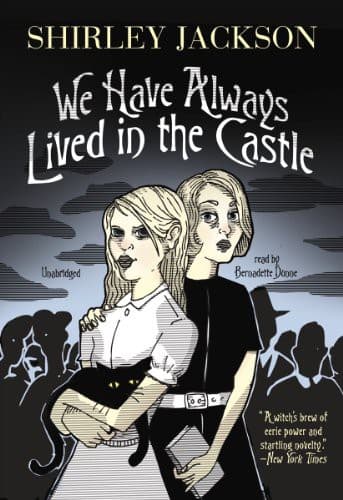
- We Have Always Lived in the Castle
Shirley Jackson
4.0 (118k) average on GoodreadsThrillerFeatures an isolated young female protagonist in a strange family dynamic, with an unsettling atmosphere and underlying mystery.
- Gone Girl
Gillian Flynn
4.1 (2.3M) average on GoodreadsThrillerWhile both are psychological thrillers, Flynn's Gone Girl is lauded for its intricate plot, multiple unreliable narrators, and shocking twists. Kasischke's "White Bird in a Blizzard" is less about plot mechanics and more about the internal psychological landscape of its protagonist, focusing on emotional resonance and trauma rather than complex deception. Flynn's narrative is more meticulously structured for suspense, whereas Kasischke's is more atmospheric and dreamlike.
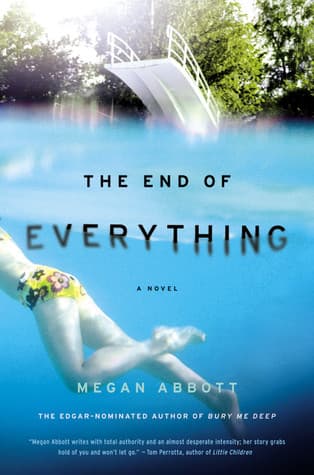
- The End of Everything
Megan Abbott
3.3 (13k) average on GoodreadsThrillerBoth novels explore the aftermath of a missing girl from a young female perspective. Abbott's The End of Everything maintains a clearer distinction between reality and memory, slowly revealing truths through a more grounded narrative. Kasischke's work, however, deliberately blurs these lines, creating a more disorienting and surreal experience that prioritizes the protagonist's subjective perception over objective reality, making it less straightforward but arguably more haunting.
- Angels & Demons
Dan Brown
3.9 (2.7M) average on GoodreadsThrillerA Harvard symbologist races through Rome's ancient sites, deciphering cryptic clues to unmask the Illuminati and stop a vengeful plot to destroy the Vatican with a stolen antimatter weapon.
- The Girl on the Train
Paula Hawkins
3.9 (2.1M) average on GoodreadsThrillerA woman’s fascination with a seemingly perfect couple she watches from her daily train commute leads her into a dark investigation when she witnesses something that shatters their idyllic image.




Enjoyed the summary?
A summary gives you the shape of the book. The book itself has the detail, the examples and the voice.
Find White Bird in a Blizzard on AmazonAs an Amazon Associate, BookBrief earns from qualifying purchases. How we're funded