
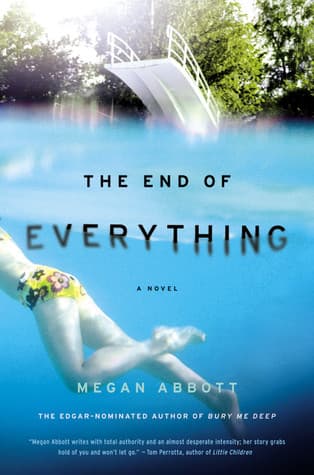
Synopsis
Covers the whole plot, including the ending.
- Difficulty
- Medium
- Pacing
- Moderate
- Mood
- Atmospheric, Suspenseful, Dark, Unsettling, Psychological
- Read it if
- You enjoy dark, atmospheric coming-of-age thrillers with a focus on psychological suspense and the complexities of female friendships.
- Skip it if
- You prefer fast-paced, action-driven mysteries or are uncomfortable with morally ambiguous young protagonists and unsettling themes.
The End of Everything Plot Summary
Covers the whole plot, including the ending.
The Summer of Inseparability
Thirteen-year-old Lizzie Hood and her best friend, Evie Verver, spend the summer of 1984 in a close relationship in their suburban neighborhood. They live next door, sharing clothes, secrets, and an intense bond that excludes others. Their days are filled with swimming, sunbathing, and elaborate rituals, often involving a perceived 'danger' or shared vulnerability. Lizzie, in particular, is deeply invested in Evie, almost to the point of obsession, finding her beautiful and mysterious. They navigate the start of adolescence together, their world a bubble of shared experience and growing awareness of their bodies and the world around them, seemingly impenetrable.
Evie's Disappearance
One hot afternoon, Evie Verver disappears without a trace. Lizzie remembers them being together by the pool, then Evie going inside. When Evie's mother, Mrs. Verver, realizes Evie is not home for dinner and cannot be found, a frantic search begins. The initial panic quickly escalates into a full missing person's investigation, drawing the entire suburban community into a state of heightened anxiety and suspicion. Lizzie is one of the last people to see Evie, and her world is instantly thrown into chaos, marked by an unsettling mix of grief, confusion, and a strange, new kind of attention from adults and authorities.
Lizzie Becomes the Center
With Evie gone, Lizzie becomes the reluctant, yet strangely central, figure in the investigation. Detectives question her repeatedly, trying to find out Evie's state of mind, any recent arguments, or potential secrets. The Verver family, especially Mrs. Verver, clings to Lizzie, seeing her as the last link to their daughter. The community, too, watches Lizzie, projecting their fears onto her. This newfound attention, while difficult, also gives Lizzie an unexpected sense of power and importance, a role she both resents and secretly enjoys. She feels the weight of everyone's expectations, desperate to provide answers she does not have, yet also enjoying the spotlight.
Uncovering Evie's Secrets
Haunted by dreams and a growing sense of responsibility, Lizzie begins her own private investigation into Evie's disappearance. She starts by sifting through Evie's belongings in her bedroom, looking for clues. She discovers a hidden box containing trinkets, notes, and a diary. Through these items, Lizzie starts to realize that Evie had a secret life, one far more complex and troubling than Lizzie had ever imagined. Evie's diary reveals a growing sexuality, a fascination with older boys, and a secret relationship with a local older boy named Sean, who works at the video store and is known for being a bit of a troublemaker. This discovery deeply unsettles Lizzie, shaking her view of their shared intimacy.
The Verver Family's Grief and Secrets
As the search for Evie continues, Lizzie spends more time at the Verver house, becoming familiar with their grief and the cracks in their seemingly perfect family. Mrs. Verver becomes increasingly erratic, while Mr. Verver withdraws. Lizzie observes a strained dynamic, particularly between Evie's older brother, Jason, and the rest of the family. She also notices subtle hints of an unspoken tension or secret within the household, separate from Evie's disappearance. The Verver's idealized image begins to crumble under the pressure of their daughter's absence, revealing a family struggling with its own internal problems and unspoken resentments.
The Suspects and Red Herrings
The police investigation goes through various local suspects and false leads. Sean, the older boy Evie was secretly seeing, is heavily scrutinized due to his reputation and his last-known contact with Evie. Other local men, including a reclusive neighbor and even Lizzie's own father, briefly come under suspicion as the community deals with fear and the need to assign blame. Each new lead offers a fleeting hope that is quickly dashed, leaving the community, and Lizzie, in a perpetual state of anxiety and uncertainty. Lizzie herself, armed with her new knowledge of Evie's secret life, often holds back information from the authorities, unsure of how to process it or its implications.
Lizzie's Shifting Perceptions of Evie
The more Lizzie learns about Evie's secret life — her flirtations, her diary entries about feeling trapped, her relationship with Sean — the more her idealized image of her best friend crumbles. Lizzie deals with feelings of betrayal and confusion, realizing that the girl she thought she knew intimately had an entire hidden world. She questions the true nature of their friendship, wondering if Evie ever truly returned the intensity of Lizzie's devotion. This disillusionment is painful, forcing Lizzie to confront the complexities of identity and the inherent unknowability of others, even those closest to us. Her grief becomes intertwined with a sense of personal loss, not just of Evie, but of their shared, innocent past.
The Confrontation with Jason
Lizzie grows increasingly suspicious of Jason, Evie's older brother. She notices his strange behavior, his possessiveness over Evie's room, and a tension that seems to exist between him and his parents. Driven by her own investigation and a growing unease, Lizzie confronts Jason. During their intense conversation, Jason reveals disturbing details about the Verver family's dysfunction and his own complicated relationship with Evie. He alludes to a protective, almost obsessive, bond with his sister, and a desire to shield her from the perceived dangers of the outside world, particularly her romantic entanglements. This confrontation hints at a deeper, darker secret within the Verver household, distinct from the missing person's case.
The Discovery of the Truth
Through her own deductions, a final confrontation with Jason, and the discovery of a hidden detail in the Verver's backyard, Lizzie pieces together the horrifying truth. It is revealed that Evie did not run away or fall victim to a stranger. Instead, her disappearance is tied to a tragic incident within her own home. Jason, in a fit of possessive rage or misguided protection, accidentally caused Evie's death during an argument related to her secret relationship with Sean. The Verver parents, in a desperate attempt to protect their remaining child and their family's reputation, covered up the death, burying Evie's body in their backyard and fabricating the story of her disappearance. Lizzie finds the shallow grave, confirming her darkest suspicions.
The Aftermath and Lizzie's Silence
The revelation of Evie's death and the Ververs' cover-up leaves Lizzie shattered. She faces an impossible choice: expose the truth, shattering the Verver family and her own community, or remain silent, becoming involved in the secret. In a moment of trauma and a twisted sense of loyalty, perhaps to Evie, perhaps to the remnants of her own childhood, Lizzie chooses silence. The novel ends with Lizzie carrying the heavy burden of this knowledge, forever changed by the events of that summer. Her innocence is lost, replaced by an understanding of the darkness that can lurk beneath seemingly perfect surfaces, and the devastating power of secrets.
Principal Figures
Lizzie Hood
Protagonist
Evie's best friend, who becomes the unlikely investigator of her disappearance.
Thirteen-year-old Lizzie is an observant, imaginative, and intensely loyal girl. She is deeply devoted to her best friend, Evie, to the point of obsession, often living vicariously through Evie's bolder personality. Lizzie is initially naive, viewing the world through the lens of their shared childhood games and secrets. Her intelligence is subtle, manifesting in her keen observation skills and her ability to piece together fragmented clues. She is driven by a complex mix of grief, guilt, and a burgeoning curiosity about the adult world.
Relationships: Evie Verver (Intense, almost symbiotic best friendship, marked by Lizzie's adoration and idealization of Evie.); Jason Verver (Initially a peripheral figure, later a source of suspicion and the unwitting confessor of the truth.); Mrs. Verver (A maternal figure who clings to Lizzie after Evie's disappearance, creating an uncomfortable intimacy.)
Evie Verver
Catalyst/Victim
Lizzie's beautiful and enigmatic best friend whose disappearance drives the plot.
Thirteen-year-old Evie is depicted as beautiful, captivating, and slightly more daring than Lizzie. She possesses a mysterious quality that draws Lizzie in. While Lizzie sees her as an extension of herself, Evie is revealed to have a secret life, exploring her burgeoning sexuality and a desire for independence away from Lizzie and her family. Her diary entries suggest a restless spirit and a yearning for something more, or different, than her suburban life. Her true personality is only fully revealed through Lizzie's discoveries after her disappearance, showing a girl on the cusp of womanhood, navigating complex emotions and desires.
Relationships: Lizzie Hood (Best friend, though the depth of Evie's reciprocation is questioned after her secrets are revealed.); Sean (Secret boyfriend, an older boy who represents a forbidden, more adult world.); Jason Verver (Older brother, with whom she shares a complex, somewhat possessive relationship.); Mr. and Mrs. Verver (Parents, from whom she keeps secrets and whose expectations she feels constrained by.)
Jason Verver
Antagonist/Supporting
Evie's older brother, whose possessiveness and family loyalty lead to tragic consequences.
Jason is Evie's older brother, initially presented as a somewhat sullen and protective figure. He is deeply, perhaps unnaturally, attached to Evie and their family unit. As the story progresses, his behavior becomes increasingly suspicious, hinting at a darker, more possessive side. His actions are driven by a misguided sense of loyalty and a desperate desire to protect his sister, or perhaps, to control her. He embodies the pressure cooker environment of the Verver household and the lengths to which family members will go to preserve their secrets and reputation. He is a tragic figure, driven by flawed love and fear.
Relationships: Evie Verver (Older brother, with a complex, possessive, and ultimately destructive bond.); Mr. and Mrs. Verver (Son, whose parents enable his actions through their own complicity and desire for secrecy.); Lizzie Hood (The recipient of his unintentional confession and the witness to his family's dark secret.)
Mrs. Verver
Supporting
Evie's distraught mother, who becomes entangled in the cover-up of her daughter's death.
Mrs. Verver is initially portrayed as a loving, if somewhat detached, suburban mother. After Evie's disappearance, she becomes a figure of intense grief and desperation, clinging to Lizzie as a surrogate daughter and a link to Evie. Her actions are driven by a desperate desire to protect her family, particularly Jason, and to maintain a façade of normalcy and respectability. She embodies the pressures of suburban conformity and the lengths to which parents will go to shield their children, even from the consequences of their own actions. Her grief is genuine, but it is overshadowed by her complicity in the cover-up.
Relationships: Evie Verver (Mother, whose love is complicated by her own secrets and desire for control.); Jason Verver (Son, whom she fiercely protects, leading to the cover-up.); Mr. Verver (Husband, with whom she shares the burden of their family's secret.); Lizzie Hood (A temporary maternal figure, seeing Lizzie as a substitute for Evie.)
Mr. Verver
Supporting
Evie's father, who retreats into himself after her disappearance and participates in the cover-up.
Mr. Verver is Evie's father, a less vocal but equally complicit figure in the family's secret. He is initially portrayed as a stable, suburban patriarch. After Evie's disappearance, he becomes withdrawn and haunted, his grief manifesting in a quiet despair. He is driven by a desire to protect his family's reputation and to shield them from scandal, even at the cost of truth. His silence and complicity underscore the profound dysfunction within the Verver household, highlighting how fear and the need for control can lead seemingly ordinary people to extraordinary acts of deception. He is a man broken by the events, living with the weight of his actions.
Relationships: Evie Verver (Father, whose love is overshadowed by his fear and desire for secrecy.); Mrs. Verver (Wife, with whom he shares the burden of the cover-up.); Jason Verver (Son, whom he helps protect from the consequences of his actions.)
Sean
Supporting/Mentioned
An older boy and Evie's secret boyfriend, who becomes a prime suspect.
Sean is an older boy from the neighborhood, known for working at the video store and having a slightly rebellious reputation. He is Evie's secret boyfriend, representing her burgeoning independence and desire for experiences outside her sheltered world. He becomes a prime suspect in Evie's disappearance due to his last-known contact with her and his perceived 'bad boy' image. Sean is a catalyst for Evie's desire to break free and ultimately, an unwitting factor in her tragic fate. He embodies the perceived dangers and allure of the adult world from a teenage perspective.
Relationships: Evie Verver (Secret boyfriend, a source of excitement and rebellion for Evie.); Lizzie Hood (A figure of intrigue and suspicion to Lizzie, representing a world Evie kept hidden.)
Lizzie's Mother
Supporting
Lizzie's well-meaning but somewhat detached mother.
Lizzie's mother is a typical suburban parent, concerned for her daughter and the unfolding tragedy in the neighborhood. She tries to comfort Lizzie and guide her through the difficult situation, but she remains somewhat oblivious to the deeper emotional turmoil and detective work Lizzie undertakes. She represents the well-intentioned but ultimately limited understanding of the adult world regarding the complex inner lives of teenagers. Her focus is on maintaining normalcy and protecting Lizzie from the harsh realities of the investigation.
Relationships: Lizzie Hood (Mother, caring but unable to fully grasp the depth of Lizzie's experience or knowledge.)
Themes & Insights
Loss of Innocence
The novel carefully tracks Lizzie's journey from childhood innocence to a devastating understanding of adult cruelty and moral uncertainty. The idyllic summer, initially filled with games and innocent secrets, is shattered by Evie's disappearance. Lizzie's discovery of Evie's hidden life, and eventually the truth of her death, forces her to confront the dark side of human nature and the complexities of love, jealousy, and betrayal. Her final act of silence confirms her transition into a world where innocence is lost, replaced by a heavy burden of knowledge.
“That summer, the world went from soft to sharp. From blurry to terribly, blindingly clear.”
The Unreliable Nature of Memory and Perception
Lizzie's narration is filtered through her adolescent perspective, colored by her intense emotional attachment to Evie and the trauma of the events. Her memories of Evie and their shared past are constantly re-evaluated as she uncovers new information, showing how personal biases and emotions can distort reality. The story questions whether anyone truly knows another person, even a best friend, and how easily perceptions can be shattered when confronted with hidden truths. Lizzie frequently re-examines past conversations and events, searching for missed clues or alternative interpretations, highlighting the subjective nature of memory.
“How could I have known so little about the person I thought I knew best in the world?”
The Dark Side of Female Friendship and Obsession
The intense, almost suffocating bond between Lizzie and Evie is a central theme. Lizzie's adoration of Evie borders on obsession, blurring the lines of individual identity. This intensity, while initially nurturing, also contains elements of possessiveness and a subconscious desire to control or embody the other. The novel explores the pressures and complexities of female relationships at a vulnerable age, where identity is still forming and boundaries can be fluid. Evie's attempts to assert her own individuality are met with Lizzie's desperate attempts to hold onto their shared world, hinting at the potentially destructive nature of such intense bonds.
“She was my mirror, my shadow, my other self. Without her, I was just half a girl.”
Suburban Façades and Hidden Darkness
The seemingly perfect suburban setting of the 1980s is a stark contrast to the dark secrets and tragic events that unfold. The manicured lawns and quiet streets hide a world of dysfunction, jealousy, and violence within the Verver household. The community's initial shock and collective grief quickly give way to suspicion and gossip, revealing the fragility of their perceived safety and harmony. The theme highlights how appearances can be deceiving, and how the pressure to maintain a perfect image can lead to profound moral compromises and devastating consequences, particularly within families.
“Our street, usually so quiet, was now a stage for whispers and stares. Everyone looking for the monster hiding among us.”
The Burden of Secrets and Complicity
The novel explores the psychological weight of carrying a terrible secret, especially for a young girl. Lizzie's decision to remain silent about Evie's true fate transforms her from an innocent bystander into a participant in the cover-up. This burden shapes her future, trapping her in a web of silence and trauma. The Verver family's collective secret also illustrates the corrosive power of lies, showing how the desire to protect reputation and family can lead to profound moral corruption and enduring guilt. The silence itself becomes a character, suffocating and omnipresent.
“The secret felt like a stone in my gut, growing heavier with every passing day.”
Plot Devices & Literary Techniques
First-Person Adolescent Narration
The story is told entirely from Lizzie's subjective, evolving perspective.
The use of first-person narration by a thirteen-year-old girl is crucial. It creates an intimate, often unreliable, and highly emotional lens through which the events are filtered. Lizzie's limited understanding, her intense emotional bond with Evie, and her shifting perceptions as she uncovers truths all contribute to the suspense and psychological depth. Her voice captures the confusion, fear, and burgeoning maturity of adolescence, allowing the reader to experience the loss of innocence alongside her and question the reliability of her observations, especially as she processes trauma.
Symbolism of Summer and Water
The summer setting and water imagery symbolize youth, intimacy, and impending change/danger.
The novel is set during a sweltering summer, a season traditionally associated with freedom, youth, and burgeoning sexuality, but which here becomes oppressive and stifling. The constant presence of water – swimming pools, sprinklers, the humidity – symbolizes the fluidity of their friendship, the cleansing power of innocence, but also the suffocating nature of their bond and the eventual drowning of truth. The heat and water also evoke a sense of languid sensuality and vulnerability, foreshadowing the loss of innocence and the dark undercurrents of desire and danger that consume Evie.
Evie's Diary
A discovered diary provides crucial insights into Evie's secret life.
Evie's hidden diary serves as a classic plot device, providing Lizzie (and the reader) with direct access to Evie's private thoughts, desires, and secrets. It functions as a catalyst for Lizzie's investigation, shattering her idealized image of her best friend and revealing the complexities of Evie's inner world. The diary entries introduce new characters and motivations, propelling the plot forward and deepening the mystery, while simultaneously highlighting the theme of hidden lives and the unknowability of others. It's a tangible link to the missing girl, offering clues and misdirection.
The Suburban Setting
The seemingly idyllic 1980s suburban environment contrasts sharply with the dark events.
The 1980s suburban setting is more than just a backdrop; it's a character in itself. It represents a veneer of safety, order, and conventional morality that is gradually peeled back to reveal the darker realities beneath. The emphasis on appearances, community gossip, and the desire for conformity amplifies the shock and horror of Evie's disappearance and the subsequent cover-up. This contrast between the outward perfection and the inward decay highlights the novel's themes of hidden darkness and the fragility of innocence in seemingly protected environments.
The End of Everything Quotes
“The summer stretched out before us, a long, shimmering road to nowhere.”
“We were all so beautiful then, weren't we? Before everything got ruined.”
“That's the thing about secrets. They start small, like a whisper, and then they grow into a roar.”
“The air was thick with it, the unspoken, the things we all knew but pretended not to.”
“Sometimes, the most dangerous things are the ones you can't see coming.”
“We were like moths to a flame, drawn to the very thing that would burn us.”
“Grief, I learned, wasn't a straight line. It was a tangled mess, full of dead ends and false starts.”
“Everyone had their own version of the truth, their own story they told themselves.”
“The quiet ones are always the ones you have to watch out for.”
“It was the kind of heat that made you feel like anything could happen, good or bad.”
“We lived in a town that was too small for its secrets.”
“The past isn't ever really past, is it? It just waits for you to catch up.”
“Fear has a way of twisting everything, making you see things that aren't there.”
“We were just kids, trying to make sense of an adult world that made no sense at all.”
Quiz
10 questions on the plot and the characters. Each answer comes with a short explanation.
Question 1
What is the primary relationship between Lizzie Hood and Evie Verver at the beginning of the story?
- They are distant cousins.
- They are rival field hockey players.
- They are inseparable best friends and next-door neighbors.
- They are new acquaintances in the same class.
Show answer
C. They are inseparable best friends and next-door neighbors. Lizzie and Evie are described as inseparable best friends and next-door neighbors, sharing clothes and activities.
Question 2
What significant event triggers the central mystery of the novel?
- Lizzie moves away to a new town.
- Evie runs away from home after an argument.
- Evie disappears one afternoon.
- Lizzie discovers a secret about her own family.
Show answer
C. Evie disappears one afternoon. The plot description clearly states that 'one afternoon, Evie disappears,' which sets off the entire mystery.
Question 3
What is Lizzie's initial reaction to Evie's disappearance, beyond concern?
- She immediately suspects Evie's parents.
- She feels guilty for a past argument.
- She is titillated by her new power as the center of the disappearance.
- She tries to forget Evie ever existed.
Show answer
C. She is titillated by her new power as the center of the disappearance. The text states Lizzie is 'titillated by her own new power as the center of the disappearance,' indicating a complex emotional response.
Question 4
What common items did Lizzie and Evie often swap?
- Books and musical instruments.
- Clothes, bathing suits, and field-hockey sticks.
- School notes and homework assignments.
- Jewelry and makeup.
Show answer
B. Clothes, bathing suits, and field-hockey sticks. The description explicitly mentions 'swap clothes, bathing suits, and field-hockey sticks' as symbols of their close friendship.
Question 5
As the community reacts to Evie's disappearance, what role does Lizzie find herself playing?
- She becomes a suspect in the investigation.
- She is largely ignored by the adults.
- Everyone turns to her for answers about Evie.
- She organizes search parties for Evie.
Show answer
C. Everyone turns to her for answers about Evie. The text states, 'everyone turns to Lizzie for answers,' highlighting her unexpected central role.
Question 6
What is the overarching effect of Lizzie's investigation into Evie's disappearance on her perception of her best friend?
- She realizes Evie was even more innocent than she thought.
- She discovers Evie had many more friends than she knew.
- She begins to wonder if she knew anything at all about her best friend.
- She confirms all her existing beliefs about Evie.
Show answer
C. She begins to wonder if she knew anything at all about her best friend. The summary indicates that as Lizzie uncovers secrets, she 'begins to wonder if she knew anything at all about her best friend,' suggesting a fundamental shift in her understanding.
Question 7
What kind of atmosphere or mood is evoked by the setting described in the synopsis?
- A cold, isolated, and desolate urban environment.
- A bustling, indifferent metropolitan backdrop.
- A balmy suburban community experiencing 'rabid, giddy panic'.
- A quaint, historical village with ancient secrets.
Show answer
C. A balmy suburban community experiencing 'rabid, giddy panic'. The description mentions a 'balmy suburban community' and the spread of 'rabid, giddy panic,' setting a specific tone.
Question 8
The synopsis mentions Lizzie being 'haunted by dreams of her lost friend.' What does this detail suggest about Lizzie's internal state?
- She is simply experiencing normal grief.
- Her subconscious is actively processing the traumatic event and her evolving understanding of Evie.
- She is intentionally trying to forget Evie.
- The dreams are literal clues to Evie's location.
Show answer
B. Her subconscious is actively processing the traumatic event and her evolving understanding of Evie. Being 'haunted by dreams' suggests a deeper psychological impact beyond simple grief, implying her subconscious is grappling with the mystery and her changing perceptions of Evie.
Question 9
What is the primary motivation behind Lizzie's 'furtive pursuit of the truth'?
- She is trying to clear her own name as a suspect.
- She is compelled by curiosity and a desire to understand Evie's secrets.
- She wants to prove the police are incompetent.
- She is instructed by Evie's parents to find her.
Show answer
B. She is compelled by curiosity and a desire to understand Evie's secrets. The text states Lizzie is 'compelled by curiosity' to take up her own investigation, highlighting her personal drive to uncover the truth.
Question 10
The description mentions that 'presumably, there are no secrets' between Lizzie and Evie. How does the unfolding plot challenge this presumption?
- It confirms that they truly had no secrets from each other.
- Lizzie discovers Evie had many secrets, leading her to question their entire friendship.
- Lizzie learns that she was the one keeping secrets from Evie.
- The presumption is never challenged and remains true throughout the story.
Show answer
B. Lizzie discovers Evie had many secrets, leading her to question their entire friendship. The phrase 'Lizzie uncovers secret after secret and begins to wonder if she knew anything at all about her best friend' directly contradicts the initial presumption of no secrets, making it a central thematic element.
The End of Everything FAQ
What is the central mystery driving the plot of "The End of Everything"?
The core mystery revolves around the sudden disappearance of thirteen-year-old Evie Verver, the inseparable best friend of the protagonist, Lizzie Hood. As the suburban community descends into a frantic search, Lizzie becomes central to the investigation, forced to confront how little she truly knew about Evie and the secrets her friend might have kept.
Who is Lizzie Hood and what is her relationship with Evie Verver at the beginning of the book?
Lizzie Hood is the thirteen-year-old protagonist, who views Evie Verver as her inseparable best friend and next-door neighbor. They share clothes, activities like field hockey, and what Lizzie believes to be an unspoken bond of complete trust and no secrets, highlighting their intense, almost symbiotic friendship.
How does Evie's disappearance affect Lizzie's role within her community?
Evie's disappearance thrusts Lizzie into an unexpected spotlight, making her the primary source of information and speculation for the community. She becomes the center of attention, a position that both empowers and burdens her, as everyone turns to her for clues about Evie's life and potential reasons for her vanishing.
What kind of atmosphere does Megan Abbott create in the suburban setting after Evie disappears?
Abbott crafts an atmosphere of 'rabid, giddy panic' that spreads through the 'balmy suburban community,' transforming it from idyllic to unsettling. This creates a tense backdrop against which Lizzie's internal turmoil and external investigation unfold, highlighting the vulnerability beneath the veneer of suburban normalcy.
What drives Lizzie's personal investigation into Evie's disappearance?
Lizzie is compelled by a mix of curiosity, a desire for truth, and the unsettling realization that she might not have known Evie as well as she thought. Her investigation is also fueled by her own new power as the center of attention, making her quest both a search for Evie and a journey of self-discovery.
Are there any clues early on that suggest Evie might have had a life separate from Lizzie's knowledge?
The synopsis hints that Lizzie's investigation uncovers 'secret after secret,' immediately suggesting that Evie had hidden aspects to her life. Lizzie's growing doubt, 'wonder[ing] if she knew anything at all about her best friend,' directly indicates that Evie maintained a private world that Lizzie was unaware of.
What is the significance of the shared items like clothes, bathing suits, and field-hockey sticks between Lizzie and Evie?
These shared items symbolize the girls' intense closeness and the perceived lack of boundaries in their friendship, reinforcing Lizzie's initial belief that they had no secrets. Their interchangeability underscores the idea of a shared identity that is shattered by Evie's disappearance, revealing the fragility of Lizzie's understanding.
How do Lizzie's 'haunted by dreams' contribute to the unfolding mystery?
Lizzie's dreams serve as a psychological manifestation of her grief, guilt, and the subconscious processing of the mystery. They likely offer fragmented clues or symbolic insights into Evie's disappearance, blurring the lines between reality and Lizzie's internal landscape, and driving her further into her own investigation.
Does the book explore the possibility of Evie's unhappiness or trouble prior to her disappearance?
Yes, the narrative explicitly asks whether Evie was 'unhappy, troubled, or upset' before she vanished, prompting Lizzie and the community to re-evaluate Evie's seemingly perfect facade. This line of questioning suggests that there were underlying issues in Evie's life that were not apparent to Lizzie.
How does Lizzie's 'new power as the center of the disappearance' affect her psychological state?
Lizzie's newfound centrality in the investigation creates a complex psychological dynamic; she is 'titillated' by this power, suggesting a morbid fascination or a sense of importance she didn't previously possess. This blend of grief and unexpected influence likely warps her perspective and motivations, making her pursuit of the truth morally ambiguous.
What psychological impact does Evie's disappearance have on Lizzie regarding her self-perception and identity?
Evie's disappearance shatters Lizzie's sense of self, as much of her identity was intertwined with being Evie's best friend. As she uncovers secrets, Lizzie is forced to question her judgment, her understanding of friendship, and ultimately, who she is without Evie, leading to a profound identity crisis.
How does the 'giddy panic' of the community reflect on the psychological state of the adults?
The 'giddy panic' suggests a collective hysteria and perhaps a latent voyeurism within the community, where fear is mixed with a strange excitement over the drama of the disappearance. This reflects a breakdown of adult composure and responsibility, projecting their anxieties and moral failings onto the missing girl and the investigating child.
In what ways might Lizzie's 'furtive pursuit of the truth' be influenced by her age and emotional immaturity?
As a thirteen-year-old, Lizzie's pursuit is likely driven by intense emotions, a desire for drama, and a limited understanding of adult complexities. Her immaturity might lead her to misinterpret clues, jump to conclusions, or engage in risky behavior, all while grappling with the overwhelming emotional weight of her friend's absence.
How does the concept of 'secrets' function psychologically within the novel's narrative?
Secrets are central to the novel's psychological tension, not just those Evie kept, but also those Lizzie uncovers about her community and perhaps herself. They represent the hidden depths and deceptive appearances that permeate adolescent friendships and suburban life, challenging Lizzie's perception of truth and trust.
Is the novel primarily a mystery about finding Evie, or more a psychological exploration of Lizzie's coming-of-age?
While the disappearance of Evie is the catalyst, the synopsis strongly suggests the novel is equally, if not more so, a psychological exploration of Lizzie's coming-of-age. Her internal journey, the unraveling of her perceptions, and her confrontation with uncomfortable truths about friendship and identity are central to the narrative, using the mystery as a framework.
What is the significance of the title, "The End of Everything," in relation to the plot?
The title likely refers to the abrupt end of Lizzie's childhood innocence, the end of her perceived perfect friendship with Evie, and potentially the end of the idyllic facade of their suburban community. Evie's disappearance shatters Lizzie's world, marking a definitive turning point where 'everything' she knew or believed comes to an end.
Could Lizzie herself be an unreliable narrator, given her age and emotional state?
Given Lizzie's age, her intense emotional involvement, and her 'titillated' reaction to being the center of attention, it is highly plausible that she could be an unreliable narrator. Her perspective might be skewed by grief, fantasy, or a desire to shape the narrative, leading readers to question her interpretations of events.
How does the theme of female friendship, particularly between young girls, evolve or distort in the novel?
The novel initially portrays an ideal, inseparable female friendship, but Evie's disappearance forces a distortion of this bond. It explores the darker, more complex aspects of intense adolescent friendships, revealing the potential for hidden resentments, secrets, and a fragile sense of self-worth often tied to the other person.
Does the book suggest a critique of suburban life or parental oversight?
The description of a 'balmy suburban community' and the 'rabid, giddy panic' that ensues suggests a critique of the superficiality or hidden tensions within such environments. The adults' reliance on Lizzie for answers could also imply a failure of parental oversight or a blindness to the realities of their children's lives.
About the author

Megan Abbott is an American author known for her psychological thrillers and explorations of female friendships and ambition. Her notable works include You Will Know Me, which delves into the world of competitive gymnastics, Dare Me, a dark portrayal of high school cheerleading, Give Me Your Hand, a suspenseful tale of rivalry, and The End of Everything, which examines the disappearance of a teenage girl.
Similar books
- The Lovely Bones
Alice Sebold
3.8 (2M) average on GoodreadsFantasyExplores the aftermath of a young girl's disappearance and the impact on her family and friends, with a focus on psychological depth.
- We Were Liars
E. Lockhart
3.8 (465k) average on GoodreadsThrillerFeatures a group of privileged teenagers, dark secrets, and a twisty narrative that challenges perceptions of truth and memory.
- Dare Me
Megan Abbott
3.2 (25k) average on GoodreadsThrillerAnother Megan Abbott novel exploring the dark undercurrents of female friendships, obsession, and the unsettling world of competitive youth.
- One of Us Is Lying
Karen M. McManus
4.0 (216k) average on GoodreadsThrillerWhile McManus offers a multi-perspective, fast-paced mystery, Abbott's novel delves deeper into the singular, often distorted, subjective experience of grief and guilt, focusing more on psychological depth than a complex web of suspects.
- Sharp Objects
Gillian Flynn
4.0 (678k) average on GoodreadsThrillerBoth explore trauma and dark female relationships, but Flynn's novel has a more overtly Gothic, disturbing, and graphic tone. Abbott's "The End of Everything" maintains a more insidious, internal horror focused on emotional and psychological fallout within a suburban community, with less explicit violence.
- Angels & Demons
Dan Brown
3.9 (2.7M) average on GoodreadsThrillerA Harvard symbologist races through Rome's ancient sites, deciphering cryptic clues to unmask the Illuminati and stop a vengeful plot to destroy the Vatican with a stolen antimatter weapon.





Enjoyed the summary?
A summary gives you the shape of the book. The book itself has the detail, the examples and the voice.
Find The End of Everything on AmazonAs an Amazon Associate, BookBrief earns from qualifying purchases. How we're funded