
Estimated read time: 8 min read
One Sentence Summary
"White Bird in a Blizzard" is a haunting coming-of-age story about a young woman grappling with the mysterious disappearance of her mother and the dark secrets that unravel in its wake.
Table of Contents
Introduction
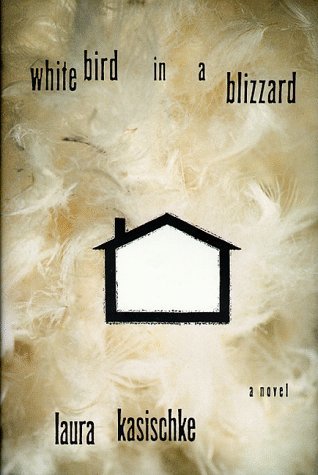
White Bird in a Blizzard by Laura Kasischke is a hauntingly poetic exploration of memory, loss, and the elusive nature of truth. Set against a backdrop of suburban America in the 1980s, Kasischke’s novel delves into the psychological aftermath of a teenager’s disappearance and the ripple effects it creates within her family. The book’s lyrical prose and suspenseful narrative hold readers captive, making it a significant work within contemporary literary fiction that deftly combines mystery with emotional depth.
Kasischke, known for her skill in blending lyrical intensity with narrative tension, offers readers a story that is as much about the fractures within a family as it is about the secrets people keep. This summary will unpack the novel’s historical context, plot, characters, themes, and literary techniques, providing a thorough understanding without giving away critical spoilers.
Historical Context
The novel is set primarily in the early 1980s, a time marked by cultural shifts in America including the rise of suburban life, changing family dynamics, and evolving attitudes toward gender and identity. The era’s cultural landscape—a mix of 1980s pop culture, Reagan-era politics, and suburban conformity—provides a vivid backdrop for the story’s unfolding mystery.
The suburban setting reflects the era’s emphasis on appearances and the idealized American family, which contrasts sharply with the novel’s exploration of hidden dysfunction and emotional isolation. Kasischke’s portrayal also touches on the broader theme of how societal expectations in that period shaped personal identities and relationships, especially for women and girls.
Brief Synopsis
Plot Overview
White Bird in a Blizzard centers on Kat Connor, a teenager whose mother, Eve, mysteriously disappears one winter day. The disappearance is sudden and unexplained, leaving Kat and her family to grapple with uncertainty. As Kat grows up, she struggles to make sense of her mother’s vanishing and the emotional turmoil it causes.
The novel unfolds through Kat’s perspective, blending her coming-of-age experiences with the psychological impact of her mother’s absence. Layers of secrets, betrayals, and suppressed desires emerge, revealing the complex emotional landscape beneath the surface of suburban normalcy.
Setting
The story takes place in a fictional suburban town in Michigan, encapsulating the cold, often isolating atmosphere of a snowy winter—symbolic of the emotional chill that permeates the family. The 1980s setting is richly detailed, evoking the era’s cultural markers such as music, fashion, and social attitudes, which deepen the authenticity of the narrative environment.
Main Characters
| Name | Role | Key Traits | Importance to Plot |
|---|---|---|---|
| Kat Connor | Protagonist | Introspective, rebellious, curious | Central character whose perspective shapes the narrative |
| Eve Connor | Kat’s mother | Mysterious, troubled, enigmatic | Her disappearance drives the plot’s mystery |
| Brock Connor | Kat’s father | Distant, stoic, emotionally reserved | His relationship with Kat and Eve is pivotal to family dynamics |
| Phil | Kat’s boyfriend | Supportive, grounded | Represents a contrasting normalcy for Kat |
| Various friends and neighbors | Supporting roles | Reflect social milieu and influence Kat’s growth | Add depth to suburban life depiction and thematic development |
Plot Summary
Part One: The Disappearance
The novel opens with the sudden disappearance of Eve Connor during a snowy day. Kat, then a teenager, witnesses her mother leaving the house in an unusual and unsettling manner. This event shatters the family’s stability and sets off a chain of emotional and psychological consequences.
Kat’s immediate response is a mixture of confusion, anger, and fear. The local community’s reactions and the police investigation form a subtle backdrop but are secondary to Kat’s internal struggle with loss and uncertainty.
Part Two: Adolescence and Alienation
Following Eve’s disappearance, Kat’s life is marked by alienation and rebellion. She distances herself from her father and peers, navigating her teenage years with a growing sense of detachment. Her friendships and romantic relationships are tinged with the unresolved trauma of her mother’s absence.
This section explores Kat’s attempts to understand her mother’s life and secrets, often reflecting on the contradictions between the woman she knew and the enigmatic figure Eve becomes in her absence.
Part Three: Revelation and Resolution
As Kat matures, she begins to uncover truths about her mother’s life, including hidden aspects of her identity and motivations. These revelations challenge Kat’s perceptions and force her to confront painful realities about her family and herself.
The narrative builds toward a resolution that balances emotional catharsis with ambiguity, leaving readers to ponder the complexities of memory, grief, and forgiveness.
Themes and Motifs
Loss and Absence
The central theme of White Bird in a Blizzard is the profound impact of loss and absence. Eve’s disappearance is both a literal event and a metaphor for emotional voids in familial relationships. The novel examines how absence shapes identity and memory.
Memory and Subjectivity
Kasischke explores the unreliable nature of memory, showing how personal narratives are fragmented and subjective. Kat’s recollections and interpretations evolve, highlighting the difficulty of grasping absolute truth.
Female Identity and Sexuality
The novel probes female identity, particularly through Eve and Kat, contrasting societal expectations with private desires. Eve’s enigmatic character challenges traditional maternal roles, while Kat’s coming-of-age journey reflects broader questions about autonomy and self-definition.
The Illusion of Suburban Normalcy
Suburban life, often idealized in popular culture, is depicted as a veneer masking dysfunction and secrets. The cold, snowy setting amplifies feelings of isolation and concealment.
Motifs
- Snow and Cold: Symbolizes emotional numbness and the chilling effects of loss.
- Bird Imagery: The title’s metaphor reflects fragility, freedom, and entrapment.
- Mirrors and Reflections: Represent self-examination and distorted perceptions.
Literary Techniques and Style
Kasischke’s prose is notable for its lyrical quality, blending poetic imagery with straightforward narrative. She employs several literary techniques to deepen the reader’s engagement:
- Nonlinear Narrative: The story unfolds through fragmented memories and flashbacks, mirroring Kat’s psychological state.
- Symbolism: Recurrent symbols such as snow and birds enrich thematic resonance.
- Mood and Atmosphere: The author crafts a pervasive sense of suspense and melancholy through detailed descriptions of setting and interior states.
- First-Person Perspective: The intimate viewpoint allows deep exploration of Kat’s emotions and thoughts.
- Ambiguity: Kasischke intentionally leaves certain plot elements unresolved, encouraging readers to interpret the narrative actively.
These techniques create a compelling tension between what is seen and what is hidden, reflecting the novel’s core concerns with perception and reality.
Author's Background
Laura Kasischke is an acclaimed American poet and novelist whose work often delves into themes of female experience, memory, and the uncanny. Born in 1961, she has published numerous poetry collections and novels, blending lyrical language with psychological insight.
Kasischke’s background as a poet informs her distinctive prose style, characterized by vivid imagery and emotional intensity. White Bird in a Blizzard is one of her best-known novels and was adapted into a film in 2014, attesting to its cultural impact.
Her writing often explores the intersection of the ordinary and the mysterious, making her a significant voice in contemporary American literature, especially in portraying women’s inner lives.
Key Takeaways
- Loss and absence can profoundly shape personal and familial identity.
- Memory is subjective and often unreliable, complicating our understanding of truth.
- Female identity is multifaceted, resisting simplistic social roles.
- Suburban normalcy often conceals deeper emotional and psychological struggles.
- Literary ambiguity invites readers to engage actively with narrative meaning.
- Kasischke’s poetic prose enhances the emotional depth and thematic complexity.
Reader's Takeaway
Readers of White Bird in a Blizzard can expect an emotionally charged journey that challenges perceptions of family, memory, and identity. The novel’s psychological depth and lyrical style provide both intellectual stimulation and emotional resonance.
The story invites reflection on how people cope with loss and the ways secrets shape relationships. It also offers a poignant portrayal of a young woman’s struggle to define herself amid confusion and pain.
For students and lecturers, the book presents rich material for discussions on narrative structure, symbolism, and themes related to gender and memory. Its layered storytelling and stylistic nuance make it a rewarding study in contemporary fiction.
Conclusion
White Bird in a Blizzard stands out as a haunting and beautifully written novel that explores the complexities of memory, loss, and identity within the context of suburban American life. Laura Kasischke’s skillful blending of poetic language and suspenseful storytelling makes this book a compelling read for anyone interested in psychological fiction and nuanced character studies.
The novel’s exploration of female experience and the elusive nature of truth offers valuable insights into human psychology and social dynamics. For readers eager to engage with a story that is both emotionally gripping and intellectually enriching, White Bird in a Blizzard is an essential literary work worth exploring further.
White Bird in a Blizzard FAQ
What is the main plot of 'White Bird in a Blizzard'?
'White Bird in a Blizzard' follows the story of Kat Connor, a teenage girl whose life is turned upside down when her mother mysteriously disappears. The novel explores themes of family secrets, loss, and self-discovery.
Who is the author of 'White Bird in a Blizzard'?
The book was written by Laura Kasischke, an acclaimed American poet and novelist known for her lyrical and evocative storytelling.
What genre does 'White Bird in a Blizzard' belong to?
The novel is a blend of literary fiction and psychological suspense, with elements of mystery and coming-of-age narrative.
What themes are explored in 'White Bird in a Blizzard'?
Major themes include family dynamics, the impact of loss, identity, adolescence, and the complexity of memories.
Is 'White Bird in a Blizzard' based on a true story?
No, the novel is a work of fiction, although it deals with realistic and emotionally resonant situations.
Has 'White Bird in a Blizzard' been adapted into a film or other media?
Yes, the novel was adapted into a film in 2014, starring Shailene Woodley and directed by Gregg Araki.
What is the significance of the title 'White Bird in a Blizzard'?
The title symbolizes the protagonist's feelings of isolation and being out of place, much like a white bird caught in a harsh and confusing storm.
What age group is 'White Bird in a Blizzard' suitable for?
The novel is generally suitable for adult readers and mature young adults due to its themes of loss, sexuality, and family complexities.
How is the narrative structured in 'White Bird in a Blizzard'?
The story is narrated from Kat's perspective, blending present experiences with flashbacks that reveal her family history and inner thoughts.
What makes Laura Kasischke's writing style unique in this book?
Kasischke's writing is poetic, atmospheric, and emotionally intense, creating a haunting and immersive reading experience.


