
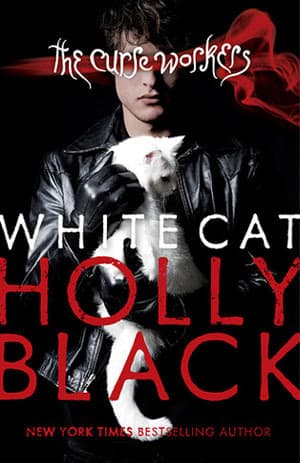
Synopsis
Covers the whole plot, including the ending.
- Difficulty
- Medium
- Pacing
- Moderate
- Mood
- Mysterious, Suspenseful, Dark, Romantic
- Read it if
- You enjoy urban fantasy with a strong mystery element, morally grey characters, and a unique magic system revolving around 'curse workers' in a contemporary setting.
- Skip it if
- You prefer high fantasy with clear-cut heroes and villains, or dislike stories involving organized crime and manipulation.
White Cat Plot Summary
Covers the whole plot, including the ending.
The Dream and the Missing Gloves
Cassel Sharpe, a seventeen-year-old non-magic worker in a family of powerful curse workers, has a recurring nightmare where he pushes a girl off a roof. This dream is tied to the murder of Lila Zacharov, the daughter of a rival crime boss, a crime he believes he committed three years prior. He attends a boarding school for non-magic workers, distancing himself from his family's criminal enterprise. The story opens with Cassel discovering his sleepwalking has returned and that his special gloves, designed to prevent accidental magical touches, are missing. His older brother, Barron, a transformation worker, finds him on the roof and teases him about his lack of magic and his past.
The Funeral and the Familiar Face
Cassel's grandfather, a powerful emotion worker, forces him to attend the funeral of his uncle, a transformation worker who supposedly died of a heart attack. At the funeral, Cassel sees a beautiful, pale girl with white hair who seems to recognize him, staring intently. He feels an unsettling sense of familiarity with her, despite not recalling ever meeting her. The girl, who he later learns is named Lila, is accompanied by a man who appears to be her father, Luka Zacharov, the head of the rival Zacharov family. This encounter deeply disturbs Cassel, as Lila Zacharov is the girl he supposedly murdered three years ago.
The Betrayal and the Investigation
After the funeral, Cassel's suspicions about his past grow. He confronts his brother, Barron, who admits that their family, particularly their grandfather, has a history of manipulating memories with emotion work. Cassel realizes he might have been framed or had his memories altered regarding Lila's murder. He decides to investigate Lila's supposed death, believing she is alive and that he was manipulated. He starts gathering clues, trying to piece together the events of three years ago, distrusting his own memories and his family's story.
The Truth About Lila
Cassel follows Lila, observing her strange behavior and her connection to a white cat that frequently appears near her. He eventually learns the truth: Lila Zacharov was not murdered; instead, she was transformed into a white cat by his family's transformation worker, his brother Barron, under his grandfather's orders. The girl he saw at the funeral is Lila, temporarily returned to human form by another transformation worker, but she periodically reverts to her cat form. This revelation explains her unusual appearance and her intense gaze at him, as she remembers everything.
The Curse and the Consequences
Cassel confronts his family, demanding answers. He learns that his grandfather, a powerful emotion worker, manipulated his memories to make him believe he murdered Lila, thus binding him to the family. He discovers that the white cat he frequently sees is Lila, and she was transformed as revenge against her father, Luka Zacharov. The 'curse' he believes he has is actually from his family's magic, designed to control him and prevent him from leaving their criminal enterprise. He also learns that his mother, a death worker currently in prison, was involved in the original plot.
Working with Lila
Realizing the extent of his family's deception and the injustice done to Lila, Cassel decides to help her. Lila, who can communicate with him in her cat form through a mental link, agrees to work with him to break her transformation. They begin to investigate ways to reverse the powerful transformation curse, knowing it will be dangerous and will pit them against both of their powerful families. Their alliance is tense, as Lila still resents what Cassel's family did to her, and Cassel grapples with his guilt and the desire for redemption.
The Hunt for the Cure
Cassel and Lila discover that only a very powerful transformation worker can reverse Lila's curse. Their search leads them to various underground magic workers and dangerous situations. They face obstacles from both the Sharpe and Zacharov families, who are both determined to either maintain the transformation or use Lila for their own purposes. During their quest, Cassel begins to develop genuine feelings for Lila, and she, despite her anger, starts to trust him, recognizing his sincerity in wanting to help her.
The Confrontation with Luka Zacharov
Their efforts lead them to Luka Zacharov, Lila's father, who is a powerful and ruthless curse worker. Luka, initially believing Cassel to be a threat, is eventually convinced of Cassel's intentions to help Lila. He reveals more details about the feud between the families and his own complex relationship with Lila. The confrontation is tense, as Luka is wary of Cassel, but Lila's presence and her desire to be fully human again sway her father to consider their plan, setting the stage for a dangerous alliance.
The Grandfather's Plan
As Cassel investigates, he uncovers the full extent of his grandfather's manipulative scheme. His grandfather orchestrated Lila's transformation and Cassel's false memory to solidify his control over Cassel and to gain leverage against the Zacharovs. The ultimate goal was to merge the two crime families through a forced marriage between Cassel and Lila, ensuring the Sharpe family's dominance. This revelation makes Cassel realize he is a pawn in a much larger, more sinister game, and he feels a renewed urgency to free Lila and himself.
The Climax and the Choice
The climax occurs as Cassel and Lila, with the reluctant help of Luka Zacharov, confront Cassel's grandfather and Barron. They attempt to force Barron to reverse Lila's transformation. A chaotic magical battle ensues, involving various types of curse work. Cassel, despite being a non-magic worker, uses his wits and knowledge of his family's weaknesses to protect Lila. He makes a crucial decision to expose his grandfather's manipulations, risking everything to free Lila and break the cycle of deception and violence within his family.
Lila's Freedom and Cassel's Revelation
In the chaotic struggle, Lila's transformation is finally broken, and she is fully restored to her human form. Amidst the resolution of Lila's curse, a shocking truth about Cassel is revealed: he is not a non-magic worker. He is, in fact, a powerful magic worker, specifically a transformation worker, a fact that his family had suppressed through a powerful emotion curse. This revelation explains his strange dreams, his sleepwalking, and his mysterious affinity for the white cat, as he was unconsciously using his own magic. His family had hidden this to keep him from realizing his true power and to control him.
The Aftermath and New Beginnings
In the aftermath, the Sharpe and Zacharov families are in disarray. Cassel's grandfather's power is diminished, and the truth of his manipulations is exposed. Cassel, now aware of his own magic, must come to terms with his identity and his family's betrayal. Lila, free from her curse, begins to rebuild her life, and her relationship with Cassel deepens. The book concludes with Cassel and Lila facing an uncertain future, but with a newfound understanding of themselves and their bond, ready to navigate the complex world of magic and crime together, on their own terms.
Principal Figures
Cassel Sharpe
Protagonist
A seemingly non-magic worker from a powerful crime family, haunted by a past murder.
Cassel is a complex, introspective, and morally conflicted teenager. He believes he murdered Lila Zacharov three years ago and carries the burden of this guilt, feeling like an outcast in his family of powerful curse workers. He's pragmatic, intelligent, and observant, often using his wits rather than magic to navigate dangerous situations. Despite his family's criminal ties, he yearns for a normal life and struggles with their manipulative nature. He is fiercely loyal to those he cares about, even while questioning his own sanity.
Relationships: Lila Zacharov (Victim of his family's crime; later, his romantic interest and partner in seeking justice.); Barron Sharpe (Older brother, transformation worker, initially antagonistic and teasing, but later a reluctant ally.); Philip Sharpe (Older brother, death worker, often detached and intimidating.); Grandfather Sharpe (Emotion worker, manipulative patriarch, antagonist.); Maureen Sharpe (Mother) (Death worker, in prison, involved in the original plot against Lila.); Luka Zacharov (Lila's father, head of a rival crime family, initially an enemy, later an uneasy ally.)
Lila Zacharov
Deuteragonist/Love Interest
The daughter of a rival crime boss, believed murdered, but actually transformed into a white cat.
Lila is initially introduced as a mysterious, pale girl with white hair, exuding an unsettling familiarity. As the story unfolds, she is revealed to be the girl Cassel supposedly murdered, who was actually transformed into a white cat by his family. She is intelligent, resilient, and possesses a sharp wit, even in her cat form. She harbors deep resentment and anger towards the Sharpes for her transformation but is also pragmatic enough to ally with Cassel to break her curse. She is strong-willed and determined, capable of holding her own against powerful magic workers.
Relationships: Cassel Sharpe (Initially her family's enemy, later her romantic interest and partner in breaking her curse.); Luka Zacharov (Her father, a powerful curse worker, with a complicated and strained relationship due to his overprotectiveness and her transformation.)
Barron Sharpe
Supporting/Antagonist
Cassel's older brother and a transformation worker, initially complicit in the family's schemes.
Barron is Cassel's older brother, a transformation worker who initially enjoys teasing and tormenting Cassel, especially about his lack of magic and his past 'crime'. He is loyal to his family, particularly his grandfather, and was the one who performed Lila's transformation. Despite his often cruel demeanor, he shows flashes of a more complex personality, occasionally expressing concern for Cassel or revealing information that helps him. He is a powerful and skilled magic worker, but often acts impulsively.
Relationships: Cassel Sharpe (Brother; often antagonistic, but with an underlying bond.); Grandfather Sharpe (Grandfather; loyal to him and his schemes.)
Grandfather Sharpe
Antagonist
The manipulative patriarch of the Sharpe family and a powerful emotion worker.
Grandfather Sharpe is the cunning and ruthless head of the Sharpe crime family. He is a powerful emotion worker, capable of altering memories and influencing feelings, which he uses to maintain control over his family and their criminal empire. He orchestrated Lila's transformation and manipulated Cassel's memories to bind him to the family and to gain leverage against the Zacharovs. He is driven by power, family loyalty (in his own twisted way), and a desire to see the Sharpe family dominate the magical underworld. He is a master manipulator, always several steps ahead.
Relationships: Cassel Sharpe (Grandson; views him as a pawn to be controlled and exploited.); Barron Sharpe (Grandson; uses him for his transformation abilities.); Philip Sharpe (Grandson; uses him for his death working abilities.)
Luka Zacharov
Supporting/Antagonist
Lila's father and the powerful, vengeful head of the rival Zacharov crime family.
Luka Zacharov is the formidable and dangerous head of the Zacharov crime family, a powerful curse worker. He is Lila's father and deeply protective of her, though his methods can be ruthless and controlling. He is locked in a bitter feud with the Sharpe family, particularly after Lila's transformation. He is a man of few words, but his presence commands respect and fear. He is driven by a desire for revenge against the Sharpes and to protect his daughter, even if it means keeping her transformed for her 'safety'.
Relationships: Lila Zacharov (Daughter; deeply protective, though his actions led to her transformation.); Cassel Sharpe (Initially an enemy due to his family's actions, later an uneasy ally.)
Philip Sharpe
Supporting
Cassel's older brother and a death worker, often detached and intimidating.
Philip is Cassel's other older brother, a death worker. He is often more reserved and less overtly antagonistic than Barron, but his profession as a death worker makes him inherently intimidating. He is loyal to the family and participates in their schemes, though he seems more detached from the emotional drama. He is a powerful magic worker, but his personality remains somewhat enigmatic throughout the story. He represents another facet of the Sharpe family's dangerous power.
Relationships: Cassel Sharpe (Brother; more distant than Barron, but still part of the family dynamic.); Grandfather Sharpe (Grandfather; loyal to him and his plans.)
Maureen Sharpe (Mother)
Mentioned/Supporting
Cassel's mother, a death worker currently in prison, involved in the original plot.
Maureen Sharpe is Cassel's mother, a death worker who is currently in prison for a magically induced murder. She is mentioned frequently and her criminal past and magical abilities cast a shadow over Cassel's life. It is revealed that she was involved in the original plot against Lila Zacharov, adding to Cassel's complex feelings about his family. Despite her absence, her influence and reputation are significant, shaping Cassel's understanding of his family's dark legacy.
Relationships: Cassel Sharpe (Son; her past actions deeply affect him.); Grandfather Sharpe (Father; part of his criminal enterprise.)
Sam
Supporting
Cassel's best friend at boarding school, a non-magic worker.
Sam is Cassel's best friend at the boarding school for non-magic workers. He is loyal, supportive, and provides Cassel with a sense of normalcy away from his criminal family. Sam is often the voice of reason and concern, offering Cassel advice and a listening ear. He is unaware of the full extent of Cassel's family's magical dealings but is a steadfast friend, representing the mundane world Cassel often craves.
Relationships: Cassel Sharpe (Best friend and confidant.)
Themes & Insights
Identity and Self-Discovery
The novel explores Cassel's struggle to define himself outside of his family's criminal legacy and his perceived 'non-magic' status. He grapples with the guilt of a murder he believes he committed and the constant pressure to conform to his family's expectations. The journey to uncover the truth about Lila also becomes a journey of self-discovery, culminating in the shocking revelation of his own magical abilities. This theme is central to Cassel's arc, as he learns to trust his instincts over manipulated memories, as seen when he begins to question his recurring dream and his family's narrative about Lila's death.
“I was a blank slate, a non-magic worker, and that was the only identity I was allowed. But it wasn't true.”
Memory and Manipulation
A core theme is the unreliability of memory and the dangers of magical manipulation. The Sharpe family, particularly Grandfather Sharpe, uses emotion work to alter and suppress memories, directly impacting Cassel's perception of reality and his belief that he murdered Lila. This manipulation shows how power can be used to control individuals and narratives. Cassel's struggle to discern truth from falsehood, as he pieces together the events of three years ago, highlights how fragile personal history is when magic is involved. The entire mystery hinges on the fact that Cassel's memories of Lila's death were false.
“What if the memories I had weren't my own? What if they were someone else's, planted in my head like a seed?”
Family Loyalty vs. Morality
Cassel is constantly torn between his loyalty to his family and his own moral compass. The Sharpes are a powerful, criminal organization, and their actions are often ruthless and self-serving. Cassel struggles with the dissonance of loving his family while disliking their methods, especially after discovering their role in Lila's transformation and his own manipulation. This conflict is evident when he chooses to help Lila, knowing it will put him directly at odds with his powerful grandfather and brothers, showing his growing sense of justice over blind family allegiance.
“I was a Sharpe. It was etched into my bones. But what if being a Sharpe meant being a monster?”
Prejudice and Power Dynamics
The world of 'White Cat' is structured around a clear power dynamic between magic workers and non-magic workers, with the former holding significant, often criminal, influence. Non-magic workers are treated as second-class citizens, seen as weak or insignificant. Cassel, believing himself to be a non-magic worker, experiences this prejudice firsthand within his own family, which fuels his feelings of inadequacy. The criminal underworld further highlights how magical abilities translate into power and control, often at the expense of others. This theme is underscored by the reveal of Cassel's hidden magic, challenging the established hierarchy.
“In my family, not having magic was like not having a soul. It made you less than human.”
Plot Devices & Literary Techniques
Unreliable Narrator
Cassel's manipulated memories make his initial perspective untrustworthy.
Cassel Sharpe serves as an unreliable narrator due to his magically altered memories. He genuinely believes he murdered Lila Zacharov, and his internal monologues reflect this guilt and confusion. This device creates suspense and mystery, as the reader is forced to question every detail Cassel remembers and every piece of information he receives. The gradual reveal of his manipulated past slowly unravels the initial narrative, leading to a shocking twist and a re-evaluation of everything the reader (and Cassel) thought was true. This keeps the reader constantly engaged in deciphering the truth.
The Recurring Dream
A persistent nightmare acts as a clue and a catalyst for Cassel's investigation.
Cassel's recurring nightmare, where he pushes a girl off a roof, is a crucial plot device. It serves as a constant reminder of his supposed crime and fuels his guilt, but it also acts as a subtle clue that something is amiss. The dream is a distorted echo of the real events, hinting at the truth without revealing it directly. It pushes Cassel to question his memories and eventually embark on his investigation into Lila's 'death', driving the entire plot forward as he seeks to understand its true meaning and escape its torment.
The White Cat
Lila's transformed form serves as a constant, mysterious presence and a symbol of her curse.
The white cat is a literal and symbolic plot device. It is Lila Zacharov in her transformed state, a direct consequence of the Sharpe family's magic. Her frequent, mysterious appearances around Cassel, and her ability to mentally communicate with him, serve to deepen the mystery surrounding her 'death' and to forge a unique, intimate connection between her and Cassel. The cat form symbolizes her entrapment and the injustice done to her, while also acting as a means for her to observe and influence events, actively participating in the plot to break her curse.
The Gloves
Special gloves prevent accidental magic, highlighting Cassel's suppressed power.
Cassel wears special gloves to prevent accidental magical touches, despite believing he is a non-magic worker. This detail is a subtle but potent piece of foreshadowing, as it initially seems to be a precaution taken by his family to protect others from his brothers' magic. However, the recurring motif of his gloves being missing, particularly when he sleepwalks, hints at his own suppressed magical abilities. The gloves symbolize his family's control over him and the suppression of his true identity, acting as a constant reminder of his perceived weakness that ultimately masks his strength.
White Cat Quotes
“When you're a monster, you can't afford to be a coward.”
“The worst part about my family isn't the lying, or the stealing, or the killing. It's the way they make you doubt everything.”
“Being a monster is a lot like being a magician. You have to make people believe in things that aren't real.”
“I'm a monster, and I like it. I like the way it feels to be powerful.”
“There are some things you can't take back, no matter how much you wish you could.”
“It's hard to be good when you're surrounded by bad.”
“Love makes you stupid. It makes you weak. It makes you do things you'd never do otherwise.”
“You can't trust anyone who can lie to your face and make you believe them.”
“Sometimes the truth is the most dangerous thing of all.”
“I'm not a hero. I'm just a kid who made a mistake.”
“Family isn't about blood. It's about who you choose to keep close.”
“The past isn't just behind you; it's a part of you.”
“Being invisible is a kind of power too. No one expects anything from you.”
“You can't outrun your own head.”
Quiz
10 questions on the plot and the characters. Each answer comes with a short explanation.
Question 1
What type of magic is Cassel believed to be incapable of performing, setting him apart from his family?
- Curse breaking
- Transformation
- Touch magic
- Illusion casting
Show answer
C. Touch magic Cassel's family are all magic workers, and the book description explicitly states he is 'the only one of their family who can't do magic,' implying he lacks the 'touch' that is fundamental to their abilities.
Question 2
What significant event from his past does Cassel constantly remember and feel cursed by?
- Being abandoned by his mother
- The murder of a fourteen-year-old girl
- His family's eviction from their home
- Failing a crucial magic test
Show answer
B. The murder of a fourteen-year-old girl The book description clearly states, 'Cursed by the memory of the fourteen year old girl he murdered.'
Question 3
According to the provided text, what percentage of the population can work magic in Cassel's world?
- 5%
- 10%
- 1%
- 0.1%
Show answer
C. 1% The last paragraph explicitly states, 'In this world only 1% of the population can work magic.'
Question 4
Why have magic workers been driven into crime since 1929?
- They prefer the thrill of illegal activities.
- Magic was prohibited, forcing them underground.
- They were naturally drawn to a life of crime.
- To hide their existence from non-magical people.
Show answer
B. Magic was prohibited, forcing them underground. The text states, 'Ever since magic was prohibited in 1929 magic workers have been driven underground and into crime.'
Question 5
What is the primary reason Cassel's family members, particularly his brothers, detest him?
- His rebellious attitude.
- His involvement with the law.
- His inability to perform magic.
- His past murder of a girl.
Show answer
C. His inability to perform magic. The text says, 'His brothers detest him as the only one of their family who can't do magic.' While the murder is a curse, his lack of magic is the specific reason for his brothers' detestation.
Question 6
What is the current state of Cassel's mother?
- She is a fugitive on the run.
- She is in prison.
- She has abandoned the family.
- She is working a legitimate job.
Show answer
B. She is in prison. The description states, 'His mother is in prison,' detailing the family's hardships.
Question 7
Despite magic being prohibited, what specific services do people still seek from magic workers?
- Fortune telling, healing, and potion making.
- Their touch, curses, magical killings, and transformations.
- Weather control, teleportation, and invisibility.
- Mind reading, object animation, and dream manipulation.
Show answer
B. Their touch, curses, magical killings, and transformations. The text specifies, 'And while people still need their touch, their curses, their magical killings, their transformations, times have been hard.'
Question 8
What does Cassel's family being one of the 'big five crime families in America' suggest about their status in the magic world?
- They are struggling to survive and are on the verge of collapse.
- They hold significant power and influence within the underground magical criminal network.
- They are known for their philanthropic efforts despite their criminal ties.
- They are a legitimate business front for magical services.
Show answer
B. They hold significant power and influence within the underground magical criminal network. Being one of the 'big five' implies a high level of organization, power, and influence within their criminal domain, especially concerning magic.
Question 9
The description mentions 'a secret at the centre of Cassel's family and he's about to inherit it. It's terrifying.' What theme does this foreshadow for the novel?
- The theme of forbidden love and its consequences.
- The theme of a hidden truth, inherited burdens, and potential danger.
- The theme of overcoming poverty through magical means.
- The theme of a lighthearted adventure into a magical world.
Show answer
B. The theme of a hidden truth, inherited burdens, and potential danger. The phrasing 'secret,' 'inherit,' and 'terrifying' strongly suggests a plot revolving around uncovering a hidden, dangerous truth that Cassel will be forced to confront.
Question 10
How does Cassel's unique situation—being a non-magic worker in a magic-working crime family—contribute to his character's internal conflict and external struggles?
- It makes him an outcast, leading to a desire to prove himself and a lack of acceptance from his family, while also potentially making him an anomaly that could be key to solving mysteries.
- It allows him to live a normal life free from the dangers of magic, creating a desire to escape his family's criminal ties entirely.
- It grants him a unique form of non-magical power that his family respects, giving him an advantage in their criminal dealings.
- It leads him to actively seek out other non-magic workers to form a rebellion against the magic-working families.
Show answer
A. It makes him an outcast, leading to a desire to prove himself and a lack of acceptance from his family, while also potentially making him an anomaly that could be key to solving mysteries. The text states his brothers detest him for his lack of magic and he's 'cursed' by a past murder, highlighting his outcast status and internal struggle. His uniqueness could also be a narrative device, making him stand apart from the family's typical magical operations and potentially giving him a different perspective on the 'secret' he's about to inherit.
White Cat FAQ
What is the central premise of 'White Cat'?
'White Cat' follows Cassel Sharpe, a seventeen-year-old boy from a powerful family of curse workers, who believes he murdered a girl named Lila Zacharov three years prior. He struggles with this guilt and his status as the only non-magic worker in his family, while navigating a world where magic is illegal but essential to the criminal underworld.
Who are the major magic-working families in Cassel's world?
Cassel's family, the Sharpes, are one of the 'big five' crime families, known for their transformation work. Other prominent families include the Zacharovs, specializing in death curses, and the Antonovs, who handle emotion work. These families form the backbone of the organized magical crime network.
What type of magic does Cassel's family, the Sharpes, specialize in?
The Sharpe family specializes in transformation work, which allows them to change objects or people. This type of magic is incredibly versatile and often used for disguises, alterations, or even more sinister purposes within their criminal enterprises.
What is the significance of the 'white cat' in the story?
The white cat is a crucial element that appears in Cassel's dreams and is linked to the memory of Lila Zacharov's death. It later becomes clear that the white cat is a transformed Lila, a result of Cassel's own latent transformation magic, revealing the truth about her 'death' and his involvement.
What is a 'curse worker' in the context of the book?
A curse worker is an individual born with the ability to perform magic by touch, categorized into different specialties like transformation, emotion, luck, death, and memory work. Their powers are illegal but highly sought after, leading them into the criminal underworld.
What is the big twist regarding Cassel's magical abilities?
The major twist is that Cassel is not a magic worker, but rather a powerful transformation worker himself. His family had convinced him he was 'null' and had him forget his true abilities, framing him for Lila's death to protect him and exploit his power.
How did Cassel's family manipulate his memories?
Cassel's family, particularly his grandfather and older brother Barron, used memory workers to alter his recollections. They made him believe he killed Lila and suppressed his own transformation abilities, effectively controlling his understanding of his past and his identity.
What is the true nature of Lila Zacharov's 'death' and Cassel's involvement?
Lila was not truly killed; Cassel, in a fit of emotion and unknowingly using his transformation magic, turned her into a white cat. His family then used memory workers to make him forget this and believe he had murdered her, covering up the incident.
What is the purpose of the glove Cassel wears?
Cassel wears a glove to prevent accidental magic, as his transformation work is activated by touch. However, it's later revealed that the glove was also a psychological tool, reinforcing his belief that he was a null and preventing him from discovering his true abilities sooner.
How does Cassel's belief that he is a murderer impact his self-perception and relationships?
Cassel's guilt over 'killing' Lila deeply shapes his identity, making him feel like an outcast and a monster. This self-loathing affects his interactions with his family, particularly his brothers who constantly remind him of his 'crime,' and makes him wary of forming close bonds.
What psychological effects does the constant gaslighting from his family have on Cassel?
The constant gaslighting about his magical abilities and Lila's 'death' creates significant psychological trauma for Cassel. He suffers from memory gaps, self-doubt, and a warped sense of reality, making him question his own sanity and perceptions.
How does Cassel's relationship with his brothers, Barron and Phillip, reflect his family's dysfunctional dynamics?
Cassel's relationship with Barron and Phillip is strained and abusive, characterized by their constant taunts about his 'murder' and lack of magic. This dynamic highlights the family's cutthroat nature, where power and magical ability are valued above familial affection or honesty.
In what ways does Cassel struggle with his identity throughout the novel?
Cassel struggles with multiple facets of his identity: as a 'murderer,' as a 'null' in a family of magic workers, and as someone constantly manipulated by those he should trust. His journey involves peeling back layers of deception to discover his true self and his own formidable power.
Is Cassel's journey primarily one of redemption or self-discovery?
While there are elements of redemption as he seeks to understand and rectify past wrongs, Cassel's journey is primarily one of self-discovery. He must uncover the truth about his past, his family's deceptions, and his own identity as a powerful magic worker, rather than atoning for a crime he didn't commit.
How does the author use the 'illegal magic' premise to explore themes of power and control?
The 'illegal magic' premise allows the author to explore how power, even when outlawed, can still control society and individuals. The crime families wield immense influence through their magical services, demonstrating how power structures adapt and persist outside the law, often at the expense of those without magic or knowledge.
What is the moral ambiguity surrounding the magic workers' actions?
The magic workers, while operating outside the law, are not always depicted as purely evil. They provide services, albeit illicit ones, that people need. This creates moral ambiguity, as their actions are often driven by survival, loyalty to family, and the demands of a society that simultaneously fears and relies on their abilities.
To what extent is Cassel a victim of his circumstances versus an active participant in his fate?
Initially, Cassel is largely a victim of his circumstances, manipulated by his family and burdened by false memories. However, as he begins to question and investigate, he transforms into an active participant in uncovering the truth, ultimately taking control of his own destiny and powers.
About the author

Holly Black is an American author known for her work in young adult fantasy fiction. She is the author of "The Cruel Prince," "The Wicked King," and "The Queen of Nothing," which make up the Folk of the Air series, as well as "The Iron Trial," the first book in the Magisterium series, and "The Darkest Part of the Forest." Her stories often explore themes of magic, power, and identity.
Similar books
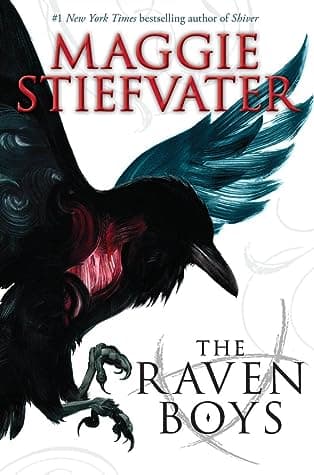
- The Raven Boys
Maggie Stiefvater
4.0 (270k) average on GoodreadsFantasyFeatures a contemporary setting with hidden magic, a compelling mystery, and a cast of complex characters, including a 'normal' protagonist among powerful magic users.
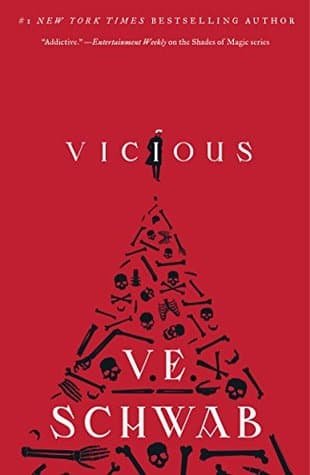
- Vicious
V.E. Schwab
4.0 (7k) average on GoodreadsThrillerExplores morally ambiguous characters with extraordinary powers and delves into themes of revenge and the blurred lines between good and evil.
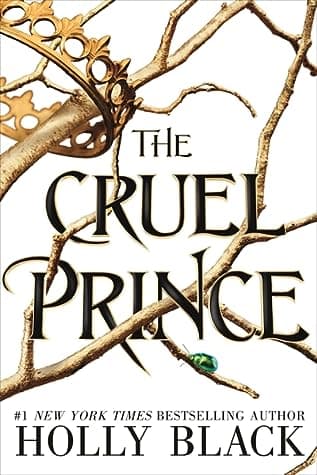
- The Cruel Prince
Holly Black
4.1 (216k) average on GoodreadsFantasyAnother Holly Black novel with a protagonist navigating a dangerous magical world, dealing with family secrets, betrayals, and a complex romantic dynamic.
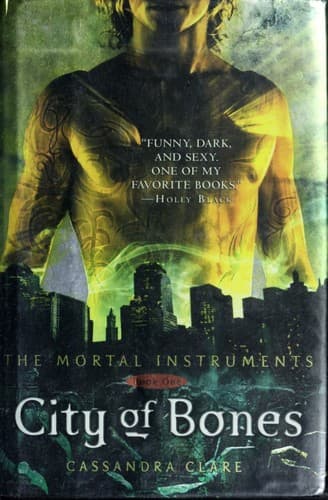
- City of Bones
Cassandra Clare
4.1 (43k) average on GoodreadsThrillerUnlike City of Bones' more traditional good-versus-evil narrative with clear angelic/demonic forces, White Cat presents a morally ambiguous world where magic (curse-working) is a tool of human intention and consequence, leading to more nuanced antagonists and ethical dilemmas. The magic systems are fundamentally different, with Clare's relying on ancient, established supernatural beings and Black's on individual, often criminal, manipulation of luck.
- Harry Potter and the Sorcerer's Stone
J.K. Rowling
4.5 (7M) average on GoodreadsFantasyRescued from a miserable life under the stairs, an orphaned boy discovers he's a wizard destined for a magical school, where he uncovers a dangerous secret tied to the dark wizard who murdered his parents.
- The Hunger Games
Suzanne Collins
4.3 (6.4M) average on GoodreadsFantasyIn a future where children fight to the death on live television, Katniss Everdeen volunteers for the arena, turning a death sentence into a fight for survival and a spark of rebellion.


Enjoyed the summary?
A summary gives you the shape of the book. The book itself has the detail, the examples and the voice.
Find White Cat on AmazonAs an Amazon Associate, BookBrief earns from qualifying purchases. How we're funded