

Synopsis
Covers the whole plot, including the ending.
- Difficulty
- Medium
- Pacing
- Moderate
- Mood
- Gothic, Suspenseful, Philosophical, Dark, Psychological
- Read it if
- You enjoy early American gothic literature, psychological thrillers, and explorations of religious fanaticism and the human mind's fragility.
- Skip it if
- You prefer fast-paced modern thrillers or are sensitive to themes of extreme religious delusion and family violence.
Wieland and Memoirs of Carwin the Biloquist Plot Summary
Covers the whole plot, including the ending.
The Tranquil Retreat and the Unseen Threat
Clara Wieland, the narrator, starts by describing her family's peaceful life at their country home, Mettingen, near Philadelphia. Her father, a German immigrant and religious man, died mysteriously by spontaneous combustion after a period of intense religious devotion. Clara lives with her brother, Theodore Wieland, his wife Catherine Pleyel, and their four children. Theodore is also very religious, inheriting his father's intensity but using it in a more rational way. Their peaceful lives are disturbed by Henry Pleyel, Catherine's brother and Theodore's close friend, and later by Francis Carwin, a ventriloquist who can imitate voices, creating an uneasy atmosphere at Mettingen.
The Voice in the Temple
The first major disturbance happens when Theodore and Henry Pleyel are in a small, classical temple on the estate, built by Theodore's father. Theodore hears an unseen voice warning him to 'forbear!' from reading aloud from a classical text. This incident deeply troubles Theodore, who sees it as a divine message. Clara and Catherine also experience strange things, including whispers and unusual sounds, which they cannot explain. These events create a growing sense of fear and suspicion among the family, who first think they are supernatural or a prank, and later, more specifically, blame Carwin.
Carwin's Introduction and Growing Suspicion
Francis Carwin, a man with unclear origins and a charming yet unsettling manner, arrives at Mettingen. He claims to have traveled widely and has a remarkable command of languages and a unusual vocal talent. While charming at first, his secretive nature and his habit of appearing and disappearing without explanation soon make him suspicious, especially as the strange voices become more frequent and targeted. Henry Pleyel particularly distrusts Carwin, believing him to be a villain. Clara, despite her doubts, is drawn to Carwin's intelligence and mysterious personality, even as she fears his possible role in the unsettling events.
Catherine's Demise and Theodore's Descent
The unsettling events worsen dramatically with Catherine Pleyel's brutal murder. She is found dead in her bed, a victim of a violent attack. Theodore Wieland, already deeply affected by the mysterious voices, becomes convinced that he is receiving divine commands. He believes these voices are direct messages from God, telling him to perform increasingly horrific acts to show his faith and obedience. His rational mind, once strong, becomes twisted by religious extremism and the belief that he is an instrument of God's will. This is a turning point, as Theodore's piety turns into a dangerous delusion, leading directly to more tragedy.
The Children's Murder and Theodore's Confession
Believing he has an unwavering divine command, Theodore Wieland commits the ultimate crime: he murders his four beloved children. He thinks he is offering them as a sacrifice to God, an act of supreme faith. After the horrific deed, Theodore, in a state of religious ecstasy mixed with deep despair, confesses his crimes to a shocked community. His confession details the voices he heard, which he firmly believes were God's instructions. This event destroys the remaining order and reason in Mettingen, leaving Clara and the community struggling with the incomprehensible nature of Theodore's actions and the source of his delusion.
Clara's Near-Death and Pleyel's Accusation
Following the murders of Catherine and the children, Theodore tries to kill Clara too, believing it is another divine command. Clara narrowly escapes his attack, saved by a timely intervention or her own quick thinking. Meanwhile, Henry Pleyel, devastated by his sister's death and convinced of Carwin's evil, publicly accuses Carwin of causing all the tragedies. Pleyel believes Carwin, through his ventriloquism, orchestrated the voices that drove Theodore mad. This accusation puts Carwin under intense scrutiny and forces him to face the results of his actions, though indirectly.
Carwin's Revelation and Limited Confession
Cornered and facing serious accusations, Francis Carwin finally reveals the truth about his ventriloquial abilities. He admits to using his power to create some of the mysterious voices and sounds that troubled the Wieland family, mainly out of mischief and a desire to see their reactions. However, he strongly denies any part in the murders of Catherine and the children, or in directly ordering Theodore to commit them. He claims his actions were limited to minor pranks and that Theodore's ultimate madness resulted from his own religious fervor, made worse by Carwin's initial deceptions but not directly caused by them.
Theodore's Trial and Imprisonment
Theodore Wieland is tried for the murders of his wife and children. Despite his strong belief in divine commands, the court finds him legally insane. He is judged not a malicious killer but a man driven mad by religious delusion. As a result, he is acquitted on grounds of insanity and committed to an asylum. This outcome, though legally sound, leaves Clara and the community grappling with the deep psychological and moral questions of his actions, and the unsettling question of how a seemingly good man could be led to such extreme violence by an internal conviction.
Clara's Continued Peril and Carwin's Final Intervention
Even after Theodore's confinement, Clara's ordeal is not over. Theodore escapes from the asylum and confronts Clara again, still believing he must complete his divine mission by killing her. In a dramatic moment, as Theodore is about to strike Clara, Carwin, who has been watching, intervenes. He uses his ventriloquism to project a voice that Theodore perceives as God's, ordering him to 'Hold! Thy mission is accomplished!' This command, coming from what Theodore believes to be God, causes him to stop immediately and then turn his weapon upon himself, ending his life. This final, tragic act ends Theodore's terror.
Aftermath and Clara's Reflection
Afterward, Clara Wieland is left to rebuild her shattered life. She thinks deeply about what happened, grappling with her brother's madness, Carwin's deception, and how fragile human reason and perception are. She considers the dangers of uncontrolled religious passion and the devastating power of misunderstanding. The novel ends with Clara moving to Europe with Henry Pleyel, trying to find peace and rebuild her life away from Mettingen's tragic memories. Her story is a warning about the dangers of extremism and how easily the human mind can be fooled by what seems supernatural.
Memoirs of Carwin: Early Life and Influences
The unfinished sequel, 'Memoirs of Carwin the Biloquist,' changes to Francis Carwin's perspective, as he begins to tell his own history. He describes his early life in rural Pennsylvania, his desire for knowledge, and his unhappiness with his humble upbringing. Carwin recounts his fascination with language and sound, which leads him to discover his talent for ventriloquism, or 'biloquism' as he calls it. He first uses this ability for fun and minor tricks, unaware of its later impact. He also details his intellectual awakening and his desire to explore the world beyond his home, setting the stage for his later travels and encounters.
Carwin's Apprenticeship with Ludloe
Carwin recounts his journey to Europe, where he meets Ludloe, a charismatic and influential philosopher. Ludloe, who supports radical social and political change, takes Carwin under his wing, seeing potential in his intellect and unique abilities. Carwin becomes a follower, drawn to Ludloe's revolutionary ideas and his vision for a new society. During this time, Carwin's ventriloquial skills are further refined and used, often for Ludloe's secret plans or for experiments. This mentorship exposes Carwin to intellectual debate, political intrigue, and moral uncertainty, shaping his worldview and his willingness to manipulate perception.
The Ludloe Conspiracy and Carwin's Disillusionment
As Carwin gets more involved with Ludloe, he discovers the darker side of his mentor's ideals. Ludloe's methods often involve deception, manipulation, and a disregard for individual rights in pursuit of his grand vision. Carwin finds himself taking part in schemes that test his own moral limits, including spying and manipulating others with his ventriloquism. This period marks a growing disappointment for Carwin, as he sees how good intentions can lead to tyrannical and unethical actions. He begins to question Ludloe's true motives and the rightness of their cause, leading to a break between them.
Carwin's Escape and Return to America
Feeling increasingly uneasy with Ludloe's extreme views and dangerous plans, Carwin decides to leave his mentor. He escapes from Europe, leaving behind the world of radical philosophy and political conspiracy. He returns to America, seeking to distance himself from his past and the moral compromises he made. However, his experiences with Ludloe have profoundly shaped him, leaving him with a cynical view of human nature and a readiness to use his unique abilities for personal gain or out of detached curiosity, which eventually leads him to Mettingen and the Wieland family.
Connecting to Wieland: Carwin's Unfinished Confession
The 'Memoirs of Carwin' are unfinished, ending before Carwin fully explains his reasons for arriving at Mettingen or his exact role in the events there. However, the narrative gives important context for understanding his character and actions in 'Wieland.' It reveals his intellectual arrogance, his fascination with human psychology, and his willingness to manipulate others through his ventriloquism, all stemming from his early life and his training under Ludloe. The memoirs suggest that Carwin's actions at Mettingen were driven by mischief, scientific curiosity, and a detached observation of human gullibility, rather than outright malice, though the results were terrible.
Wieland and Memoirs of Carwin the Biloquist Characters
Clara Wieland
Protagonist/Narrator
The intelligent and sensitive narrator who endures unimaginable tragedy.
Clara is the younger sister of Theodore Wieland and the sole survivor and narrator of the horrific events. She is highly intelligent, perceptive, and sensitive, with a strong commitment to reason and empirical evidence. She struggles to reconcile the events she witnesses with her understanding of the world, constantly seeking rational explanations for the seemingly supernatural. Her primary drive is to understand the truth behind her family's destruction and to vindicate her brother, even as she fears him. She represents the fragile human mind grappling with the inexplicable and the devastating impact of psychological trauma.
Relationships: Theodore Wieland (Devoted sister, then terrified victim); Catherine Pleyel (Close sister-in-law and friend); Henry Pleyel (Friend and eventual husband); Francis Carwin (Intrigued by, then suspicious of, then grateful to)
Theodore Wieland
Antagonist/Victim
A devout and stoic man driven to madness and murder by religious delusion.
Theodore is Clara's older brother, a man of profound religious conviction and stoic philosophy, inheriting his father's intense piety but applying it with a more rationalistic bent. He is a loving husband and father, deeply respected by his family and community. His devotion to God is absolute, making him highly susceptible to what he perceives as divine commands. This unwavering faith, combined with a powerful imagination and the external manipulation of Carwin's ventriloquism, leads him to believe he is chosen by God to commit horrific acts of sacrifice. His primary drive is to fulfill what he believes is God's will, no matter how terrible.
Relationships: Clara Wieland (Loving brother, then would-be murderer); Catherine Pleyel (Devoted husband, then murderer); Henry Pleyel (Close friend and brother-in-law); Francis Carwin (Unwitting victim of Carwin's deception)
Francis Carwin
Antagonist/Supporting
The enigmatic ventriloquist whose deceptions inadvertently trigger the tragedy.
Francis Carwin is a mysterious and intelligent man with an extraordinary talent for ventriloquism (biloquism). He is a wanderer, a keen observer of human nature, and a former disciple of the radical utopian Ludloe. Carwin is driven by a combination of intellectual curiosity, a desire to experiment with his abilities, and a detached amusement at manipulating others' perceptions. While he denies intending the tragic outcome, his initial pranks and deceptions, particularly his creation of disembodied voices, directly contribute to Theodore's religious delusions. He is a morally ambiguous character, capable of both causing immense harm and, ultimately, saving Clara's life.
Relationships: Clara Wieland (Object of his fascination, then savior); Theodore Wieland (Unwitting victim of his deception); Henry Pleyel (Accused villain); Ludloe (Mentor and later source of disillusionment)
Catherine Pleyel
Supporting/Victim
Theodore's loving wife and Henry's sister, a victim of the unfolding tragedy.
Catherine is Theodore's beloved wife and the mother of their four children. She is depicted as a kind, intelligent, and affectionate woman, who brings warmth and joy to the Wieland household. She is close to Clara and initially shares in the family's bewilderment regarding the mysterious voices. Catherine represents domestic bliss and stability, which is brutally shattered by the events of the novel. Her murder marks the point of no return for Theodore's descent into madness and is the first major tragedy to befall the family, highlighting the vulnerability of innocence in the face of delusion and external manipulation.
Relationships: Theodore Wieland (Devoted wife, then murdered by him); Clara Wieland (Close sister-in-law and friend); Henry Pleyel (Beloved sister)
Henry Pleyel
Supporting
Catherine's brother and Theodore's friend, a man of reason who champions Carwin's guilt.
Henry Pleyel is Catherine's brother, a man of strong rationalistic beliefs and a close friend to Theodore. He is initially skeptical of any supernatural explanations for the strange occurrences and is quick to suspect human agency. He deeply distrusts Carwin from the outset, viewing him as a manipulative villain. After Catherine's murder, Pleyel becomes a fierce advocate for Carwin's guilt, convinced that Carwin is the mastermind behind Theodore's madness. He represents the voice of reason attempting to impose order on chaos, though his certainty about Carwin's malice sometimes blinds him to other possibilities. He eventually marries Clara and moves to Europe with her.
Relationships: Catherine Pleyel (Devoted brother); Theodore Wieland (Close friend and brother-in-law); Clara Wieland (Friend, then husband); Francis Carwin (Accuser and enemy)
The Elder Wieland
Mentioned
The patriarch whose religious fervor and mysterious death cast a long shadow.
The father of Theodore and Clara, a German immigrant who, after a period of intense religious enthusiasm, died mysteriously by spontaneous combustion. While he appears only in Clara's opening exposition, his fervent, almost fanatical piety and his bizarre death profoundly influence his son Theodore. His legacy of intense religious devotion and the 'temple' he built on the estate become central to Theodore's later delusions. He represents the potential dangers of unchecked religious zeal and foreshadows the tragic events that will befall his family.
Relationships: Theodore Wieland (Father and powerful influence); Clara Wieland (Father)
Ludloe
Mentioned/Supporting (in Memoirs)
Carwin's radical utopian mentor in Europe.
Ludloe is a charismatic and influential utopian philosopher whom Carwin encounters in Europe. He is a proponent of radical social and political reform, often employing deceptive and manipulative means to achieve his ends. Ludloe takes Carwin under his wing, shaping his intellect and encouraging the development of his ventriloquial talents for various schemes. While not directly present in the 'Wieland' narrative, his influence on Carwin is crucial for understanding Carwin's character, his moral ambiguity, and his willingness to manipulate others' perceptions. Ludloe represents the dangerous allure of radical ideology and the potential for good intentions to be corrupted.
Relationships: Francis Carwin (Mentor and manipulator)
The Children of Theodore and Catherine
Victims
The innocent children tragically murdered by their deluded father.
The four unnamed children of Theodore and Catherine Wieland are innocent victims of their father's religious delusion. They represent the ultimate sacrifice, highlighting the extreme and devastating consequences of Theodore's madness. Their brutal murders underscore the horror and irrationality of the events, serving as a stark reminder of the destructive power of fanaticism. Their presence emphasizes the domestic tragedy and the complete annihilation of the Wieland family's happiness.
Relationships: Theodore Wieland (Children, then murdered by him); Catherine Pleyel (Children, then orphaned by her death and murdered)
Wieland and Memoirs of Carwin the Biloquist Themes
The Fallibility of Human Reason and Perception
The novel explores how easily human reason can be tricked and twisted, both by outside manipulation and internal psychological processes. Theodore Wieland's descent into madness, caused by his misunderstanding of Carwin's ventriloquism as divine commands, is the main example. Clara, despite her rational mind, struggles to tell truth from illusion, showing that sensory experience is unreliable and the mind can trick itself. The entire tragedy rests on characters misinterpreting sounds and events, showing that even intelligent people can be led astray when their perceptions are challenged or their beliefs are strong.
“What words shall I find to describe the long train of horrors that succeeded? A mind that was pure and upright, a heart that was tender and benevolent, were transformed, in a moment, into a den of furies, and a fountain of blood.”
The Dangers of Religious Fanaticism
Charles Brockden Brown carefully examines the destructive power of uncontrolled religious fervor. Theodore Wieland, a deeply pious man, becomes convinced he is receiving direct commands from God, leading him to commit terrible murders. His strong faith, combined with a powerful imagination and outside influences (Carwin's voices), turns into a dangerous delusion. The novel suggests that an absolute belief system, without the balance of reason and critical thought, can lead to moral monstrosity. The elder Wieland's mysterious death by spontaneous combustion, linked to his intense religious practices, foreshadows the tragic results of his son's similar, but more violent, passion.
“Religious enthusiasm, built on the ruins of common sense, and the subversion of natural affection, was the cause of all these horrors.”
The Nature of Deception and Manipulation
Carwin's ventriloquism is the main plot device for exploring deception. His ability to project voices, creating the illusion of a supernatural presence, directly contributes to Theodore's madness. The novel examines how easily people can be manipulated when their senses are fooled and their beliefs are exploited. Carwin's own 'Memoirs' reveal his intellectual curiosity and his detached amusement in watching the effects of his deceptions, showing the moral uncertainty of such actions. The story questions the ethics of manipulation, even when not meant to cause direct harm, and highlights the devastating results that can come from playing with human perception.
“He who studies to deceive, will seldom fail to deceive. The difficulty is not in finding a tool, but in finding a suitable occasion for its use.”
The Fragility of Domesticity and Social Order
The novel begins with an ideal picture of the Wieland family's peaceful life at Mettingen, a haven of reason and domestic happiness. This peace is systematically shattered by the unfolding horrors, showing how vulnerable individual happiness and social order are to internal psychological collapse and outside, seemingly supernatural forces. The destruction of the Wieland family—the murders of Catherine and the children, Theodore's madness, and Clara's trauma—comments on how fragile happiness is and how easily even the most stable lives can be ruined forever. It reflects early American worries about the new republic's stability.
“Our family was a model of domestic felicity.”
The Power of Language and Voice
Language and voice are central to the novel, both as ways to communicate and as tools of deception. Carwin's unique ability of 'biloquism' (ventriloquism) causes much of the tragedy. The disembodied voices he creates are seen as divine messages, driving Theodore to madness and murder. The novel explores how the perception of an authoritative voice, no matter its true source, can have great power over people, especially those with strong existing beliefs. It highlights how language, when separated from its speaker and context, can become a dangerous weapon that can twist reality and incite violence.
“My powers of imitation were not confined to the voice. I could vary the tone, the emphasis, the articulation, and the very accent of the speaker.”
Plot Devices & Literary Techniques
Ventriloquism (Biloquism)
Carwin's ability to project voices, serving as the central mechanism of deception.
Carwin's unique talent for ventriloquism, which he calls 'biloquism,' is the primary plot device driving the narrative. It allows him to create disembodied voices that are perceived by the Wieland family as supernatural or divine. This ability directly causes the confusion and fear that lead to Theodore's religious delusions. It functions as a rational explanation for the seemingly inexplicable, yet its deceptive nature makes it a powerful and dangerous tool that can shatter the boundaries between reality and illusion, ultimately leading to tragedy. It highlights the theme of the fallibility of human perception.
The Unreliable Narrator
Clara Wieland's subjective and traumatized perspective shapes the reader's understanding.
Clara Wieland serves as the primary narrator, recounting the events from her deeply personal and traumatized perspective. While she strives for accuracy, her emotional state, her limited knowledge at the time of the events, and her subsequent psychological suffering render her an inherently unreliable narrator. The reader experiences the horrors alongside her, filtered through her terror and confusion. This device forces the reader to question what is real and what is perceived, mirroring Clara's own struggle to make sense of the incomprehensible. It underscores the theme of the fallibility of human perception and the subjective nature of truth.
Gothic Atmosphere
The use of suspense, mystery, and the sublime to evoke dread and psychological terror.
Brown employs classic Gothic elements to create an atmosphere of dread and psychological terror. The isolated country estate of Mettingen, the mysterious death of the elder Wieland, the presence of a secret temple, and the recurring motif of disembodied voices all contribute to a sense of the uncanny and the preternatural. The focus on psychological torment, madness, and violent acts committed within a seemingly rational setting heightens the horror. This atmosphere amplifies the emotional impact of the tragedies and enhances the exploration of themes like religious fanaticism and the fragility of the human mind.
Epistolary/Memoir Form
The narrative is presented as Clara's written account, supplemented by Carwin's memoirs.
The novel is primarily presented as Clara Wieland's written memoir, offering her first-person, retrospective account of the events. This form allows for deep psychological introspection and provides a direct, intimate connection to her trauma and her attempts to rationalize the horrors. The 'Memoirs of Carwin' then shift to his first-person account, offering an alternative perspective and partial explanation for his actions. This dual-memoir structure provides different angles on the truth, highlighting the subjective nature of perception and the complexities of human motivation, while also contributing to the novel's gothic sense of unraveling mystery.
Spontaneous Combustion
The mysterious and unexplained death of the elder Wieland.
The elder Wieland's death by spontaneous combustion is a shocking and unexplained event that opens the novel. While seemingly a bizarre plot point, it functions as a powerful symbol and a foreshadowing device. It immediately establishes a sense of the uncanny and the inexplicable within the family's history, setting the stage for later 'supernatural' occurrences. It also implicitly links intense religious fervor to destructive, fiery outcomes, subtly foreshadowing Theodore's own fiery, self-destructive religious zeal. The lack of a rational explanation for this event initially contributes to the family's susceptibility to believing in divine or preternatural interventions.
Wieland and Memoirs of Carwin the Biloquist Quotes
“But a man, who has been led by an unconquerable necessity, to the commission of what the world calls crimes, but which, in the eye of reason, are only misfortunes, has a claim to the pity, not to the punishment, of his fellow-creatures.”
“The great engine of human misery is the heart, and the great source of human happiness is the heart.”
“Superstition is the creature of ignorance, and ignorance is the parent of fear.”
“My mind was wrought into a state of the highest perturbation. I was bewildered, amazed, terrified.”
“What is it, that, in the most critical emergencies, and when the mind is most oppressed, comes to our relief, and saves us from despair? It is the hope of future good.”
“The will of God, if I understand it right, is nothing else than the dictate of our own reason, pointing out to us what is good.”
“Imagination, when indulged, is a foe to happiness.”
“I was haunted by a sense of something dreadful, that I could not distinctly perceive, but which perpetually hovered on the verge of my understanding.”
“Man is a creature of habits, and habit is a second nature.”
“The power of suspending belief is a talent that few possess.”
“From that moment, I was a changed being. My heart was no longer the abode of cheerfulness and serenity.”
“There are no bounds to the influence of example.”
“My case was a hard one. I was exposed to the worst of evils, without the possibility of escaping them.”
“He that would be superior to his kind, must be superior to himself.”
Quiz
10 questions on the plot and the characters. Each answer comes with a short explanation.
Question 1
What is the name of the estate where the Wieland family resides?
- Bellevue
- Mettingen
- Clermont
- Oakwood
Show answer
B. Mettingen The Wieland family lives on an estate called Mettingen, which serves as the primary setting for the novel's tragic events.
Question 2
What unusual and ultimately fatal event afflicts the elder Wieland, Clara's father, early in the novel?
- He is struck by lightning.
- He spontaneously combusts.
- He drowns in a nearby river.
- He is poisoned by a mysterious illness.
Show answer
B. He spontaneously combusts. The elder Wieland dies by what appears to be spontaneous combustion, a bizarre and unexplained event that foreshadows the novel's themes of irrationality and inexplicable phenomena.
Question 3
What is the name of the mysterious character who possesses the power of biloquism (ventriloquism)?
- Theodore Wieland
- Pleyel
- Carwin
- Maxwell
Show answer
C. Carwin Carwin is the character who uses his skill in biloquism to manipulate others, causing much of the confusion and terror in the Wieland household.
Question 4
What is the primary motivation Theodore Wieland claims for murdering his wife and children?
- Financial gain
- Revenge against Pleyel
- Divine command from a voice he believes is God
- A desire to escape his responsibilities
Show answer
C. Divine command from a voice he believes is God Theodore Wieland commits the murders believing he is acting upon a divine command from a celestial voice, which is later revealed to be Carwin's biloquism.
Question 5
Which theme is most profoundly explored through Theodore Wieland's actions and eventual madness?
- The corrupting influence of wealth
- The dangers of unchecked religious fanaticism and the fallibility of human reason
- The struggle for women's rights in early America
- The beauty of the natural world
Show answer
B. The dangers of unchecked religious fanaticism and the fallibility of human reason Theodore's descent into madness, driven by what he perceives as divine voices, highlights the novel's central theme of the fragility of human reason and the perils of fanaticism.
Question 6
In 'Memoirs of Carwin the Biloquist,' what is the name of the charismatic utopian leader Carwin becomes a manipulated disciple of?
- Theodore Wieland
- Pleyel
- Ludloe
- Mettingen
Show answer
C. Ludloe The sequel, 'Memoirs of Carwin,' reveals Carwin's past as a follower of Ludloe, a utopian figure who influences Carwin's development and use of his abilities.
Question 7
How does Clara Wieland's perspective as the narrator shape the reader's understanding of the events in 'Wieland'?
- She provides an objective, omniscient view of all characters' thoughts and actions.
- Her narrative is unreliable and often influenced by her trauma, fear, and limited knowledge, making the truth ambiguous.
- She primarily focuses on the political implications of the events, offering little personal insight.
- Her calm and rational explanations resolve all mysteries by the end of the novel.
Show answer
B. Her narrative is unreliable and often influenced by her trauma, fear, and limited knowledge, making the truth ambiguous. Clara's narration is highly subjective and colored by her psychological state, making her an unreliable narrator and adding to the novel's suspense and ambiguity regarding the true nature of events.
Question 8
What specific detail about the elder Wieland's religious practices is mentioned as a factor in his later, mysterious death?
- He regularly attended public church services.
- He built a private temple on his estate for solitary worship, believing in a personal, unmediated connection to God.
- He was an atheist who openly defied religious conventions.
- He practiced ancient pagan rituals.
Show answer
B. He built a private temple on his estate for solitary worship, believing in a personal, unmediated connection to God. The elder Wieland's intense, solitary worship in his private temple is directly linked to the circumstances of his death, suggesting a connection between his fervent beliefs and the inexplicable event.
Question 9
The novel 'Wieland' is often cited as a foundational work of what literary genre in America?
- Romantic comedy
- Satirical farce
- Gothic fiction and psychological horror
- Pastoral poetry
Show answer
C. Gothic fiction and psychological horror With its themes of terror, madness, the supernatural (or seemingly supernatural), and psychological torment, 'Wieland' is a seminal example of American Gothic fiction and psychological horror.
Question 10
How does Carwin's confession about his biloquism affect the legal proceedings against Theodore Wieland?
- It immediately exonerates Theodore and he is released.
- It casts doubt on Theodore's sole responsibility, suggesting he was manipulated, but doesn't fully excuse his actions from a legal standpoint.
- It leads to Carwin being immediately arrested and convicted of the murders.
- The court dismisses it as a delusion and proceeds with Theodore's conviction as planned.
Show answer
B. It casts doubt on Theodore's sole responsibility, suggesting he was manipulated, but doesn't fully excuse his actions from a legal standpoint. Carwin's confession reveals the manipulation but doesn't fully absolve Theodore, who is still legally responsible for his actions, though his motivation is now understood to be based on deception. It complicates the legal and moral judgment.
Wieland and Memoirs of Carwin the Biloquist FAQ
What is the central tragedy that befalls the Wieland family in the main narrative?
The central tragedy is the murder of Catharine Wieland, her four children, and eventually Clara Wieland's beloved Pleyel, all at the hands of Theodore Wieland. Theodore, a devoutly religious man, believes he is commanded by a divine voice to commit these atrocities as a test of faith, demonstrating the terrifying power of fanaticism and delusion.
Who is Clara Wieland and what is her role in the story?
Clara Wieland is the narrator and Theodore's sister. She is initially a rational and skeptical observer, but gradually becomes entangled in the unfolding horrors, experiencing profound psychological distress and doubt. Her narrative voice provides a direct, albeit increasingly unreliable, account of the events and her own deteriorating mental state.
What is the significance of the 'biloquist' Carwin in the novel?
Carwin is a mysterious and enigmatic figure possessing the power of biloquism (ventriloquism). He uses this ability to create disembodied voices, which Theodore misinterprets as divine commands. Carwin's actions, though often ambiguous in intent, are the primary catalyst for Theodore's descent into madness and the subsequent tragedies.
How does the novel explore the theme of religious fanaticism?
The novel explores religious fanaticism through Theodore Wieland's extreme piety and his interpretation of perceived divine commands. His unshakeable belief in the authenticity of the voices, which he attributes to God, leads him to commit unthinkable acts, highlighting the dangers when faith becomes unmoored from reason and empathy.
What happens to Theodore Wieland at the end of the main narrative?
After committing the murders, Theodore is imprisoned and eventually put on trial. While initially unrepentant, believing he acted under divine instruction, he later realizes the truth about Carwin's deception. Overwhelmed by the horror of his actions, he commits suicide, unable to bear the weight of his guilt and the realization of his delusion.
What is the nature of the 'voices' Theodore Wieland hears, and how are they explained?
The 'voices' Theodore hears are ultimately revealed to be the product of Carwin's biloquial abilities. Carwin, often for reasons of mischievous curiosity or to manipulate situations, projects voices that sound disembodied and supernatural, which Theodore's already fervent religious mind interprets as direct messages from God.
How does the 'Memoirs of Carwin' segment connect to the main 'Wieland' story?
'Memoirs of Carwin' serves as a fragmentary prequel, offering Carwin's perspective and background, explaining his acquisition of biloquism and his involvement with Ludloe. It reveals his motivations, though often ambiguous, and sheds light on the events that led him to the Wieland estate, providing context for his role as an instigator.
What is the significance of the burning of the Wieland patriarch's temple?
The burning of the Wieland patriarch's temple, where he was found dead, is a recurring mysterious event that foreshadows the later tragedies and introduces an element of the supernatural. It serves as an early instance of inexplicable phenomena within the family's history, setting a precedent for Theodore's later susceptibility to perceived divine intervention.
How does the novel portray the fallibility of human perception and reason?
The novel powerfully portrays the fallibility of human perception and reason through Theodore's complete misinterpretation of Carwin's voices, and Clara's own descent into doubt and paranoia. It demonstrates how easily individuals can be deceived, not only by external manipulation but also by their own deeply held beliefs and psychological vulnerabilities, leading to catastrophic errors in judgment.
What role does Pleyel play in Clara's life and the overall narrative?
Pleyel is Clara's intellectual companion, her potential lover, and a voice of reason. He initially dismisses the supernatural explanations but eventually becomes a victim of Carwin's manipulations, believing Clara to be morally corrupt. His rejection of Clara, based on false evidence, further isolates her and highlights the pervasive nature of deception.
In what ways does the novel reflect the psychological concerns of the early American republic?
The novel reflects early American concerns about the stability of individual reason and the potential for manipulation in a nascent democracy. It questions the foundations of belief, the dangers of uncritical faith, and the vulnerability of the populace to charismatic figures or deceptive influences, echoing fears about demagoguery and social order in a new nation.
How does Carwin's character challenge traditional notions of good and evil?
Carwin's character is ambiguous, challenging clear distinctions between good and evil. While his actions lead to horrific outcomes, his motivations are often complex—ranging from mischievous experimentation to a desire for control, rather than pure malice. He operates in a moral gray area, making him a fascinating and unsettling figure.
Is Clara Wieland a reliable narrator? Why or why not?
Clara Wieland is an increasingly unreliable narrator. While she attempts to be factual, her narrative is deeply colored by her trauma, grief, and psychological distress. Her subjective experience, fear, and moments of delusion make it difficult for the reader to fully trust her interpretations, mirroring the novel's theme of the instability of perception.
What is the significance of the novel's subtitle, 'The Transformation'?
The subtitle 'The Transformation' refers primarily to Theodore Wieland's radical psychological shift from a pious, loving family man to a deluded murderer. It also hints at Clara's own transformation from a rational observer to a traumatized survivor, and the broader societal 'transformation' implied by the fragility of reason in the face of manipulation.
How does the novel use Gothic elements to achieve its terrifying effect?
The novel employs Gothic elements such as a secluded estate, mysterious voices, sudden inexplicable deaths, psychological torment, and a pervasive atmosphere of dread. These elements create suspense and amplify the sense of the uncanny, making the psychological horror more potent by blurring the lines between the rational and the seemingly supernatural.
What is Ludloe's role in Carwin's development, as described in 'Memoirs of Carwin'?
Ludloe is Carwin's mentor and a charismatic utopian leader who manipulates Carwin, teaching him about deception and the art of influencing others. He introduces Carwin to a world of secret societies and schemes, subtly shaping Carwin's worldview and providing the context for his later manipulative tendencies and use of biloquism.
What is the ultimate fate of Clara Wieland?
Clara Wieland survives the ordeal, though deeply scarred. She eventually finds some measure of peace and moves to Europe with her uncle, regaining a sense of stability. However, her narrative concludes with the lingering trauma and the profound skepticism she has developed regarding human nature and the reliability of perception.
How does the novel critique the Enlightenment ideals of reason and rationality?
The novel critiques Enlightenment ideals by demonstrating how easily reason can be subverted or overwhelmed by fanaticism, delusion, and external manipulation. It suggests that human rationality is far more fragile and susceptible to error than Enlightenment thinkers might have believed, highlighting the darker potential of the human mind.
About the author
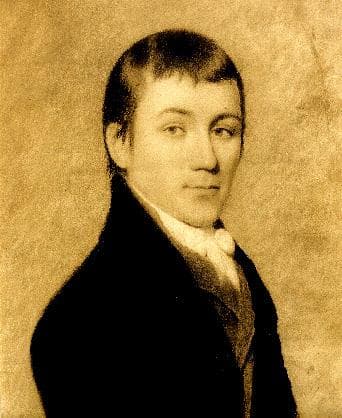
Charles Brockden Brown was a pioneering American novelist, often considered the first professional writer in the United States. He is best known for his Gothic novels, including "Wieland" and "Memoirs of Carwin the Biloquist," which explored themes of madness, psychological terror, and the supernatural, influencing later American writers.
Similar books
- The Turn of the Screw
Henry James
3.4 (104k) average on GoodreadsMysteryExplores psychological ambiguity and unreliable narration with a gothic atmosphere.
- Frankenstein: The 1818 Text
Mary Shelley
3.8 (1.2M) average on GoodreadsFantasyPioneering gothic novel with themes of scientific hubris and psychological torment.
- The House of the Seven Gables
Nathaniel Hawthorne
3.5 (35k) average on GoodreadsHistorical FictionClassic American gothic dealing with inherited curses and psychological decay.
- Nineteen Eighty-Four
George Orwell
4.2 (5.5M) average on GoodreadsFictionWinston Smith dreams of truth and rebellion in a world where Big Brother watches all, but he confronts the terrifying power of a regime that controls not just actions, but thoughts.
- The Frozen River
Ariel Lawhon
4.4 (600k) average on GoodreadsFictionIn 1789 Maine, a heroic midwife's diary helps her expose a murder and get justice in a town that wants to silence her.
- A Man Called Ove
Fredrik Backman
4.4 (569k) average on GoodreadsFictionA stubborn widower, who lives by strict rules, finds his quiet world changed by a lively new family next door, making him face his past and find happiness in human connection.





Enjoyed the summary?
A summary gives you the shape of the book. The book itself has the detail, the examples and the voice.
Find Wieland and Memoirs of Carwin the Biloquist on AmazonAs an Amazon Associate, BookBrief earns from qualifying purchases. How we're funded