

Synopsis
Covers the whole plot, including the ending.
- Difficulty
- Medium
- Pacing
- Moderate
- Mood
- Dark, Melancholy, Philosophical, Suspenseful
- Read it if
- You are interested in the foundational text of science fiction, enjoy gothic literature with deep philosophical questions, or want to explore themes of responsibility, isolation, and the nature of humanity.
- Skip it if
- You prefer fast-paced action, are looking for a purely heroic protagonist, or dislike stories with tragic outcomes and extensive philosophical musings.
Frankenstein Plot Summary
Covers the whole plot, including the ending.
Walton's Arctic Expedition and the Discovery of Victor
The novel opens with letters from Robert Walton, an English explorer, to his sister, Margaret Saville. Walton leads an expedition to the North Pole, driven by a desire for discovery. His letters show his loneliness and his wish for a companion. During their journey through the Arctic ice, the crew sees a huge figure on a sledge, moving north. A few days later, they find another man, Victor Frankenstein, almost frozen to death on a sledge. Victor is rescued. He is weak but recovers. Walton, seeing a similar ambition in Victor, befriends him and learns Victor is chasing the creature the crew saw earlier. Victor, seeing Walton's drive, decides to tell his tragic story as a warning.
Victor's Early Life and the Seeds of Ambition
Victor Frankenstein starts his story by describing his upbringing in Geneva, Switzerland. He is the eldest son of Alphonse and Caroline Beaufort Frankenstein, loving parents. He speaks of his adopted sister, Elizabeth Lavenza, who becomes his soulmate and intended bride. Victor also introduces his close childhood friend, Henry Clerval, who loves poetry and moral science. From a young age, Victor is curious about life and death, reading works by alchemists like Cornelius Agrippa, Paracelsus, and Albertus Magnus, which his father dislikes. He sees the destructive power of lightning during a thunderstorm, sparking his interest in electricity and galvanism.
University in Ingolstadt and the Obsession with Creation
At seventeen, Victor goes to the University of Ingolstadt in Germany. His natural philosophy professor, M. Krempe, initially discourages him by dismissing his early studies as outdated. However, M. Waldman, the chemistry professor, encourages his scientific pursuits and introduces him to modern chemistry. Victor becomes a diligent and brilliant student, soon excelling past his teachers. He becomes obsessed with understanding life and death, spending hours dissecting corpses and studying decay. Driven by ambition, he discovers how to animate lifeless matter. He decides to create a giant being, believing he can make a new, superior race. He isolates himself from family and friends, working obsessively in his laboratory.
The Creature's Birth and Victor's Repulsion
After months of intense work, Victor finally brings his creation to life one dreary November night. The moment the Creature's yellow eye opens, Victor feels not triumph, but horror and disgust. Despite choosing beautiful features, the Creature's watery eyes, shriveled complexion, and straight black lips create a grotesque appearance. Overwhelmed by revulsion, Victor immediately flees his laboratory, abandoning his creation. He wanders the streets of Ingolstadt in terror and later meets his friend Henry Clerval, who has arrived from Geneva. Victor's health declines, and he suffers a nervous breakdown, which Henry helps him through. He tries to forget his creation, hoping it has disappeared.
Justine's Trial and the Creature's Vengeance
Victor gets a letter from his father, saying his youngest brother, William, has been murdered. Distraught, Victor returns to Geneva. As he nears home, he sees the Creature in the woods where William's body was found, immediately realizing his creation is the murderer. He keeps this knowledge to himself, fearing he would be called insane. To his further agony, Justine Moritz, a beloved family servant, is falsely accused of William's murder when a locket with a picture of Caroline Frankenstein is found in her pocket. Despite Victor's and Elizabeth's belief in her innocence, Justine is convicted based on circumstantial evidence and her coerced confession, leading to her execution. Victor feels guilt and despair, knowing his creation is responsible for these tragedies.
Encounter on the Mer de Glace and the Creature's Plea
Overwhelmed by grief and guilt, Victor seeks comfort in the desolate landscapes of the Swiss Alps, especially on the Mer de Glace near Montanvert. While alone, he is suddenly confronted by the Creature, who approaches him with speed. Victor feels renewed horror and rage, cursing his creation and wanting to destroy it. However, the Creature, now articulate and intelligent, asks Victor to listen to his story before judging him. He explains his loneliness, his suffering, and the cruelty he has endured from humanity because of his appearance. He reveals his capacity for feeling and his desire for companionship. He then demands that Victor create a female companion for him, promising to leave humanity alone and live peacefully in the wilds of South America.
The Creature's Narrative: Education and Rejection
The Creature's story begins with his awakening and his initial confusion and pain, abandoned by Victor. He describes learning about the world, discovering fire, and foraging for food. He finds refuge in a hovel next to a cottage inhabited by the DeLacey family: an old blind man, his son Felix, his daughter Agatha, and Felix's beloved Safie. Hidden, the Creature watches them, learning their language, customs, and kindness. He feels for their poverty and secretly helps them. He also learns about human history and society from their books. Believing his gentle nature would be accepted by the blind M. DeLacey, he finally reveals himself. However, Felix, Agatha, and Safie return and, horrified by his appearance, drive him away with violence, destroying his hopes for acceptance and turning his heart to vengeance.
The Creature's Vow of Vengeance and William's Murder
Devastated by the DeLacey family's rejection, the Creature's goodness turns to hatred and a desire for revenge against humanity, especially his creator. He sets fire to the DeLacey cottage in a rage and travels toward Geneva, guided by a locket with Victor's name he found in Victor's abandoned laboratory. Along the way, he tries to save a drowning girl but is shot by her companion, further fueling his hatred. Near Geneva, he meets a young boy, William Frankenstein. Seeing the child's innocence, the Creature first considers making him a friend, but upon learning he is a Frankenstein, his rage takes over. He strangles William and takes the locket from his neck, later placing it on the sleeping Justine Moritz, framing her for the murder. The Creature ends his tale by repeating his demand for a female companion, threatening more destruction if Victor refuses.
The Creation of the Second Creature and its Destruction
Reluctantly, Victor agrees to create a female companion for the Creature, driven by the Creature's threats and the promise of peace for humanity. He travels to England with Henry Clerval, supposedly to study, but actually to gather materials for his task. After separating from Henry, Victor isolates himself on a remote island in the Orkneys off Scotland, where he begins to assemble the female creature. As he works, he is filled with doubts: what if the two creatures breed? What if the female is more malicious than the male? What if she rejects him? What if they harm humanity? Overcome with dread, Victor destroys the almost complete female creature in front of the horrified Creature, who has been secretly watching. The Creature vows vengeance, saying, 'I will be with you on your wedding-night!'
Henry Clerval's Murder and Victor's Imprisonment
After destroying the female creature, Victor throws her remains into the sea. He then sails, planning to return to Scotland, but a storm takes his boat off course. He lands in Ireland, only to be arrested and accused of murder. To his horror, the victim is identified as Henry Clerval, his friend. Victor recognizes the Creature's work: the marks on Clerval's neck are the same as on William's. Overwhelmed by grief and guilt, Victor suffers another severe nervous breakdown. He is eventually acquitted of the murder after his father, Alphonse, comes to his aid and provides an alibi for the time of Clerval's death, confirming Victor was in the Orkneys. Victor returns to Geneva, a broken man, haunted by his creation's vengeful acts.
Elizabeth's Murder and Alphonse's Death
Back in Geneva, Victor plans his marriage to Elizabeth, despite his dread and the Creature's threat, 'I will be with you on your wedding-night.' He misunderstands the threat, thinking the Creature will kill him. On their wedding night, Victor sends Elizabeth to their bedchamber, armed with pistols and expecting the Creature to attack him. While Victor searches the house, he hears Elizabeth's scream. He rushes back to find her lifeless body, strangled by the Creature. The Creature, visible through the window, grins at Victor before fleeing. This final, devastating blow shatters Victor. His father, Alphonse, already weakened by the deaths of William and Justine, dies of grief a few days later. Victor is left alone, consumed by a burning desire for revenge against his creation.
The Pursuit and Victor's Demise
With his family gone, Victor dedicates his remaining life to hunting down the Creature. He tracks his creation across Europe and into the frozen Arctic, driven by a single purpose. The Creature, often leaving taunting messages and clues, seems to both evade and lead Victor, enjoying the chase. Victor endures extreme hardships, his health declining. He reaches the Arctic, where Robert Walton's ship finds him, near death on an ice floe. On his deathbed, Victor asks Walton to continue his pursuit and destroy the Creature. He warns Walton against unchecked ambition and the dangers of playing God. Victor dies shortly after, exhausted and tormented by his life's work.
The Creature's Lament and Final Farewell
After Victor's death, the Creature appears in Victor's cabin on Walton's ship, standing over his creator's body. Walton is horrified and tries to kill him. However, the Creature, filled with sorrow and self-loathing, gives a powerful speech. He laments his existence, his crimes, and the unbearable loneliness that drove him to such acts. He expresses remorse for the suffering he caused, especially to Victor, whom he still sees as his only link to existence. He describes his own agony, his heart 'a nest of vipers.' The Creature reveals that his torment is far greater than any physical pain, and he plans to travel to the northernmost pole to build a funeral pyre and burn himself, ensuring no other creature like him can ever exist. With this final declaration, the Creature leaps from the ship and disappears into the Arctic ice, never to be seen again.
Frankenstein Characters
Victor Frankenstein
Protagonist
Brilliant but flawed scientist, consumed by ambition and driven to create life.
Victor is the central figure of the novel, a gifted student of natural philosophy with an insatiable curiosity and a profound ambition to unlock the secrets of life and death. His childhood is idyllic, fostering a sensitive and imaginative nature. However, his intellectual pursuits at Ingolstadt quickly transform into an unhealthy obsession, leading him to create the Creature. Victor is intelligent, but also self-absorbed, reckless, and ultimately cowardly, abandoning his creation and failing to take responsibility for his actions. His ambition blinds him to the moral implications of his work, leading to his tragic downfall and the destruction of his loved ones.
Relationships: The Creature (Creator and creation; bitter enemies); Elizabeth Lavenza (Adopted sister and fiancée); Henry Clerval (Childhood friend); Alphonse Frankenstein (Father); Caroline Beaufort Frankenstein (Mother); William Frankenstein (Younger brother); Robert Walton (Confidante and fellow ambitious spirit)
The Creature (Frankenstein's Monster)
Antagonist/Supporting
Victor's creation, initially benevolent but driven to violence by human rejection and loneliness.
The Creature is a sentient, articulate being created by Victor Frankenstein. Initially, he is innocent and benevolent, eager to connect with humanity and learn about the world. He educates himself through observation and books, developing a profound understanding of language, history, and human emotions. His monstrous appearance, however, leads to universal rejection, fear, and violence from every human he encounters, including his creator. This constant suffering and loneliness transform his initial goodness into bitterness, hatred, and a desperate desire for revenge against Victor and humanity. Despite his heinous acts, he retains a capacity for deep feeling and remorse, especially for his own existence.
Relationships: Victor Frankenstein (Creation and creator; bitter enemies); DeLacey family (Objects of his initial hope for acceptance, then hatred); William Frankenstein (Victim of his first act of vengeance); Henry Clerval (Victim of his vengeance); Elizabeth Lavenza (Victim of his vengeance)
Robert Walton
Supporting
Arctic explorer and narrator, who discovers Victor Frankenstein and records his story.
Robert Walton is an ambitious English sea captain and explorer who writes letters to his sister, Margaret Saville, detailing his journey to the North Pole. He yearns for glory and discovery, but also for companionship and a kindred spirit with whom to share his dreams. His ambition mirrors Victor Frankenstein's, making him a receptive audience for Victor's tragic tale. Walton's role is primarily that of a frame narrator, providing the initial and final perspectives of the story. He is compassionate, responsible, and ultimately swayed by Victor's cautionary tale, choosing to turn his ship back rather than risk his crew's lives for personal glory.
Relationships: Victor Frankenstein (Confidante and friend); Margaret Saville (Sister and recipient of his letters)
Elizabeth Lavenza
Supporting
Victor's adopted sister, fiancée, and an embodiment of domestic purity and love.
Elizabeth is an orphan adopted by the Frankenstein family, becoming Victor's beloved companion and later his fiancée. She is portrayed as beautiful, gentle, patient, and morally upright, serving as a beacon of domestic affection and tranquility. She possesses a calming influence and is a source of comfort for Victor, though he often neglects her. Elizabeth worries deeply about Victor's health and happiness, representing the ideal of feminine grace and selfless love in the novel. Her eventual brutal murder by the Creature on her wedding night is the final, devastating blow to Victor, symbolizing the destruction of all that is innocent and pure in his life.
Relationships: Victor Frankenstein (Adopted sister and fiancée); Alphonse Frankenstein (Adopted father); Caroline Beaufort Frankenstein (Adopted mother); Justine Moritz (Friend and confidante)
Henry Clerval
Supporting
Victor's loyal childhood friend, pursuing moral science and poetry.
Henry Clerval is Victor's best friend from childhood, a kind, imaginative, and morally upright young man. Unlike Victor, Henry is drawn to the arts, poetry, and moral philosophy, seeking to understand the human spirit rather than the physical world. He is a devoted and selfless friend, nursing Victor back to health after his first nervous breakdown and accompanying him on his travels. Henry represents the beauty and goodness of humanity, always encouraging Victor to appreciate nature and human connection. His murder by the Creature is a particularly cruel act of vengeance, as Henry is entirely innocent and embodies the very virtues Victor has forsaken.
Relationships: Victor Frankenstein (Childhood friend)
Alphonse Frankenstein
Supporting
Victor's kind and respected father, who suffers immense loss.
Alphonse Frankenstein is Victor's loving and protective father, a prominent figure in Geneva society. He represents traditional family values, reason, and emotional stability. He tries to guide Victor away from the outdated studies of alchemists and encourages a balanced life. Despite his deep love for his son, he struggles to understand Victor's secret anguish and mental turmoil. He endures immense personal tragedy, losing his wife, two sons, and adopted daughter, ultimately dying of grief. His suffering highlights the far-reaching consequences of Victor's actions and the Creature's vengeance.
Relationships: Victor Frankenstein (Father); Caroline Beaufort Frankenstein (Wife); Elizabeth Lavenza (Adopted daughter); William Frankenstein (Son)
Caroline Beaufort Frankenstein
Supporting
Victor's compassionate mother, who dies early in the story.
Caroline Beaufort Frankenstein is Victor's mother, a woman of great compassion and benevolence. She is depicted as a nurturing figure who dedicates herself to caring for her family and the less fortunate, such as Elizabeth Lavenza. Her death from scarlet fever, contracted while nursing Elizabeth, occurs early in the novel and deeply affects Victor, serving as an initial encounter with death and loss. Her memory often serves as a moral compass for Victor, though he ultimately deviates from the values she instilled. Her character represents selfless maternal love and domestic virtue.
Relationships: Victor Frankenstein (Mother); Alphonse Frankenstein (Husband); Elizabeth Lavenza (Adopted daughter)
Justine Moritz
Supporting
A kind family servant falsely accused and executed for William's murder.
Justine Moritz is a young, intelligent, and much-loved servant in the Frankenstein household, taken in by Caroline Frankenstein after her own family's misfortunes. She is gentle, good-natured, and devoted to the family, particularly to Elizabeth. Following William's murder, the Creature plants the incriminating locket in her pocket, leading to her wrongful conviction and execution. Her trial and death highlight the themes of injustice, prejudice, and the fallibility of human judgment. Victor's inability to reveal the truth about the Creature, for fear of being deemed mad, directly contributes to her demise, deepening his guilt.
Relationships: Frankenstein family (Devoted servant); Elizabeth Lavenza (Friend)
William Frankenstein
Mentioned
Victor's youngest brother, the Creature's first human victim.
William is Victor's youngest brother, a charming and innocent child. His brutal murder by the Creature is the first act of direct revenge against Victor and marks a turning point in the narrative. His death shatters the Frankenstein family's peace and sets in motion the chain of tragic events that follow, including Justine's execution and Victor's descent into despair. William's innocence makes his death particularly shocking and emphasizes the Creature's growing capacity for malice.
Relationships: Victor Frankenstein (Brother); Alphonse Frankenstein (Father); Elizabeth Lavenza (Adopted sister)
DeLacey Family
Supporting
A family of exiles whose kindness the Creature observes, only to be rejected by them.
The DeLacey family consists of the blind patriarch, M. DeLacey, his son Felix, his daughter Agatha, and Felix's beloved Safie. They are French exiles living in poverty in a German cottage. The Creature observes them from a hovel, learning language, social customs, and the concepts of love, kindness, and sorrow. They represent humanity's potential for virtue and compassion. The Creature's hope for acceptance rests on their kindness, especially M. DeLacey's blindness. However, their subsequent violent rejection of the Creature, driven by fear of his appearance, is the pivotal event that turns the Creature's heart to hatred and vengeance.
Relationships: The Creature (Unknowing teachers and eventual rejecters)
Frankenstein Themes
The Dangers of Unchecked Ambition
The novel explores the dangers of ambition that ignores moral and ethical boundaries. Victor Frankenstein's pursuit of scientific glory, his desire to create life, destroys him and his family. His ambition blinds him to the responsibilities of creation and the potential results of his actions. Robert Walton's ambition to reach the North Pole, though less destructive, is also presented as a potentially fatal flaw. Victor's story is a warning against seeking knowledge and power without considering ethical implications or the welfare of others.
“Learn from me, if not by my precepts, at least by my example, how dangerous is the acquirement of knowledge and how much happier that man is who believes his native town to be the world, than he who aspires to become greater than his nature will allow.”
Responsibility and Abandonment
A central theme is the moral responsibility that comes with creation and the consequences of abandonment. Victor Frankenstein, horrified by his creation's appearance, immediately abandons it, neglecting his parental duties. This neglect causes the Creature's suffering and its turn to violence. The Creature, left alone, must navigate a hostile world without love or instruction. His acts of vengeance can be seen as a desperate cry for recognition and a twisted way of seeking attention from his negligent creator. The novel argues that creators have a duty to their creations, and that neglect can lead to destructive outcomes.
“I ought to be thy Adam; but I am rather the fallen angel, whom thou drivest from joy for no misdeed.”
Prejudice and Otherness
The novel examines the destructive nature of prejudice and the experience of being an 'other.' The Creature, despite his initial kindness and intelligence, is rejected and reviled solely because of his grotesque appearance. Every human he meets reacts with fear, disgust, and violence, denying him acceptance or companionship. This constant prejudice changes his potential for goodness into hatred and a desire for revenge. Shelley shows how society's inability to look past superficial differences can create monsters out of innocent beings, forcing the 'other' into isolation and desperation.
“I am malicious because I am miserable. Am I not shunned and hated by all mankind?”
Nature vs. Nurture
The debate over whether one is born good or evil, or shaped by environment, is central to the Creature's character. The Creature begins as an innocent being, with an innate capacity for love and empathy, as shown by his observations of the DeLacey family and his secret acts of kindness. However, the relentless cruelty, fear, and rejection he experiences from humanity foster his malevolent side. His transformation into a vengeful murderer is a direct result of his environment and the treatment he receives, suggesting that societal prejudice and abandonment are more powerful in shaping character than any inherent 'evil' in his creation.
“My heart was for ever panting to be loved. But it was not until I beheld your gracious countenance that I dared to hope.”
Isolation and Loneliness
Both Victor Frankenstein and his Creature suffer from isolation and loneliness. Victor isolates himself during his creative process, separating himself from family and friends, and later from society because of guilt and obsession. The Creature's isolation is far more severe; he is utterly alone in the world, a unique being with no family, no companion, and no one to understand or accept him. This loneliness drives his demand for a female companion and fuels his acts of vengeance when that hope is denied. Shelley suggests that deep isolation, whether self-imposed or forced, can lead to madness, despair, and destructive behavior.
“I am alone, and miserable. Only as you are my creator, can you be my destroyer.”
Plot Devices & Literary Techniques
Frame Narrative
A story within a story, providing multiple perspectives and layers of storytelling.
The novel employs a classic frame narrative structure. It begins with Robert Walton's letters, which frame Victor Frankenstein's first-person account of his life and creation. Within Victor's narrative, the Creature then offers his own first-person account of his experiences. This layered structure allows for multiple perspectives on the events, characters, and themes. Walton's letters serve to introduce Victor and his ambition, while the Creature's narrative provides insight into his motives and suffering, challenging the reader's initial perception of him as a pure monster. The frame also allows Walton to act as a moral witness, learning from Victor's tragic tale.
Epistolary Format
The story is partially told through letters, providing intimacy and subjective viewpoints.
The outermost layer of the frame narrative is presented through Robert Walton's letters to his sister, Margaret Saville. This epistolary format lends an intimate and personal tone, allowing the reader direct access to Walton's thoughts, feelings, and observations. It establishes a sense of authenticity and immediacy. While Victor's and the Creature's narratives are presented as spoken accounts recorded by Walton, the return to Walton's letters at the end reinforces the subjective nature of storytelling and provides a final, reflective commentary on the events, bringing the reader back to the 'present' of the Arctic expedition.
Doppelgänger Motif
The Creature acts as a 'double' or dark reflection of Victor Frankenstein.
The Creature serves as Victor's doppelgänger, a dark mirror reflecting his creator's ambition, isolation, and capacity for destruction. Both begin with a desire for knowledge and connection. Victor's neglect forces the Creature into a life of isolation, mirroring Victor's own self-imposed isolation during his creation. The Creature's vengeful acts are a direct consequence of Victor's abandonment and a twisted extension of Victor's own destructive hubris. In a sense, the Creature embodies the monstrous aspects of Victor's unchecked ambition, becoming the external manifestation of his internal flaws and guilt. Their intertwined fates highlight their profound, destructive connection.
Gothic Elements
Use of atmosphere, setting, and supernatural/macabre themes to evoke dread.
Frankenstein is saturated with Gothic elements. The settings often include desolate landscapes (the Swiss Alps, the Arctic ice), isolated laboratories, and dark, stormy nights, creating an atmosphere of dread and foreboding. The Creature himself, with his grotesque appearance and supernatural origin, embodies the macabre. Themes of forbidden knowledge, the uncanny, psychological torment, and the supernatural are prevalent. The novel evokes a sense of terror and suspense, relying on emotional intensity and the exploration of dark aspects of the human psyche, characteristic of the Gothic genre, to heighten the drama and impact of Victor's tragic story.
Frankenstein Quotes
“Beware; for I am fearless, and therefore powerful.”
“I ought to be thy Adam, but I am rather the fallen angel, whom thou drivest from joy for no misdeed.”
“Life, although it may only be an accumulation of anguish, is dear to me, and I will defend it.”
“If I cannot inspire love, I will cause fear!”
“Nothing is so painful to the human mind as a great and sudden change.”
“The world was to me a secret which I desired to divine.”
“Learn from me, if not by my precepts, at least by my example, how dangerous is the acquirement of knowledge.”
“I have love in me the likes of which you can scarcely imagine and rage the likes of which you would not believe.”
“The companions of our childhood always possess a certain power over our minds which hardly any later friend can obtain.”
“I am malicious because I am miserable.”
“A human being in perfection ought always to preserve a calm and peaceful mind and never to allow passion or a transitory desire to disturb his tranquillity.”
“The fallen angel becomes a malignant devil. Yet even that enemy of God and man had friends and associates in his desolation; I am alone.”
“I, the miserable and the abandoned, am an abortion, to be spurned at, and kicked, and trampled on.”
“Seek happiness in tranquillity and avoid ambition, even if it be only the apparently innocent one of distinguishing yourself in science and discoveries.”
Quiz
10 questions on the plot and the characters. Each answer comes with a short explanation.
Question 1
What is the name of the ship captain who rescues Victor Frankenstein in the Arctic and to whom Victor narrates his story?
- Captain Walton
- Captain Clerval
- Captain Beaufort
- Captain Krempe
Show answer
A. Captain Walton The novel is framed by letters from Captain Robert Walton to his sister, Margaret Saville. Walton rescues Victor in the Arctic, and Victor recounts his tragic story to Walton, who then records it.
Question 2
What event in Victor's childhood first sparks his interest in natural philosophy and the secrets of life?
- Reading the works of Cornelius Agrippa
- Witnessing a lightning strike that destroys a tree
- The death of his mother from scarlet fever
- Meeting Professor Waldman at the University of Ingolstadt
Show answer
A. Reading the works of Cornelius Agrippa As a boy, Victor discovers an old book by the alchemist Cornelius Agrippa, which ignites his passion for natural philosophy. This early fascination leads him to pursue forbidden knowledge, setting the stage for his later experiments.
Question 3
Who is Victor's adopted sister and later fiancée, whom the Creature kills on their wedding night?
- Elizabeth Lavenza
- Justine Moritz
- Margaret Saville
- Caroline Beaufort
Show answer
A. Elizabeth Lavenza Elizabeth Lavenza is adopted into the Frankenstein family as a child and grows up with Victor. They become engaged, but the Creature murders her on their wedding night as revenge against Victor for refusing to create a female companion for him.
Question 4
What does the Creature demand from Victor in exchange for leaving humanity alone, a demand that Victor initially agrees to but later destroys?
- A female companion
- Wealth and resources to live in seclusion
- Public acknowledgment as Victor's creation
- The secret to creating life
Show answer
A. A female companion The Creature argues that he is lonely and miserable due to his isolation from society. He demands that Victor create a female companion for him, promising to retreat to South America with her. Victor starts the project but destroys the female creature out of fear that they might reproduce or cause more harm.
Question 5
Which character is wrongly executed for the murder of Victor's younger brother William, a crime actually committed by the Creature?
- Justine Moritz
- Henry Clerval
- Alphonse Frankenstein
- Professor Krempe
Show answer
A. Justine Moritz Justine Moritz is a servant in the Frankenstein household. The Creature frames her for William's murder by placing a locket he stole from William in her pocket. Despite her innocence, she is convicted and executed, adding to Victor's guilt and the novel's themes of injustice.
Question 6
In the 1818 text, what is a key difference in the Creature's origin compared to later editions, reflecting Shelley's original political themes?
- The Creature is self-educated through books like Paradise Lost, Plutarch's Lives, and The Sorrows of Young Werther
- The Creature is born with innate evil and a desire to destroy humanity
- Victor uses electricity from a lightning storm to animate the Creature
- The Creature is assembled from body parts of executed criminals
Show answer
A. The Creature is self-educated through books like Paradise Lost, Plutarch's Lives, and The Sorrows of Young Werther In the 1818 text, the Creature's education through classic literature (e.g., Milton's Paradise Lost) highlights Shelley's themes of nurture vs. nature and social alienation. This contrasts with later revisions that sometimes downplay his intellectual development. The 1818 edition emphasizes his potential for goodness, corrupted by societal rejection.
Question 7
What is the primary reason Victor gives for refusing to create a female companion for the Creature, despite his initial agreement?
- Fear that the female might be more evil or that they could reproduce and create a race of monsters
- Lack of scientific materials and resources to complete the task
- Pressure from his family to abandon his experiments and return home
- A belief that the Creature does not deserve companionship after his crimes
Show answer
A. Fear that the female might be more evil or that they could reproduce and create a race of monsters While working on the female creature, Victor imagines catastrophic scenarios: she might reject the Creature, be more destructive, or they might breed a new species that could threaten humanity. This fear leads him to destroy his work, breaking his promise and provoking the Creature's further vengeance.
Question 8
How does the Creature learn to speak and understand human language after being abandoned by Victor?
- By secretly observing the De Lacey family from their cottage and teaching himself from their interactions and books
- Through direct lessons from Victor, who feels guilty and tries to educate him
- By attending a university in disguise and taking classes
- From a kind stranger he meets in the woods who takes pity on him
Show answer
A. By secretly observing the De Lacey family from their cottage and teaching himself from their interactions and books After his creation, the Creature hides near the De Lacey cottage, where he observes the family's daily life. By watching and listening, he learns language, empathy, and social norms from them, which deepens his longing for companionship and highlights his capacity for education and emotion.
Question 9
In the 1818 text, what symbolic role does the Alpine setting of Mont Blanc play in Victor's confrontation with the Creature?
- It represents the sublime power of nature, contrasting with Victor's unnatural creation and serving as a backdrop for their moral and philosophical debate
- It is where Victor first discovers the secret to animating life through electrical experiments
- It serves as a safe haven where Victor hides from the Creature's pursuit
- It is the location where the Creature ultimately dies, symbolizing his return to nature
Show answer
A. It represents the sublime power of nature, contrasting with Victor's unnatural creation and serving as a backdrop for their moral and philosophical debate The majestic and terrifying landscape of Mont Blanc embodies the Romantic ideal of the sublime—nature's awe-inspiring beauty and power. This setting underscores the irony of Victor's attempt to usurp natural processes, and it frames their meeting where the Creature pleads for a companion, emphasizing themes of creation, responsibility, and isolation.
Question 10
What is the fate of Henry Clerval, Victor's childhood friend, and how does it impact Victor?
- The Creature strangles him in Ireland, and Victor is accused of the murder, leading to his imprisonment and mental breakdown
- He dies of a fever while nursing Victor back to health after the creation of the Creature
- He is killed by villagers who mistake him for the Creature, causing Victor to vow revenge
- He abandons Victor out of horror at his experiments, leaving Victor completely isolated
Show answer
A. The Creature strangles him in Ireland, and Victor is accused of the murder, leading to his imprisonment and mental breakdown The Creature murders Henry Clerval in Ireland as part of his revenge against Victor. Victor discovers the body and is subsequently arrested and imprisoned for the crime, though he is later acquitted due to lack of evidence. This event deepens Victor's guilt and despair, driving him to pursue the Creature to the Arctic.
Frankenstein FAQ
What is 'Frankenstein: The 1818 Text' about?
The novel follows Victor Frankenstein, a young scientist who creates a sentient being from assembled body parts, only to abandon it in horror. The Creature, rejected by society and seeking revenge, pursues Victor across Europe, leading to a tragic cycle of destruction that claims the lives of Victor's loved ones, including his brother William, friend Henry Clerval, and bride Elizabeth Lavenza.
Why should I read the 1818 edition of 'Frankenstein'?
This edition preserves Mary Shelley's original, politically charged vision, including her critique of unchecked scientific ambition and societal neglect. It features stronger female voices (like Elizabeth and Safie) and a more ambiguous, sympathetic portrayal of the Creature than later revisions, offering a raw exploration of creation, responsibility, and isolation.
What is the background/setting of 'Frankenstein'?
The story unfolds across late-18th-century Europe, primarily in Geneva (Victor's home), Ingolstadt (where he studies), and the Arctic (where he pursues the Creature). Framed by Captain Walton's letters from his polar expedition, the novel blends Gothic horror with Enlightenment-era scientific ideals, reflecting Shelley's own intellectual milieu.
What are the most memorable quotes from 'Frankenstein'?
Key quotes include the Creature's lament, 'I was benevolent and good; misery made me a fiend,' and Victor's warning, 'Learn from me... how dangerous is the acquirement of knowledge.' These lines encapsulate themes of innate goodness corrupted by rejection and the perils of hubristic ambition.
What writing style does Mary Shelley use in the 1818 text?
Shelley employs a layered, epistolary frame narrative, with Captain Walton's letters enclosing Victor's first-person account, which itself includes the Creature's monologue. This creates a complex, subjective perspective, blending Gothic suspense with philosophical dialogue and vivid natural descriptions.
What minor details add significant meaning to 'Frankenstein'?
The Creature's education through observing the De Lacey family—reading Plutarch, Milton, and Goethe—highlights his innate capacity for reason and empathy, contrasting with his monstrous appearance. Victor's destruction of the female Creature mid-creation underscores his recurring failure to take responsibility, dooming both himself and his creation.
What are some subtle foreshadowing moments in the novel?
Victor's childhood fascination with lightning and alchemy foreshadows his later obsessive experiments. Elizabeth's scarlet fever, which kills Victor's mother, mirrors the 'pestilence' of death the Creature brings. The Creature's first appearance amid a lightning storm hints at the destructive power of Victor's 'spark of life.'
What unexpected character connections exist in 'Frankenstein'?
The Creature secretly aids the impoverished De Lacey family, forming a bond with the blind father who cannot judge him by appearance. Justine Moritz, wrongly executed for William's murder, is a beloved family friend, linking the Creature's revenge to Victor's domestic circle. Safie, a Turkish woman marrying Felix De Lacey, parallels the Creature's desire for companionship.
What are Victor Frankenstein's unspoken motivations?
Beyond scientific glory, Victor is driven by a deep-seated desire to overcome death, stemming from his mother's demise. His refusal to create a mate for the Creature reveals an unacknowledged fear of a race of monsters, but also a selfish need to maintain control and avoid further ethical burdens.
What psychological complexities does the Creature exhibit?
The Creature embodies a paradox: born with a childlike innocence and yearning for love, he becomes vengeful after repeated rejections. His intelligence and emotional depth—evident in his eloquent speech and appreciation for nature—clash with his violent actions, illustrating how nurture (or its absence) shapes identity.
What are the major emotional turning points in the novel?
Key turning points include Victor's horrified abandonment of the Creature after its 'birth,' the Creature's murder of William upon realizing his connection to Victor, and Victor's decision to destroy the female Creature, which triggers the Creature's vow to be with Victor on his wedding night. Elizabeth's murder marks the final collapse of Victor's hope.
How do the relationship dynamics between Victor and the Creature evolve?
Their relationship shifts from creator-abandoner to pursuer-pursued, then to a twisted symbiosis where each defines the other's existence. The Creature's initial pleas for companionship turn to threats, while Victor's guilt and hatred fuel his obsessive chase, culminating in a mutual destruction on the Arctic ice.
Which parts of 'Frankenstein' remain ambiguous or open-ended?
The novel leaves ambiguous whether the Creature truly dies after Victor's death, as he vows to end his own life but is last seen drifting away on an ice raft. Shelley also never fully explains the scientific process of reanimation, focusing instead on its ethical and emotional consequences.
What are controversial scenes or decisions in the 1818 text?
Victor's choice to destroy the female Creature is debated: is it a moral stand against potential proliferation, or a cruel betrayal that ensures further violence? The Creature's murder of the innocent child William also sparks controversy, blurring lines between victim and villain in his tragic arc.
How does 'Frankenstein' end, and what does it mean?
The novel ends with Victor dying aboard Walton's ship after recounting his story, and the Creature appearing to mourn over his body, expressing remorse before vowing to self-immolate. This underscores themes of mutual destruction and failed responsibility, suggesting both creator and creation are tragic products of ambition and isolation.
What does the Arctic framing narrative add to the story?
Captain Walton's Arctic expedition mirrors Victor's quest for forbidden knowledge, with the icy desolation symbolizing emotional and moral isolation. Walton's decision to turn back, influenced by Victor's tale, offers a cautionary contrast to Victor's relentless pursuit, highlighting the possibility of learning from others' mistakes.
About the author
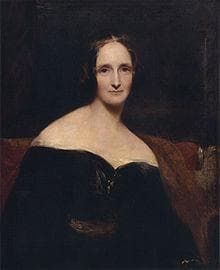
Mary Shelley was an English novelist best known for her groundbreaking work, Frankenstein, published in 1818. Often regarded as one of the earliest examples of science fiction, the novel explores themes of creation and responsibility. Shelley's writing reflects the Romantic era's fascination with nature, humanity, and the consequences of scientific advancement.
Similar books
- Strange Case of Dr. Jekyll and Mr. Hyde
Robert Louis Stevenson
3.9 (147k) average on GoodreadsDelves into the duality of human nature, scientific hubris, and the creation of a 'monster'.
- Paradise Lost
John Milton
4.1 (6k) average on GoodreadsMysteryThe Creature frequently references and identifies with the fallen angel Satan's plight.
- Harry Potter and the Sorcerer's Stone
J.K. Rowling
4.5 (7M) average on GoodreadsFantasyRescued from a miserable life under the stairs, an orphaned boy discovers he's a wizard destined for a magical school, where he uncovers a dangerous secret tied to the dark wizard who murdered his parents.
- The Hunger Games
Suzanne Collins
4.3 (6.4M) average on GoodreadsFantasyIn a future where children fight to the death on live television, Katniss Everdeen volunteers for the arena, turning a death sentence into a fight for survival and a spark of rebellion.
- 1984
George Orwell
4.2 (3.1M) average on GoodreadsPoliticsIn a future where surveillance and thought control are absolute, a man's search for truth clashes with the Party, showing that hope can be a form of rebellion.
- Divergent
Veronica Roth
4.2 (2.9M) average on GoodreadsFantasyIn a society divided by virtues, a sixteen-year-old's difference from the norm starts a rebellion that threatens her world.






Enjoyed the summary?
A summary gives you the shape of the book. The book itself has the detail, the examples and the voice.
Find Frankenstein on AmazonAs an Amazon Associate, BookBrief earns from qualifying purchases. How we're funded