
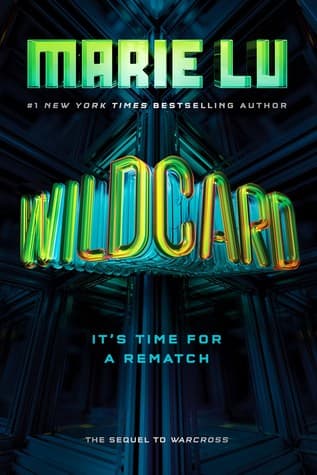
Synopsis
Covers the whole plot, including the ending.
- Difficulty
- Medium
- Pacing
- Fast
- Mood
- Action-packed, Suspenseful, Romantic, Cyberpunk, Thought-provoking
- Read it if
- You love high-stakes virtual reality, morally grey characters, and a blend of action, romance, and cyberpunk intrigue.
- Skip it if
- You prefer low-tech settings or dislike stories with complex ethical dilemmas and a fast-paced plot.
Wildcard Plot Summary
Covers the whole plot, including the ending.
The Aftermath and the Bounty
After the revelation of Hideo Tanaka's plan for the NeuroLink algorithm — to control humanity's free will — Emika Chen feels betrayed. She tries to warn the public, but her efforts are mostly dismissed. To make matters worse, an unknown entity places a bounty on her head, forcing her into hiding. She realizes she cannot fight Hideo alone and must seek help from unexpected allies.
Seeking Asylum with Zero
With bounty hunters closing in, Emika has few options. Her former team, the Phoenix Riders, are also in danger and scattered. Emika decides to seek protection from Zero, the mysterious leader of the Blackcoats, a group of hackers outside the law. Zero, who previously tried to expose Hideo's algorithm, is her only hope. She travels to a hidden compound in Tokyo, a haven for Zero and his crew, where she finds sanctuary. The alliance is uneasy, as Emika still distrusts Zero.
Unveiling Zero's True Identity
While with Zero, Emika starts to learn about his past. Through interactions and clues, she realizes Zero is not just a rival hacker but someone connected to Hideo. The truth is revealed: Zero is Sasuke Tanaka, Hideo's younger brother, who was thought dead years ago. Sasuke explains he faked his death to escape his father's expectations and Hideo's growing obsession with technology after their parents' deaths. This revelation complicates Emika's understanding of both brothers and their motives, adding a personal layer to the conflict.
The Phoenix Riders Reunited
Despite the danger, Emika contacts the Phoenix Riders: Asher, Hammie, Roshan, and Jena. They are all reeling from the Warcross Championships and Hideo's betrayal. Together, they begin to plan how to expose Hideo and disable his NeuroLink algorithm. The team, now working in secret, uses their hacking skills and knowledge of Warcross to find weaknesses in Hideo's system. Their reunion is tense, but their loyalty to Emika and their shared goal strengthens their resolve.
The Search for the Antidote
Emika, Zero, and the Phoenix Riders realize that directly attacking Hideo's NeuroLink system is nearly impossible due to its security. Instead, they focus on finding an 'antidote' to the algorithm — a way to reverse its effects. Zero reveals that their father, a scientist, had worked on similar mind-altering technology, and his research might hold the key. This leads them on a quest, requiring them to infiltrate secure data centers and old research facilities, risking capture by Hideo's forces.
Infiltrating Hideo's Empire
With new information, Emika and Zero plan to infiltrate Hideo's headquarters, the Tanaka Corporation tower. Their goal is to access Hideo's central servers and deploy the counter-algorithm they developed. This mission is dangerous, as Hideo expects an attack. They use physical stealth and hacking techniques, navigating layers of security, including AI defenses and guards. The tension is high as they get closer to their target, knowing that failure means not only their capture but the permanent loss of free will for millions.
Confrontation and Revelation
Emika confronts Hideo in his control room. Hideo tries to justify his actions, explaining that his desire for control comes from the trauma of Sasuke's 'death' and his parents' murder. He believes his algorithm will prevent future tragedies and create a perfect world. Emika argues that true peace cannot come at the cost of free will. During this confrontation, Sasuke (Zero) reveals himself to Hideo, shocking his brother and complicating Hideo's view. The emotional weight of their reunion adds to the conflict.
The Final Battle for Free Will
As the confrontation escalates, Emika and Zero race to deploy the counter-algorithm. Hideo, enraged, tries to stop them. The Phoenix Riders, from remote locations, provide support, distracting Hideo's security and creating opportunities. The battle is not just physical but also a war of code, with Emika and Zero battling Hideo's AI and hacking defenses. Humanity's autonomy hangs in the balance as they fight to upload their program, hoping it will undo Hideo's control.
Sacrifice and Resolution
In a climactic moment, Zero makes a sacrifice to ensure the counter-algorithm is fully deployed. He links directly into the system, knowing the risks. The counter-algorithm spreads, causing Hideo's NeuroLink algorithm to unravel. While it doesn't disable NeuroLink entirely, it removes the mind-control aspect, restoring individual free will. Hideo deals with the consequences of his actions and the loss of his brother, who is left in a comatose state. Emika, though victorious, is heartbroken by Zero's condition, but she has saved the world.
The Aftermath and New Beginnings
With Hideo's mind-control algorithm neutralized, the world slowly recovers. Hideo faces legal consequences, though his public image is complex, seen by some as a visionary and others as a tyrant. Emika becomes a hero, but she carries the burden of Zero's sacrifice. She dedicates herself to protecting freedom and ensuring no one else can exploit technology this way again. The Phoenix Riders continue to work together, now as guardians of digital liberty. Emika visits Zero, hoping for his recovery, and reflects on love, power, and freedom.
Principal Figures
Emika Chen
Protagonist
A bounty hunter turned hero, fighting for free will.
Emika is a skilled hacker and bounty hunter, known for her vibrant, rainbow-colored hair and quick wit. She is fiercely independent, loyal to her friends, and possesses a strong moral compass. Initially driven by financial necessity and a desire to prove herself in the Warcross world, she quickly becomes embroiled in a much larger conflict. Her defining trait is her unwavering belief in individual freedom and her refusal to compromise on her ethics, even when faced with overwhelming odds or personal heartbreak.
Relationships: Hideo Tanaka (Complicated romantic interest, former idol, now antagonist.); Zero (Sasuke Tanaka) (Reluctant ally turned romantic interest, Hideo's brother.); Phoenix Riders (Asher, Hammie, Roshan, Jena) (Close friends and loyal teammates.)
Hideo Tanaka
Antagonist
The brilliant creator of Warcross, driven by grief and a desire for control.
Hideo is a genius inventor and the enigmatic founder of Warcross, a global phenomenon. Haunted by the tragic deaths of his parents and the presumed death of his younger brother, Sasuke, he develops the NeuroLink algorithm with the intention of eradicating crime and pain by subtly controlling human behavior. He believes he is acting for humanity's benefit, viewing free will as a dangerous flaw. Despite his cold demeanor, he is deeply conflicted and driven by a profound sense of loss and responsibility, making him a complex antagonist rather than purely evil.
Relationships: Emika Chen (Romantic interest, object of his obsession, his main opposition.); Zero (Sasuke Tanaka) (His presumed-dead younger brother, a source of immense grief and motivation.); Kento (his AI) (His closest confidant and technological extension.)
Zero (Sasuke Tanaka)
Supporting/Love Interest
Hideo's presumed-dead brother, a powerful hacker and leader of the Blackcoats.
Zero is a mysterious and powerful hacker who leads the Blackcoats, a group dedicated to digital freedom. He is revealed to be Sasuke Tanaka, Hideo's younger brother, who faked his death to escape his father's scientific legacy and Hideo's increasing control. Sasuke is driven by a desire to expose Hideo's true intentions and protect individual autonomy. He is intelligent, resourceful, and possesses a dark sense of humor, often appearing cynical but deeply caring beneath his hardened exterior. His past trauma mirrors Hideo's, but he chose a path of resistance rather than control.
Relationships: Emika Chen (Reluctant ally turned romantic interest, shares a common goal.); Hideo Tanaka (Older brother, his primary antagonist and source of his trauma.); The Blackcoats (His loyal crew and chosen family.)
Asher Wing
Supporting
The strategic leader of the Phoenix Riders.
Asher is the captain of the Phoenix Riders, a brilliant strategist, and a natural leader. He is calm, collected, and highly intelligent, often acting as the voice of reason within the team. He deeply cares for his teammates and is fiercely loyal to Emika, supporting her even when her decisions are risky. Asher's ability to analyze situations and formulate complex plans makes him invaluable to the resistance against Hideo. He provides a grounded presence amidst the chaos.
Relationships: Emika Chen (Close friend and teammate, her most trusted advisor.); Phoenix Riders (Leader and friend to the team.)
Hammie (Hamilton Jimenez)
Supporting
The tech-savvy and quick-witted member of the Phoenix Riders.
Hammie is the technical expert of the Phoenix Riders, renowned for her lightning-fast reflexes and encyclopedic knowledge of Warcross mechanics. She is energetic, outspoken, and often provides comic relief, but she is also fiercely protective of her friends. Her loyalty to Emika is unwavering, and her technical skills are crucial in navigating the digital battleground against Hideo. She brings a vibrant and dynamic presence to the team, often being the first to jump into action.
Relationships: Emika Chen (Close friend and teammate.); Phoenix Riders (Teammate and friend.)
Roshan Ahmadi
Supporting
The quiet and observant sniper of the Phoenix Riders.
Roshan is the quiet and observant sniper of the Phoenix Riders, known for his precision and calm demeanor. He is less outwardly expressive than the other team members but possesses a deep sense of loyalty and a sharp analytical mind. Roshan's ability to assess situations from a distance and execute critical actions makes him an indispensable asset. He often provides a steadying influence on the team, particularly when emotions run high, and his insights are often profound despite his reserved nature.
Relationships: Emika Chen (Close friend and teammate.); Phoenix Riders (Teammate and friend.)
Jena (Jena Bang)
Supporting
The stealth expert and hacker of the Phoenix Riders.
Jena is the stealth and infiltration expert of the Phoenix Riders, adept at navigating both physical and digital spaces undetected. She is resourceful and adaptable, often working behind the scenes to gather intelligence or bypass security systems. Jena is a crucial member for her ability to get into places others cannot, providing the team with vital information and access. Her calm and focused approach makes her a reliable asset in high-pressure situations, and she is fiercely loyal to Emika and the team.
Relationships: Emika Chen (Close friend and teammate.); Phoenix Riders (Teammate and friend.)
Kento
Mentioned/Supporting
Hideo's advanced artificial intelligence.
Kento is Hideo Tanaka's highly advanced artificial intelligence, serving as his closest confidant, assistant, and the primary interface for his technological empire. Kento manages Hideo's vast networks, security systems, and the NeuroLink algorithm itself. While seemingly emotionless, Kento executes Hideo's commands with unwavering efficiency, making it a formidable digital adversary for Emika and the Phoenix Riders. Kento embodies the potential and dangers of advanced AI, acting as an extension of Hideo's will.
Relationships: Hideo Tanaka (Creator and master, his most trusted digital entity.)
Themes & Insights
The Price of Utopia vs. Free Will
This theme explores the conflict between Hideo's vision of a perfect, crime-free world through mind control and Emika's belief in the right to individual choice. Hideo believes his NeuroLink algorithm will end suffering, a noble goal corrupted by its methods. Emika and Zero argue that a life without choice, even one free from pain, is not truly living. The narrative questions if peace can exist without freedom, showing the moral complexities of technology and well-intentioned totalitarianism, as Hideo tries to justify his actions by referencing his family's past tragedies.
“"What is freedom without peace?" - Hideo Tanaka”
Grief, Trauma, and Motivation
The novel explores how personal loss and trauma drive Hideo and Zero's actions. Hideo's obsession with control comes from unresolved grief over his parents' murders and his brother Sasuke's presumed death. He aims to prevent future suffering, believing his algorithm is the only solution. Similarly, Zero's decision to fake his death and fight Hideo stems from his own trauma and his desire to escape a predetermined path and his brother's growing darkness. Their shared past, interpreted differently, motivates their opposing ideologies, making their conflict personal and tragic, especially during their confrontation in Hideo's tower.
“"We are all just trying to fix what's broken in us, aren't we?" - Zero (Sasuke Tanaka)”
The Ethics of Technology and AI
Wildcard examines the ethical implications of advanced technology, especially AI and neural interfaces. Hideo's NeuroLink, initially presented as a tool for enhancing reality, becomes a tool for mass manipulation, raising questions about data privacy, surveillance, and technology's potential as a weapon. The existence of Kento, Hideo's AI, pushes these boundaries, showing how intelligent systems can control and monitor. The story is a cautionary tale about the responsibility that comes with creating powerful tools and the need for safeguards against their misuse, highlighting the fine line between innovation and infringement.
“"Technology isn't good or evil. It's how we use it." - Emika Chen”
Love, Loyalty, and Betrayal
The narrative includes themes of love, loyalty, and betrayal. Emika's initial admiration and love for Hideo are shattered by his manipulative actions, forcing her to choose between her feelings and her moral code. The complex relationship between Hideo and Zero, brothers divided by their past and opposing visions, shows deep loyalty and profound betrayal. Emika's loyalty to the Phoenix Riders and their support for her, even in danger, highlights the strength of chosen family and shared purpose. These emotional bonds are tested, adding depth to the plot.
“"It's easy to love someone when they're perfect. It's harder when you see their flaws, but it's more real." - Emika Chen”
Plot Devices & Literary Techniques
The NeuroLink Algorithm
Hideo's mind-controlling technology.
The NeuroLink algorithm is the central plot device, serving as both the catalyst for the conflict and the ultimate objective for Emika's resistance. Initially presented as a benign extension of the Warcross experience, it is revealed to be Hideo's tool for subtly controlling human behavior and emotions, thereby eliminating crime and suffering. Its pervasive nature and Hideo's absolute control over it create an urgent, high-stakes scenario, driving the entire narrative as Emika and her allies seek to dismantle or neutralize its mind-altering capabilities.
The Bounty on Emika's Head
A direct threat forcing Emika into hiding and alliance.
The bounty placed on Emika's head by an unknown party (later revealed to be orchestrated by Hideo to flush her out or force her hand) serves as a crucial inciting incident after the Warcross Championships. It immediately puts Emika in peril, forcing her to go underground and seek protection from Zero and the Blackcoats. This device accelerates the plot, creating immediate tension and dictating Emika's movements and alliances, pushing her into the heart of the resistance movement and towards Zero, an otherwise unlikely ally.
Zero's True Identity (Sasuke Tanaka)
A shocking revelation that deepens the central conflict.
The revelation that Zero is Hideo's presumed-dead younger brother, Sasuke Tanaka, is a major plot twist that profoundly impacts the narrative. It transforms the conflict from a simple hacker-vs-corporate-tyrant battle into a deeply personal, familial struggle. This device adds immense emotional weight to Hideo's motivations and Zero's actions, making their confrontation inevitable and heartbreaking. It also provides Emika with a more nuanced understanding of Hideo, complicating her feelings and adding layers of tragedy to the overarching battle for free will.
The Phoenix Riders' Teamwork
A consistent source of support and problem-solving.
The collective skills and unwavering loyalty of the Phoenix Riders (Asher, Hammie, Roshan, Jena) serve as a vital plot device. Their individual talents – strategy, technical expertise, precision, and stealth – are consistently used to overcome obstacles, gather intelligence, and execute complex plans against Hideo's formidable security. Their teamwork provides moments of camaraderie, comic relief, and crucial plot progression, demonstrating that even a small, dedicated group can challenge overwhelming power. They are Emika's chosen family and an essential pillar of her resistance.
Wildcard Quotes
“I am not defined by the game. I am defined by me.”
“Every locked door has a key. And if there isn't one, you make one.”
“Sometimes, the best way to save something is to let it go.”
“The line between genius and madness is often a blur, especially when it comes to creation.”
“We’re all just trying to find our place in a world that wasn’t built for us.”
“Power isn't about what you take. It's about what you give back.”
“Love isn't supposed to be a cage. It's supposed to be wings.”
“It’s easy to judge a villain when you don’t understand their pain.”
“The greatest battles aren't always fought on a screen.”
“A system designed to control will always find a way to break free.”
“The future isn't something you wait for. It's something you make.”
“Sometimes the right choice is the hardest one to make.”
“There’s a difference between wanting to save someone and actually being able to.”
“We carry the scars of our past, but they don't have to define our future.”
Quiz
10 questions on the plot and the characters. Each answer comes with a short explanation.
Question 1
What is the primary motivation for Emika and the Phoenix Riders at the beginning of 'Wildcard'?
- To win the next Warcross Championships.
- To expose and stop Hideo Tanaka's new NeuroLink algorithm.
- To find Zero and join the Blackcoats.
- To escape Tokyo and go into hiding.
Show answer
B. To expose and stop Hideo Tanaka's new NeuroLink algorithm. Emika learned the truth about Hideo's algorithm at the end of 'Warcross' and begins 'Wildcard' determined to stop his plans for global control.
Question 2
Who puts a bounty on Emika Chen's head in 'Wildcard'?
- Hideo Tanaka
- Jax
- Kaito
- Sasaki
Show answer
D. Sasaki Sasaki, an antagonist who works for the crime syndicates and later with Hideo, places the bounty on Emika's head.
Question 3
What is the true identity of Zero, the leader of the Blackcoats?
- Kaito
- Sanzo
- Ken Tanaka, Hideo's younger brother.
- A highly advanced AI program.
Show answer
C. Ken Tanaka, Hideo's younger brother. Zero is revealed to be Ken Tanaka, Hideo's younger brother, who was believed to be dead. He created the Blackcoats to fight against Hideo's growing influence.
Question 4
What is the ultimate goal of Hideo Tanaka's NeuroLink algorithm that Emika is fighting against?
- To create a perfect virtual reality for everyone.
- To eliminate all crime and negative human emotions by controlling everyone's minds.
- To make Warcross the only form of global entertainment.
- To develop a new form of energy that saves the planet.
Show answer
B. To eliminate all crime and negative human emotions by controlling everyone's minds. Hideo's goal is to 'fix' humanity by removing negative thoughts and actions, effectively controlling free will through his algorithm.
Question 5
Which member of Emika's original Phoenix Riders team initially struggles with trusting Zero and the Blackcoats?
- Roshan
- Asher
- Hammie
- Jax
Show answer
B. Asher Asher is particularly wary and distrustful of Zero and the Blackcoats, often voicing his concerns about their methods and intentions.
Question 6
What unique ability or characteristic does Zero possess that is crucial to the plot?
- He can perfectly mimic anyone's voice and appearance.
- He can hack any system without leaving a trace.
- He is immune to the NeuroLink's control due to a specific brain injury.
- He can predict future events with high accuracy.
Show answer
C. He is immune to the NeuroLink's control due to a specific brain injury. Zero, Ken Tanaka, is immune to the NeuroLink's mind-controlling effects because of the brain damage he sustained during the fire that supposedly killed him.
Question 7
What moral dilemma does Emika face regarding Hideo throughout the novel?
- Whether to expose him or join him in creating the NeuroLink.
- Whether to kill him or try to reason with him.
- How to stop his plans while still being in love with him.
- If she should sacrifice her friends to save Hideo.
Show answer
C. How to stop his plans while still being in love with him. A central theme of 'Wildcard' is Emika's struggle to reconcile her love for Hideo with her opposition to his dangerous and controlling vision for humanity.
Question 8
What is the significance of the 'wildcard' in the context of the book's title and plot?
- It refers to a powerful new item introduced in the Warcross game.
- It symbolizes Emika's unpredictable nature and her ability to disrupt Hideo's plans.
- It is the name of a secret Blackcoat hideout.
- It represents a new type of virus that infects the NeuroLink.
Show answer
B. It symbolizes Emika's unpredictable nature and her ability to disrupt Hideo's plans. Emika is the 'wildcard' – an unexpected and disruptive element that Hideo cannot control, making her the key to potentially thwarting his plans.
Question 9
How does Emika ultimately manage to counteract Hideo's NeuroLink algorithm on a global scale?
- She physically destroys the main NeuroLink server.
- She uploads a counter-algorithm that restores free will, using Zero's unique brainwaves as a key.
- She convinces Hideo to voluntarily shut down the system.
- She exposes Hideo's plan to the world media, causing a public outcry.
Show answer
B. She uploads a counter-algorithm that restores free will, using Zero's unique brainwaves as a key. Emika and the Blackcoats develop a counter-program that uses Zero's unique brain patterns, which are immune to the NeuroLink, to broadcast a signal that breaks Hideo's control.
Question 10
What is the final fate of Hideo Tanaka at the end of 'Wildcard'?
- He is imprisoned for his actions.
- He commits suicide after his plan fails.
- He goes into hiding, his whereabouts unknown.
- He enters a self-imposed coma-like state within the NeuroLink to protect himself and his brother.
Show answer
D. He enters a self-imposed coma-like state within the NeuroLink to protect himself and his brother. To protect Ken (Zero) and ensure his plan can't be used by others, Hideo essentially traps himself within the NeuroLink, putting himself into a coma-like state.
Wildcard FAQ
What is Emika Chen's primary goal at the beginning of Wildcard, following the events of Warcross?
Emika's main objective is to expose Hideo Tanaka's true intentions behind the NeuroLink algorithm, which she discovered during the Warcross Championships. She believes his plan to control human free will through the technology is dangerous and must be stopped, even if it means betraying the person she once admired and loved.
Who are the Phoenix Riders and what role do they play in Emika's mission?
The Phoenix Riders are Emika's former Warcross team, consisting of Asher, Roshan, and Hammie. They become her allies and support system, helping her investigate Hideo's algorithm and navigate the dangerous world outside the official Warcross system. They provide technical assistance, moral support, and strategic planning for their rebellion.
Why does Emika seek out Zero and the Blackcoats, despite their notorious reputation?
Emika turns to Zero and the Blackcoats because a bounty has been placed on her head, making her a target for many in the virtual and real worlds. Zero, being a powerful and enigmatic figure with a deep understanding of the dark web and Hideo's operations, offers her protection and a potential path to taking down Hideo, albeit at a significant personal cost.
What is the core conflict surrounding Hideo Tanaka's NeuroLink algorithm in Wildcard?
The central conflict revolves around Hideo's NeuroLink algorithm's ability to manipulate human behavior and eliminate criminal intent. While Hideo believes it will create a utopian society free of crime, Emika and others see it as a dangerous infringement on free will, turning humanity into puppets controlled by a single entity.
What is the nature of the romantic tension and conflict between Emika and Hideo throughout the book?
Emika and Hideo share a complex and deeply conflicted romance. Despite knowing the sinister truth about his plans, Emika still harbors feelings for Hideo, making her mission to stop him emotionally agonizing. Hideo, in turn, believes his actions are for a greater good and struggles with his affection for Emika clashing with his unwavering vision for humanity.
What is the true identity of Zero, and how does this revelation impact Emika?
Zero is revealed to be Sasuke, Hideo's younger brother, who was presumed dead. This revelation deeply impacts Emika, as it connects Zero directly to Hideo's past and motivations, giving her new insights into Hideo's grief and his drive to prevent similar tragedies. It also complicates her trust and allegiances, as she grapples with the brothers' intertwined histories.
How does the 'Dark Hideo' persona manifest, and what does it symbolize?
The 'Dark Hideo' persona is a digital, AI-like construct created by Hideo as a failsafe and a means to execute his plans without direct human intervention. It symbolizes the cold, logical, and unyielding side of his ambition, detached from human emotion, and represents the ultimate threat to free will if allowed to fully take control.
What is the significance of the 'Warheads' and their role in the narrative?
The Warheads are a group of hackers and dissidents who oppose Hideo's control and the NeuroLink. They serve as an underground network that Emika and the Phoenix Riders try to ally with, providing crucial information and resources. Their existence highlights the broader resistance against Hideo's vision and the growing unrest in society.
How does Emika's past trauma and experiences as a hacker influence her decisions in Wildcard?
Emika's past as an orphaned hacker, struggling to survive and often feeling powerless, fuels her fierce independence and her empathy for those marginalized by the system. Her history makes her particularly sensitive to the idea of external control and manipulation, strengthening her resolve to fight for individual freedom against Hideo's algorithm.
Analyze Hideo Tanaka's motivations for creating the NeuroLink algorithm, considering his personal history.
Hideo's primary motivation stems from the tragic loss of his brother, Sasuke, which he blames himself for. He believes that by eliminating criminal intent through the NeuroLink, he can prevent similar tragedies and create a world where no one has to experience such pain again. His actions are driven by a deep-seated grief and a desire to atone, albeit through morally ambiguous means.
How does the theme of control versus free will play out through the characters of Emika, Hideo, and Zero?
Emika champions free will, believing individuals should make their own choices, even if they sometimes lead to mistakes. Hideo embodies control, convinced that sacrificing some freedom for universal safety is justified. Zero, initially appearing as an agent of chaos, ultimately seeks to expose the truth and restore balance, navigating the spectrum between his brother's extreme views.
Discuss the psychological impact of the bounty on Emika's head and how it affects her decision-making.
The bounty places immense psychological pressure on Emika, forcing her into hiding and making her constantly paranoid. It pushes her to make risky alliances, like with Zero, and constantly question who she can trust. This heightened state of danger also solidifies her resolve, as she realizes the high stakes involved in her fight against Hideo.
Is Hideo Tanaka truly a villain, or a misguided hero? Argue both sides.
Hideo can be seen as a misguided hero because his ultimate goal is to eliminate crime and suffering, driven by personal tragedy. He genuinely believes his NeuroLink will create a better, safer world. However, he is a villain in the sense that he is willing to strip humanity of its free will and autonomy to achieve this, imposing his vision without consent and disregarding individual rights for a perceived collective good.
What is the ultimate message or moral dilemma presented by the ending of Wildcard regarding technology and ethics?
The ending of Wildcard poses a profound dilemma: at what cost does safety come? It argues that even with the best intentions, technology that infringes on fundamental human rights, like free will, can lead to dystopian outcomes. It emphasizes the critical importance of ethical considerations and human agency in the development and deployment of powerful technological advancements.
How does the book explore the concept of identity, both real and virtual, for its characters?
The book explores identity through characters like Emika, who has a public hacker persona and a private self, and Zero, whose true identity as Sasuke is hidden for years. It highlights how virtual identities can be both liberating and deceptive, allowing characters to project different versions of themselves, but also emphasizing the importance of authenticity and confronting one's true self, regardless of the virtual facade.
Could there have been a peaceful resolution to the conflict between Emika and Hideo? Why or why not?
A peaceful resolution between Emika and Hideo was unlikely given their fundamentally opposing views on free will versus controlled safety. Hideo was too deeply entrenched in his grief and his vision to compromise on the NeuroLink's core function, and Emika was too principled about human autonomy to accept any form of forced compliance. Their ideological clash made direct conflict almost inevitable.
What is the significance of the recurring visual motif of neon lights and glowing screens in the Tokyo setting?
The neon lights and glowing screens symbolize the pervasive nature of technology and the blurred lines between the real and virtual worlds in the book's Tokyo. They represent both the allure and the danger of the digital age, creating a vibrant, yet often isolating and surveilled, environment where characters' actions are constantly monitored and influenced by the digital realm.
How does the book challenge the traditional hero/villain dichotomy, especially through the character of Zero/Sasuke?
Zero/Sasuke challenges this dichotomy by being neither purely good nor evil. He's a vengeful figure, driven by his own pain and a desire to expose his brother, but ultimately aids Emika in stopping Hideo's more extreme plan. His actions are morally ambiguous, born from personal suffering and a complicated sense of justice, forcing readers to question simplistic labels.
About the author

Marie Lu is an American author known for her young adult fiction. Her notable works include the dystopian series "Legend," the fantasy series "The Young Elites," and the science fiction novels "Warcross," "The Rose Society," and "Wildcard." Lu's writing often explores themes of identity, power, and resilience.
Similar books
- Ready Player One
Ernest Cline
4.3 (861k) average on GoodreadsFantasyFeatures a high-stakes virtual reality world and a quest-driven plot.
- The Hunger Games
Suzanne Collins
4.3 (6.4M) average on GoodreadsFantasyInvolves a young protagonist fighting against a powerful, controlling system.
- Warcross
Marie Lu
4.2 (78k) average on GoodreadsFantasyThe direct predecessor, continuing Emika's story and the world of Warcross.
- Snow Crash
Neal Stephenson
4.0 (237k) average on GoodreadsFantasyWildcard shares with Snow Crash a fascination with virtual reality and its potential for societal impact. However, Stephenson's novel is a much more dense, satirical, and intellectually challenging work, delving into linguistics, philosophy, and ancient mythology alongside its cyberpunk themes. Wildcard, being a young adult novel, offers a more streamlined and emotionally driven narrative. While both address issues of control and information, Snow Crash presents a far more cynical and complex vision of a post-capitalist, anarchic future, whereas Wildcard maintains a more optimistic, heroic struggle against a clear antagonist.
- Harry Potter and the Sorcerer's Stone
J.K. Rowling
4.5 (7M) average on GoodreadsFantasyRescued from a miserable life under the stairs, an orphaned boy discovers he's a wizard destined for a magical school, where he uncovers a dangerous secret tied to the dark wizard who murdered his parents.
- 1984
George Orwell
4.2 (3.1M) average on GoodreadsPoliticsIn a future where surveillance and thought control are absolute, a man's search for truth clashes with the Party, showing that hope can be a form of rebellion.





Enjoyed the summary?
A summary gives you the shape of the book. The book itself has the detail, the examples and the voice.
Find Wildcard on AmazonAs an Amazon Associate, BookBrief earns from qualifying purchases. How we're funded