

Synopsis
Covers the whole plot, including the ending.
- Difficulty
- Easy
- Pacing
- Fast
- Mood
- Suspenseful, Violent, Gritty, Desperate
- Read it if
- You enjoy fast-paced, visceral survival thrillers with relentless pursuit and a high body count in a dangerous wilderness setting.
- Skip it if
- You prefer thrillers with deep character development, intricate plots, or are sensitive to graphic violence and disturbing situations.
Wildlife Plot Summary
Covers the whole plot, including the ending.
The Tragic Accident
The story begins with a boating accident deep in the Florida Everglades. Billy, a young boy from the Gator-Eye family, drives an airboat and accidentally hits another boat, killing a young girl named Jenny from the rival Sawyer family. The Sawyers, a violent and vengeful group, immediately swear revenge. Even though the accident was unintentional, the old hatred between the two families, who had a tense peace over their territories, restarts into a full blood feud. Billy's father, Earl Gator-Eye, knows the Sawyers will do anything to get their revenge, creating danger for anyone caught in the middle.
A Research Trip Gone Wrong
Meanwhile, writer Mark and his girlfriend Amy, along with Amy's parents, Fred and Carol, start a seemingly harmless boat trip into the remote Everglades. Mark is researching his next thriller novel, and the isolated wilderness provides inspiration. The family is at first charmed by the unique ecosystem and its wildlife, enjoying what they think is a peaceful trip. However, their journey unknowingly takes them into the disputed territory of the feuding families, putting them on a path toward the brewing violence.
Witnessing the Unspeakable
As Jed guides the family deeper into the Everglades, they hear gunshots and find a terrible scene. They witness a group of Sawyer family members brutally killing members of the Gator-Eye family in revenge for Jenny's death. Among the victims is Billy's father, Earl Gator-Eye. The Sawyers, led by Silas Sawyer, discover Mark's group watching the massacre. Realizing they have witnesses, the Sawyers immediately turn their attention to Mark, Amy, Fred, and Carol, marking them for death to remove any evidence of their crime. The research trip instantly changes into a desperate fight for survival.
Flight into the Swamp
The Sawyers chase Mark's boat, disabling it with gunfire. Jed, the guide, dies in the first attack, leaving the family stranded and alone. Forced to leave their disabled boat, Mark, Amy, Fred, and Carol go into the dense, mosquito-infested Everglades on foot. Night falls quickly, making the terror worse as they realize they are not only being hunted by human predators but also face the dangers of the swamp itself: venomous snakes, alligators, and the oppressive heat and humidity. Their only hope is to outrun and outsmart the relentless Sawyers in the unforgiving wilderness.
Separation and Desperation
As the Sawyers get closer, the group is forced to split up in the chaos. Fred, Amy's father, bravely creates a distraction to draw the Sawyers away, giving Mark, Amy, and Carol a chance to escape. Fred's heroic act buys them time but leads to his capture and brutal torture by the Sawyers. This separation and Fred's sacrifice highlight the increasing desperation and the horrific stakes involved. Mark and Amy feel guilt and fear, but they know they must keep moving to honor Fred's sacrifice and find a way out of the deadly swamp.
A Glimmer of Hope
While navigating the swamp, Mark and Amy find an isolated shack belonging to an old, reclusive hermit named Caleb. Caleb, who has lived in the Everglades for decades, is cautious but not hostile. He offers them minimal supplies and warnings about the Sawyers, who he knows well, and the dangers of the 'glades. He emphasizes that the wilderness often claims those not native to it. Caleb's presence offers a brief rest and a glimmer of hope, but his reluctance to get involved shows the deep fear and respect locals have for the violent Sawyer family and the lawlessness of the remote region.
The Sawyers' Ruthlessness
The Sawyers continue their relentless pursuit, showing their extreme ruthlessness. They torture Fred for information, eventually killing him gruesomely, leaving his body as a warning. They also capture Carol, Amy's mother, subjecting her to terror. These actions confirm the Sawyers' reputation as merciless killers who will do anything to eliminate witnesses and keep control over their territory. Mark and Amy, seeing or learning of these atrocities, are fueled by grief, terror, and a burning desire for survival and revenge against their tormentors.
Mark's Transformation
As the ordeal gets worse, Mark, initially a writer who observes life from a distance, changes profoundly. He loses his intellectual detachment and uses primal survival instincts. He begins to use his knowledge of thrillers and his surroundings to plan and fight back, not just flee. His main goal becomes protecting Amy at all costs. This shift from passive victim to active participant marks a turning point, as he realizes that to survive the Sawyers and the Everglades, he must become as dangerous as his pursuers, leaving his former self to become more savage.
Confrontation and Retribution
Mark and Amy, now hardened by their experiences, decide to stop running and confront the Sawyers. They use their knowledge of the treacherous Everglades environment, setting traps and ambushes. Mark, using his newfound cunning, carefully plans their counterattacks. They manage to kill several Sawyer family members, turning the hunters into the hunted. The swamp itself becomes an ally, its dangers now tools in their hands. This phase is marked by intense, brutal fights, where Mark and Amy prove they are no longer helpless victims but strong adversaries.
The Final Showdown
The climax ends in a brutal confrontation between Mark and Silas Sawyer, the patriarch of the murderous family. The battle is a raw, physical struggle for survival, without mercy or rules. Mark, driven by grief for Amy's parents and a desperate need to protect Amy, uses all his strength and cunning to defeat Silas. The fight happens in a particularly dangerous part of the Everglades, adding to the intensity. Mark ultimately manages to defeat Silas, ending the Sawyer family's terror and securing a chance for himself and Amy to escape.
Escape and Aftermath
After the final confrontation, Mark and Amy, battered and traumatized, manage to find their way out of the Everglades. Authorities rescue them, but the ordeal has left a lasting mark. The physical wounds will heal, but the psychological scars of witnessing brutality and being forced to commit violence will remain. They are survivors, but their innocence is shattered, and their view of humanity and the natural world is forever changed. The book ends with their escape, but also the heavy burden of their experiences.
Principal Figures
Mark
Protagonist
A writer thrust into a fight for survival, forced to abandon his intellectualism for primal instinct.
Mark is initially introduced as an intellectual writer, researching for his next thriller novel. He is observant, thoughtful, and somewhat detached from physical danger, preferring to analyze it from a safe distance. He is deeply in love with Amy and cares for her family. As the events unfold, he is forced to confront the brutal realities of survival, shedding his former identity to protect Amy. He becomes cunning, resourceful, and ultimately capable of extreme violence when pushed to his limits.
Relationships: Amy (girlfriend, deep love and protective bond); Fred (Amy's father, initial respect, then profound grief and inspiration for revenge); Carol (Amy's mother, care and concern); Silas Sawyer (arch-nemesis, antagonist)
Amy
Supporting
Mark's girlfriend, who endures immense trauma and discovers her own strength.
Amy is Mark's girlfriend, portrayed as loving, supportive, and initially somewhat naive to the dangers of the world beyond her comfort zone. She is close to her parents, Fred and Carol. Throughout the ordeal, she experiences profound grief and terror, witnessing the murder of her parents and facing constant threats. Despite her initial vulnerability, she proves to be resilient and resourceful, contributing to their survival and maintaining a strong emotional connection with Mark.
Relationships: Mark (boyfriend, deep love and shared trauma); Fred (father, loving and devastating loss); Carol (mother, loving and devastating loss)
Fred
Supporting
Amy's father, who makes the ultimate sacrifice for his family.
Fred is Amy's father and Carol's husband. He is portrayed as a protective and loving family man, somewhat out of his element in the wild Everglades but determined to ensure his family's safety. When the Sawyers attack, he makes a heroic, selfless decision to draw their attention away from Mark, Amy, and Carol, ultimately sacrificing his own life. His sacrifice serves as a powerful motivator for Mark and Amy throughout their escape.
Relationships: Amy (daughter, deeply protective); Carol (wife, loving); Mark (son-in-law, respected)
Carol
Supporting
Amy's mother, who suffers greatly at the hands of the Sawyers.
Carol is Amy's mother and Fred's wife. She is initially depicted as a typical concerned mother, enjoying the family trip. Her experience in the Everglades is one of extreme terror and suffering. She is captured by the Sawyers after the group splits, enduring their cruelty and violence. Her fate further underscores the brutality of the Sawyers and the dire stakes for Mark and Amy.
Relationships: Amy (daughter, loving); Fred (husband, loving); Mark (son-in-law)
Silas Sawyer
Antagonist
The ruthless and vengeful patriarch of the Sawyer family.
Silas Sawyer is the formidable and utterly merciless patriarch of the Sawyer family. He is driven by a primitive sense of justice and revenge, particularly after the death of Jenny. Silas rules his family with an iron fist, demanding absolute loyalty and demonstrating extreme brutality towards anyone who crosses them or witnesses their crimes. He embodies the lawlessness and savage nature of the Everglades, seeing outsiders as prey. He is cunning and relentless in his pursuit of Mark and Amy.
Relationships: Sawyer Family (patriarch, commands absolute loyalty); Mark (arch-nemesis, hunter)
Jed
Supporting
The local guide for Mark's group, killed early in the conflict.
Jed is the local guide hired by Mark's group to navigate the Everglades. He is knowledgeable about the swamp and its dangers, but he is ultimately an outsider to the feud between the Gator-Eyes and Sawyers. His death early in the story, at the hands of the Sawyers, immediately establishes the extreme peril the family is in and leaves them stranded and without experienced guidance in the hostile environment.
Relationships: Mark's Group (hired guide)
Caleb
Supporting
A reclusive Everglades hermit who offers limited aid and cryptic warnings.
Caleb is an old, reclusive hermit who lives deep within the Everglades. He is a survivor of the swamp, having adapted to its harsh conditions and avoiding the conflicts of the outside world. He is cautious and wary of outsiders but not entirely heartless. He offers Mark and Amy some basic supplies and crucial, albeit cryptic, warnings about the Sawyers and the nature of the Everglades. His presence adds to the mystique and inherent dangers of the environment.
Relationships: Mark and Amy (temporary benefactor, wary observer)
Billy Gator-Eye
Mentioned
The young boy whose accidental death sparks the feud.
Billy is a young boy from the Gator-Eye family. While piloting an airboat, he is involved in an accidental collision that results in the death of Jenny Sawyer. This tragic accident, though unintentional, is the catalyst for the entire deadly feud between the Gator-Eye and Sawyer families, setting in motion the chain of events that imperils Mark's group.
Relationships: Earl Gator-Eye (father); Jenny Sawyer (accidental victim)
Earl Gator-Eye
Mentioned
Billy's father, a victim of the Sawyers' initial revenge.
Earl Gator-Eye is Billy's father and a member of the Gator-Eye family. He is among the first victims of the Sawyer family's brutal revenge, killed by them in retaliation for Jenny's death. Mark's group witnesses his murder, which directly places them in the Sawyers' crosshairs.
Relationships: Billy Gator-Eye (son)
Jenny Sawyer
Mentioned
The young Sawyer girl whose accidental death ignites the family feud.
Jenny Sawyer is a young girl from the Sawyer family who is tragically killed in a boating accident involving Billy Gator-Eye. Her death is the direct cause of the Sawyers' violent quest for vengeance against the Gator-Eye family, which then spills over to engulf Mark's group. She is the innocent spark that ignites a brutal and unforgiving conflict.
Relationships: Silas Sawyer (family member, subject of vengeance)
Themes & Insights
The Brutality of Human Nature
The novel clearly shows humanity's capacity for violence and vengeance, especially away from civilization. The Sawyer family embodies this theme, driven by a primal need for retribution that goes beyond any moral or legal limits. Their actions—torture, murder, relentless pursuit—are savage and merciless, showing how quickly humans can become barbaric. Mark's own change from an intellectual observer to a brutal survivor, capable of violence, further supports this theme. It shows that even 'civilized' people can be forced to embrace their darker instincts to survive, as seen when he carefully plans traps and ambushes against the Sawyers.
“The line between man and beast blurred in the swamp, and some men had already crossed it long ago.”
Man vs. Wild
This theme explores not only the physical dangers of the untamed wilderness but also how it removes societal restraints, forcing individuals to face their rawest selves. The Florida Everglades is a character itself—a vast, indifferent, and deadly environment filled with alligators, snakes, and oppressive conditions. Mark and Amy's struggle against the elements—heat, insects, lack of food and water—is as dangerous as their fight against the Sawyers. The swamp acts as both an obstacle and, ironically, a tool for survival, as Mark learns to use its terrain and hidden dangers against his pursuers. The wilderness highlights human fragility and resilience.
“The Everglades didn't care who you were, only if you could survive.”
Revenge and Retribution
The entire plot is started and driven by the cycle of revenge. The accidental death of Jenny Sawyer triggers the Sawyers' brutal quest for retribution against the Gator-Eye family. This first act of vengeance then includes Mark and his family when they witness the Sawyers' crimes. The theme explores the destructive nature of an eye-for-an-eye mentality, where violence leads to more violence, escalating to a point of no return. Mark, initially a victim, is eventually driven by his own desire for retribution for the deaths of Fred and Carol, completing the cycle and showing how easily one can be consumed by the need for vengeance.
“They took one of ours. We take theirs. That's the way it is out here.”
The Loss of Innocence
Mark and Amy begin their journey as relatively innocent outsiders, seeing the Everglades as a fascinating backdrop for a book. By the end, they are changed forever, having witnessed horrors and been forced to commit violent acts themselves. Their initial naivety about the world's darker corners is shattered. The idyllic image of nature is replaced by a harsh reality where danger hides everywhere. This theme highlights how extreme trauma can take away one's innocence, leaving behind a scarred but hardened individual, forever altered by the experiences of survival.
“The world they had known, the safe, predictable world, had been swallowed whole by the swamp.”
Plot Devices & Literary Techniques
The MacGuffin (Research Trip)
The initial reason for the protagonists' journey into the dangerous territory.
Mark's research for his thriller novel serves as the initial, seemingly innocuous reason for the group to venture into the remote Everglades. This 'MacGuffin' quickly loses its narrative importance once the conflict begins, but it effectively draws the protagonists into the perilous setting where the main plot unfolds. It provides a credible, everyday reason for ordinary people to find themselves in extraordinary danger, making their predicament more relatable and the subsequent terror more impactful.
The Unforgiving Environment
The Everglades itself acts as a major antagonist and a tool for survival.
The Florida Everglades is more than just a setting; it functions as a primary plot device. Its vastness, treacherous terrain (swamps, dense vegetation), dangerous wildlife (alligators, snakes, insects), and extreme conditions (heat, humidity) constantly challenge the protagonists, amplifying their struggle. It not only increases the difficulty of escape but also provides Mark with opportunities to use its hidden dangers to his advantage against the Sawyers, turning the environment into a crucial element in their fight for survival.
The Witness
The act of witnessing a crime as the catalyst for relentless pursuit.
The moment Mark's group inadvertently witnesses the Sawyer family's brutal execution of the Gator-Eyes is the pivotal plot device that transforms their research trip into a desperate fight for survival. This act of 'witnessing' immediately makes them targets, providing the Sawyers with a clear, ruthless motivation for their relentless pursuit: to eliminate all evidence and maintain their dominance. It creates an immediate, high-stakes conflict that drives the entire narrative forward.
The Transformation Arc
The protagonist's profound change from ordinary to extraordinary survivor.
Mark's character arc, from an intellectual writer to a primal survivor, is a significant plot device. His transformation allows the narrative to explore themes of human nature and survival. As he sheds his former self and embraces a more ruthless, cunning persona to fight the Sawyers, it justifies his eventual capacity for violence and his ability to outwit his tormentors. This arc provides a dynamic psychological journey for the protagonist, making his eventual triumph more earned and impactful.
Wildlife Quotes
“The thing about evil, true evil, is that it doesn’t always announce itself with a flourish. Sometimes it just…is. Quietly.”
“You can run, but you can’t hide, not when the wilderness itself is on the side of the hunter.”
“Fear is a funny thing. It can paralyze you, or it can give you a strength you never knew you possessed.”
“Some monsters wear human skin. Others wear none at all, and they’re the ones you truly need to fear.”
“The silence out here wasn't peaceful; it was a hungry silence, waiting to swallow you whole.”
“Survival isn't about being the strongest. It's about being the smartest, the most adaptable, and sometimes, the luckiest.”
“The forest had eyes. And teeth. And it was closing in.”
“There are no rules in the wild. Only prey and predator.”
“Hope was a dangerous luxury. It could keep you going, or it could break you when it finally ran out.”
“The line between sanity and madness blurs when you're truly alone, truly hunted.”
“Every rustle of leaves, every snapped twig, was a potential harbinger of death.”
“Sometimes the greatest weapon isn't a gun or a knife, but the will to live.”
“He didn't just want to kill them; he wanted them to know why.”
“The woods don't judge. They just consume.”
Quiz
10 questions on the plot and the characters. Each answer comes with a short explanation.
Question 1
What is the primary reason the young writer and his girlfriend's family venture into the Everglades?
- For a family vacation.
- To escape a city problem.
- For research on a new book.
- To go hunting.
Show answer
C. For research on a new book. The synopsis explicitly states they take a boat ride into the Everglades for research on a new book.
Question 2
What event initially sets the two families in the Everglades against each other?
- A dispute over land ownership.
- A tragic accident.
- A disagreement over hunting rights.
- A robbery gone wrong.
Show answer
B. A tragic accident. The synopsis mentions that 'a tragic accident has ignited a deadly feud between two families.'
Question 3
What do the writer and his group become unwitting witnesses to during their trip?
- A rare wildlife sighting.
- A brutal crime.
- An illegal drug deal.
- A natural disaster.
Show answer
B. A brutal crime. The synopsis states they 'become unwitting witnesses to a brutal crime.'
Question 4
Why are the protagonists forced to travel on foot after nightfall?
- Their boat runs out of fuel.
- Their boat is damaged or they abandon it to escape.
- They intentionally seek a hiking trail.
- They are looking for a shortcut.
Show answer
B. Their boat is damaged or they abandon it to escape. The synopsis implies a forced change in their travel method: 'Now, as night falls, forced to travel on foot, they must flee...' This suggests their original mode of transport (the boat) is no longer viable for escape.
Question 5
What two primary threats must the protagonists avoid while fleeing through the wilderness?
- Poachers and severe weather.
- Deadly wildlife and human predators.
- Starvation and dehydration.
- Quicksand and poisonous plants.
Show answer
B. Deadly wildlife and human predators. The synopsis explicitly states they must 'desperately avoiding the deadly wildlife—and the far more lethal human predators that are hunting them.'
Question 6
What specific characteristic of the Everglades makes it a perilous setting for the characters?
- Its extreme dryness and heat.
- Its urban sprawl and dense population.
- Its isolated wilds and treacherous wilderness.
- Its mountainous terrain and high altitudes.
Show answer
C. Its isolated wilds and treacherous wilderness. The description highlights the Everglades as 'isolated wilds' and 'treacherous wilderness,' emphasizing its remote and dangerous nature.
Question 7
The title 'Wildlife' has a double meaning in the context of the book's synopsis. What are these two meanings?
- The natural animals and the untamed plant life.
- The dangerous animals of the Everglades and the 'human predators'.
- The local inhabitants and the visiting tourists.
- The beauty of nature and the ugliness of human conflict.
Show answer
B. The dangerous animals of the Everglades and the 'human predators'. The synopsis mentions 'deadly wildlife' and 'far more lethal human predators,' suggesting 'wildlife' refers to both the natural dangers and the savage human element.
Question 8
The 'deadly feud between two families' is a central conflict. What kind of dynamic does this introduce to the narrative beyond the immediate threat to the protagonists?
- A focus on environmental conservation.
- A commentary on the justice system.
- An element of deep-seated, ongoing human conflict that predates the protagonists' arrival.
- A subplot about treasure hunting.
Show answer
C. An element of deep-seated, ongoing human conflict that predates the protagonists' arrival. The feud is presented as a pre-existing condition ('a deadly feud between two families') that the protagonists stumble into, indicating a deeper, ongoing human conflict in the setting.
Question 9
Given the 'isolated wilds' and 'treacherous wilderness' of the Everglades, what specific challenge does this environment pose for the characters' survival, beyond just avoiding predators?
- Lack of internet access for communication.
- Difficulty in navigation and finding safe passage.
- Extreme cold temperatures.
- Frequent volcanic eruptions.
Show answer
B. Difficulty in navigation and finding safe passage. A 'treacherous wilderness' implies difficult terrain, swamps, and dense vegetation, making navigation and finding a path to safety a significant challenge, especially when 'forced to travel on foot' at night.
Question 10
The synopsis describes the human predators as 'far more lethal' than the deadly wildlife. What does this suggest about the nature of the threat posed by the humans?
- They are physically stronger than any animal.
- They possess intelligence, malice, and possibly weapons, making them more dangerous than instinct-driven animals.
- They are supernatural beings.
- They are simply more numerous than the animals.
Show answer
B. They possess intelligence, malice, and possibly weapons, making them more dangerous than instinct-driven animals. The term 'far more lethal' implies a threat beyond mere physical danger, suggesting intelligence, intent, and potentially tools or weapons that make humans more dangerous than animals, which act on instinct.
Wildlife FAQ
What is the core premise of 'Wildlife'?
'Wildlife' centers on a young writer, Alex, his girlfriend, Kristen, and her family, who venture into the Florida Everglades for book research. They inadvertently witness a brutal crime stemming from a deadly feud between two local families, the Conklin and the Vance clans. This forces them to flee on foot through the dangerous wilderness, hunted by both the natural predators and the far more lethal human perpetrators.
Who are the main protagonists forced to survive in the Everglades?
The primary protagonists are Alex, a writer, and his girlfriend Kristen. They are accompanied by Kristen's family: her father, Mark, her mother, Carol, and her younger brother, Kevin. This group becomes the unwitting target of the feuding families after witnessing a murder.
What event triggers the protagonists' perilous journey into the Everglades?
The protagonists take a boat trip into the isolated Everglades for Alex to gather research and inspiration for his new book. Their peaceful excursion turns deadly when they stumble upon a violent confrontation between the Conklin and Vance families, witnessing a murder that implicates them as inconvenient witnesses.
Who are the primary antagonists hunting Alex and Kristen's group?
The primary antagonists are members of the feuding Conklin and Vance families, particularly those directly involved in or complicit with the crime witnessed by the protagonists. These individuals are ruthless and determined to eliminate any witnesses to protect their secrets and perpetuate their cycle of violence.
What specific dangers do the protagonists face from the natural environment?
Beyond the human threat, Alex and Kristen's group must contend with the treacherous Everglades environment itself. This includes dangerous wildlife like alligators, venomous snakes, and other predators, as well as the challenging terrain of swamps, dense vegetation, and the oppressive heat and humidity.
Is there a specific 'tragic accident' mentioned that ignited the feud, or is it left ambiguous?
The book hints at a long-standing, escalating animosity between the Conklin and Vance families, but the 'tragic accident' that specifically ignites the current deadly feud is a pivotal plot point. It's revealed to be a recent event, likely involving a death or serious injury to a family member, which fuels their desire for revenge and sets the stage for the witnessed murder.
Are there any clues to the history of the Conklin and Vance families' feud beyond the initial description?
As the story progresses, the protagonists might uncover snippets of the families' dark history through overheard conversations or discoveries. These details often reveal a generational cycle of violence, land disputes, or illicit activities that have fueled their hatred for decades, providing context for their current brutality.
How does Alex's background as a writer influence his actions or observations during the ordeal?
Alex's writer's mind often leads him to analyze situations, observe details, and sometimes even narrate events internally, which can be both a strength and a hindrance. His ability to piece together clues or understand human motivations might help the group, but his detached observation could also momentarily distance him from the immediate danger.
Does Kristen's family dynamic play a role in their survival, or does it become a liability?
Kristen's family dynamic is crucial. Mark, her father, often tries to take charge, while Carol, her mother, might struggle with the harsh realities. Kevin, the younger brother, could be a source of vulnerability or unexpected resilience. Their pre-existing relationships and conflicts are tested and evolve under extreme pressure.
How does the extreme stress of being hunted affect the group's internal relationships?
The relentless pressure of being hunted in a hostile environment severely strains the group's relationships. Tensions flare, old grievances resurface, and trust is tested. Characters might turn on each other, or conversely, forge stronger bonds through shared trauma and mutual reliance, revealing their true natures.
What psychological toll does witnessing a brutal crime take on Alex and Kristen?
Witnessing a brutal crime, especially one involving extreme violence, deeply traumatizes Alex and Kristen. They grapple with shock, fear, and moral horror. The memory of the event likely haunts them, impacting their decision-making and potentially leading to post-traumatic stress, even if they escape the Everglades.
How do the human predators in the story rationalize their actions, psychologically?
The human predators, particularly members of the Conklin and Vance families, likely rationalize their actions through a distorted sense of loyalty, revenge, or self-preservation. They may view outsiders as threats to their way of life or believe their violent acts are justified by past wrongs, creating a dangerous 'us vs. them' mentality.
Does the environment itself contribute to the characters' psychological breakdown or resilience?
The oppressive and dangerous Everglades environment significantly impacts the characters' psychological states. Its isolation, the constant threat of wildlife, and the physical exhaustion push them to their limits, potentially leading to paranoia, hallucinations, or a breakdown of their mental fortitude, while others might find unexpected resilience.
What is the symbolic significance of the 'wildlife' in the title beyond literal animals?
The 'wildlife' in the title serves as a powerful metaphor. It not only refers to the dangerous animals of the Everglades but also, more significantly, to the primal, untamed, and brutal nature of humanity when stripped of societal constraints, particularly exemplified by the feuding families and the protagonists' own struggle for survival.
Is the ending ambiguous, or does it offer a clear resolution for the protagonists?
The nature of the ending can be debated. While a thriller often aims for a clear resolution regarding the immediate threat, the lasting psychological impact on the protagonists or the ultimate fate of the feuding families might remain ambiguous. This could leave readers pondering the true cost of survival and justice.
Does the book suggest a critique of civilization versus the wilderness, or simply highlight human depravity?
The book likely explores both. It critiques the idea that civilization truly tames human nature, showing how easily people can revert to primal brutality in the wilderness. However, it also highlights inherent human depravity that exists regardless of environment, suggesting that the Everglades merely provides a stage for existing darkness to play out.
How does the author use the setting of the Florida Everglades to enhance the horror and suspense?
The Everglades setting is crucial for enhancing horror and suspense. Its vast, labyrinthine landscape provides endless hiding places and traps, while its natural dangers (alligators, snakes, oppressive heat) create a constant, pervasive sense of dread. The isolation and lack of escape routes amplify the feeling of being trapped and hunted, making it a character in itself.
Are there any moral dilemmas or ethical choices the characters are forced to make during their escape?
Yes, survival in such extreme circumstances often forces characters into difficult moral dilemmas. They might have to choose between saving themselves or others, sacrificing one for the good of the group, or committing acts they would normally find reprehensible. These choices reveal their core values and the corrupting influence of fear.
Similar books
- The Most Dangerous Game
Richard Connell
3.9 (42k) average on GoodreadsThrillerClassic human-hunting-human premise in a remote, dangerous setting.
- Deliverance
James Dickey
3.9 (30k) average on GoodreadsLiterary FictionOrdinary people thrust into a horrific survival situation against violent locals in a wilderness environment.
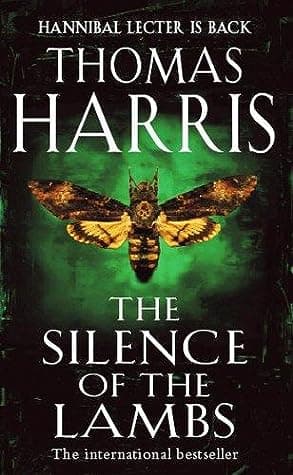
- The Silence of the Lambs
Thomas Harris
4.2 (464k) average on GoodreadsThrillerWildlife features terrifying human villains, similar to Harris's work. However, Harris's antagonists, particularly Hannibal Lecter, are renowned for their intellectual depth, complex motivations, and psychological manipulation, adding layers beyond pure villainy. The Sawyers in Wildlife are more straightforward, primal threats, lacking the intricate psychological profiles of Harris's characters.
- Angels & Demons
Dan Brown
3.9 (2.7M) average on GoodreadsThrillerA Harvard symbologist races through Rome's ancient sites, deciphering cryptic clues to unmask the Illuminati and stop a vengeful plot to destroy the Vatican with a stolen antimatter weapon.
- Gone Girl
Gillian Flynn
4.1 (2.3M) average on GoodreadsThrillerA wife's sudden disappearance on her fifth anniversary reveals a web of lies and psychological warfare, exposing the secrets within a seemingly perfect marriage.
- The Girl on the Train
Paula Hawkins
3.9 (2.1M) average on GoodreadsThrillerA woman’s fascination with a seemingly perfect couple she watches from her daily train commute leads her into a dark investigation when she witnesses something that shatters their idyllic image.





Enjoyed the summary?
A summary gives you the shape of the book. The book itself has the detail, the examples and the voice.
Find Wildlife on AmazonAs an Amazon Associate, BookBrief earns from qualifying purchases. How we're funded