
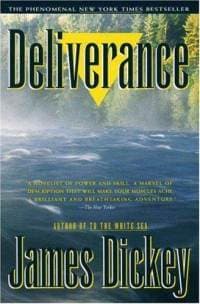
Synopsis
Covers the whole plot, including the ending.
- Difficulty
- Medium
- Pacing
- Fast
- Mood
- Gritty, Suspenseful, Dark, Primal, Intense
- Read it if
- You want a raw, intense, and psychologically deep survival thriller that explores themes of masculinity, civilization vs. wilderness, and moral compromise.
- Skip it if
- You are sensitive to graphic violence, sexual assault, or find morally ambiguous characters and bleak endings off-putting.
Deliverance Plot Summary
Covers the whole plot, including the ending.
The Plan for the Cahulawassee
Lewis Medlock, an outdoorsman, convinces his friends Ed Gentry, Bobby Trippe, and Drew Ballinger to join him on a canoe trip down the Cahulawassee River in northern Georgia. The river will soon be dammed, making this their last chance to see its untouched beauty. Lewis wants to reconnect with nature and test his skills. Ed, a graphic artist, is more hesitant but goes along with Lewis. Bobby and Drew, less experienced, agree to the trip as an escape from city life. They arrange for their cars to be driven to a pickup point downriver, ready for their wilderness immersion.
Arrival at Aintry and the Locals
The four men arrive in Aintry, a small, isolated town, the starting point for their trip. They immediately notice the poverty and suspicion of the locals, especially a group of men at a gas station. Lewis tries to pay two men to drive their cars to the takeout point, but the interaction is tense. One menacing man with missing teeth and his silent, younger companion make them uneasy. Drew, a moral man, expresses discomfort with the locals, sensing hostility. Despite their concerns, they unload their canoes and prepare to leave the unsettling town.
Descent into the Wilderness
The men launch their two canoes onto the Cahulawassee. Lewis and Ed share one; Drew and Bobby share the other. At first, the experience is exciting, a thrilling ride through rapids and a deep connection with the clean wilderness. Ed, despite his earlier doubts, finds himself drawn to the river's raw beauty and the challenge of the whitewater. They bond over the adventure, feeling a primal freedom. As they go downstream, the feeling of isolation grows, and the vast wilderness begins to feel less freeing and more threatening, watching their journey.
The Attack on Bobby and Ed
While scouting ahead, Ed and Bobby get separated from Lewis and Drew. Two dirty, armed mountain men ambush them. One, the toothless man from Aintry, holds them at gunpoint. The other, younger and silent, helps him. The men tie Ed to a tree. The toothless man forces Bobby to undress, then rapes him at gunpoint. Ed, helpless, is forced to watch. The experience deeply traumatizes Bobby and Ed, destroying their sense of safety. The wilderness, once a source of freedom, becomes a place of terror.
Lewis's Intervention and the First Death
As the toothless man prepares to rape Ed, Lewis and Drew arrive, having heard the noise. Lewis, with his bow, shoots the toothless man through the chest, killing him. The younger mountain man runs into the woods. The three remaining men now face a dead body and the fact that they have committed a crime, though in self-defense. Drew, horrified, insists they report it. Lewis argues that no one would believe their story, given the remote location and the suspicious locals. He suggests burying the body and continuing as if nothing happened.
The Burial and Drew's Fate
Against Drew's moral objections, Lewis, Ed, and Bobby bury the toothless man's body. The act is gruesome, further involving them. As they go downriver, Drew becomes agitated, his conscience bothering him. He refuses to paddle, his eyes distant. Suddenly, their canoe hits something, and Drew falls into the water. He is found downstream, dead, with an unusual wound on his head. Lewis believes the surviving mountain man shot him. Ed suspects a heart attack or a fall onto a sharp rock. His death complicates their desperate situation.
Lewis's Injury and Ed's Transformation
Soon after Drew's death, their canoe tips in rapids, and Lewis breaks his leg badly. With Lewis unable to move and Bobby in shock, Ed must take charge. He realizes the surviving mountain man is still out there, possibly hunting them. Driven by a need for survival and revenge, Ed decides he must hunt and kill the remaining attacker before they are all killed. This decision marks a big change in Ed, turning him from a hesitant observer to a determined killer.
The Hunt for the Second Man
Ed, with Lewis's bow, climbs the bluffs above the river, determined to find the second mountain man. He spends a terrifying night in the wilderness, hunting and being hunted. He eventually sees the man on the opposite bank, aiming a rifle at their camp. Ed, with new resolve and a hunter's instinct, takes a difficult shot with the bow and arrow, hitting the man. The man falls into the river and disappears, likely dead. Ed, shaken by the act, feels a grim satisfaction and accomplishment in protecting his friends. He returns to Lewis and Bobby, the immediate threat gone.
The Cover-Up and Rescue
With both attackers seemingly dead, the three surviving men—Ed, Lewis, and Bobby—decide to stick to Lewis's plan: report nothing. They create a detailed story about a boating accident and Drew's death, agreeing to never speak of the true events. They manage the remaining rapids, and a local family by the river eventually finds them. The family helps transport Lewis and Drew's body to civilization. The local sheriff, suspicious but without proof, questions them. The men stick to their fabricated story, and the sheriff, unable to prove otherwise, lets them go, allowing them to escape legal consequences.
Aftermath and Lingering Trauma
Back in Atlanta, the men go back to their normal lives, but the Cahulawassee experience leaves a lasting mark. They keep their pact of silence, never discussing the true events, not even with their wives. Ed, especially, finds himself changed. The instincts he used during the ordeal, the cold efficiency of his kill, stay with him. He sees the world differently, with a deeper understanding of its brutal side. While they were ‘delivered’ from immediate danger, they are forever haunted by the violence they saw and took part in, bound by their shared secret.
Principal Figures
Ed Gentry
Protagonist
A graphic artist who is forced to confront his primal nature.
Ed Gentry is initially presented as a somewhat complacent graphic artist, living a comfortable but unfulfilling life in Atlanta. He is drawn to the canoe trip by Lewis's influence but lacks his friend's intense connection to the wilderness. Ed is observant and introspective, often reflecting on the events unfolding around him. He is the most relatable of the four, initially hesitant and squeamish. However, the traumatic events on the river force him to shed his civilized veneer and embrace a ruthless, survival-driven persona, ultimately becoming the group's protector.
Relationships: Lewis Medlock (Close friend and mentor figure, whose worldview Ed initially admires but later surpasses in a crisis.); Bobby Trippe (Friend and fellow victim, whose assault profoundly impacts Ed.); Drew Ballinger (Friend, whose moral compass and tragic death deeply affect Ed.); Martha Gentry (Wife, to whom Ed maintains the secret of the trip.)
Lewis Medlock
Supporting Character / Catalyst
An avid outdoorsman and survivalist, the instigator of the trip.
Lewis is a physically powerful and highly opinionated man, obsessed with survivalism and the purity of the wilderness. He views the Cahulawassee trip as a test of man against nature and a chance to experience a 'purer' existence before civilization encroaches. Lewis is the group's natural leader and the most experienced outdoorsman. He is decisive and pragmatic, often to the point of ruthlessness, which becomes critical after the attack. Despite his strength, he is ultimately vulnerable, and his injury forces Ed to step into a leadership role.
Relationships: Ed Gentry (Close friend; Lewis is the primary influence on Ed joining the trip.); Bobby Trippe (Friend, whom Lewis saves from further assault.); Drew Ballinger (Friend, whose moral objections Lewis dismisses for survival.)
Bobby Trippe
Supporting Character / Victim
A somewhat effeminate and cynical businessman who becomes a victim of violence.
Bobby is presented as a somewhat flippant and cynical character, less physically adept than Lewis or Ed. He initially approaches the trip with a sense of ironic detachment, often making sarcastic remarks. His vulnerability is cruelly exposed during the assault by the mountain men, where he is singled out for sexual violence. This traumatic event shatters his composure and leaves him deeply traumatized, rendering him largely passive and in shock for the remainder of the journey. He struggles to cope with the violation and the subsequent cover-up.
Relationships: Ed Gentry (Friend and fellow survivor of the assault.); Lewis Medlock (Friend, who saves him from further harm.); Drew Ballinger (Friend.)
Drew Ballinger
Supporting Character / Moral Compass
The morally upright and principled member of the group.
Drew is the most morally grounded and principled member of the quartet. He is a musician, sensitive, and possesses a strong sense of justice and fairness. He is deeply disturbed by the poverty and hostility of the local inhabitants and is the only one to vehemently object to Lewis's plan to cover up the first killing. His moral distress and refusal to participate in the cover-up lead to his tragic and ambiguous death, which further complicates the group's desperate situation. He represents the voice of conventional morality that is ultimately silenced by the brutal realities of the wilderness.
Relationships: Ed Gentry (Friend, with whom Drew shares a more sensitive perspective.); Lewis Medlock (Friend, whose pragmatic and ruthless decisions Drew strongly opposes.); Bobby Trippe (Friend.)
The Toothless Man
Antagonist
One of the two sadistic mountain men who ambush the group.
The toothless man is a terrifying figure, embodying the brutal, uneducated, and menacing aspect of the isolated mountain community. He is sadistic and predatory, taking pleasure in the humiliation and assault of Bobby and Ed. His lack of teeth and unsettling demeanor make him physically grotesque and psychologically disturbing. He represents the primal, uncivilized threat that the city men encounter in the wilderness. He is the first to be killed by Lewis's arrow, an act of self-defense that propels the narrative into deeper moral ambiguity.
Relationships: Ed Gentry (Victimizer of Ed.); Bobby Trippe (Rapist of Bobby.); Lewis Medlock (Killed by Lewis.)
The Younger Man
Antagonist
The silent, equally menacing accomplice of the toothless man.
The younger man is the silent partner of the toothless man, equally menacing but less vocal. He assists in the ambush and assault, his lack of dialogue making him an even more chilling presence. He represents a persistent, unseen threat after his partner is killed, stalking the survivors and contributing to their paranoia and fear. His eventual death at Ed's hand marks Ed's full transformation into a hunter and ensures the group's immediate survival. He is a symbol of the lingering danger that the wilderness holds.
Relationships: Ed Gentry (Victimizer of Ed, later killed by Ed.); Bobby Trippe (Victimizer of Bobby.); The Toothless Man (Accomplice.)
Sheriff Bullard
Mentioned / Supporting
The local sheriff who questions the survivors after their rescue.
Sheriff Bullard is the law enforcement officer who interviews Ed, Lewis, and Bobby after they emerge from the wilderness. He is suspicious of their story regarding Drew's death and the circumstances of their trip, but he lacks concrete evidence to contradict their carefully constructed lie. He represents the return of civilization and its laws, but his inability to uncover the truth highlights the effectiveness of the men's cover-up and the isolation of the region. He serves as a reminder of the consequences they narrowly avoided.
Relationships: Ed Gentry (Interrogates Ed and the other survivors.)
Themes & Insights
Man vs. Nature / The Wilderness as a Test
The main theme explores the clash between civilized man and wild nature. The Cahulawassee River is not just a setting but an active force, testing the physical and moral limits of the four friends. At first, the wilderness offers freedom, but it quickly becomes a brutal place where societal rules disappear. The men lose their city comforts and must face their basic survival instincts, showing how thin the layer of civilization is. Ed's change from a hesitant artist to a cold hunter shows this, a direct response to nature's demands.
“What happened on the river was a dream, if it happened. If it happened, it happened to someone else. I was there, but I was not there.”
The Loss of Innocence / Deliverance Through Violence
The novel shows a deep loss of innocence, especially for Ed and Bobby. The adventure quickly turns into a nightmare of rape, murder, and cover-up. The men are 'delivered' from their comfortable, naive lives into a brutal reality where violence is not only present but necessary for survival. They escape the wilderness physically, but the terrible things they saw and did mark them forever. The 'deliverance' is not salvation but a harsh trial by fire, leaving them with a permanent psychological scar. Bobby's rape and Ed's kills are key moments in this theme.
“The river was a god, and it was a god that had chosen them.”
The Nature of Masculinity
The book closely looks at different types of masculinity. Lewis shows a tough, almost mythical masculinity, believing in man's power over nature and a return to basic strength. Ed struggles with his own perceived lack of masculinity, feeling less adequate than Lewis, until the crisis forces him to develop a ruthless, protective instinct. Bobby represents a less traditionally 'masculine' type, making him a target for the mountain men's aggression. The ordeal makes the men redefine what strength, courage, and their roles as men mean in a world without social norms.
“I was learning to take my place in the violence of the world.”
Moral Compromise and Guilt
A significant theme is the moral compromises the men must make and the guilt that follows. Drew's strong moral objection to burying the first body highlights the group's slide into ethical uncertainty. Lewis's practical decision to hide the murders, driven by self-preservation, forces the others to be involved. The men's promise of silence after their rescue ensures their freedom but dooms them to a lifetime of shared guilt and secrecy. They are haunted by their actions, especially Ed, who struggles with the man he became in the wilderness.
“He knew that the river had been there for millions of years, and that it would be there for millions more. But they would not.”
Plot Devices & Literary Techniques
The Cahulawassee River
A powerful, symbolic setting that acts as a character and catalyst.
The Cahulawassee River is more than just a location; it is a central character and a potent symbol. It represents untamed nature, a 'last chance' for wildness before human intervention. Its rapids and deep canyons serve as both a source of exhilarating freedom and a deadly trap. The river isolates the men, strips them of their societal roles, and forces them into a primal struggle for survival. It acts as a crucible, forging new identities and revealing the brutal core of humanity. The impending damming of the river underscores the theme of nature's vulnerability to civilization.
The Bow and Arrow
A primitive weapon symbolizing a return to primal instincts.
Lewis's bow and arrow, initially a symbol of his love for primitive hunting and self-sufficiency, becomes a crucial plot device. It is the weapon used to kill both mountain men, first by Lewis in self-defense, then by Ed in a deliberate hunt. Its use contrasts sharply with modern firearms, emphasizing a return to ancient, more personal forms of violence. For Ed, mastering the bow represents his complete transformation from a civilized man to a primal hunter, a skilled killer who must shed his inhibitions to survive and protect his friends.
The Pact of Silence
A post-event agreement that binds the survivors and creates lasting psychological impact.
After the violence, the three surviving men — Ed, Lewis, and Bobby — agree to a strict pact of silence, never revealing the true events of the trip. This device is crucial for their physical escape from legal consequences but traps them in a shared psychological burden. It highlights the theme of moral compromise and the lasting impact of trauma. The silence becomes a heavy weight, shaping their future lives and relationships, and ensuring that their 'deliverance' is not a true liberation but a haunted existence.
Foreshadowing through Local Encounters
Early interactions with locals hint at the dangers to come.
The initial encounters with the impoverished and suspicious locals in Aintry, particularly the menacing toothless man and his silent companion, serve as strong foreshadowing. These interactions immediately establish a sense of unease and hostility, suggesting that the wilderness holds not just natural dangers but human ones as well. Drew's discomfort and Lewis's pragmatic but tense dealings with the locals set a foreboding tone, hinting that the men's journey will involve more than just navigating rapids, preparing the reader for the inevitable confrontation.
Deliverance Quotes
“I was going to die. I was going to die and I was going to like it.”
“Sometimes you have to lose yourself to find anything.”
“The river was beautiful, but it was also a monster.”
“We don't know what's out there.”
“You ought to see what's in these hills.”
“Paddle faster! I hear banjos!”
“I never knew what the hell I was doing until I did it.”
“There are times when you have to do things you don't want to do.”
“The only thing that matters is that we get out of here alive.”
“We beat it. We beat it, didn't we?”
“It was the best thing I ever did.”
“The river had changed them all, not necessarily for the better, but irrevocably.”
“There was a look in his eyes I had never seen before; a look of total, absolute knowledge of what he was doing.”
“The land was a presence, a thing that watched them.”
“What they had done, and what had been done to them, would never leave them.”
Quiz
10 questions on the plot and the characters. Each answer comes with a short explanation.
Question 1
What is the primary motivation for the four men to embark on the canoe trip down the Cahulawassee River?
- To scout for a new hunting ground.
- To experience the wilderness before the river is dammed and flooded.
- To participate in a professional canoe race.
- To escape legal troubles in the city.
Show answer
B. To experience the wilderness before the river is dammed and flooded. The men, particularly Lewis, are driven to experience the raw wilderness of the Cahulawassee River before it is irrevocably altered by the construction of a new dam.
Question 2
Which character is depicted as the most experienced outdoorsman and the leader of the expedition?
- Ed Gentry
- Bobby Trippe
- Lewis Medlock
- Drew Ballinger
Show answer
C. Lewis Medlock Lewis Medlock is the most physically capable and knowledgeable about survival, often taking the lead and making critical decisions during the trip.
Question 3
What musical instrument does Drew bring on the trip, leading to a memorable 'dueling banjos' scene?
- Guitar
- Harmonica
- Banjo
- Fiddle
Show answer
C. Banjo Drew plays the banjo, and his impromptu musical exchange with a local mountain boy is one of the most iconic and initially peaceful scenes in the book.
Question 4
What is the immediate consequence of the men encountering the two mountain men on the riverbank?
- They are offered help navigating difficult rapids.
- Bobby Trippe is sexually assaulted and Lewis is gravely injured.
- They are forced to trade their supplies for passage.
- One of the mountain men is accidentally shot by Ed.
Show answer
B. Bobby Trippe is sexually assaulted and Lewis is gravely injured. This is the pivotal moment where the recreational trip turns horrifyingly violent. Bobby is assaulted, and Lewis's leg is broken attempting to intervene.
Question 5
After the first attack, what action does Ed take that sets the course for the subsequent desperate struggle for survival?
- He attempts to paddle back upstream to seek help.
- He buries the body of the first attacker and decides they must continue downstream to avoid discovery.
- He sends Bobby ahead to find a road.
- He tries to signal a passing aircraft.
Show answer
B. He buries the body of the first attacker and decides they must continue downstream to avoid discovery. Ed, under Lewis's guidance, buries the body, which forces them to commit to covering up the crime and continuing their journey down the dangerous river, away from civilization.
Question 6
What is the primary internal conflict Ed Gentry faces throughout the ordeal?
- His desire to abandon his friends versus his loyalty.
- His struggle to reconcile his civilized self with the primal instincts required for survival.
- His regret over not bringing more supplies.
- His fear of his wife discovering his infidelity.
Show answer
B. His struggle to reconcile his civilized self with the primal instincts required for survival. Ed, an ordinary suburban man, is forced to confront his capacity for violence and make life-or-death decisions, transforming from a passive observer to an active participant in survival.
Question 7
What happens to Drew during the descent down the river after the initial attack?
- He is bitten by a venomous snake.
- He becomes delirious from a fever.
- He falls out of the canoe and drowns, possibly after being shot.
- He manages to flag down a rescue helicopter.
Show answer
C. He falls out of the canoe and drowns, possibly after being shot. Drew falls into the rapids and drowns, with the possibility of having been shot from the riverbank, adding to the group's peril and moral burden.
Question 8
What specific act of violence does Ed commit that is crucial to the group's immediate survival after Drew's death?
- He fights off a bear that attacks their camp.
- He scales a cliff and ambushes the second mountain man, killing him with an arrow.
- He sets a trap that injures a pursuing local.
- He deliberately capsizes the canoe to escape a confrontation.
Show answer
B. He scales a cliff and ambushes the second mountain man, killing him with an arrow. Ed, after much internal struggle, climbs the cliff and uses Lewis's bow to kill the second mountain man, who they believe was stalking them and responsible for Drew's death.
Question 9
How do the surviving men explain the disappearance of their friends and the injuries they sustained to the local authorities?
- They admit to a violent encounter and plead self-defense.
- They claim they were attacked by a wild animal.
- They fabricate a story about a severe canoe accident and drowning.
- They refuse to cooperate with the investigation.
Show answer
C. They fabricate a story about a severe canoe accident and drowning. To avoid suspicion and legal repercussions for the deaths they caused, the men concoct a detailed story about a tragic canoeing accident, with Drew and the other missing men presumed drowned.
Question 10
What is the overarching theme suggested by the title 'Deliverance' in the context of the novel's ending?
- The deliverance from physical danger and the wilderness.
- The psychological deliverance from societal constraints and the discovery of a primal self.
- The deliverance of the river from human interference through the damming project.
- The deliverance of justice for the victims of the violence.
Show answer
B. The psychological deliverance from societal constraints and the discovery of a primal self. The 'deliverance' is not just about escaping the physical danger, but also about the profound psychological transformation and the unleashing of a primal, survivalist nature within the men, particularly Ed, as they are stripped of their civilized veneers.
Deliverance FAQ
What is the central premise of 'Deliverance'?
The novel follows four Atlanta businessmen – Lewis Medlock, Ed Gentry, Bobby Trippe, and Drew Ballinger – on a canoe trip down the fictional Cahulawassee River in the remote Georgia wilderness. Their goal is to experience nature before the valley is flooded by a new dam, but their adventure quickly devolves into a desperate fight for survival after a violent encounter with local mountain men.
Who are the four main characters and what are their primary roles at the beginning of the trip?
Lewis Medlock is the survivalist and leader, obsessed with nature and physical prowess. Ed Gentry is the protagonist and narrator, an advertising artist who initially feels detached but is forced to act. Bobby Trippe is the overweight, somewhat effeminate member, often the target of Lewis's derision. Drew Ballinger is the moral compass and musician, a quiet, thoughtful man who represents civilization and order.
What event irrevocably changes the nature of the canoe trip?
The turning point occurs when Ed and Bobby are separated from Lewis and Drew. Bobby is brutally raped by one of two mountain men, and Ed is forced to watch, held at gunpoint. This traumatic event shatters their idyllic adventure and propels them into a desperate struggle for survival and concealment.
How does the group deal with the first mountain man after the assault on Bobby?
Lewis appears and kills the rapist with an arrow to the chest, saving Ed from a similar fate. The group then debates what to do with the body and ultimately decides to bury it to avoid legal repercussions and to protect Bobby's reputation, marking their first step into a morally ambiguous world.
What happens to Drew Ballinger and how does his fate impact the group?
Drew refuses to participate in burying the body, expressing his moral outrage. Later, his canoe capsizes, and he is found dead, seemingly shot through the head. His death, whether accidental or caused by the unseen second mountain man, removes the group's moral anchor and forces Ed to assume a more decisive, often ruthless, leadership role.
What is the significance of the river's impending damming to the story's themes?
The damming of the Cahulawassee River symbolizes the encroachment of civilization on wilderness, and the destruction of a pristine, wild place. It serves as Lewis's primary motivation for the trip, a last chance to experience true nature, and ironically, it foreshadows the characters' own 'drowning' in a primitive, lawless struggle.
How does Ed's recurring dream about the 'white, blind, feminine face' relate to his character arc?
The dream represents Ed's subconscious anxieties, his feeling of inadequacy, and his suppressed primal urges. As he is forced to confront violence and become a hunter, the dream evolves, eventually transforming into a 'masculine' face, symbolizing his acceptance of his darker, more assertive self and his transformation from passive observer to active participant.
What is the symbolic meaning of the banjo duel between Drew and the local boy?
The banjo duel represents a brief, harmonious, yet ultimately fragile connection between the urban outsiders and the isolated mountain community. It highlights the cultural divide and foreshadows the tragic breakdown of communication and the violent clash that follows, demonstrating that while music can bridge gaps, it cannot erase deeper tensions.
How does the 'eye for an eye' motif manifest in Ed's pursuit of the second mountain man?
After Lewis is severely injured, Ed takes on the role of hunter, stalking and killing the presumed second mountain man with an arrow. This act is a direct retaliation for the earlier assault and Drew's death, demonstrating a descent into primitive justice and Ed's complete embrace of the wilderness's brutal rules, abandoning civilized law.
Analyze Lewis Medlock's psychological journey from confident leader to vulnerable victim.
Lewis begins as the quintessential 'alpha male,' confident in his survival skills and disdainful of modern comforts. His severe leg injury not only incapacitates him physically but also shatters his carefully constructed persona of invincibility. This forces Ed to take charge, and Lewis must confront his own mortality and dependence, revealing a deeper vulnerability beneath his tough exterior.
How does Ed Gentry's transformation from passive observer to active killer reflect a Jungian shadow integration?
Ed initially suppresses his primal instincts, viewing himself as a 'weekend adventurer.' The trauma of the assault and the responsibility of leadership force him to confront and integrate his 'shadow' self – the capacity for violence, cunning, and ruthlessness needed for survival. He becomes a hunter, tapping into an ancient, archetypal masculinity previously dormant.
Discuss Bobby Trippe's psychological response to the rape and its long-term effects.
Bobby is deeply traumatized and humiliated by the rape, which strips him of his dignity and masculinity. He becomes withdrawn, fearful, and physically weak, unable to contribute meaningfully to the group's survival efforts. The experience leaves him permanently scarred, forcing him to live with the secret and the psychological burden, altering his perception of himself and the world.
What is the psychological impact of the 'secret' the survivors must keep?
The shared secret of the murders binds the survivors in a traumatic pact, fostering a sense of isolation and paranoia. It forces them to live a double life, outwardly normal but inwardly haunted by their experiences. This secrecy prevents them from fully processing the trauma, leading to lingering psychological distress and a permanent alteration of their identities.
Is the ending of 'Deliverance' truly a 'deliverance' for the characters, or something else?
The 'deliverance' is ambiguous. While the men escape the wilderness physically, they are not truly 'delivered' from the psychological scars or the moral compromises they made. Ed gains a new self-awareness and capability, but it comes at a profound cost, leaving him with a permanent sense of dread and the burden of his actions. It's a deliverance from death, but not from self-alteration.
Does the novel endorse a return to primitivism, or critique it?
The novel doesn't explicitly endorse or critique primitivism but rather explores its compelling and terrifying aspects. It suggests that while nature can offer exhilarating freedom and a connection to primal self, it can also strip away the veneer of civilization, revealing humanity's capacity for extreme violence and brutality. The 'return' is forced, not chosen, and comes with dire consequences.
How does the novel explore the theme of masculinity in crisis?
The novel presents different facets of masculinity – Lewis's hyper-masculine survivalism, Ed's initial passivity, Bobby's perceived effeminacy, and Drew's intellectual masculinity. The wilderness crisis forces them to confront and redefine their masculinity, pushing Ed to embrace a more primal, violent form for survival, highlighting the fragility and adaptability of societal gender roles under extreme duress.
Could the second mountain man have been a figment of their collective paranoia, or was he real?
The novel deliberately leaves the existence of the second mountain man somewhat ambiguous, playing on the characters' paranoia and the blurring lines between reality and psychological torment. While Ed believes he kills the second man, the lack of definitive proof (a body, clear identification) allows for the interpretation that he might have been a manifestation of their guilt and fear, or simply an unseen threat that never fully materialized.
What is the significance of the river itself as a character or force in the novel?
The Cahulawassee River acts as a powerful, almost sentient force. It is both a source of exhilaration and deadly peril, a path to adventure and a trap. It symbolizes the untamed wilderness, indifferent to human suffering, and its currents metaphorically carry the men deeper into their primitive selves, washing away their civilized identities and forcing them to confront their true nature.
How does the novel's ending resonate with the idea of the 'unseen' or 'unspoken' aspects of life?
The ending emphasizes the profound impact of experiences that remain hidden from public view. The survivors carry an unspoken burden, a secret life shaped by their ordeal. This highlights how much of human experience, particularly trauma, exists in the private, unshared realm, influencing individuals without ever being acknowledged by society, creating a permanent, internal 'wilderness' within them.
About the author

James Dickey was an American poet and novelist known for his exploration of themes related to nature and the human experience. His notable work, "Deliverance," is a novel that delves into the struggles of survival and self-discovery in the wilderness. Dickey's writing often reflects his background in poetry, blending lyrical prose with intense narrative.
Similar books
- Lord of the Flies
William Golding
3.7 (2.3M) average on GoodreadsYoung AdultExplores the breakdown of civilization and human nature in a survival scenario.
- The Road
Cormac McCarthy
4.0 (716k) average on GoodreadsScience FictionFeatures a stark, brutal landscape and a desperate struggle for survival with moral dilemmas.
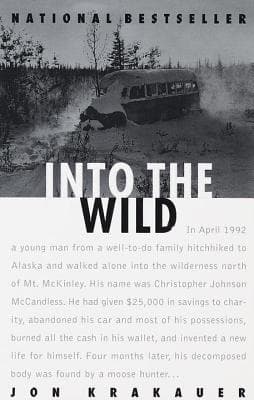
- Into the Wild
Jon Krakauer
3.7 (2k) average on GoodreadsFantasyNon-fiction, but shares themes of man's desire to escape civilization and confront nature's harshness.
- A River Runs Through It
Norman Maclean
4.2 (8k) average on GoodreadsHistorical FictionWhile both novels feature a river and the wilderness as central elements, their thematic concerns diverge significantly. Maclean's A River Runs Through It is a meditative, nostalgic exploration of family, memory, and the solace found in nature, particularly fly-fishing. Deliverance, in contrast, uses the river as a catalyst for terror, violence, and a harrowing test of survival, focusing on the destructive rather than redemptive aspects of the wild. Maclean's tone is elegiac; Dickey's is urgent and brutal.
- The Old Man and the Sea
Ernest Hemingway
3.8 (831k) average on GoodreadsLiterary FictionA Cuban fisherman's long struggle with a giant marlin becomes a story of endurance and dignity, now retold for young adults with illustrations, phonetic guides, and writing prompts in Traditional Chinese.
- One Hundred Years of Solitude
Gabriel García Márquez
4.1 (753k) average on GoodreadsLiterary FictionThrough the multi-generational story of the Buendía family, a mythical town deals with the repeating patterns of time, love, and solitude, as the extraordinary mixes with the ordinary.




Enjoyed the summary?
A summary gives you the shape of the book. The book itself has the detail, the examples and the voice.
Find Deliverance on AmazonAs an Amazon Associate, BookBrief earns from qualifying purchases. How we're funded