
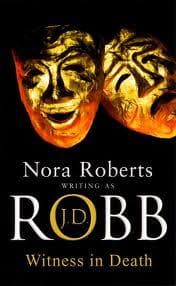
Synopsis
Covers the whole plot, including the ending.
- Difficulty
- Medium
- Pacing
- Fast
- Mood
- Suspenseful, Gritty, Engaging, Romantic
- Read it if
- You enjoy futuristic police procedurals with a strong, no-nonsense detective and a dash of romance.
- Skip it if
- You dislike explicit violence or a blend of mystery with science fiction elements.
Witness in Death Plot Summary
Covers the whole plot, including the ending.
Opening Night Murder
Lieutenant Eve Dallas and her husband, Roarke, attend opening night of 'Blood Will Tell' at the New Globe Theatre, which Roarke owns. During the third act, actor Charles Butler, playing the villain, is stabbed to death on stage with a real knife instead of a prop. The audience first thinks it's part of the show, but other actors soon realize what happened. Eve, in the audience, immediately secures the crime scene and starts her investigation. The incident creates chaos in the theater world and puts pressure on Eve, as she is the main detective, a witness, and the wife of the theater's owner.
Initial Investigation and Media Frenzy
Eve's first interviews reveal complex relationships and rivalries among the cast and crew. The victim, Charles Butler, was known for his talent but also for his arrogance and womanizing. Many disliked him, including his co-star and ex-lover, Nadine Furst, and the play's director, Julian Cross. The media quickly arrives at the New Globe, sensationalizing the murder and highlighting Roarke's ownership, which adds more scrutiny to Eve's investigation. Eve and her partner, Detective Delia Peabody, carefully examine the stage, props, and dressing rooms for clues, trying to tell the difference between theatrical elements and actual evidence.
The Prop Knife Discrepancy
Eve's investigation quickly shows that the prop knife, designed to retract, was replaced with a real, sharp blade. This detail confirms the murder was planned, not an accident. The focus shifts to who had access to the props and the chance to make the switch. Eve interviews the prop master, stage manager, and other crew members, finding inconsistencies and alibis that are hard to check during the chaos of opening night. The technical aspects of the stage production become key to understanding how the killer managed to commit the murder so smoothly during a live performance, with dozens of witnesses present.
Uncovering Backstage Secrets
As Eve and Peabody investigate further, they uncover a history of affairs, professional jealousies, and old grudges within the theater company. Charles Butler had a reputation for sleeping with co-stars and manipulating people. Nadine Furst, his ex-lover, admitted hating him. Julian Cross, the director, resented Butler's past actions. Even minor characters like the understudy, Darcia, and the stage manager, Arthur, seem to have secrets. Eve carefully puts together timelines and alibis, finding that many people had both a reason and a chance, making the suspect pool large and interconnected.
The Director's Past
Eve focuses on Julian Cross, the acclaimed but private director. She discovers Cross has a hidden past, including a wife and child he abandoned years ago for his career. This paints a picture of a man capable of ruthless ambition and emotional detachment. Further investigation shows that Butler had found out Cross's secret and was using it to blackmail him, threatening to expose his past and ruin his reputation. This gives Cross a strong reason for murder, adding him to the list of main suspects, though he maintains his innocence, claiming he was only trying to protect his family from scandal.
The Understudy's Secret
Peabody's thorough work uncovers another secret: Darcia, the seemingly shy understudy, was having a secret affair with Charles Butler and was pregnant with his child. Butler had promised to leave his current girlfriend and marry Darcia, but had recently broken that promise, leaving her devastated. This discovery gives Darcia a strong reason for murder—a scorned lover seeking revenge and protection for her unborn child. Eve considers whether Darcia, driven by despair and betrayal, could have swapped the knives, using her access as an understudy to the stage and props.
Roarke's Assistance and Technical Clues
Roarke, despite media pressure, actively helps Eve by providing technical expertise and access to the New Globe's advanced systems. He helps her analyze the intricate stage mechanics, lighting cues, and prop storage, looking for anomalies or blind spots the killer might have used. His knowledge of the theater's layout and security systems is invaluable in understanding how someone could have manipulated the props undetected. Together, they review surveillance footage and schematics, trying to find the exact moment the knife swap happened and who had the chance to do it without being noticed by the busy stage crew.
Confronting Suspects and False Leads
Eve brings Nadine Furst in for a more intense interrogation, pressing her on her volatile relationship with Butler and her alibi. Nadine, while clearly holding deep resentment, maintains her innocence. Her anger seems genuine, but not murderous. Eve also re-interviews other crew members, including the stage manager and prop master, trying to find flaws in their stories. The investigation becomes a psychological battle, as Eve tries to tell true emotion from practiced acting, always aware that everyone involved is a performer, capable of deception. She finds herself sifting through layers of performance to reach the truth.
The Breakthrough – A Subtle Detail
The breakthrough comes when Eve re-examines the victim's pre-show routine and the specific placement of props on stage. She realizes that the killer must have known Charles Butler's exact movements and habits, and had close knowledge of the stage setup. A subtle detail about a prop's weight or feel, something only an actor closely involved with the scene would notice, starts to make sense. Eve begins to suspect that the killer was not just someone with access, but someone who was part of the performance itself, someone who could blend into the theatrical illusion.
The Killer Revealed: Julian Cross
Eve finally confronts Julian Cross, showing him the evidence. She deduces that Cross, meticulous and controlling, had been blackmailed by Butler over his abandoned family. Unable to tolerate the threat to his carefully built life and reputation, Cross planned the murder. He swapped the knives during a complex stage transition, knowing the exact timing and the actors' movements. He used his authority as director to subtly manipulate the stage crew and ensure his plan went unnoticed. Cornered, Cross breaks down, confessing to the murder, revealing his desperation and his cold, calculating nature.
Confession and Resolution
Julian Cross, facing undeniable evidence, confesses to planning and carrying out Charles Butler's murder. He explains how Butler's blackmail about his abandoned wife and child had pushed him to his limit, threatening to destroy his career and public image. Cross details how he used his close knowledge of the play's staging, prop management, and the actors' movements to swap the knives during the chaotic third act. His confession brings grim satisfaction to Eve, who has navigated the complex world of theater and celebrity to uncover the truth. The case, which had captivated the city, is now closed.
Principal Figures
Eve Dallas
Protagonist
A dedicated and brilliant homicide detective for the NYPSD.
Lieutenant Eve Dallas is a tough, no-nonsense homicide detective with a sharp mind and an unwavering commitment to justice. Haunted by a traumatic past, she channels her intensity into her work, often pushing boundaries to solve cases. She is highly intuitive, relying on both evidence and gut feelings. Despite her hardened exterior, she deeply loves her husband, Roarke, and values her relationships with her team. She struggles with the public scrutiny that comes with high-profile cases, especially when her personal life intersects with her professional duties.
Relationships: Roarke (Husband, confidant, business partner, lover); Delia Peabody (Partner, friend, mentee); Commander Whitney (Superior officer, mentor)
Roarke
Supporting
Eve's billionaire husband, owner of the New Globe Theatre, and former criminal.
Roarke is an enigmatic and immensely wealthy Irish businessman with a mysterious past, known for his vast empire and sharp intellect. He is deeply devoted to Eve, providing her with unwavering support, both emotionally and professionally. While he has left his criminal past behind, his connections and resources often prove invaluable in Eve's investigations. He is fiercely protective of Eve and his assets, navigating the media frenzy surrounding the New Globe murder with a calm, strategic demeanor, always ready to assist Eve with his unique skills and insights.
Relationships: Eve Dallas (Wife, soulmate, business partner, lover); Galahad (Business associate, friend)
Delia Peabody
Supporting
Eve's loyal and increasingly competent detective partner.
Detective Delia Peabody is Eve's junior partner, a diligent and observant officer who is steadily growing in confidence and skill under Eve's mentorship. She is often the 'good cop' to Eve's 'bad cop,' possessing a more conventional and empathetic approach to interviews. Peabody is fiercely loyal to Eve and is not afraid to ask questions or offer observations, even if they challenge Eve's initial theories. She provides a grounding presence for Eve and is instrumental in the detailed legwork of the investigation, often picking up on subtle clues others miss.
Relationships: Eve Dallas (Partner, friend, mentor); McNab (Boyfriend, fellow officer)
Charles Butler
Victim
The talented but arrogant leading actor murdered on stage.
Charles Butler was the charismatic but deeply flawed leading man in 'Blood Will Tell.' He was renowned for his acting talent but equally infamous for his womanizing, arrogance, and manipulative nature. He had a history of affairs with co-stars, professional rivalries, and a penchant for blackmail, making him a widely disliked figure despite his star power. His murder on opening night sets the entire plot in motion, and the investigation into his life reveals a multitude of people who had reasons to wish him harm.
Relationships: Nadine Furst (Ex-lover, co-star); Julian Cross (Director, blackmailed victim); Darcia (Secret lover, impregnated)
Julian Cross
Antagonist
The acclaimed, controlling director of 'Blood Will Tell' and the murderer.
Julian Cross is a highly respected and intensely private theatre director, known for his meticulous attention to detail and demanding nature. He presents a calm and professional demeanor, but beneath the surface lies a ruthless ambition and a deeply controlling personality. He harbors a significant secret – a family he abandoned years ago – which Charles Butler discovers and uses to blackmail him. This blackmail, coupled with his desire to maintain his pristine reputation, drives him to meticulously plan Butler's murder, using his intimate knowledge of the stage and production to execute the crime.
Relationships: Charles Butler (Actor, blackmailer, victim); Nadine Furst (Co-star, directed by him)
Nadine Furst
Supporting
Charles Butler's co-star and bitter ex-lover.
Nadine Furst is a talented and fiery actress, known for her passionate performances. She had a tumultuous romantic history with Charles Butler, which ended badly, leaving her with deep-seated anger and resentment towards him. Despite her intense dislike for Butler, she is a professional and maintains her composure during the investigation, though her emotions are often close to the surface. She is a prime suspect due to her very public animosity towards the victim, but her alibi and genuine grief for the disruption to her career eventually clear her.
Relationships: Charles Butler (Ex-lover, co-star)
Darcia
Supporting
The understudy, secretly pregnant with Charles Butler's child.
Darcia is a quiet and seemingly timid understudy in 'Blood Will Tell.' She maintained a secret romantic relationship with Charles Butler, believing he would leave his current girlfriend for her. When Butler reneged on his promise, leaving her pregnant and alone, she became devastated and desperate. Her situation provides her with a strong motive for revenge, making her a significant person of interest in Eve's investigation. She represents the collateral damage of Butler's manipulative behavior.
Relationships: Charles Butler (Secret lover, father of her child)
Commander Whitney
Supporting
Eve's commanding officer at the NYPSD.
Commander Whitney is Eve's superior officer, a fair but firm leader who respects Eve's abilities while also holding her accountable. He provides guidance and support, often acting as a buffer between Eve and the political pressures of the department. He trusts Eve's judgment implicitly but also reminds her of the protocols and public perception, especially in high-profile cases like the New Globe murder.
Relationships: Eve Dallas (Superior officer, mentor)
Themes & Insights
The Illusion of Reality vs. Truth
This theme is central to the novel, set in a theater where illusion is key. Eve constantly works to distinguish between performance and reality, between what appears true and what actually happened. The murder itself occurs during a play, blurring the lines between staged violence and actual death. Characters, being actors, are good at deception, making it hard for Eve to tell genuine emotion from practiced lies. This theme appears in every interrogation, forcing Eve to look past the surface and the 'performance' of each suspect to find the truth of human motivation.
“Everyone here is a performer. They live to project. To make you believe. It's my job to see through the show.”
Reputation and Public Image
The novel explores the pressure around public image and reputation, especially in the celebrity world of theater. Charles Butler's murder immediately becomes a media circus, with reporters scrutinizing every detail and person involved, including Roarke and Eve. Julian Cross's reason for murder comes directly from his fear that his carefully built reputation would be destroyed by Charles Butler's blackmail. The characters are very aware of how they are seen, and many act to protect their public image, even if it means lying or hiding the truth. This theme highlights the superficiality and fragility of fame.
“Fame. It's a gilded cage, Eve. And when the bars rattle, everyone looks.”
Hidden Lives and Secrets
Almost every character in 'Witness in Death' has significant secrets or leads a double life. Charles Butler's manipulative nature is fueled by his ability to uncover and exploit others' hidden truths. Julian Cross hides an abandoned family, while Darcia hides her secret pregnancy and affair with Butler. These hidden lives create a complex web of motives and resentments that Eve must untangle. The theater, with its backstage areas and dressing rooms, is a metaphor for the hidden parts of human nature, where the 'real' lives of the performers are kept separate from their public personas.
“Everyone has a backstage, Peabody. A place where the costumes come off and the real face shows. Sometimes, that face is ugly.”
Professionalism vs. Personal Entanglement
Eve Dallas constantly deals with the intersection of her professional duty and her personal life. Being a witness to the murder and her husband Roarke owning the theater puts personal pressure on her investigation. The media's intense focus on her marriage and Roarke's involvement threatens to compromise her impartiality in the public eye. This theme explores the challenges of remaining objective when personal stakes are high, and how Eve's dedication to justice allows her to navigate these complex ethical and emotional waters without compromising her integrity.
“This isn't about Roarke. It's about a man who was murdered. And my job is to find who did it, no matter who owns the damn building.”
Plot Devices & Literary Techniques
Red Herring
Misleading clues or suspects designed to divert the reader's attention.
The novel employs several red herrings to complicate the investigation and keep the reader guessing. Nadine Furst's very public and intense animosity towards Charles Butler, and Darcia's secret pregnancy and betrayal, both provide strong motives, making them appear to be viable suspects. These characters and their compelling backstories serve to draw attention away from the true killer, Julian Cross, until Eve meticulously pieces together the more subtle and technical clues. The theatrical setting itself, where deception is inherent, amplifies the effectiveness of these red herrings.
Closed Circle Mystery
A murder committed within a limited group of suspects, often in an isolated location.
The murder of Charles Butler occurs on stage during a live performance within the New Globe Theatre, effectively creating a closed circle of suspects comprising the cast, crew, and a limited audience. While the audience is large, the actual crime scene and the people with access to the prop knife are severely restricted. This device heightens the tension and allows Eve to meticulously investigate each individual within this contained environment, knowing the killer must be one of them. The theatre acts as a micro-society where everyone is connected, and secrets are hard to keep.
Dramatic Irony
The audience (and Eve) is aware of a character's true nature or motive before others.
Dramatic irony is subtly woven into the narrative, particularly concerning Julian Cross. As the director, he is in control of the play's illusions, and the irony lies in him orchestrating a real murder within a staged one. The audience and Eve, through the investigation, slowly become aware of his manipulative and controlling nature, and his hidden past, long before others in the story fully grasp his capacity for such a crime. This device adds a layer of suspense as Eve closes in on the perpetrator, while the characters around him remain largely oblivious to his true intentions.
The Unreliable Narrator (of events)
Characters' accounts of events are biased or incomplete, requiring Eve to discern the truth.
While Eve Dallas is the primary point-of-view, the 'unreliable narrator' device manifests in the accounts of the various suspects and witnesses. Being actors, many characters are inherently skilled at presenting a curated version of reality. Their testimonies are often colored by personal biases, self-preservation, or genuine confusion about what happened during the chaotic opening night. Eve must constantly sift through these subjective and often contradictory narratives, using forensic evidence and psychological profiling to construct an objective timeline of events and uncover the true story hidden beneath the performances.
Witness in Death Quotes
“He'd seen enough death to know it was never pretty, never poetic. It was just... death.”
“The one thing you could count on with humans was their ability to surprise you, for better or worse.”
“Love wasn't a fairy tale. It was a choice, a commitment, and a hell of a lot of work.”
“Sometimes the monster was the one you least suspected, wearing the most charming smile.”
“Justice wasn't about revenge. It was about balance, about making things right.”
“Fear was a powerful motivator, but it could also blind you to the truth.”
“Every secret had a shelf life. Eventually, it rotted and stank.”
“There were a lot of ways to kill someone. Not all of them involved a weapon.”
“He was her anchor, her safe harbor in a world that was constantly trying to drag her under.”
“The past had a way of reaching out and grabbing you, even when you thought you'd outrun it.”
“You couldn't save everyone, but you had to try. That was the job.”
“Sometimes the loudest screams were the ones you couldn't hear.”
“It wasn't about being perfect. It was about being honest, even when it hurt.”
“The city never slept, and neither did its demons.”
Quiz
10 questions on the plot and the characters. Each answer comes with a short explanation.
Question 1
What is the name of the theatre where the murder takes place?
- The Grand Theatre
- The New Globe Theatre
- The Apollo Stage
- The Metropolitan Playhouse
Show answer
B. The New Globe Theatre The opening night murder occurs at the New Globe Theatre, which is owned by Roarke.
Question 2
What is the profession of the victim, leading man Gavin Elwood?
- Director
- Playwright
- Actor
- Producer
Show answer
C. Actor Gavin Elwood is described as the 'leading man' who is stabbed to death on stage, indicating he is an actor.
Question 3
Why does the media take an unusual interest in this particular murder case?
- The victim was a political figure.
- Eve Dallas is a witness, and her husband, Roarke, owns the theatre.
- It was the first murder ever committed in a theatre.
- The murder weapon was extremely rare.
Show answer
B. Eve Dallas is a witness, and her husband, Roarke, owns the theatre. The synopsis explicitly states that the press discovers Eve is a witness and Roarke owns the theatre, leading to increased media attention.
Question 4
What is the primary challenge Eve Dallas faces in discerning the truth from deception in this case?
- Lack of physical evidence at the crime scene.
- Witnesses are uncooperative and hostile.
- Many suspects are actors skilled at portraying emotions and lying convincingly.
- The murder occurs in a blackout, making identification difficult.
Show answer
C. Many suspects are actors skilled at portraying emotions and lying convincingly. The synopsis highlights the difficulty in telling 'the difference between the truth - and really good acting,' implying that the theatrical environment and the skills of the suspects are a major hurdle.
Question 5
Who is the primary detective assigned to the case?
- Detective Peabody
- Lieutenant Eve Dallas
- Commander Whitney
- Officer McNab
Show answer
B. Lieutenant Eve Dallas The text states, 'Now Eve Dallas has a high profile celebrity homicide on her hands. Not only is she primary detective, she's also a witness.'
Question 6
What is the relationship between Eve Dallas and Roarke?
- Colleagues
- Siblings
- Husband and Wife
- Rivals
Show answer
C. Husband and Wife The synopsis clearly states, 'when the press discovers that her husband, Roarke, owns the theatre,' indicating their marital relationship.
Question 7
What type of weapon was used to kill the leading man?
- A gun
- Poison
- A knife (stabbed)
- Blunt force trauma
Show answer
C. A knife (stabbed) The text explicitly states the leading man 'is stabbed to death right on centre stage.'
Question 8
What is unique about Eve Dallas's involvement in the case, beyond being the primary detective?
- She was the victim's estranged sister.
- She was performing in the play herself.
- She is a witness to the murder.
- She had previously investigated the victim for another crime.
Show answer
C. She is a witness to the murder. The synopsis states, 'Not only is she primary detective, she's also a witness.'
Question 9
How does the setting of a theatre impact the investigation's focus?
- It means the killer must have been a professional assassin.
- It emphasizes the importance of understanding motives related to artistic rivalry and performance.
- It suggests the murder was an elaborate special effect gone wrong.
- It limits the number of potential suspects to only the backstage crew.
Show answer
B. It emphasizes the importance of understanding motives related to artistic rivalry and performance. The recurring theme of 'telling the difference between the truth - and really good acting' and the emphasis on the theatrical setting implies that the investigation will delve into the world of performance, where motives like rivalry and the blurring of reality and fiction are prominent.
Question 10
What is the overarching goal Eve Dallas must achieve to solve the case and mitigate the intense media scrutiny?
- To prove Roarke's innocence in the murder.
- To find the killer quickly and efficiently.
- To expose corruption within the theatre industry.
- To write a tell-all book about the celebrity murder.
Show answer
B. To find the killer quickly and efficiently. The text states, 'The only way out is to move fast. Question everyone - and everything.' This implies that a swift resolution to finding the killer is crucial to handling the overwhelming media interest and closing the case.
Witness in Death FAQ
What is the central crime in 'Witness in Death'?
The central crime is the on-stage murder of Lyle Pickering, the leading man in the play 'Blood Will Have Blood,' during the opening night performance at the New Globe Theatre. He is stabbed with a prop knife that was switched with a real one, making the murder appear to be part of the play.
Why is Eve Dallas considered a witness in this case?
Eve Dallas is considered a witness because she was seated in the audience, specifically in Roarke's box, watching the play unfold when Lyle Pickering was murdered. She saw the event directly, though initially believed it was part of the performance.
What complicates the investigation for Eve Dallas?
The investigation is complicated by several factors: Eve being a witness, her husband Roarke owning the New Globe Theatre, and the victim being a high-profile celebrity, leading to intense media scrutiny. Additionally, the theatrical setting blurs the lines between reality and performance, making motives and alibis difficult to discern.
Who are the primary suspects Eve and her team investigate?
Eve and her team investigate several individuals connected to the play and Lyle Pickering, including his co-star and ex-lover Nadine Furst, the director Julian Cross, the playwright Alistair Roe, and other cast and crew members with personal or professional grievances against Pickering.
What role does Roarke play in the investigation?
Roarke, as the owner of the New Globe Theatre, provides Eve with access to the building's schematics, security footage, and financial records, proving invaluable to the investigation. He also offers emotional support and his unique insight into the world of business and manipulation, sometimes even acting as a sounding board for Eve's theories.
How does the 'prop knife' detail become crucial to solving the case?
The 'prop knife' detail is crucial because the killer replaced a stage prop with a real, sharpened knife, turning a theatrical gesture into a fatal blow. Investigating the procurement and handling of props, and who had access to them, becomes a key element in identifying the murderer.
Are there any subtle indications of the killer's identity early in the book?
Yes, there are subtle hints. The killer's meticulous planning and manipulation of details, including the prop switch and the timing, point to someone with a deep understanding of the theatre's operations and a calm, calculating demeanor. Their apparent lack of strong emotional reaction to Pickering's death, disguised as professional detachment, can be a subtle tell.
What is the significance of the play 'Blood Will Have Blood' within the larger narrative?
'Blood Will Have Blood' mirrors the real-life events, exploring themes of betrayal, ambition, and murder, which are central to Lyle Pickering's death. The play's dark subject matter and the intense emotions it evokes among the cast and crew provide a cover and context for the actual crime, blurring the lines between fiction and reality.
How does Eve's past trauma influence her approach to the victims and suspects in this case?
Eve's past trauma, particularly her own experience with abuse and violence, gives her a unique empathy for victims and an intense drive to seek justice. It also makes her particularly sensitive to subtle signs of manipulation or hidden pain in suspects, allowing her to dig deeper than others might.
What psychological impact does being a witness have on Eve?
Being a witness adds a layer of personal involvement and stress for Eve. It forces her to confront the blurring of her professional and personal roles, and the initial shock of seeing what she believed was fiction turn into reality is unsettling, making her question her own perceptions.
How does the theatrical environment affect the psychological profiles of the characters involved?
The theatrical environment fosters a heightened sense of drama, ego, and emotional intensity among its inhabitants. Characters are accustomed to performing and embodying different roles, which can make it challenging for Eve to discern genuine emotions and motivations from practiced acts, creating a complex web of psychological masks.
What is the primary motive for Lyle Pickering's murder?
The primary motive for Lyle Pickering's murder is a combination of professional rivalry, deep-seated resentment, and a desire for revenge stemming from Pickering's manipulative and destructive behavior. He had a history of sabotaging careers, exploiting relationships, and crushing the dreams of those around him, leading to overwhelming hatred.
Does the book suggest that anyone in the theatre could have been driven to murder Pickering?
The book strongly suggests that many individuals in Pickering's orbit had legitimate grievances and could have been driven to murder him, given his consistently cruel and manipulative nature. This widespread animosity creates a large pool of plausible suspects, making the investigation more challenging and highlighting the depths of his toxicity.
How does the ending reinforce the themes of justice and consequences?
The ending reinforces themes of justice and consequences by ensuring that the killer, despite their cunning plan, is ultimately exposed and held accountable for their actions. It demonstrates that even in a world of performance and deception, truth and justice will eventually prevail, providing closure for the victims and their families.
What is the significance of the title 'Witness in Death'?
The title 'Witness in Death' is significant because it directly refers to Eve Dallas's dual role as both the primary investigator and an eyewitness to the murder. It also subtly hints at the audience's role in the theatre, witnessing a death that was both real and staged, blurring the lines between observer and participant.
How does Roarke's relationship with Nadine Furst impact the investigation?
Roarke's past romantic relationship with Nadine Furst, one of the primary suspects and the victim's co-star, creates an initial layer of complication and personal discomfort for Eve. While Roarke assures Eve it's long past, it adds a subtle dynamic to his interactions with Nadine and ensures Eve examines her very carefully.
What is the ultimate fate of the New Globe Theatre after the murder?
Despite the murder, the New Globe Theatre, being Roarke's property, continues its operations after the investigation concludes, albeit with enhanced security. The tragedy doesn't permanently tarnish its reputation, though it becomes a memorable, albeit grim, part of its history.
Are there any recurring side characters who provide comic relief or crucial insights?
Yes, recurring side characters like Peabody provide crucial support and occasionally comic relief with her earnestness and evolving relationship with McNab. Mavis and Leonardo also offer their unique perspectives and emotional support to Eve, grounding her in her personal life amidst the professional chaos.
About the author

J.D. Robb is a pseudonym for author Nora Roberts, known for her work in the romance and suspense genres. She is particularly recognized for the "In Death" series, which includes titles such as "Naked in Death," "Glory in Death," "Immortal in Death," "Rapture in Death," "Ceremony in Death," and "Holiday in Death." These novels blend elements of crime fiction with futuristic settings and strong character development.
Similar books
- Naked in Death
J.D. Robb
4.1 (167k) average on GoodreadsThrillerIt's the first book in the same series, establishing the world and characters.
- The Lincoln Lawyer
Michael Connelly
4.2 (193k) average on GoodreadsThrillerFeatures a sharp detective/lawyer navigating a complex, high-stakes case with media attention.
- Still Life
Louise Penny
3.9 (2k) average on GoodreadsLiterary FictionA character-driven mystery with a strong sense of place and intricate plotting, though more cozy.
- Angels & Demons
Dan Brown
3.9 (2.7M) average on GoodreadsThrillerA Harvard symbologist races through Rome's ancient sites, deciphering cryptic clues to unmask the Illuminati and stop a vengeful plot to destroy the Vatican with a stolen antimatter weapon.
- Gone Girl
Gillian Flynn
4.1 (2.3M) average on GoodreadsThrillerA wife's sudden disappearance on her fifth anniversary reveals a web of lies and psychological warfare, exposing the secrets within a seemingly perfect marriage.
- The Girl on the Train
Paula Hawkins
3.9 (2.1M) average on GoodreadsThrillerA woman’s fascination with a seemingly perfect couple she watches from her daily train commute leads her into a dark investigation when she witnesses something that shatters their idyllic image.




Enjoyed the summary?
A summary gives you the shape of the book. The book itself has the detail, the examples and the voice.
Find Witness in Death on AmazonAs an Amazon Associate, BookBrief earns from qualifying purchases. How we're funded