Estimated read time: 9 min read
One Sentence Summary
“Women” by Charles Bukowski follows the exploits of Henry Chinaski, a hard-drinking writer, as he navigates a series of tumultuous relationships with women, exploring themes of desire, loneliness, and self-destruction.
Table of Contents
Introduction
Welcome to the wild, raw, and raucously honest world of Charles Bukowski’s Women—a novel that’s as much a confession as it is a celebration of the messy complexity of human desire. First published in 1978, Women is infamous for its unfiltered depiction of sex, alcoholism, and the everyday struggles of the American underclass. But beyond the boozy bravado, Bukowski’s novel is a deeply revealing exploration of loneliness, creative hunger, and the search for meaning amid chaos. Whether you’re a college student mining literature for authentic voices or a lecturer looking for an uncompromising look at twentieth-century American masculinity, Women provides plenty to ponder—and maybe laugh or wince at along the way!
Historical Context
America in the 1970s
Bukowski’s Women is set in the gritty, sprawling landscape of Los Angeles during the 1970s—a time when the American Dream was being redefined. The Vietnam War’s shadow still lingered, Watergate had left its mark, and counterculture movements were morphing into new forms of rebellion. Against this backdrop, traditional gender roles and ideas about love and freedom were being challenged, both in literature and society at large.
Bukowski and the Literary Scene
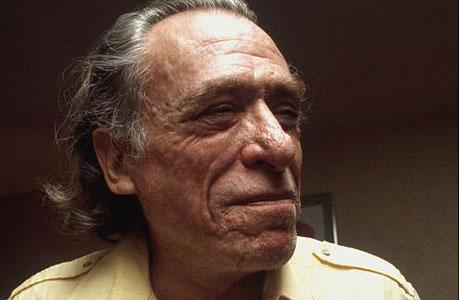
Charles Bukowski, often dubbed the “laureate of American lowlife,” emerged as a cult literary figure thanks to his raw, poetic voice and unapologetic honesty. His work drew from real life—especially the world of blue-collar Los Angeles, with its dive bars, flophouses, and battered poets. The alter ego of Bukowski, Henry Chinaski, had already starred in earlier works (Post Office, Factotum), but Women marked a new and deeply personal exploration of sexuality and aging.
Brief Synopsis
Plot Overview
Bukowski’s Women follows the exploits of Henry Chinaski, a hard-drinking, aging poet and writer whose newfound literary fame brings a parade of women—and trouble—into his life. The novel is episodic, structured around a seemingly endless succession of sexual encounters, relationships, and benders. But beneath the surface, it’s a meditation on Chinaski’s desperate search for connection, his battles with self-destruction, and his struggle to balance creativity with chaos.
Setting
Time: Mid-to-late 1970s
Place: Los Angeles, California (with detours to other American cities)
Atmosphere: Gritty, nocturnal, and unapologetically seedy—think cheap motels, smoky bars, and sun-bleached boulevards. The city’s underbelly becomes a character in itself, mirroring Chinaski’s inner turmoil and the era’s shifting social landscapes.
Main Characters
Here’s a table breaking down the key players in Women:
| Name | Role | Key Traits | Importance to Plot |
|---|---|---|---|
| Henry Chinaski | Protagonist; Poet/Writer | Cynical, witty, self-destructive, sensitive, vulnerable | Central figure; novel unfolds through his perspective |
| Lydia Vance | Lover/On-and-Off Girlfriend | Fiery, jealous, passionate, unstable | Chinaski’s most intense and volatile relationship |
| Sara | Lover | Independent, reserved, intelligent | Offers Chinaski brief stability |
| Tammie | Young Lover | Naive, playful, energetic | Represents youth, impulsiveness, and consequences |
| Dee Dee | Lover | Artistic, nurturing, eccentric | Explores art and emotional support |
| Cecelia | Lover | Married, secretive, conflicted | Embodies forbidden love and secrecy |
| Irene | Lover | Kind, patient, mature | Provides moments of solace and normalcy |
| Jan | Lover | Distant, intellectual, aloof | Forces Chinaski into self-reflection |
Note: Many other women appear briefly; each reveals another facet of Chinaski’s struggles with intimacy and identity.
Plot Summary
The Writer’s Life (and Its Perks)
Henry Chinaski, now in his fifties, has finally achieved some literary success. Fan mail pours in, invitations to readings multiply, and—most importantly—women seem to find him irresistible. Chinaski’s life becomes a whirlwind of sexual encounters, often initiated by women who idolize his poetry. But where most novels would romanticize this, Bukowski presents every conquest with a mixture of humor, self-loathing, and brutal honesty.
Lydia: Passion and Destruction
Chinaski’s relationship with Lydia Vance is the novel’s emotional center. Lydia is unpredictable, fiercely loving, and often violent. Their connection is electric, yet toxic; they fight, break up, reunite, and hurt each other in equal measure. Through Lydia, Chinaski confronts his own inability to sustain intimacy, his fear of being alone, and the price of passion.
The Cycle of Women
After Lydia, the novel becomes almost picaresque, as Chinaski drifts from one woman to the next. Some offer brief moments of comfort or creativity; others lead to chaos or farce. Each relationship is a vignette—funny, sad, or painfully awkward. Tammie, for instance, brings wild energy but also drama and consequences Chinaski can barely manage. With Sara, he tries—and fails—to find normalcy.
The Writer’s Dilemma
Throughout these adventures, Chinaski struggles with writer’s block, self-doubt, and the fear that his talent may be fading. The attention he receives from women is both a distraction and a validation, but it never fills the void he feels. He questions whether his artistic success is worth the emotional wreckage it leaves behind.
Confronting Mortality
Near the novel’s end, Chinaski confronts the realities of aging—his body’s decline, his waning sexual prowess, and the looming specter of death. There’s a sense of resignation, but also a grudging acceptance. The final pages find Chinaski alone, reflecting on what (if anything) he’s learned from his journey.
Themes and Motifs
Bukowski’s Women is as much about the human condition as it is about sex or drinking. Let’s explore its major themes:
| Theme | Description | Broader Context |
|---|---|---|
| Loneliness and Alienation | Chinaski’s endless search for companionship masks a deep-rooted loneliness | Reflects postwar American malaise and urban isolation |
| Masculinity and Aging | The novel examines what it means to be a man facing physical and emotional decline | Challenges myths of virility, success, and self-reliance |
| The Artist’s Struggle | Writing is both a salvation and a curse for Chinaski | Mirrors Bukowski’s own battles with fame and creativity |
| Sexual Freedom vs. Emptiness | Chinaski’s hedonism promises liberation but often leads to dissatisfaction and regret | Echoes 1970s sexual revolution and its limitations |
| Self-Destruction and Redemption | Alcohol, sex, and chaos are both coping mechanisms and sources of pain | Explores cycles of addiction and the possibility of growth |
Motifs:
- Alcohol and bars (symbols of escape and community)
- Letters and readings (fame’s double-edged sword)
- Violence (emotional and physical, as a form of expression)
- Humor and irony (tools for survival)
Literary Techniques and Style
Narrative Structure
Women employs a loose, episodic structure: each chapter is a snapshot from Chinaski’s life, often focused on a particular relationship or drunken adventure. This structure mirrors the chaotic unpredictability of both the protagonist’s life and the era itself.
Voice and Language
Bukowski’s writing is spare, direct, and unapologetically crude. There’s no romanticizing, no elaborate metaphors—just raw, rhythmic prose that cuts to the bone. Dialogue is snappy, often hilarious, and always authentic. Bukowski’s style captures the cadence of barroom banter and the inner voice of a man both jaded and yearning.
Realism and Autobiography
Much of the novel’s power lies in its realism. Bukowski draws heavily from his own experiences, blurring the line between fiction and autobiography. The result is a confessional tone that’s both compelling and uncomfortable.
Irony and Humor
Despite its often bleak subject matter, Women is surprisingly funny. Bukowski’s wit is dry, self-deprecating, and laced with irony—he’s always the first to poke fun at his own failures and excesses.
Author's Background
Charles Bukowski: The Man Behind the Myth
Born in Germany in 1920 and raised in Los Angeles, Bukowski spent decades working menial jobs—postman, factory worker, dishwasher—before finding literary success in his fifties. His poetry and prose championed the downtrodden, the outcast, and the irredeemable. Bukowski’s alter ego, Henry Chinaski, appears in many of his books, serving as a stand-in for the author’s own adventures and misadventures.
Influences and Style
Bukowski was influenced by American writers like John Fante and Ernest Hemingway, as well as by jazz, classical music, and the Beat movement. His “dirty realism” and confessional style have inspired generations of writers looking to break free from literary convention.
Legacy
While controversial—often criticized for misogyny and nihilism—Bukowski’s work is celebrated for its honesty, humor, and unflinching gaze at life’s ugliness and beauty. Women remains one of his most discussed and debated novels, especially in academic circles interested in gender, autobiography, and countercultural literature.
Key Takeaways
- Authenticity: Women is a masterclass in writing without a filter. Bukowski’s honesty, for better or worse, is unforgettable.
- Loneliness is universal: Beneath the bravado, Chinaski’s journey is one of longing and alienation—a theme that resonates with readers of all backgrounds.
- Fame is a double-edged sword: Success brings Chinaski attention but also new forms of emptiness and anxiety.
- Sexual liberation has limits: The era’s promises of freedom are complicated by emotional fallout and unmet needs.
- Humor can be survival: Bukowski’s crude wit and irony offer relief from the novel’s darkness.
- Aging is inevitable: The book is a sobering meditation on mortality and the passage of time.
Reader's Takeaway
Reading Women is like riding shotgun with a hard-living poet on a cross-country bender—you’ll laugh, cringe, and maybe even recognize pieces of yourself in Chinaski’s contradictions. The novel’s emotional impact is rooted in its refusal to look away from life’s ugliness or from the ways we sabotage our own happiness. College students may find themselves relating to Chinaski’s search for identity and meaning, while lecturers can use the book as a springboard for discussions on gender, realism, and literary authenticity.
Conclusion
Charles Bukowski’s Women isn’t a love story in the traditional sense, nor is it a simple chronicle of sexual conquest. It’s a brutally honest, darkly funny, and sometimes uncomfortable exploration of what it means to be human—messy, flawed, and always searching. Whether you approach it as a piece of confessional fiction, a social critique, or a window into a unique literary voice, Women leaves a mark. For the brave and the curious, it offers a rare glimpse into the heart of an artist who refused to play by anyone’s rules, least of all his own.
If you’re ready to encounter literature that challenges, provokes, and, yes, entertains, Women is waiting—just don’t say you weren’t warned.
Women FAQ
What is 'Women' by Charles Bukowski about?
'Women' is a semi-autobiographical novel following Henry Chinaski, Bukowski's literary alter ego, as he navigates a series of tumultuous relationships with women amid his life as a writer and heavy drinker in Los Angeles. The book explores themes of love, sex, addiction, and the search for meaning.
Is 'Women' part of a series?
Yes, 'Women' is part of the Henry Chinaski series of novels by Charles Bukowski. Other books in the series include 'Post Office,' 'Factotum,' 'Ham on Rye,' and 'Hollywood.'
What themes are explored in 'Women'?
'Women' delves into themes such as relationships, sexuality, loneliness, addiction, aging, artistic struggle, and the complexities of desire and vulnerability.
Is 'Women' based on Bukowski's real life?
Yes, the novel is largely autobiographical. The protagonist Henry Chinaski is a stand-in for Bukowski, and many of the events and characters are drawn from Bukowski's personal experiences.
What is the writing style of 'Women'?
'Women' is written in Bukowski’s signature raw, unfiltered, and direct prose. The style is conversational, gritty, and often humorous, with a focus on realistic dialogue and candid observations.
Is 'Women' suitable for all readers?
'Women' contains explicit content, including sexual situations, strong language, and substance abuse. It is intended for mature readers and may not be suitable for everyone.
How does 'Women' compare to Bukowski's other works?
'Women' is considered one of Bukowski’s major novels and is similar in style and tone to his other works featuring Henry Chinaski. It stands out for its focus on relationships and the dynamics between men and women.
When was 'Women' published?
'Women' was first published in 1978.
Are the female characters in 'Women' based on real people?
Many of the female characters in 'Women' are believed to be inspired by real women Bukowski knew, but their portrayals are fictionalized for the novel.
What impact did 'Women' have on Bukowski’s career?
'Women' solidified Bukowski’s reputation as a leading voice in contemporary American literature, known for his gritty realism and candid exploration of the human condition.