

Core Idea
- Difficulty
- Easy
- Read it if
- You are open to the idea that your thoughts directly create your reality, are struggling with chronic physical or emotional issues, and are seeking a spiritual approach to self-healing through affirmations and self-love.
- Skip it if
- You prefer evidence-based medical approaches, are skeptical of the mind-body connection, or are uncomfortable with spiritual concepts that attribute illness solely to mental states.
Key Takeaways from You Can Heal Your Life
The Power of Thought
Your thoughts create your reality, influencing health and circumstances.
Hay states that our mental patterns do not just observe life but actively create our experiences, especially our physical health. She argues that deep-seated negative thoughts, often from childhood or society, appear as physical ailments, emotional stress, and bad life situations. This is not just about superficial 'positive thinking'; it is about finding and removing the core beliefs that cause self-sabotage. The idea is that the subconscious mind does not tell the difference between what is real and what is imagined; it simply acts on the strongest thought patterns it receives. So, constant negative self-talk or fearful expectations can unknowingly program the body for illness or failure.
“Every thought we think is creating our future.”
In the book: Hay frequently cites her own journey and the experiences of her clients, observing patterns where specific emotional issues correlated with particular physical ailments (e.g., resentment linked to throat problems, criticism to arthritis). While not scientific studies, these anecdotal observations form the empirical basis of her claims.
Try this: Begin a daily practice of thought awareness. Observe your internal dialogue without judgment. When you catch a negative thought, consciously reframe it. For instance, if you think, 'I'm always sick,' rephrase it to 'My body is learning to be healthy and strong.' Use affirmations as a proactive tool to implant new, positive beliefs.
Related ideas: affirmations, mind-body-connection, limiting-beliefs
Self-Love as the Cure
Unconditional self-acceptance is the foundation for all healing.
At the heart of Hay's philosophy is the idea that true self-love is the best healer. She believes that most illnesses and life problems come from a lack of self-worth and a constant feeling of not being 'good enough.' This inner criticism creates energy blocks and stress in the body, making it prone to disease. Real self-love is not vanity; it is about accepting oneself completely, faults and all, and creating an inner state of compassion and forgiveness. When we truly love ourselves, we naturally make choices that support our physical and emotional well-being. It is about removing the inner critic and replacing it with an inner supporter.
“The only thing we are ever dealing with is a thought, and a thought can be changed. The first step is to love yourself.”
In the book: Hay recounts stories of clients who, after years of struggling with chronic conditions, experienced significant improvements once they began to practice self-acceptance and forgiveness, often through mirror work and affirmations focused on self-love.
Try this: Practice 'mirror work' daily. Look into your eyes in a mirror and say, 'I love and accept you exactly as you are.' Start with small affirmations of self-worth throughout your day. Treat yourself with the same kindness and understanding you would offer a dear friend.
Related ideas: self-worth, mirror-work, unconditional-love
Forgiveness Releases Resentment
Holding onto anger harms you more than the one you resent.
Hay firmly states that resentment is one of the most damaging emotional patterns, often leading to chronic physical problems like arthritis, cancer, and throat issues. She argues that holding onto anger, bitterness, and the desire for revenge creates a harmful internal environment that literally 'eats away' at the body. Forgiveness, in Hay's view, is not about approving of others' actions or letting them 'off the hook'; it is about freeing yourself from the emotional prison of anger and bitterness. It is an act of self-love, releasing energy that was previously used by negative emotions. This includes forgiving oneself for past mistakes and perceived failures, as self-guilt is just as damaging.
“Resentment, criticism, guilt, and fear cause more problems than anything else.”
In the book: Hay frequently links specific diseases, particularly cancer, to long-held, unexpressed resentment. She observed that clients who struggled most with forgiveness often faced the most severe and persistent illnesses.
Try this: Identify anyone you are holding resentment towards, including yourself. Write a letter (which you don't have to send) forgiving them for what happened. Practice affirmations like, 'I forgive everyone in my past for all perceived wrongs. I forgive myself for my mistakes.' Visualize cutting energetic cords of resentment.
Related ideas: resentment, emotional-release, self-forgiveness
The Body's Message System
Illness is a communication from your body about unaddressed emotional issues.
Hay introduces the idea that physical symptoms and diseases are not random but are direct messages from our bodies, signaling deeper emotional or mental imbalances. She provides a detailed chart that links specific ailments with common emotional patterns (e.g., headaches mean self-criticism, back pain means lack of support, stomach issues mean fear or anxiety). This view changes how we see illness, from an external attack to an internal feedback system. By 'listening' to the body and understanding its messages, people can find the emotional root causes and start the healing process through mental and emotional changes.
“Every cell in your body responds to every thought you think and every word you utter.”
In the book: The book's extensive 'Mental Equivalents' chart, which lists hundreds of physical ailments alongside their probable mental causes. For example, 'colds' are linked to 'too much confusion, disorder, small hurts,' and 'arthritis' to 'feeling unloved, criticism, resentment.'
Try this: When you experience a physical symptom, consult Hay's 'mental equivalents' or simply ask yourself, 'What emotion might this physical issue be trying to tell me?' Reflect on recent stresses, fears, or resentments. Once identified, address the emotional root with affirmations and self-care.
Related ideas: psychosomatic, body-language, emotional-roots-of-disease
Releasing the Past
Clinging to past hurts prevents you from living fully in the present.
A major obstacle to healing, according to Hay, is focusing on past traumas, injustices, or failures. She argues that constantly reliving negative past events keeps those wounds fresh and stops people from moving forward. The past, in her view, is only powerful if we let it be. Releasing the past does not mean forgetting it or pretending it did not happen; it means consciously choosing to let go of the emotional charge linked to it. This allows energy to be redirected toward creating a more positive present and future. It is about breaking free from mental prisons built from old memories and judgments, often formed in childhood.
“The past is over and done with. There is nothing we can do to change it. We can, however, change our thoughts about the past.”
In the book: Hay observed that many clients struggled to heal until they addressed unresolved childhood issues and past relationships. She shares anecdotes of individuals who, once they released old grievances, saw remarkable shifts in their health and life circumstances.
Try this: Consciously acknowledge and validate your past experiences, then declare your intention to release their hold. Practice affirmations like, 'I am willing to release the past. I am safe in the present moment.' Visualize old memories dissolving or floating away, replaced by a sense of peace.
Related ideas: childhood-trauma, letting-go, present-moment
Affirmations as Tools for Change
Consciously chosen positive statements reprogram your subconscious mind.
Affirmations are central to Hay's method. She defines them not just as positive statements but as any thought or spoken word, noting that most people unknowingly repeat negative beliefs daily. Her work focuses on consciously choosing positive, present-tense affirmations to counter these limiting patterns. The repeated nature of affirmations, she explains, bypasses the critical conscious mind and puts new, empowering beliefs directly into the subconscious. This reprogramming then begins to create new realities in health, relationships, and prosperity. It is a deliberate act of mental gardening, pulling out doubts and planting seeds of self-belief and well-being.
“An affirmation is really anything you say or think. Much of what we normally say and think is quite negative and doesn't create good experiences for us.”
In the book: The book provides numerous specific affirmations for various life areas and health issues, encouraging readers to use them consistently. Hay’s own recovery from cancer, which she attributes significantly to affirmations and mental work, serves as a powerful personal testament.
Try this: Create affirmations that resonate with your desired reality (e.g., 'I am healthy and vibrant,' 'I attract loving relationships'). Repeat them aloud or silently multiple times a day, especially when you catch yourself thinking negatively. Write them down and place them where you'll see them often.
Related ideas: positive-thinking, subconscious-mind, manifestation
Prosperity is a State of Mind
Your beliefs about abundance directly impact your financial reality.
Hay extends her principles of mental creation beyond health to include financial success. She argues that scarcity and lack are not external conditions imposed on us but rather reflections of our internal beliefs about money and worthiness. Many people unknowingly hold limiting beliefs about money (e.g., 'money is evil,' 'I do not deserve wealth,' 'there is not enough'), which actively push abundance away. To attract prosperity, one must develop a mindset of abundance, gratitude, and worthiness. This involves releasing fear about money, forgiving past financial mistakes, and affirming one's right to a prosperous life. It is about understanding that the universe is naturally abundant, and our ability to receive is limited only by our beliefs.
“True prosperity is a state of mind. It is a feeling of security and well-being.”
In the book: Hay shares anecdotes of clients who, by shifting their beliefs about money and worth, began to experience unexpected financial opportunities and improvements in their material circumstances.
Try this: Examine your beliefs about money. Are they positive or negative? Replace scarcity-based thoughts with affirmations like, 'I am a magnet for money,' 'I am open and receptive to all the wealth the Universe has to offer.' Practice gratitude for the money you already have, no matter how small.
Related ideas: abundance-mindset, financial-freedom, worthiness
The Importance of Releasing Guilt
Guilt is a destructive emotion that punishes the self unnecessarily.
Hay emphasizes that guilt is one of the most weakening emotions, often leading to self-punishment, physical illness, and a cycle of self-sabotage. She teaches that guilt is a learned response, often taught in childhood, that serves no useful purpose. Instead of inspiring positive change, it paralyzes and reduces self-worth. Releasing guilt involves recognizing that we did our best with the knowledge we had at the time, and that self-forgiveness is most important. It is about understanding that everyone makes mistakes, and the way to grow is by learning from them, not by endlessly punishing oneself. This includes societal guilt, which can appear as feelings of inadequacy or shame.
“Guilt is a totally useless emotion. It never makes us feel better.”
In the book: Hay connects guilt to various physical ailments, including self-inflicted injuries, chronic pain, and a general feeling of unworthiness that manifests as a lack of success or happiness in life.
Try this: When feelings of guilt arise, acknowledge them, then consciously choose to release them. Affirm, 'I forgive myself completely. I am free from all guilt.' Understand that every moment is a new opportunity to make a better choice, and the past is over.
Related ideas: self-punishment, shame, releasing-negative-emotions
Responsibility for Your Life
You are the sole creator of your experiences, good or bad.
A main idea of Hay's philosophy is that each person is fully responsible for their life experiences, including their health, relationships, and financial situation. This is not about blame, but about empowerment. By accepting full responsibility, one reclaims the power to change their circumstances, rather than seeing themselves as a victim of outside forces. This means admitting that even undesirable events are, at some level, a reflection of internal thought patterns or beliefs. This view is very freeing, as it shifts the focus from 'why me?' to 'what can I change within myself to create a different outcome?' It is the ultimate statement of personal control.
“You are a magnificent, powerful, creative being. There is nothing you cannot do.”
In the book: Hay's entire body of work is built on the premise that her clients, through mental work, were able to heal themselves, demonstrating their inherent power and responsibility over their conditions.
Try this: Stop blaming others or external circumstances for your problems. When faced with a challenge, ask yourself, 'What belief or thought pattern within me might have contributed to this, and what can I change?' Focus on what you *can* control – your thoughts and reactions.
Related ideas: personal-agency, empowerment, self-mastery
You Can Heal Your Life Quotes
“The point of power is always in the present moment.”
“Every thought we think is creating our future.”
“I am willing to change.”
“Resentment, criticism, guilt, and fear cause more problems than anything else.”
“Love is the great miracle cure. Loving ourselves works miracles in our lives.”
“We are 100% responsible for all of our experiences.”
“Forgiveness is the answer to almost every problem.”
“Our bodies are always talking to us. If we will only take the time to listen.”
“I am in the right place at the right time, doing the right thing.”
“When we really love ourselves, everything in our life works.”
“All disease comes from a state of unforgiveness.”
“It's only a thought, and a thought can be changed.”
“We are creating our own experiences with every word and every thought.”
“Life is really very simple. What we give out, we get back.”
“The Universe totally supports us in every thought we choose to think and believe.”
Quiz
10 questions on the main ideas. Each answer comes with a short explanation.
Question 1
According to Louise L. Hay, what is the fundamental cause of most illnesses and problems in our lives?
- External environmental factors
- Limiting beliefs and negative thought patterns
- Genetic predispositions
- Lack of proper medical care
Show answer
B. Limiting beliefs and negative thought patterns Louise L. Hay's core premise is that our internal thoughts and beliefs, particularly limiting ones, are the root cause of our experiences, including illness.
Question 2
What is the primary tool Louise L. Hay advocates for changing one's life and healing the body?
- Strict dietary changes
- Regular physical exercise
- Affirmations and mental work
- Seeking external validation
Show answer
C. Affirmations and mental work The book emphasizes that 'mental work' through affirmations and changing thought patterns is the key to healing and improving life.
Question 3
Which of the following is NOT a core principle taught by Louise L. Hay in 'You Can Heal Your Life'?
- We are responsible for all our experiences.
- The power of the present moment.
- Forgiveness is essential for healing.
- External circumstances are always beyond our control.
Show answer
D. External circumstances are always beyond our control. Hay argues that while external circumstances may seem challenging, our *response* to them and our internal world are within our control, and can reshape our experiences.
Question 4
Louise L. Hay often connects specific physical ailments to particular emotional or mental patterns. What emotional pattern does she frequently associate with problems in the throat area (e.g., sore throat, thyroid issues)?
- Unexpressed creativity or inability to speak one's truth.
- Financial insecurity and fear of poverty.
- Lack of joy and enthusiasm for life.
- Resistance to change and new ideas.
Show answer
A. Unexpressed creativity or inability to speak one's truth. In her detailed catalog of probable mental patterns, Hay often links throat problems to issues with communication, self-expression, and the inability to 'swallow' or accept certain situations.
Question 5
What is the significance of the 'mirror work' exercise in Louise L. Hay's teachings?
- It helps in visualizing future goals more clearly.
- It is a technique for practicing self-love and positive affirmations directly to oneself.
- It aids in identifying negative self-talk from others.
- It is a method for analyzing body language.
Show answer
B. It is a technique for practicing self-love and positive affirmations directly to oneself. Mirror work, where one looks into their own eyes and says affirmations, is a powerful technique Hay advocates for building self-esteem and directly addressing one's inner child.
Question 6
Louise L. Hay states that 'the point of power is always in the...' What word completes this phrase, emphasizing where we can enact change?
- past
- future
- present moment
- opinions of others
Show answer
C. present moment This is a direct quote from the book, highlighting that the only time we have the ability to think and act differently is right now, in the present.
Question 7
According to Hay, what is often the underlying emotional pattern connected to problems with the feet and legs?
- Difficulty with communication.
- Fear of the future, or an unwillingness to move forward.
- Resentment towards authority figures.
- A deep sense of unworthiness.
Show answer
B. Fear of the future, or an unwillingness to move forward. Hay often links issues with feet and legs to our foundation, our ability to move forward in life, and fears about the future or direction.
Question 8
How does Louise L. Hay differentiate between guilt and resentment in their impact on health?
- Guilt is linked to heart conditions, while resentment causes digestive issues.
- Guilt is primarily associated with self-punishment and often leads to pain, while resentment is seen as a major cause of cancer and other chronic diseases.
- Guilt affects the upper body, and resentment affects the lower body.
- Hay does not distinguish between their health impacts, treating them as equally detrimental.
Show answer
B. Guilt is primarily associated with self-punishment and often leads to pain, while resentment is seen as a major cause of cancer and other chronic diseases. Hay specifically highlights resentment as a deep-seated anger that 'eats away' at the body, linking it strongly to cancer, while guilt is often tied to self-punishment and pain.
Question 9
What is Louise L. Hay's perspective on the role of parents and childhood experiences in shaping our adult life and health?
- Parents are solely responsible for all adult problems, and healing requires blaming them.
- Childhood experiences are irrelevant once we reach adulthood.
- Childhood experiences and parental teachings heavily influence our early belief systems, which then manifest in adulthood, and healing involves understanding and releasing these patterns, often through forgiveness.
- Only traumatic childhood events have an impact; daily parental interactions do not.
Show answer
C. Childhood experiences and parental teachings heavily influence our early belief systems, which then manifest in adulthood, and healing involves understanding and releasing these patterns, often through forgiveness. A significant portion of the book discusses how beliefs formed in childhood, often absorbed from parents, become our adult patterns, and that forgiveness (of self and others) is crucial for healing these past influences.
Question 10
When addressing the concept of self-love, what specific action does Louise L. Hay suggest is often the most difficult for people, yet essential for healing?
- Buying oneself expensive gifts.
- Saying 'I love you' to oneself in the mirror.
- Avoiding all negative people.
- Constantly seeking external compliments.
Show answer
B. Saying 'I love you' to oneself in the mirror. Hay repeatedly emphasizes that for many, looking in the mirror and genuinely saying 'I love you' to themselves is incredibly challenging due to deep-seated self-criticism, but it's a vital step in cultivating self-love and healing.
You Can Heal Your Life FAQ
What is the core philosophy behind 'You Can Heal Your Life'?
The core philosophy is that our thoughts create our reality, and therefore, limiting beliefs and negative thought patterns are often the root cause of physical illnesses and life challenges. By changing our thinking and embracing positive affirmations, we can heal our bodies and improve our lives.
Does positive thinking really work to heal physical ailments?
Louise Hay suggests that consistent positive thinking, coupled with addressing underlying emotional patterns, can significantly contribute to physical healing. While not a replacement for medical care, it's presented as a powerful complementary tool for well-being by shifting the mental landscape that may contribute to illness.
What is the 'mirror work' concept in the book?
Mirror work is a fundamental practice where you look into your own eyes in a mirror and speak positive affirmations to yourself. This technique is designed to build self-love, confront negative self-talk, and internalize new, empowering beliefs directly and powerfully.
How does 'You Can Heal Your Life' differ from other self-help books on manifestation?
'You Can Heal Your Life' places a strong emphasis on the connection between specific thought patterns and physical ailments, offering a detailed 'probable mental patterns' chart. While it touches on manifestation, its primary focus is on self-love, forgiveness, and releasing past hurts as the foundation for healing and creating a better life, rather than solely on attracting desires.
Can this book help with emotional issues like anxiety or depression?
Yes, the principles in 'You Can Heal Your Life' are highly applicable to emotional issues. By identifying and transforming the underlying negative beliefs and thought patterns that contribute to anxiety or depression, the book offers tools and affirmations to foster emotional well-being and inner peace.
What are affirmations, and how do I use them effectively?
Affirmations are positive statements declared in the present tense, designed to reprogram your subconscious mind. To use them effectively, repeat them regularly with conviction, preferably aloud and in front of a mirror, to override old negative beliefs and cultivate new, empowering thoughts.
Is 'You Can Heal Your Life' suitable for people with chronic illnesses?
Many readers with chronic illnesses have found the book to be a valuable resource for understanding the mind-body connection and empowering themselves in their healing journey. It encourages taking an active role in one's well-being through mental work, alongside any medical treatments.
How long does it take to see results from applying the book's teachings?
The time to see results varies greatly among individuals, depending on their commitment, consistency, and the depth of the issues being addressed. Some may experience shifts quickly, while others may find it's a gradual process of consistent mental and emotional work.
About the author

Louise L. Hay was an American author and motivational speaker known for her work in the self-help genre. She is best known for her book "You Can Heal Your Life," which emphasizes the connection between mental patterns and physical health. Hay's teachings focus on personal empowerment and positive thinking.
Similar books
- The Power of Now: A Guide to Spiritual Enlightenment
Eckhart Tolle
4.1 (211k) average on GoodreadsPsychologyEmphasizes the importance of present moment awareness for inner peace and healing.
- Feel the Fear and Do It Anyway
Susan Jeffers
4.0 (27k) average on GoodreadsBusinessEncourages taking action despite fear, aligning with self-empowerment principles.
- The Secret
Rhonda Byrne
4.4 (53) average on Goodreads"You Can Heal Your Life" shares thematic similarities with "The Secret" in its promotion of the Law of Attraction and the power of positive thought to manifest reality. However, Hay's book places a much stronger emphasis on internal work, self-love, and emotional healing as prerequisites for manifestation, whereas "The Secret" often focuses more directly on external desires and the mechanics of attraction without as deep an exploration of emotional blockages. Hay's work feels more grounded in personal transformation, while Byrne's can sometimes be perceived as purely transactional.
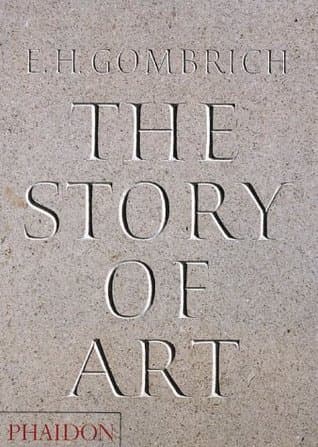
- The Story of Art
E.H. Gombrich
3.9 (311k) average on GoodreadsReferenceExplore thousands of years of human creativity, from ancient cave art to modern masterpieces, with Gombrich's classic account, updated with new insights into art's changing story.
- The New Drawing on the Right Side of the Brain
Betty Edwards
3.9 (297k) average on GoodreadsPsychologyLearn to draw by using the often-ignored visual side of your brain, changing how you see the world.
- Go Ask Alice
Anonymous
3.7 (293k) average on GoodreadsReferenceA teenage girl's diary chronicles her swift decline into 1970s drug culture, from an innocent game to addiction, ending in her tragic death.




Enjoyed the summary?
A summary gives you the shape of the book. The book itself has the detail, the examples and the voice.
Find You Can Heal Your Life on AmazonAs an Amazon Associate, BookBrief earns from qualifying purchases. How we're funded