
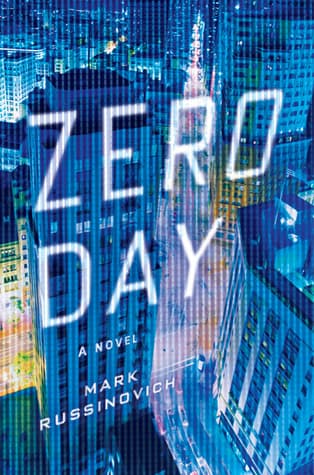
Synopsis
Covers the whole plot, including the ending.
- Difficulty
- Medium
- Pacing
- Fast
- Mood
- Suspenseful, Chilling, Urgent, Technologically grounded
- Read it if
- You enjoy techno-thrillers with high stakes and realistic cybersecurity threats.
- Skip it if
- You prefer fantasy or stories without a strong technical focus.
Zero Day Plot Summary
Covers the whole plot, including the ending.
Global System Failures Begin
The story begins with several unrelated technological disasters: an airliner's controls fail mid-flight, an oil tanker runs aground, and hospitals experience database failures leading to patient deaths. A nuclear power plant also faces a near-meltdown as its cooling systems malfunction. These events, though spread out and affecting different areas, share a common problem: critical computer systems are failing without explanation. The world watches in confusion, blaming isolated glitches or human error, but the scale and variety of the failures suggest something more sinister beneath the surface of global technology.
Jeff Aiken's Suspicions Aroused
Jeff Aiken, a brilliant but disillusioned former government analyst, becomes involved in the unfolding chaos. Having left his previous role due to frustration with bureaucracy and failures leading to 9/11, Jeff has a unique understanding of system weaknesses. He observes the escalating global incidents—the plane nearly crashing, the tanker running aground, the hospital errors, and the nuclear plant crisis—and immediately dismisses official explanations of random malfunctions. His intuition tells him these are not isolated events. Instead, he suspects a sophisticated, coordinated cyberattack targeting critical infrastructure, a 'zero day' exploit on an unprecedented scale, and he begins to investigate independently, driven by urgency and fear of global catastrophe.
DHS Recruits Jeff
As the cyberattacks intensify and the threat becomes clear, the Department of Homeland Security (DHS) recognizes the seriousness of the situation. Despite his earlier difficult departure from government service, Jeff Aiken's cybersecurity expertise makes him the only viable candidate to lead the response. DHS agent Sarah Daniel, recognizing his skill, recruits him. Initially resistant, citing his distrust of government bureaucracy, Jeff is eventually swayed by the potential disaster and the realization that his unique skills are needed. He agrees to join the task force, but on his own terms, demanding operational freedom and direct access to resources, setting the stage for a tense collaboration.
Initial Investigations and Obstacles
Jeff Aiken, now working with Sarah Daniel, immediately starts investigating, trying to trace the attacks' origin. They face significant challenges, including the complexity of the compromised systems and the attacker's methods of hiding their tracks. Bureaucratic hurdles within various government agencies also prove to be a major problem, as departments are reluctant to share information or admit weaknesses. Jeff's unconventional approach often clashes with established protocols, causing friction with other government officials. The attacker leaves very few traces, making attribution difficult. Jeff and Sarah realize they are dealing with an adversary of exceptional skill and resources, operating with stealth that makes traditional cyber-forensics nearly impossible.
A Pattern Emerges
Through careful analysis, Jeff begins to find a pattern in the seemingly unconnected attacks. He discovers that all the compromised systems share a common, deeply hidden vulnerability: a sophisticated rootkit, called 'Titan,' silently installed on critical infrastructure systems worldwide. This rootkit allows the attacker complete, undetectable control over the target machines. The revelation is unsettling, indicating a long-term, pre-planned infiltration rather than a quick assault. Jeff realizes that the attacker has been patiently preparing for months, if not years, embedding this malicious software into systems from power grids to financial networks. This discovery shifts the investigation from reactive damage control to understanding the full scope of the clandestine network and predicting the attacker's next move.
The Attacker's Identity and Motive
As Jeff and Sarah dig deeper, they begin to piece together clues about the attacker's identity and motivations. The sophistication of the 'Titan' rootkit and the precision of the attacks suggest a highly skilled individual or small group, rather than a state-sponsored entity. Evidence starts to point towards a reclusive but brilliant programmer, possibly disillusioned with modern society's reliance on technology and its vulnerabilities. The attacker's actions are not purely destructive; there is an underlying message, a calculated demonstration of fragility. Jeff theorizes that the goal is not just chaos, but to expose the dangers of global interconnectedness and perhaps force a societal re-evaluation of technology, or even to provoke a specific political or economic outcome.
A Race Against Time
With the 'Titan' rootkit identified, Jeff and Sarah realize the current attacks are just a prelude to something far worse. They deduce that the attacker is building towards a 'zero day' event, a coordinated, simultaneous shutdown of multiple critical global systems designed to cripple the world. Targets could include financial markets, communication networks, or even defense systems. Pressure mounts as they work around the clock, trying to predict the attacker's final target and method. They face the daunting task of not only identifying the attacker but also developing countermeasures to neutralize the 'Titan' rootkit across thousands of compromised systems before the ultimate strike can be launched. The investigation becomes a desperate race against an impending global collapse.
Confrontation and Resolution
Through technical skill and psychological profiling, Jeff and Sarah pinpoint the attacker's location and identity. Jeff, driven by a deep understanding of the hacker's mindset, confronts the individual in a tense, high-stakes encounter. The confrontation is not just physical; it's an intellectual battle, with Jeff trying to reason with the ideologically driven attacker, to understand their motives, and to convince them to halt the impending catastrophe. The climax involves a desperate scramble to disable the final, most devastating stage of the 'Titan' attack, which threatens to plunge the world into a digital dark age. The resolution depends on Jeff's ability to outmaneuver the attacker both technically and psychologically, preventing the ultimate 'zero day' event.
Aftermath and Reflection
After the averted catastrophe, the world is left shaken. While the most devastating attack was prevented, the preceding incidents exposed the fragility of global interconnectedness and the deep vulnerabilities in modern technology. Governments and corporations must now confront the reality that their critical infrastructure is more susceptible to attack than previously imagined. Jeff Aiken, though exhausted, feels a grim satisfaction in preventing total collapse, but remains cautious. The incident serves as a warning, forcing a global re-evaluation of cybersecurity protocols, international cooperation, and trust in a digitally dependent world. The book ends with a sense of unease, acknowledging that while this threat was neutralized, the underlying vulnerabilities remain, making future 'zero day' events a constant danger.
Principal Figures
Jeff Aiken
Protagonist
A brilliant, disillusioned former government cybersecurity analyst.
Jeff Aiken is a highly intelligent and exceptionally skilled cybersecurity expert, formerly with the government. He's characterized by his sharp analytical mind, his ability to see patterns where others see chaos, and his deep understanding of complex systems. He's also deeply cynical and distrustful of bureaucracy, a trait born from his disillusionment with the systemic failures he witnessed leading up to 9/11. Despite his reluctance to re-engage with government, his strong moral compass and sense of responsibility compel him to act when global catastrophe looms. He is often impatient with incompetence but possesses a profound dedication to protecting critical infrastructure.
Relationships: Sarah Daniel (professional colleague and developing mutual respect); The Attacker (intellectual adversary and ideological counterpoint)
Sarah Daniel
Supporting
A dedicated and pragmatic DHS agent who recruits Jeff Aiken.
Sarah Daniel is a determined and capable agent with the Department of Homeland Security. She is intelligent, pragmatic, and possesses a strong sense of duty. Sarah acts as Jeff's primary contact and liaison within the government, often navigating the bureaucratic hurdles that Jeff disdains. She recognizes Jeff's unique genius and is willing to bend rules and endure his challenging personality to leverage his expertise. While she operates within the system, she is also open-minded enough to appreciate Jeff's unconventional methods, proving to be an essential partner in the investigation. Her calm demeanor often balances Jeff's intensity.
Relationships: Jeff Aiken (professional colleague and developing mutual respect)
The Attacker (unnamed/pseudonym)
Antagonist
A highly skilled, ideologically driven hacker seeking to expose global technological fragility.
The primary antagonist is a brilliant, reclusive hacker whose identity is initially unknown. This individual is not driven by financial gain or state-sponsored objectives, but by a profound ideological conviction. They believe that humanity's increasing reliance on interconnected technology has made it dangerously vulnerable and that a catastrophic 'zero day' event is necessary to force a global re-evaluation. Their methods are incredibly sophisticated, employing a deeply embedded rootkit ('Titan') to gain silent control over critical infrastructure. They are a master of stealth and deception, making them an elusive and formidable adversary, representing the dark side of technological genius.
Relationships: Jeff Aiken (intellectual adversary and ideological counterpoint)
General Thompson
Supporting
A high-ranking military official overseeing the government's response.
General Thompson is a stern and authoritative military figure who plays a significant role in coordinating the government's response to the cyberattacks. He represents the traditional, hierarchical approach to national security. While initially skeptical of Jeff Aiken's unconventional methods and his past, Thompson eventually comes to respect Jeff's expertise as the gravity of the situation becomes apparent. He is focused on national defense and maintaining order, often clashing with Jeff's more individualistic approach but ultimately providing the necessary resources and authority for the investigation. His presence underscores the geopolitical stakes of the cyber crisis.
Relationships: Jeff Aiken (authority figure, initially distrustful, later respectful); Sarah Daniel (superior officer)
Dr. Aris Thorne
Supporting
A government cybersecurity expert who initially struggles to identify the threat.
Dr. Aris Thorne is a government cybersecurity expert who, along with his team, is initially tasked with analyzing the system failures. He is intelligent and well-versed in conventional cyber threats but struggles to comprehend the unprecedented nature and sophistication of the 'Titan' rootkit. His initial analyses often fall short, highlighting the gap between traditional cybersecurity defenses and the advanced tactics employed by the attacker. Thorne represents the established, but somewhat overwhelmed, governmental cybersecurity apparatus that Jeff Aiken is brought in to assist. He is a competent professional, but lacks Jeff's unique intuitive genius.
Relationships: Jeff Aiken (professional colleague, initially outmatched, later supportive)
Themes & Insights
Vulnerability of Modern Society
The main theme of 'Zero Day' is society's overlooked vulnerability due to its reliance on interconnected technology. The novel shows how everything from air travel and medical care to energy grids and financial markets can nearly collapse from a single, sophisticated cyberattack. The initial series of seemingly random failures—the plane, the tanker, the hospitals, the power plant—illustrate how deeply integrated and fragile these systems are. The book argues that this interconnectedness, while enabling progress, also creates a single point of failure that an adversary can exploit, revealing the illusion of security in a digitally dependent world.
“We've built a world on sand, and we call it progress.”
The Nature of Expertise and Intuition
The novel explores the difference between conventional expertise and intuitive genius, especially in high-stakes situations. Jeff Aiken embodies the latter: his ability to connect disparate events, to 'see' patterns where others see chaos, is central to solving the mystery. While other government experts rely on protocols and data analysis, Jeff's blend of experience, insight, and cynicism allows him to think creatively and anticipate the attacker's moves. This theme highlights that with new threats, traditional methods may not be enough, and true innovation often comes from those who challenge norms and trust their instincts.
“Sometimes, the biggest threats aren't found by following the rules, but by breaking them.”
Bureaucracy vs. Efficacy
A recurring theme is the tension between government bureaucracy and the need for agile action during a crisis. Jeff Aiken's initial reluctance to rejoin government service stems from his disillusionment with its inefficiencies and political infighting, which he believes hindered past responses (e.g., 9/11). Throughout the investigation, Jeff and Sarah often clash with bureaucratic red tape, inter-agency rivalries, and a general slowness to adapt. The novel suggests that while structure is necessary, too much reliance on rigid protocols can cripple a response to a fast-moving, unconventional threat, underscoring the need for flexible leadership and decisive action.
“The only thing more dangerous than the enemy is the committee trying to stop them.”
Ethical Dilemmas of Technology
The book explores the ethical questions surrounding advanced technology and its potential for both good and harm. The attacker's motivation, for instance, comes from a twisted sense of ethical responsibility—to expose humanity's over-reliance on technology by demonstrating its fragility. This raises questions about who controls technology, its potential for misuse, and the moral implications of creating systems that are powerful yet vulnerable. The novel makes readers consider the societal responsibility that comes with technological advancement and the constant battle between innovation and the need for security and ethical deployment.
“We built these gods, and now we wonder why they demand sacrifice.”
Plot Devices & Literary Techniques
The 'Titan' Rootkit
A sophisticated, deeply embedded malicious software allowing undetectable system control.
The 'Titan' rootkit is the central technological plot device. It represents the ultimate 'zero day' exploit, a piece of malware so advanced and deeply integrated that it can bypass conventional security measures and grant an attacker complete, undetectable control over critical systems. Its discovery by Jeff Aiken is the turning point in the investigation, shifting the focus from random failures to a coordinated, pre-meditated attack. The rootkit's capabilities drive the plot's urgency, as its pervasive nature means that countless global systems are silently compromised, waiting for the attacker's final command. It embodies the chilling 'what if' scenario that grounds the novel's techno-thriller premise.
The Disillusioned Genius Protagonist
A highly skilled individual, alienated from authority, compelled to act by crisis.
Jeff Aiken's character arc and personality serve as a key plot device. His past disillusionment with government, particularly after 9/11, provides a compelling reason for his initial reluctance and his subsequent demand for autonomy. This allows him to operate outside bureaucratic constraints, facilitating faster progress than would be possible within traditional government structures. His 'outsider' status also grants him a fresh perspective, enabling him to identify patterns that others, too ingrained in the system, might miss. This device allows for sharp commentary on government inefficiency while simultaneously providing a hero who is both relatable and exceptionally capable.
Escalating Global Incidents
A series of increasingly severe and widespread technological failures that build suspense.
The narrative uses a series of escalating global incidents as a primary driver of suspense and urgency. Starting with seemingly isolated events (plane, tanker, hospitals, power plant), the scale and severity of the cyberattacks steadily increase. Each new incident reinforces the gravity of the threat and the attacker's growing control, pushing the plot forward and forcing characters to react with greater urgency. This device effectively demonstrates the pervasive nature of the 'Titan' rootkit and the attacker's ultimate goal of global destabilization, keeping the reader on edge as the world teeters closer to total technological collapse.
The Ideological Antagonist
A villain driven by a belief system rather than material gain, making them harder to predict.
The antagonist is not a typical villain seeking wealth or power, but one driven by a profound, albeit radical, ideology. This makes them a more complex and unpredictable adversary. Their goal is not merely destruction but to make a statement about the fragility of modern society and its technological dependence. This ideological motivation forces Jeff Aiken to engage with the attacker on an intellectual and philosophical level, rather than just a technical one. It deepens the novel's thematic resonance, transforming the conflict from a simple good-vs-evil dynamic into a debate about the ethical implications of technology and societal progress.
Zero Day Quotes
“The Internet was designed to be resilient, not secure. That's a fundamental difference many people still don't grasp.”
“Every line of code is a potential vulnerability, a tiny doorway for someone to exploit.”
“You can't patch human nature. That's where the real zero days are.”
“The scariest thing isn't the unknown, it's realizing what you thought you knew was wrong.”
“A perfect system is a myth. There are always cracks, always ways in, if you know where to look.”
“Power in the digital age isn't about armies or bombs; it's about who controls the information.”
“Trust is the weakest link in any security chain.”
“The greatest trick the devil ever pulled was convincing the world he didn't exist. The greatest trick a hacker pulls is convincing you there's nothing wrong.”
“Sometimes, the only way to protect something is to understand how it can be destroyed.”
“The digital world is a reflection of our own. All its flaws, all its brilliance.”
“Every system has a designer, and every designer has biases. Those biases can be exploited.”
“The problem with a truly complex system is that no single person can fully comprehend it. That's its strength and its greatest weakness.”
“A zero day isn't just about finding a flaw; it's about the timing, the surprise, the absolute lack of defense.”
“The line between security and surveillance is often blurred, especially when you're trying to protect a nation.”
Quiz
10 questions on the plot and the characters. Each answer comes with a short explanation.
Question 1
Which of the following incidents was NOT among the initial unrelated computer failures mentioned at the beginning of 'Zero Day'?
- An airliner's controls failing mid-flight.
- An oil tanker running aground due to navigational system failure.
- A major stock exchange experiencing a complete shutdown.
- A nuclear power plant's cooling systems malfunctioning.
Show answer
C. A major stock exchange experiencing a complete shutdown. The initial incidents described in the book include an airliner failure, an oil tanker grounding, hospital database issues, and a nuclear power plant malfunction, but not a stock exchange shutdown.
Question 2
What was Jeff Aiken's former profession before he quit in disgust?
- Cybersecurity consultant for a private firm.
- Government analyst.
- University professor of computer science.
- Software engineer at a tech giant.
Show answer
B. Government analyst. Jeff Aiken is introduced as a former government analyst who resigned after witnessing errors related to 9/11.
Question 3
Why did Jeff Aiken initially quit his government job?
- He was offered a more lucrative position in the private sector.
- He disagreed with the government's approach to cybersecurity.
- He witnessed gross errors that led to 9/11.
- He wanted to pursue independent research into zero-day exploits.
Show answer
C. He witnessed gross errors that led to 9/11. The synopsis explicitly states Jeff Aiken 'quit in disgust after witnessing the gross errors that led to 9/11.'
Question 4
What specific type of hospital malfunction is mentioned as occurring due to computer failures?
- Life support systems failing.
- Surgical robots malfunctioning during operations.
- Patients dying after being administered incorrect dosages of medicine.
- Electronic health records being permanently deleted.
Show answer
C. Patients dying after being administered incorrect dosages of medicine. The synopsis details that 'Hospitals everywhere have to abandon their computer databases when patients die after being administered incorrect dosages of their medicine.'
Question 5
Where did the oil tanker run aground when its navigational system failed?
- Off the coast of California.
- In the Persian Gulf.
- In Japan.
- Near the Suez Canal.
Show answer
C. In Japan. The synopsis specifies, 'An oil tanker runs aground in Japan when its navigational system suddenly stops dead.'
Question 6
What is Jeff Aiken's primary fear regarding the seemingly random computer failures?
- That they are caused by an undiscovered software bug.
- That they are a precursor to a more serious, coordinated attack on U.S. computer infrastructure.
- That they are isolated incidents caused by aging technology.
- That they are the result of natural disasters impacting data centers.
Show answer
B. That they are a precursor to a more serious, coordinated attack on U.S. computer infrastructure. Jeff Aiken 'fears a more serious attack targeting the U.S. computer infrastructure is already under way,' suggesting the incidents are not random but part of a larger scheme.
Question 7
The book 'Zero Day' is described as presenting a 'chilling 'what if' scenario.' What is the core 'what if' based on?
- What if artificial intelligence gains sentience and turns against humanity?
- What if a global pandemic forces humanity to live entirely online?
- What if a world completely reliant on technology experiences a cataclysmic cyber disaster?
- What if alien technology interferes with Earth's computer systems?
Show answer
C. What if a world completely reliant on technology experiences a cataclysmic cyber disaster? The synopsis clearly states the 'chilling 'what if' scenario that, in a world completely reliant on technology, is more than possible today -- it's a cataclysmic disaster just waiting to happen.'
Question 8
What specific historical nuclear incident is referenced in relation to the Midwestern nuclear power plant's malfunction?
- Three Mile Island.
- Fukushima Daiichi.
- Chernobyl.
- Windscale.
Show answer
C. Chernobyl. The text mentions, 'In the Midwest, a nuclear power plant nearly becomes the next Chernobyl when its cooling systems malfunction.'
Question 9
What is the implied consequence if Jeff Aiken fails to prevent the international catastrophe he fears?
- A temporary economic recession worldwide.
- A limited regional conflict between nations.
- A complete breakdown of global infrastructure and potentially widespread loss of life.
- A significant but manageable setback in technological advancement.
Show answer
C. A complete breakdown of global infrastructure and potentially widespread loss of life. The synopsis describes the potential outcome as an 'international catastrophe' and a 'cataclysmic disaster just waiting to happen,' implying severe, widespread, and potentially deadly consequences beyond mere economic or regional impact.
Question 10
What specialized background of the author, Mark Russinovich, lends credibility to the book's premise?
- He is a former military intelligence officer.
- He is a global authority on cybersecurity.
- He is a renowned expert in disaster preparedness.
- He is a former airline pilot and maritime navigator.
Show answer
B. He is a global authority on cybersecurity. The synopsis highlights that the book is 'Written by a global authority on cyber security,' which directly supports the technical realism of the 'what if' scenario.
Zero Day FAQ
What is the central premise of 'Zero Day'?
The novel 'Zero Day' explores a series of seemingly unrelated global computer failures, including an airliner's control system failure and a nuclear power plant malfunction. Former government analyst Jeff Aiken suspects these are not random incidents but rather a coordinated, large-scale cyberattack targeting critical infrastructure, leading him to race against time to prevent a global catastrophe.
Who is Jeff Aiken and what is his motivation?
Jeff Aiken is a former government analyst who left his position after becoming disillusioned by the errors that contributed to 9/11. His past experience makes him uniquely sensitive to systemic failures and motivates him to investigate the escalating computer malfunctions, fearing a similar, but technologically advanced, catastrophic oversight.
What are some of the initial incidents that signal a larger problem?
The initial incidents include an airliner's controls failing mid-flight over the Atlantic, an oil tanker running aground in Japan due to navigation system failure, and hospitals experiencing patient deaths from incorrect medication dosages after database malfunctions. These diverse events across different sectors and geographies hint at a widespread, underlying issue.
What is the 'zero day' in the context of the book's title?
In cybersecurity, a 'zero day' refers to a vulnerability in software or hardware that is unknown to the vendor, meaning there is 'zero days' for them to fix it before it can be exploited by attackers. The title signifies the novel's focus on such unpatched, critical vulnerabilities being weaponized for a devastating global attack.
Who is the primary antagonist behind the cyberattacks?
The primary antagonist behind the global cyberattacks is a highly skilled and ideologically driven group or individual, whose identity and specific motivations are uncovered throughout Jeff Aiken's investigation. They utilize sophisticated zero-day exploits to achieve their destructive goals, aiming to destabilize global systems.
What is the significance of the nuclear power plant near-meltdown in the Midwest?
The nuclear power plant incident, where cooling systems malfunction and nearly cause a Chernobyl-like disaster, is a critical turning point. It demonstrates the potentially catastrophic human cost and the escalating danger of the cyberattacks, shifting the threat from mere disruption to mass casualties and environmental devastation.
Are there any specific technical details or exploits mentioned that are based on real-world vulnerabilities?
While the book is fiction, given Mark Russinovich's background as a cybersecurity expert, many of the technical exploits and vulnerabilities described, particularly the concept of zero-day attacks and compromising critical infrastructure, are rooted in plausible real-world scenarios and existing security weaknesses, making the threat feel very tangible.
How does Jeff Aiken utilize his past government experience to uncover the plot?
Jeff Aiken's past experience provides him with an understanding of government protocols, intelligence gathering, and the bureaucracy that can hinder rapid response. He uses this knowledge to navigate official channels, identify blind spots, and connect seemingly disparate pieces of information that others might dismiss as unrelated anomalies.
What role does international cooperation play in combating the threat?
International cooperation is crucial but also challenging. The global nature of the attacks necessitates collaboration between different nations and intelligence agencies. However, issues of trust, national sovereignty, and differing priorities create hurdles that Jeff Aiken and his allies must overcome to mount a unified defense against the pervasive cyber threat.
How does the novel explore the psychological impact of living in a hyper-connected, vulnerable world?
The novel delves into the anxiety and fear that arise from the realization that our reliance on technology can be weaponized against us. It highlights the psychological fragility of a society where critical systems, from transportation to healthcare, can be crippled by unseen forces, leading to a sense of pervasive insecurity and helplessness.
What psychological traits make Jeff Aiken an effective protagonist in this scenario?
Jeff Aiken's effectiveness stems from his critical thinking, skepticism towards official narratives, and a deep-seated sense of responsibility stemming from his 9/11 experience. His ability to connect seemingly unrelated dots, coupled with his tenacity and willingness to challenge authority, are crucial psychological traits for unraveling the complex cyber plot.
How do different characters react to the escalating crisis, psychologically?
Characters react in various ways: some are initially in denial, dismissing events as isolated accidents; others succumb to panic or fear; and a select few, like Jeff Aiken, exhibit determination and a drive to understand and combat the threat. The crisis exposes the spectrum of human psychological responses to unprecedented technological vulnerability.
Does the book suggest a specific psychological profile for the perpetrators of such a large-scale cyberattack?
The book implies that the perpetrators possess a combination of extreme technical prowess, deep ideological conviction, and a willingness to inflict widespread chaos and death to achieve their goals. Their psychological profile suggests a detachment from the human consequences of their actions, driven by a belief in a 'greater good' or a desire for societal restructuring.
What is the book's overarching message about humanity's reliance on technology?
The book delivers a chilling warning about the double-edged sword of technological advancement. It suggests that while technology offers convenience and progress, our complete reliance on it creates profound vulnerabilities. The message is that without robust security and vigilance, this reliance can lead to catastrophic, civilization-threatening failures.
Does 'Zero Day' offer a hopeful or pessimistic view of the future of cybersecurity?
While the book presents a terrifying 'what if' scenario, it ultimately offers a cautiously hopeful view. It highlights the immense challenges and the potential for disaster, but also emphasizes the importance of human ingenuity, collaboration, and the dedication of individuals like Jeff Aiken in combating such threats. It's a call to action more than a prophecy of doom.
How does the book's ending resonate with its initial premise?
The ending typically brings the narrative full circle, resolving the immediate threat but leaving a lingering sense of the fragility of modern systems. It reaffirms the initial premise that global reliance on technology, while beneficial, harbors inherent dangers that require constant vigilance and adaptation to prevent future 'zero day' catastrophes.
What ethical dilemmas are explored regarding national security versus individual privacy in a cyberwarfare context?
The novel implicitly explores the tension between the need for governments to monitor and protect critical infrastructure (potentially infringing on privacy) and individual civil liberties. The urgency of the cyberattacks forces characters to make difficult choices, highlighting the ethical tightrope walked by those responsible for national security in the digital age.
Could the events of 'Zero Day' realistically happen today?
The book, written by a cybersecurity authority, posits a highly plausible 'what if' scenario. Experts widely agree that the core premise – a coordinated cyberattack targeting critical infrastructure – is not only possible but a significant and growing threat today, making the novel's depiction of a 'cataclysmic disaster just waiting to happen' a sobering reality check.
About the author
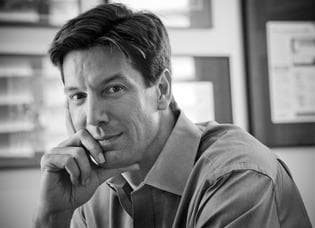
Mark Russinovich is an author known for his fiction works, including "Zero Day" and "Trojan Horse." His writing often explores themes related to technology and cybersecurity, reflecting his expertise in the field. Russinovich is also recognized for his contributions to software development and system administration.
Similar books
- The Andromeda Strain
Michael Crichton
3.9 (223k) average on GoodreadsThrillerFeatures a team racing against time to understand and contain a global threat.
- Angels & Demons
Dan Brown
3.9 (2.7M) average on GoodreadsThrillerA Harvard symbologist races through Rome's ancient sites, deciphering cryptic clues to unmask the Illuminati and stop a vengeful plot to destroy the Vatican with a stolen antimatter weapon.
- Gone Girl
Gillian Flynn
4.1 (2.3M) average on GoodreadsThrillerA wife's sudden disappearance on her fifth anniversary reveals a web of lies and psychological warfare, exposing the secrets within a seemingly perfect marriage.
- The Girl on the Train
Paula Hawkins
3.9 (2.1M) average on GoodreadsThrillerA woman’s fascination with a seemingly perfect couple she watches from her daily train commute leads her into a dark investigation when she witnesses something that shatters their idyllic image.
- The Da Vinci Code
Dan Brown
3.9 (1.9M) average on GoodreadsThrillerA symbologist and a cryptologist race through European landmarks, deciphering ancient codes and uncovering a conspiracy that could rewrite the foundations of Christianity.
- The Guest List
Lucy Foley
3.8 (1.3M) average on GoodreadsThrillerOn a remote Irish island, a glamorous wedding descends into a deadly whodunnit when a guest is found murdered, trapping everyone with their secrets as a storm rages.






Enjoyed the summary?
A summary gives you the shape of the book. The book itself has the detail, the examples and the voice.
Find Zero Day on AmazonAs an Amazon Associate, BookBrief earns from qualifying purchases. How we're funded