

Daniel Kahneman
Born: 03-04-1934
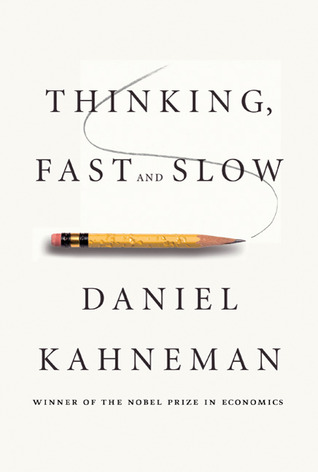
Daniel Kahneman is a renowned psychologist and Nobel laureate, celebrated for his groundbreaking work in behavioral economics. Born in 1934 in Tel Aviv, he co-authored the influential book "Thinking, Fast and Slow," which explores the dual systems of human thought. Kahneman's innovative research has profoundly impacted our understanding of decision-making and judgment, making him a pivotal figure in both psychology and economics.
Book summaries for books written by Daniel Kahneman
Quotes
Nothing in life is as important as you think it is, while you are thinking about it.
The confidence people have in their beliefs is not a measure of the quality of evidence but of the coherence of the story the mind has managed to construct.
We can be blind to the obvious, and we are also blind to our blindness.
A reliable way to make people believe in falsehoods is frequent repetition, because familiarity is not easily distinguished from truth.
Our comforting conviction that the world makes sense rests on a secure foundation: our almost unlimited ability to ignore our ignorance.
The idea that the future is unpredictable is undermined every day by the ease with which the past is explained.
The mind that makes up stories is not to be trusted.
We are prone to overestimate how much we understand about the world and to underestimate the role of chance in events.
Risk is a human construct, not an objective fact.
The experiencing self does not have a voice. The remembering self is sometimes wrong, but it is the one that keeps score and governs what we learn from living.
We have a tendency to see the world as more benign than it really is.
The illusion that you understand the past fosters overconfidence in your ability to predict the future.