

Estimated read time: 5 min read
One Sentence Summary
"Thinking, Fast and Slow" explores the dual systems of thought that drive our decisions: the fast, intuitive, and emotional system and the slow, deliberate, and analytical system.
Table of Contents
Introduction
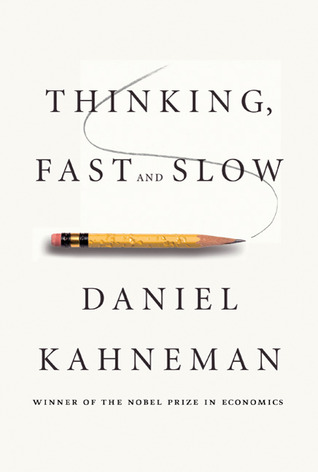
"Thinking, Fast and Slow" by Daniel Kahneman is a groundbreaking exploration of the human mind's decision-making process. The book delves into the dual systems of thinking that drive the way we make choices, approach problems, and perceive the world. Kahneman, a Nobel laureate, combines decades of research in psychology and behavioral economics to provide profound insights into how these systems shape our judgments and decisions. This book is significant for anyone interested in understanding the cognitive biases that influence our thoughts and actions.
Author's Expertise and Credibility
Daniel Kahneman is a renowned psychologist and Nobel Prize winner in Economic Sciences. His work in the field of behavioral economics, particularly his studies on judgment and decision-making, has transformed our understanding of human psychology. Kahneman's expertise is evident in his ability to convey complex psychological concepts with clarity and depth, making them accessible to a broad audience.
Core Concepts and Ideas
Summary of Main Ideas
Kahneman introduces two modes of thinking: System 1 and System 2.
- System 1: Fast, intuitive, and automatic. It requires little effort and is often driven by emotions.
- System 2: Slow, deliberate, and analytical. It demands more attention and is used for complex computations.
The interplay between these systems explains why we often make irrational choices and how cognitive biases affect our decisions.
Importance of the Topic
Understanding these thinking systems is crucial for improving decision-making skills. The book highlights how biases can lead to errors in judgment and provides strategies to mitigate their effects. This knowledge is applicable in various fields, including business, economics, medicine, and personal life.
Chapter-by-Chapter Summary
Part 1: Two Systems
The Characters of the Story
- Summary: Kahneman introduces System 1 and System 2, explaining their characteristics and functions. System 1 operates automatically and quickly, while System 2 allocates attention to effortful mental activities.
- Key Takeaways: Recognizing which system is at work can help us understand our thought processes and improve decision-making.
Part 2: Heuristics and Biases
Anchors
- Summary: This chapter discusses the anchoring effect, where initial exposure to a number influences subsequent judgments.
- Key Takeaways: Be aware of initial information and how it might skew your judgments.
Availability
- Summary: Kahneman explores the availability heuristic, where people judge the probability of events based on how easily examples come to mind.
- Key Takeaways: Consider information beyond immediate recollections to avoid biased conclusions.
Part 3: Overconfidence
The Illusion of Understanding
- Summary: The chapter examines how people overestimate their understanding of the world and the predictability of events.
- Key Takeaways: Acknowledge the limits of your knowledge and be open to uncertainty.
The Illusion of Validity
- Summary: Kahneman discusses how confidence in predictions often lacks a real basis, highlighting the illusion of validity.
- Key Takeaways: Question the reliability of forecasts and be skeptical of overconfidence.
Part 4: Choices
Prospect Theory
- Summary: Kahneman introduces prospect theory, which explains how people make decisions involving risk.
- Key Takeaways: Understand that people value gains and losses differently, influencing their risk-taking behavior.
Loss Aversion
- Summary: The concept of loss aversion is explored, showing that people prefer avoiding losses over acquiring equivalent gains.
- Key Takeaways: Be mindful of loss aversion when making decisions to avoid irrational choices.
Part 5: Two Selves
Two Selves
- Summary: This chapter contrasts the experiencing self, which lives in the present, and the remembering self, which recalls the past.
- Key Takeaways: Differentiate between these selves to better understand life satisfaction and happiness.
Practical Applications
Kahneman's insights can be applied in various ways:
- Decision-Making: Use awareness of cognitive biases to make more rational choices.
- Negotiations: Recognize anchoring effects and overconfidence in negotiations.
- Risk Assessment: Apply prospect theory to evaluate risks more effectively.
Supporting Evidence and Examples
Kahneman supports his theories with numerous studies and experiments. For instance, he uses the famous "Linda Problem" to illustrate conjunction fallacy and demonstrate how intuition can lead to errors. Real-life examples, such as financial decisions and medical diagnoses, further validate his claims.
Critical Insights
While "Thinking, Fast and Slow" offers valuable insights, some critics argue that it may overemphasize cognitive biases' impact on decision-making. Others suggest that the book could be more concise. Nevertheless, its comprehensive exploration of human thought processes is widely acclaimed.
Reader's Benefits
Readers can gain a deeper understanding of their own thinking patterns and learn to identify and counteract biases. This knowledge is empowering, enabling individuals to make more informed and rational decisions in their personal and professional lives.
Conclusion
"Thinking, Fast and Slow" is a profound exploration of human cognition that challenges our understanding of decision-making. By dissecting the dual systems of thought, Kahneman provides invaluable insights into the cognitive biases that shape our choices. This book encourages readers to reflect on their own thinking processes and offers strategies for improving decision-making. Whether you're a psychologist, economist, or simply curious about the human mind, "Thinking, Fast and Slow" is a must-read that promises to enrich your understanding of yourself and the world around you.
Thinking, Fast and Slow FAQ
What is 'Thinking, Fast and Slow' about?
The book explores the two systems of thought that drive the way we think: 'System 1,' which is fast, intuitive, and emotional, and 'System 2,' which is slower, deliberate, and logical. It examines how these systems shape our judgments and decisions and discusses cognitive biases and errors.
Who is the author of 'Thinking, Fast and Slow'?
The book is written by Daniel Kahneman, a psychologist and Nobel laureate in Economic Sciences.
What are some key concepts discussed in the book?
Key concepts include cognitive biases, the distinction between System 1 and System 2 thinking, heuristics, the anchoring effect, and the prospect theory among others.
How does the book explain cognitive biases?
The book demonstrates how cognitive biases arise from the shortcuts (heuristics) our brains use for quick decision-making, often leading to errors in judgment and decision-making.
Is 'Thinking, Fast and Slow' suitable for beginners in psychology?
Yes, the book is accessible to beginners and offers a comprehensive introduction to cognitive psychology and behavioral economics, though some sections may be complex.
What is the significance of System 1 and System 2 in decision-making?
System 1 operates automatically and quickly, with little or no effort and no sense of voluntary control, while System 2 allocates attention to effortful mental activities and is responsible for complex computations. Understanding their roles helps in recognizing biases and improving decision-making.
What is the 'anchoring effect' discussed in the book?
The anchoring effect is a cognitive bias where individuals rely too heavily on the first piece of information they receive (the 'anchor') when making decisions.
Does the book provide practical advice for improving decision-making?
Yes, the book offers insights into recognizing and mitigating biases, allowing for more rational decision-making in various aspects of life.
How is 'prospect theory' explained in the book?
'Prospect theory' describes how people choose between probabilistic alternatives that involve risk, where the probabilities of outcomes are uncertain. It suggests that people value gains and losses differently, leading to irrational decision-making.
Why is 'Thinking, Fast and Slow' considered an important read?
The book is important because it provides profound insights into human thought processes, challenges assumptions about rationality, and has significant implications for fields like economics, psychology, and decision-making.


