
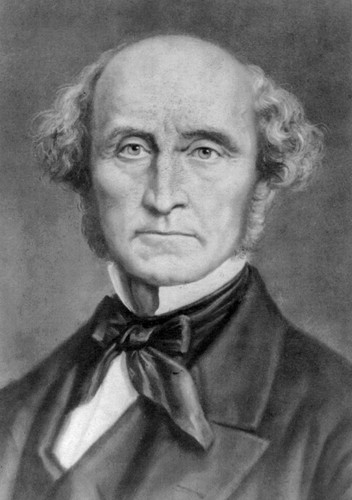
John Stuart Mill
Born: 05-19-1806
John Stuart Mill was a British philosopher, political economist, and civil servant, renowned for his contributions to liberal thought and utilitarian ethics. Born in 1806, he was a prolific writer whose works, such as "On Liberty" and "Utilitarianism," have left a lasting impact on Western philosophy. Mill was a strong advocate for individual freedom, women's rights, and social reforms, shaping modern democratic ideals until his death in 1873.
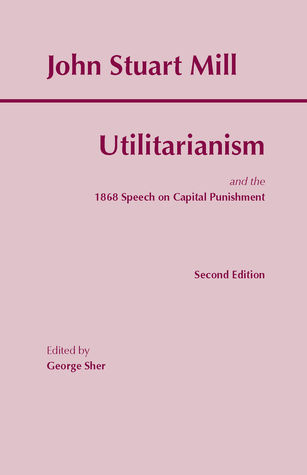
Book summaries for books written by John Stuart Mill
Quotes
The creed which accepts as the foundation of morals, Utility, or the Greatest Happiness Principle, holds that actions are right in proportion as they tend to promote happiness, wrong as they tend to produce the reverse of happiness.
It is better to be a human being dissatisfied than a pig satisfied; better to be Socrates dissatisfied than a fool satisfied.
The utilitarian morality does recognize in human beings the power of sacrificing their own greatest good for the good of others.
The only proof capable of being given that an object is visible, is that people actually see it. The only proof that a sound is audible, is that people hear it: and so of the other sources of our experience. In like manner, I apprehend, the sole evidence it is possible to produce that anything is desirable, is that people do actually desire it.
It is not the agent's own greatest happiness, but the greatest amount of happiness altogether, which is the criterion of right and wrong.
The happiness which forms the utilitarian standard of what is right in conduct, is not the agent's own happiness, but that of all concerned.
The utilitarian doctrine is, that happiness is desirable, and the only thing desirable, as an end; all other things being only desirable as means to that end.
It is quite compatible with the principle of utility to recognize the fact, that some kinds of pleasure are more desirable and more valuable than others.
Those only are happy, who have their minds fixed on some object other than their own happiness.
The morality of the principle of utility does not mean that any given pleasure, as music, for instance, or any given exemption from pain, as for example health, are to be looked upon as means to a collective something termed happiness, and to be desired on that account.
To do as one would be done by, and to love one's neighbour as oneself, constitute the ideal perfection of utilitarian morality.
From the fact that people are so readily able to set up a standard of good and evil, it must be that good and evil have some real existence.