Estimated read time: 9 min read
One Sentence Summary
"Utilitarianism" by John Stuart Mill argues that the best moral action is the one that maximizes overall happiness and minimizes suffering for the greatest number of people.
Table of Contents
Introduction
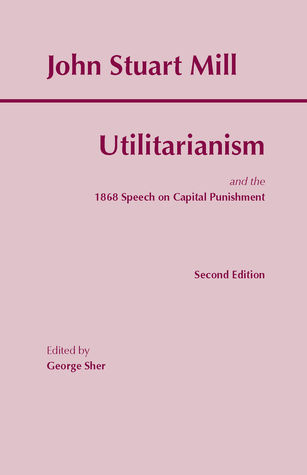
John Stuart Mill's Utilitarianism, first published in 1863, remains one of the most influential philosophical works exploring ethical theory. At its core, the book defends utilitarianism—the idea that the best action is the one that maximizes overall happiness or pleasure. Mill's eloquent and accessible prose helped popularize utilitarian ethics beyond academic circles, engaging philosophers, policymakers, and everyday readers alike. For college students and lecturers, Utilitarianism offers a foundational text to understand consequentialist moral philosophy, while its insights continue to provoke debate in moral psychology, economics, and political theory.
Mill’s work is not only a rigorous defense of utilitarianism but also a response to common criticisms. He refines and humanizes the theory initially proposed by Jeremy Bentham, emphasizing qualitative differences in pleasures and the importance of justice and individual rights within a happiness-centered framework. This summary unpacks Mill’s arguments, contextualizes the historical background, and examines the lasting impact of Utilitarianism on ethical discourse.
Historical Context
The Intellectual Climate of the 19th Century
Utilitarianism was written during the Victorian era, a time of rapid industrialization, social reform, and philosophical evolution in Britain. The Enlightenment's rationalism and empiricism heavily influenced Mill and his contemporaries. Philosophers sought to ground ethics in reason and observable consequences rather than tradition or divine command.
Jeremy Bentham and Early Utilitarianism
Mill builds on the work of Jeremy Bentham (1748–1832), who pioneered utilitarianism as a "science of morality." Bentham's principle of utility proposed that actions are right if they promote the greatest happiness for the greatest number. However, Bentham’s utilitarianism was often criticized for its perceived hedonism and mechanistic approach to pleasure, reducing all values to quantifiable units of happiness.
Mill’s Innovations
Mill, educated rigorously by his father James Mill, was also influenced by his friendship with Harriet Taylor and by the broader liberal political movements advocating individual liberty and social justice. His version of utilitarianism attempts to address Bentham’s shortcomings by considering the quality, not just quantity, of pleasures and by integrating respect for personal freedoms.
Brief Synopsis
Plot Overview
Since Utilitarianism is a philosophical treatise rather than a fictional narrative, its "plot" is a structured argumentative progression. Mill sets out to explain, justify, and refine the utilitarian ethical framework. He begins by defining utility and happiness, addresses common objections, and explores the relationship between utility and justice.
Setting
The book is rooted in mid-19th century England, reflecting the social, political, and intellectual challenges of the era. Mill wrote in response to both utilitarian critics and broader philosophical debates on morality, liberty, and human nature.
Main Concepts and Arguments
| Concept | Description | Significance |
|---|---|---|
| Principle of Utility | Actions are right if they promote the greatest happiness for the greatest number | Foundation of Mill’s ethical theory |
| Higher and Lower Pleasures | Differentiates pleasures by intellectual and moral quality, not just physical intensity | Addresses critiques of Bentham’s hedonism |
| Happiness as the Ultimate End | Happiness (pleasure and absence of pain) is the only intrinsic good | Provides the goal for moral evaluation |
| Justice and Utility | Justice is compatible with utility; rights and fairness promote overall happiness | Bridges gaps between utilitarianism and common moral intuitions |
| Moral Motivation | Actions are morally right if motivated by the desire to promote general happiness | Connects ethics with psychology and social behavior |
Themes and Motifs
Happiness and Morality
Mill’s central theme is that happiness is the ultimate moral goal. Unlike deontological ethics, which focus on duties and rules, utilitarianism is a form of consequentialism, judging actions by outcomes. Mill stresses that happiness includes mental and emotional pleasures, not merely physical gratification.
Quality Over Quantity
One of Mill's revolutionary ideas is the qualitative differentiation of pleasures. He argues that intellectual and moral pleasures (e.g., reading poetry, appreciating art) are superior to mere physical pleasures (e.g., eating, sex). This counters Bentham’s critics who mocked utilitarianism as a doctrine of crude hedonism.
Justice and Rights
Mill acknowledges that justice and respect for individual rights might sometimes conflict with utility. However, he argues that a just society, where rights are protected, ultimately maximizes happiness. This integration of justice into utilitarianism helped secure its relevance for modern liberal political theory.
The Role of Education and Social Reform
Implicit through Mill’s arguments is a call for education and social reform. By cultivating higher pleasures and promoting equitable social structures, society can increase overall happiness. Mill’s utilitarianism thus supports progressive social policies.
Literary Techniques and Style
Mill writes in a clear, accessible style, avoiding dense philosophical jargon. His prose is persuasive and often conversational, ideal for readers new to philosophy. He employs analogies and appeals to common sense, making abstract ideas tangible.
His argumentative structure is methodical: he presents objections, addresses them systematically, and reinforces his conclusions with practical examples. This dialectical style engages readers in critical thinking rather than passive acceptance.
Author's Background
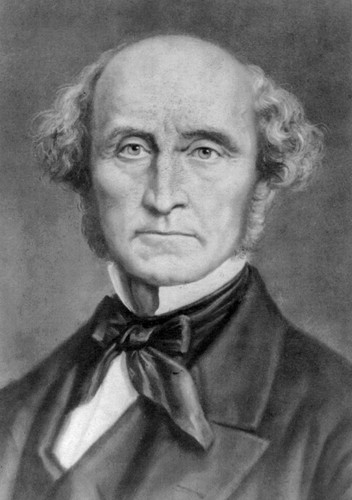
John Stuart Mill (1806–1873) was a British philosopher, political economist, and social reformer. Raised in an intense intellectual environment by his father, James Mill, he mastered classical literature, logic, and philosophy from an early age. His friendship and later marriage to Harriet Taylor profoundly influenced his views on liberty and equality.
Mill's writing spans ethics, political philosophy, economics, and logic. Utilitarianism is a cornerstone of his moral philosophy, complementing works like On Liberty and The Subjection of Women. His legacy lies in integrating utilitarian ethics with liberal humanism, advocating individual freedom alongside social welfare.
In-Depth Explanation of Key Ideas
Principle of Utility
Mill defines utility as the property in actions that tends to produce happiness and prevent pain. He suggests that the moral worth of an action depends on its tendency to promote overall happiness. This principle is both a descriptive claim about human motivation and a normative guide for ethical behavior.
Higher and Lower Pleasures
Mill famously distinguishes between pleasures of the mind and pleasures of the body. He argues that people who experience both consistently prefer intellectual pleasures—even if accompanied by discomfort—over mere physical pleasures. This hierarchy elevates utilitarianism beyond simple hedonism.
Happiness as the Ultimate End
Mill claims that all human actions aim at some perceived good, with happiness being the ultimate end. He defends this claim by appealing to common human experience and the consensus of moral judgment across cultures.
Justice and Utility
Mill tackles the objection that utilitarianism disregards justice. He argues that concepts of justice, rights, and desert are grounded in utility. Protecting rights creates trust and social stability, which maximize happiness in the long run.
Moral Motivation
Mill emphasizes that true morality requires acting from the desire to promote happiness, not merely from duty or social convention. This psychological insight connects moral philosophy with practical human behavior.
Practical Applications
Mill’s utilitarianism offers a framework for ethical decision-making in various fields:
- Public Policy: Governments should enact laws that maximize social welfare, balancing individual rights with collective good.
- Economics: Policies promoting equitable distribution of resources increase overall happiness.
- Environmental Ethics: Actions should consider long-term impacts on human and non-human happiness.
- Personal Ethics: Individuals should cultivate higher pleasures and consider the broader consequences of their choices.
Supporting Evidence and Examples
Mill uses thought experiments and appeals to common moral intuitions rather than empirical data. For instance, he points to the general preference for intellectual pleasures to argue their superiority. He also references societal practices that protect rights to illustrate justice’s utility.
Critical Insights
Strengths
- Clarity and Accessibility: Mill’s writing invites a broad audience to engage with complex ethical questions.
- Integration of Justice: By reconciling utility with justice, Mill addresses major critiques of utilitarianism.
- Recognition of Pleasure Quality: Differentiating pleasures enriches utilitarian theory and aligns it with human experience.
Limitations
- Measuring Happiness: The subjective nature of happiness complicates utilitarian calculations.
- Potential Conflicts: Cases where individual rights conflict with majority happiness remain contentious.
- Assumption of Rationality: Mill assumes individuals can accurately assess the consequences of actions, which is often unrealistic.
Key Benefits for Readers
- Develops critical thinking about ethical theories and moral decision-making.
- Provides tools to analyze social and political issues from a consequentialist perspective.
- Offers a historical understanding of liberal political philosophy and social reform.
- Encourages reflection on personal values, happiness, and justice.
Reader’s Takeaway
Readers will gain a nuanced understanding of utilitarianism beyond simplistic happiness calculus. Mill’s emphasis on higher pleasures and justice enriches the moral imagination, inviting readers to consider how ethical principles connect with real-world happiness and fairness. Emotionally, the book challenges readers to balance self-interest with altruism, inspiring a commitment to both personal and social well-being.
Conclusion
John Stuart Mill’s Utilitarianism endures as a seminal work in moral philosophy, blending rigorous argumentation with practical wisdom. Its defense of happiness as the foundation of ethics, combined with an innovative account of pleasure quality and justice, makes it essential reading for students, lecturers, and anyone curious about the foundations of moral thought. Exploring this book equips readers with intellectual tools to navigate ethical dilemmas thoughtfully and compassionately, reinforcing utilitarianism’s place in the ongoing discourse on how best to live together in society.
For those intrigued by the complexities of morality and the pursuit of happiness, Utilitarianism offers an engaging and profound journey worth undertaking.
Utilitarianism FAQ
What is the main idea of John Stuart Mill's Utilitarianism?
The main idea of Utilitarianism is that the best action is the one that maximizes overall happiness or pleasure and minimizes overall pain or suffering.
How does Mill define happiness in Utilitarianism?
Mill defines happiness as pleasure and the absence of pain; he argues that actions are right in proportion as they tend to promote happiness, wrong as they tend to produce the reverse of happiness.
What is the difference between higher and lower pleasures according to Mill?
Mill distinguishes higher pleasures (intellectual and moral pleasures) from lower pleasures (physical pleasures), arguing that higher pleasures are more valuable and desirable.
Does Utilitarianism justify immoral acts if they result in greater happiness?
Mill argues that while utilitarianism focuses on maximizing happiness, it generally aligns with moral intuitions and that immoral acts typically do not lead to the greatest overall happiness in the long term.
How does Utilitarianism address individual rights?
Mill acknowledges individual rights as important because respecting them generally promotes overall happiness, but rights are not absolute if violating them results in greater happiness.
Is Utilitarianism a consequentialist ethical theory?
Yes, Utilitarianism is a form of consequentialism, meaning it judges actions based on their outcomes or consequences, specifically the amount of happiness or unhappiness they produce.
What are some criticisms of Utilitarianism discussed by Mill?
Mill addresses criticisms such as the idea that utilitarianism is a 'doctrine worthy only of swine' by emphasizing higher pleasures and argues against the idea that it ignores justice or individual rights.
How does Mill suggest we calculate the greatest happiness?
Mill suggests considering factors such as intensity, duration, certainty, propinquity, fecundity, purity, and extent of pleasures and pains to evaluate which actions produce the greatest happiness.
What role does impartiality play in Utilitarianism?
Impartiality is central in Utilitarianism; everyone's happiness counts equally, and the moral agent should consider the happiness of all affected parties without bias.