

Vladimir Lenin
Vladimir Lenin was a Russian revolutionary, political theorist, and the architect of the Soviet state. Born in 1870, he led the Bolshevik Party to power during the October Revolution of 1917, establishing the first communist government. As the head of the Soviet Union, Lenin's policies and writings laid the foundation for Marxist-Leninist ideology. His leadership and ideas significantly influenced 20th-century global politics.
Book summaries for books written by Vladimir Lenin
Quotes
Without a revolutionary theory, there can be no revolutionary movement.
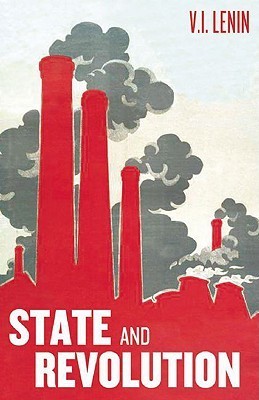
The proletarian revolution is impossible without the forcible destruction of the bourgeois state apparatus.
Freedom in capitalist society always remains about the same as it was in ancient Greek republics: freedom for the slave-owners.
Democracy is the most democratic of all forms of government.
Politics begin where the masses are, not where there are thousands, but where there are millions, that is where serious politics begin.
The oppressed are allowed once every few years to decide which particular representatives of the oppressing class are to represent and repress them.
The history of all countries shows that the working class exclusively by its own effort is able to develop only trade-union consciousness.
War is a continuation of politics by other means.
Any cook should be able to run the country.
Capitalists are no more capable of self-sacrifice than a man is capable of lifting himself up by his own bootstraps.
The state is a product and a manifestation of the irreconcilability of class antagonisms.