

Estimated read time: 6 min read
One Sentence Summary
A Marxist analysis of the state and its role in the transition to communism.
Table of Contents
Introduction
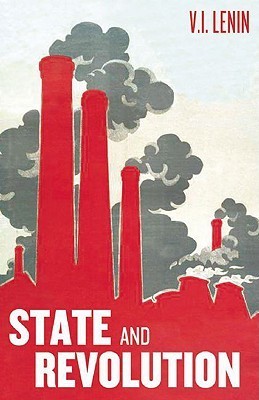
"The State and Revolution" is a political treatise written by Vladimir Lenin, the leader of the Bolshevik Party and the first head of the Soviet Union. Published in 1917, this book outlines Lenin's vision for the role of the state in a socialist society and provides a theoretical framework for the revolutionary struggle against capitalism.
Brief Synopsis
Lenin's "The State and Revolution" is divided into several chapters that analyze the nature of the state, its historical development, and its future role in a socialist society. The book begins with an examination of the Marxist theory of the state, criticizing the views of other socialist thinkers such as Karl Kautsky.
Lenin argues that the state is a product of class society and is inherently oppressive. He contends that the state exists to protect the interests of the ruling class and maintain the existing social order. In a capitalist society, the state serves as a tool of the bourgeoisie to exploit and oppress the working class.
The book then delves into a historical analysis of the state, tracing its development from ancient slave societies to feudalism and capitalism. Lenin argues that with the rise of monopoly capitalism, the state becomes increasingly centralized and powerful, serving the interests of the ruling class.
In the later chapters, Lenin explores the role of the state in a socialist society. He envisions a revolutionary transformation that would lead to the establishment of a proletarian state, which would eventually wither away as class distinctions disappear. Lenin emphasizes the importance of the dictatorship of the proletariat as a transitional stage towards communism.
Main Characters
| Character Name | Description |
|---|---|
| Vladimir Lenin | The author of the book and the leader of the Bolshevik Party. Lenin provides a critical analysis of the state and advocates for the revolutionary overthrow of capitalism. |
| Karl Kautsky | A prominent socialist thinker whose views on the state are criticized by Lenin. Kautsky represents the reformist approach to socialism that Lenin rejects. |
Summary of Different Story Points over Chapters
Chapter 1: Class Society and the State
- Lenin critiques the views of Karl Kautsky and other socialists who advocate for a peaceful transition to socialism through parliamentary means.
- He argues that the state is an instrument of class oppression and cannot be transformed from within.
- Lenin emphasizes the need for a revolution and the overthrow of the bourgeoisie to establish a proletarian state.
Chapter 2: The Experience of the Russian Revolution of 1905
- Lenin examines the revolutionary events of 1905 in Russia, analyzing the role of different social classes and the weaknesses of the bourgeois democratic revolution.
- He highlights the importance of the working class in leading the revolution and asserts that the proletariat must seize political power.
Chapter 3: The State and Revolution
- Lenin provides a detailed analysis of the state, its functions, and its historical development.
- He argues that the state is a tool of the ruling class to suppress the working class and maintain the existing social order.
- Lenin criticizes the reformist approach to the state and advocates for the revolutionary overthrow of capitalism.
Chapter 4: The Economic Basis of the Withering Away of the State
- Lenin explores the economic conditions necessary for the withering away of the state.
- He argues that in a socialist society, with the abolition of private property and the means of production owned collectively, the state will gradually lose its significance.
- Lenin emphasizes the need for the dictatorship of the proletariat as a transitional stage towards communism.
Main Events
- The publication of "The State and Revolution" in 1917.
- The Bolshevik Revolution in Russia, led by Lenin and the Bolshevik Party, in October 1917.
- The establishment of the Soviet Union and the implementation of Lenin's ideas on the state and revolution.
Themes and Insights
Critique of Capitalism and the State
"The State and Revolution" offers a scathing critique of capitalism and the oppressive nature of the state. Lenin argues that the state is an instrument of class rule and serves to maintain the interests of the ruling class. He highlights the need for a revolutionary struggle to overthrow capitalism and establish a proletarian state.
The Dictatorship of the Proletariat
Lenin's book emphasizes the importance of the dictatorship of the proletariat as a transitional stage towards communism. He argues that the working class must seize political power to dismantle the bourgeois state and establish a new form of government that represents the interests of the proletariat.
The Withering Away of the State
Lenin explores the concept of the withering away of the state in a socialist society. He argues that as class distinctions disappear and the means of production are owned collectively, the state will gradually lose its significance and eventually cease to exist.
Reader's Takeaway
"The State and Revolution" provides valuable insights into Lenin's revolutionary theory and his vision for the establishment of a socialist society. It offers a critical analysis of the state and capitalism, advocating for the overthrow of the bourgeoisie and the establishment of a proletarian state. This book is essential reading for anyone interested in understanding Lenin's ideas and the history of revolutionary movements.
Conclusion
"The State and Revolution" by Vladimir Lenin is a seminal work that outlines Lenin's vision for the role of the state in a socialist society. It offers a critique of capitalism, analyzes the historical development of the state, and advocates for the revolutionary overthrow of the bourgeoisie. Lenin's ideas on the dictatorship of the proletariat and the withering away of the state continue to be influential in political theory and revolutionary movements.
The State and Revolution FAQ
What is 'The State and Revolution' about?
'The State and Revolution' is a book written by Vladimir Lenin that examines the role of the state in society and the necessary conditions for a successful revolution.
Who is the author of 'The State and Revolution'?
The author of 'The State and Revolution' is Vladimir Lenin, a prominent figure in the Russian Revolution and the first leader of the Soviet Union.
What are the main ideas discussed in 'The State and Revolution'?
Some of the main ideas discussed in 'The State and Revolution' include the nature of the state, the concept of the dictatorship of the proletariat, and the role of the state in the transition to communism.
Is 'The State and Revolution' a difficult book to read?
While 'The State and Revolution' deals with complex political and philosophical concepts, it is written in a clear and accessible manner. However, some readers may find certain sections challenging due to the depth of the analysis.
Is 'The State and Revolution' relevant today?
Yes, 'The State and Revolution' remains relevant today as it explores fundamental questions about the nature of the state, the role of revolution, and the transition to a communist society. Many of the ideas discussed in the book continue to influence political and social movements.
Are there any criticisms of 'The State and Revolution'?
Yes, there have been various criticisms of 'The State and Revolution' over the years. Some argue that Lenin's ideas are impractical or outdated, while others criticize his interpretation of Marxism. It is important to approach the book critically and consider different perspectives.
Who would benefit from reading 'The State and Revolution'?
'The State and Revolution' would benefit readers interested in political theory, Marxism, and the history of revolutions. It is a valuable resource for those seeking to understand Lenin's ideas and their impact on revolutionary movements.
Is 'The State and Revolution' a long book?
'The State and Revolution' is relatively short and concise, with the main text spanning around 100 pages. However, some editions may include additional supplementary materials or annotations.
Are there any prerequisites for reading 'The State and Revolution'?
While there are no strict prerequisites for reading 'The State and Revolution,' having a basic understanding of Marxist theory and the Russian Revolution can enhance the reader's comprehension and context.


