
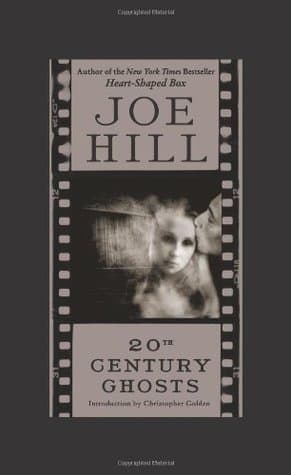
Synopsis
Covers the whole plot, including the ending.
- Difficulty
- Medium
- Pacing
- Variable
- Mood
- Atmospheric, Suspenseful, Melancholy, Dark, Eerie
- Read it if
- You enjoy well-crafted, atmospheric horror and dark fantasy short stories with emotional depth, or if you're a fan of Stephen King and want to explore his son's work.
- Skip it if
- You prefer continuous narratives, graphic horror, or dislike stories that end ambiguously.
20th Century Ghosts Plot Summary
Covers the whole plot, including the ending.
Pop Art
Arthur Roth is born an inflatable boy, a unique condition that causes him to float and makes him extremely fragile. His mother struggles to care for him, fearing he will pop. Arthur finds comfort in his friendship with a neighborhood boy named Joe, who treats him with kindness and understanding, unlike most other children. They develop a deep bond, sharing secrets and experiences. As they grow older, Arthur's condition becomes more challenging, limiting his ability to participate in normal life. Joe remains his steadfast companion, helping him to experience the world as much as possible, even as Arthur's existence becomes increasingly difficult and lonely.
You Can See the Dead
Alvin Hammond, a struggling artist, gains the ability to see ghosts after a childhood accident. Initially, he tries to ignore them, but the spirits are persistent, often appearing in grotesque forms. One particular ghost, a man named Crandall who died a violent death, begins to torment Alvin, appearing frequently and growing more aggressive. Crandall's presence disrupts Alvin's life and work, pushing him to his limit. Alvin eventually learns the truth about Crandall's death and must help the ghost find peace, leading to a dangerous and psychologically taxing confrontation where Alvin uses his unique ability to lay Crandall's spirit to rest.
The Black Phone
John Finney is abducted by a serial killer known as 'The Grabber' and locked in a soundproof basement. In the basement, he finds an old, disconnected black rotary phone. To his astonishment, the phone rings, and he hears the voices of The Grabber's previous victims. These spectral children, including his friend Finney, offer him clues and advice on how to escape and fight back against their murderer. John, terrified but determined, uses their spectral guidance to gather resources, plan an escape, and ultimately turn the tables on his captor, using the combined wisdom of the dead to save his own life.
Voluntary Committal
Nolan, a bright but troubled boy, struggles to connect with his severely autistic younger brother, Simon. Simon spends his days drawing incredibly detailed maps and blueprints of an imaginary town called 'Imaginaryland.' Nolan slowly realizes that Simon's creations are not just drawings but are appearing in a hidden, physical space within their house, a place only Simon seems to fully access. This hidden world, built from Simon's mind, becomes a refuge and a source of wonder, but also a place of danger as its rules are dictated by Simon's unpredictable thoughts. Nolan tries to understand and navigate this world, fearing for Simon's safety and sanity.
The Cape
Eric, as a child, believed his tattered red blanket was a magical cape that granted him the power of flight. After a tragic accident involving his younger brother, Nicky, which he blames on his cape's failure, Eric abandons the fantasy. Years later, as an adult, Eric is a bitter and resentful man. He rediscovers the blanket, and this time, it seems to possess a genuine, malevolent power. The cape grants him the ability to fly and other dark powers, but at a terrible cost, twisting his personality and fueling his anger. He uses its power to get revenge and control, becoming a villainous figure rather than the hero he once imagined.
Last Breath
Mr. Kaye, an elderly man with a terminal illness, learns about a mysterious service that allows individuals to have their 'last breath' captured and preserved. Intrigued, he visits the establishment, run by an enigmatic woman. The process involves a complex ritual where his final exhalation is collected and stored in a glass vial, a physical memento of his life's end. This service offers a strange form of immortality, a way to leave a tangible piece of oneself behind. Mr. Kaye grapples with the philosophical implications of this act, reflecting on life, death, and legacy as he prepares for his final moments.
My Father's Mask
Jack and his younger sister, Laura, are staying at their eccentric parents' remote country house. They find a collection of bizarre, animalistic masks and observe their parents engaging in strange, ritualistic games at night. These games are unsettling and seem to involve role-playing as mythical creatures, with the parents showing disturbing changes in personality and behavior. The children become increasingly frightened, unsure if their parents are simply playing a strange game or if something more sinister is at play, blurring the lines between reality and a terrifying fantasy, forcing them to question the true nature of their parents.
Bobby Conroy Comes Back from the Dead
Bobby Conroy, a struggling actor, works as a zombie extra on a horror film set. He is apathetic and disillusioned with his life. During a break, he meets another zombie extra, a woman named Lexine, who he recognizes as an old acquaintance from acting classes. They strike up a conversation, bonding over their shared experiences and frustrations. As they talk, a genuine connection forms between them amidst the grotesque makeup and artificial horror of the film set. This unexpected encounter offers Bobby a glimmer of hope and a chance at a new beginning, pulling him out of his cynical rut and reminding him of the possibility of human connection.
Dead-Wood
A group of friends goes on a camping trip into an isolated forest, seeking adventure and escape. As they go deeper, they notice strange phenomena: trees that seem to move, unnatural sounds, and a sense of dread. They soon realize that the forest itself is a living, malevolent entity, actively trapping and consuming anything that enters it. One by one, the friends fall victim to the forest's sinister will, becoming entangled in its roots and branches. The remaining survivors must fight for their lives against the sentient 'dead-wood,' desperate to escape its suffocating grasp and the horrifying fate it has planned for them.
The Movie at the End of the World
The narrator, a man on his deathbed, describes his life as a continuous movie playing in his mind, projected onto the inside of his eyelids. This 'movie' is a fragmented, non-linear compilation of his memories, regrets, and fleeting joys. As he nears his end, the film becomes more vivid and intense, showing him moments of his past, both significant and mundane. He reflects on the nature of memory, the passage of time, and the inevitability of death, finding a strange comfort in this internal cinematic experience. The story explores the idea that our lives are narratives we construct and replay until the final credits roll.
20th Century Ghosts
Alec Sheldon is the projectionist at the dilapidated Rosebud Theater, a place steeped in cinematic history and fading glory. He is a solitary man, finding solace in the flickering images on screen. One afternoon in 1945, he meets Imogene, a beautiful young woman who knows everything about movies, from obscure facts to the perfect kiss. Imogene, however, is a ghost, one of the many spirits who haunt the old theater. She falls in love with Alec, and they share a poignant, spectral romance, united by their shared passion for film. Their relationship transcends the boundaries of life and death, offering Alec a deep, if ethereal, connection.
Better Than Home
A young boy, a talented and passionate baseball player, dreams of making it big. He idolizes his local team and spends every waking moment practicing. During a crucial game, he suffers a horrific injury, shattering his arm and his dreams of a professional career. The injury is not only physically painful but also emotionally devastating, as it forces him to confront the end of his aspirations. He deals with the loss of his identity as an athlete and the future he had envisioned, navigating the difficult path of accepting his new reality and finding a new purpose in life beyond the baseball diamond.
In the Rundown
In a bleak, post-apocalyptic world, two brothers, Jack and Danny, scavenge for survival in a ravaged landscape known as 'The Rundown.' They face constant threats from other desperate survivors, mutated creatures, and the harsh environment itself. Their bond is tested by the constant struggle for resources and the psychological toll of their desolate existence. They rely on each other for protection and companionship, their relationship a fragile beacon in a world without hope. The story focuses on their arduous journey, their desperate attempts to find safety, and the sacrifices they make to stay alive in a world that has forgotten humanity.
Scheherazade's Typewriter
A struggling writer acquires an antique typewriter rumored to have magical properties. He soon discovers that anything he writes on it, particularly stories, begins to happen in reality. Initially, he uses this power to improve his life and create fantastical scenarios, but the magic proves to be unpredictable and dangerous. His creations often take on lives of their own, twisting his intentions and leading to chaos and unintended consequences. The writer must deal with the immense power he wields and the responsibility that comes with it, learning that bringing fiction to life can be far more perilous than he imagined.
The Widow's Breakfast
Poe, an elderly and reclusive writer, lives in a decaying mansion, his mind slowly succumbing to dementia. He is haunted by memories of his deceased wife and the guilt of past mistakes. His daily routine is marked by strange rituals and conversations with unseen entities. The line between reality and hallucination blurs as his mental state deteriorates. He meticulously prepares a 'widow's breakfast' each day, a symbolic act of remembrance and penance. The story looks at his fragmented consciousness, exploring grief, regret, and the fragility of the mind as he confronts his haunting past in a world that is increasingly his own creation.
Principal Figures
Arthur Roth
Protagonist
The 'inflatable boy' who navigates a fragile existence.
Arthur is a boy born with a unique condition that makes him light as air and incredibly delicate. He is inherently kind and introspective, keenly aware of his difference from others. Despite the constant threat of injury and the social isolation his condition brings, he yearns for connection and normalcy. His primary drive is to experience life as fully as possible, even with his physical limitations.
Relationships: Joe (Best friend and confidant)
Alvin Hammond
Protagonist
An artist burdened with the ability to see the dead.
Alvin is a struggling artist who gains the unsettling ability to see ghosts after a childhood accident. He is initially cynical and tries to ignore the spectral world, but the persistent and often malevolent spirits force him to confront his unique gift. He is driven by a desire for peace and normalcy, but ultimately finds himself compelled to help the dead, even at great personal cost. His artistic sensibility often gives him a unique perspective on the spectral world.
Relationships: Crandall (A malevolent ghost who torments Alvin)
John Finney
Protagonist
A kidnapped boy who communicates with the dead.
John is a resourceful and resilient young boy, thrust into a terrifying situation when he is abducted by 'The Grabber.' Despite his fear, he possesses an innate courage and quick thinking. He is driven by the primal need to survive and escape, a drive amplified by the spectral guidance he receives. He is smart, observant, and capable of using the information given to him by the dead to his advantage.
Relationships: Finney (ghost) (Previous victim of The Grabber, offers guidance); The Grabber (His abductor and antagonist)
Nolan
Protagonist
A boy trying to understand his autistic brother's unique world.
Nolan is the older brother of Simon, burdened by the responsibility and confusion of caring for a severely autistic sibling. He is intelligent and observant, but also somewhat isolated by his family situation. He is driven by a deep, if sometimes frustrated, love for Simon and a desire to understand the strange manifestations of his brother's mind. He possesses a strong sense of protective duty.
Relationships: Simon (His autistic younger brother, creator of Imaginaryland)
Eric
Protagonist/Antagonist
A man whose childhood fantasy of a cape turns into a dark reality.
Eric is a complex character, initially a hopeful child who believes in the magic of his cape. As an adult, he is bitter, resentful, and filled with unresolved anger, particularly stemming from a childhood tragedy involving his brother. He is driven by a desire for power and revenge, which the re-emergent magical cape amplifies. His actions are often selfish and destructive, transforming him into a villainous figure despite his human origins.
Relationships: Nicky (His younger brother, involved in a tragic childhood accident)
Imogene
Supporting Character
A movie-loving ghost haunting the Rosebud Theater.
Imogene is the ghost of a beautiful young woman, forever waiting in the Rosebud Theater in 1945. She is charming, knowledgeable about film, and possesses a romantic, wistful nature. She is driven by a desire for connection and a love for the magic of cinema, which transcends her spectral existence. Her presence is both ethereal and deeply human, embodying the lingering spirit of a bygone era and a passion for stories.
Relationships: Alec Sheldon (The projectionist she falls in love with)
Alec Sheldon
Protagonist
A lonely projectionist who finds love with a ghost.
Alec is a quiet, solitary projectionist at the old Rosebud Theater. He is a man who finds comfort and meaning in the world of movies, preferring the company of film reels to people. He is initially reserved and somewhat melancholic, but his encounter with Imogene awakens a deep capacity for love and connection within him. He is driven by a quiet yearning for companionship and purpose.
Relationships: Imogene (The ghost he falls in love with)
Poe
Protagonist
An elderly writer grappling with dementia and a haunting past.
Poe is an aging, reclusive writer whose mind is slowly unraveling due to dementia. He is haunted by grief for his deceased wife and guilt over past actions. His world is a blend of reality and hallucination, making him an unreliable narrator of his own life. He is driven by a desperate attempt to hold onto his memories and make sense of his fragmented existence, even as his mind betrays him. His literary background infuses his delusions with a poetic, if unsettling, quality.
Relationships: His deceased wife (A constant, haunting memory)
Themes & Insights
The Power of Storytelling and Imagination
Many stories in the collection explore how narratives, whether literary, cinematic, or internal, shape reality and provide escape or meaning. In '20th Century Ghosts,' Imogene and Alec's love is forged over their shared passion for film; the stories on screen become their shared language. 'Voluntary Committal' shows Simon's imaginary world appearing physically, demonstrating the tangible power of a vivid imagination. 'Scheherazade's Typewriter' directly illustrates the dangerous power of a writer's words to alter reality, highlighting the responsibility that comes with creation. Stories serve as both refuge and a source of deep influence.
“'Movies are dreams,'' Imogene whispered. ''They're the only dreams that last forever.'”
Grief, Loss, and Memory
The collection often explores the impact of grief and the persistence of memory, often appearing as literal ghosts or haunting presences. 'The Widow's Breakfast' portrays Poe's descent into dementia, driven by his inability to process his wife's death and past regrets. In 'You Can See the Dead,' Alvin is tormented by ghosts, particularly Crandall, whose unresolved death leaves a lingering, malevolent imprint. The spectral children in 'The Black Phone' are not just guides but also embodiments of past loss, their memories reaching out from beyond the grave. Memory, both cherished and painful, is a strong force that shapes the living and the dead.
“'The past isn't dead. It isn't even past.'”
The Nature of Identity and Otherness
Several stories explore what it means to be different, to live outside societal norms, or to have one's identity irrevocably altered. Arthur Roth in 'Pop Art' is literally an 'inflatable boy,' physically distinct and fragile, forcing him to deal with his unique existence and find connection despite his otherness. Eric in 'The Cape' struggles with his identity after a childhood trauma, and the magical cape transforms him into a darker version of himself. The zombie extras in 'Bobby Conroy Comes Back from the Dead' embody a kind of living death, finding connection in their shared, unusual profession. These narratives look at the challenges and occasional beauty of being an outsider.
“'I was a boy, true. But I wasn't like other boys. I was lighter. I floated.'”
The Thin Veil Between Life and Death
A recurring theme is the porous boundary between the living and the dead, with ghosts and spectral phenomena common throughout the collection. In 'The Black Phone,' deceased children communicate with John from the afterlife, directly influencing his survival. 'You Can See the Dead' features Alvin's involuntary ability to perceive the deceased, who often linger due to unresolved issues. The titular story, '20th Century Ghosts,' presents a tender romance between a living man and a ghost, demonstrating that love and connection can transcend the ultimate boundary. Death is not an ending but often a transition, leaving a lasting mark on the world of the living.
“'There was a phone in the basement. It didn't work. Except when it rang.'”
Plot Devices & Literary Techniques
Supernatural Abilities/Manifestations
Characters gaining powers or witnessing otherworldly phenomena.
This device is central to many stories. Alvin Hammond gains the ability to see ghosts in 'You Can See the Dead,' while John Finney receives calls from the deceased in 'The Black Phone.' Simon in 'Voluntary Committal' manifests his imaginary world physically, and the cape in 'The Cape' grants Eric dark powers. These abilities often serve as catalysts for the plot, forcing characters to confront extraordinary circumstances and explore the limits of reality.
Unreliable Narration
The reader's perception is skewed by the narrator's compromised state.
This device is prominently used in 'The Widow's Breakfast,' where the elderly writer Poe's deteriorating mental state blurs the line between reality and delusion, making it difficult for the reader to discern what is actually happening. It's also present in stories like 'My Father's Mask,' where the children's limited understanding and fear color their interpretation of their parents' bizarre games, creating a sense of psychological suspense and uncertainty for the audience.
The Sentient Environment
Nature itself acts as a malevolent force.
In 'Dead-Wood,' the forest is not merely a setting but an active antagonist, a living, malevolent entity that traps and consumes the characters. This device elevates the natural world from a backdrop to a character, imbuing it with sinister intent and creating a claustrophobic, inescapable horror. It reflects a primal fear of nature's indifference or hostility towards humanity, making the environment itself a source of dread and danger.
The Magical Object
An everyday item imbued with extraordinary power.
This device drives the plots of several stories. In 'The Cape,' Eric's childhood blanket becomes a genuine source of malevolent power. 'The Black Phone' features a disconnected phone that rings with calls from the dead. 'Scheherazade's Typewriter' introduces a typewriter that brings written stories to life. These objects serve as focal points for the supernatural, acting as conduits for power or communication that fundamentally alter the characters' realities and introduce fantastical elements into their lives.
20th Century Ghosts Quotes
“Every kid thinks about this, at some point. The idea of a secret passage. A hidden door. A way into the unknown.”
“There are always two sides to a story. And one is always wrong.”
“The past is a place you can visit, but you can't live there.”
“The dead don’t go away. They’re just… different.”
“It’s not the monsters in the dark that scare you, it’s the ones you invite in.”
“Every story has a beginning, a middle, and an end. Even the ones that don't make sense.”
“Some things, once broken, can never truly be put back together.”
“Kids are like that. They believe in things you don't. And sometimes, they're right.”
“The world is full of ghosts, if you only know where to look.”
“There’s a difference between being alone and being lonely.”
“Hope is a tricky thing. Sometimes it's a lifeline. Sometimes it's a noose.”
“Memory is a kind of haunting.”
“The best stories are the ones that scare you into remembering something you thought you'd forgotten.”
“Even the smallest kindness can echo through time.”
Quiz
10 questions on the plot and the characters. Each answer comes with a short explanation.
Question 1
In 'Pop Art,' what unique characteristic does Francis, the protagonist, possess?
- He can fly using self-made wings.
- He is an inflatable boy.
- He can turn invisible at will.
- He communicates telepathically.
Show answer
B. He is an inflatable boy. In 'Pop Art,' Francis, also known as Arthur Roth, is an inflatable boy, which makes him unique and the subject of bullying.
Question 2
What is the primary setting for the ghost of Imogene in '20th Century Ghosts'?
- An abandoned library
- The Rosebud Theater
- A haunted house on a hill
- A deserted train station
Show answer
B. The Rosebud Theater Imogene, the ghost, waits in the Rosebud Theater for Alec Sheldon in 1945, as described in the story '20th Century Ghosts'.
Question 3
In 'The Black Phone,' what unusual object in the basement allows John Finney to communicate with the dead?
- A magic mirror
- An antique, disconnected telephone
- A ouija board
- A crystal ball
Show answer
B. An antique, disconnected telephone John Finney uses an antique, disconnected telephone in the basement to receive calls from the previous victims of his abductor.
Question 4
What is the ultimate fate of Arthur Roth (Francis) in 'Pop Art'?
- He finds a cure for his condition and becomes human.
- He is accidentally deflated and dies.
- He becomes a famous circus performer.
- He runs away to a special school for unique children.
Show answer
B. He is accidentally deflated and dies. Arthur Roth, the inflatable boy, is accidentally deflated by his 'friend' and dies, symbolizing the fragility of his existence and relationships.
Question 5
In 'Best New Horror,' what is the protagonist, Eddie, obsessed with after his encounter with the mysterious short story?
- Finding the author of the story.
- Recreating the events of the story in real life.
- The feeling of being watched and the presence of a 'silent person' behind him.
- Writing his own version of the story.
Show answer
C. The feeling of being watched and the presence of a 'silent person' behind him. After reading 'The Button Box,' Eddie becomes increasingly paranoid, feeling a 'silent person' constantly behind him, a manifestation of the story's psychological horror.
Question 6
What is the nature of the 'ghosts' in the titular story '20th Century Ghosts'?
- They are malevolent spirits seeking revenge.
- They are patrons who died in the theater and replay their last moments.
- They are the memories and lingering presence of people who loved movies.
- They are physical manifestations of the projectionist's guilt.
Show answer
C. They are the memories and lingering presence of people who loved movies. The 'ghosts' in the Rosebud Theater are not traditional malevolent spirits, but rather the lingering presences and memories of those who loved movies, tied to the theater and its history.
Question 7
In 'Bobby Conroy Comes Back from the Dead,' what significant detail about the zombie apocalypse setting differentiates it from typical zombie narratives?
- The zombies are intelligent and can speak.
- The apocalypse is a slow, ongoing event, and society has adapted to live alongside zombies.
- Zombies can be cured with a specific vaccine.
- The zombies only appear at night.
Show answer
B. The apocalypse is a slow, ongoing event, and society has adapted to live alongside zombies. Unlike typical zombie stories, 'Bobby Conroy Comes Back from the Dead' depicts a world where the zombie apocalypse is a slow-burn, ongoing reality that people have learned to live with, even working jobs alongside the undead.
Question 8
What is the central theme explored in 'My Father's Mask' through the protagonist's relationship with the mask?
- The power of ancient curses.
- The struggle between inherited identity and personal choice.
- The psychological effects of isolation.
- The allure of forbidden knowledge.
Show answer
B. The struggle between inherited identity and personal choice. The story delves into the protagonist's struggle with a mask that seems to impose his father's identity upon him, exploring themes of inherited burdens and the fight for individual self-determination.
Question 9
In 'Voluntary Committal,' what is the nature of the 'imaginary friends' the children create, and how do they manifest?
- They are benevolent spirits that protect the children.
- They are physical constructs built from discarded toys that become sentient.
- They are complex, sentient entities born from the children's minds, capable of existing in a shared 'imaginary' space.
- They are hallucinations caused by a rare medical condition.
Show answer
C. They are complex, sentient entities born from the children's minds, capable of existing in a shared 'imaginary' space. The 'imaginary friends' in 'Voluntary Committal' are not mere figments but appear to be complex, sentient beings created by the children's minds, capable of interacting within a shared, constructed reality, blurring the lines between imagination and reality.
Question 10
How does the story 'The Cape' utilize the superhero motif to explore themes of childhood trauma and escapism?
- It shows how superhero powers can literally heal past wounds.
- The protagonist actually gains superpowers and becomes a hero, overcoming his past.
- It depicts the protagonist, as an adult, using his childhood superhero fantasies to cope with and eventually perpetuate his trauma through a distorted reality.
- The story is a straightforward superhero origin story with no underlying thematic depth.
Show answer
C. It depicts the protagonist, as an adult, using his childhood superhero fantasies to cope with and eventually perpetuate his trauma through a distorted reality. 'The Cape' uses the superhero fantasy, particularly the titular cape, as a vehicle for the adult protagonist to re-engage with and ultimately perpetuate his childhood trauma, blurring the lines between fantasy and a twisted reality, rather than providing genuine escapism or healing.
20th Century Ghosts FAQ
What is the central premise of '20th Century Ghosts'?
'20th Century Ghosts' is a collection of short stories by Joe Hill, blending elements of horror, fantasy, and the supernatural. Each story presents a unique, often unsettling, premise, ranging from a ghostly movie theater usher to an inflatable boy, exploring themes of loss, memory, and the lingering effects of the past.
Who is Imogene and what is her role in 'Pop Art'?
Imogene is the titular 'ghost' in '20th Century Ghosts,' specifically in the story 'Pop Art.' She is a young, beautiful, and deceased woman who haunts the Rosebud Theater. She waits for Alec Sheldon in 1945, sharing her vast knowledge of cinema and a spectral kiss, illustrating a poignant connection between the living and the dead.
Describe Arthur Roth's unique condition in 'Pop Art'.
Arthur Roth is a lonely and bullied child in 'Pop Art' who is literally an inflatable boy. His body is made of rubber and requires regular inflation, making him physically different and vulnerable to abuse. This condition serves as a powerful metaphor for his social isolation and fragility.
What is the transformation Francis undergoes in 'The Black Phone'?
Francis, a character mentioned in the book's blurb, does not transform in 'The Black Phone'; that description belongs to 'The Locust-God.' In 'The Locust-God,' Francis was once human but transforms into an eight-foot-tall locust. This metamorphosis signifies a monstrous change, bringing terror and a new, dominant presence to the town of Calliphora.
What is the significance of the antique telephone in 'The Black Phone' for John Finney?
In 'The Black Phone,' John Finney is a boy trapped in a basement by a serial killer. The antique, disconnected telephone in the cellar rings at night, allowing him to receive calls from the spirits of previous murdered children. These spectral calls provide crucial clues and comfort, helping John in his struggle for survival.
Are there any recurring motifs or symbols across different stories in the collection?
While not explicitly stated for all stories, Joe Hill frequently uses motifs of childhood innocence corrupted, the lingering presence of the dead, and objects imbued with supernatural power. The concept of 'ghosts' extends beyond literal specters to encompass past regrets, traumatic memories, and the echoes of history that refuse to die.
How does Joe Hill's writing style in '20th Century Ghosts' echo or differ from his father, Stephen King?
Joe Hill often shares his father's talent for creating relatable characters and building suspense, but he frequently employs a more lyrical and melancholic tone. While both excel at horror, Hill often leans into a more fantastical and emotionally resonant brand of supernatural fiction, sometimes with a less overtly violent or grotesque approach.
What is the subtle connection between the title '20th Century Ghosts' and the individual narratives?
The title '20th Century Ghosts' implies that many of the stories are set within or deeply influenced by the 20th century, with the 'ghosts' representing not just literal spirits but also the lingering effects of past events, cultural shifts, and personal traumas from that era. Each story's 'ghost' is rooted in its specific historical and social context.
How does the story 'Pop Art' explore themes of bullying and social isolation through Arthur Roth?
'Pop Art' profoundly explores bullying and social isolation by making Arthur Roth's physical difference a literal manifestation of his vulnerability. His inflatable nature makes him an easy target, highlighting the cruelty children can inflict and the profound loneliness of being an outcast, despite his inherent goodness.
What psychological impact do the calls from the dead children have on John Finney in 'The Black Phone'?
The calls from the dead children in 'The Black Phone' have a complex psychological impact on John Finney. While terrifying, they also provide a sense of connection and purpose, giving him hope and crucial information. This interaction transforms his fear into a desperate, collaborative fight for survival, empowering him through the voices of past victims.
How does Imogene's character in '20th Century Ghosts' (the story, not the collection) represent a specific psychological need?
Imogene, as a beautiful and knowledgeable ghost, represents the psychological need for connection, understanding, and perhaps even a form of escapism through art. Her deep knowledge of film and her gentle presence offer Alec a unique companionship, fulfilling a desire for an idealized, non-judgmental relationship that transcends life and death.
In 'The Locust-God,' what does Francis's transformation into a locust symbolize psychologically or metaphorically?
Francis's transformation into an eight-foot-tall locust in 'The Locust-God' can symbolize a monstrous manifestation of unchecked anger, resentment, or a suppressed, destructive nature. It represents a complete dehumanization, where his inner turmoil and unhappiness morph into an overwhelming, terrifying force that seeks to dominate and consume, reflecting a deep psychological break.
Is 'Pop Art' purely a fantasy story, or can Arthur Roth's condition be interpreted metaphorically?
'Pop Art' can be interpreted both as a fantasy and a powerful metaphor. While Arthur Roth's inflatable body is fantastical, it serves as a potent metaphor for the fragility, vulnerability, and social ostracization experienced by many children who are 'different.' It highlights the emotional and physical abuse that can result from being an outsider.
How does the ending of 'The Black Phone' offer a sense of closure or continued dread?
The ending of 'The Black Phone' offers a complex mix of closure and lingering dread. While John Finney achieves a measure of victory and escape, the trauma of his experience and the lingering presence of the dead children's voices suggest that the past, and its horrors, are not easily forgotten. It's a victory, but one earned at a terrible cost.
What is the overarching message about memory and the past conveyed through the collection?
The collection consistently conveys that memory and the past are not inert; they are active, living forces that continue to shape the present. Whether through literal ghosts, lingering trauma, or the echoes of historical events, the book argues that 'the past isn't dead. It isn't even past,' suggesting its enduring power and influence on individuals and communities.
Could the character of Imogene in '20th Century Ghosts' (story) be seen as a critique of nostalgia?
Imogene's character could be interpreted as a nuanced critique of nostalgia. While she embodies the romanticized past of cinema, her existence as a ghost suggests that clinging to the past, even a beautiful one, can be a form of stasis or a refusal to engage with the present. Her beauty and knowledge are alluring, but also tied to a world that has moved on.
How does the blurb's statement 'The past isn't dead. It isn't even past...' resonate with the themes of the book?
This statement is a core thematic anchor for the entire collection, emphasizing that historical events, personal traumas, and the presence of the dead continue to exert influence on the living. It suggests that the past is not merely history but an active, often haunting, element that shapes the characters' realities and the supernatural occurrences they face.
About the author
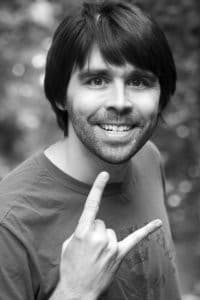
Joe Hill is an American author known for his contributions to contemporary horror and fiction. His notable works include "Heart-Shaped Box," "NOS4A2," "Horns," "The Fireman," and the short story collection "20th Century Ghosts." Hill is recognized for his ability to blend supernatural elements with deep character exploration.
Similar books
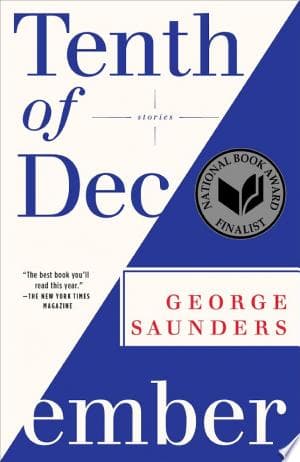
- Tenth of December
George Saunders
4.0 (62k) average on GoodreadsLiterary FictionA collection of short stories that blend the mundane with the surreal and often poignant.
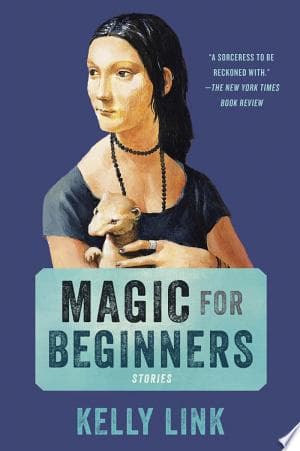
- Magic for Beginners
Kelly Link
3.8 (9k) average on GoodreadsFantasyBoth authors are lauded for their genre-bending and literary quality in short fiction. However, Hill's narrative voice is generally more direct and less overtly experimental than Link's, making his collection potentially more accessible to traditional horror readers while still offering significant depth and complexity.
- Harry Potter and the Sorcerer's Stone
J.K. Rowling
4.5 (7M) average on GoodreadsFantasyRescued from a miserable life under the stairs, an orphaned boy discovers he's a wizard destined for a magical school, where he uncovers a dangerous secret tied to the dark wizard who murdered his parents.
- The Hunger Games
Suzanne Collins
4.3 (6.4M) average on GoodreadsFantasyIn a future where children fight to the death on live television, Katniss Everdeen volunteers for the arena, turning a death sentence into a fight for survival and a spark of rebellion.
- 1984
George Orwell
4.2 (3.1M) average on GoodreadsPoliticsIn a future where surveillance and thought control are absolute, a man's search for truth clashes with the Party, showing that hope can be a form of rebellion.
- Divergent
Veronica Roth
4.2 (2.9M) average on GoodreadsFantasyIn a society divided by virtues, a sixteen-year-old's difference from the norm starts a rebellion that threatens her world.




Enjoyed the summary?
A summary gives you the shape of the book. The book itself has the detail, the examples and the voice.
Find 20th Century Ghosts on AmazonAs an Amazon Associate, BookBrief earns from qualifying purchases. How we're funded